10 days in Lithuania: the grand tour itinerary
Nida: Vilnius curonian spit all day tour
Can you do a complete Lithuania road trip in 10 days? Yes — 10 days is ideal for a full country loop: Vilnius (3 nights), the eastern lakes at Anykščiai (1 night), back through Kaunas (1 night), across to the Hill of Crosses and Klaipėda (2 nights on the coast), the Curonian Spit (1 day), and south through Druskininkai (1 night) back to Vilnius. A rental car is essential from Day 4 onwards.
The logic of the Lithuania grand tour
Lithuania rewards slow travel. Rushing through it in 7 days means you see the headline sights but miss the country’s most distinctive quality: the transition from the cosmopolitan baroque capital to pine forest lake districts to Baltic dune coast, all within 4 hours of each other.
This 10-day route is a loop from Vilnius. You could reverse it, but the sequence here builds logically: city depth first, then progressively rural, then back to civilization via Druskininkai’s spa town. A rental car is strongly recommended from Day 4 — the east and south are underserved by public transport.
Budget: €70-100/person/day for mid-range travel (meals, transport, accommodation, tickets). Car rental adds €35-60/day for 7 days = €245-420 total.
| Where | Vilnius, Anykščiai, Kaunas, Hill of Crosses, Klaipėda, Curonian Spit, Druskininkai |
| Cost | around €70-100/person/day, plus €245-420 total for car rental |
| Time needed | 10 days, a full loop from and back to Vilnius |
| Getting there | train Days 1-3; rental car from Day 4 onwards |
| Best time | May-September; Druskininkai’s spas work year-round |
Days 1-3: Vilnius — the city in depth
Three full days is the right pace for Vilnius when you’re not rushing.
Day 1 — Old Town fundamentals: Cathedral Square, Gediminas Tower (€5), Vilnius University courtyards (€6), Gates of Dawn, and Užupis in the afternoon. Dinner at Tores or Džiaugsmas.
Day 2 — Dark history and museums: KGB Museum (€8, 2 hours), then the Jewish heritage quarter with the Vilna Gaon Museum (€4). Afternoon: Paneriai Memorial by train (15 min, €1.20 each way) — the site where approximately 100,000 people were murdered during the Nazi occupation. Free museum on site. This combination — KGB Museum in the morning, Paneriai in the afternoon — is a full day of essential historical reckoning.
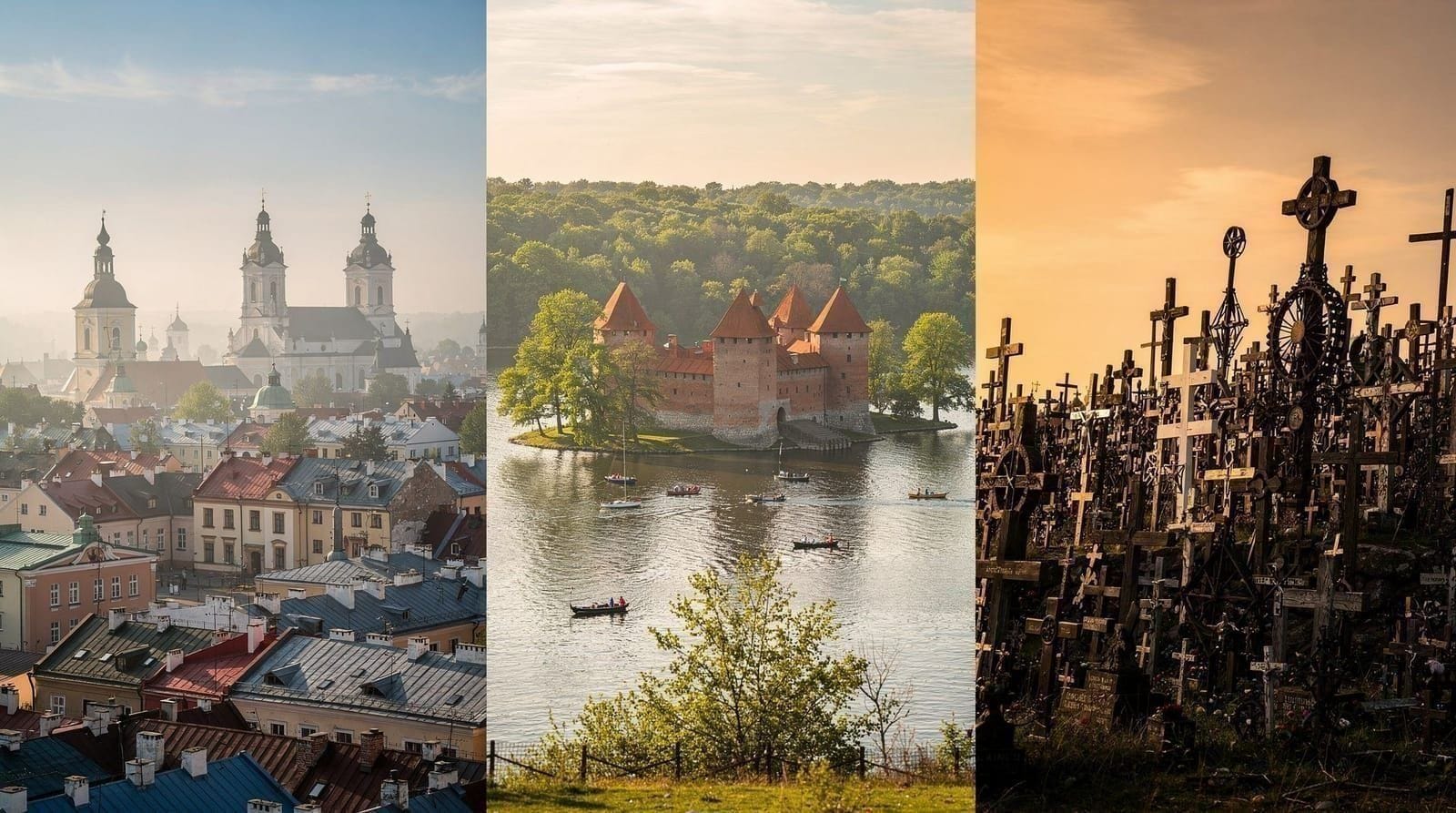
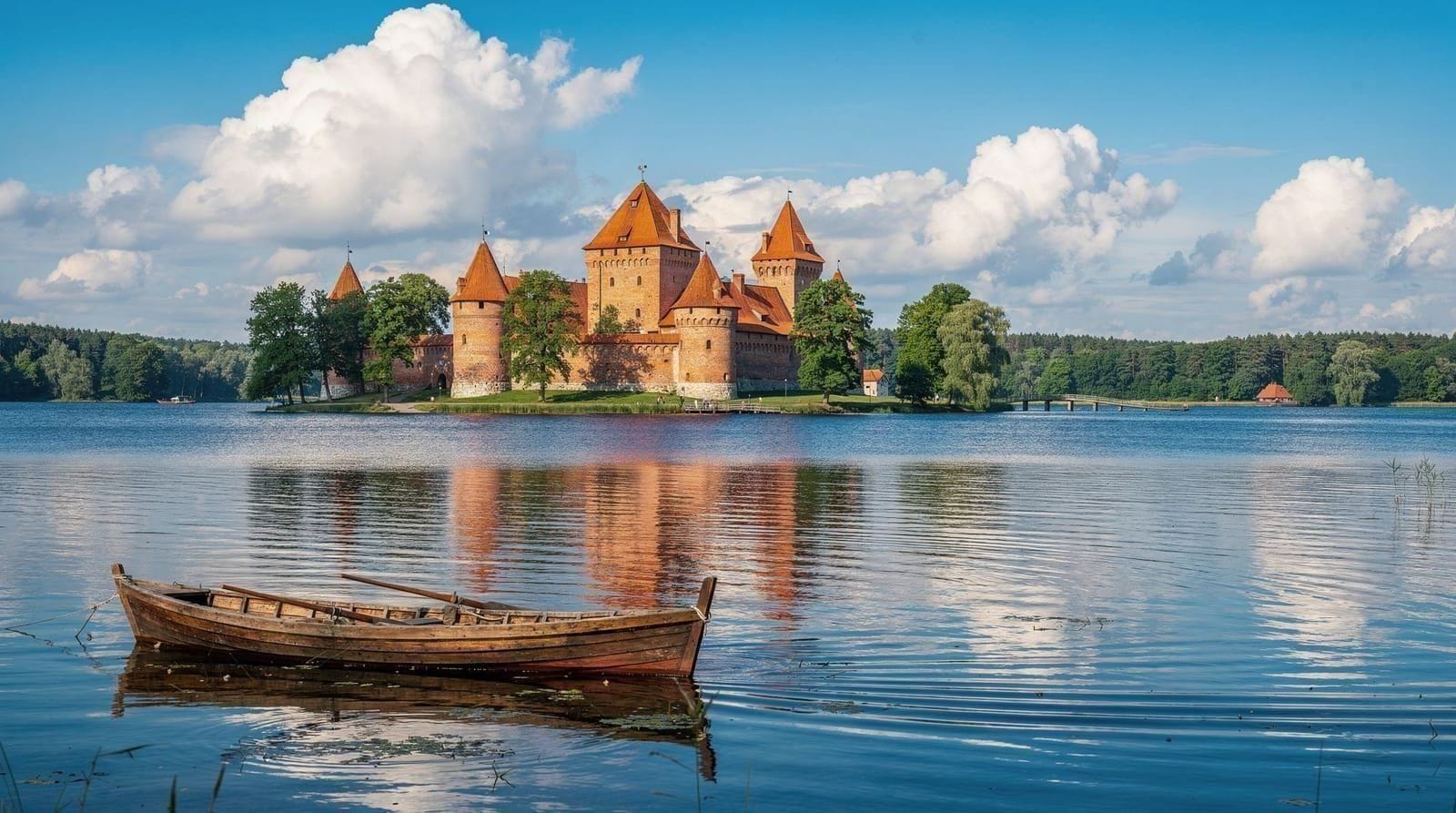
Day 3 — Trakai: Train at 9:15 (€2.90, 30 min). Trakai Island Castle (€12), kibinai lunch at Senoji Kibininė, kayak rental optional (€5-10/hour). Return by 15:00. Afternoon free in Vilnius for the National Museum (€5), craft beer at Špunka, or shopping at Halės turgus.
Day 4: Vilnius to Anykščiai — lakes and forest
Collect your rental car this morning. Drive northeast: Vilnius to Anykščiai is 110 km, ~1.5 hours on the A2 and regional roads.
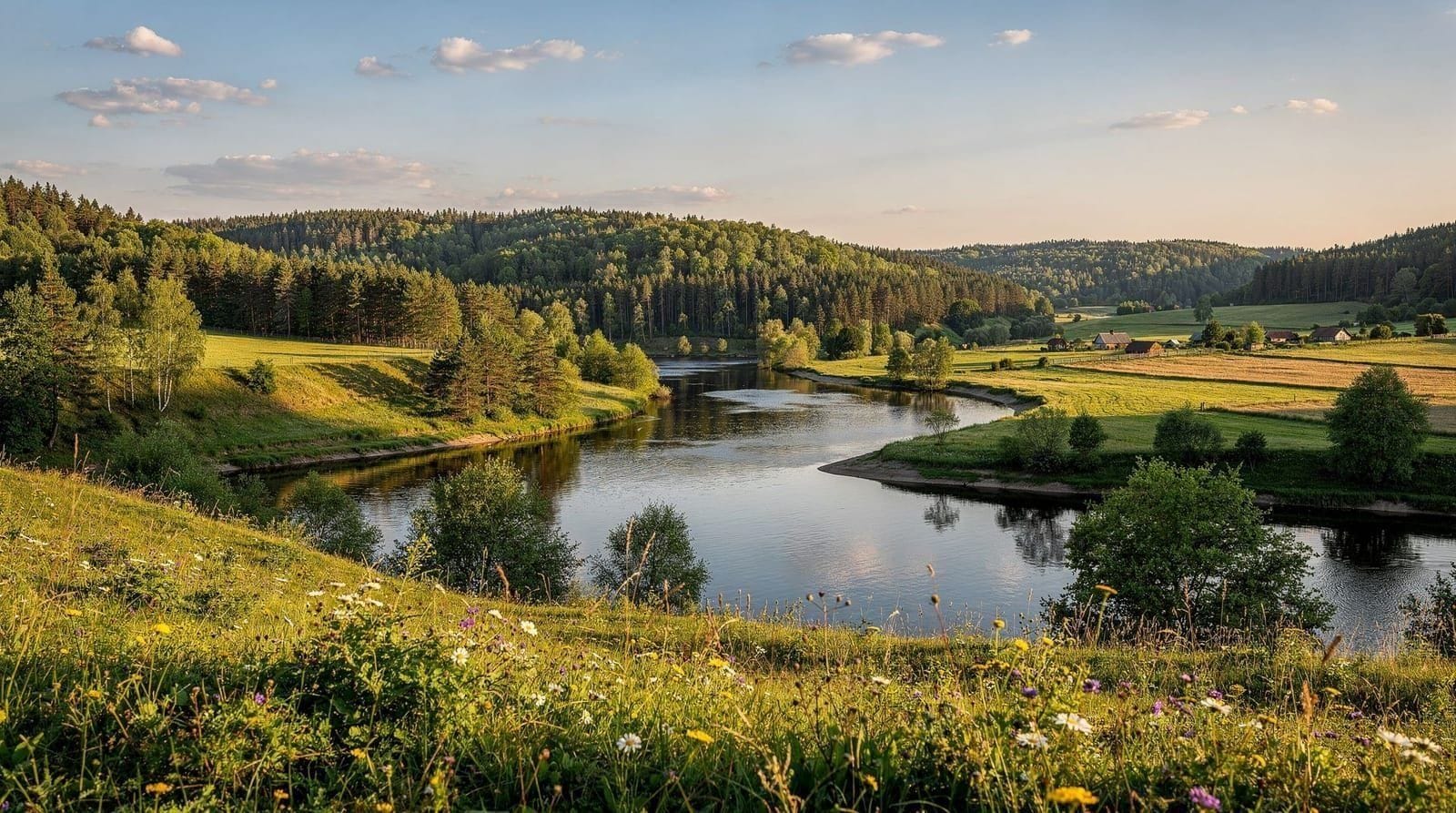
Anykščiai (full guide) is Lithuania’s answer to “what does the countryside actually look like?” — rolling pine-forested hills, clear lakes, and a genuine small-town atmosphere. Three things make it worth a night:
Anykščiai Treetop Walking Path (Šventupio g. 28B): an elevated walkway through the forest canopy, with a 21m observation tower. Entry €8. Open May–October. Particularly beautiful in late afternoon light.
Anykščiai Narrow-Gauge Railway: a heritage steam railway that runs through the forested Aukštaitija landscape. Seasonal operation; check anyksciai.lt for current schedule. Tickets from €5.
Šventoji River valley: walking and cycling paths through the river valley. Rent bikes from the tourist office (€5-8/hour).
Vilnius: Anyksciai countryside day tour Vilnius: John paul ii route hill of crosses tytuvenai siluvaOvernight in Anykščiai: Arklio Muziejus Hotel (Niūronys village, €60-80 doubles) or the small guesthouses in the town centre (€40-60).
Dinner: Ažuoliukas or a local café in Anykščiai town — prices are noticeably lower than Vilnius. Expect €6-10 for a main course.
Day 5: Anykščiai to Kaunas (via Kernavė)
Drive from Anykščiai back southwest. Detour south to Kernavė (UNESCO World Heritage Site, 35 km from Vilnius direction): the mound complex marks the first Lithuanian capital, with five large earthwork hills from the medieval kingdom. Free access, small museum (€3) on site. Allow 1 hour.
Continue to Kaunas (80 km from Kernavė, 1 hour).
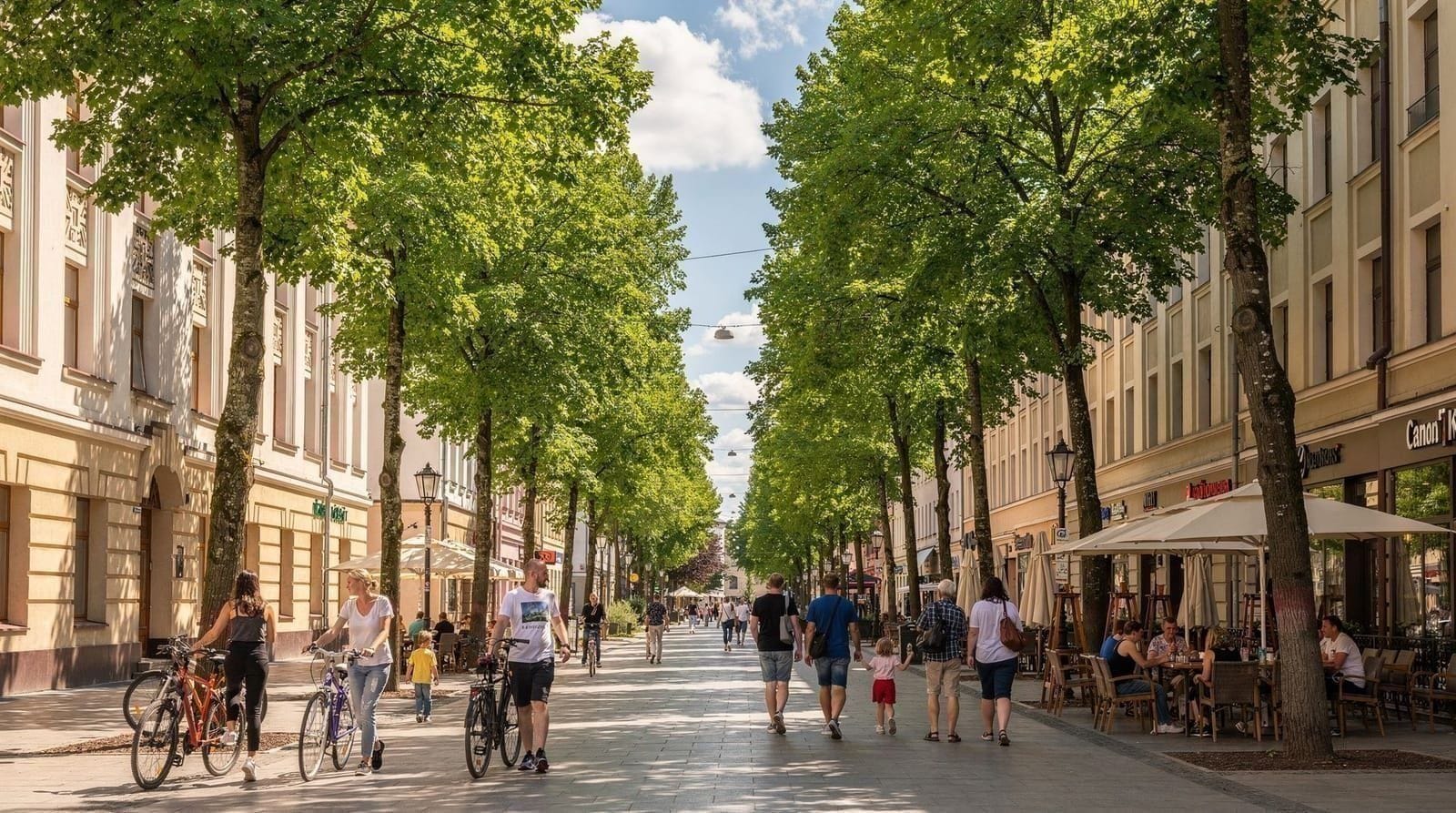
Afternoon in Kaunas: Old Town (Rotušės aikštė, Perkūnas House, Cathedral), then the full length of Laisvės alėja — the 1.7 km interwar modernist boulevard. The M. K. Čiurlionis Art Museum (Putvinskio g. 55, €5) is worth the stop if you haven’t seen his work before.
Overnight in Kaunas: Park Inn by Radisson (Draugystės g. 179, from €65) or the boutique Daugirdas Hotel (V. Daugirdo g. 4, from €75) in the Old Town.
Dinner: Fredas (Savanorių pr. 142, mains €8-12) for honest local cooking, or Tosi (Laisvės al. 103, contemporary cafe-restaurant, €10-15).
Day 6: Kaunas — Ninth Fort and drive north
Morning (9:30): Ninth Fort (bus 23 from centre, €1, 20 min). The mass execution site used by both Soviet and Nazi regimes is essential context for understanding Lithuanian 20th-century history. Museum entry €4. Allow 1.5-2 hours.
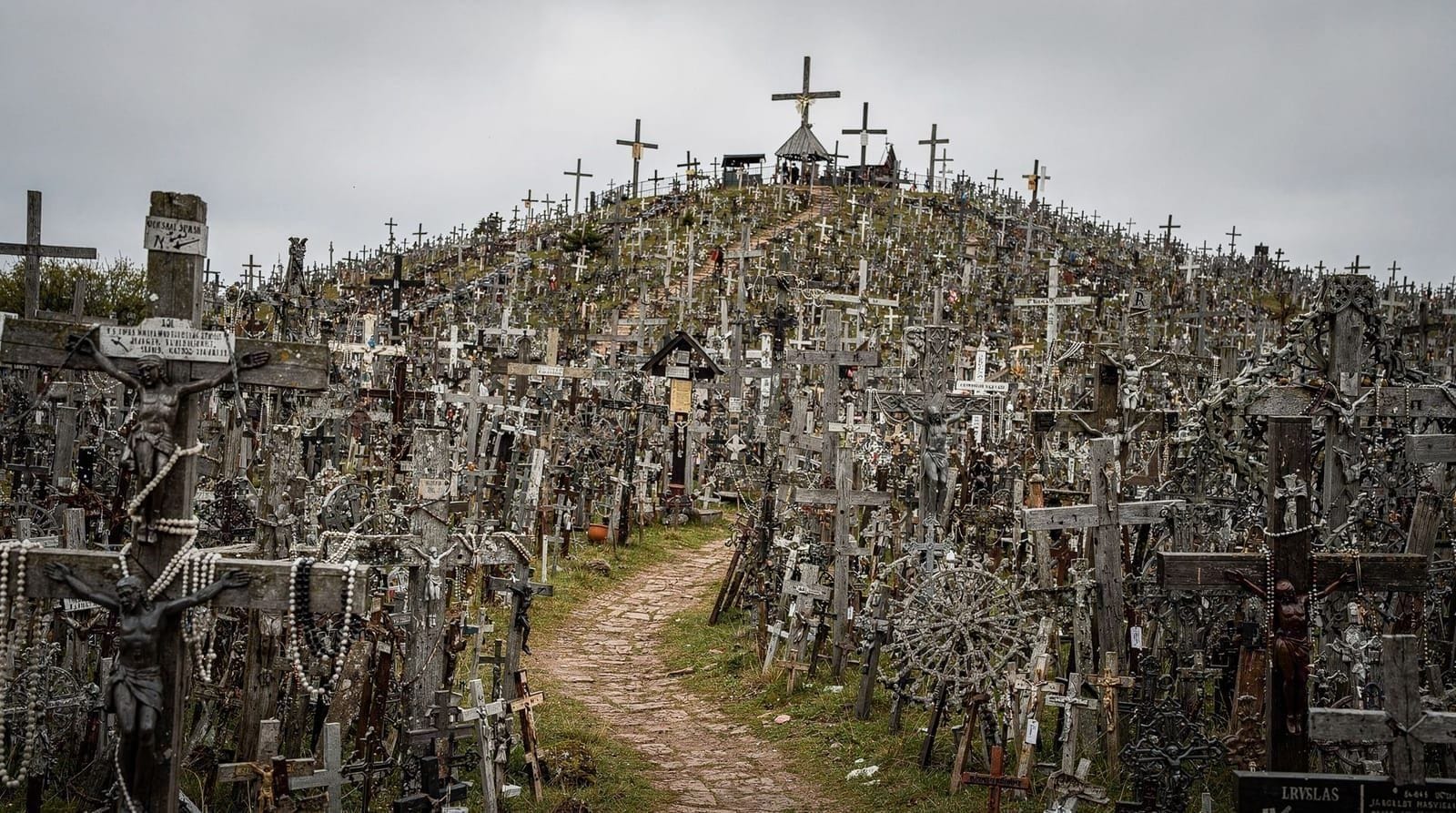
Afternoon: Drive from Kaunas north to Šiauliai (100 km, ~1.5 hours on A12). Stop at Hill of Crosses Kryžių kalnas — 12 km north of Šiauliai, well-signed. Free entry, open at all hours. Allow 45-60 minutes. The site is more powerful than any photo suggests; arrive in afternoon light if possible.
Vilnius: Hill of crosses siauliai full dayDrive to Klaipėda: 110 km from Šiauliai on A11, ~1.5 hours. Arrive ~18:00.
Overnight in Klaipėda: Amberton Klaipėda (Šimkaus g. 1, doubles from €70) or Old Mill Hotel (Šaltinių g. 1, from €60). Two-night base for the coast.
Dinner: Iki Marios (S. Neries g. 1A) for seafood on a terrace, mains €13-19. Or walk Klaipėda Old Town first — the half-timbered Memel-era architecture deserves an evening stroll.
Day 7: Klaipėda and Curonian Spit (north)
Morning: Klaipėda Old Town in daylight — the 15th–19th century Memel German architecture is well-preserved and quite different in character from Vilnius or Kaunas. Castle Museum (Pilies g. 4, €4, Tue–Sun), History Museum of Lithuania Minor.
Afternoon: Drive to Smiltynė, take the car ferry to the Curonian Spit (ferries every 30 min, 10 min crossing, €8.50/car + €1/person). Drive south:
- Juodkrantė (25 km): Witches’ Hill (Raganos kalnas) sculpture forest, free, 1 hour.
- Juodkrantė viewpoints: sand dune overlooks with views of both lagoon and sea.
- Drive to Nida (50 km from ferry) for late afternoon.
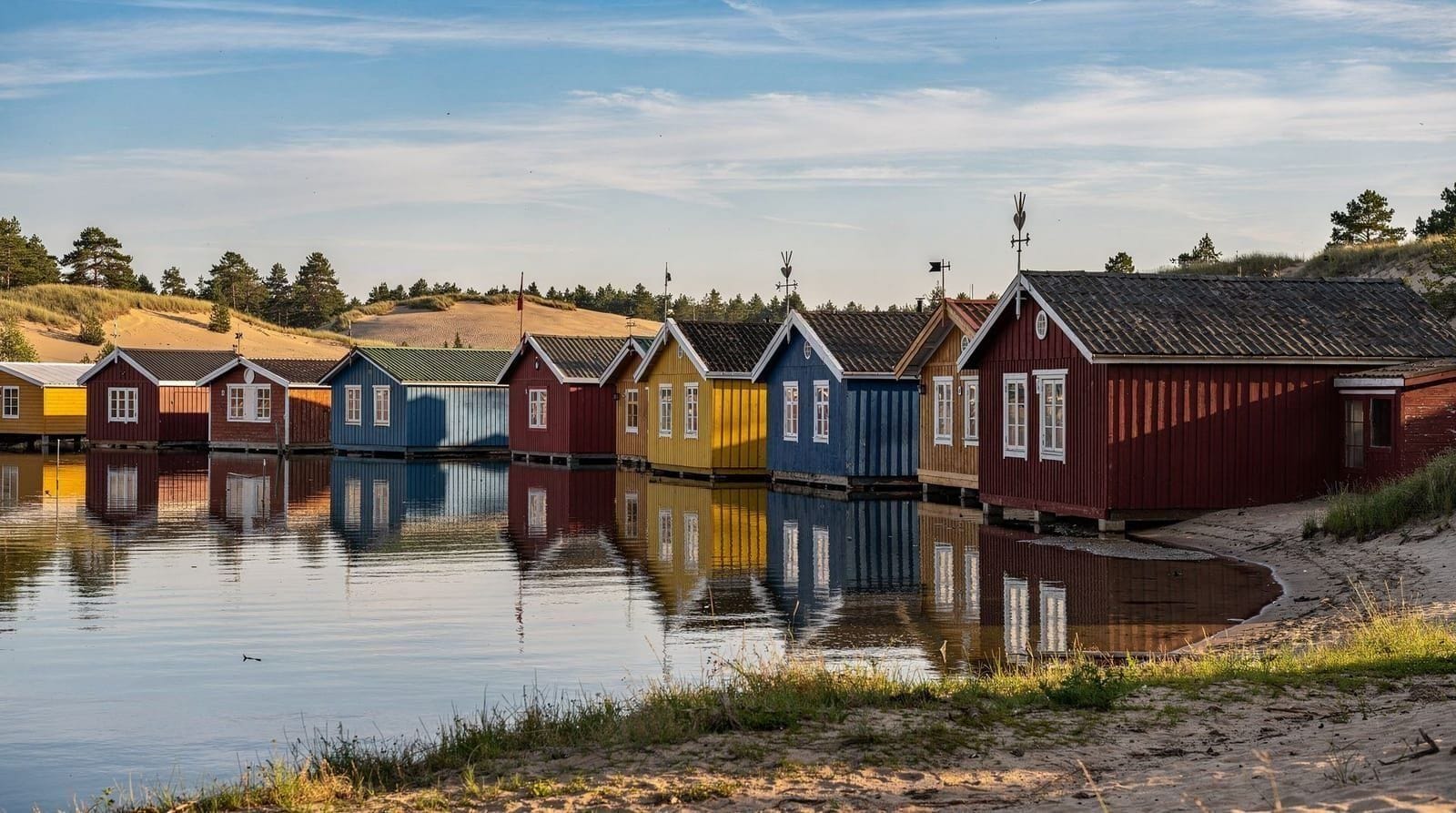
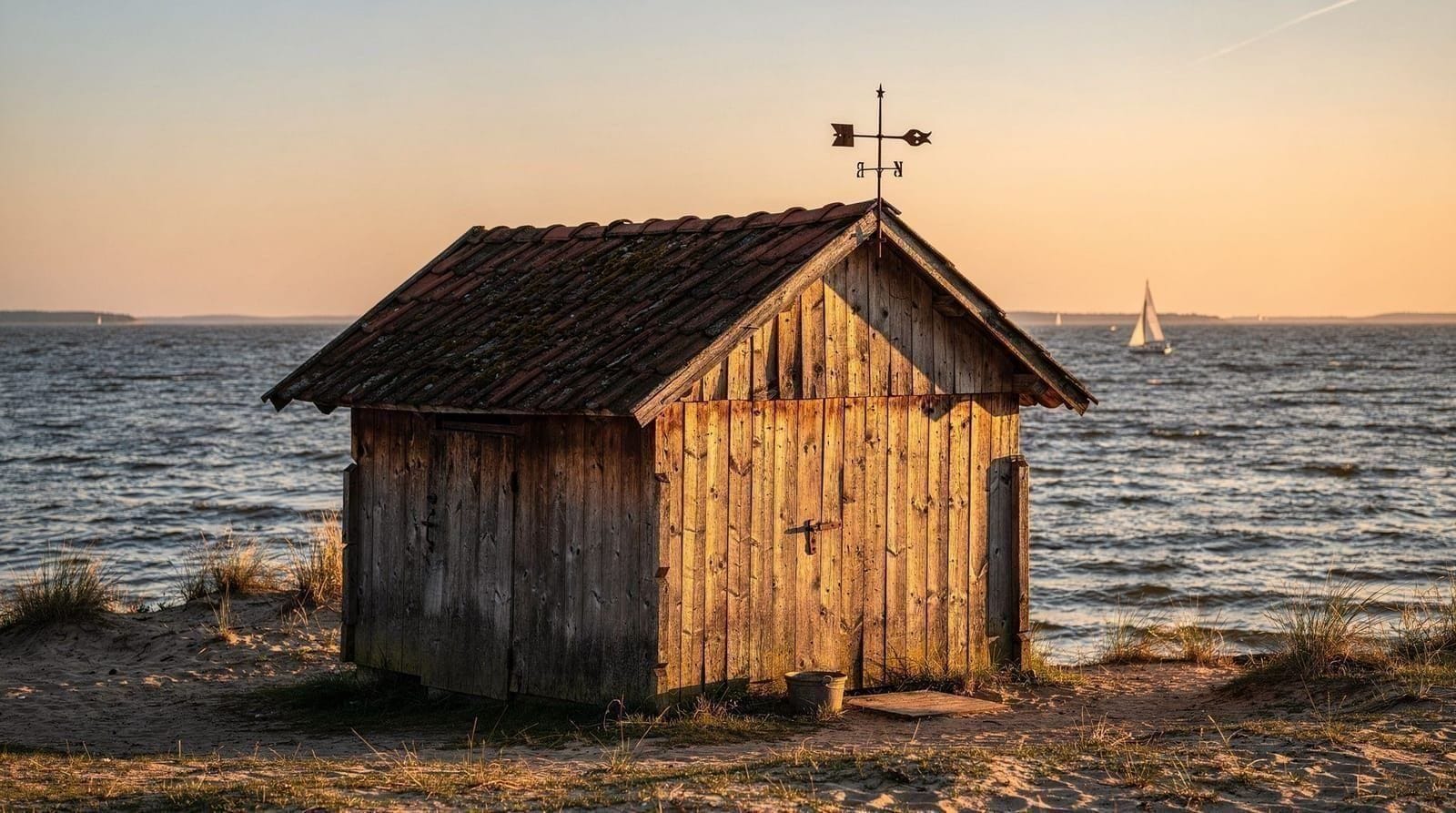
Nida afternoon: Nida is the most appealing village on the spit — traditional fishermen’s houses with distinctive weathervanes, a small harbour on the lagoon side, and the 52m Parnidis Dune a 20-minute walk from the village. The Thomas Mann House (Skruzdynės g. 17, €3) commemorates the novelist’s summer stays in the 1930s.
Return to Klaipėda by 19:00 via the same ferry.
Day 8: Palanga and drive south to Druskininkai
Morning: Palanga Drive 30 km north to Palanga, Lithuania’s main beach resort. The Amber Museum (Kranto g. 12, €5, Tue–Sun 10:00–18:00) in the Tiškevičiai Park is one of the best amber collections in Europe — the displays explain Baltic amber geology and include remarkable amber inclusions (insects, plants preserved in resin). Allow 1-1.5 hours.
Walk the Palanga Pier and beach — 14 km of Baltic sand. In summer the beach is busy but genuinely nice. Cold, swimmable from June.
Drive south to Druskininkai: 360 km from Palanga, ~4 hours. It’s a long drive; break at Kaunas (midpoint) for a coffee stop.
Overnight in Druskininkai: Druskininkai is Lithuania’s premier spa town on the Nemunas River. Grand Spa Lietuva (Vilniaus al. 11, from €90) includes spa facilities with the room rate. SPA Vilnius Druskininkai (Taikos pr. 43, from €70) is the standard mid-range option.
Evening: The Druskininkai spa culture is the point. The Aqua Park (Vilniaus al. 13-2, €15-20/session) or hotel spa. Dinner at Kolonada (Vilniaus al. 22, mains €12-18) overlooking the Nemunas river.
Day 9: Druskininkai — spas, Grūtas Park, and forest
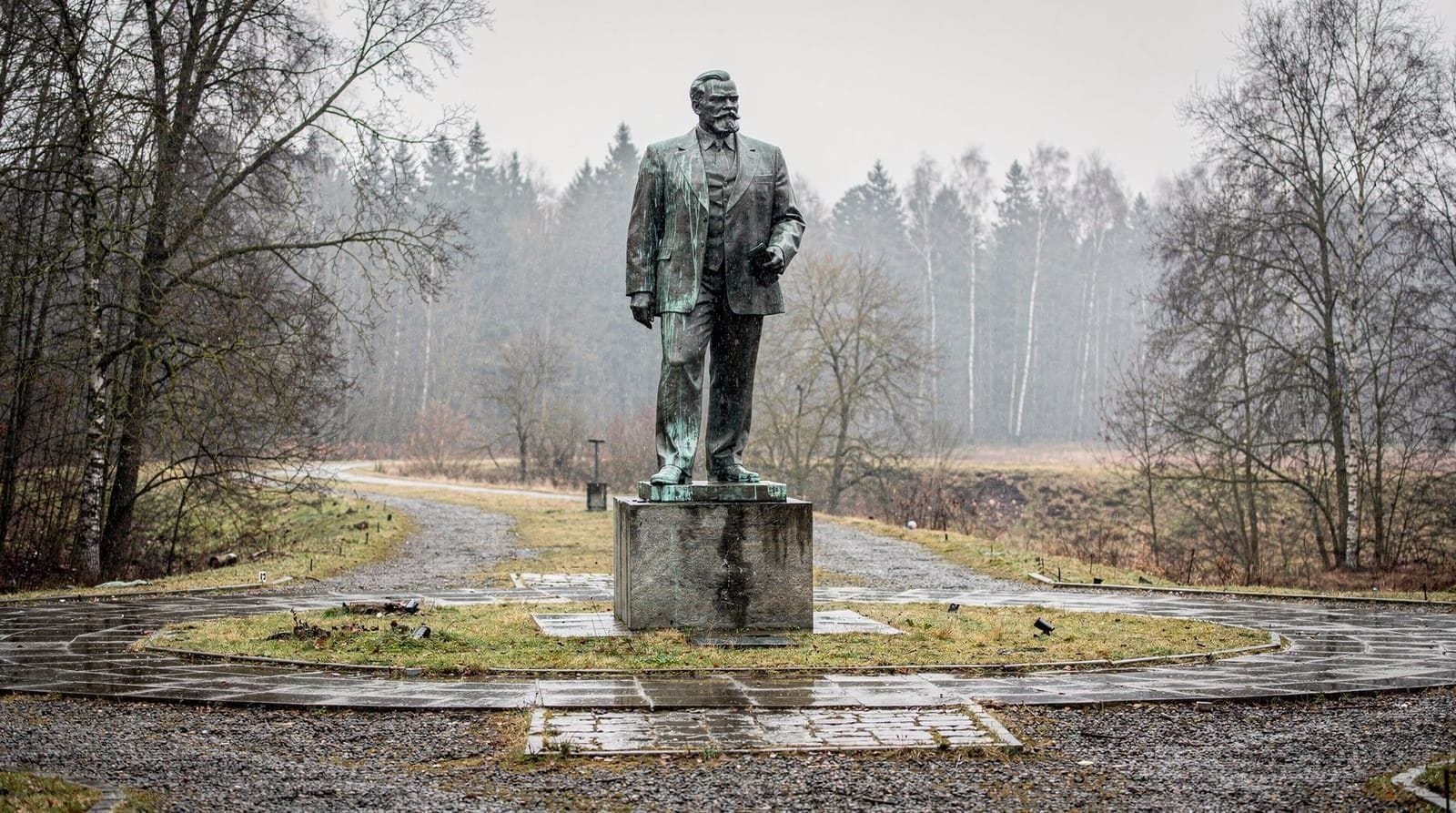
Morning: Grūtas Park Grūtas Park (Grūtas village, 7 km from Druskininkai centre, car needed or taxi €5 each way) is a Soviet-era sculpture park — a former collective farm now filled with relocated statues of Lenin, Stalin, and communist functionaries removed from Lithuanian public spaces after independence. Entry €8. Open daily 9:00–18:00. Allow 1.5-2 hours. The full Grūtas guide has context.
Afternoon: Dzūkija National Park The forests south of Druskininkai form part of Lithuania’s largest national park. Cycling is the best way to explore — bikes available for rent in Druskininkai town (€8-12/day). The main forest path from Druskininkai loops south along the Nemunas (16 km round trip). Very quiet, very Lithuanian.
Druskininkai spa afternoon: The town’s mineral springs are the original reason for Druskininkai’s existence. The Akvagrandis Spa (V. Kudirkos g. 45, €12 day ticket) uses the natural mineral water. Mud baths from €18.
Evening: Last night in Druskininkai. Kolonada for a final dinner or the hotel restaurant.
Day 10: Return to Vilnius
Drive Druskininkai to Vilnius: 130 km, ~1.5 hours on the A4. Arrive in Vilnius with time for a final coffee, last purchase at Halės turgus market, or one last look at Cathedral Square before your flight.
Return car: Vilnius city or airport. Airport (VNO) is 6 km from centre.
Practical notes for 10 days
Car logistics: Rent in Vilnius on Day 4 morning. Return in Vilnius on Day 10. A compact car is fine for all Lithuanian roads (the A1, A2, A4 motorways are well-maintained dual carriageways). Total driving distance for the loop: ~1,000-1,100 km.
Accommodation summary: Vilnius 3n → Anykščiai 1n → Kaunas 1n → Klaipėda 2n → Druskininkai 2n → (Vilnius 0n, drive straight to airport or fly home).
Budget estimate: Excluding flights, a mid-range 10-day trip costs €900-1,400 per person: accommodation €600-800 (averaging €65-85/night), food €250-350, transport including car rental €200-350, tickets €60-100.
Nida: Vilnius curonian spit all day tourDay-by-day summary
| Days | Focus | Overnight |
|---|---|---|
| 1-3 | Vilnius Old Town, KGB Museum, Jewish heritage, Trakai | Vilnius |
| 4 | Drive to Anykščiai: treetop walk, narrow-gauge railway | Anykščiai |
| 5 | Kernavė detour, drive to Kaunas | Kaunas |
| 6 | Ninth Fort, Hill of Crosses, drive to Klaipėda | Klaipėda |
| 7 | Klaipėda Old Town, Curonian Spit (Juodkrantė, Nida) | Klaipėda |
| 8 | Palanga, drive south to Druskininkai | Druskininkai |
| 9 | Grūtas Park, Dzūkija National Park, spa afternoon | Druskininkai |
| 10 | Drive back to Vilnius | — |
How this differs from the 7-day itinerary
If you’ve already looked at the 7-day highlights itinerary, the extra three days here go almost entirely to places that itinerary skips: Anykščiai’s lake-and-forest countryside, the Kernavė UNESCO mound complex, and Druskininkai’s spa culture and Grūtas Park. Nothing from the 7-day version is cut — this is a genuine extension rather than a different trip. If you’re deciding between the two, the honest test is whether “what does rural Lithuania actually look like” interests you as much as the capital and the coast; if yes, the extra three days are worth it.
Pacing and what to cut if 10 days feels long
Even at 10 days, this is a full itinerary with real driving distances (roughly 1,000-1,100 km total). If you’d rather slow down, the two easiest trims are Day 8’s long Palanga-to-Druskininkai drive (skip Palanga and go straight from Klaipėda to Druskininkai, saving half a day) or Day 5’s Kernavė detour (worthwhile but skippable if you’ve already got enough medieval history from Trakai). Families or slower travellers sometimes add an extra night in Anykščiai or Druskininkai instead of packing in every stop — both towns reward unhurried time more than a tight schedule does.
Frequently asked questions about 10 days in Lithuania
What is the best route for a Lithuania road trip?
The most efficient loop from Vilnius: north to Anykščiai, west through Kaunas, northwest to Hill of Crosses and Klaipėda, south along the coast to Palanga, then southeast via Druskininkai back to Vilnius. This avoids backtracking and covers all regions.
What’s the best way to see the Curonian Spit?
Drive south from the Smiltynė ferry terminal (Klaipėda side), stopping at Juodkrantė and ending in Nida. The road is 50 km; the round trip with stops takes a full day. Public buses run the spit but are infrequent — a car gives freedom to stop at the dune viewpoints.
Is Druskininkai worth visiting on a Lithuania road trip?
Yes, particularly if you have 10 days and want to see a different side of Lithuania. Druskininkai is a genuine resort town with 19th-century spa culture, Soviet-era nostalgia (Grūtas Park), and excellent forest walking. It’s also the gateway to Dzūkija National Park.
Can I do this itinerary without a car?
Days 1-3 (Vilnius) and Day 4 (Kaunas) are fine by train. Beyond that, public transport becomes inadequate for the pace required. Anykščiai has infrequent buses; Druskininkai has buses from Vilnius but no onward connections to the coast. For a 10-day Lithuania trip without a car, stay longer in Vilnius and use organised day tours for the coast and rural areas.
What is the driving like in Lithuania?
Lithuania has a good motorway network (A1, A2, A4 are dual carriageways). Speed limits: 130 km/h on motorways, 90 km/h on main roads, 50 km/h in towns. Road signs are clear and in Latin script. Fuel is available at all main intersections. Driving standard is generally safe; watch for cyclists and farm vehicles on rural roads.
Is 10 days too long for Lithuania?
Not if you enjoy a mix of city time and slower countryside days — this loop only repeats driving distances once (the return leg to Vilnius), and each overnight base offers something distinct. If 10 days feels excessive, the 7-day itinerary covers the headline sights in a tighter loop.
Should I book accommodation for all 10 nights in advance?
For summer (June-August), yes, particularly in Nida, Klaipėda, and Druskininkai, where good mid-range options fill up. Vilnius and Kaunas have more capacity and can be booked closer to the date. Outside peak season, booking a few days ahead is usually sufficient everywhere on this route.
Top experiences
Bookable activities with verified prices and instant confirmation on GetYourGuide.