Kaunas, Lithuania
Kaunas has Lithuania's best interwar Modernist architecture, a walkable old town, and the Ninth Fort Holocaust museum. 1 hour from Vilnius by train.
Kaunas: Sightseeing 2 hour tour
Duration: 2 hours
Quick facts
- Distance from Vilnius
- ~100 km
- Travel time
- ~1 hour by train or bus from Vilnius
- Best time
- Apr–Oct; outdoor café culture peaks Jun–Aug
- Days needed
- 1 full day from Vilnius; or overnight for more depth
- Entry
- Ninth Fort €6–8; most old town sights free
Quick answer: Kaunas is Lithuania’s second city, about 100 km from Vilnius and reachable in one hour by train. It has an underrated old town, Lithuania’s most significant collection of interwar Modernist architecture, and the Ninth Fort — a sobering Holocaust memorial at a fortification where over 30,000 people were killed between 1941 and 1944. A full day from Vilnius covers the essentials; an overnight allows more depth.
| Where | Central Lithuania, ~100 km from Vilnius |
| Cost | Ninth Fort ~€6–8; most old town sights free |
| Time needed | 1 full day; overnight for more depth |
| Getting there | Train (~1h) or bus; no car needed for the centre |
| Best time | Apr–Oct; café culture peaks Jun–Aug |
What Kaunas offers that Vilnius does not
Kaunas was Lithuania’s provisional capital between the two world wars (1920–1940), a period when Vilnius was under Polish control. This accident of history gave Kaunas an urban core built during the interwar Modernist moment — Art Deco and Functionalist buildings that rival anything in Warsaw or Prague’s equivalent districts. The style is coherent, the scale is human, and almost no tourists are looking at it.
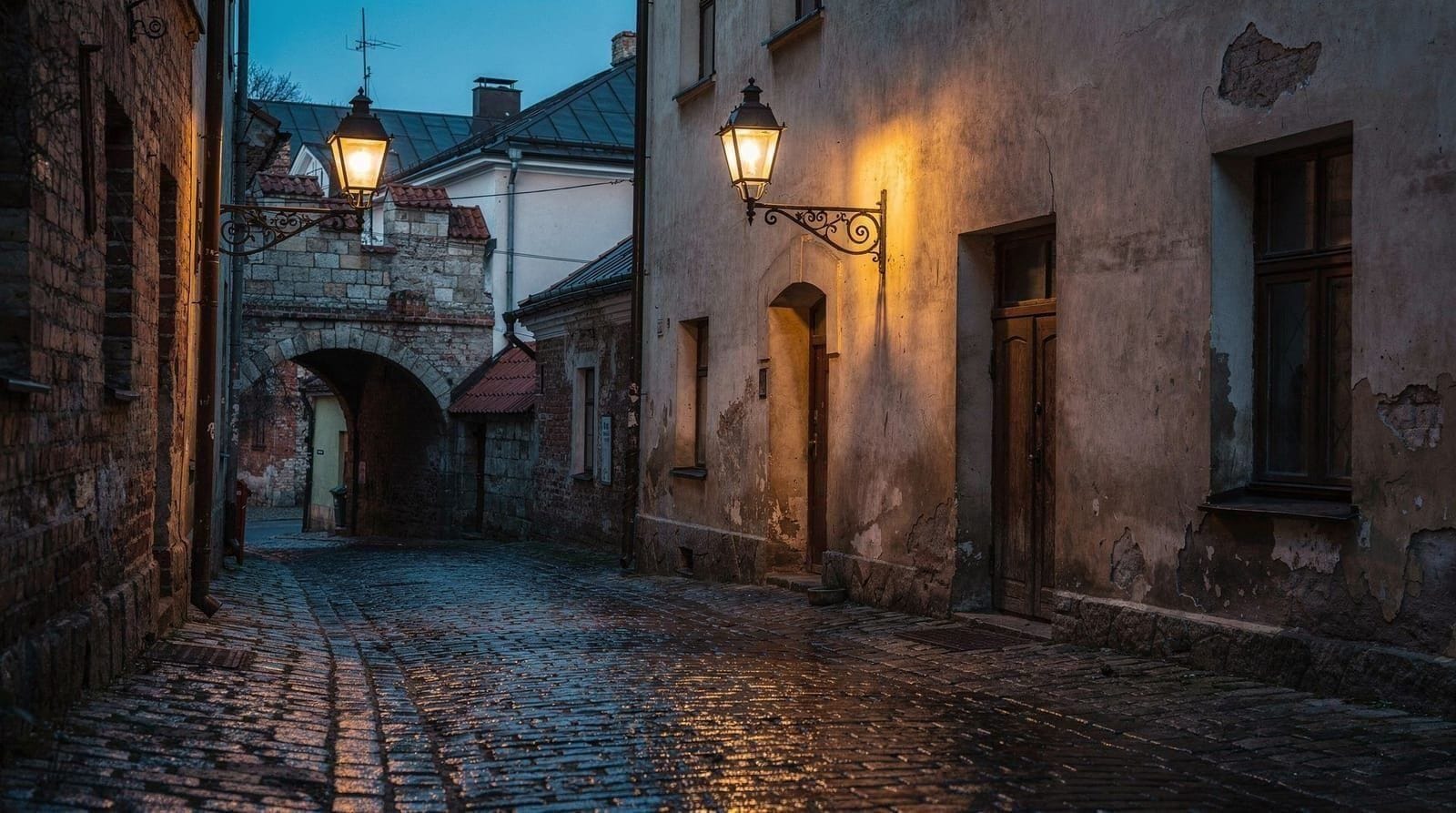
The city also has a working-class, ungentrified edge that Vilnius’s tourist centre lacks. Laisvės Alėja (Freedom Avenue) is a pedestrian boulevard lined with cafés and bars where locals outnumber visitors on any given afternoon. The old town is smaller and less polished than Vilnius’s, but it’s also calmer.
The Ninth Fort is not optional for anyone willing to engage with what happened here.
Getting to Kaunas from Vilnius
Train: Frequent departures from Vilnius Central Station throughout the day; journey time 1 hour 5 minutes; cost around €5–8 depending on operator and class. Lithuanian rail (LTG Link) runs modern intercity trains. Buy tickets online or at the station. The Kaunas railway station is about 1.5 km south of the old town — walkable in 20 minutes or short taxi/bus ride.
Bus: Luxexpress and other operators run Vilnius–Kaunas frequently; similar time and cost. Drop-off at Kaunas bus station, adjacent to the train station.
Car: 100 km via the A1 motorway, about 1 hour in normal traffic. Parking in the centre is metered; the old town has several car parks. Driving is worth considering if you plan to combine with Rūmšiškės Open-Air Museum or Pažaislis Monastery (both require a car or organised transport).
Kaunas: Sightseeing 2 hour tourThe old town and Kaunas Castle
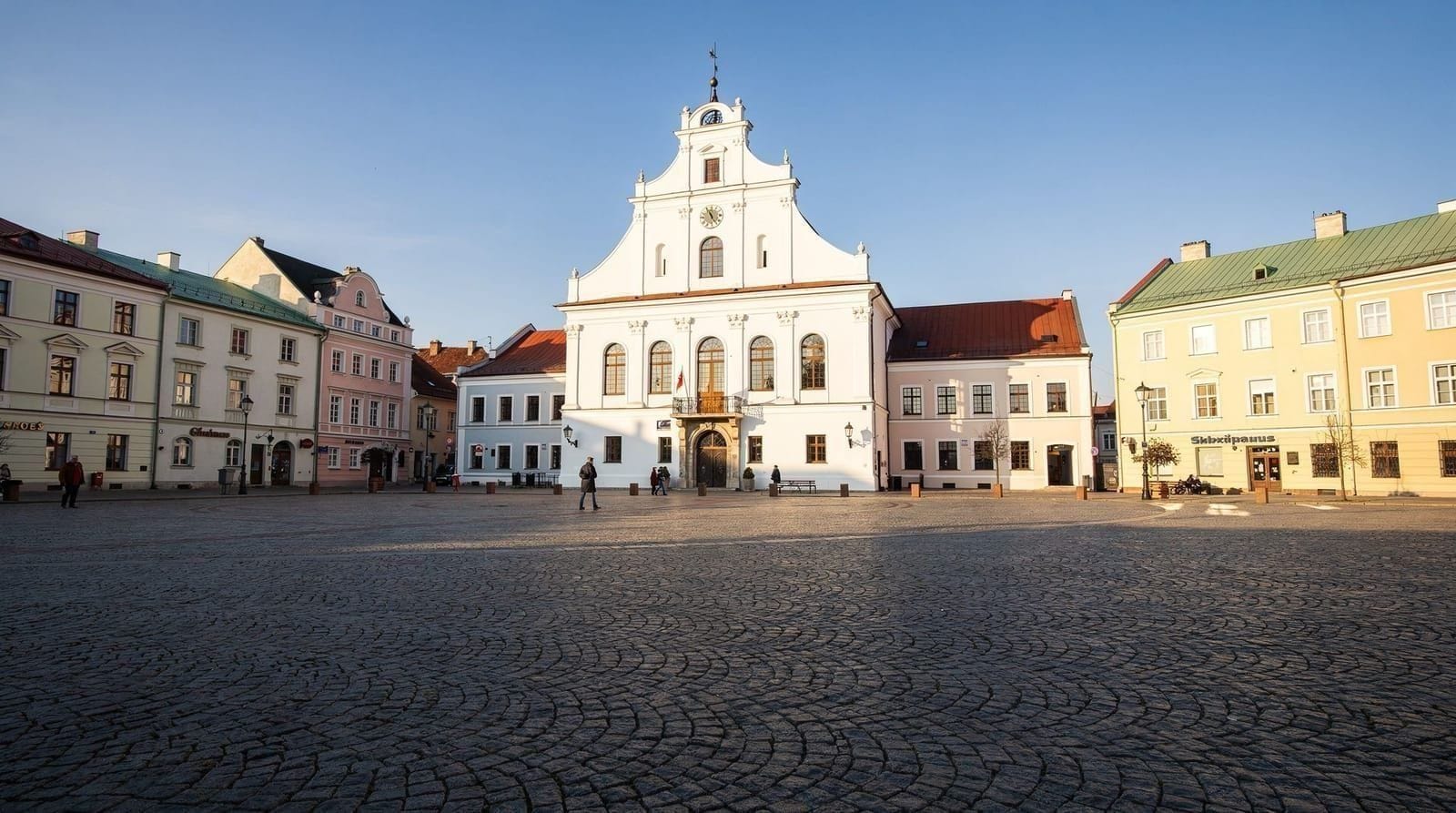
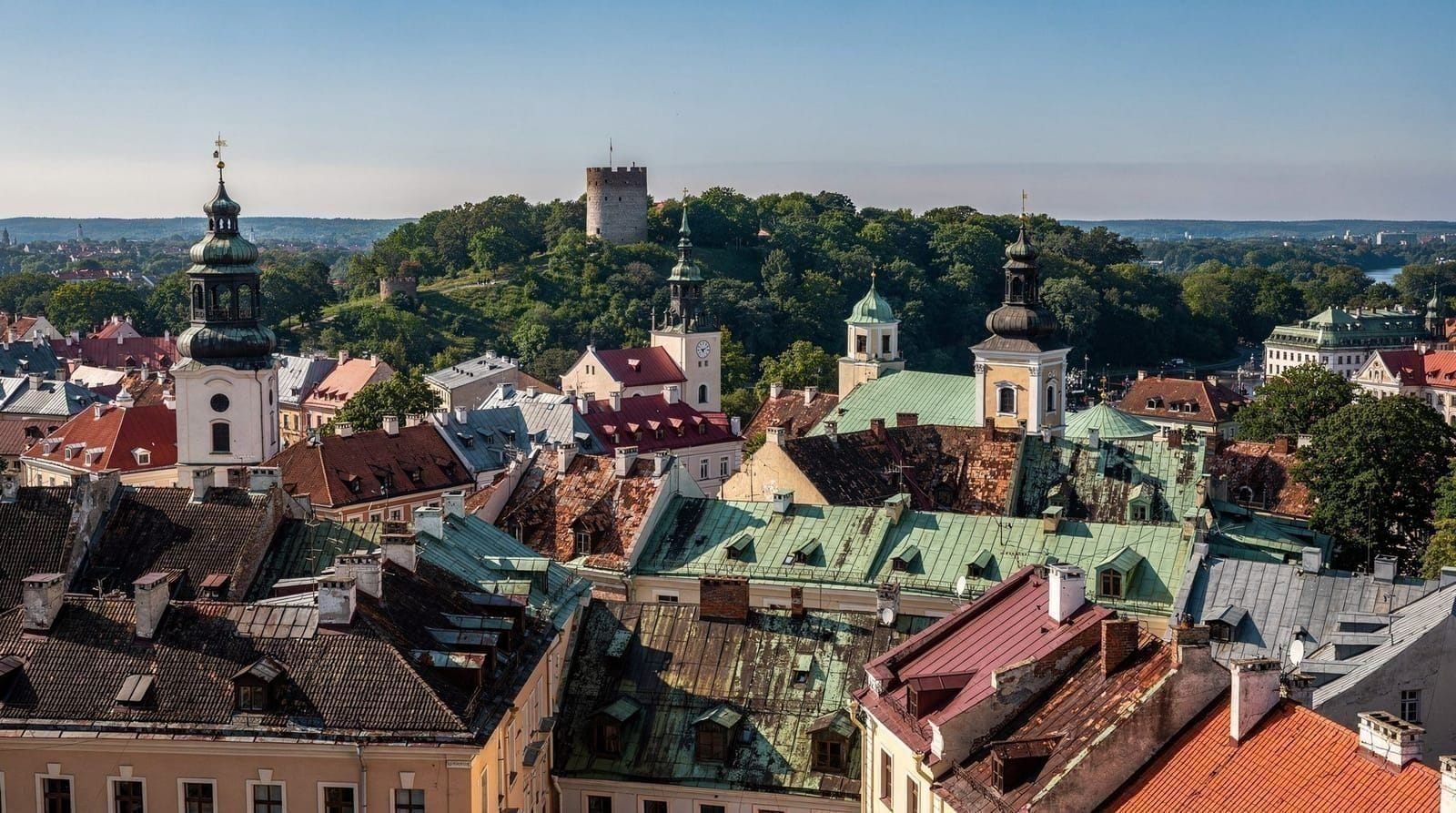
Kaunas old town sits at the confluence of the Nemunas and Neris rivers — you can walk to the riverfront and see both. The main square, Rotušės Aikštė (Town Hall Square), is overlooked by a white Baroque town hall called the “White Swan.” The square has outdoor café terraces in summer and a small Christmas market in winter.
Kaunas Castle is one of the oldest stone castles in Lithuania, built in the 14th century. Only one tower survives intact. Entry is free to walk around the exterior; the small museum inside is €2–3. It’s worth 20 minutes but not the centrepiece of a visit.
St Francis Xavier Church (on Rotušės Square) and the Church of the Holy Trinity nearby are the architecturally notable interiors. Both are free to enter.
Interwar Modernism (Lithuania’s hidden architectural treasure)
Between 1920 and 1940, Kaunas was the seat of independent Lithuania’s government. The state invested in public buildings that reflected the European Modernist mood of the era. The result is Laisvės Alėja and the streets around it: a district of low-rise, geometrically elegant buildings that is being considered for UNESCO Modernism status.
Key buildings to look for:
- Lietūkis Garage (Savanorių Prospektas) — a 1939 Art Deco petrol station and garage of almost sculptural quality. One of the most photographed Modernist buildings in Lithuania.
- Kaunas Post Office (Laisvės Alėja 102) — clean Functionalist lines from 1931.
- Žaliakalnis Funicular — a 1933 funicular railway connecting the lower city to the residential hill above. Still running, €0.50 per trip.
- Vytautas Magnus University area — several interwar civic buildings around Donelaičio Street.
The Tourism Information Centre on Laisvės Alėja can give you a self-guided walking map of the Modernist quarter. It takes about 90 minutes to cover the main sites on foot.
The Ninth Fort
The Ninth Fort is 6 km northwest of the city centre — reachable by bus (routes 23/35 from Kaunas bus station) or taxi (€4–6). It is one of the most significant Holocaust memorials in the Baltic states.
Built as part of the Kaunas fortress system in the 1890s, the Ninth Fort was used by Soviet forces during the first Soviet occupation (1940–41) to imprison and execute Lithuanian activists. Under the German occupation from 1941, it became a principal site of mass murder: approximately 30,000 Jews from Kaunas and across Europe were shot here, along with thousands of Soviet prisoners of war and Lithuanian citizens.
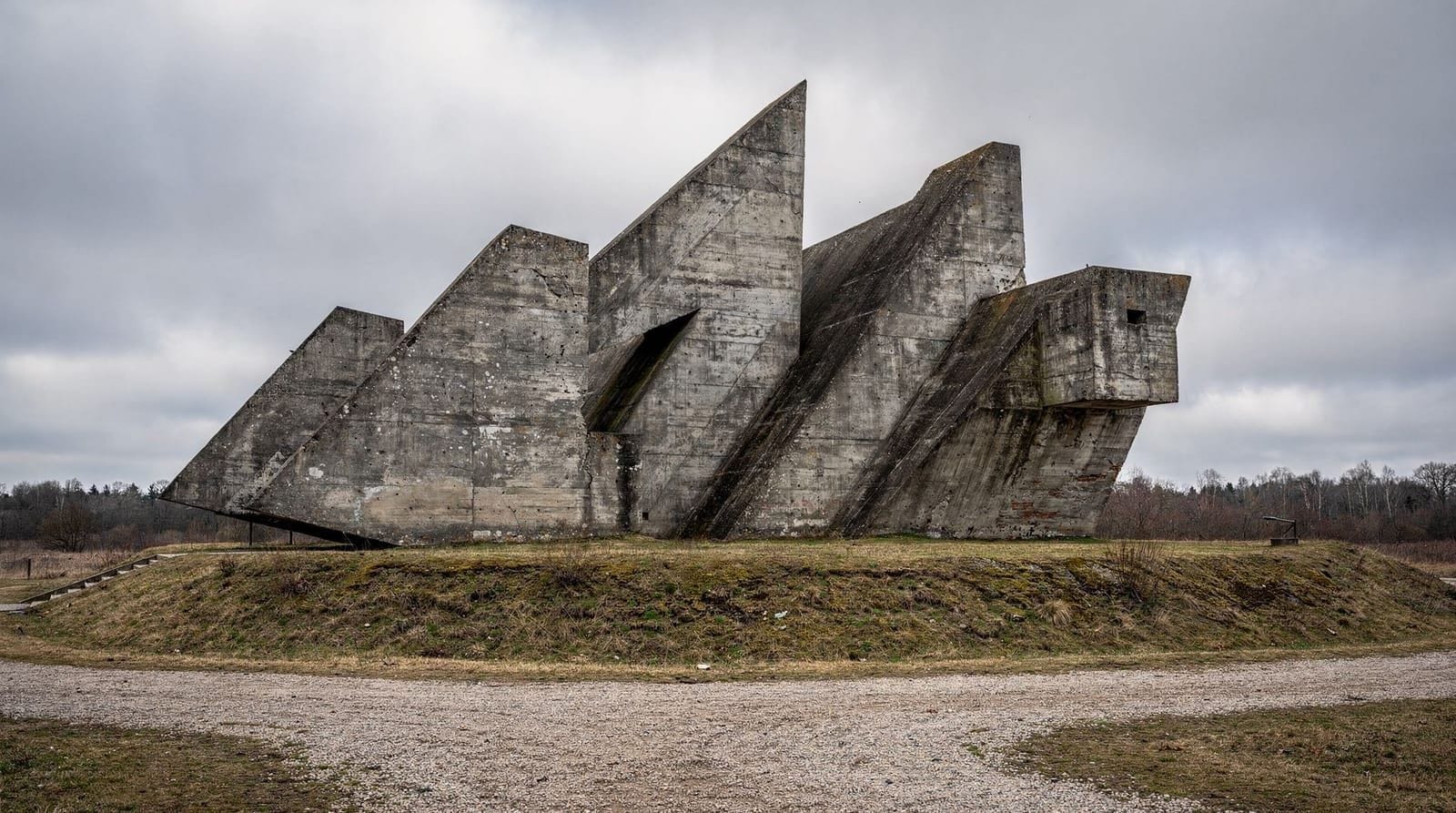
The museum is comprehensive, with documentation, photographs, and artefacts. Allow at least 90 minutes. Entry is around €6–8. The outdoor monument — a massive concrete sculptural group installed in 1984 — is visible from the road; it is one of the most powerful Soviet-era memorials in the region, despite its political context.
Kaunas: Ninth fort dark history tour Kaunas: Private tour love storiesDo not confuse the Ninth Fort with the M. K. Čiurlionis National Art Museum (in the city centre), which is Lithuania’s main fine arts museum. Both are worth visiting; they require separate visits.
Rūmšiškės and Pažaislis
Two significant sites near Kaunas require a car or organised transport:
Rūmšiškės Open-Air Museum (20 km east of Kaunas): One of the largest open-air ethnographic museums in Europe — rural Lithuanian farmsteads, mills, and craftspeople’s workshops relocated and preserved across a 175-hectare site. Half a day at minimum. Reachable by bus from Kaunas bus station (about 35 minutes). Entry around €8–10.
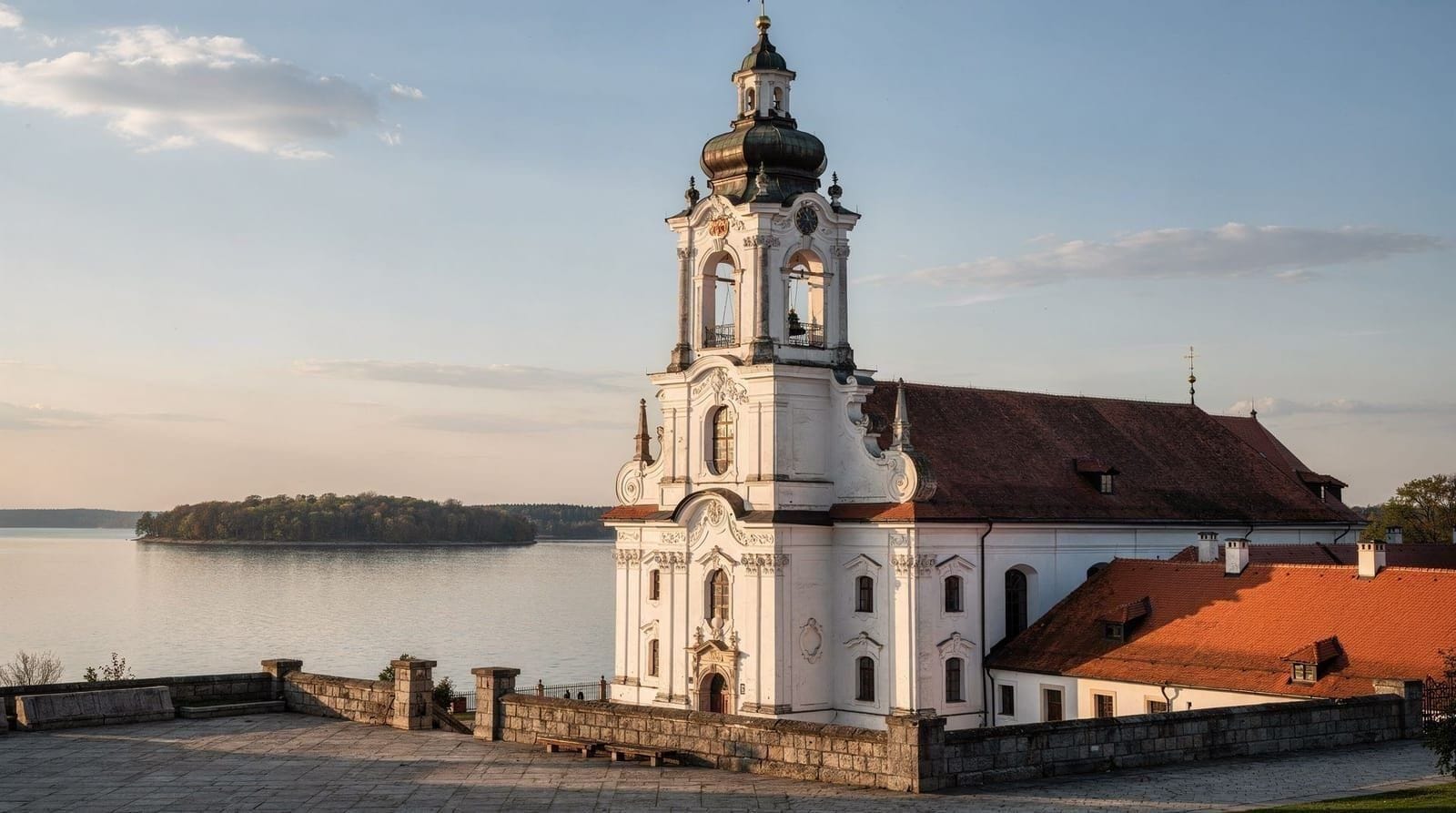
Pažaislis Monastery (9 km east): A 17th-century Baroque monastery complex on a lake, considered the finest Baroque religious architecture in Lithuania. Free to walk the grounds; entry to the church interior may require checking service times. Reachable by bus or bicycle in summer.
The GYG tour that combines Kaunas, Rūmšiškės, and Pažaislis is the most efficient way to cover all three in a day from Vilnius without a car.
Vilnius: Kaunas rumsiskes pazaislis full dayWhere to eat in Kaunas
- Spurginė (Laisvės Alėja 89): A beloved local institution selling freshly fried doughnuts (spurgos). Under €3 for a handful. Cash only, queue expected.
- Uoksas (Vilniaus Street): Contemporary Lithuanian cooking at mid-range prices (€12–18 for a main). Good vegetarian options.
- Bernelių Užeiga (Valančiaus Street): Traditional Lithuanian food in a rustic setting — cepelinai, smoked meats, good local beer on tap. Popular with locals and visitors alike, €10–15 for a main.
- Miesto Sodas (Laisvės Alėja): Rooftop terrace, cocktails, and European-Lithuanian fusion. More expensive (€15–25) but worth it for the terrace view in summer.
What to skip
The ghost tour is marketed aggressively but delivers little historical substance. If you want a locally-led ghost-story walk of Kaunas old town, it’s an entertaining evening option, but it is not cultural education.
The casino-hotel district near the bus station is uninspiring. Stay in or near the old town or the Laisvės Alėja pedestrian zone.
Kaunas versus Trakai as a day trip
Both compete for the same “one day out of Vilnius” slot, but they suit different travellers:
| Kaunas | Trakai | |
|---|---|---|
| Character | City, architecture, history | Castle, lake, nature |
| Time from Vilnius | ~1 hour by train | ~30–40 minutes |
| Best for | Architecture, Modernism, dark history | Postcard views, families, a shorter half-day |
If you only have time for one, the Trakai vs Kaunas day trip guide walks through the trade-offs in more depth. Many visitors with a longer Lithuania trip do both — Trakai as a half-day, Kaunas as a full day — rather than choosing.
Kaunas Cathedral and the old town beyond the square
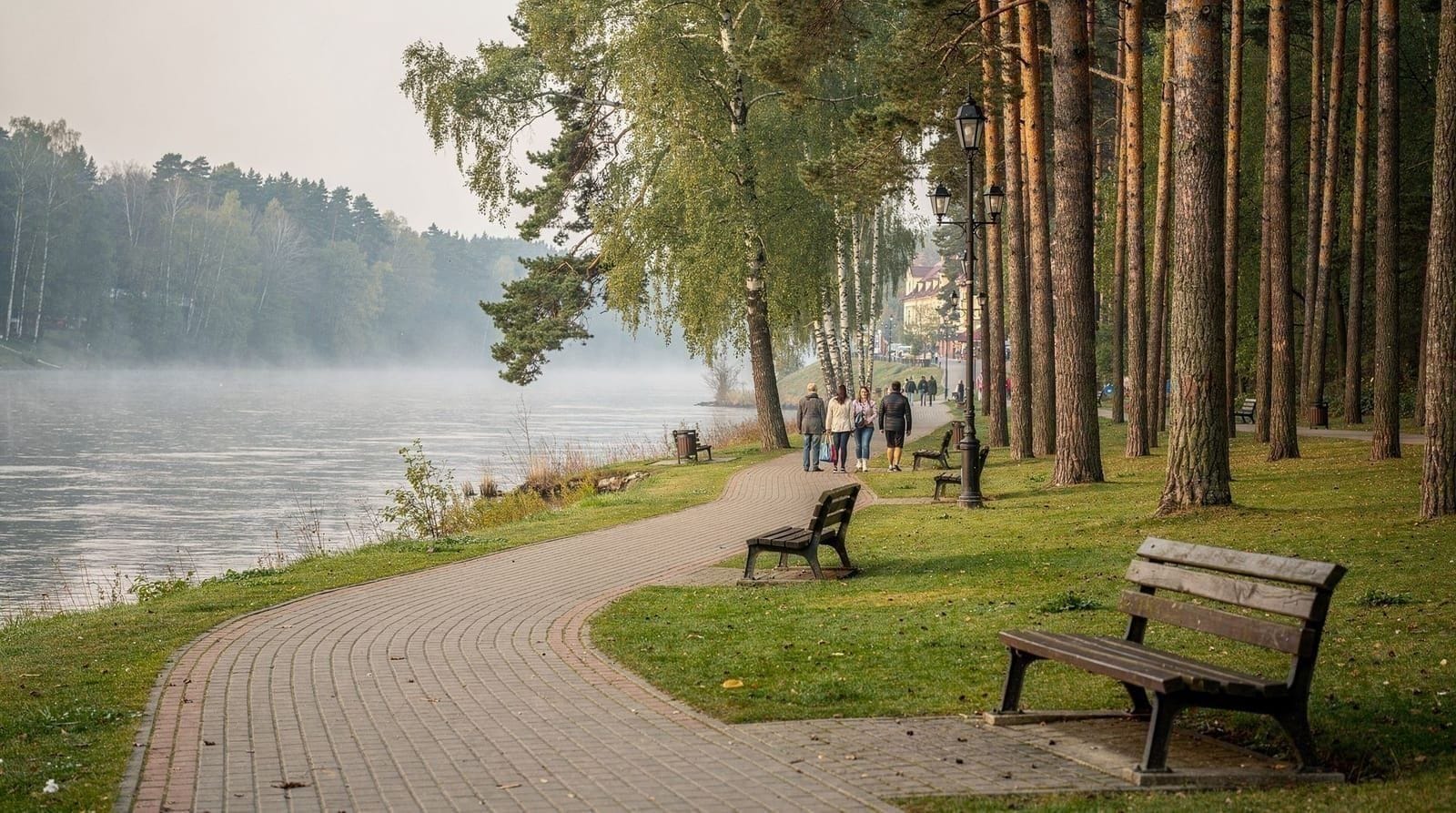
Beyond Rotušės Square, Kaunas Cathedral Basilica (Vytauto Didžiojo prospektas) is the largest Gothic church in Lithuania, with a history stretching to the 15th century and substantial Baroque additions inside. It sits a short walk from the main square and is free to enter. The riverside promenade along the Nemunas, just south of the old town, is a quieter stretch worth a walk if you have spare time before catching the train back — locals fish and cycle here away from the tourist core.
Planning a longer Kaunas visit
For visitors extending beyond a single day, Kaunas rewards a second day mainly through Rūmšiškės and Pažaislis (both requiring transport out of the centre) plus a slower pass through the Modernist quarter with the self-guided map from the Tourism Information Centre. See the Kaunas day trip guide for a structured single-day plan, the Ninth Fort guide for what to know before visiting the memorial, and the 4-day Vilnius and Kaunas itinerary for how to combine both cities properly rather than treating Kaunas as an afterthought.
Frequently asked questions about Kaunas
Is Kaunas worth visiting as a day trip from Vilnius?
Yes, particularly if you’re interested in interwar architecture, the Ninth Fort, or simply experiencing a Lithuanian city with fewer tourists than Vilnius. A full day (8–10 hours including travel) is adequate; an overnight gives you more time for the outlying sites (Rūmšiškės, Pažaislis).
How long does the train take from Vilnius to Kaunas?
About 1 hour 5 minutes on direct LTG Link intercity trains. Trains run frequently throughout the day, typically every 30–60 minutes. The fare is €5–8 depending on ticket type and advance purchase.
What is Kaunas known for?
Kaunas is known for its interwar Modernist architecture (it was the provisional capital of independent Lithuania 1920–1940), its old town with Rotušės Square, and the Ninth Fort — the major Holocaust memorial in the region. It also has a lively Laisvės Alėja pedestrian boulevard and a strong local café and bar culture.
Is the Ninth Fort suitable for children?
The Ninth Fort covers the Holocaust and mass execution in direct terms. The exhibits include photographs and documentation that are not suitable for young children. For older children and teenagers, it is an important and sobering educational visit. Adults should read about the site’s history before going.
Do I need a car to visit Kaunas?
No — the train is fast and convenient. The old town, Laisvės Alėja, and the Ninth Fort are all reachable without a car (the fort requires a bus or taxi, not a long walk). You do need a car or organised tour to visit Rūmšiškės and Pažaislis conveniently.
Should I visit Kaunas or Trakai if I only have one day?
It depends on your interests. Trakai is closer (30–40 minutes) and delivers dramatic lake-castle scenery in a shorter visit — better for families or a half-day add-on. Kaunas takes a full day but rewards visitors interested in architecture and 20th-century history with far more depth. See the Trakai vs Kaunas day trip guide for a fuller comparison.
Top experiences
Bookable activities with verified prices and instant confirmation on GetYourGuide.