Vilnius old town guide — what to see, do, and avoid
Vilnius: City highlights walking tour
Duration: ~2 hours
How long do you need to explore Vilnius Old Town?
A focused half-day (3–4 hours) covers the core route from Cathedral Square to the Gates of Dawn. A full day lets you linger in the courtyards, climb Gediminas Tower, and explore Užupis without rushing.
Vilnius Old Town is one of Europe’s largest surviving medieval old towns — 1,487 acres of Gothic, Renaissance, Baroque, and Neoclassical architecture squeezed onto the banks of the Vilnia and Neris rivers. UNESCO recognised it in 1994. For first-time visitors and returning travellers alike, it rewards slow, curious exploration far more than a rushed checklist sprint.
| Where | Between Cathedral Square and the Gates of Dawn |
| Cost | Free to walk; individual sights around €1.50–8 |
| Time needed | Half-day (3–4hrs) for the core route, a full day with Užupis |
| Getting there | Fully walkable; Bolt from central Vilnius €4–7 |
| Best time | Morning for Cathedral Square light, evening for the courtyards |
The layout you need to understand first
The Old Town runs roughly north-to-south along the ridge between Gediminas Castle Hill and the Gates of Dawn, with Pilies gatvė as the main artery. Getting spatially oriented before you start walking prevents the confusion that many visitors describe when their map app leads them into a dead-end courtyard for the fourth time in an hour.
The natural anchor points are:
- Cathedral Square (Katedros aikštė) in the north — the formal ceremonial heart
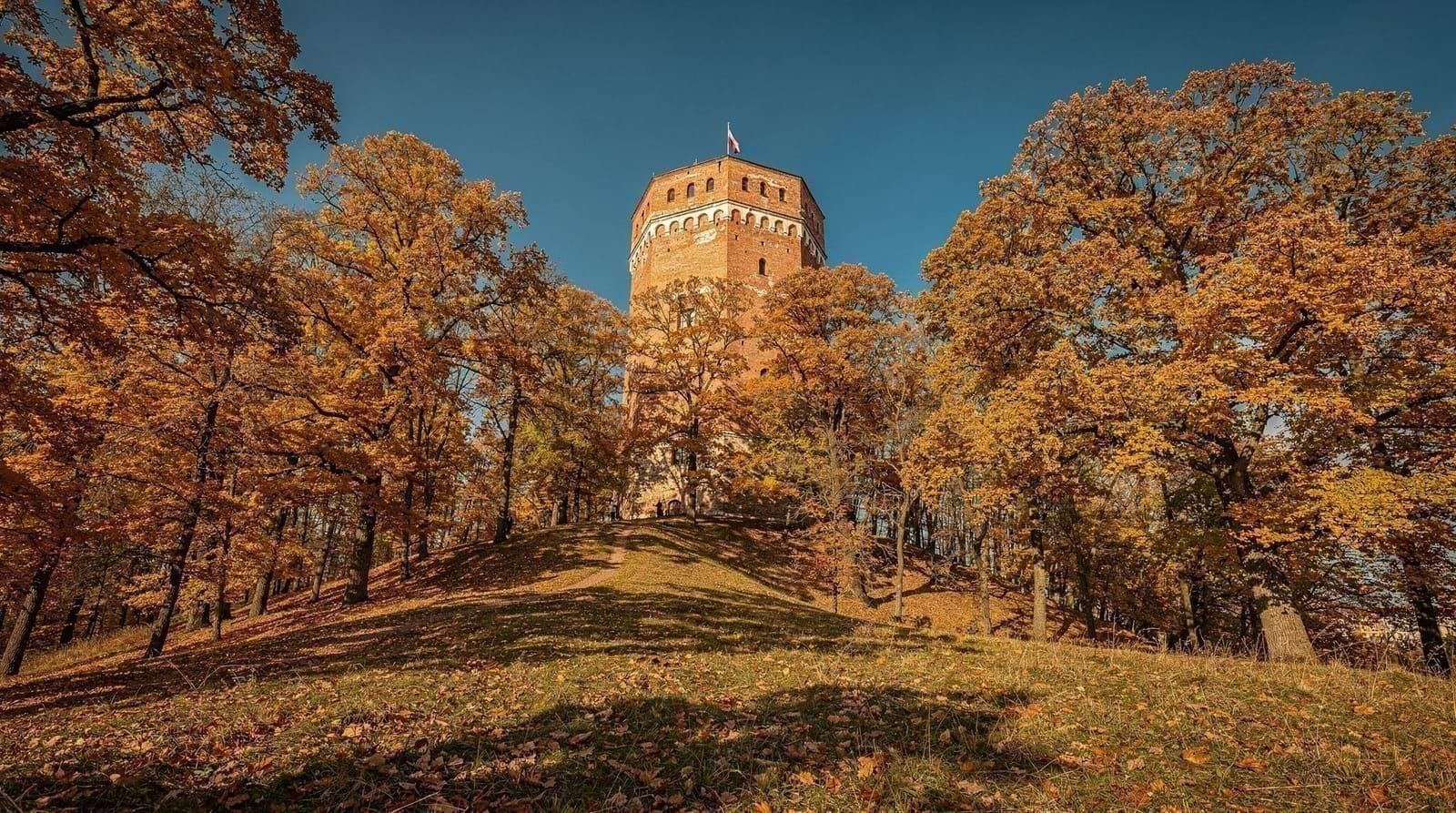
- Gediminas Tower on the hill above the square — the city’s skyline marker
- Pilies gatvė — the cobbled pedestrian street running south from the cathedral
- Town Hall Square (Rotušės aikštė) — the mid-point, lined with restaurant terraces
- Gates of Dawn (Aušros Vartai) — the southern end, where the city wall survives
The Užupis neighbourhood lies just east of the Old Town proper, across a small bridge over the Vilnia river. It is technically its own “republic” but is inseparable from any full Old Town visit.
Distance from Cathedral Square to the Gates of Dawn: about 1.2 km on foot. The detour into Vilnius University adds 15 minutes. A loop through Užupis adds another 30–45 minutes.
Walking the core route
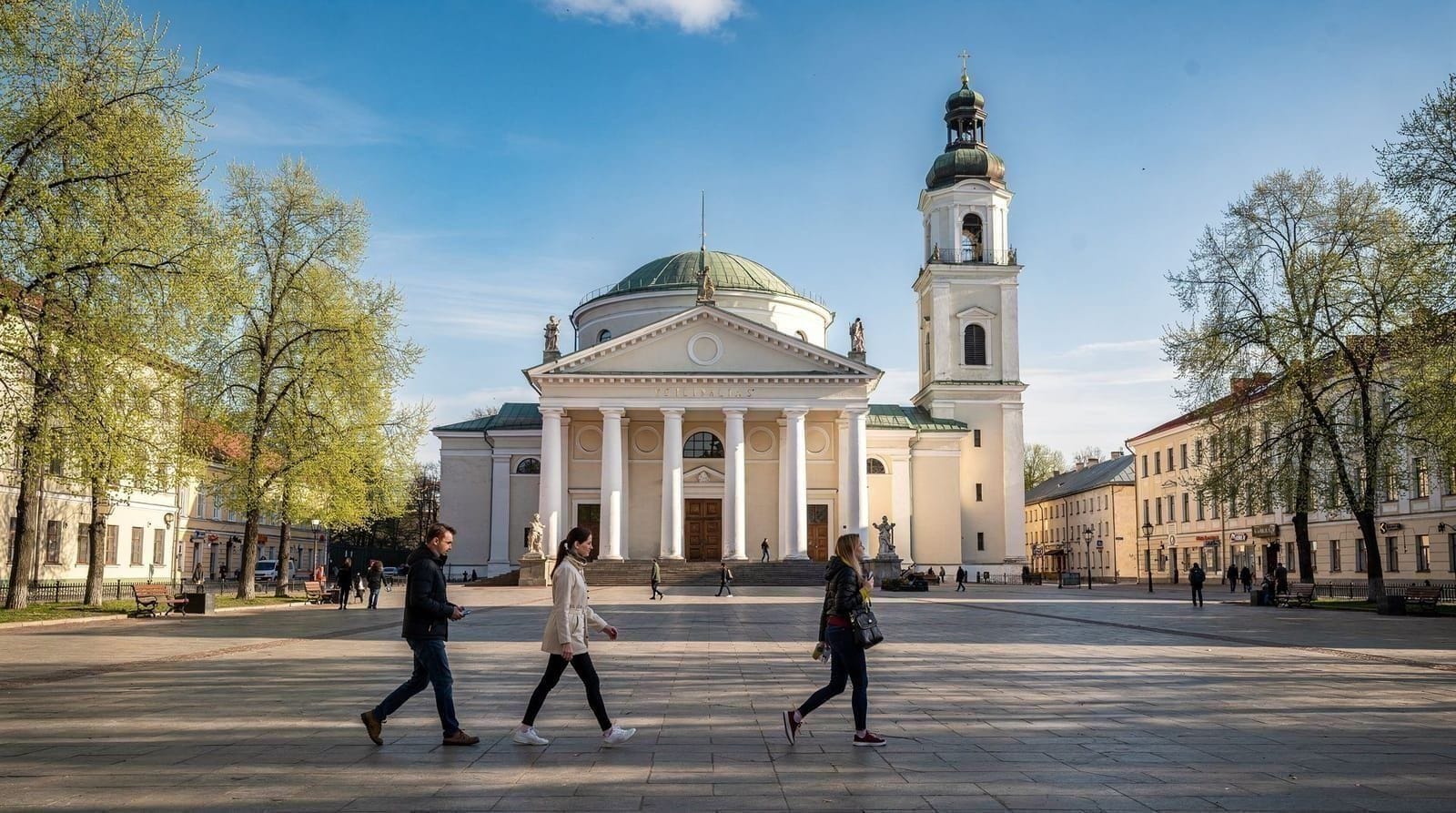
Start at Cathedral Square in the morning while the light falls on the cathedral’s white neoclassical facade. The Gediminas Monument in front dates from 1996 — the granite columns behind it carried the Lithuanian flag during the 1989 Baltic Way human chain. Look for the cobblestone “Stebuklas” (Miracle) tile set into the ground near the belfry — local tradition says spinning on it three times grants a wish.
Gediminas Tower opens at 10 am (closed Mondays November–March). The funicular costs €2.50 up/€1 down, or you walk the steep path in about 10 minutes. Inside is a small historical museum (€5 adults, €2.50 students). The panoramic view takes in the whole Old Town, the Neris bend, and — on clear days — a faint green horizon of forests. Worth every cent. The Gediminas Tower and Castle guide covers the site’s history and the Iron Wolf founding legend in more depth, and Cathedral Square below it has its own dedicated guide worth reading before you set off.
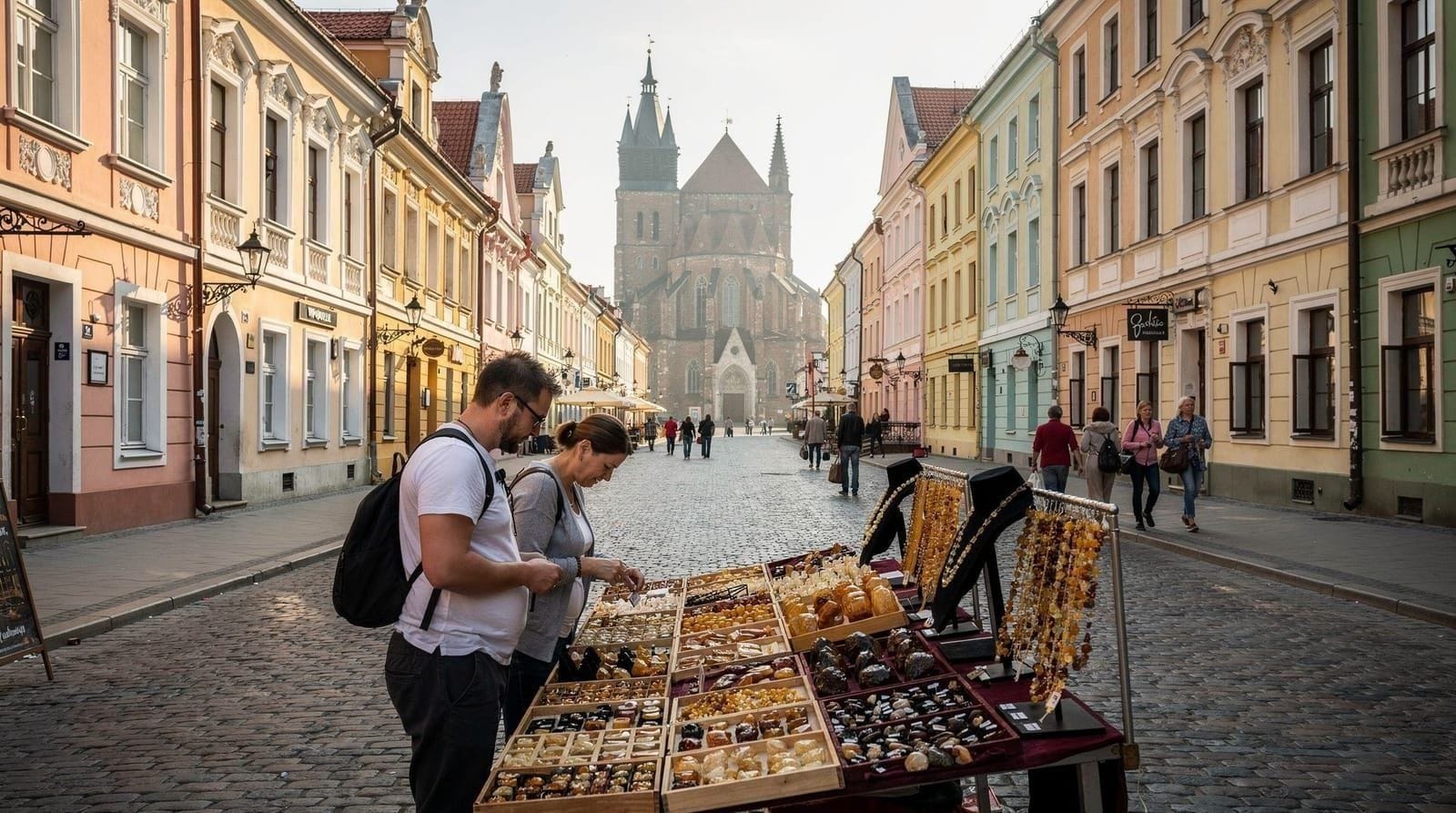
Head south on Pilies gatvė, a cobbled pedestrian street lined with amber shops, book stalls, and cafés. The tourism density is high here: exercise standard price-checking discipline. A plain coffee should be €2.50–3.50; anything over €4 on this street is tourist pricing.
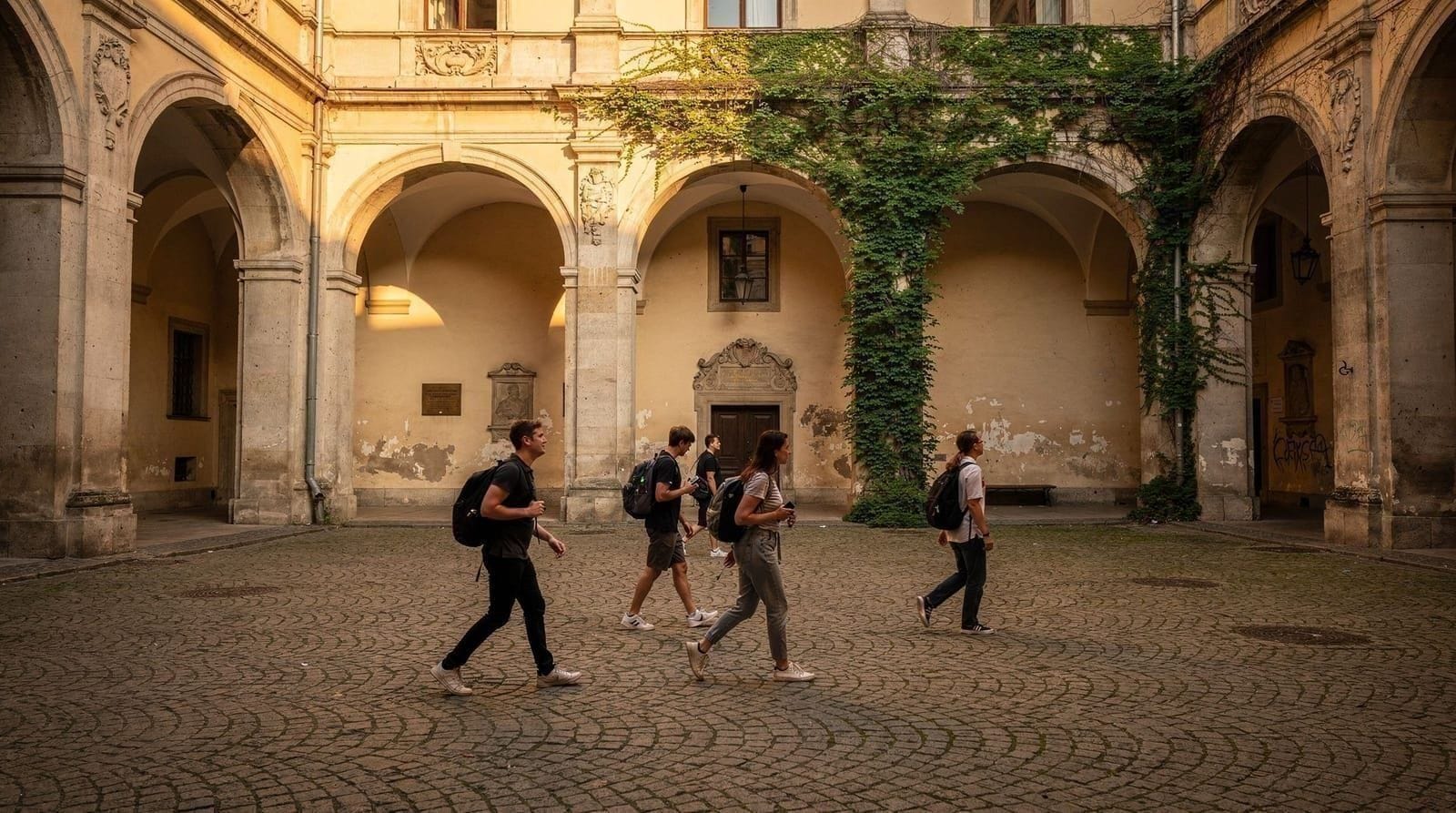
Branch left into Šv. Jono gatvė to reach the main entrance of Vilnius University — 15 courtyards of Renaissance and Baroque architecture that the public can walk through freely (€1.50 suggested donation at the gate, more for the tower). The Observatory Courtyard and the Great Courtyard are the most impressive. The Vilnius University guide has a full courtyard-by-courtyard breakdown if you want to allocate more than a quick pass-through.
Return to Pilies, continue south, and enter the university’s Church of St. Johns (Šv. Jonų bažnyčia), which has one of the finest Baroque interiors in the Baltic states. Entry is free and it is rarely crowded before 11 am.
Continue south on Didžioji gatvė past Town Hall Square. Turn left on Šv. Mykolo gatvė to see the former Bernardine convent — now home to several small museums including the excellent Amber Museum at no. 8 (€6, closed Monday). This is the right place to buy quality amber if that is your interest: pieces are certified and priced honestly.
Didžioji becomes Aušros Vartų gatvė as it approaches the city wall. The Gates of Dawn is a 16th-century gate with a 17th-century chapel containing a silver-robed icon of the Virgin Mary venerated across Poland and Lithuania. Remove hats when entering the chapel; photography is permitted but be discreet — services occur throughout the day.
A guided walking tour adds context to all of this that self-navigation simply cannot replicate — particularly for the dozens of courtyards, former synagogue sites, and Baroque interiors that have no visible explanation.
The courtyards: the real character of the Old Town
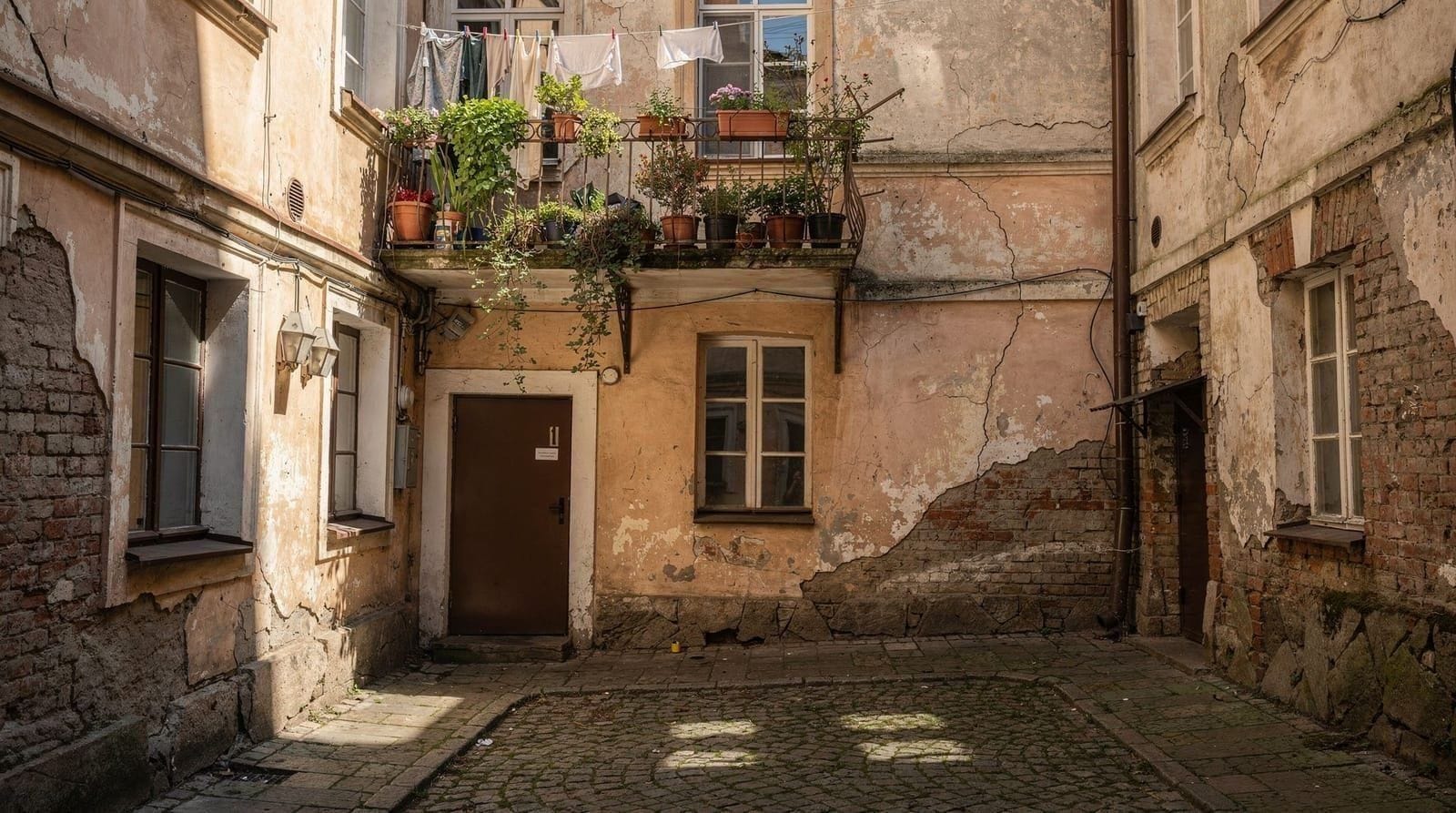
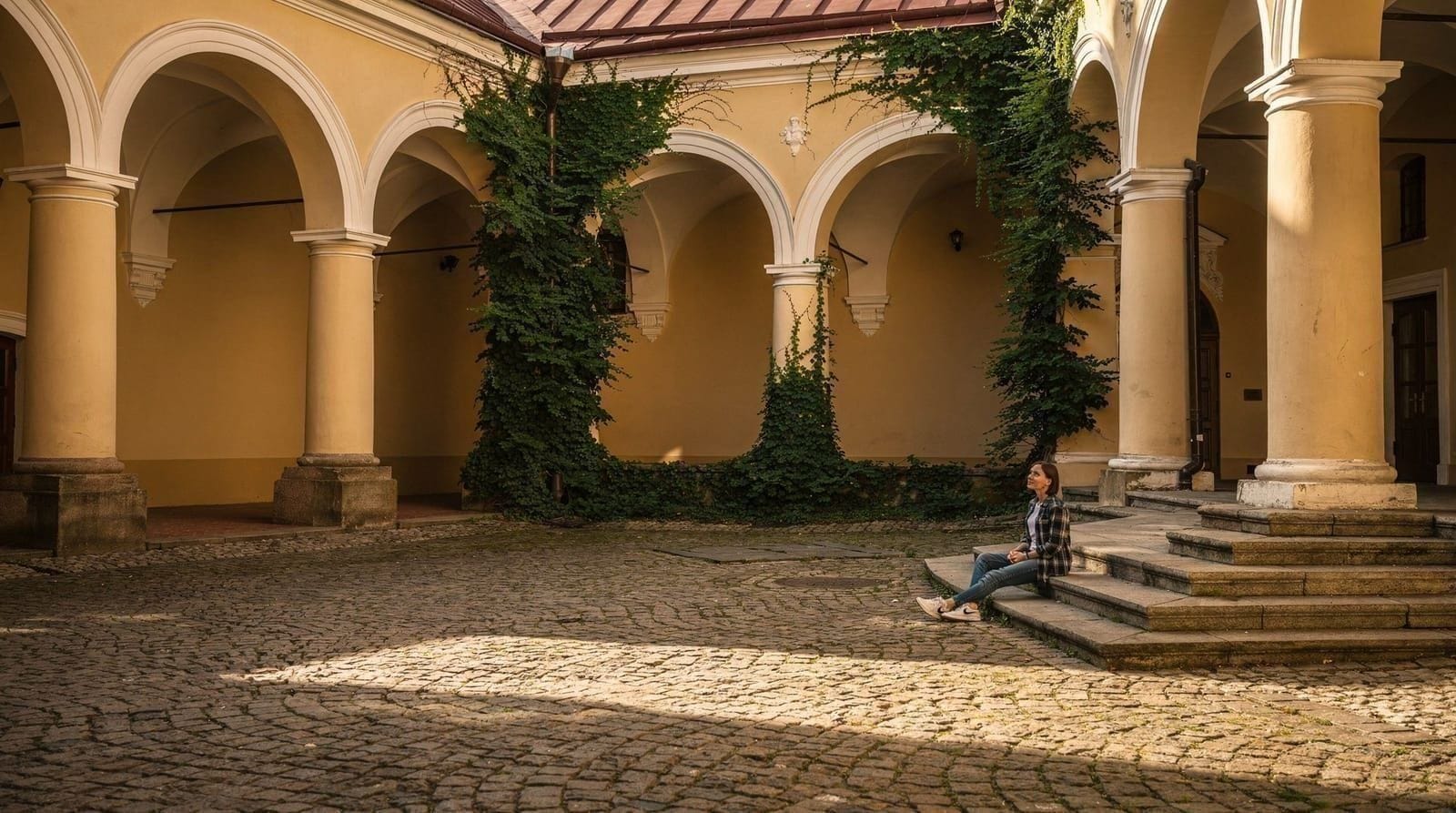
Vilnius Old Town’s courtyards are its defining feature — narrow arched passages open into unexpected spaces, some containing working artisan studios, others secret gardens, others the ruins of former synagogues. The courtyards of the Jewish Vilna district (particularly around Žydų, Antokolskio, and Stiklių gatvės) are historically layered in ways the street-level view conceals. The former Great Synagogue of Vilna stood on Žydų gatvė until 1957 — what remains is a primary school, with foundations visible in the school courtyard (accessible on request). The Jewish Vilnius and the Vilna Gaon guide covers this history properly rather than as a footnote.
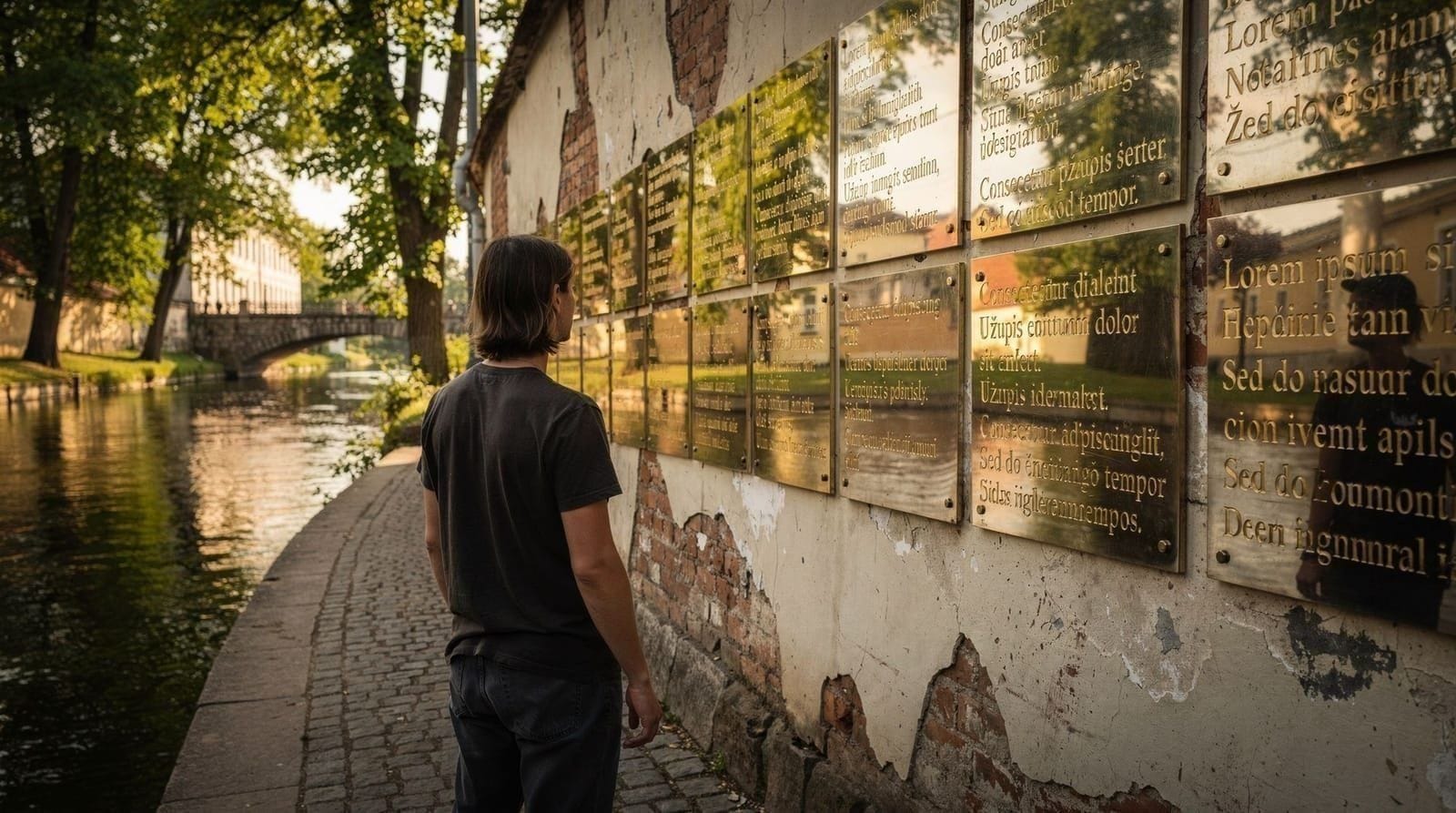
The Literati Quarter (Literatų gatvė) has a small open-air memorial wall of plaques honouring Lithuanian writers. It is brief but beautifully maintained, and is three minutes from Pilies gatvė. Many of the courtyards also carry their own local legends — ghosts, curses, hidden treasure — covered in full in the Vilnius legends and myths guide, which is worth reading before you walk so the stories have somewhere to land.
The Baroque skyline and beyond the core route
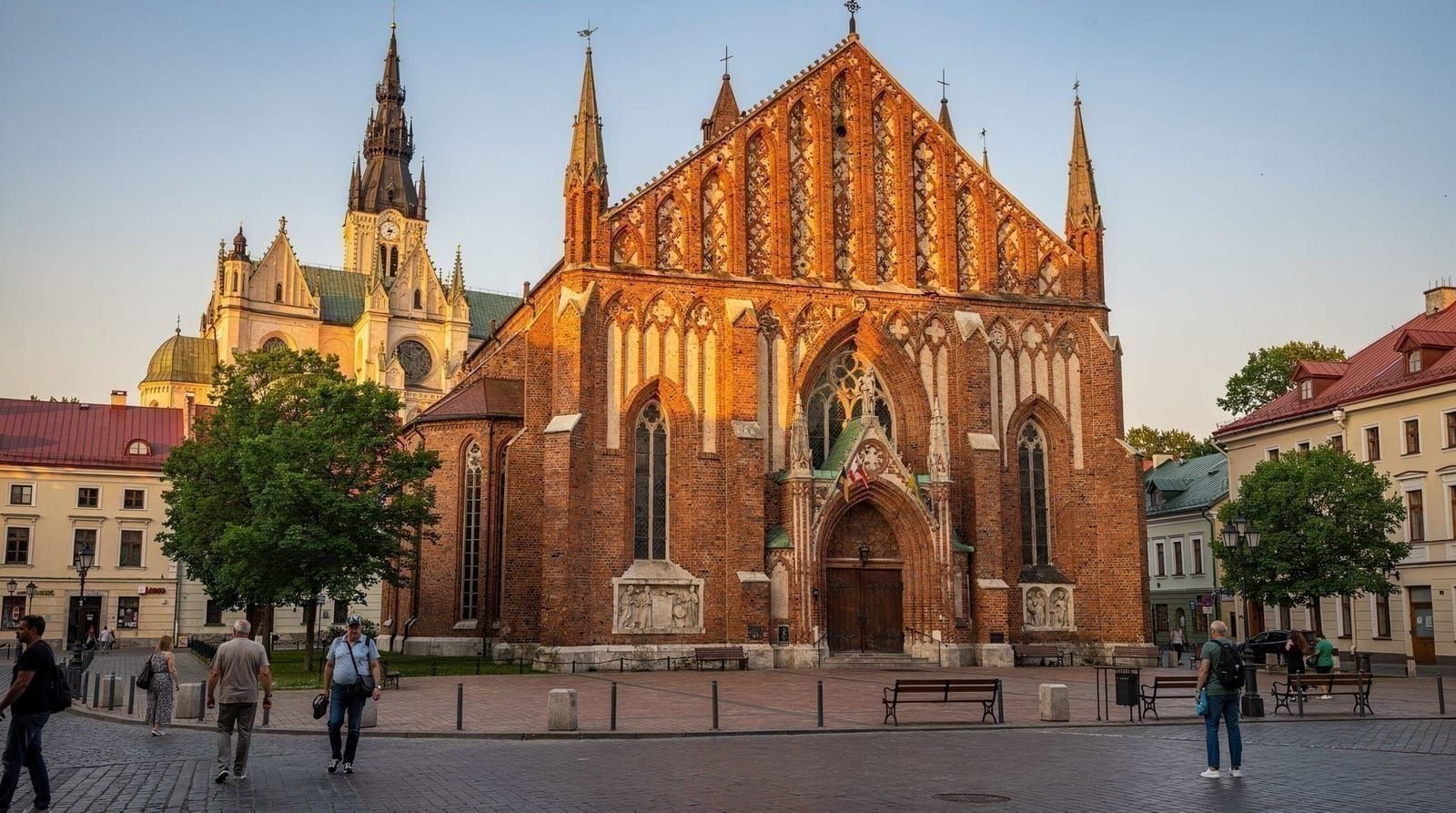
The Old Town’s Baroque churches are easy to walk past without registering how unusual the concentration is — Vilnius has one of the densest collections of Baroque architecture in Northern Europe, a legacy of the 17th- and 18th-century rebuilding after fires and the plague. The Vilnius Baroque architecture guide is worth reading before your walk if architecture interests you, since it explains what distinguishes “Vilnius Baroque” from the Italian or Central European versions most visitors already know. Just east of the core route, St Anne’s Church and the Bernardine complex is the single most photographed building in the city and deserves a proper stop rather than a passing photo. From there, crossing into Užupis via the small bridge over the Vilnia adds a genuinely different neighbourhood character to the walk — worth the 30–45 minutes even on a tight schedule.
Practical information
Getting around inside the Old Town: The Old Town is almost entirely pedestrian-friendly and compact enough to walk. Cobblestones mean wheeled luggage and mobility issues need planning — the smoothest routes tend to use main streets rather than alley cuts. See the getting around Vilnius guide for how the Old Town connects to the rest of the city by bus, bike, or Bolt.
Parking: No parking inside most of the Old Town. Use the multi-storey at Pylimo gatvė 46 (€1.50/hour) or the Gedimino 9 surface lot. Bolt or Taxi5 from anywhere in central Vilnius: €4–7 to the Old Town.
Food and drink: For an honest meal without tourist-menu pricing, try Etno Dvaras on Pilies gatvė 16 (Lithuanian classics, €9–16 main), or walk to Šnekutis at Šv. Stepono 8 in the southern Old Town (cepelinai €7, dark bread, excellent beer). On Town Hall Square, the terraces look appealing but menus frequently change prices seasonally and upward.
Toilets: Cathedral Square has public toilets (€0.50) behind the belfry. McDonald’s on Gedimino prosp. 5 has free facilities. Most sit-down restaurants offer toilets for customers.
Guided options: what’s available
The range of tours operating in the Old Town is wide, and quality varies considerably.
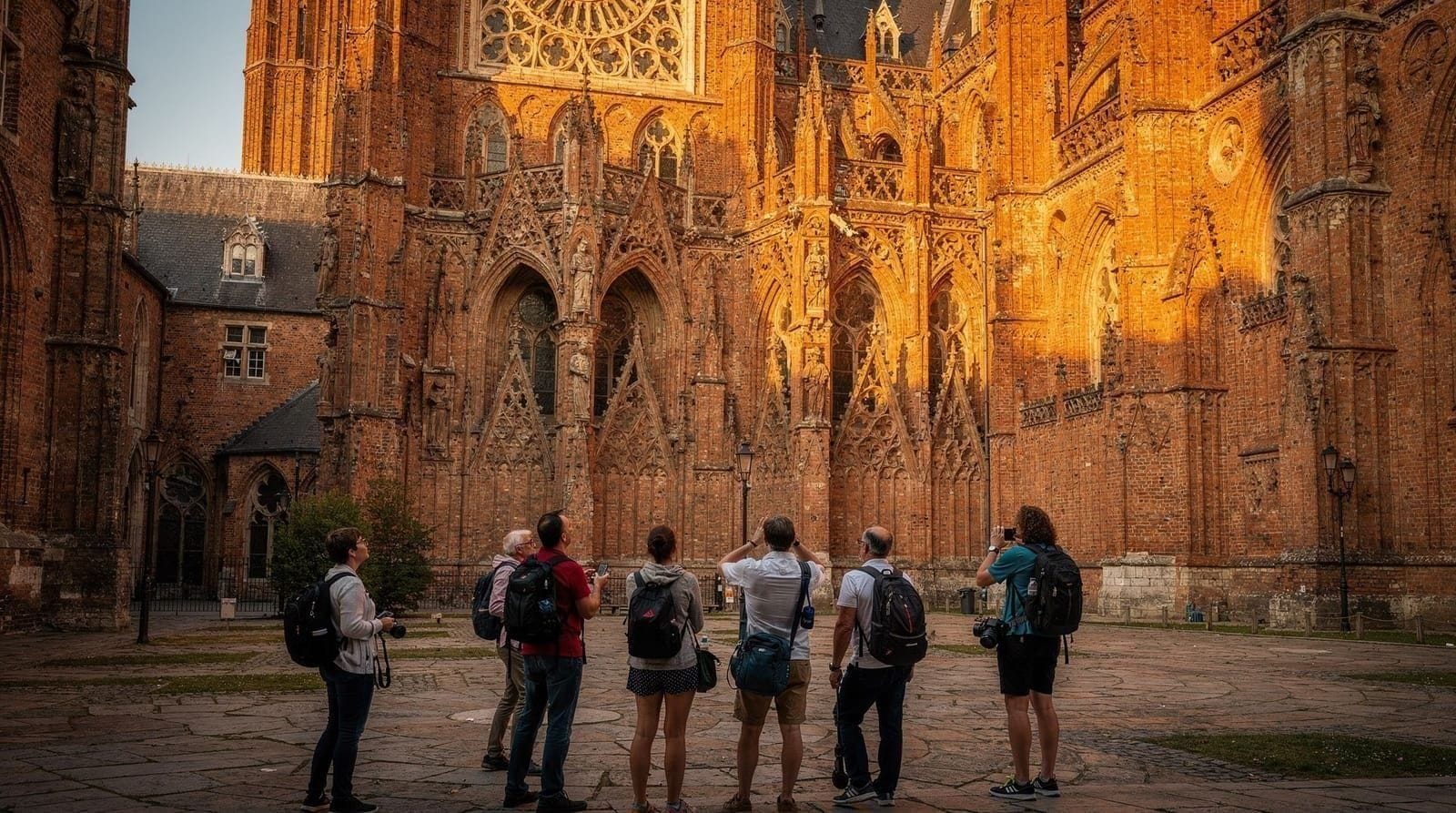
Small-group walking tours with local guides (€18–28 per person, ~2 hours) provide the best depth-to-price ratio for first-time visitors. Look for groups capped at 12 people.
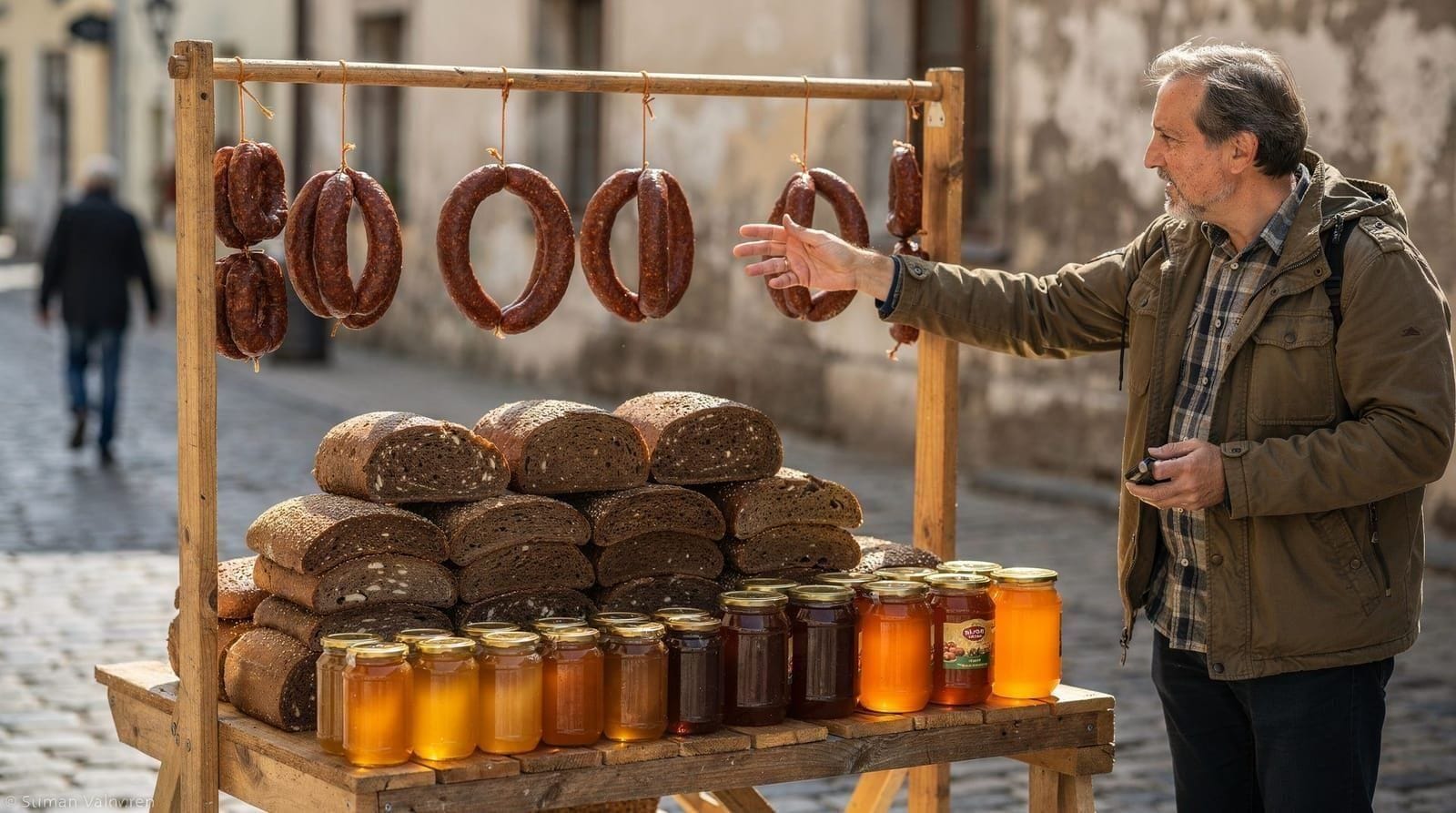
Food-inclusive walking tours (€45–65) combine sights with tastings of Lithuanian bread, smoked sausage, and local cheeses — a time-efficient way to cover the Old Town while sampling the food culture.
Audio guides (via app) are available for €5–8 and allow fully self-paced exploration. The GYG-listed audio bundles cover both the northern and southern Old Town halves.
Avoid any tour described as a “pub crawl with Old Town sights included” — the history content in these is typically 10 minutes of walking and 2.5 hours of bars.
Seasonal notes
- December–early January: Christmas market fills Cathedral Square. Atmospheric but crowded; accommodation prices spike 30–50%. Book well ahead.
- June 24 (Joninės / Midsummer): The city celebrates with bonfires and outdoor concerts — one of the best nights to be in Vilnius.
- Early March (Kaziukas Fair): The largest craft market of the year on and around Cathedral Square. Handmade crafts, local food, and very lively.
- July–August: Peak season. Warm (20–26°C), long days, outdoor concerts in the Old Town. Higher prices. Advance booking for top restaurants and sunset tours is necessary.
- November–January: Short days, potential snow. Fewer crowds. The Old Town at dusk with fresh snow is genuinely beautiful, not just a marketing claim.
Frequently asked questions about Vilnius Old Town
Is Vilnius Old Town safe at night?
It is generally safe for tourists walking in pairs or groups. The main streets stay populated until midnight in summer. The quiet back alleys east of Užupis and the Naujininkai district south of the Gates of Dawn are less lit — exercise standard urban awareness, not alarm.
What is the oldest building in Vilnius Old Town?
The Lower Castle excavations (beneath Cathedral Square) contain masonry from the 13th and 14th centuries. Above ground, the Gothic church of St. Anne dates from the late 15th/early 16th century. The belfry of Vilnius Cathedral is the oldest visible structure on the square, incorporating a medieval tower base.
Can you visit Vilnius Old Town with a pram or wheelchair?
Partially. Cathedral Square and the main streets are flat and paved. Most of the cobbled alley network is difficult for prams and wheelchairs. The funicular to Gediminas Tower is accessible. Several museums have step-free entrances — check individually.
How much should I budget for a full day in the Old Town?
A realistic day: Gediminas Tower (€5), university courtyard (€1.50), two museums (€8–12 total), a sit-down lunch (€12–18), coffee breaks (€5–8), and a guided evening walk or ghost tour (€18–25). Total: €50–70 per person without accommodation.
Are there lockers or bag storage near the Old Town?
Yes — the central bus station (Autobusų stotis) has staffed left-luggage (€2–3/hour). The hotel Radisson Blu on Thorvaldo 2 offers paid bag storage. Some Old Town hostels will store luggage even for non-guests for a small fee.
How many days should I spend in the Old Town versus the rest of Vilnius?
Most visitors spend one full day (or two half-days) on the Old Town core and Užupis, then use additional days for day trips like Trakai or for the museums and neighbourhoods outside the historic centre. For a 2-3 day trip, allocate at least one full day to the Old Town alone rather than trying to combine it with a day trip.
Is it worth visiting the Old Town more than once, at different times of day?
Yes, if your schedule allows. Cathedral Square and the courtyards look markedly different in morning light, midday bustle, and evening quiet or Christmas-market glow. A morning walk and a separate evening return (for dinner or a ghost tour) show two genuinely different versions of the same streets.
Top experiences
Bookable activities with verified prices and instant confirmation on GetYourGuide.