Grūtas Park — Lithuania's Soviet sculpture park guide
Vilnius: Druskininkai grutas park transfer
What is Grūtas Park and why is it worth visiting?
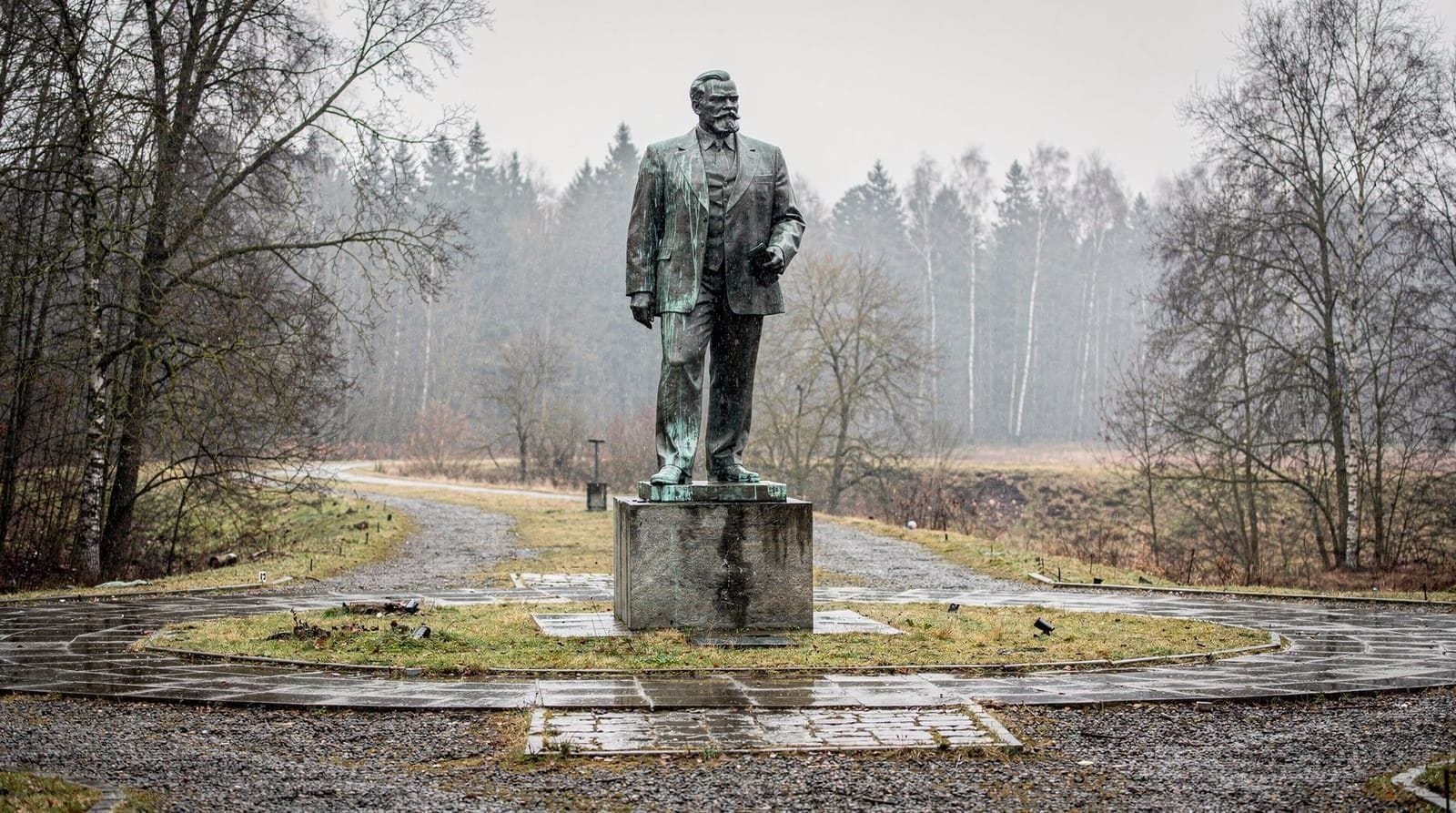
Grūtas Park (Grūto parkas) near Druskininkai is an outdoor museum of Soviet-era monuments removed from public spaces across Lithuania after independence — including Lenins, Leninist figures, and war memorials. It is not kitsch nostalgia but a thoughtful documentation of a totalitarian visual culture, displayed in a setting that preserves historical artifacts that would otherwise have been destroyed.
When Lithuania restored independence in 1990, the Soviet-era statues came down from their plinths across the country. In Vilnius, the Lenin on Gedimino prosp. (removed August 23, 1991, the same spot where the Gediminas Monument now stands) was one of the most prominent. The question of what to do with these objects — destroy them, sell them, store them, display them — was not abstract. It was a question about how a post-Soviet society deals with the material residue of totalitarianism.
Lithuania’s answer, eventually, was Grūtas Park.
| Where | Grūtas village, 7 km from Druskininkai, ~130 km south of Vilnius |
| Cost | around €7 adults, €4 children (6–15) |
| Time needed | 2–2.5 hours |
| Getting there | Guided transfer, bus + local bus, or car (~1.5 h) |
| Best paired with | Druskininkai spa town, same day |
What the park contains
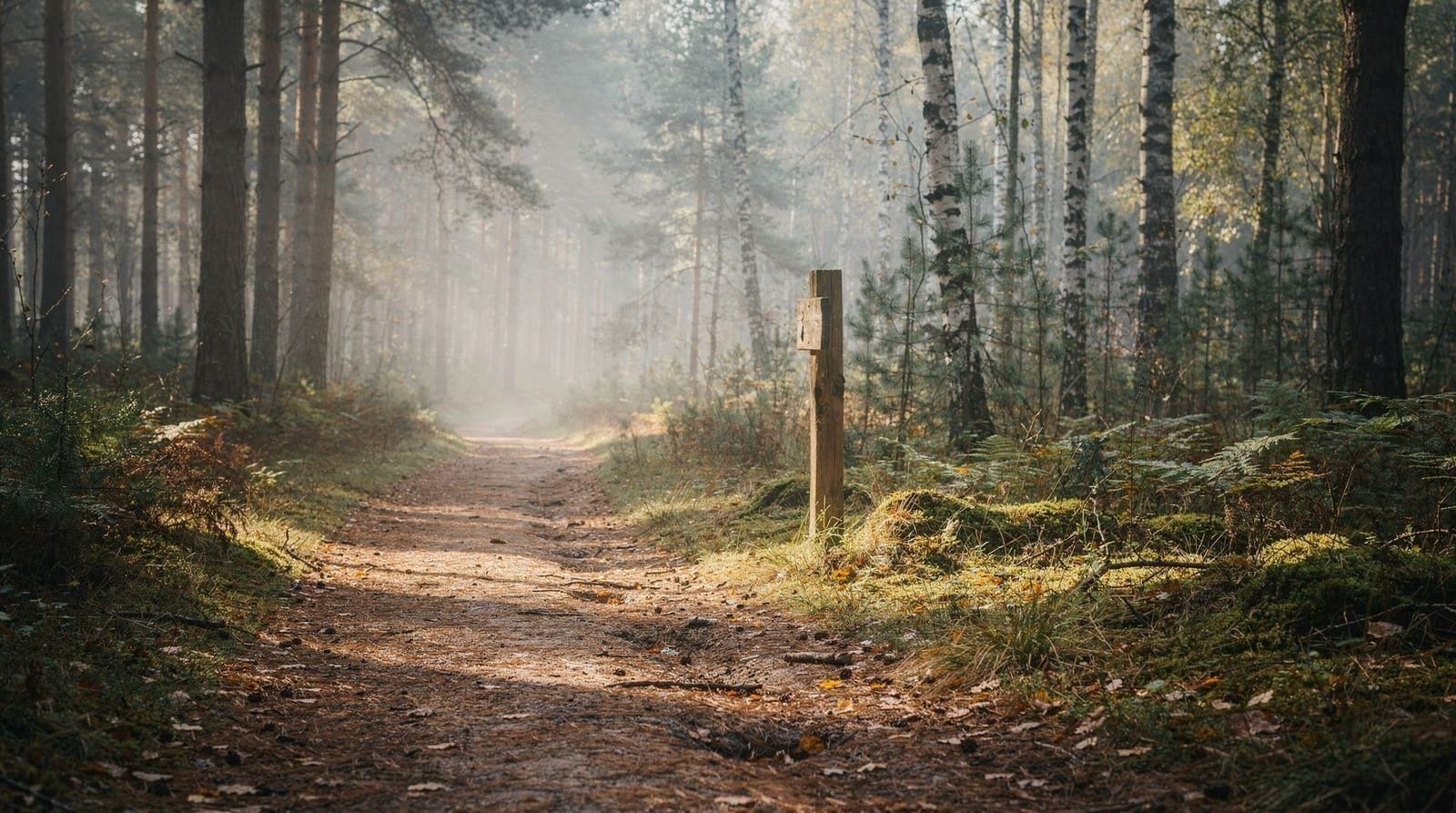
The park covers 20 hectares of pine forest and wetland near the village of Grūtas. Along a 2 km path with wooden boardwalks over the wetland sections, approximately 80 sculptures and installations are displayed outdoors, supplemented by a small indoor exhibition building.
The sculptures range from the politically central to the bureaucratically peripheral:
Lenin: Multiple versions, in various scales and materials. The main Vilnius Lenin (a large bronze, previously on Gedimino prosp.) is one of the park’s centrepieces. Other Lenins arrived from different Lithuanian towns. The stylistic range — from heroic-monumental to intimate-domestic — is instructive about how Soviet ideology attempted to occupy different emotional registers.
Soviet leaders: Stalin (partially — head and torso sections of a 10-metre statue removed from Vilnius in 1961 after de-Stalinisation), Dzerzhinsky (founder of the Cheka/GPU, the first Soviet secret police), and figures from Soviet Lithuanian politics.
Worker and partisan figures: The largest category in terms of numbers — idealised workers, collective farm women, soldiers, and partisan fighters (both Soviet anti-Nazi partisans and Soviet “heroes” of various categories). These are the mid-level propaganda sculpture of Soviet public space — the kinds of objects that stood outside factories, collective farm headquarters, and provincial town halls.
War memorials: Monuments to Soviet soldiers and the “Great Patriotic War” (the Soviet term for WWII on the eastern front). Some were removed because they commemorated Soviet military presence in a context where that presence was experienced as occupation rather than liberation.
The indoor exhibition supplements the outdoor sculptures with photographs of the original installation sites, Soviet official documents, propaganda posters, and personal objects of the Soviet period. It provides essential context — a sculpture of a “liberated worker” from 1955 looks different when you see a photograph of the specific collective farm from which it was removed in 1992, and read the documentation of what collectivisation meant for the farmers who lived there.
Historical framing
The park does not pretend neutrality. The framing is explicitly Lithuanian — these objects are presented as relics of an occupation, not as celebrated cultural heritage. Interpretive text consistently distinguishes between the aesthetic qualities of the sculptures (some are technically accomplished) and the political function they served.
At the same time, the park does not sanitise. The sculptures are presented as they were — large, imposing, visually powerful objects designed to dominate public space and assert ideological presence. The experience of walking among them in a forest setting, removed from their intended context, produces an uncanny effect that is neither comfortable nostalgia nor simple condemnation.
Some visitors compare the experience to walking through an outdoor set for a film that was never finished. The scale and formal seriousness of the sculptures makes their current displacement — in a wetland forest in southern Lithuania — both absurd and historically correct. These objects do not belong in public squares anymore. They also should not simply be destroyed.
The controversy
The park’s establishment was not uncontroversial. Some survivors of Soviet repression and descendants of deportees objected to any preservation that did not clearly mark the sculptures as criminal objects. The Lithuanian Jewish community expressed concerns about any context that might blur the distinction between Soviet political sculpture and the memorials to Soviet victims — given that “Soviet partisan” identity was claimed by both genuine anti-Nazi resisters and Soviet collaborators who participated in Jewish genocide in 1941.
These are legitimate concerns, and the park’s management has engaged with them. The current framing acknowledges the complexity. A visitor who comes expecting a “Stalin theme park” or Soviet nostalgia experience will be disappointed — and misled by some of the park’s early media coverage (particularly in the late 1990s and early 2000s, when it was described as such in international press).
Combining with Druskininkai
Grūtas Park is 7 km from the centre of Druskininkai, Lithuania’s premier spa town. A day combining both makes excellent geographical sense.
Druskininkai sits on the Nemunas river in the Dzūkija region — a landscape of pine forests, sand, and slow rivers. The spa infrastructure (mineral baths, salt chambers, wellness centres) dates primarily from the Soviet period when Druskininkai was a major sanatorium resort for the USSR, and continues actively. Grand Spa Lietuva (Vilniaus al. 13–21) is the largest facility and offers day passes to its water park and thermal pools (€25–45 depending on day/time).
The Druskininkai town centre is modest but pleasant — the pedestrian area along Kudirkos gatvė has decent local restaurants and cafés. Dzūkija National Park begins at the town’s edge, with walking and cycling paths into old-growth pine forest.
A guided Druskininkai and Grūtas Park tour from Vilnius handles the 130 km transport in both directions and includes entry to the park — the most efficient way to make this day trip without a car.
A full-day Dzūkija National Park and Grūtas Park tour combines the sculpture park with nature walking in the national park — a longer itinerary covering the natural and historical character of the Dzūkija region.
Where Grūtas Park fits in a wider Soviet-history itinerary
Grūtas Park is one part of a broader story that Lithuania documents across several sites, each with a different focus. In Vilnius itself, the Soviet history of Vilnius guide and the KGB Museum (Museum of Occupations) cover the political repression and surveillance apparatus that the sculptures in this park once represented in public space — visiting one before the other adds context both ways. In Kaunas, the Ninth Fort documents the darkest chapter of the same period from an entirely different angle, and the Paneriai memorial near Vilnius covers the Holocaust specifically rather than the Soviet occupation. None of these sites substitute for each other — together they form a fuller picture of 20th-century Lithuania than any single visit provides.
For trip planning, Grūtas Park is usually one stop within a Druskininkai day trip rather than a destination on its own, given the shared 130 km journey south. See the best day trips from Vilnius overview for how it compares to Trakai, Kaunas, and the other options.
Practical information
Address: Grūto gatvė 89, Grūtas, Druskininkai district | grutas.lt
Opening hours: May–September 9 am–8 pm daily; October–April 9 am–6 pm daily
Entry: Adults €7 / Children (6–15) €4 / Under 6 free
Time needed: 2–2.5 hours for a thoughtful visit of the full sculpture path and indoor exhibition
Facilities: A café on site (open in season) serves Lithuanian food and drinks. Toilet facilities adequate. Limited disabled access on the boardwalk sections (the main paths are accessible, some side areas have uneven ground).
Getting there independently: Bus from Vilnius to Druskininkai (Autobusų stotis, €7–9, departures every 2–3 hours). From Druskininkai bus station, local Bus 2 to Grūtas village (approximately 10 minutes). Taxi from Druskininkai to the park: approximately €8–10.
With a car: Vilnius to Grūtas Park via the A4 motorway south, approximately 130 km / 1.5 hours. Free parking at the park entrance.
Frequently asked questions about Grūtas Park
Is Grūtas Park good for children?
Yes and no. The sculpture park is physically accessible and visually interesting for children — large bronze figures in a forest setting have obvious appeal. The historical context (occupation, deportation, ideological repression) requires parental explanation appropriate to the child’s age. The park is not designed as a children’s attraction but several younger visitors find the scale and strangeness of the figures engaging. The indoor exhibition is more appropriate for older children.
Are the sculptures in good condition?
Most are well-maintained. Some show weathering and the metal objects have patinated. The park carries out periodic restoration. The outdoor exposure means condition varies — the largest bronzes are in the best shape, some stone figures have significant weathering.
Can I photograph at Grūtas Park?
Yes, freely. Photography is unrestricted. The sculptures have been widely photographed and filmed since the park opened. Documentary photography with respectful framing is appropriate; performative or mocking photography of individual figures is a matter of visitor judgment.
Are there other Soviet-era outdoor sculpture parks in Europe?
Momento Park in Budapest (Hungary) and the Sculpture Park (Skulptūru parks) in Riga (Latvia) follow similar models. Vilnius’s Grūtas Park was the first and remains the largest. The three together form a Baltic-Central European circuit of post-Soviet historical documentation of real value to anyone interested in 20th-century European history.
How much time should I budget for Grūtas Park plus Druskininkai in one day?
Realistically, a full day. Grūtas Park itself takes 2–2.5 hours, the journey from Vilnius is roughly 1.5–2 hours each way, and most visitors also want at least an hour or two in Druskininkai town or its spa facilities. Combining both without feeling rushed generally means leaving Vilnius by mid-morning at the latest.
Should I visit Grūtas Park before or after the KGB Museum in Vilnius?
Either order works, but visiting the KGB Museum first gives useful context on the surveillance and repression apparatus that the Grūtas Park sculptures once symbolised in public squares — the sequence makes the sculpture park’s framing land more clearly. Visiting Grūtas Park first works just as well if your itinerary is driven by geography rather than narrative order.
Top experiences
Bookable activities with verified prices and instant confirmation on GetYourGuide.