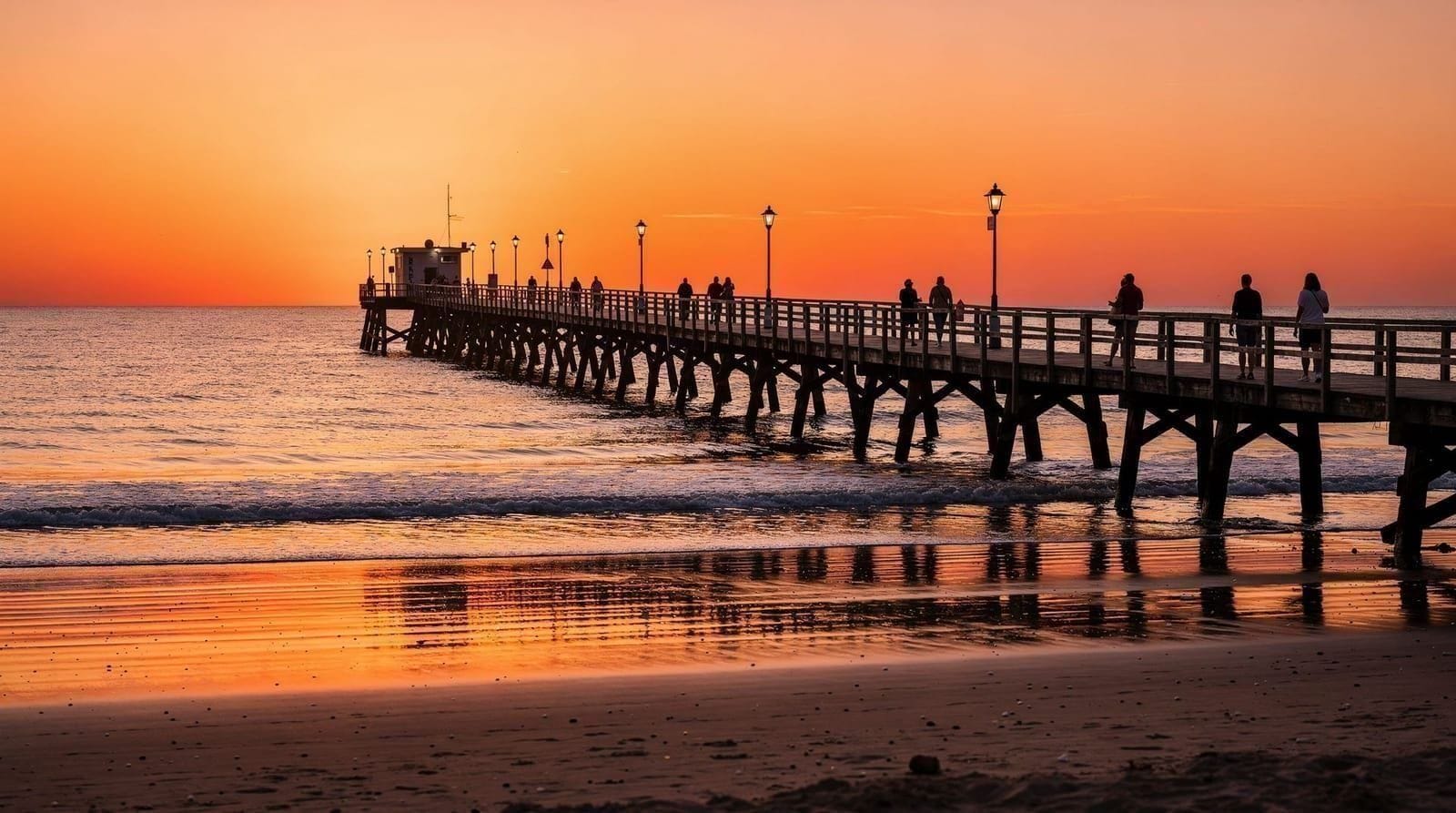
Nida, Lithuania
Nida is the Curonian Spit's main village: dramatic dunes, a calm lagoon, the Thomas Mann House, and amber beaches. What to do and how to get there.
Nida: Vilnius curonian spit all day tour
Quick facts
- Distance from Vilnius
- ~360 km (including ferry crossing)
- Travel time
- ~4.5–5 hours from Vilnius (train to Klaipėda + ferry + bus)
- Best time
- Jun–Aug; outside season many facilities close
- Days needed
- 1 day; 1–2 nights ideal
- Entry
- Village free; Parnidis Dune free; national park day fee ~€1–2
Quick answer: Nida is the main settlement on the Lithuanian half of the Curonian Spit — a small resort village of about 1,500 permanent residents, set between the Baltic dunes to the west and the Curonian Lagoon to the east. It has Parnidis Dune (the most visited viewpoint on the spit), the Thomas Mann Summer House, amber beaches, a lagoon harbour, and enough restaurants and accommodation to serve as a proper base for 1–2 nights. From Vilnius, the journey takes around 5 hours; it is the right place to stay if you’re spending more than a day on the Curonian Spit.
| Where | Curonian Spit, ~360 km from Vilnius |
| Cost | Village and dune free; national park fee €1–2/day |
| Time needed | 1 day; 1–2 nights ideal |
| Getting there | Train to Klaipėda + ferry + bus (~5h) |
| Best time | Jun–Aug; many facilities close outside season |
Nida in context
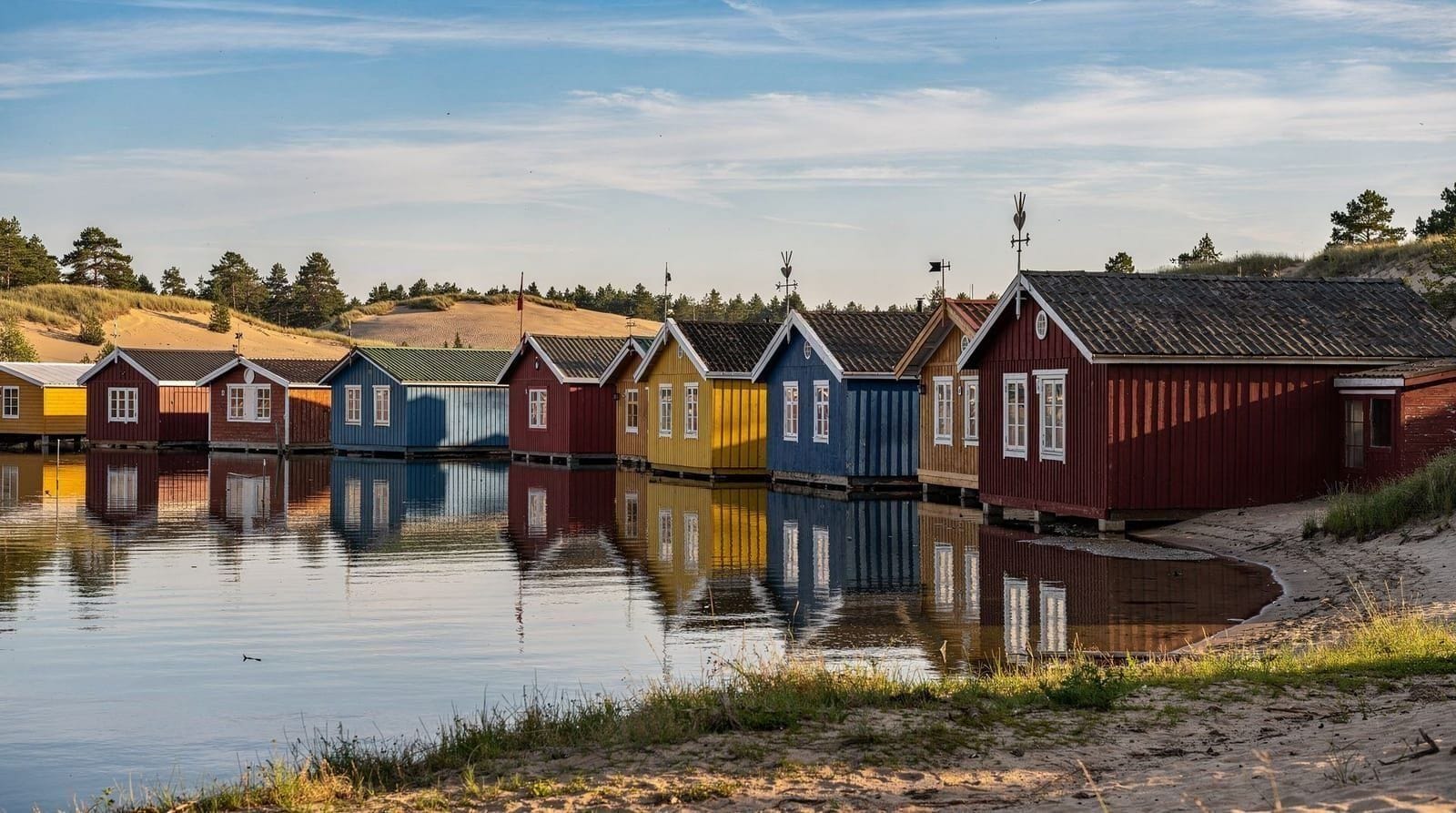
Nida is not a large town by any measure. What it has is character: traditional Curonian wooden houses with carved weathervanes (žvejų bukeliai — “fishermen’s cottages” style), a lagoon-facing main street, a small harbour where fishing boats and tourist cruises operate side by side, and the overwhelming presence of pine forest and sand dune within a five-minute walk of the centre.
The village was a favourite destination for German-speaking intellectuals in the interwar period. Thomas Mann built his summer house here in 1929–1930 and spent three summers writing, before the Nazi rise to power ended his ability to return. He later based part of the “Joseph” cycle of novels here.
For the full regional context, including how to get to the spit from Vilnius and what to do at the northern villages, see the Curonian Spit destination page.
What to do in Nida
Parnidis Dune
The centrepiece. A 52-metre dune above the village with views across the Curonian Lagoon to the east and the Baltic horizon to the west. A large granite sundial monument stands on the summit (the original was damaged in a 1999 storm and rebuilt). On clear days you can see the Russian section of the spit to the south — the border is about 5 km from Nida, marked and closed.
The walk up takes 20–25 minutes on a sandy path with wooden board sections. In summer midday heat, it is exposed and can be tiring. The dune is living and protected: stay on the marked paths, which are clearly signed. Erosion from footfall has been a significant issue in recent years.
Amber beach and Baltic swimming
The Baltic side of the spit (about a 20-minute walk from the village centre) has clean, wide beaches. The sand is generally fine and well-maintained. After storms, amber fragments wash up along the strand line — serious amber hunters work this beach with flat-bottomed nets, knee-deep in the shore break. Swimming is safe in normal conditions; water temperature in July–August reaches 18–21°C.
Thomas Mann House (Tomo Mano namai)
The small blue-painted wooden house on Skruzdynės Street where Thomas Mann spent three summers (1930–1932) is now a museum. The house was constructed to his family’s design — a mix of Lithuanian vernacular architecture and German Jugendstil. The interior is preserved with period furnishings; exhibitions cover Mann’s connection to the spit and the political context of his exile.
Entry is approximately €4–5. The house is small and visits are correspondingly brief (30–40 minutes). It matters more if you know Mann’s work; the house itself is charming regardless.
Lagoon harbour and boat hire
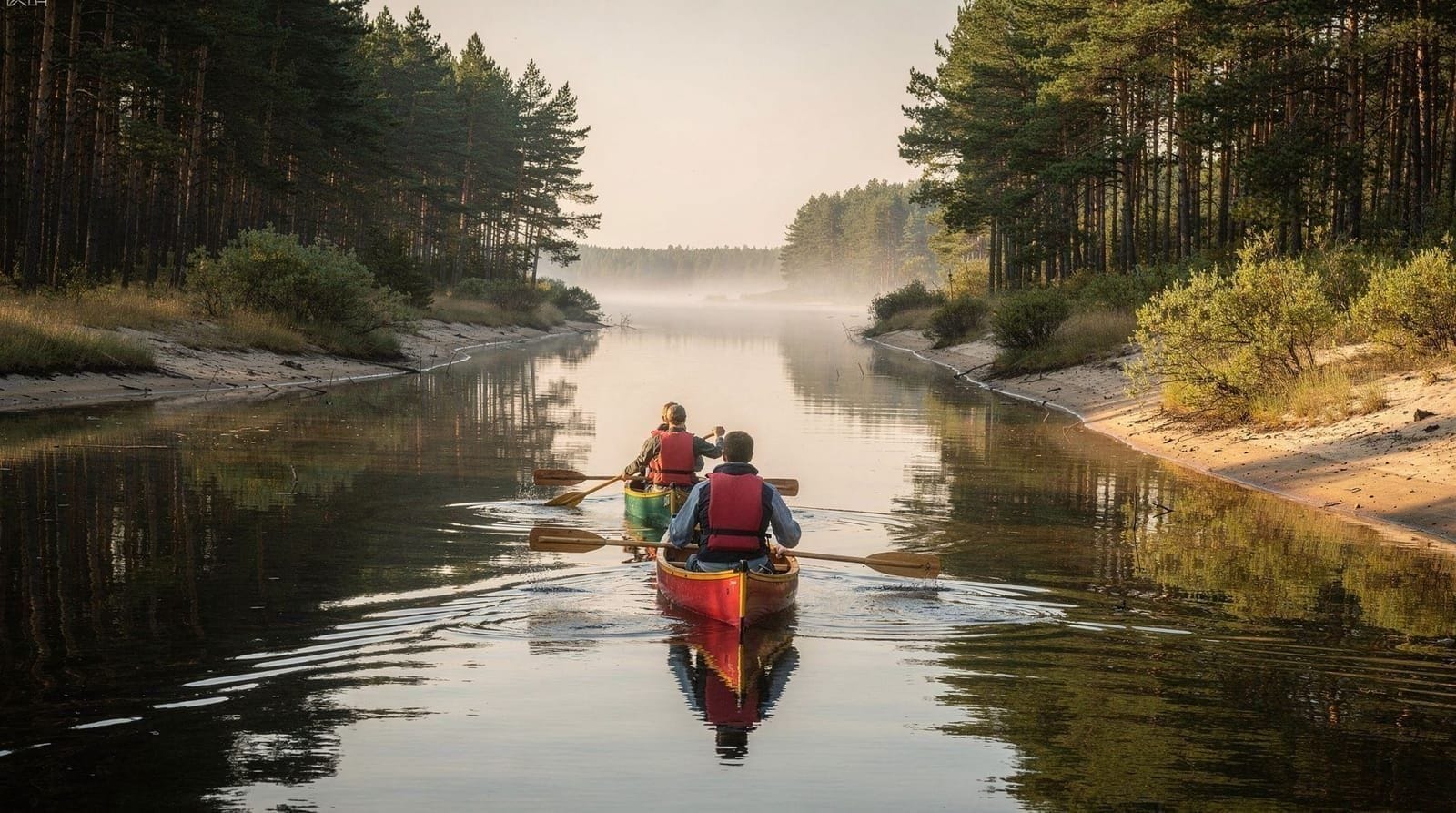
The lagoon side of Nida has a harbour with wooden jetties. Tourist boat trips across the lagoon run in summer; canoe and kayak rentals are available at the harbour. The lagoon is calm, shallow, and warm in summer — better for paddling than the exposed Baltic side. The views back toward the dune ridge from the water are the best perspective on the landscape.
Klaipėda: Curonian spit guided canoe tour Klaipėda: Evening wooden canoe tourCycling
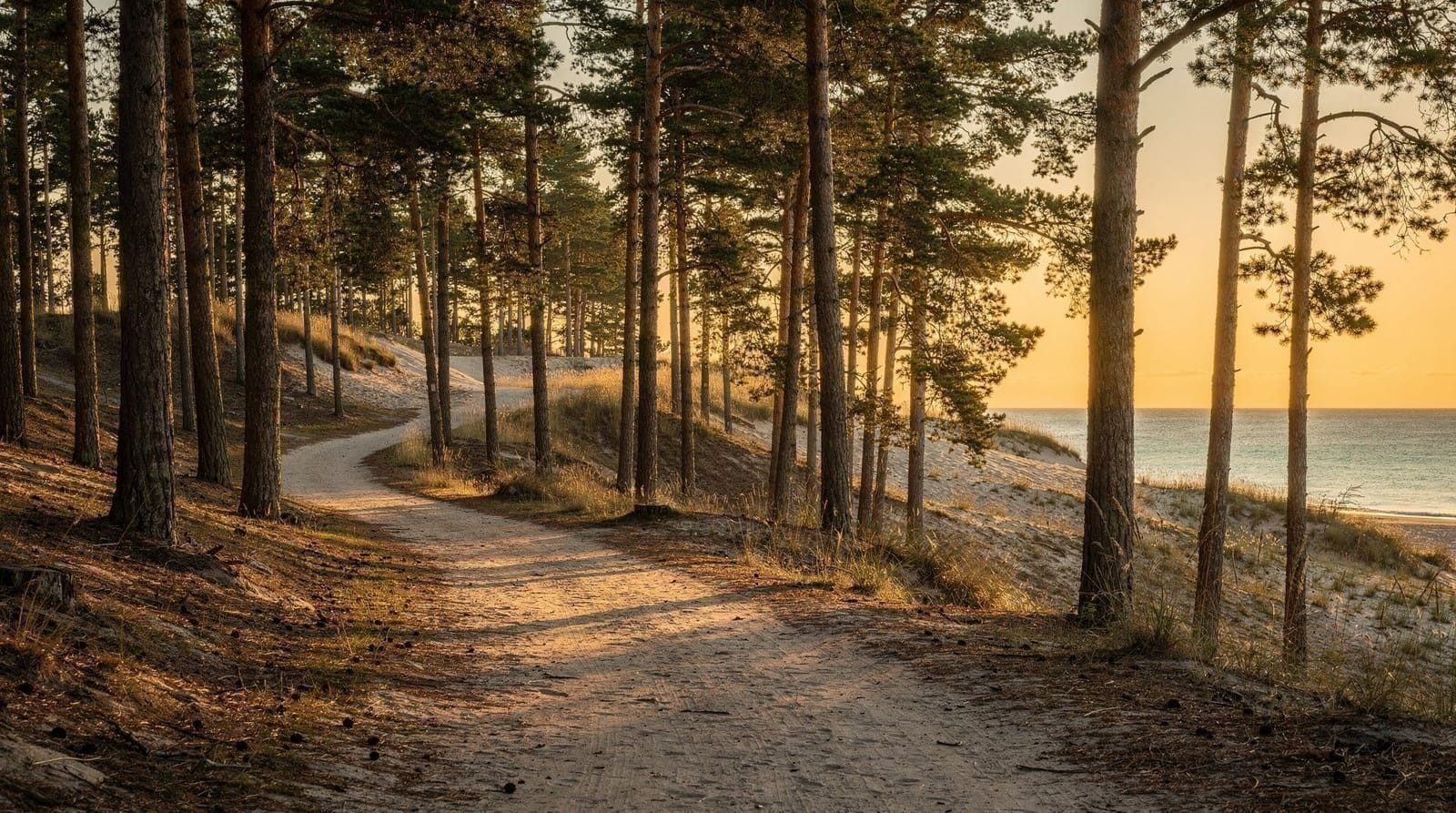
Nida is the southern end of the cycling route that runs the full length of the Lithuanian spit (48 km to Smiltynė/Klaipėda). Bikes are available for rent in the village centre (€8–12/day for a standard bike; more for e-bikes). The path is mostly flat, through pine forest, with occasional dune viewpoints. Cycling from Nida north to Juodkrantė (about 30 km) and back is a realistic full-day excursion.
From Vilnius: getting to Nida
The most straightforward route:
- Vilnius Central Station → Klaipėda (train, ~3.5 hours, €14–22)
- Klaipėda → Smiltynė (Old Ferry, 5 min, under €1 for pedestrians)
- Smiltynė → Nida (Resort Bus route 1, ~50 min, €2–4 depending on stops)
Total travel time: ~5 hours. Trains from Vilnius depart multiple times daily; last trains back from Klaipėda are in late evening. Check the LTG Link timetable as schedules change seasonally.
Organised day tours from Vilnius to the Curonian Spit cover the logistics and include a guide — a good option for a one-day visit.
Nida: Vilnius curonian spit all day tourWhere to eat in Nida
- Seca (Naglių Street): Local favourite for smoked fish — Baltic herring, eel, sprats. Order at the counter, eat at outdoor tables. Under €10 for a full plate. Open in season only.
- Anikė (Pamario Street, lagoon side): Sit-down restaurant with lagoon terrace. Fish dishes and Lithuanian mains; €12–18 for a main. Reliable.
- Nidos Senesnis Rūkykla (smokery near the harbour): Fresh-smoked eel is a Curonian Spit speciality — you eat it standing at the counter with bread and a beer for around €8. Very local.
In peak summer (July–August), Nida restaurants fill up. Arrive early for lunch or book ahead for dinner at sit-down places.
Where to stay in Nida
Nida has a range of accommodation from basic guest rooms (€40–60/night) to mid-range guesthouses (€70–110) and a few higher-end options. The Nida resort website and Booking.com are the main booking channels. Note: most Nida accommodation is seasonal (May–September); the village is largely closed in winter.
Practical notes
When to go: Nida makes sense from late May through September. July and August are peak season with daily visitors flooding in from Klaipėda on day trips; the village is noticeably quieter by 18:00 when day-trippers leave. June and September offer the best balance.
Mosquitoes: The pine forest and lagoon edge produce significant mosquito numbers in July and August. Bring repellent; evenings near the lagoon shore can be uncomfortable without it.
Crowds at Parnidis: The dune summit can be congested at midday in July. Go before 09:00 or after 17:00 for a more peaceful experience.
The Russian border: It is clearly marked and closed. There is nothing to approach.
Nida versus Klaipėda and Palanga: choosing a coastal base
| Base | Character | Best for |
|---|---|---|
| Nida | Quiet dune village, seasonal | Scenery, 1–2 nights on the spit itself |
| Klaipėda | Working port city, year-round | Logistics, transport hub, lower cost |
| Palanga | Lively beach resort, seasonal | Nightlife, long sandy beach, Amber Museum |
Nida wins on atmosphere for anyone whose priority is the dunes and lagoon. If you want beach-town nightlife instead of quiet mornings, Palanga is the better fit; for practicality and year-round access, Klaipėda is the sensible base. Most multi-day coastal trips from Vilnius combine at least two of the three.
Reading before you go
The Curonian Spit’s dune ecology and the deeper regional context are covered in the Curonian Spit destination page and the Curonian Spit nature guide — both worth a look before arriving in Nida so the landscape reads as more than “big sand hill.” For photographers specifically, the Curonian Spit photo guide covers the best light and vantage points around Nida and Parnidis Dune. If Nida is one stop on a longer trip, the Vilnius and Curonian Spit week itinerary shows how to sequence it with Vilnius, Trakai, and the rest of the coast.
Frequently asked questions about Nida
How long should I spend in Nida?
A day is enough to see Parnidis Dune, walk the beach, visit the Thomas Mann House, and eat a smoked fish lunch. Two nights allows cycling to Juodkrantė and back, morning beach time, and a lagoon sunset without rushing. If you’re basing yourself on the Curonian Spit, Nida is the best place to stay.
Is Nida open in winter?
Most restaurants and accommodation close from October to April. Parnidis Dune is accessible year-round, but the ferry and bus services run on reduced schedules. The landscape in winter is stark and dramatic — popular with photographers and hikers — but you must be prepared for closed services.
What is the Thomas Mann House in Nida?
It’s the summer house that Nobel laureate Thomas Mann built in Nida in 1929–1930 and used for three summers until he was forced into exile after 1933. The house is now a museum about Mann’s time on the Curonian Spit and his literary work. Entry is around €4–5. It is small but worth visiting if you have any interest in 20th-century German literature.
Can I swim at Nida?
Yes. The Baltic beach (about 20 minutes’ walk west from the village) is clean and relatively uncrowded outside peak weekends. The lagoon side has calmer, warmer water but is shallower and less appealing for swimming. Water temperatures on the Baltic coast reach 18–21°C in July and August.
Is it possible to see the Curonian Spit without visiting Nida?
Yes — the northern part of the Lithuanian spit (Juodkrantė, Pervalka, Preila) is accessible without going as far as Nida. But Nida has the most dramatic dune (Parnidis), the best-developed facilities, and the village atmosphere that defines the spit at its most characteristic. If you’re making the trip, go to Nida.
Should I base myself in Nida or Klaipėda for the coast?
Base yourself in Nida if scenery and a slower pace matter most and you have at least one night to spare. Base yourself in Klaipėda if you want year-round services, lower costs, and easy day trips to both the spit and Palanga without moving accommodation.
Top experiences
Bookable activities with verified prices and instant confirmation on GetYourGuide.