Trakai, Lithuania
Visit Trakai's island castle, kayak the lakes, and eat Karaim kibinai. Lithuania's best day trip, 28 km and 30 min from Vilnius by train.
Vilnius: Trakai half day sightseeing tour
Duration: 4 hours
Quick facts
- Distance from Vilnius
- 28 km
- Travel time
- ~30 min by train or bus from Vilnius
- Best time
- May–Sep (for kayaking and boat rides); Dec–Feb (frozen lakes, atmospheric)
- Days needed
- Half day minimum; full day recommended
- Entry
- Trakai Island Castle €10–12; free to walk the peninsula
Quick answer: Trakai is Lithuania’s most-visited site outside Vilnius — a 14th-century island castle surrounded by lakes 28 km from the capital. The train takes 30 minutes and costs under €2. Half a day covers the castle and a walk along the peninsula; a full day allows kayaking, a boat ride, and lunch at a Karaim restaurant. It is worth doing.
| Where | Galvė Lake, 28 km west of Vilnius |
| Cost | Castle €10–12; kayak €8–15/hr; kibinai lunch ~€5 |
| Time needed | Half day minimum, full day recommended |
| Getting there | Train |
| Best time | May–Sep for lake activities; weekdays for smaller crowds |
What makes Trakai worth the trip
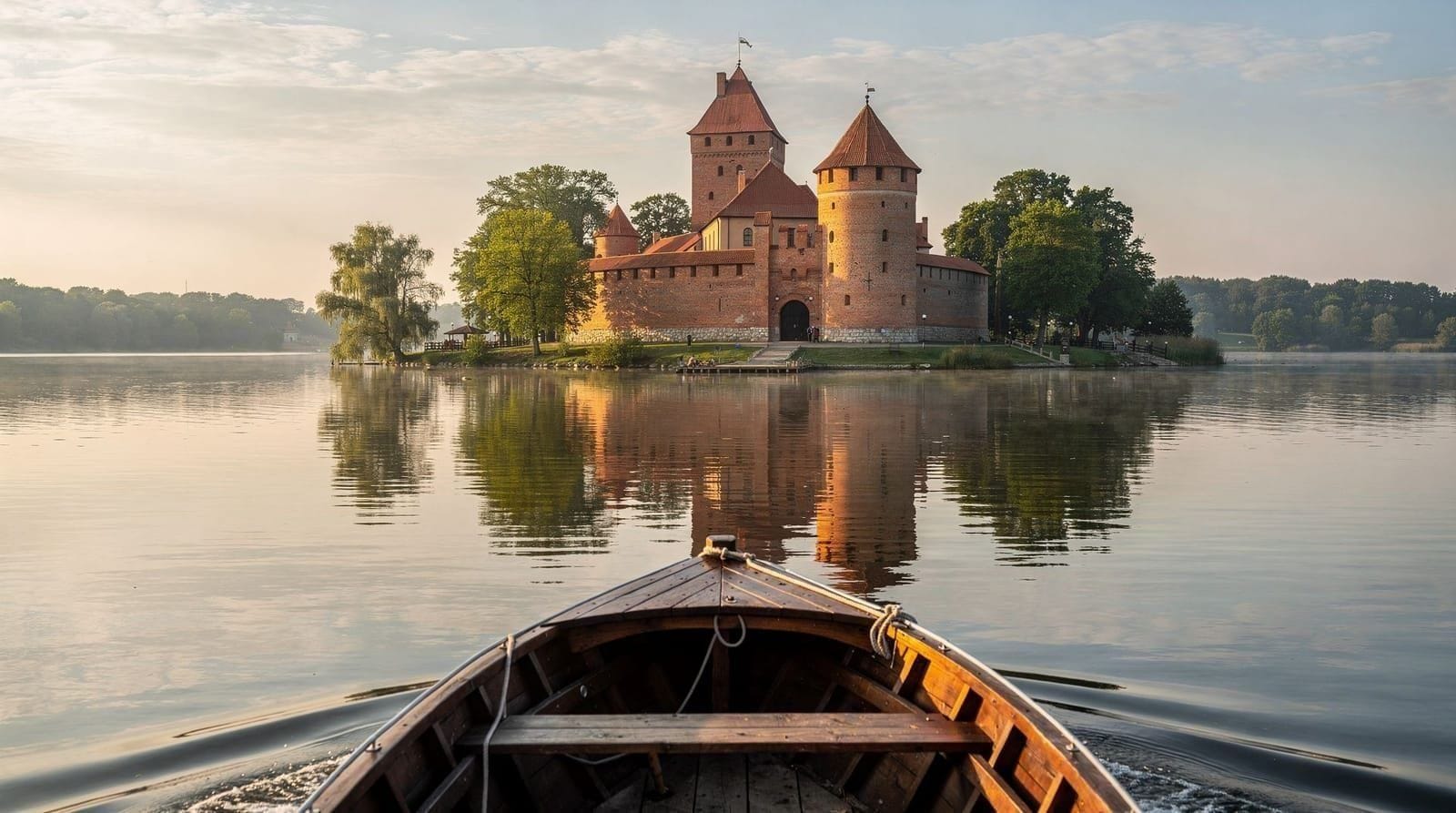
Trakai is not just a backdrop for photographs. The island castle is Lithuania’s only surviving example of a Gothic castle surrounded on all sides by water, and it’s been maintained well enough that the interior museum is genuinely informative. The lake landscape — Galvė Lake has 21 islands — is among the most scenic in the Baltic states. And the Karaim community, a Turkic minority brought to Trakai by Grand Duke Vytautas in the late 14th century, has been here ever since, maintaining a living culture that includes the kibinai pastry shops that line the main peninsula street.
The honest verdict: on a sunny summer weekend, Trakai is crowded and the castle queue can be 45 minutes. On a Tuesday in May or September, it’s quiet enough to feel like you’ve discovered it yourself.
Getting to Trakai from Vilnius
Train: Vilnius central station to Trakai station, roughly every hour, 30 minutes, around €1.70. The train station in Trakai is a 10-minute walk from the castle. This is the most reliable and cheapest option.
Bus: Regular buses from Vilnius bus station (Trakų bus company), about 35 minutes, similar price. Drops you closer to the old town centre.
Car: 28 km via the A1 motorway, about 30 minutes. Parking is available near the old town entrance (€1–2/hour). Driving allows you to combine with Kernavė (35 km from Vilnius in a different direction, so the detour adds 30–40 minutes).
Organised tour: Most tours from Vilnius include transport, a guide inside the castle, and sometimes a boat ride. A good option if you want context for what you’re seeing. See the Vilnius to Trakai guide for timing and logistics.
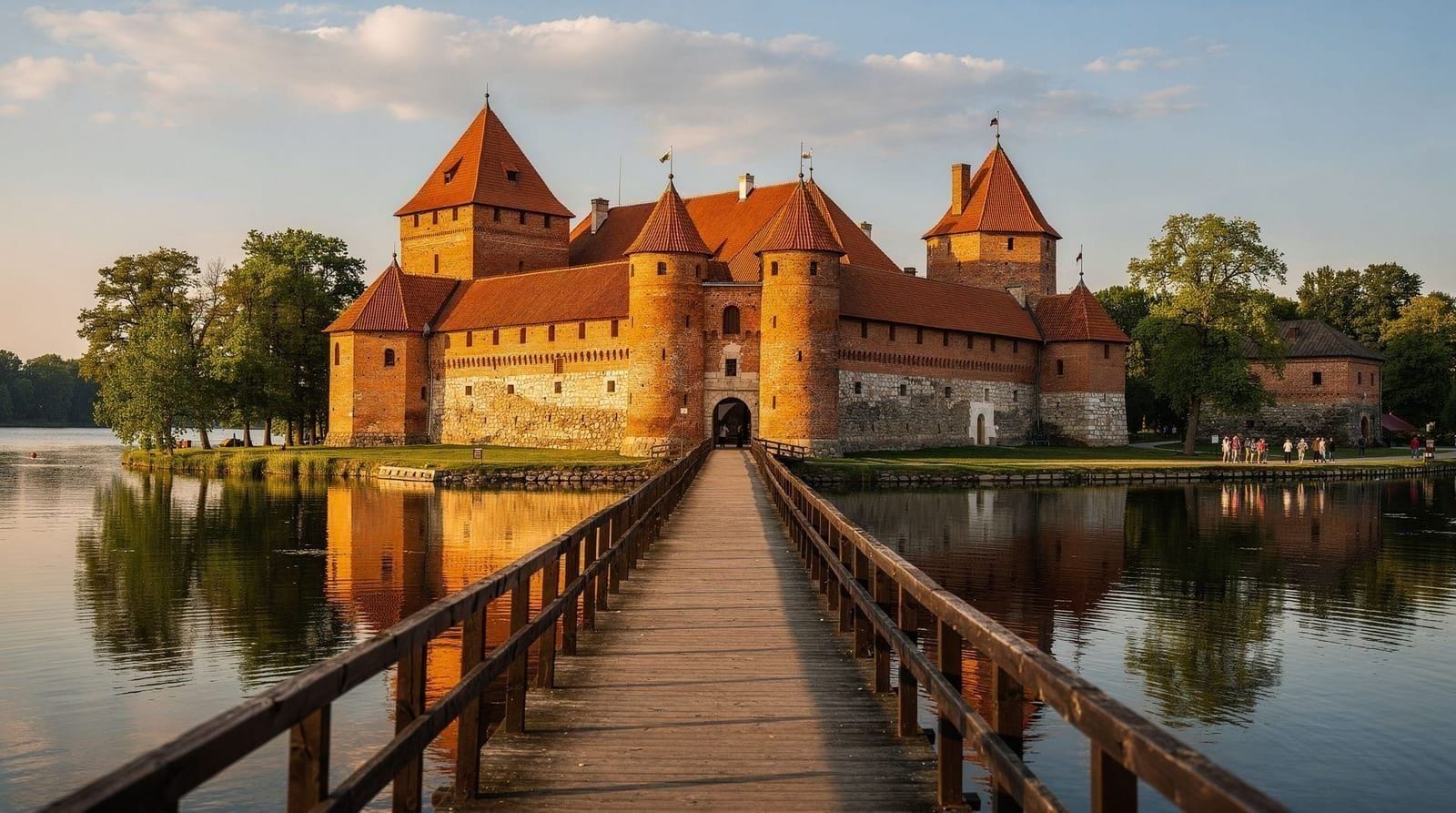
Vilnius: Trakai half day sightseeing tourTrakai Island Castle
The castle is on an island in Galvė Lake, connected to the peninsula by two wooden bridges. It was built in the late 14th and early 15th centuries under Grand Duke Vytautas the Great, who made Trakai a key political centre of the Grand Duchy of Lithuania.
Entry: Around €10–12 for adults (verify at gate — prices change seasonally). The ticket includes the museum inside.
What’s inside: The museum covers the history of the Grand Duchy of Lithuania through archaeological finds, decorative arts, coins, and maps. The exhibits are reasonably well presented with English signage, though some rooms are light on interpretation. The courtyard and the towers themselves are the highlight — you can climb to upper galleries for views over the lake.
Time needed: 1 hour for a quick visit; 1.5–2 hours to go through the museum properly.
Practical notes: Arrive early in summer (before 11:00) or late afternoon (after 15:00) to avoid the worst queues. The bridges can be a bottleneck when tour groups all arrive at once.
Kayaking and lake activities
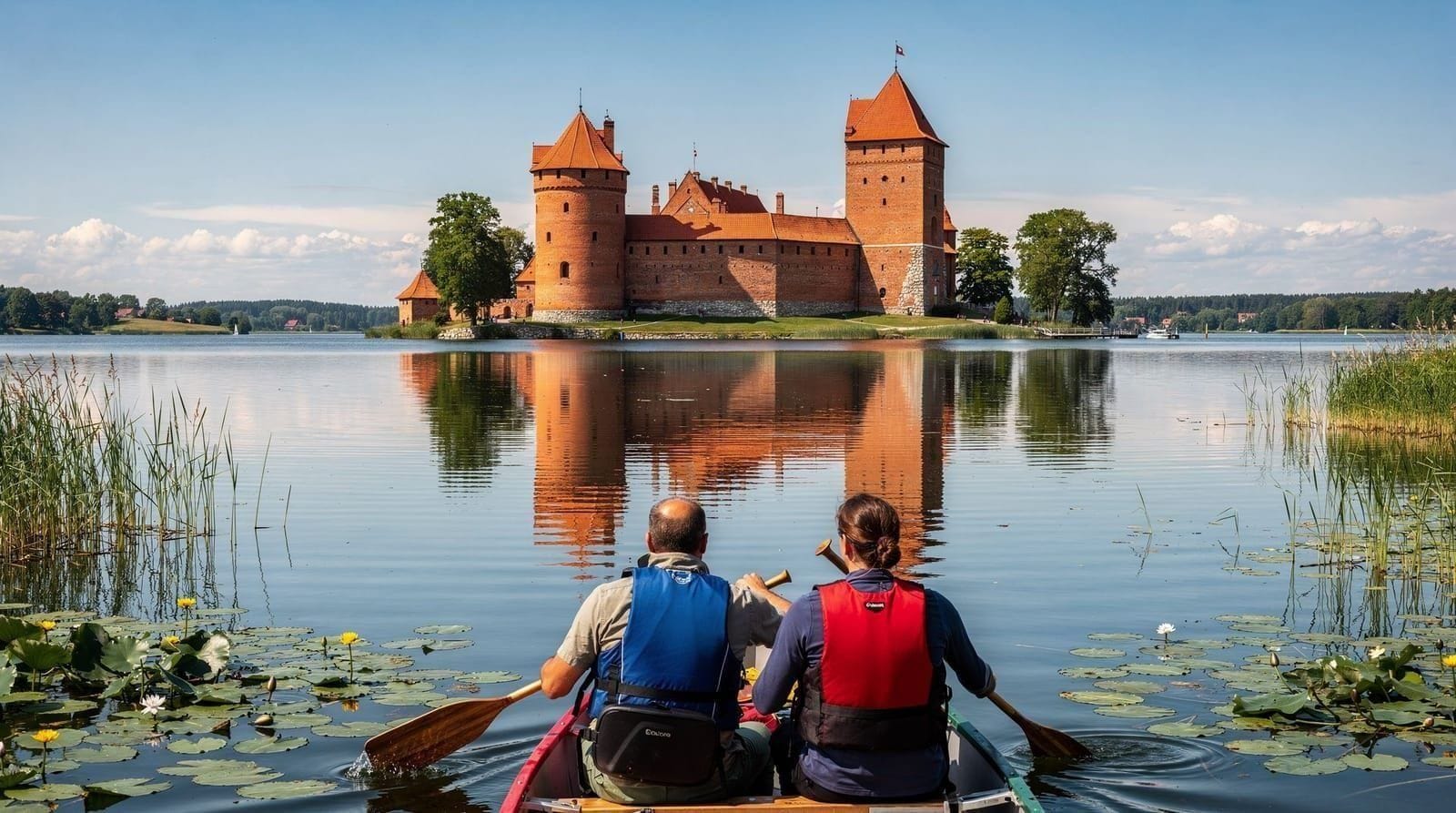
Galvė Lake is kayak country. Several rental operators line the peninsula and the waterfront near the castle approach — expect €8–15/hour for a single kayak, €12–20 for a double. You can paddle around the castle island, through the channels between smaller islands, and along the reed-fringed shores of the lake without a guide. Rentals are informal and cash-oriented in most cases.
For a guided experience — including paddling with context about the castle and lake history — the guided canoe tour is a reliable option that departs from near the castle approach.
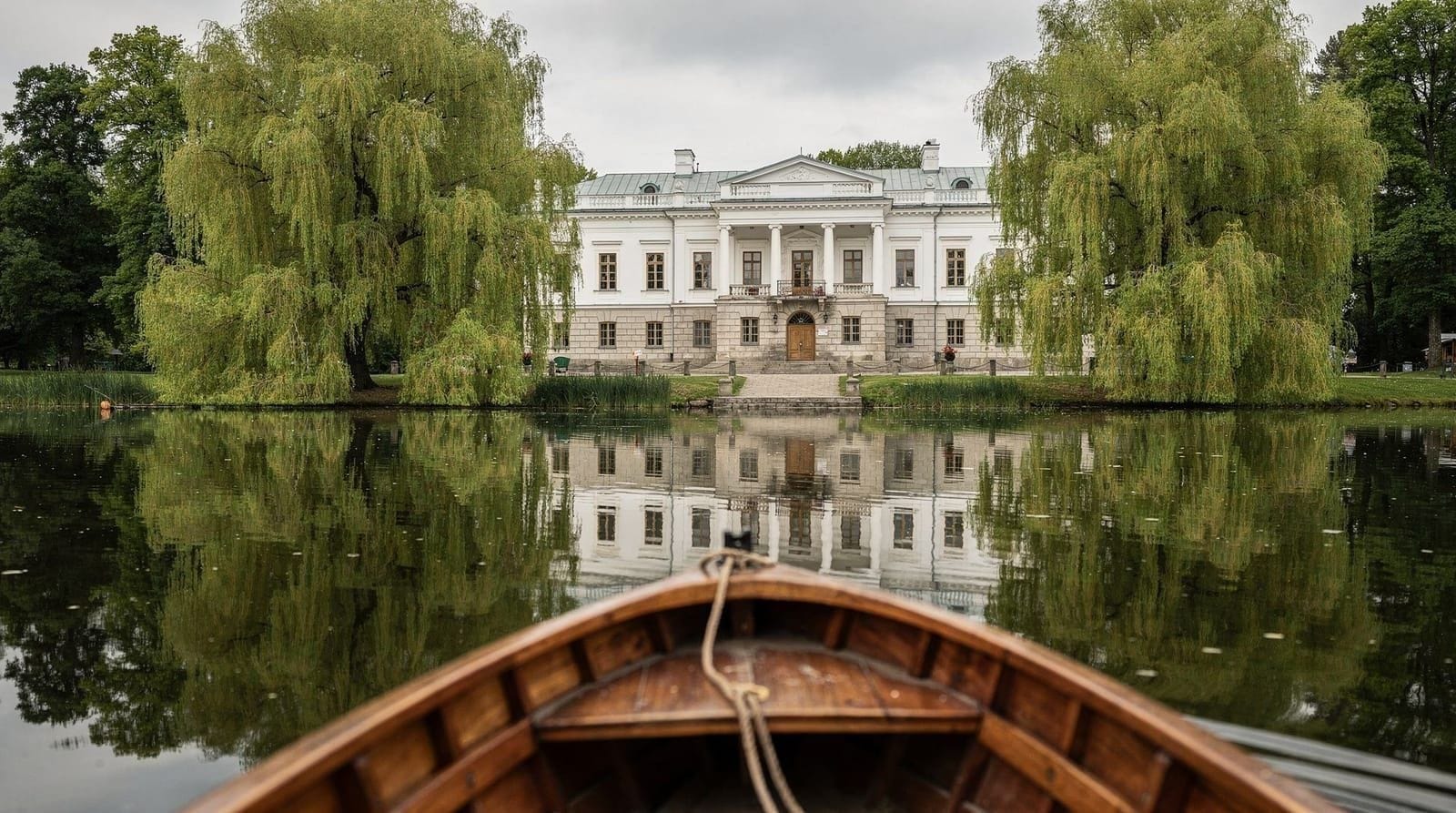
Vilnius: Trakai guided canoe castle island Vilnius: Jims tour vilnius trakai hill of angelsBoat rides (electric tourist boats) depart from the embankment on the peninsula near the main entrance. These are a more passive way to see the castle from the water; typical cost €8–12 for a 30–45 minute circuit. The Užutrakis Manor boat ride combines a crossing of the lake with a visit to the 19th-century manor estate on the opposite bank — a calmer alternative to the main castle.
Vilnius: Trakai uzutrakis manor boat rideKaraim heritage and kibinai
The Karaim are a Turkic-speaking minority with origins in the Crimea, brought to Trakai by Grand Duke Vytautas around 1397 to serve as his personal bodyguard. Roughly 60–70 Karaim remain in Trakai today, making it one of the few places in Europe where Karaim culture has survived in any form.
The Karaim ethnographic museum (on Karaimų Street) is small but informative — displays on language, religious traditions, and daily life. Entry is around €2.
Kibinai: The Karaim pastry — a semi-circular pastry pocket filled with mutton, pork, or curd and vegetables — is sold everywhere on the peninsula. The version at Kibininė (Karaimų Street) is the most authentic: the Karaim community runs it, and the pastries are made on the premises. Two kibinai and a tea costs about €5. Skip the kibinai sold from tourist kiosks near the castle bridge — they are inferior and overpriced.
Where to eat in Trakai
Trakai has one main restaurant strip along Karaimų Street and the waterfront. In summer, expect tourist-oriented pricing and wait times.
- Kibininė (Karaimų St 65): The genuine Karaim article. Kibinai, borscht, Karaim dishes. Reliable and moderately priced.
- Apvalaus Stalo Klubas (by the castle approach): On the pricier end; lake views from the terrace. Reliable Lithuanian mains (€12–18); worth it for the setting on a good day.
- Bona Fide (Karaimų St): A smaller café with coffee and light meals — good for regrouping before or after the castle.
Bring snacks from Vilnius if you plan to be there most of the day and want to avoid the tourist-menu pricing.
Combining Trakai with other day trips
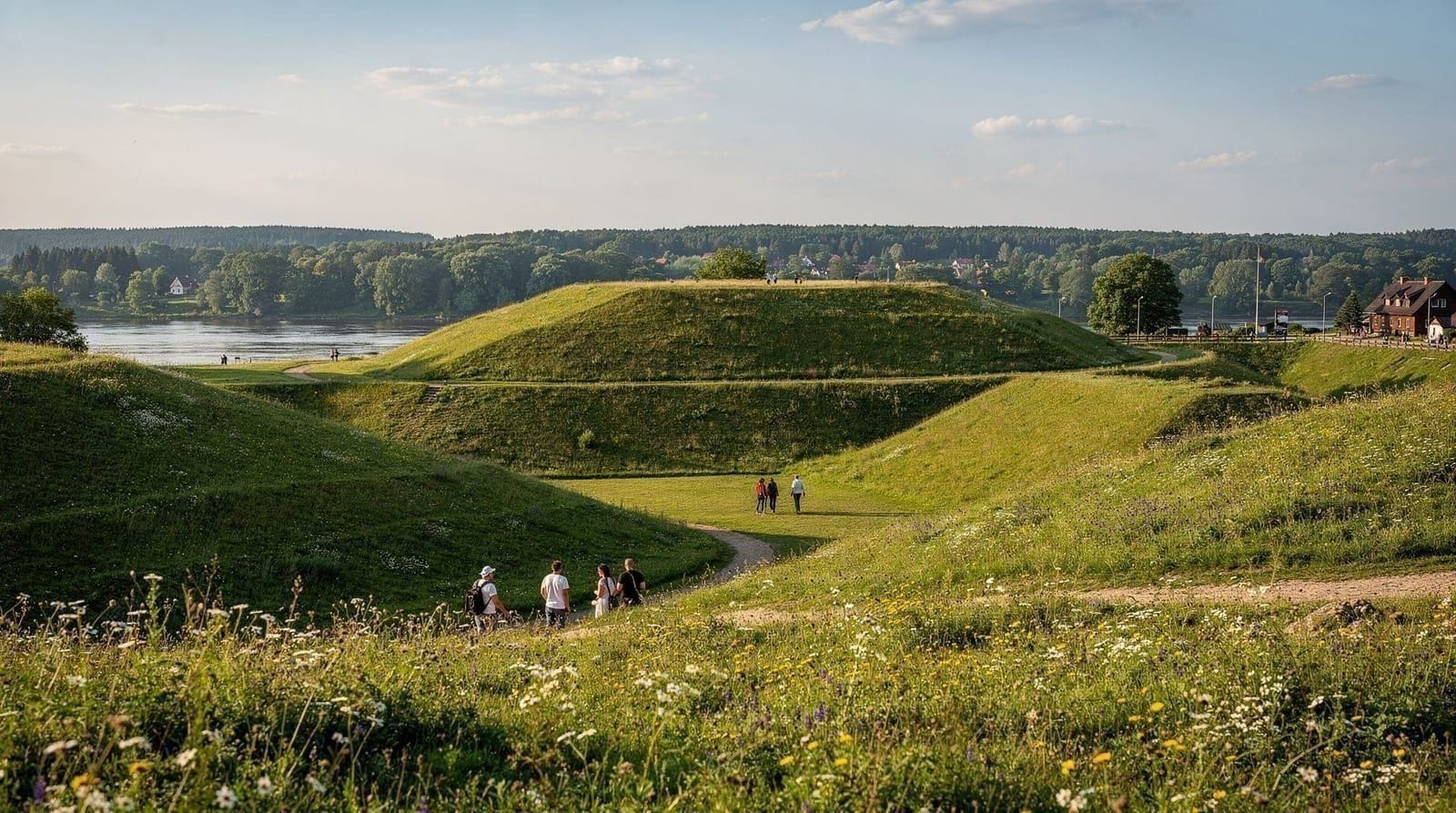
Trakai + Kernavė: The Kernavė UNESCO mounds are only 20 km from Trakai (though 35 km from Vilnius in a different direction). By car, you can visit both in a full day; by public transport, this requires awkward bus connections. Private day tours often cover both. See the Kernavė destination page.
Trakai + Paneriai: By train from Vilnius, you can stop at Paneriai (10 minutes from Vilnius station) on the way back from Trakai. Combine a morning in Trakai with an afternoon visit to the Paneriai memorial — this is a sombre but worthwhile combination. The full day trip guide covers both.
Trakai by season
| Season | Conditions | What to expect |
|---|---|---|
| May–Jun | Warm, lake at its calmest | Best combination of good weather and manageable crowds |
| Jul–Aug | Hot, peak season | Busiest; castle queues up to 45 minutes on sunny weekends |
| Sep | Mild, fewer visitors | Good kayaking weather, quieter than summer |
| Oct–Nov | Cool, quiet | Castle open, kayak rentals mostly wound down |
| Dec–Feb | Cold, sometimes frozen lake | Atmospheric, very few tourists, shorter castle hours |
Trakai’s other lakes and villages
Beyond Galvė, the Trakai area sits within a peninsula and lake district with several smaller lakes — Lukos, Bernardinų, and Totoriškių among them. Few visitors venture beyond the castle approach and Karaimų Street, but a walk or cycle along the quieter shoreline paths gives a sense of the wider landscape without the crowds. Rental bikes are available near the train station for those who want to extend a half-day visit into a longer, more active one.
Trakai Historical National Park covers the whole peninsula and surrounding lakes — it’s Lithuania’s oldest national park, established in 1991 specifically to protect the castle setting and lake ecosystem together. This is part of why the area feels so intact compared to more built-up lakeside towns elsewhere in the Baltics.
Hot-air ballooning over Trakai
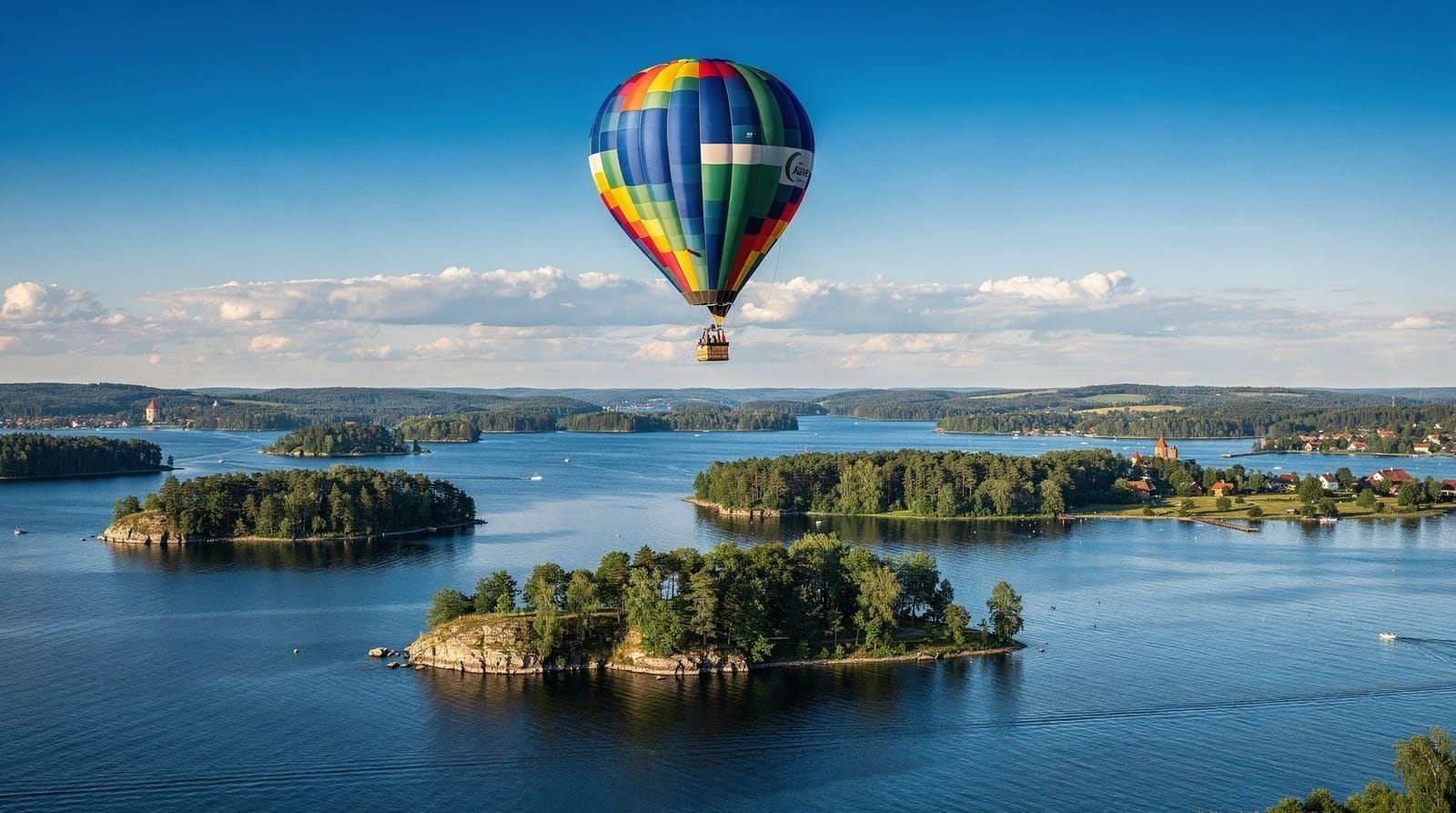
Trakai is one of the departure points for hot-air balloon flights over the lake district — the combination of water, islands, and the castle creates one of Lithuania’s best aerial views. Flights typically depart in the early morning or late afternoon and last about an hour.
Trakai: Hot air balloon ridePractical tips
Crowds: July and August weekends are the busiest. The castle can feel overwhelmed on sunny Saturdays in August. Weekday visits are significantly more relaxed year-round.
Winter: The lakes sometimes freeze in January and February, which is atmospheric and very different from summer. The castle is open year-round (shorter hours in winter). Ice fishing is visible from the peninsula in cold years. Winter visitor numbers are a fraction of summer.
What to bring: Water and snacks if you plan to kayak or walk more than 2 hours. Sunscreen in summer — the waterfront has no shade. Modest clothing for the castle museum (not required, but respectful).
Do not: Pay rack-rate taxis from Vilnius to Trakai (€40–60 each way). The train is €1.70 and takes the same time. Rank taxis in Trakai charge inflated tourist fares; Bolt works here.
Frequently asked questions about Trakai
How do I get from Vilnius to Trakai?
The train from Vilnius Central Station takes about 30 minutes and runs roughly hourly. Tickets cost around €1.70 each way. Buses also run the route in about 35 minutes. Driving takes 30 minutes via the A1; parking is available near the old town. Taxis from Vilnius cost €30–50 each way — only worth it if you’re sharing or combining with other stops.
How much does Trakai Island Castle cost?
Adult entry to the castle and museum is approximately €10–12. Check the museum website for current prices as they vary seasonally. The walking path along the peninsula, the Karaim museum, and the lakefront are free. Kayak rental starts at around €8–10/hour.
Is Trakai worth visiting?
Yes, provided you set expectations correctly. The castle is impressive from the outside and the island setting is scenic. The interior museum is interesting but not world-class. The main value is the combination of castle, lake, kayaking, and Karaim culture in a half-day trip from Vilnius. If you expect a fairy-tale castle with no other visitors, adjust expectations for summer.
Can I visit Trakai without a car?
Easily. The train from Vilnius runs regularly and is the recommended option. Bus service is also frequent. Almost everything in Trakai — the castle, Karaimų Street, lake access, kayak rentals — is within walking distance of the train station.
What is the best time to visit Trakai?
Late May, June, and September are the best months — warm enough for kayaking and lake activities, but before and after the peak summer crowds. July and August are busiest. Winter (December–February) is dramatically different: cold, very quiet, and potentially with frozen lakes.
How long should I spend in Trakai?
A minimum of three hours allows you to walk to the castle, see the museum, and have lunch. Four to five hours lets you add kayaking or a boat ride. A full day (six-plus hours) suits people who want to explore the lake by kayak, visit the Karaim museum, and eat at a proper pace. If combining Trakai with Kernavė or Paneriai, budget a full day for the combination.
Should I stay overnight in Trakai, or day-trip from Vilnius?
Day-tripping from Vilnius is the right call for almost everyone — the 30-minute train connection is fast and frequent enough that an overnight adds little except cost. The exception is if you specifically want early-morning photos of the castle before the tour buses arrive, or you’re combining Trakai with Kernavė over two unhurried days. For most itineraries, see the Vilnius and Trakai 3-day itinerary for how it fits as a day trip from a Vilnius base.
Top experiences
Bookable activities with verified prices and instant confirmation on GetYourGuide.