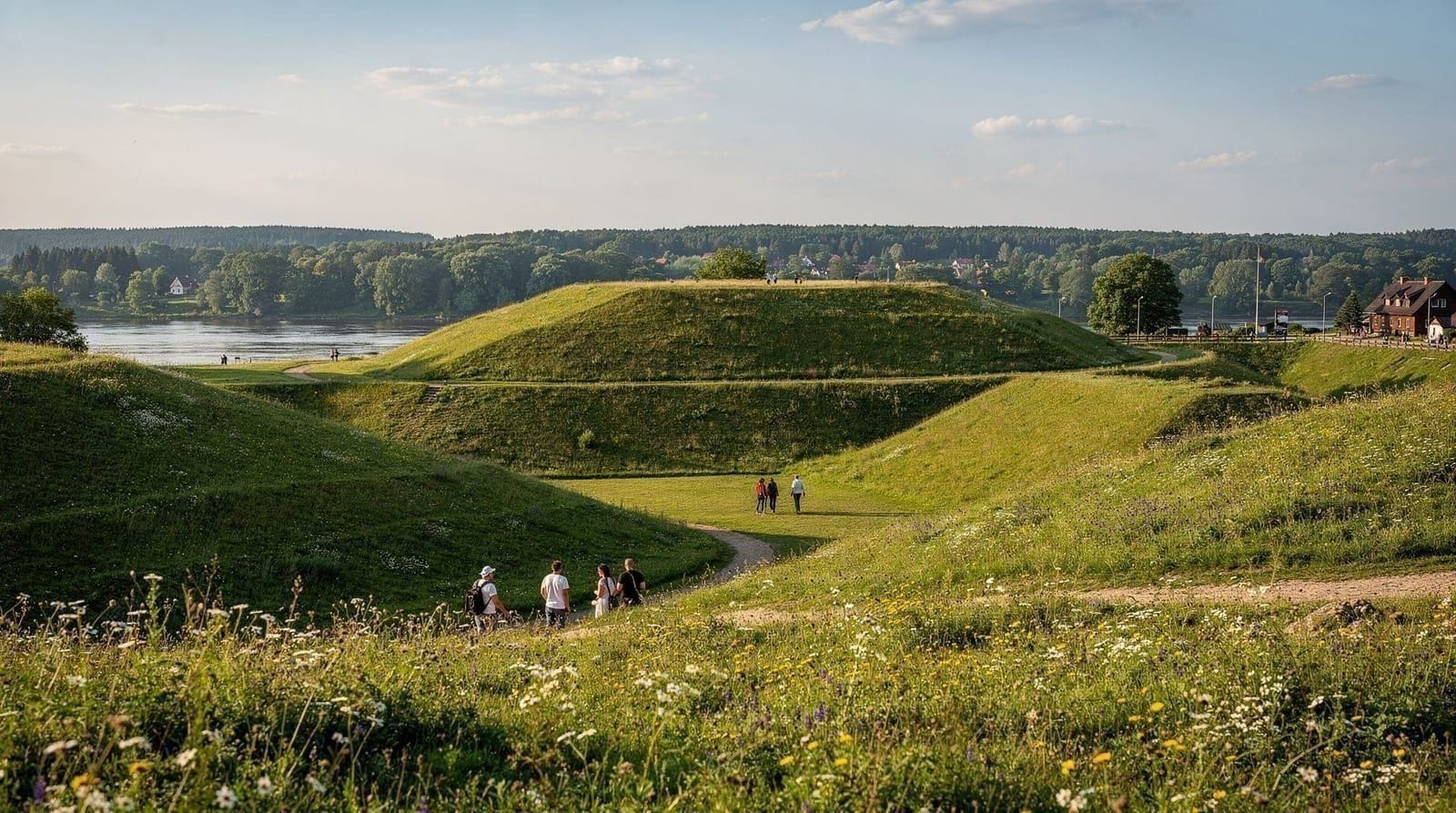
Paneriai, Lithuania
Paneriai is the Holocaust site 10 km from Vilnius where up to 100,000 people were murdered in 1941–1944. How to visit, what to expect, and the history.
Vilnius: Trakai castle paneriai memorial tour
Duration: 5-6 hours
Quick facts
- Distance from Vilnius
- 10 km
- Travel time
- ~15 min by train from Vilnius Central Station
- Best time
- Year-round; annual memorial on Jul 23
- Time needed
- 1.5–2 hours minimum
- Entry
- Free (museum free; donations welcome)
Quick answer: Paneriai (Ponary in Polish; Ponar in Yiddish) is a forest 10 km from central Vilnius where between 70,000 and 100,000 people — primarily Jews from the Vilna Ghetto, along with Soviet prisoners of war and Lithuanian political prisoners — were murdered between June 1941 and July 1944. It is one of the most significant Holocaust sites in Eastern Europe. Getting there takes 15 minutes by train. The site is free. Visiting takes at least 1.5–2 hours and requires some preparation. It is not a comfortable visit; it is an important one.
| Where | 10 km from central Vilnius |
| Cost | Free (donations welcome) |
| Time needed | 1.5–2 hours minimum |
| Getting there | Train (~15min) or car (~15min) |
| Best time | Year-round; quiet on summer weekday mornings |
The history: what happened at Paneriai
When Nazi Germany invaded the Soviet Union on June 22, 1941, German forces and their Lithuanian collaborators immediately began the mass murder of Jewish and other populations. Paneriai was selected because Soviet forces had dug large fuel storage pits there before the invasion. These pits became mass graves.
Between July 1941 and the German retreat in summer 1944:
- Approximately 70,000 Jews from the Vilna Ghetto were brought to the Paneriai forest and shot, accounting for nearly all of the Jewish population of Vilnius
- An estimated 20,000–30,000 additional victims including Soviet prisoners of war, Polish civilians, Lithuanian resistance members, and others were also murdered here
- In 1943–1944, as the German army retreated, the Sonderkommando (a forced labour unit of Jewish prisoners) was ordered to exhume and burn the bodies to destroy evidence — an operation called “Aktion 1005”. Most of these prisoners were then killed; a small number escaped through a tunnel they dug
Total victims: estimates range from 70,000 to 100,000 depending on methodology. This represents one of the single largest murder sites in the entire Holocaust.
Visiting the site
The Paneriai Memorial Museum is at the end of Agrastų Street, accessible from the Paneriai train stop or by car. The site covers the forest area where the killings occurred, the pits, and a small museum building.
What you will see:
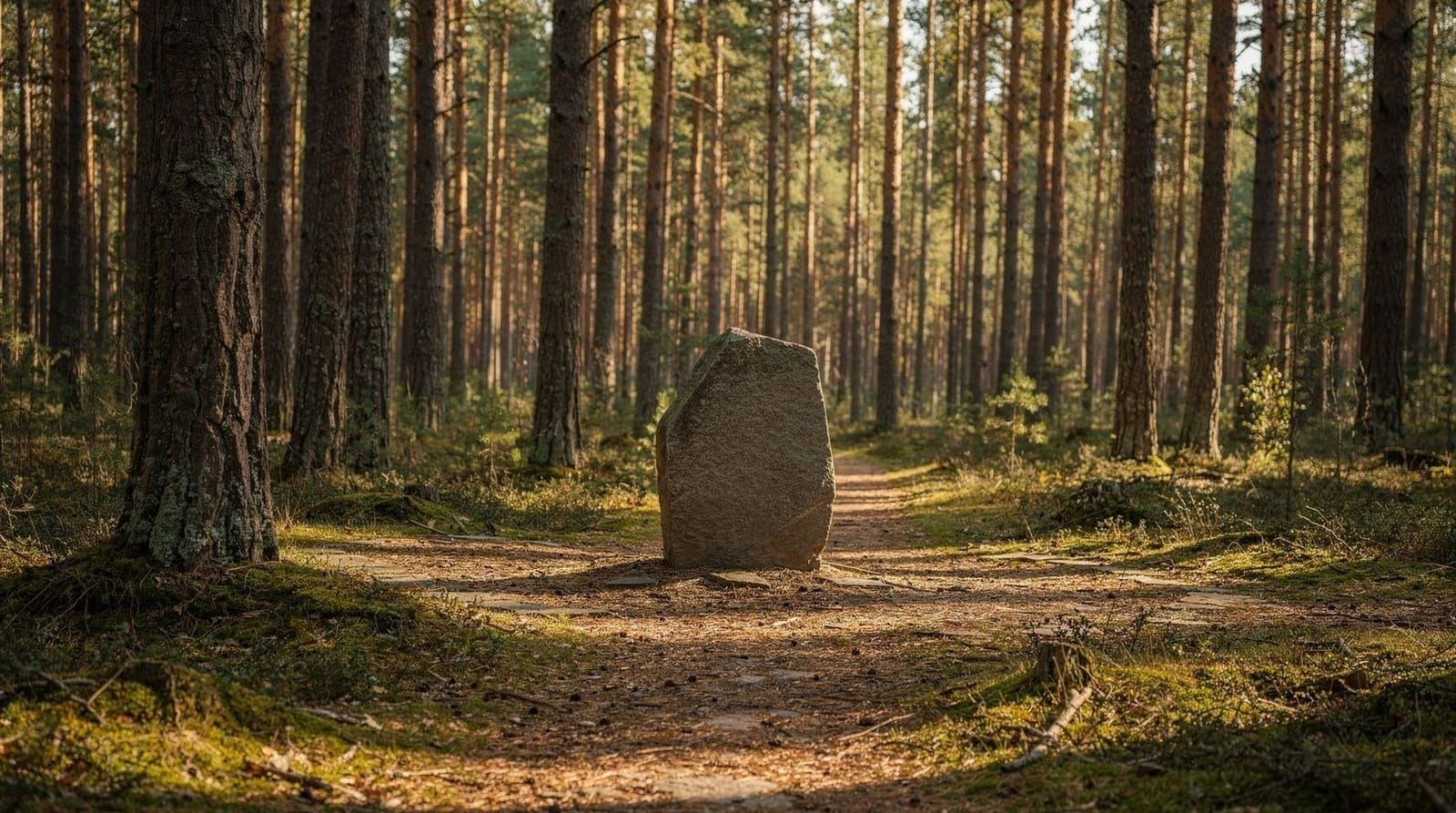
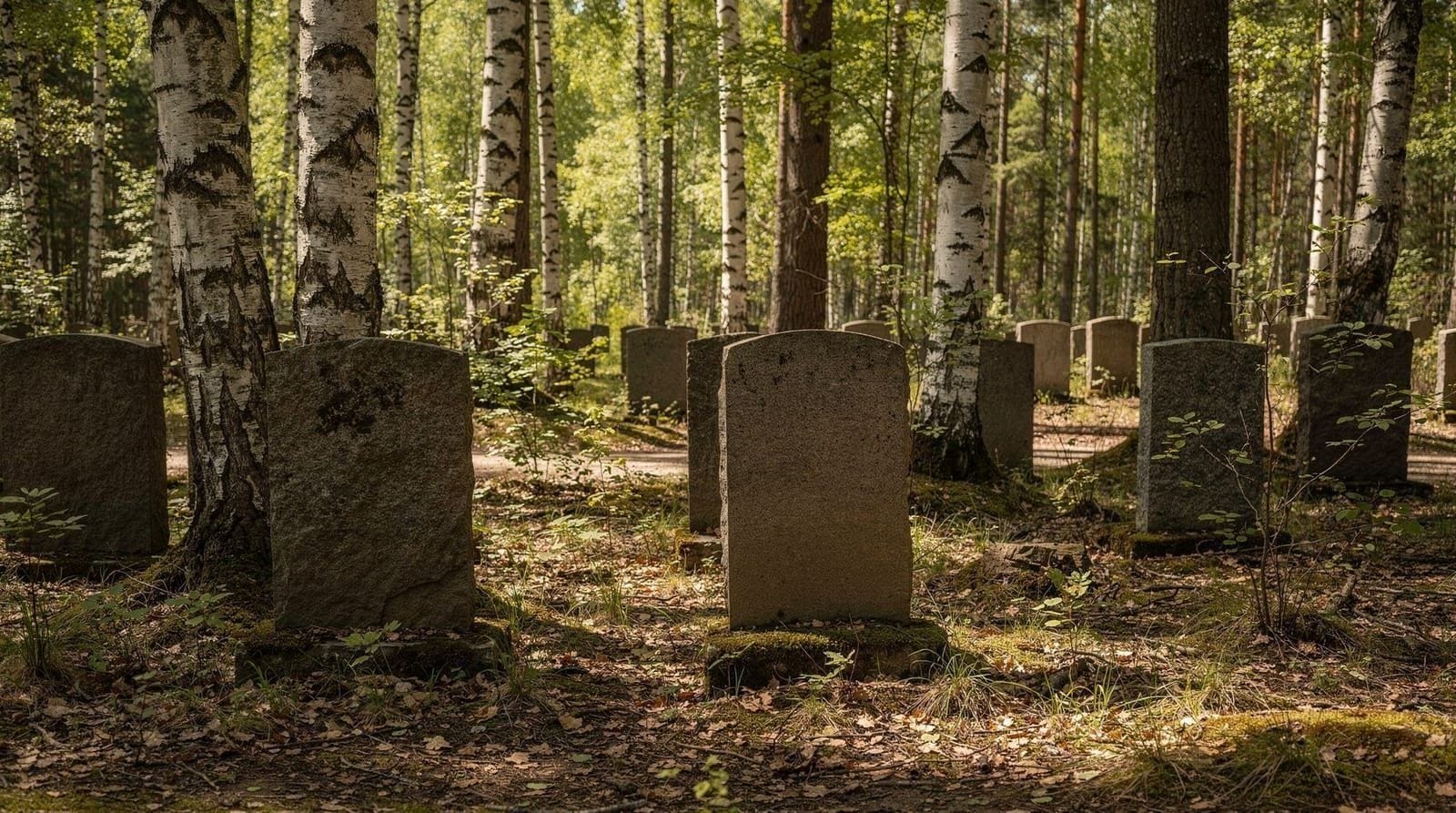
- The memorial pits — several large earthen depressions in the forest, some partially excavated, each with memorial stones
- Monuments erected at different periods: Soviet-era monuments (which minimised Jewish specificity, referring to “Soviet citizens”), post-independence Lithuanian monuments, and Jewish community memorials
- A reconstructed wooden booth where victims were processed before execution
- The site of the Sonderkommando tunnel (marked)
The museum: A small building contains photographs, documents, personal objects, and the names of documented victims. The exhibits are in Lithuanian and Russian (some signage in English). Allow 45 minutes inside the museum in addition to the outdoor site.
Visitor conduct: This is an active memorial site visited by Jewish community groups, Lithuanian families of victims, and researchers from across the world. Respectful, quiet conduct is expected. Photography is permitted but should be done with awareness. Organised commemorations take place on significant dates — the main annual memorial is typically on July 23.
Vilnius: Trakai castle paneriai memorial tourGetting to Paneriai from Vilnius
Train: From Vilnius Central Station, take any local train on the Kaunas or Trakai line. The Paneriai stop is the first stop, about 7 minutes. Trains run throughout the day; check the LTG Link timetable. A return costs under €3. Walk approximately 1.5 km from the station to the memorial (follow the signs; the route is signposted).
Car: 10 km from central Vilnius, about 15 minutes. Free parking at the memorial car park.
Taxi/Bolt: A Bolt from the old town costs approximately €5–7 each way.
Combining Paneriai with other visits
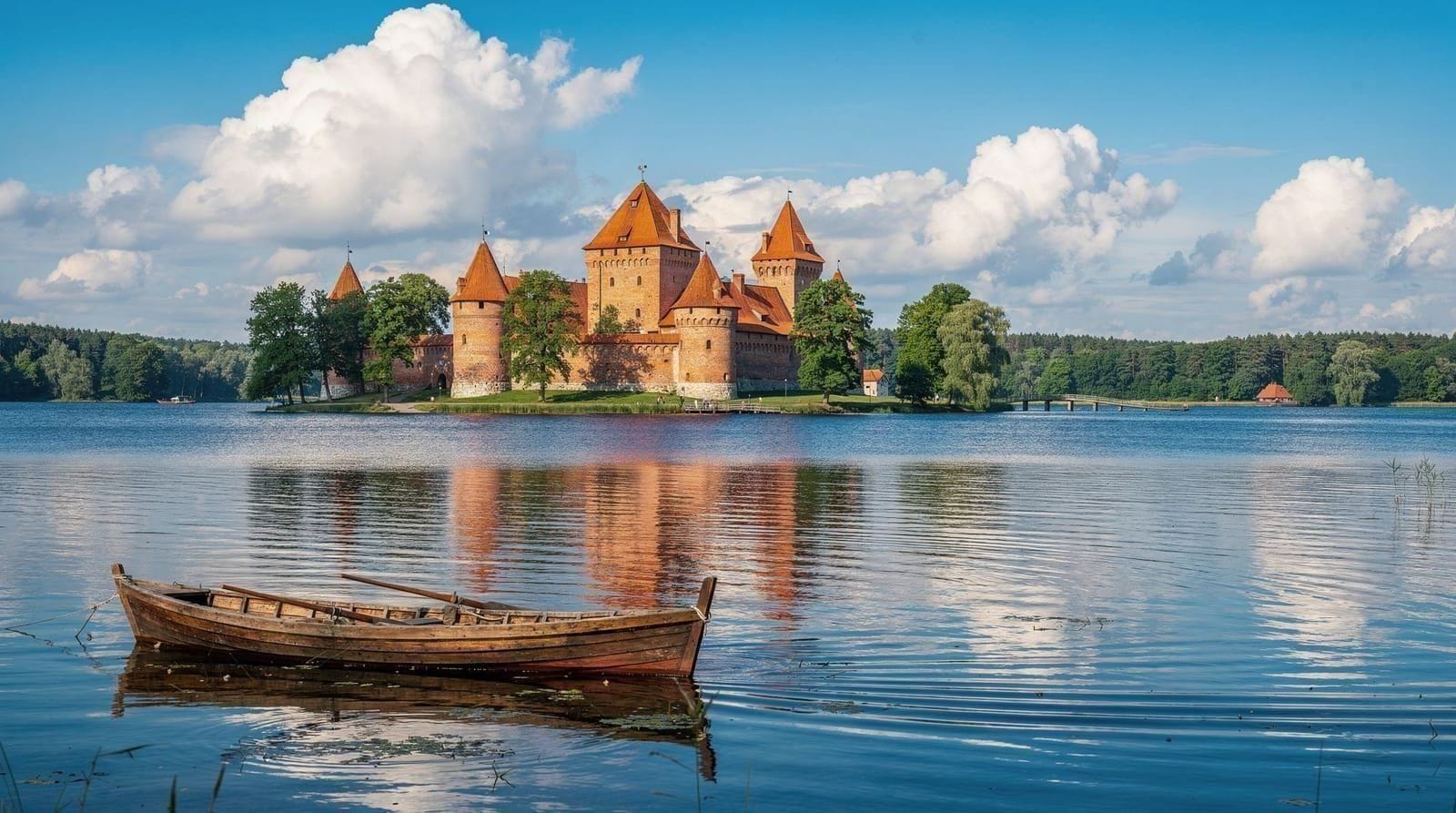
Paneriai + Trakai: A practical combination. Take the Vilnius–Trakai train, stop at Paneriai first (spend 2 hours), then reboard and continue to Trakai. This works logistically and creates a day that spans both the sobering and the scenic. See the Trakai destination page for what to do there.
Paneriai + Kernavė: A longer day combining two historically significant sites. By car, visiting Paneriai (10 km from Vilnius) and Kernavė (35 km, different direction) requires a 50–60 km drive between them. The private tour covering both is the efficient option. See the Kernavė and Paneriai day trip guide.
Vilnius: Paneriai trakai rumsiskes day tour Vilnius: Old town south audio tourContext: Jewish Vilnius before the Holocaust
To understand Paneriai, it helps to know what was destroyed.
Before World War II, Vilnius (known in Yiddish as Vilne) was one of the great centres of Jewish intellectual and religious life in the world. The Vilna Gaon (Rabbi Elijah ben Solomon Zalman, 1720–1797) was one of the most influential Jewish scholars in history; his legacy drew Jewish learning to the city for generations. By 1941, approximately 75,000 Jews lived in Vilnius — about a third of the city’s population.
Within three years, nearly all of them had been murdered: at Paneriai, in the ghetto, or in later deportations. The cultural community, the institutions, the synagogues, the libraries, the daily life — destroyed systematically. The Vilna Gaon Jewish State Museum in Vilnius documents this history; a visit there before Paneriai provides essential context. See the Jewish Vilnius guide for more.
Guided versus independent visits
Independent visit: Fully viable. The site is clearly marked, the museum provides documentation, and the outdoor pits are labelled. You will understand the geography of what happened here.
Guided visit: Significantly more informative. A guide who specialises in this history can explain the chronology, the perpetrators, the collaboration, the specific events at each pit, and the stories of individual victims and survivors. For educational visits, the guided option is strongly recommended.
Practical notes
Language: Museum signage is primarily in Lithuanian and Russian with partial English. Guided tours in English are available through various Vilnius operators.
Weather and season: The memorial is accessible year-round. The forest is atmospheric in autumn (October–November) and snow in winter adds an additional dimension. Summer weekday mornings are the least crowded.
Children: Paneriai addresses mass murder and genocide directly. This is not appropriate for young children. For teenagers, it is an important and challenging visit that parents should prepare children for with advance discussion.
What to bring: Modest, respectful clothing. A printed or digital background reading will significantly increase what you take from the visit. The site has no café or food provision — plan accordingly.
Paneriai in the context of Vilnius’s Jewish history
Understanding Paneriai fully means engaging with what came before it. The Vilna Gaon Jewish State Museum in Vilnius, and the Jewish Vilnius guide, cover the ghetto, the pre-war community, and the broader story of a city once called the “Jerusalem of Lithuania.” Visiting these before or after Paneriai gives the site more meaning than an isolated visit to the forest can provide on its own.
Combining Paneriai with Vilnius’s Soviet-history sites
Paneriai deals specifically with the Nazi occupation and the Holocaust. Vilnius also has significant sites addressing the separate but overlapping history of Soviet occupation — the KGB Museum chief among them. Some visitors choose to address both histories across a single trip, spaced across different days given the emotional weight involved; the Soviet history Vilnius guide covers this wider context.
Planning the visit
For visitors building Paneriai into a broader Vilnius itinerary, the paneriai memorial guide has the fullest logistical detail, including English-language guided tour operators. If pairing it with a day trip further out, the Kernavė and Paneriai day trip guide and the Trakai castle day trip guide both cover realistic combinations that keep the day balanced between weight and lighter sightseeing.
Frequently asked questions about Paneriai
How many people were killed at Paneriai?
Estimates range from 70,000 to 100,000, with the most commonly cited figure around 70,000–75,000 Jews plus approximately 20,000–30,000 non-Jewish victims (Soviet POWs, Polish civilians, Lithuanian resistance members). The exact number is difficult to establish precisely because records were deliberately destroyed.
Who was responsible for the killings at Paneriai?
The killings were ordered and organised by the German SS and Security Police (Einsatzgruppen), with significant participation by Lithuanian auxiliary police collaborators (known as Ypatingasis Būrys — the Special Squad). Lithuanian collaboration in the Holocaust is a historically painful and contested subject in Lithuania; the site addresses this directly.
Is Paneriai a cemetery?
Not in the formal sense. It is a murder site where victims’ remains are interred in the forest. Some remains were exhumed and burned by the Sonderkommando in 1943–1944 in the Nazi effort to erase evidence. Some remains are still in the forest. Memorial stones mark individual pits but this is not a conventional cemetery.
Can I visit Paneriai without a guide?
Yes. The site is clearly marked, the museum provides documentation, and the outdoor area is labelled. An independent visit is fully viable and free. However, a guided visit from Vilnius provides historical context that makes the visit considerably more meaningful.
Is Paneriai combined on the same day with the KGB Museum in Vilnius?
This is a heavy combination — two sites dealing with mass murder and political violence in the same day. It is possible and some visitors do it, but consider the emotional weight. The KGB Museum focuses on Soviet occupation crimes; Paneriai focuses on the Holocaust. They address different periods and different perpetrators. Separate visits on different days may be more appropriate.
Should I visit the Vilna Gaon Jewish State Museum before or after Paneriai?
Before, if possible. The museum covers the vibrant pre-war Jewish community that Paneriai’s history ultimately destroyed, giving the memorial site more context and weight. Visiting Paneriai first also works, but understanding what was lost tends to deepen the experience at the forest site.
Top experiences
Bookable activities with verified prices and instant confirmation on GetYourGuide.