Curonian Spit nature guide — dunes, forests, and wildlife
Nida: Vilnius curonian spit all day tour
What is the Curonian Spit and why is it worth visiting from Vilnius?
The Curonian Spit is a 98km sand spit separating the Curonian Lagoon from the Baltic Sea, shared between Lithuania and Russia (Kaliningrad). The Lithuanian half is a UNESCO World Heritage Site with Europe's tallest dunes, 280+ bird species, amber-strewn beaches, and 50km of cycling paths through pine forest. It is 3.5 hours from Vilnius by bus and ferry. Nida, the main village, is the best base for nature exploration.
| Where | 3.5 hours from Vilnius via Klaipėda and a short ferry crossing |
| Signature sight | Parnidis Dune, 52m above sea level, near Nida |
| Best for | Dune landscapes, birdwatching, cycling, amber hunting |
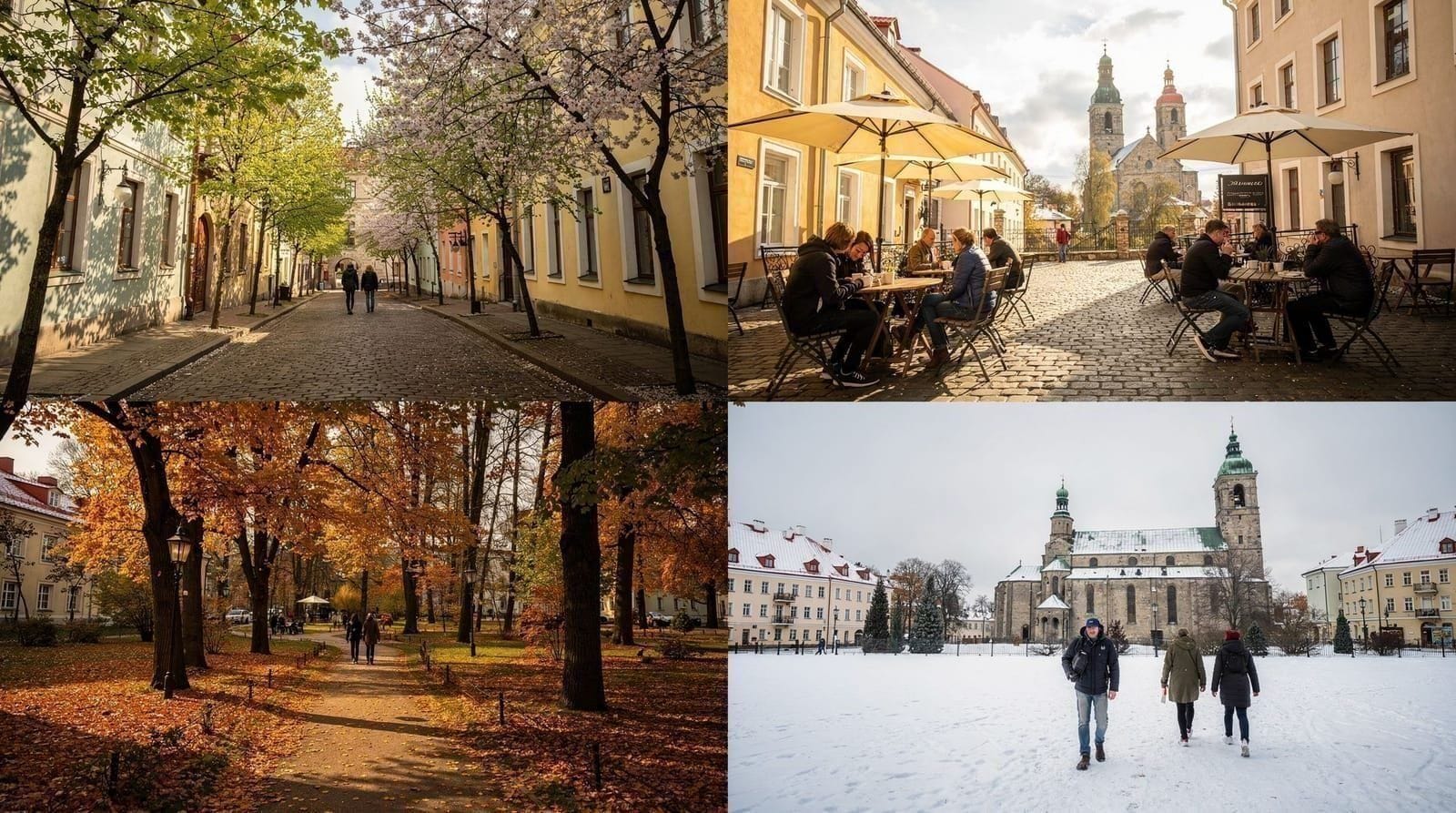
| Best season | May-September for full access; April-May and Aug-Oct for migration birdwatching |
| Minimum time | A rushed day trip is possible; two days is honestly better |
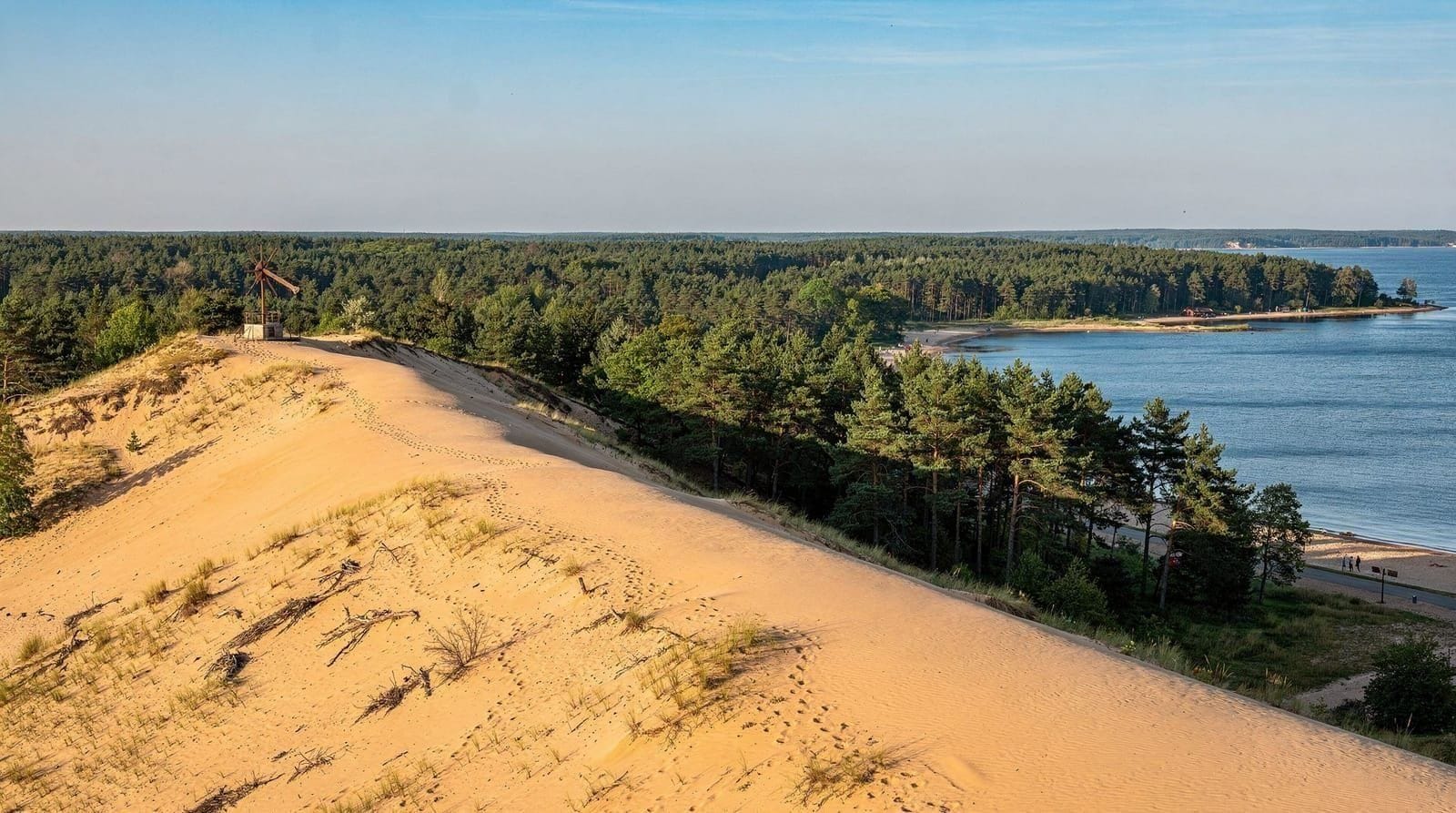
There is a moment, standing on the crest of the Parnidis Dune above Nida at dusk, when the Baltic geography makes sudden complete sense. To the west, the Baltic Sea glitters beyond the dune ridge. To the east, the Curonian Lagoon lies calm and vast, a sheet of grey-blue water stretching 97km north to the mainland. Beneath your feet, 52 metres of sand — the continent’s tallest coastal dune, slowly and continuously moving northeast at roughly 7-10 metres per year, swallowing the forest in front of it and revealing buried forest on the leeward side.
The Curonian Spit is one of Europe’s most distinctive landscapes. A 98km finger of sand separating lagoon from sea, it exists at the intersection of geological accident and human tenacity — a landscape that has buried villages, destroyed forests, and been restored by hand over three centuries, earning its UNESCO World Heritage designation as much for the human story as for the natural one.
It is 3.5 hours from Vilnius. It feels like a different world.
The geography: a sand spit on a geological clock
The Curonian Spit was formed roughly 5,000-8,000 years ago by sand deposited by Baltic Sea currents. The sand accumulated into a narrow bar that grew southward until it almost enclosed the estuary of the Nemunas River — the Curonian Lagoon. Today the spit is 98km long and between 400m and 4km wide. The Lithuanian portion covers the northern 52km; the southern 46km is Russian territory (Kaliningrad Oblast).
The ecological dynamics of the spit are driven by this narrow width and the different conditions on either side. The Baltic Sea side faces prevailing westerly winds and receives Atlantic wave action — wide, flat sandy beaches, sometimes with significant surf. The lagoon side is sheltered, calm, and shallow — excellent habitat for waterbirds. The interior is predominantly pine forest planted over the past two centuries to stabilise dunes that had become catastrophically mobile.
The UNESCO designation (2000) covers both the Lithuanian and Russian sections as a transboundary property — one of the few UNESCO sites split between two countries. The designation recognises both the natural landscape and the centuries of human effort to manage it.
Parnidis Dune: the signature landscape
Parnidis Dune is the highest dune on the Lithuanian Curonian Spit, rising 52 metres above sea level at its crest just south of Nida. It is also one of the most actively moving dunes in the region — measuring stations record its northeast advance at approximately 7-10 metres per year.
The dune supports almost no vegetation on its windward face — this is the “living” face, where sand is continuously stripped and transported. The eastern descent toward the lagoon is steeper and has patches of pioneer plants (sea rocket, sand couch grass, sea lyme grass) attempting to colonise. Behind the dune crest, a “ghost forest” of pine stumps emerges as the dune advances over previously buried trees.
Getting to the dune:
The Parnidis Dune is a 20-minute walk from Nida village centre along a marked path. The ascent is steep (metal staircase for the steepest section) and the sand is loose — wear closed shoes. The crest is broad and flat enough to walk along. The sundial monument at the crest — a tall stone pillar with carved time marks, erected in 1995 to commemorate Lithuania’s independence — provides a focal point and a scale reference in photographs.
The view from the crest:
Looking south from Parnidis, you see the dune landscape continuing to the Lithuanian-Russian border (visible as a fence line 2-3km distant). Looking north, the Nida village red rooftops are visible through the pine forest, and beyond them the lagoon. Looking west, the Baltic beach; east, the lagoon. The 360-degree view from this single point encompasses the full geographic logic of the Curonian Spit in one glance.
Timing:
Sunset from the Parnidis crest is spectacular — the sun descends over the sea to the west, the dune face turns amber, and the lagoon to the east reflects the last light. In June and July, sunset is around 22:00, so this doesn’t disrupt dinner. Allow 1.5 hours for the round trip including time on the crest.
The Dead Dunes: the haunted landscape
Near Juodkrantė, between the village and the ferry terminal, lies one of the Curonian Spit’s most atmospheric landscapes — the Mirties kopos, or Dead Dunes. These are former active dunes that have been partially stabilised by planted forest, but where the dune sand still surfaces in bare, pale patches between the trees, giving the landscape an eerie, in-between character.
The Dead Dunes trail (about 4km round trip) winds through this hybrid landscape — pine forest growing from loose sand, exposed dune faces where the sand is still shifting, and points where you emerge onto the open dune crest with views over the lagoon. The interplay of pale sand and dark green pine creates unusually dramatic light, particularly in afternoon sun.
The name “Dead Dunes” refers to the stabilised condition — these dunes no longer advance as the Parnidis Dune does. But the “dead” label undersells their character; the landscape is strange and beautiful rather than dull.
Naglių Nature Reserve: the protected core
The Naglių Nature Reserve is the strict core zone of the Curonian Spit National Park, protecting the most ecologically sensitive dune and forest systems. Access to the reserve is restricted to marked paths — no off-trail walking, no cycling, no dogs.
The reserve protects several things simultaneously: the most ancient dune formations on the spit (some dune structures here are over 3,000 years old), the relic plant communities of the dune ridges, and the lagoon-edge reed beds and shallow-water habitats.
The main visitor experience in Naglių is the Raganų kalnas (Witch Hill) path — a forest walk through old-growth pine with carved wooden sculptures representing Lithuanian woodland mythology. The sculptures depict the various forest spirits and nature deities of pre-Christian Lithuanian belief: Laima (the goddess of fate), Medeinos (the goddess of forests and game), and various more ambiguous forest spirits. The combination of dark old-growth pine and carved mythology makes for an unusual forest walk.
The path is 2km return from the Juodkrantė end. Free, but on-path only.
Birdwatching: the Juodkrantė colony and beyond
The Curonian Spit is one of the most important bird habitats in the eastern Baltic, and Juodkrantė hosts one of its most remarkable sights: a mixed colony of great cormorants and grey herons nesting in trees on the hillside above the village. The colony numbers several thousand birds at peak season (April-July), and the noise, activity, and quantity of birds visible from the observation platform is extraordinary.
The Juodkrantė cormorant colony is significant from a conservation perspective: great cormorants were nearly eradicated from Lithuania by persecution in the mid-20th century. The Juodkrantė colony represents their recovery and is now protected. Watching thousands of cormorants returning to their nests at dusk — a continuous black river of birds dropping through the pine canopy — is a spectacle in its own right.
Other birdwatching highlights on the Curonian Spit:
The spit is a major migration corridor for birds moving between Scandinavia and Africa. During spring migration (April-May) and autumn migration (August-October), the narrow landform concentrates migrating birds in extraordinary numbers. Bird observatories at Ventes Ragas (mainland side, accessible from Klaipėda) and on the spit itself record thousands of individual birds daily during peak migration.
Regular breeding species include: white-tailed eagle (the lagoon’s apex predator, easily spotted from boats and kayak), osprey, black stork, nightjar (forest clearings at dusk), European bee-eater (rare but recorded in hot summers), and multiple species of warblers in the lagoon reed beds.
The lagoon itself supports significant numbers of waterbirds year-round: mute swan, common pochard, tufted duck, smew (winter), and goosander. The shallow lagoon edges near Nida are productive for waders during migration.
For the best birdwatching experience from a boat on the lagoon, the guided canoe tour on the Curonian Spit gives you water-level access to the lagoon edges that you can’t get from the shore.
Kayaking and canoeing the lagoon
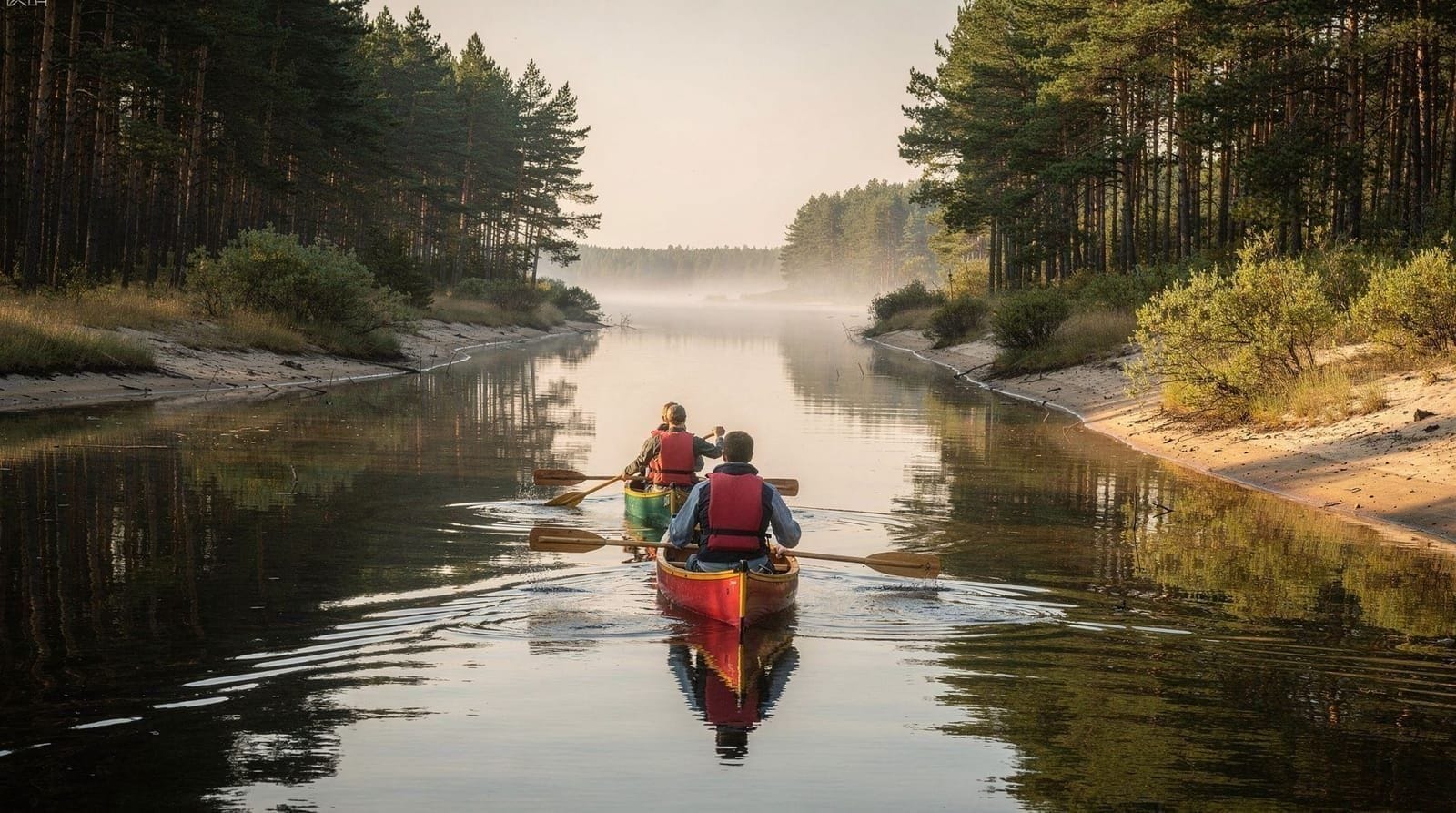
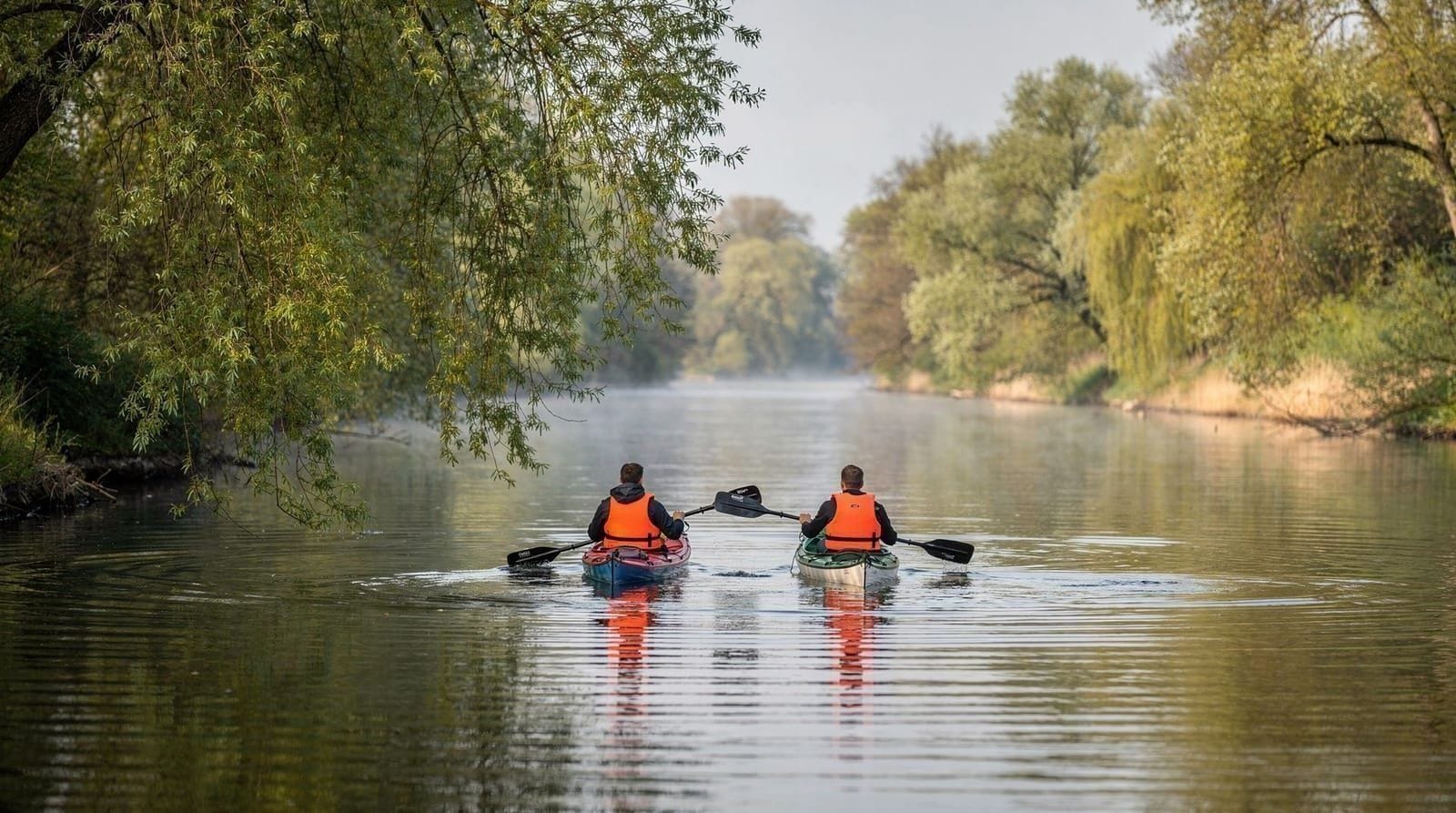
The Curonian Lagoon’s calm, shallow water makes it one of the best paddling destinations in Lithuania, distinct from river paddling around Vilnius itself (covered in our kayaking near Vilnius guide). Paddling gives access to reed-bed habitats and lagoon-edge waterbird activity that is simply not visible from the shore or the cycling paths.
Guided canoe tours typically launch from Nida or Juodkrantė and last 2-3 hours, covering a stretch of sheltered lagoon shoreline with a guide who can identify birdlife and point out the white-tailed eagles that patrol the lagoon’s open water. Early morning paddles, when the lagoon is calmest and bird activity is highest, are the best option if you have a choice of departure time.
A two-day nature itinerary
If you can manage an overnight in Nida, here is a realistic structure that goes well beyond what a rushed day trip allows:
| Day | Focus |
|---|---|
| Day 1 morning | Ferry from Klaipėda, cycle or bus to Nida, settle in |
| Day 1 afternoon | Parnidis Dune walk, Nida village and Thomas Mann House |
| Day 1 evening | Sunset from the Parnidis crest, smoked fish dinner |
| Day 2 morning | Dawn wildlife walk or lagoon canoe tour |
| Day 2 midday | Cycle to Juodkrantė via the Dead Dunes, cormorant colony |
| Day 2 afternoon | Amber beachcombing (if recent storm), bus or ferry back to Klaipėda |
This pace leaves room to actually stop and look, rather than moving continuously between checkpoints as a single day trip requires.
Amber: how and where to look
The Curonian Spit produces Baltic amber — fossilised resin from forests that grew 44 million years ago, now eroded out of the seabed and washed ashore. Amber appears on Baltic beaches after storms, when the sea churns the seabed and carries the lighter-than-water resin to the surface.
The Lithuanian stretch of the Curonian Spit, particularly between Pervalka and Nida, is one of the more productive amber beaches in Lithuania. After autumn storms (September-November), significant pieces are regularly found.
How to find amber:
- Walk the tide line immediately after a storm or strong onshore wind
- Amber is golden-orange to brown in colour, transparent to translucent, and lighter than similarly sized pebbles
- Wet amber is more visible than dry (it appears darker and more lustrous)
- The best time is 30 minutes to 2 hours after a storm subsides, before other collectors arrive
- Bring a rake or stick to sift through seaweed — most amber washes up in the strandline with kelp
Amber regulations:
Collecting amber from the beach for personal use is legal. Commercial collection without a license is not. The pieces found by beachcombers are overwhelmingly small (pea-sized), but genuine amber finds are common enough to make the search worthwhile as a nature activity.
Vilnius and Klaipėda have excellent amber museums and shops if you’d prefer to buy rather than hunt.
Pine forests and cycling: the spit by bike
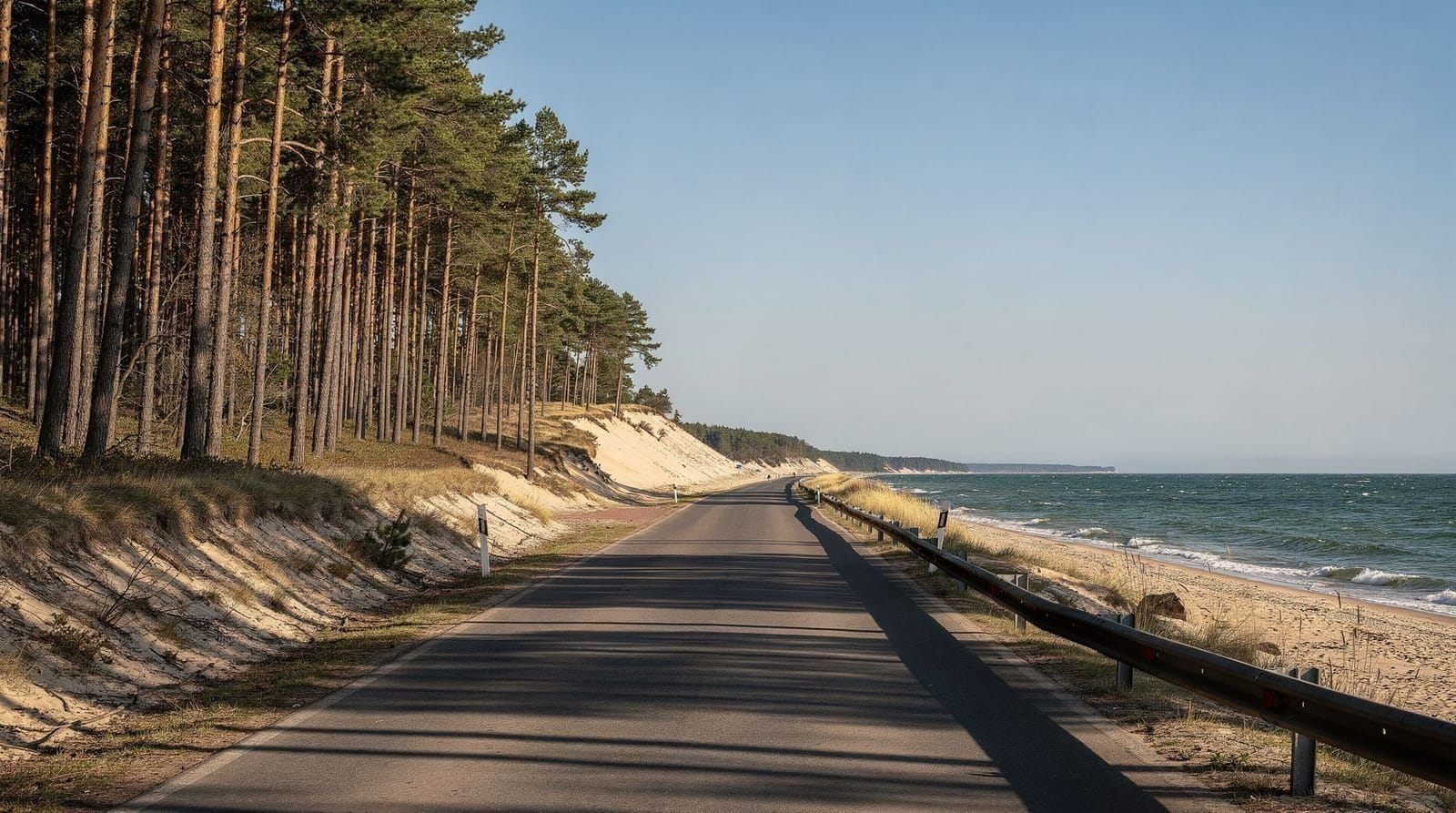
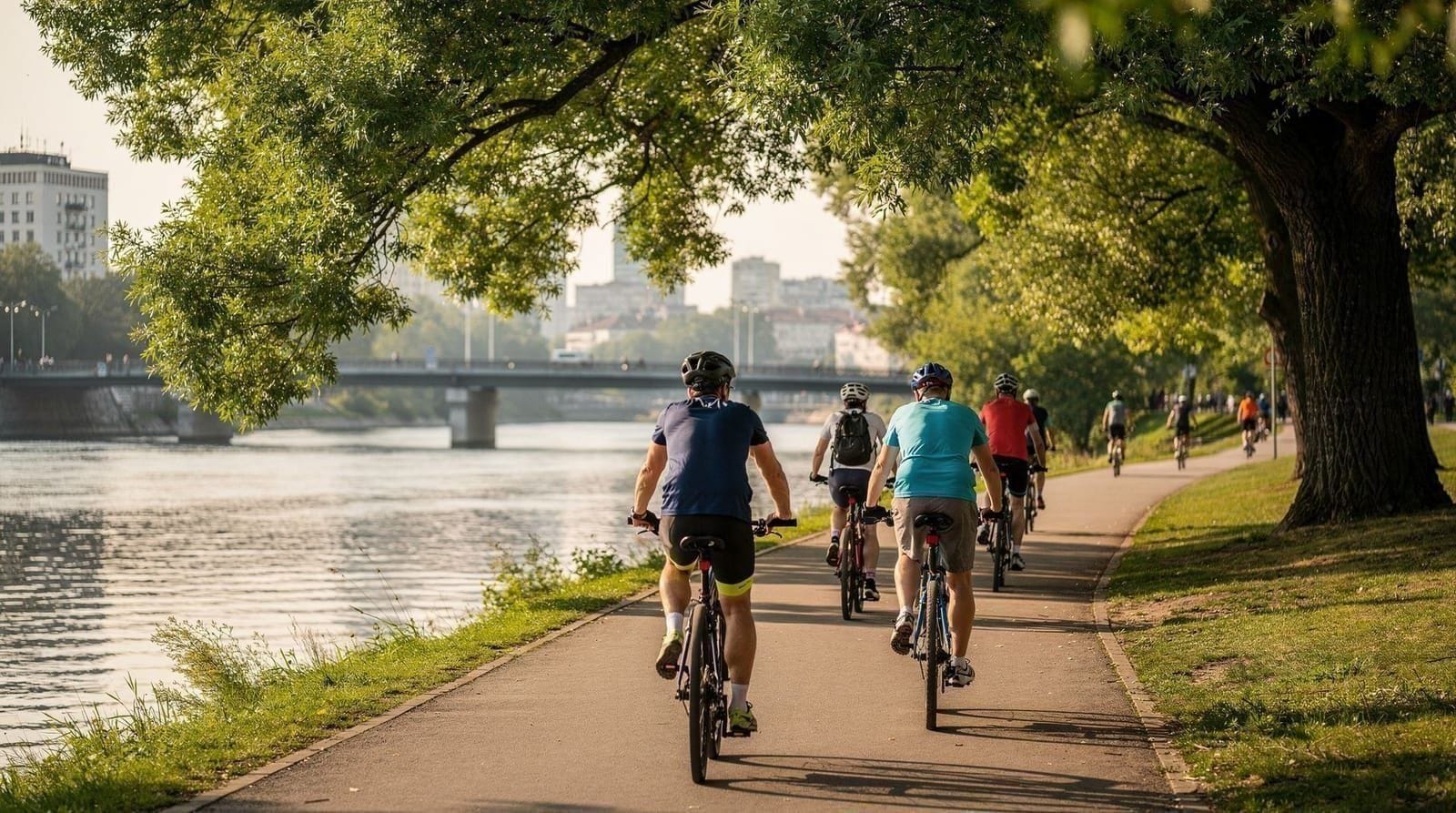
The 50km of dedicated cycling paths on the Lithuanian Curonian Spit make it one of the best cycling destinations in the Baltic states. The paths run through pine forest, mostly on the lagoon side of the spit, with the road adjacent but separated by a buffer of trees.
The terrain is almost entirely flat — the Curonian Spit rises only to the dune crests, and the cycling paths avoid those. The surface is mostly asphalt or packed gravel, well maintained.
The full spit route (Smiltynė to Nida, 48km):
Most cyclists do this as a one-way journey with a bus return. Starting from the Smiltynė ferry terminal (having crossed from Klaipėda), the route passes through Juodkrantė (25km), Pervalka (35km), Preila (38km), and ends at Nida (48km). Allow 3-5 hours depending on pace and stops. The buses from Nida carry bicycles.
Shorter sections:
Juodkrantė to Nida (23km) is a very manageable half-day. Nida village to the Parnidis Dune and back is 4km — flat, easy, can be done on any rental bike.
Bike rental is available at the Smiltynė ferry terminal and in Juodkrantė and Nida. Expect to pay €10-18 per day. The ferry across from Klaipėda is 10 minutes and carries bikes.
Photography notes for the dunes: the low, raking light of early morning and the hour before sunset gives the sand its most dramatic texture and colour — flat midday light tends to wash the dunes out to a pale, featureless beige. A polarising filter helps cut glare off both the sea and the lagoon if you’re shooting with a dedicated camera. The ghost forest behind Parnidis Dune, where bare pine trunks emerge from the advancing sand, is a particularly striking subject in soft evening light.
Wildlife beyond the birds: elk, boar, and foxes
The Curonian Spit’s relatively undisturbed forests support a surprising range of mammals for a narrow coastal landform.
Elk (European moose): The elk are the spit’s most iconic mammal residents. These are large animals — a bull elk stands 1.8 metres at the shoulder and can weigh 400kg. They are commonly seen on the forest tracks and sometimes in village outskirts at dawn and dusk. Best viewing is from a slow-moving vehicle or on foot at dawn. Do not approach — elk are large enough to be genuinely dangerous if startled.
Wild boar: Common throughout the forest, typically visible at dawn or in the late evening. Boar enter village outskirts in search of food and can be seen in Nida itself on quiet mornings.
Foxes: The Curonian Spit foxes are notoriously bold — fed by visitors for decades, they approach people directly on the beach and at picnic areas. This is a conservation problem (fed wildlife becomes dependent and unhealthy), so please do not feed them regardless of how appealing the encounter looks.
Grey seals: Occasionally haul out on the Baltic beach section north of Juodkrantė, particularly in winter. Ringed seals have been recorded in the lagoon.
Getting there from Vilnius: options and logistics
The Curonian Spit is 3.5 hours from Vilnius to Klaipėda. Here are the main options:
Organised day trip from Vilnius:
The easiest option for a first visit. A Curonian Spit day tour from Vilnius handles all transport, the ferry crossing, and guided stops at the main highlights. The typical itinerary covers the Parnidis Dune, Nida village, and the lagoon. It’s a long day (14-16 hours total), but it works for visitors with limited time.
Independent travel:
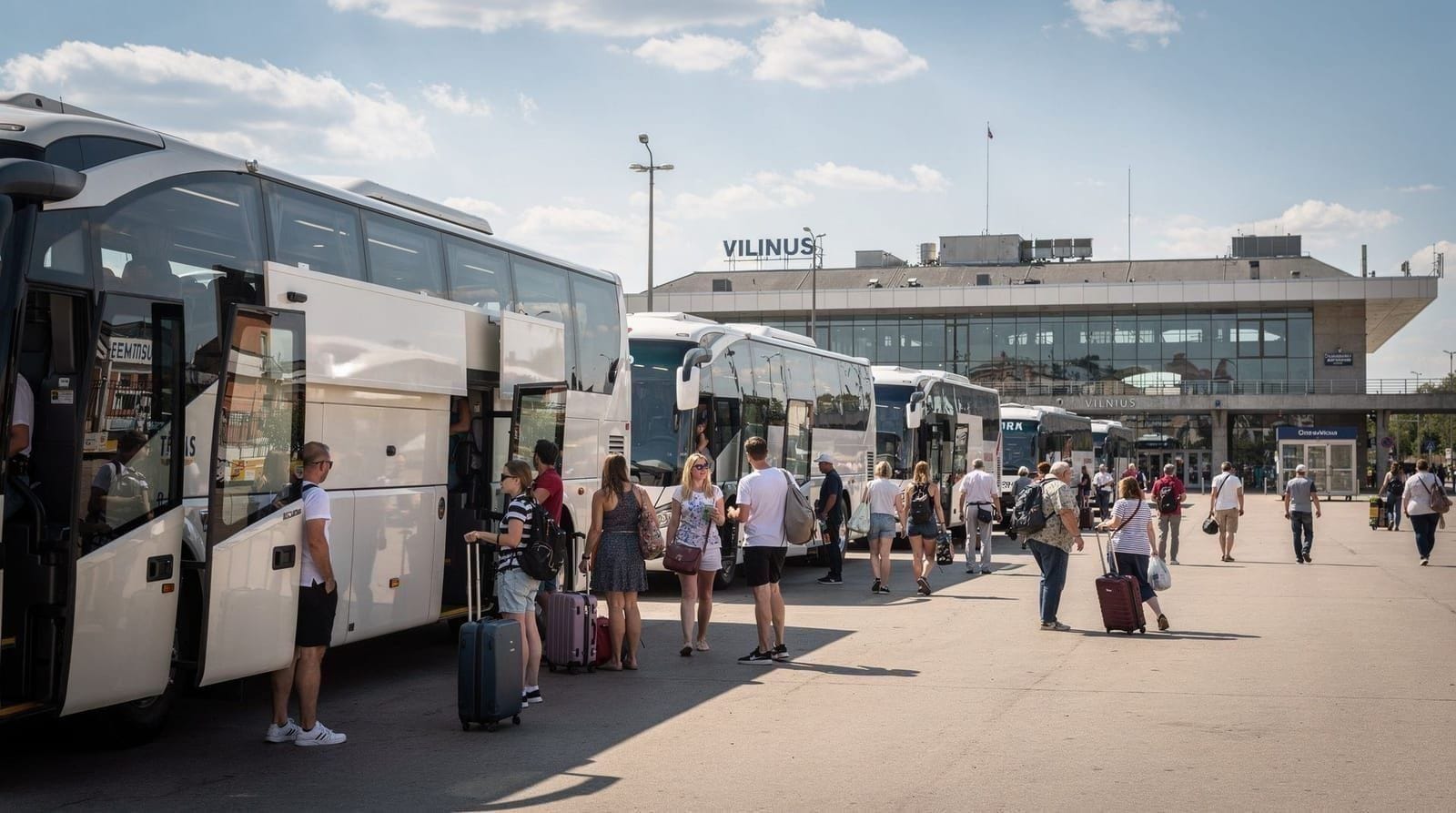
Bus from Vilnius to Klaipėda: regular Lux Express and Toks services, €12-18 one way, 3-3.5 hours. See trains and buses in Lithuania for timetables and booking.
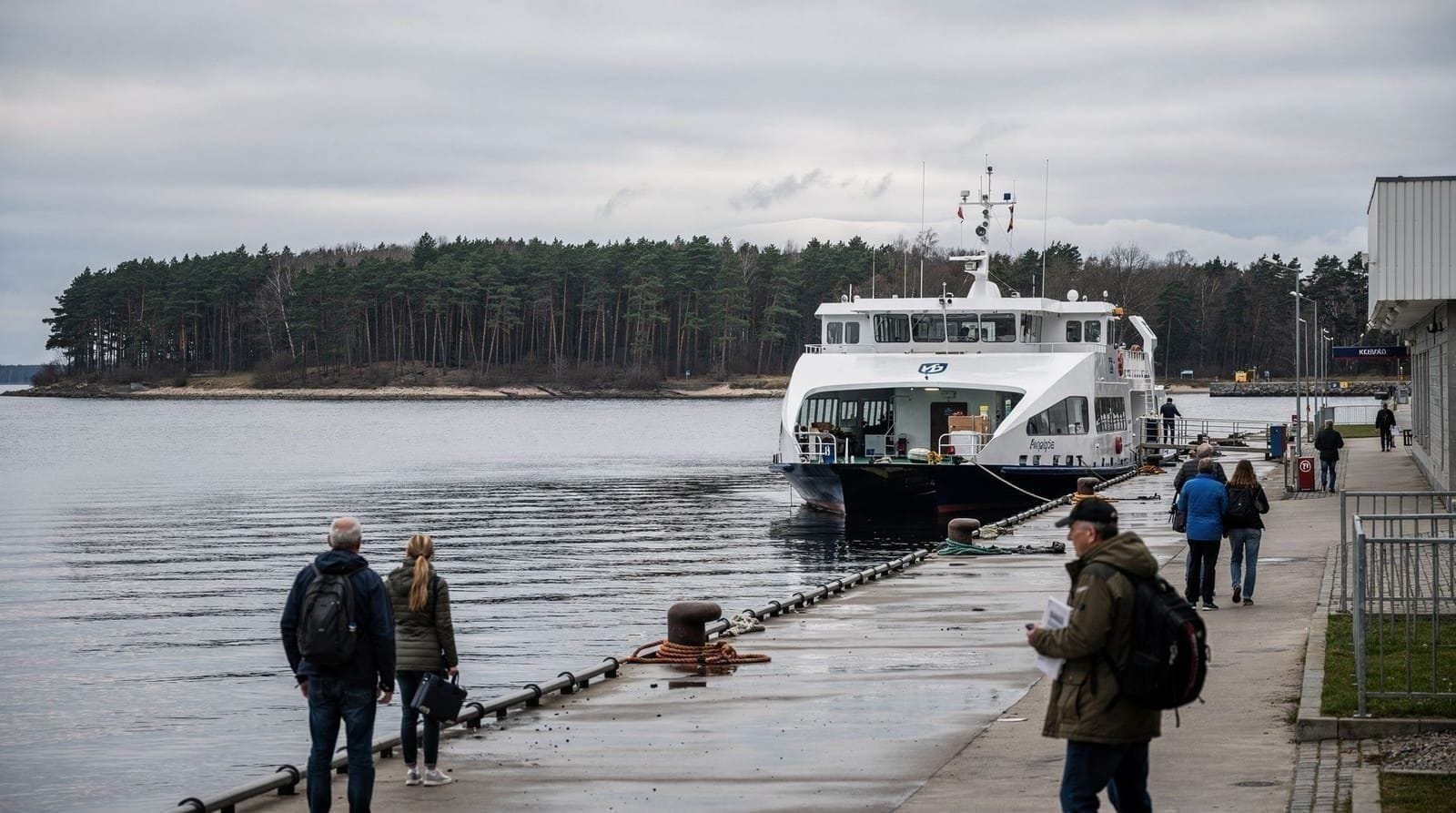
Car ferry Klaipėda to Smiltynė: runs every 30 minutes during the day (hourly in winter). Pedestrians and cyclists pay €1-2. Cars pay separately. The crossing takes 10 minutes.
From Smiltynė: local buses connect to Juodkrantė and Nida. Alternatively, rent a bike at the terminal and cycle.
Staying overnight:
Nida has accommodation ranging from campsites to mid-range hotels. A one-night stay allows a sunset visit to Parnidis and an early morning wildlife walk — much better than a day trip for nature purposes. For more on Klaipėda and the Curonian Spit logistics, the Vilnius to Klaipėda and Curonian Spit guide covers everything in detail.
Nida vs Juodkrantė: which to prioritise
Nida is the right choice for:
- First visits
- The Parnidis Dune (the spit’s signature landscape)
- Amber hunting (best beaches are near Nida)
- Longer stays with good accommodation and restaurants
- The Thomas Mann Museum (the German Nobel laureate had his summer house here)
- Best cycling distances to the most dramatic dune landscapes
Juodkrantė is the right choice for:
- Day trips from Klaipėda (only 25km from the ferry terminal)
- Birdwatching at the cormorant colony
- The Dead Dunes trail
- The Witch Hill (Raganų kalnas) woodland sculpture path
- A less crowded experience in peak summer
Most visitors to the spit see Nida. Those who make time for Juodkrantė as well get a more complete picture of what the spit offers.
Guided tours on the Curonian Spit
Beyond the Vilnius day trip, several guided experiences are available once you’re on the spit:
The full-day private Curonian Spit tour from Klaipėda covers the major highlights with a knowledgeable guide who can tailor the itinerary to your interests — more time at the Parnidis Dune, more birdwatching, or a focus on the amber beach.
The Curonian Spit group tour is the most affordable guided option for independent travellers and solo visitors — a shared tour that covers the key sites in an efficient full day.
For water-based exploration, the lagoon canoe tour gives you access to the birdlife and shallow-water habitats that are impossible to reach on foot or by road.
How the Curonian Spit fits into a Lithuania itinerary
The Curonian Spit is most naturally combined with Klaipėda in a Vilnius-plus-coast itinerary. The classic structure for a week in Lithuania:
- 3-4 days in Vilnius (Old Town, Trakai, Paneriai, day trips)
- 1 night in Kaunas en route (Lithuanian wartime capital, excellent art deco)
- 2 nights Klaipėda and the Curonian Spit
For planning this broader trip, the Lithuania travel guide provides the framework, and the Vilnius to Klaipėda guide covers the connection in detail.
The Nida destination page at /destinations/nida/ and the Curonian Spit destination page provide base practical information on accommodation, restaurants, and seasonal events.
Frequently asked questions about the Curonian Spit
Can I visit the Russian part of the Curonian Spit from Lithuania?
No. The Lithuanian-Russian border on the Curonian Spit is a land border of the Schengen zone, and crossing requires a Russian visa. The border crossing at the Nida end of the Lithuanian section is closed to tourists. The Russian Curonian Spit (Kurshskaya Kosa) requires entry from Kaliningrad via the Russian side.
Is the Curonian Spit crowded in summer?
Nida in July and August is busy — it’s the most popular nature destination in Lithuania, with accommodation often booked weeks ahead. The beach is large enough to absorb the crowds, but the Parnidis Dune can have queues for the viewing platform at peak times. Visiting on weekdays rather than weekends reduces crowding significantly. The northern sections near Juodkrantė are notably quieter.
How long do I need on the Curonian Spit?
A day trip from Vilnius is enough to see the Parnidis Dune and Nida village, but leaves you with little time to breathe. Two days allows a proper introduction: one day for Nida and the dunes, one day for Juodkrantė, the cormorant colony, and a bike ride. Three or more days allows beach time, wildlife walks at dawn, amber hunting after storms, and the slower pace the landscape rewards.
What should I bring to the Curonian Spit?
The Baltic beach is cooler than Mediterranean coasts even in summer — bring a windproof layer. The dune walk requires closed shoes (flip-flops are useless in loose sand). Insect repellent is useful in the forest areas in July-August. Binoculars are worth the luggage weight for birdwatching and elk spotting. Cash for the park entry fee, ferry, and smaller restaurants.
Are there good restaurants on the Curonian Spit?
Nida has several excellent restaurants serving smoked fish — the lagoon eel, smoked over alder, is the regional speciality and genuinely outstanding. Try it at one of the smoked fish stalls near the harbour for €5-8 rather than at a restaurant where the same quantity costs more. Juodkrantė has a smaller restaurant scene but the smoked fish tradition is equally strong.
When is the best time for birdwatching on the Curonian Spit?
Spring migration (April-May) and autumn migration (August-October) bring the highest numbers of birds through the narrow landform, while the Juodkrantė cormorant and heron colony is most active April-July. Winter brings a different set of species, including smew and goosander on the lagoon.
Can I kayak or canoe on the Curonian Lagoon?
Yes — guided canoe tours launch from Nida and Juodkrantė and are one of the best ways to see lagoon-edge birdlife up close. See the kayaking near Vilnius guide if you also want to paddle closer to the capital.
Top experiences
Bookable activities with verified prices and instant confirmation on GetYourGuide.