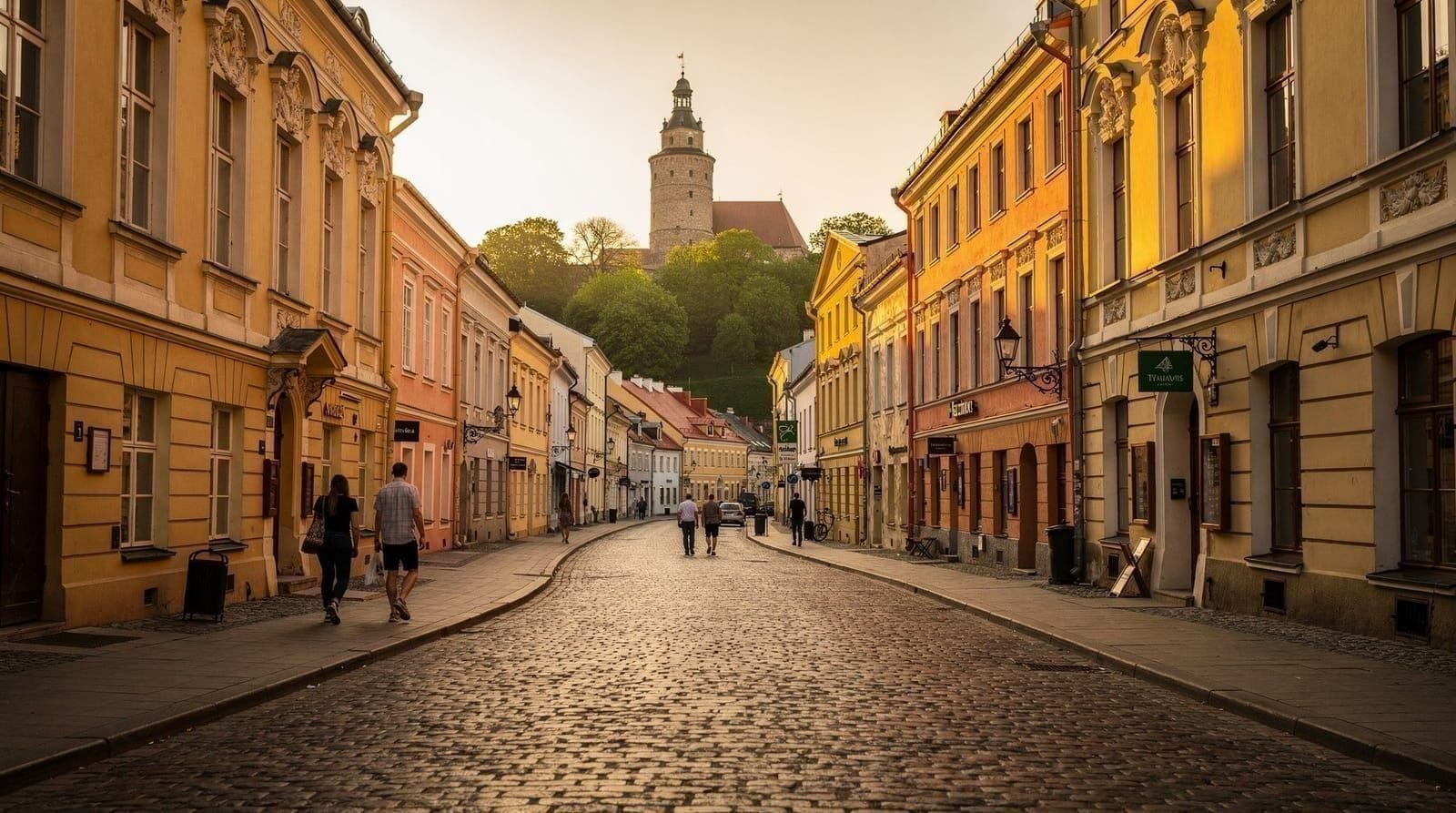
KGB museum Vilnius (Museum of Occupations) — a complete guide
Vilnius: Kgb museum occupations tour
Duration: 2 hours
What is the KGB Museum in Vilnius?
The Museum of Occupations and Fights for Freedom (colloquially called the KGB Museum) occupies the former KGB headquarters on Gedimino prosp. 40, including the basement prison cells where thousands of Lithuanians were interrogated, tortured, and executed. It is the most significant and emotionally powerful site in Vilnius for understanding 20th-century history.
The building at Gedimino prosp. 40 in central Vilnius is unassuming from the outside: a late 19th-century Tsarist administrative building that fits unremarkably into the avenue’s neoclassical streetscape. What happened inside its basement over more than five decades is among the most documented episodes of state terror in Europe’s recent history. The Museum of Occupations and Fights for Freedom — widely known as the KGB Museum — occupies this building and opens its cells, interrogation rooms, and execution chamber to visitors who want to understand what Soviet rule in Lithuania actually meant for its citizens.
This is not a comfortable visit. It should not be. It is, however, an essential one for anyone who wants to understand 20th-century Lithuanian history beyond the surface of Baltic amber and Old Town cobblestones.
| Where | Gedimino prosp. 40, a 10-minute walk from Cathedral Square |
| Cost | around €8 adults, €4 students/seniors |
| Time needed | 1.5–2 hours, more with a guided tour |
| Getting there | Walkable from the Old Town |
| Best time | Weekday mornings, before tour groups arrive |
Historical background
Lithuania was incorporated into the Soviet Union by force in June 1940, following the secret protocol of the Molotov–Ribbentrop Pact (1939) that divided Eastern Europe between Nazi Germany and the USSR. The Soviet occupation established the apparatus of totalitarian control immediately: a secret police network, mass deportations, and systematic elimination of the Lithuanian political, military, and intellectual leadership.
Between June 14–18, 1941, the first mass deportation sent approximately 17,000 Lithuanian citizens to Siberia and the NKVD’s labour camp system (the Gulag). Entire families were separated — men sent to labour camps, women and children to “special settlements” in Kazakhstan, Siberia, and other remote regions. Deportation lists targeted teachers, lawyers, military officers, farmers who owned land, and clergy — anyone who might organise resistance.
The German invasion followed within days (June 22, 1941). The Nazi occupation (1941–1944) brought its own systematic terror, with the Holocaust conducted in Lithuania — where approximately 95% of the Jewish population (200,000–210,000 people) was murdered, almost entirely in 1941. See the guide to Paneriai and Jewish Vilnius for the Holocaust documentation specific to Vilnius.
The Soviets returned in 1944 and the second occupation lasted until 1990. The NKVD/MGB/KGB headquarters on Gedimino prosp. 40 (the building changed name and organisation multiple times, though its function was continuous) was the nerve centre of political repression. Between 1944 and the mid-1950s, the basement cells held thousands of detainees — members of the anti-Soviet armed resistance, religious figures, intellectuals, and ordinary citizens accused of “anti-Soviet activity.”
The Armed Resistance (the “Forest Brothers” — Miško broliai) fought a guerrilla war against Soviet occupation from 1944 to the early 1950s. Approximately 30,000 fighters participated over the period; around 20,000 were killed, many captured and executed after interrogation in exactly this building. The last documented Lithuanian partisan, Stasys Guiga “Tarzanas,” did not surrender until 1971.
A second mass deportation on May 22–28, 1948 (Operation Priboi) sent another 29,000 Lithuanians to Siberia.
What you will see in the museum
Ground floor: documentary exhibition
The permanent exhibition on the ground floor and upper floors covers both occupations (Soviet and Nazi) through a combination of photographs, documents, personal testimonies, and objects. The curation is careful and does not sensationalise — the documents speak for themselves.
Key sections:
- NKVD/KGB organisational structure and operational methods
- Deportation maps and survivor testimonies (audio stations in English)
- The Armed Resistance: leaders, tactics, final fates
- Collaboration and informers: the museum does not shy away from the complexity of who collaborated and why
- The independence movement 1988–1991 and the January 1991 events
An entire room is dedicated to the January 13, 1991 events, when Soviet troops attacked the Vilnius TV Tower and the Parliament, killing 14 civilians and injuring hundreds. Footage from that night — including amateur video taken by Vilnius residents — is shown continuously. This was the moment when Soviet repression became visible to the entire world. The photographs of Lithuanian civilians linking arms around Parliament to defend it against Soviet tanks are among the most powerful images of the 20th century’s closing years.
Basement: the cells and execution chamber
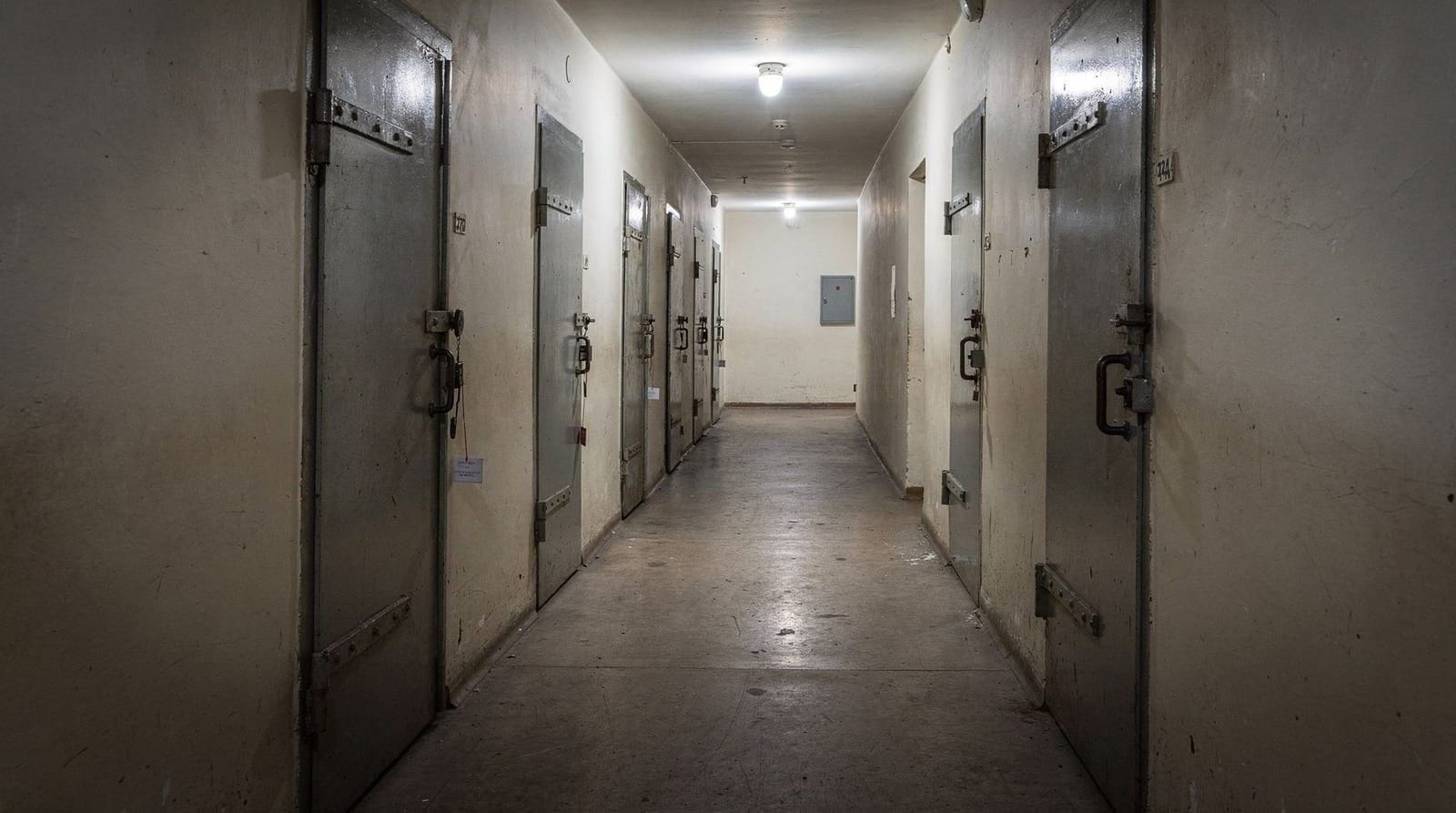
The basement is where the physical reality of the building makes the history immediate. Visitors descend to the prison area where detainees were held, interrogated, and — in the execution chamber — shot.
The cells are preserved largely as they were. Individual cell types illustrate different detention conditions: isolation, where detainees stood in cold water for days; the “refrigerator” cell kept at extremely low temperatures; the padded cell; the regular holding cells. Each has interpretive panels with documented accounts of prisoners held there.
The isolation cell (standing room only, cold water drainage kept at ankle height) and the execution room are the most sobering spaces. The execution chamber — where prisoners were shot in the back of the head after sentencing — has preserved wall plaster showing repair patches from the bullet damage. The bodies were removed to Tuskulėnai (now a separate memorial site), where they were identified through forensic archaeology in the 1990s.
A note on visiting: Take whatever time you need. Do not rush the basement. Sit in the benches if available. The scale model of the Gulag system at the bottom of the stairs — showing the geography of camps across 11 time zones — is worth examining carefully.
Guided tours
A guided tour of the basement is strongly recommended. The self-guided experience via text panels is informative but the guided experience — particularly hearing specific stories of named individuals in specific cells — makes the history personal rather than statistical.
The KGB Museum guided tour runs daily in English and covers both the basement prison and the key documentary exhibition sections. Duration: approximately 2 hours. The guides are typically historians or educators with deep knowledge of the period.
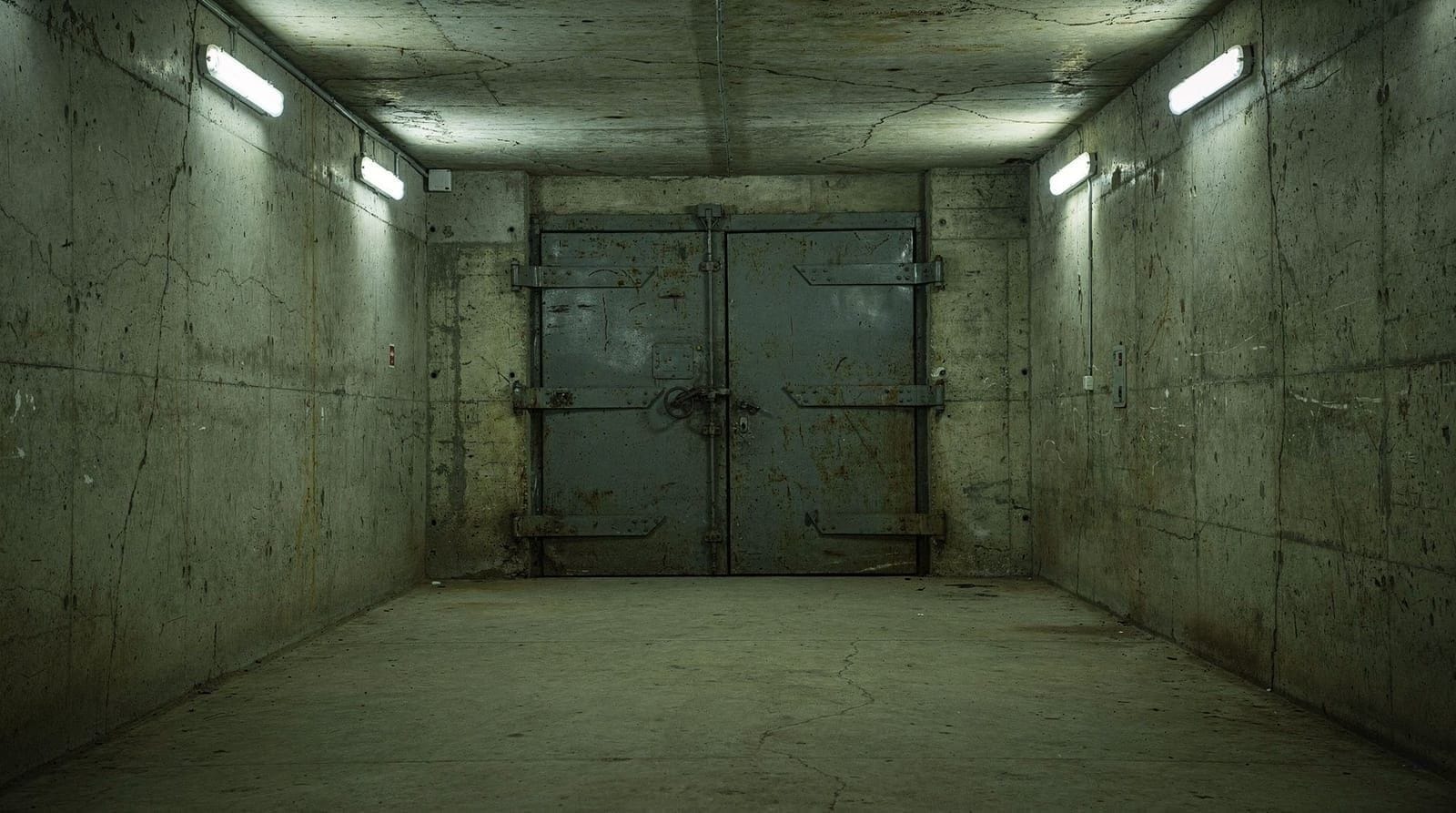
A combined Soviet history tour pairs the KGB Museum with the atomic bunker outside Vilnius — a Soviet-era civil defence facility built in 1984 and only publicly accessible since 2015. This is one of the most unusual tour combinations in the Baltics.
Practical information
Address: Gedimino prosp. 40, Vilnius 01103
Opening hours: Tuesday–Saturday 10 am–6 pm; Sunday 10 am–5 pm; closed Monday
Tickets: Adults €8 / Students & seniors €4 / Children under 7 free. Guided tour supplement: €5–10/person. Family tickets available at reception.
Language: Exhibition panels in English, Lithuanian, and Russian. Audio guides in English available for rent (€3).
Photography: Permitted throughout the museum including the basement. Flash is discouraged in the cells.
Accessibility: The ground floor exhibition is wheelchair accessible. The basement cells require descending stairs; there is no lift to the basement level.
Nearest food: Gedimino prosp. has cafés within 200 m in both directions. The café at the National Gallery of Art (Konstitucijos prosp. 22, 5-minute walk across the Neris bridge) is a calm option after a heavy visit.
Combined visit: Many visitors combine the KGB Museum with the Palace of Grand Dukes (Cathedral Square, 15-minute walk) and the Gates of Dawn on the same day. This is a full day of weight — leave space between sites.
Extending the story: other Soviet-history sites
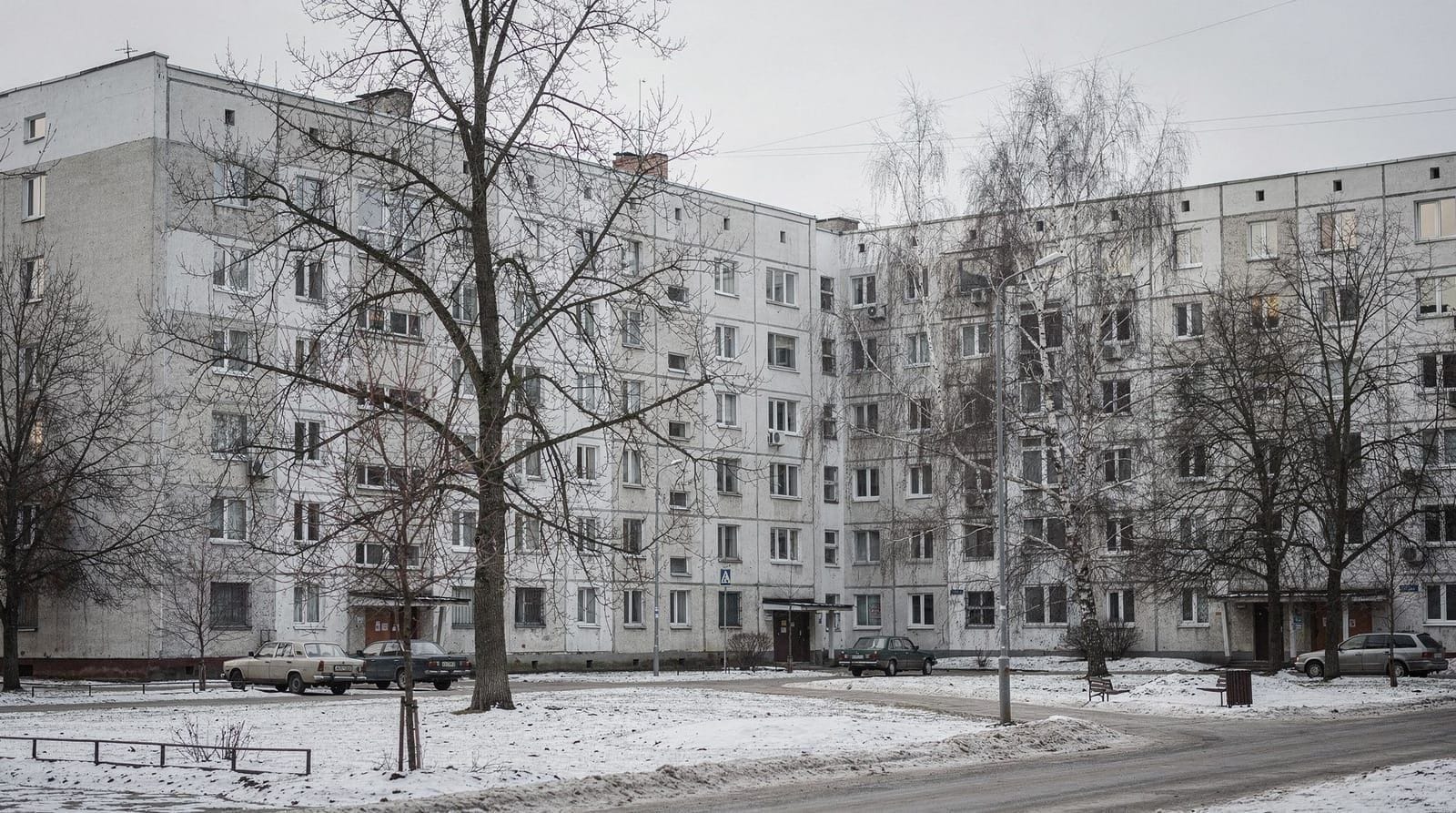
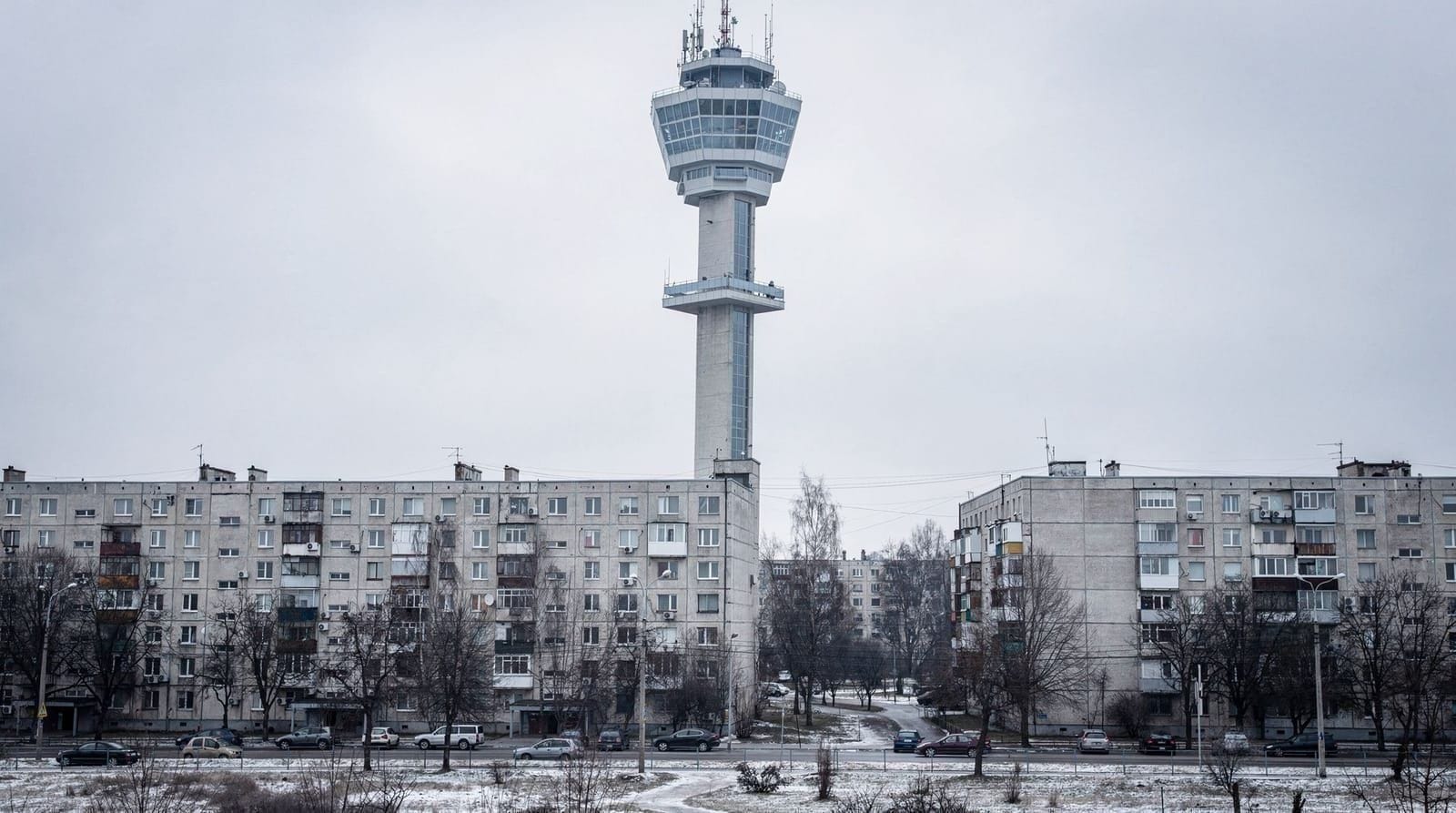
The KGB Museum is the single most concentrated site for understanding Soviet repression in Lithuania, but it’s one piece of a wider picture. The Soviet history of Vilnius guide covers the occupation era across the city more broadly — monuments, apartment blocks, and everyday life under Soviet rule, beyond just the KGB building itself.
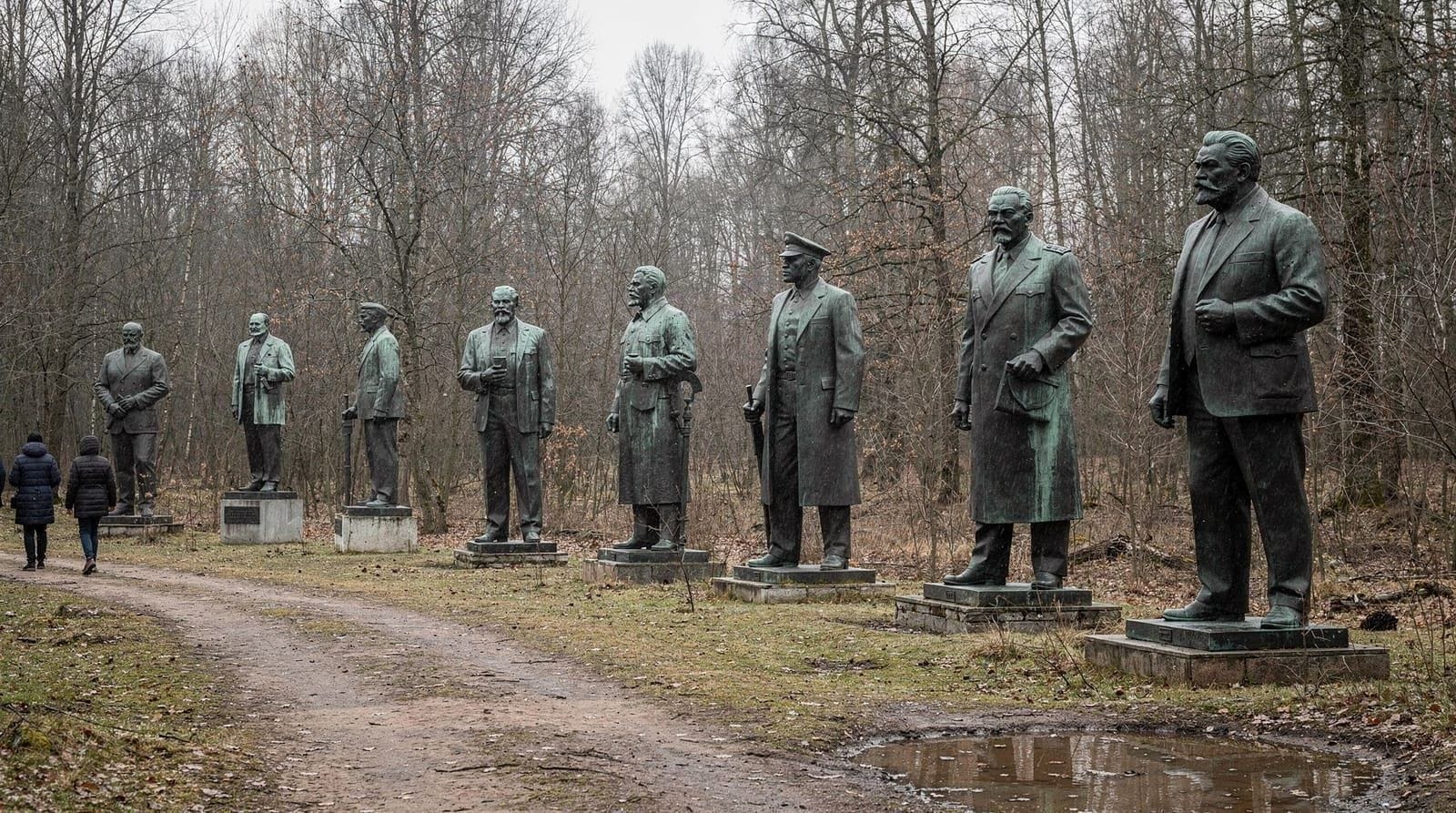
Outside Vilnius, two sites extend the same history in different directions. Grūtas Park, near Druskininkai, gathers dismantled Soviet-era statues and propaganda in an open-air museum — a strange, sometimes darkly funny counterpoint to the KGB Museum’s gravity. The Ninth Fort in Kaunas documents both Soviet and Nazi-era atrocities at a site with a similarly heavy history, and works well as a Kaunas day trip addition if you have more than a day for Lithuanian history beyond Vilnius.
A Soviet Vilnius walking tour covers the wider city context — Soviet-era architecture, monuments, and everyday-life history — as a complement to the KGB Museum’s focus on the security apparatus itself.
Tuskulėnai Memorial
The Tuskulėnai Memorial (Žirmūnai district, Žirmūnų gatvė 1P, open by appointment/specific dates) marks the site where victims executed in the KGB basement were secretly buried. Forensic excavations in 1994–1996 recovered the remains of 724 identified individuals. The memorial includes an exposition on the identification process and the names of the victims. It requires a separate visit (bus or taxi from the city centre, approximately 20 minutes) but is deeply significant.
Frequently asked questions about the KGB Museum
Is the KGB Museum the same as the Museum of Genocide Victims?
Yes — the official name is the “Museum of Genocide Victims” (Genocido aukų muziejus), but it is universally known in English as the KGB Museum because of its location in the former KGB headquarters. The name acknowledges Soviet genocide against the Lithuanian nation.
Why is the building called a KGB museum if the KGB was not the first organisation to use it?
The NKVD (later MGB, later KGB) used the building during the Soviet occupations of 1940–1941 and 1944–1991. The Nazi Sicherheitspolizei used it during 1941–1944. The “KGB Museum” label refers to the longer and more recent Soviet period. The museum’s current documentation acknowledges all three occupation periods.
Can I visit without a guided tour?
Yes. The self-guided visit with audio guide (€3 rental) is a viable alternative if guided tours are full. The basement is open to independent visitors during museum hours. However, the guided tour is significantly more contextually rich for those without prior knowledge of Lithuanian Soviet history.
Is there a memorial book for the deported and executed?
Yes. The museum maintains a Book of Memory (Lietuvos gyventojų genocido ir rezistencijos tyrimo centras) listing names of documented victims of the Soviet occupations. A searchable digital version is available at genocid.lt.
Is the KGB Museum suitable for children or teenagers?
It depends on age and sensitivity. The documentary exhibition is appropriate for most teenagers and can be genuinely educational. The basement cells and execution chamber are more intense, and parents should judge whether younger children or sensitive visitors are ready for it — there’s no requirement to descend to the basement, and skipping it while still visiting the ground-floor exhibition is a reasonable compromise for families.
How does the KGB Museum compare to Grūtas Park or the Ninth Fort in Kaunas?
They’re complementary rather than duplicative. The KGB Museum is specific and intense — a single building where real interrogation and executions took place. Grūtas Park is broader and more symbolic — a collection of removed Soviet statues in a forest setting, closer to a strange open-air museum than a memorial site. The Ninth Fort in Kaunas covers both Nazi and Soviet-era atrocities at a different location. Visiting more than one deepens the picture, but the KGB Museum is the essential starting point if you can only do one.
Top experiences
Bookable activities with verified prices and instant confirmation on GetYourGuide.