Hill of Crosses, Lithuania
The Hill of Crosses near Šiauliai has over 100,000 crosses planted by Lithuanians over centuries. How to visit, what it means, and how to get there.
Vilnius: Hill of crosses siauliai full day
Duration: 8 hours
Quick facts
- Distance from Vilnius
- ~210 km
- Travel time
- ~2.5 hours from Vilnius by tour or car; no direct public transport
- Best time
- Year-round; dawn and dusk most atmospheric; Jan 25 (St Valentine's) busy
- Days needed
- Half day (the site itself takes 1–2 hours)
- Entry
- Free; donations welcome
Quick answer: The Hill of Crosses (Kryžių Kalnas) is a low hill 12 km north of Šiauliai covered with over 100,000 crosses, crucifixes, rosaries, and carved wooden figures left by Lithuanian pilgrims over several centuries. It is one of the most distinctive religious sites in Eastern Europe — part folk art landscape, part act of national resistance, part place of active contemporary pilgrimage. The site is free to enter, takes 1–2 hours to explore, and is 210 km from Vilnius. There is no practical public transport link: you need an organised tour or a car.
| Where | Near Šiauliai, ~210 km from Vilnius |
| Cost | Free (donations welcome) |
| Time needed | Half day; the site itself 1–2 hours |
| Getting there | Organised tour or car (~2.5h); no direct public transport |
| Best time | Dawn or dusk for light and fewer crowds |
What you are looking at
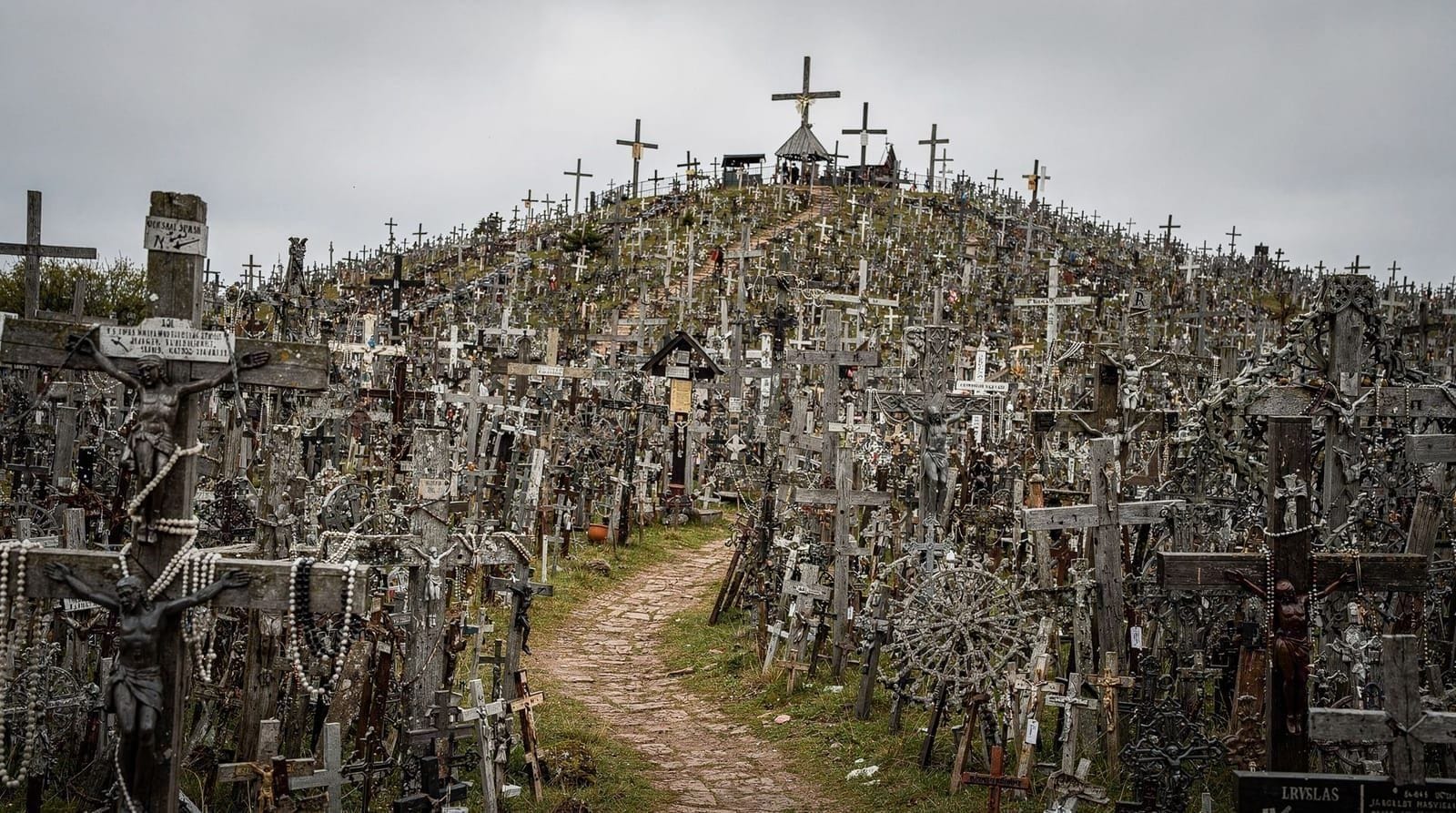
The Hill of Crosses is not a cemetery. No one is buried here. The crosses were placed by Lithuanians seeking healing, commemorating the dead, expressing faith, or asserting national identity — depending on the period and the individual.
The exact origins are debated. Crosses appear to have been placed here from at least the 14th century, possibly earlier. The practice intensified dramatically after the failed insurrections of 1831 and 1863 against Russian Imperial rule, when the hill became a form of memorial resistance — crosses for the dead that could not be publicly mourned. Under Soviet occupation (1940–1941, then 1944–1990), the hill was bulldozed three times — in 1961, 1973, and 1975. Each time, crosses reappeared within days. Soviet authorities gave up. The act of placing a cross became explicitly political: a statement of Lithuanian identity and resistance to an occupying power.
Pope John Paul II visited in 1993, three years after Lithuanian independence, and blessed the site. A Franciscan friary was built nearby in 2000. Today, the hill receives pilgrims from across the Catholic world.
What to expect when you visit
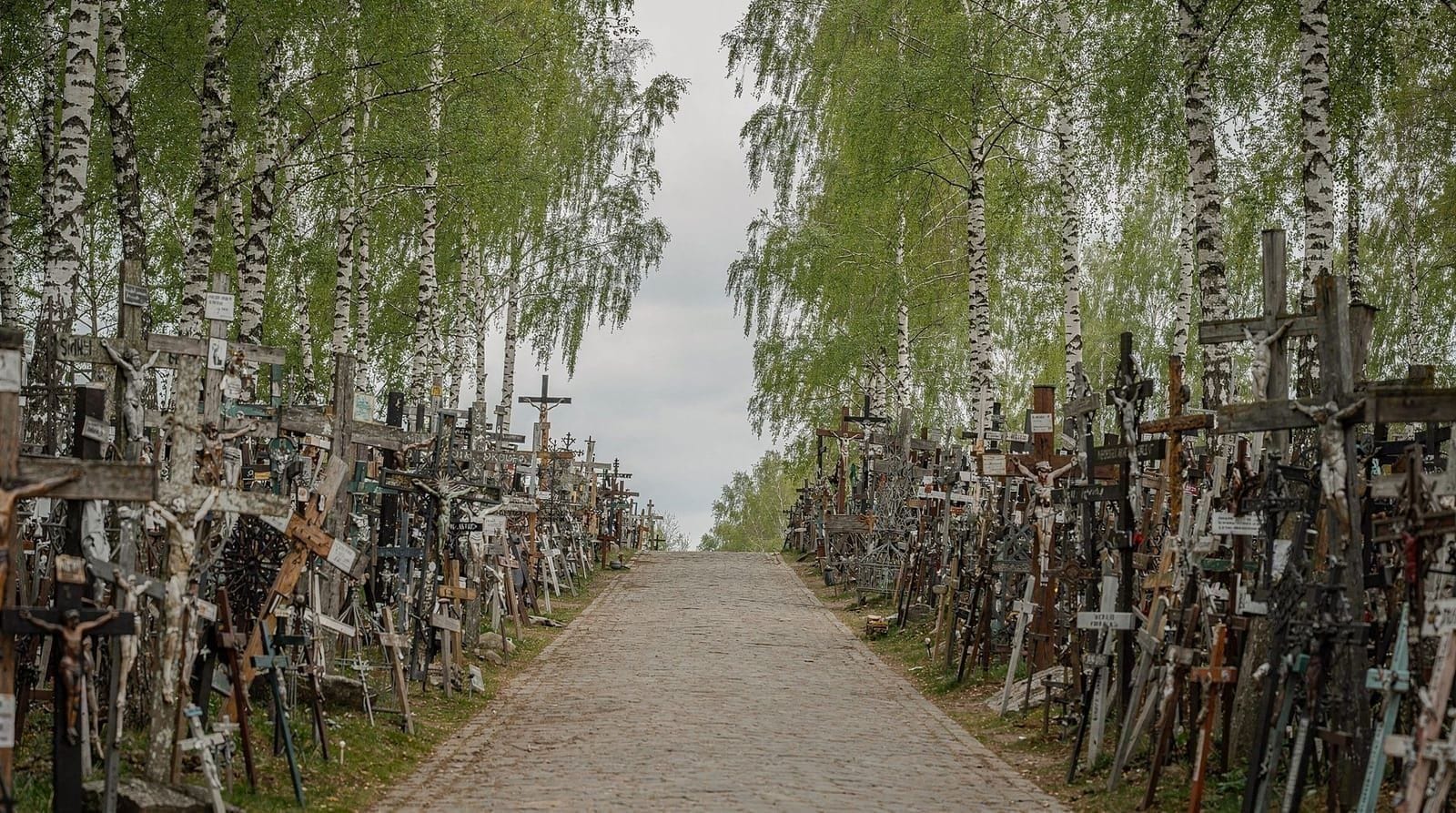
The hill is small — only about 5–6 metres high, not a dramatic landscape feature in itself. What covers it is extraordinary: hundreds of thousands of crosses of every size and material, from tiny brass crucifixes tied with rosary beads to two-metre carved wooden poles, wooden folk-art figures, photos of the departed, Lithuanian flags, military insignia from various wars, messages in dozens of languages. The density is overwhelming in the best sense.
Atmosphere: Quiet and contemplative most of the year. Pilgrims pray, light candles, tie ribbons, add new crosses. Organised tour groups cycle through throughout the day. The site is most atmospheric at dawn or at golden hour — the interplay of light through the crosses is striking, and the crowds are thinner.
Protocol: Visitors of any faith or none are welcome. The site is active for prayer; behave with corresponding respect. Photography is freely permitted and very common — this is partly a photography destination, and there is no ethical issue with this.
Mud: The path to the hill is unpaved and becomes muddy in wet weather. Appropriate footwear is recommended.
Vilnius: Hill of crosses siauliai full dayGetting there
From Vilnius: 210 km by road. No practical direct public transport. Options:
- Organised day tour (recommended): Departs Vilnius, includes transport, guide at the hill, and usually a stop in Šiauliai town. Full day return. Cost typically €30–50 per person.
- Car: 2–2.5 hours on the A1/A9 motorway. Park at the designated car park 300 metres from the hill (free). You can combine with Šiauliai (12 km south) and continue to Kaunas (130 km southeast) for a full-day circuit.
- Train to Šiauliai + taxi: Trains from Vilnius to Šiauliai (about 2.5 hours) then taxi 12 km to the hill (€8–12 each way). This works but requires taxi organisation in Šiauliai without ride-hailing apps.
From Šiauliai: 12 km north on the P79 road. By taxi: €8–12 each way. By local bus: there is a route, but it runs infrequently and the stop is still a 1 km walk from the hill. Confirm bus times locally.
Šiauliai: Hill of crosses private 2h Šiauliai: Vilnius hill of crosses rundale to rigaCombining the Hill of Crosses with other stops
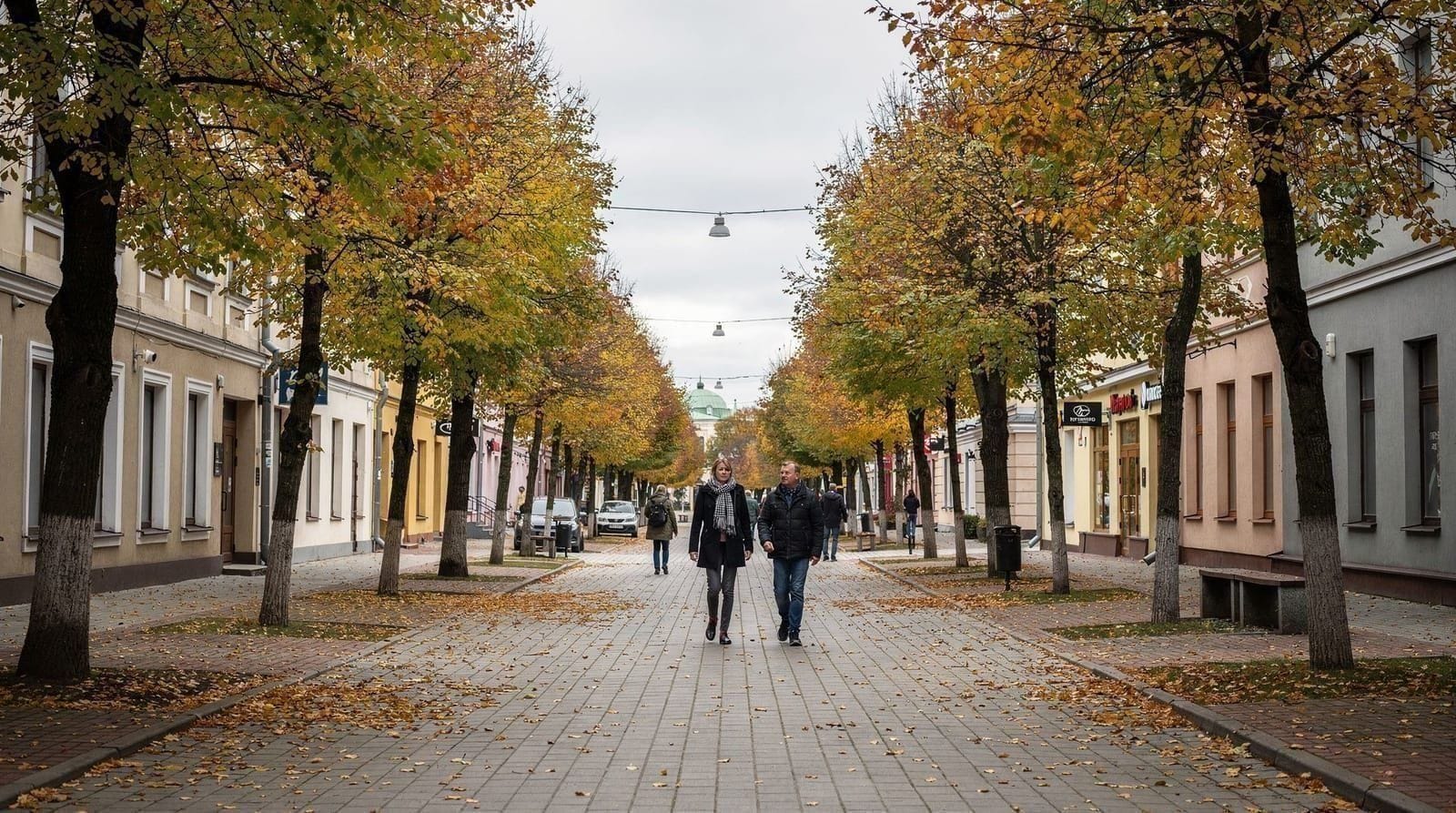
Hill of Crosses + Šiauliai: Easy combination. See Šiauliai for what the city offers (Sundial Square, the Bicycle Museum). Half a day for both.
Hill of Crosses + Pakruojis Manor: The 19th-century Pakruojis Manor estate 35 km east of the Hill of Crosses is one of the best-preserved manor complexes in Lithuania, with a working farm museum and period interiors. The organised tour covering both is a well-designed day trip.
Vilnius: Hill of crosses pakruojis manor full dayFull northern loop from Vilnius: Hill of Crosses + Šiauliai + Kaunas on the return (130 km southeast of Šiauliai). This is ambitious but achievable in a long summer day by car.
See the Hill of Crosses day trip guide for detailed logistics and timing from Vilnius.
Photography notes
Dawn and late afternoon provide the best light for photography — the crosses cast long shadows and the warm light brings out the texture of carved wood and rusted iron. The hill faces east, so morning light comes from behind the main approach and illuminates the crosses from the east side. Arrive 30–45 minutes before sunrise if you want the hill in the first light.
In midday summer light, the site photographs flat. The colours are more saturated in overcast conditions.
Context: Lithuanian Catholicism and national identity
To understand why this hill matters, it helps to understand the role of Catholicism in Lithuanian identity. Unlike neighbouring Estonia and Latvia (predominantly Lutheran or secular), Lithuania is predominantly Catholic — a legacy of the Grand Duchy of Lithuania’s conversion in 1387, the latest Christianisation in Europe. During Russian Imperial occupation and Soviet rule, the Catholic church was one of the few institutions that preserved Lithuanian culture and language against assimilation pressure.
The Hill of Crosses concentrates this history into a physical place. It is not exclusively sacred — it also carries secular Lithuanian patriotic meaning. The two are not easily separated here, which is part of what makes it more complex and interesting than a simple pilgrimage site.
Practical information
Entry: Free. A small donation box is near the entrance.
Opening hours: The site is open 24 hours (no gate or closing time). The Franciscan friary nearby has regular services.
Facilities: A small souvenir and cross shop operates near the car park, selling wooden crosses in various sizes (€2–20 depending on size and intricacy). A café operates in season. Toilets near the car park.
How long to spend: 1 hour for a walking tour of the hill. 2 hours if you want to sit, reflect, and explore the denser areas of the hill methodically. 3 hours with a proper guide who covers the history in depth.
Comparing the Hill of Crosses with other day trips from Vilnius
| Destination | Focus | Distance | Time needed |
|---|---|---|---|
| Hill of Crosses | Faith, identity, resistance | ~210 km | Half day |
| Kaunas | Interwar architecture, dark history | ~100 km | Full day |
| Kernavė | Archaeology, UNESCO mounds | ~35 km | Half day |
The Hill of Crosses asks the most of your travel time among northern Lithuania’s day-trip options, but it delivers a genuinely singular experience — nothing else in the region compresses so much history and meaning into a single, small hill. See the best day trips from Vilnius guide for how it stacks up against the full roster of options.
Understanding Soviet-era religious suppression
The bulldozing of the Hill of Crosses fits a broader pattern of Soviet policy toward religion in occupied Lithuania: churches converted to warehouses or museums of atheism, clergy imprisoned or deported, and religious practice pushed underground. What makes the Hill of Crosses remarkable is that it was rebuilt in defiance each time, in full public view, by ordinary people rather than organised institutions. For the wider context of Soviet occupation in Lithuania, see the understanding Lithuanian history guide and the Soviet history Vilnius guide, which cover the KGB Museum and other Vilnius sites addressing the same period.
Bringing a cross
Many visitors choose to bring or buy a small cross to leave on the hill — there’s no formal ritual required, and it’s a way to participate rather than only observe. If you’d rather come prepared than buy on-site, small wooden or metal crosses are inexpensive and widely available in Vilnius souvenir shops before you travel north; the on-site shop near the car park sells the same range for €2–20.
Vilnius: Hill of crosses pakruojis manor full dayFrequently asked questions about the Hill of Crosses
How many crosses are there at the Hill of Crosses?
Estimates vary widely — the commonly cited figure is over 100,000 crosses and religious objects, but some estimates put it at 200,000 or more. The hill is not formally inventoried; new crosses are added constantly.
Who placed the crosses at the Hill of Crosses?
Primarily Lithuanian Catholics, over several centuries. The practice spans grieving families, pilgrims seeking healing, national resistance movements (against Russian and Soviet rule), and contemporary visitors from around the world. Pope John Paul II visited in 1993, which increased international awareness and pilgrimage.
Why was the Hill of Crosses bulldozed by the Soviets?
Soviet authorities viewed the hill as a symbol of Lithuanian nationalism and Catholic resistance to Soviet rule, both of which they sought to suppress. The hill was cleared with bulldozers in 1961, 1973, and 1975. Each time, Lithuanians replaced the crosses within days — sometimes overnight. The Soviet authorities eventually abandoned the effort.
Is there public transport to the Hill of Crosses?
There is no practical direct public transport from Vilnius to the Hill of Crosses. The best options are an organised day tour (most convenient) or a car. From Šiauliai, infrequent local buses run roughly in the direction of the hill, but the service is unreliable and leaves a 1 km walk. Most visitors from Šiauliai use taxis.
What should I bring to the Hill of Crosses?
Practical: wear appropriate footwear for potentially muddy ground. For a meaningful visit: some background reading on Lithuanian history and Soviet occupation makes the site significantly more moving. You can bring a cross to leave — there are no restrictions on this. Small wooden crosses are sold at the souvenir shop near the car park.
Can I visit the Hill of Crosses in winter?
Yes. The site is open year-round and snow in winter creates a striking landscape. Winter visits are quieter and often very atmospheric. The road access is maintained, but confirm conditions if visiting after heavy snow.
How does the Hill of Crosses compare to Paneriai as a meaningful day trip?
Both are significant historical sites reached from Vilnius, but they address different history: the Hill of Crosses is about faith and Lithuanian national resistance across centuries, while Paneriai documents a specific Holocaust atrocity from 1941–1944. Paneriai is much closer (10 km versus 210 km) and takes less than half the time. Neither substitutes for the other; they’re complementary rather than comparable.
Top experiences
Bookable activities with verified prices and instant confirmation on GetYourGuide.