Gediminas Tower and castle — visiting guide
Vilnius: City highlights walking tour
Duration: ~2 hours
What is Gediminas Tower in Vilnius?
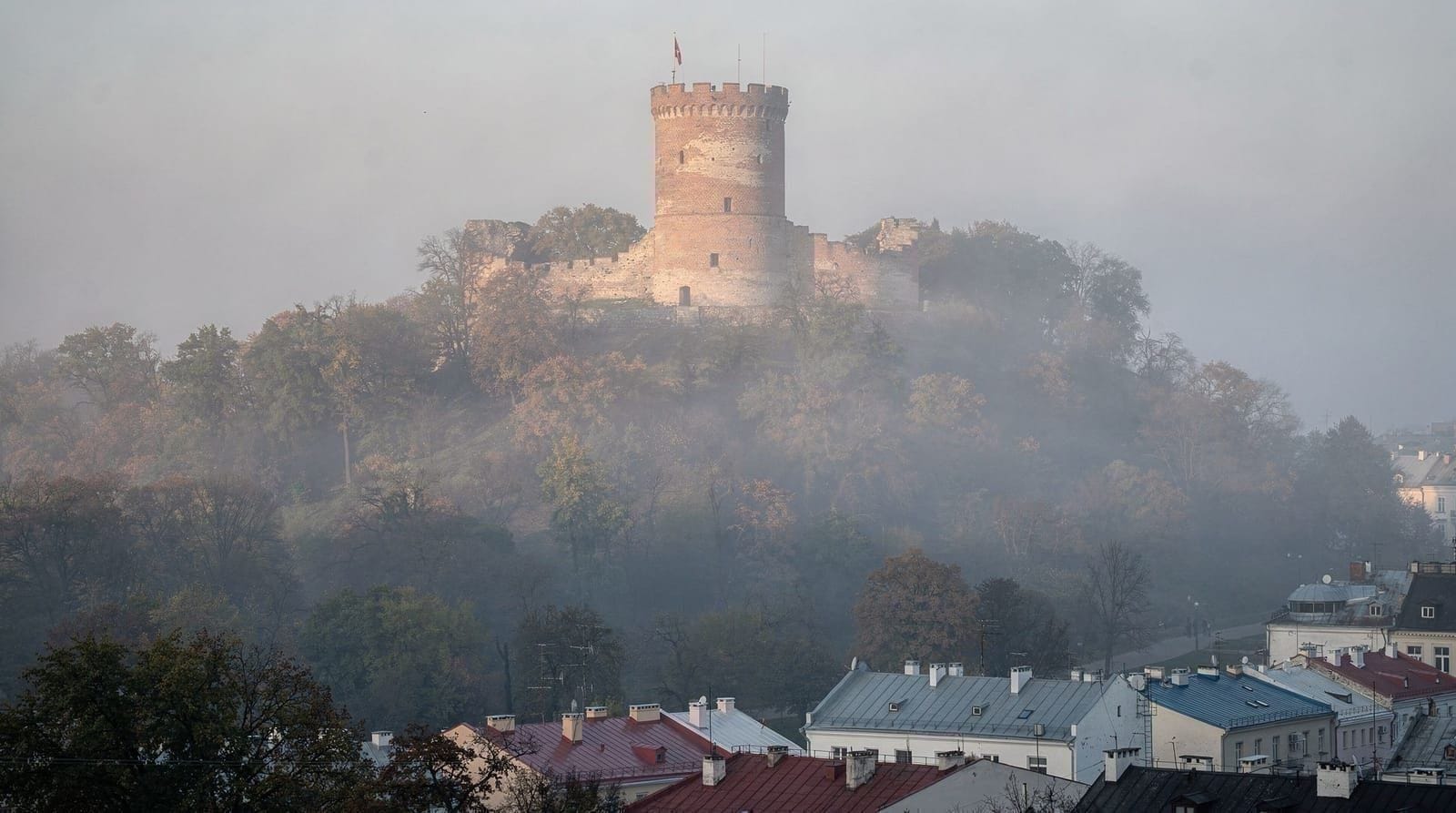
Gediminas Tower is the lone surviving octagonal tower of Vilnius Upper Castle, perched on a 48-metre hill above Cathedral Square. It houses a historical museum and offers the best panoramic view in the city. Entry costs €5 adults, €2.50 students.
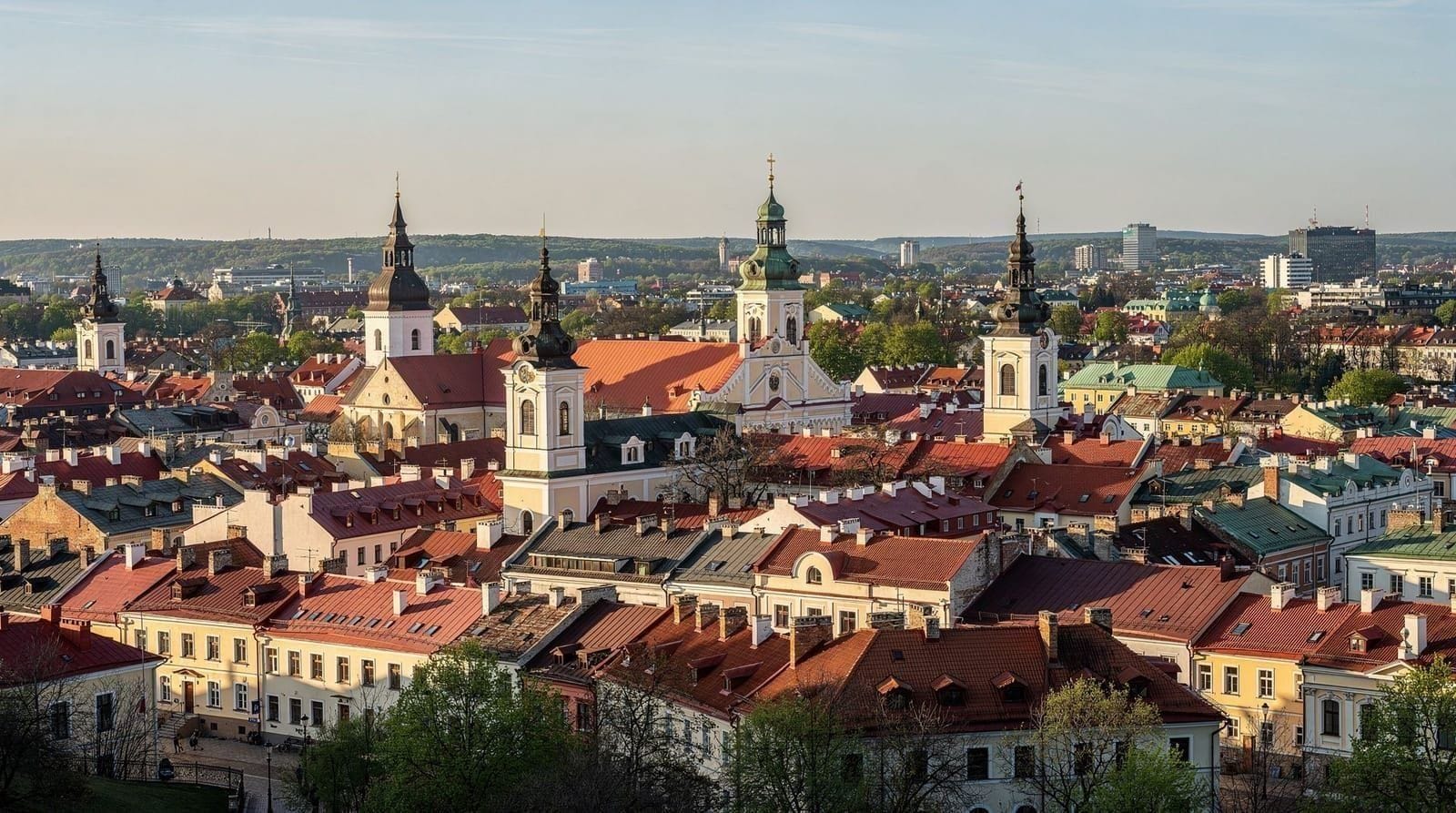
Gediminas Tower rises above the Vilnius skyline on a steep wooded hill, its three floors of medieval brickwork now housing a compact but genuinely interesting historical museum. The tower is not a tourist reconstruction — it is a real 14th-century fortification that has been repaired over the centuries and stands today much as it did when Grand Duke Gediminas chose this hilltop to build his capital. It is the most recognisable symbol of Lithuania, and it sits directly above the Vilnius Old Town and Cathedral Square.
| Where | Castle Hill, above Cathedral Square, Old Town |
| Cost | around €5 adults, €2.50 students |
| Time needed | 45–60 min (add 30 min for the hill path) |
| Getting there | Funicular (~90 sec) or a 10–12 min uphill walk |
| Best time | Early morning, before funicular queues build up |
Historical context
Grand Duke Gediminas moved the capital of the Grand Duchy of Lithuania to Vilnius around 1323, having sent famous letters to western European merchants and clergy inviting them to settle here. The choice of the confluence of the Vilnia and Neris rivers was deliberate: the hill provided defensive height, the rivers supplied water and a transport barrier, and the valley floor had space for a Lower Castle and palace complex.
The Upper Castle on the hill had multiple towers. What stands today — the western tower — was already the sole survivor by the 17th century. Swedish forces damaged the complex during the wars of the 1650s, and later Russian and later Soviet administrations made various alterations. The major restoration was completed in 1968 under Soviet rule, and the hill was opened as a public park.
The tower gained new political symbolism on January 1, 1919, when the Lithuanian tricolour was raised here for the first time. It was raised again on October 7, 1988, when a crowd of 10,000 gathered to mark the beginning of the independence movement — an event now considered one of the defining moments of Lithuania’s path to independence in 1990.
What to see inside the tower
The museum occupies three floors connected by a narrow internal staircase. Display space is limited but the curation is careful.
Ground floor covers the foundation of Vilnius and the early Grand Duchy, with archaeological finds from the hill and reproductions of the Gediminas letters to Pope John XXII and western cities. Originals of those letters survive in the Vatican Archives.
First floor focuses on the castle complex itself: scale models show what the full Upper and Lower Castle system looked like in the 14th and 15th centuries, when Vilnius was one of the largest cities in northern Europe.
Second floor (top) is the panoramic terrace. The view is genuinely excellent: Cathedral Square directly below, the Old Town roofscape extending south towards the Gates of Dawn, the Neris river curving around the hill to the north, and the modern city beyond. On clear days you can see the television tower (326 metres) 10 km to the northwest.
The museum’s accompanying app (QR codes on each floor) provides English audio content that significantly deepens the visit.
Getting there
Funicular (recommended): The lower station is behind the National Museum of Lithuania on Arsenalo gatvė 1. It runs daily May–September 10 am to 9 pm; October–April 10 am to 7 pm. Price: €2.50 up, €1.00 down, €3.00 return. The ride takes about 90 seconds. Queue time on summer weekends can reach 20–30 minutes in the afternoon — go in the morning.
Walking path: Start from Kosciuškos gatvė, on the east side of the hill, or from the path behind the National Museum on the west. Both routes are well-signed and take 10–12 minutes. The path is unpaved and can be slippery after rain — wear shoes with grip.
Accessibility: The tower itself is not wheelchair-accessible (narrow spiral staircase). The funicular is accessible. The Lower Castle grounds and Cathedral Square are fully accessible.
The Lower Castle and Palace of Grand Dukes
At the base of the hill, the Palace of the Grand Dukes of Lithuania (Valdovų rūmai, Katedros aikštė 4) was demolished in the 19th century under Russian imperial rule and reconstructed 2002–2018. It is now a major museum housing original mediaeval stone and brick from the palace, Renaissance tiles, and the extraordinary excavation chambers beneath the building where layers of 13th–17th century foundations are visible in situ.
Entry to the permanent exhibition: €10 adults, €5 students. The archaeological cellar (accessible on a slightly different ticket) is particularly impressive. Closed Monday.
The National Museum of Lithuania next to the funicular (Arsenalo gatvė 1) has large-format exhibitions on Lithuanian prehistory, the pagan era, and the formation of the Grand Duchy. €5 adults, free under 18. Closed Monday.
Together with the tower, these two museums can fill a half-day dedicated to the castle complex and Lithuanian medieval history.
Practical tips
Best time of day: The panorama faces mostly south and west, which means early afternoon light is best for photography. However, early morning (before 10 am on the hill path) avoids funicular queues and gives you the terrace largely to yourself.
Weather: The terrace is open-air and windy. In winter (December–February) temperatures on the hill are several degrees colder than in the valley. A jacket is useful even in late spring.
Photography: There are no restrictions on photography inside the museum or on the terrace. The red-brick tower against a blue sky with the cathedral below is the iconic shot — take it from the terrace level, not from the streets below.
Combined tickets: There is no current combined ticket covering the tower, Palace of Grand Dukes, and National Museum. Each is ticketed separately. A day covering all three costs €20–25 per adult, which is good value by any comparison to equivalent European historical sites.
A guided city walking tour typically includes the exterior of the hill and Castle Square in its route, with historical narration about the castle’s role in Lithuanian statehood. This is particularly useful context before you climb independently.
Nearby sights worth combining
The hill sits within a few minutes’ walk of most of the Old Town’s headline sights, which makes it easy to build a half-day around it rather than treating it as an isolated stop. Vilnius University, one of the oldest in Northern Europe, is a five-minute walk down through Cathedral Square. If you are choosing where to base yourself for a Vilnius trip, staying close to the Old Town keeps the tower within easy morning-walk distance — see where to stay in Vilnius for neighbourhood options.
A panoramic walking tour taking in the hill and the best viewpoints is a good option if you want the wider city context rather than just the tower itself.
Best time of year to visit
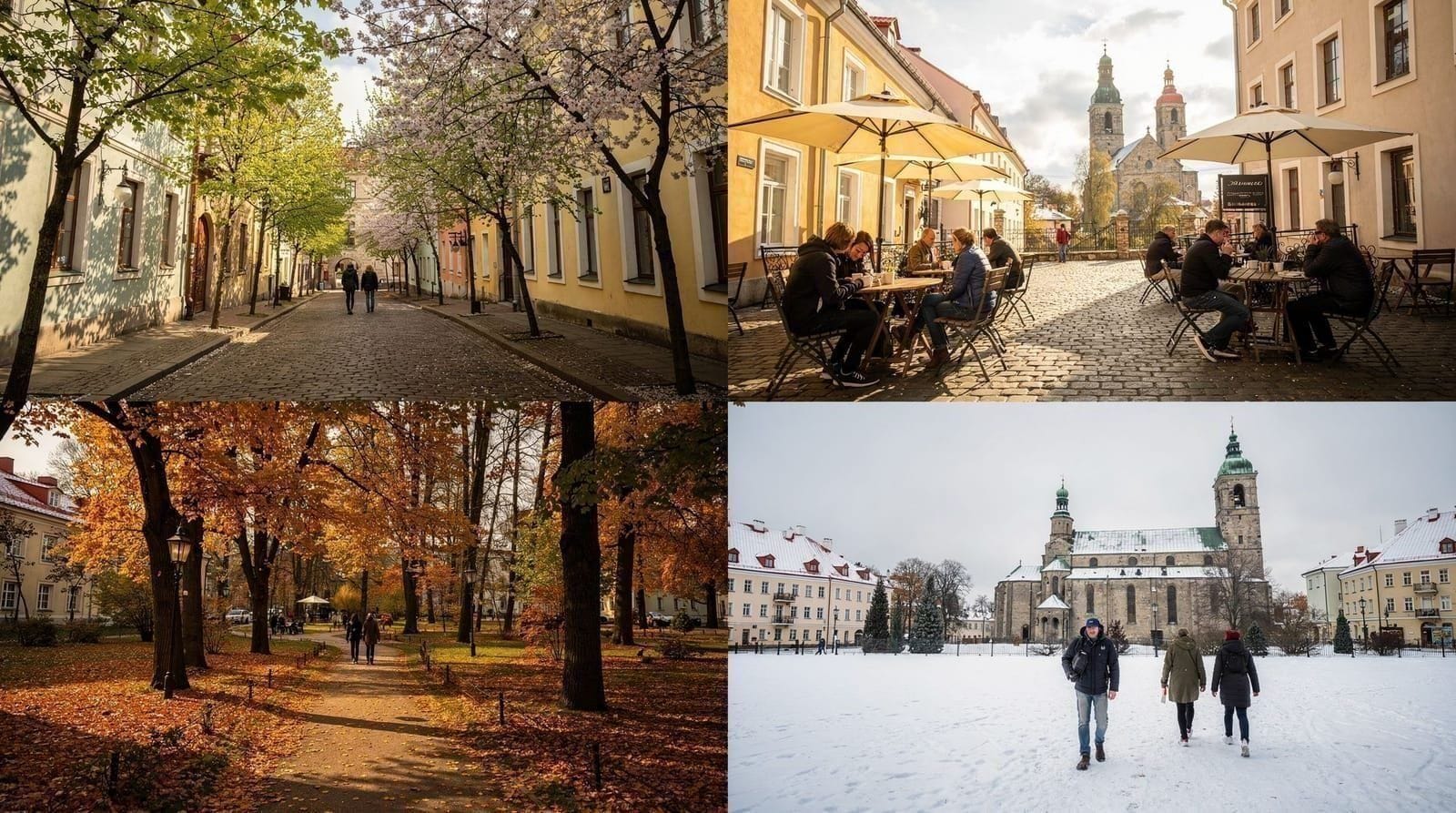
The terrace is at its most rewarding on clear days between May and September, when visibility extends well beyond the immediate roofscape. Winter visits reward those who don’t mind the cold: the crowds thin dramatically and the low-angle light on the red brick is striking, though the exposed terrace feels significantly colder than street level. For a month-by-month breakdown of what else changes across the year, see best time to visit Vilnius.
Gediminas legend
The founding legend of Vilnius involves Gediminas dreaming of an iron wolf on the hill, howling with the force of a hundred wolves. The court pagan priest Lizdeika interpreted this as a sign that a great capital city should be built here — the howling wolf signifying that the city’s fame would resound across the world. The iron wolf statue in the Lower Castle courtyard references this founding myth. See the full story in the Vilnius legends and myths guide.
Frequently asked questions about Gediminas Tower
How old is Gediminas Tower?
The tower dates from the early 14th century (1320s). The current brick structure was rebuilt from an earlier timber fortification on the same hill. Several phases of repair and restoration followed in the 15th century and again in 1966–68.
Is Gediminas Tower the same as Vilnius Castle?
The terms are often used interchangeably but are not exactly the same. “Gediminas Tower” refers specifically to the surviving western tower of the Upper Castle. “Vilnius Castle” (or Vilnius Castle Complex) is the broader term covering both the Upper Castle (on the hill) and the Lower Castle (in the valley below), plus the palace complex.
Can children visit Gediminas Tower?
Yes. Children under 7 enter the museum free. The funicular is safe for children. The internal staircase is steep and narrow — small children should be held by hand. The terrace has railings but they are at adult height.
How long should I plan for Gediminas Tower?
Allow 45–60 minutes for the funicular, museum (all three floors), and panoramic terrace. Add 30 minutes if you walk the hill path each way. A visit to the Palace of Grand Dukes or National Museum adds 1–2 hours.
Is it worth paying for a guided tour of Gediminas Tower?
The museum itself is self-explanatory with the app’s audio content, so a dedicated tower tour isn’t essential. Where a guide adds real value is context — how the hill fits into the wider story of Vilnius’s founding and statehood — which is why most visitors get more out of a general Old Town walking tour that includes the hill than a tower-only ticket.
Can I skip the tower and just do the terrace?
No — the terrace is the top floor of the museum, reached via the same ticket and staircase. There is no separate “terrace-only” ticket, so the €5 entry covers all three floors regardless of whether you spend most of your time at the view.
Top experiences
Bookable activities with verified prices and instant confirmation on GetYourGuide.