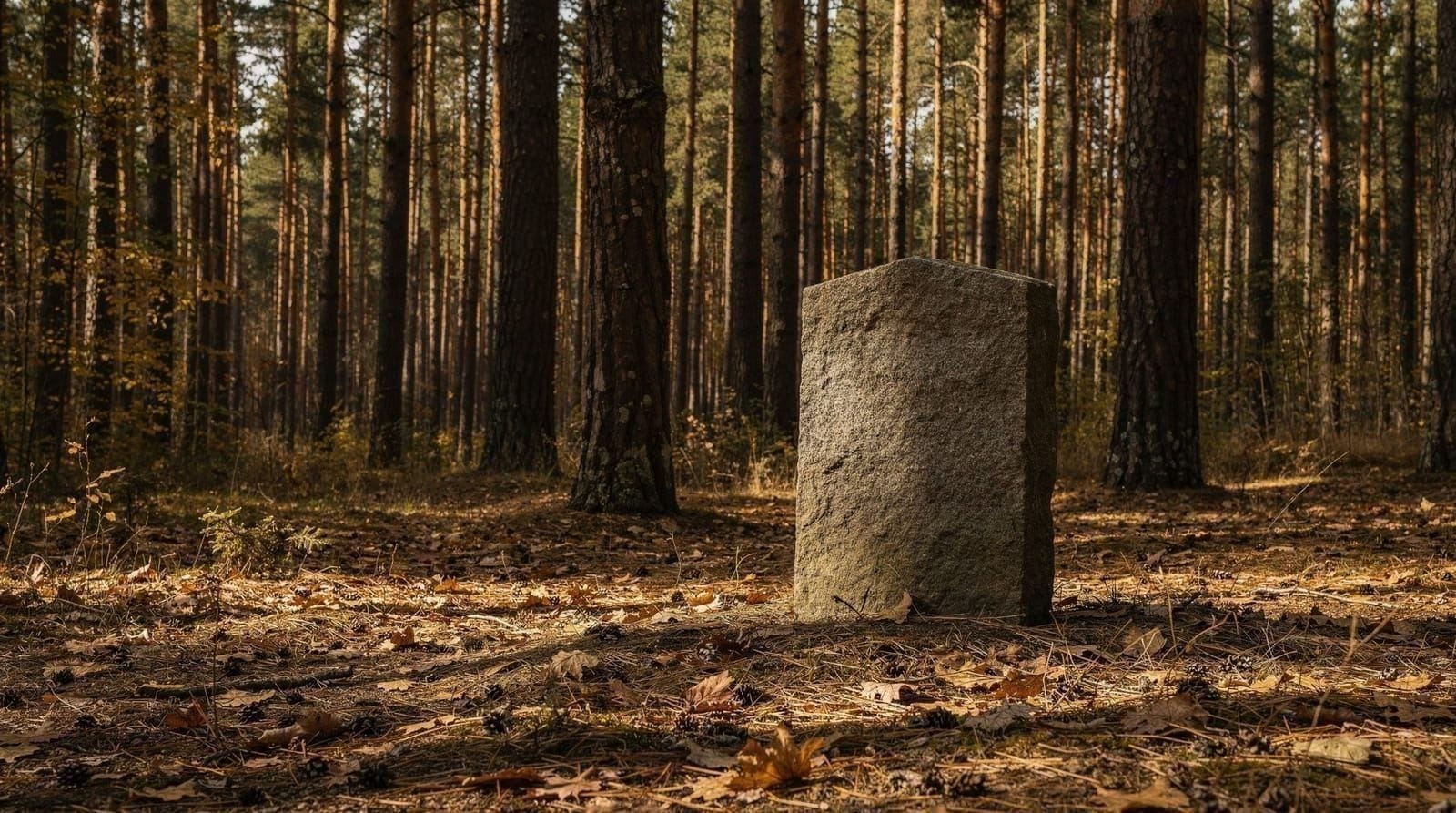
Kernavė, Lithuania
Kernavė is a UNESCO World Heritage site with Iron Age and medieval earthwork mounds, Lithuania's ancient capital. 35 km and 45 minutes from Vilnius.
Vilnius: Trakai kernave private full day
Quick facts
- Distance from Vilnius
- 35 km
- Travel time
- ~45 min by car; limited bus service
- Best time
- May–Sep; Midsummer Kernavė festival in late Jun
- Days needed
- Half day
- Entry
- Museum ~€3–5; mounds free to walk
Quick answer: Kernavė (Kernavė State Cultural Reserve) is a UNESCO World Heritage Site 35 km northwest of Vilnius — five earthwork hill-forts rising from the Neris River valley, the site of what was probably medieval Lithuania’s first capital. The mounds are visually dramatic and the views across the valley are excellent; the site museum provides reasonable archaeological context. Half a day from Vilnius covers the site comfortably. Public transport is awkward; car or organised tour is the practical approach.
| Where | 35 km northwest of Vilnius |
| Cost | Museum ~€3–5; mounds free |
| Time needed | Half day |
| Getting there | Car (~45min) or organised tour; limited bus |
| Best time | May–Sep; Midsummer festival late Jun |
What Kernavė is
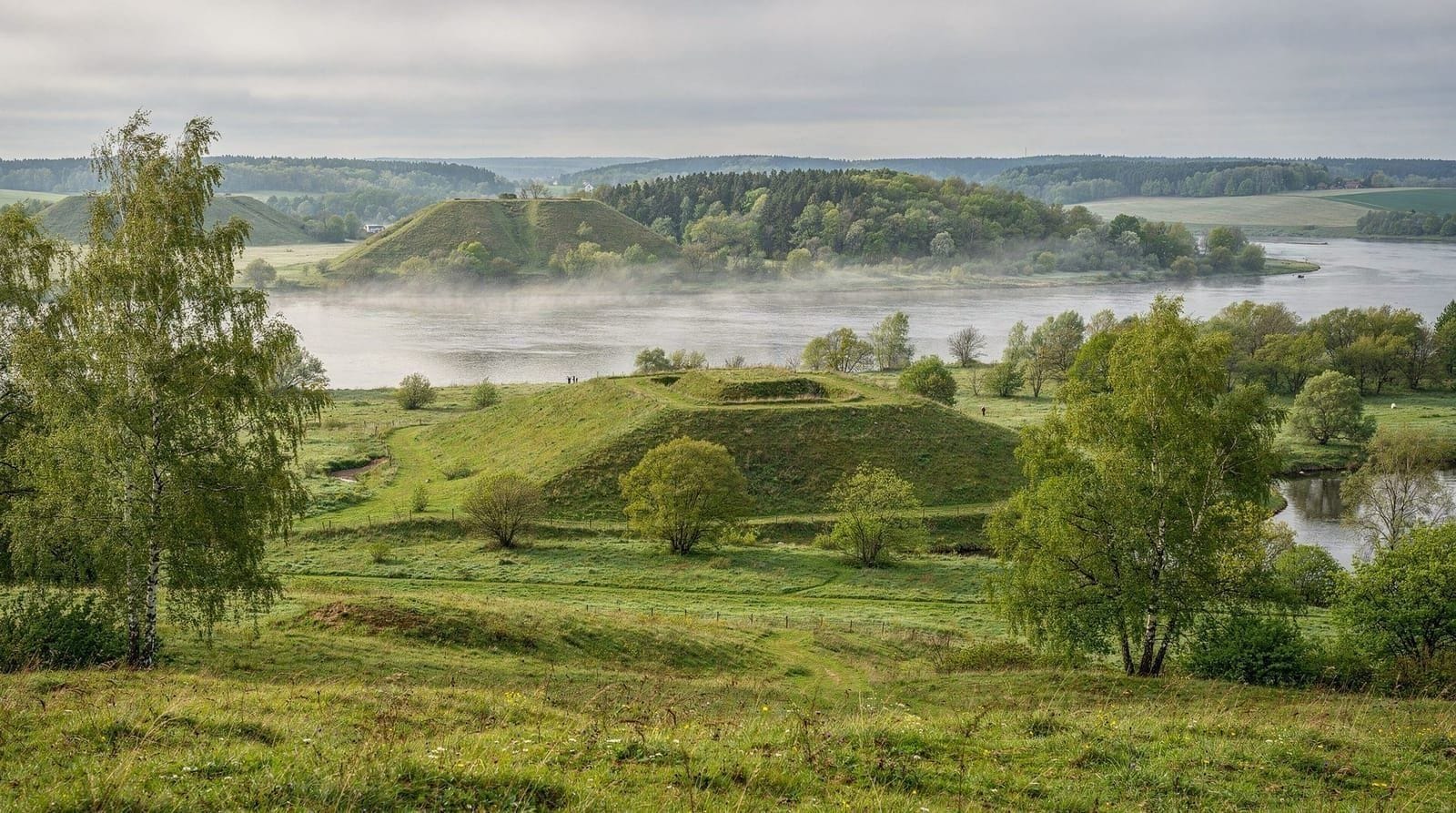
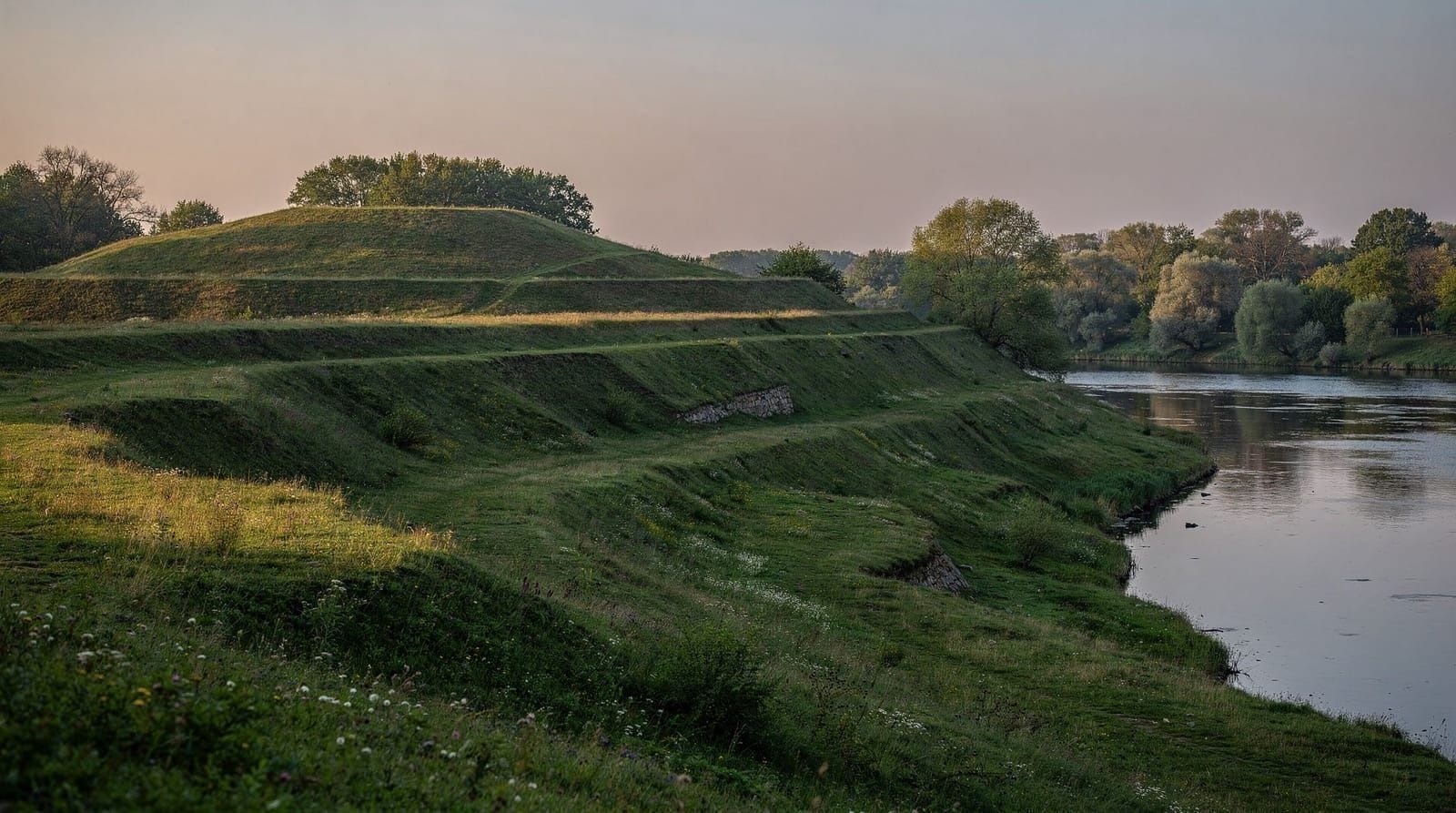
Kernavė is not a building or a ruin in the conventional sense. It is a landscape of five defended hill-forts dating from the Iron Age through the early medieval period, overlaid with a 13th-century settlement site and the remnants of a wooden church and cemetery. The earthworks — broad, flattened hilltops rising 20–30 metres above the floodplain — are the visible remains of what was one of the largest settlements in medieval Lithuania, possibly the political centre of the early Grand Duchy.
The settlement was destroyed by the Teutonic Knights in 1390 and never rebuilt. This preserved the site almost intact — no medieval or modern city grew over it. UNESCO designated Kernavė in 2004 as “an outstanding example of the fusion of natural landscape and human settlement.”
The hill-forts and the viewpoint
Five hill-forts are accessible on foot from the car park and village:
- Aukuro Kalnas (Altar Hill): The first and most prominent, rising directly above the village. A broad, flat summit with 360° views over the Neris valley. Most visitors spend time here. A stone altar for the Midsummer festival stands on the summit.
- Mindaugas’ Throne: Adjacent hill with similar views, named in popular tradition for Lithuania’s first and only king.
- Three smaller mounds: Accessed by a well-marked trail through the woods; less visited, more atmospheric in wet or foggy conditions.
The walk from the car park to the first summit takes about 15 minutes. A circuit of all five hills takes 2–3 hours including the museum stop.
The archaeological museum
The site museum (in the village near the car park) covers the archaeological history of the Kernavė site — Iron Age settlement patterns, trading goods, the medieval town plan, and the destruction of 1390. The exhibits include finds from excavations ongoing since the 1970s: amber beads, iron weapons and tools, pottery, and human burials.
The museum is small but competent, with English language signage. Entry around €3–5. Allow 45–60 minutes.
Getting there from Vilnius
Car: The most practical option. 35 km via Vilnius, Nemenčinė direction; about 45 minutes on the E28 (A14) motorway and local roads. Free parking at the reserve entrance.
Bus: Vilnius to Kernavė village — there are infrequent bus services, but they don’t run daily or at convenient times for a day trip. Check the schedules at Vilnius bus station; do not rely on this without confirming.
Organised private tour: The Vilnius–Trakai–Kernavė private full-day tour is designed for visitors wanting both sites without a car. Includes transport and a guide.
Vilnius: Trakai kernave private full dayCombining Kernavė with Trakai or Paneriai
Kernavė + Trakai: Both are about 35 km from Vilnius, but in different directions (Kernavė is northwest; Trakai is southwest). By car, visiting both in a day adds about 60–80 km of driving between the sites — achievable but makes for a full day. Organised private tours cover this route.
Kernavė + Trakai + Paneriai: This three-site combination is possible by car in a very long day. The private tour covering all three is a more practical option.
Vilnius: Paneriai trakai kernave private Vilnius: Hill of crosses pakruojis manor kernave day tripSee the Kernavė and Paneriai day trip guide for recommended sequencing and timing.
The Midsummer Living History Festival
Kernavė hosts a major Living History Festival around the Midsummer period (late June, near Joninės/June 24). The event reconstructs medieval and earlier Lithuanian life: craftspeople demonstrating Iron Age skills, historical combat demonstrations, traditional music, and a bonfire on Aukuro Kalnas at midsummer night.
The festival draws large crowds — typically 20,000–40,000 visitors over the weekend. Accommodation in the area books up months ahead. If you’re in Lithuania in late June and interested in this, plan well in advance. The event is free to enter or has a small admission fee; check the site’s official schedule.
Practical notes
Weather and ground conditions: The paths to the hill-forts are unpaved and become muddy in wet weather. Appropriate footwear makes a meaningful difference. The hillsides can be slippery after rain.
Crowds: Kernavė outside the Midsummer festival is quiet — one of the least crowded UNESCO sites you’ll visit in Central/Eastern Europe. In June–August, expect tour groups in the morning but manageable numbers by afternoon.
Facilities: A small café operates in the village in season. Toilets at the museum. No significant food or accommodation in the village itself — bring snacks for a morning visit.
Kernavė compared to Vilnius’s own historic sites
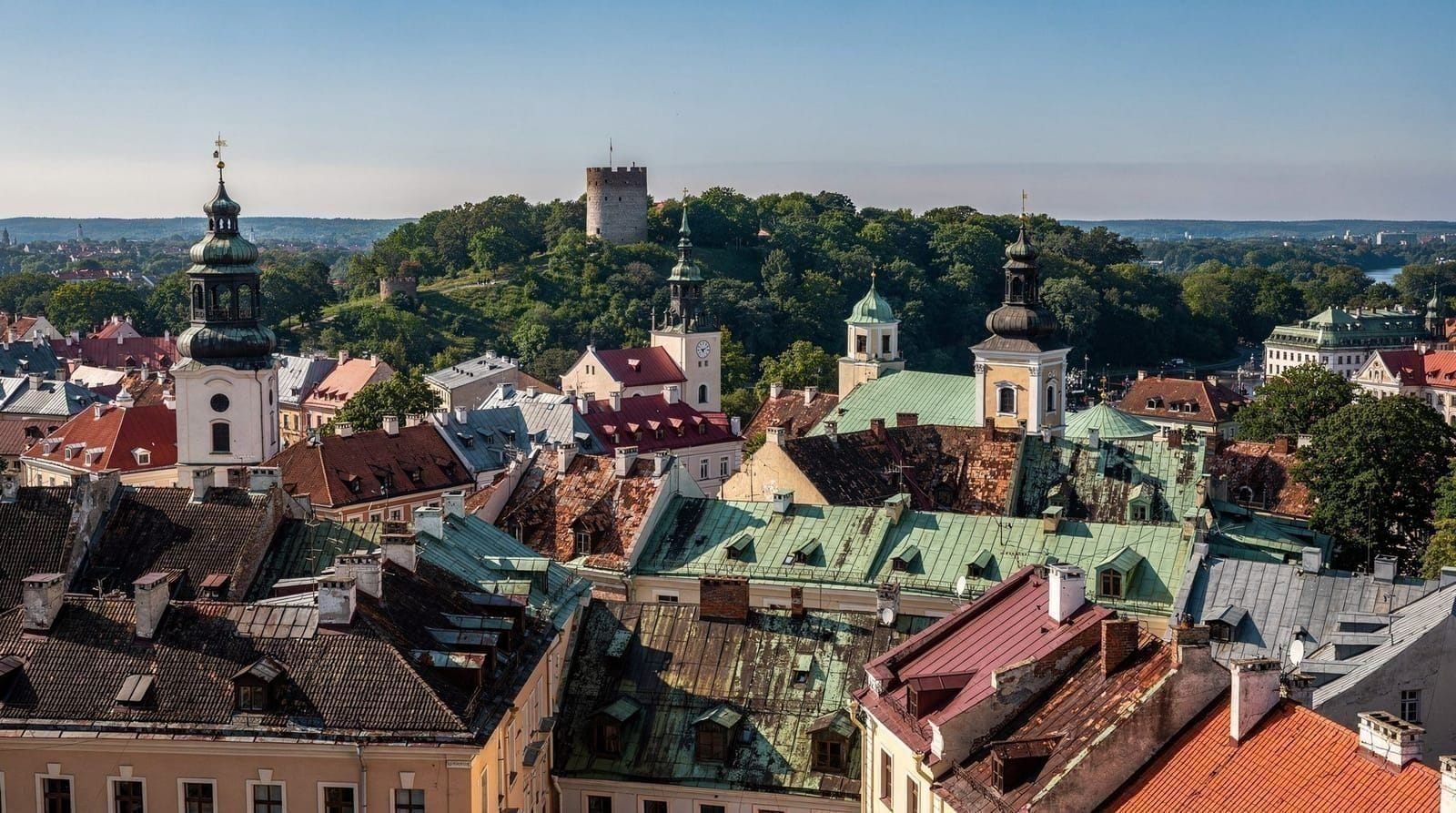
Vilnius has its own layer of medieval history — Gediminas Tower and Castle chief among them — but Kernavė predates and, in some tellings, precedes Vilnius as a centre of Lithuanian power. Visiting both gives a fuller picture: Gediminas Tower for the visible medieval capital that succeeded Kernavė, and the Kernavė mounds for the earlier, mostly-vanished settlement that came before it. Neither substitutes for the other, and the short distance from Vilnius makes seeing both in one trip straightforward.
Why Kernavė is an easy addition to a Vilnius base
Because Kernavė is only 35 km out, it works well as a half-day add-on rather than requiring a dedicated overnight, unlike the coastal or northern Lithuania destinations. Visitors basing themselves in Vilnius for how many days in Vilnius suggests, Kernavė is one of the easiest “extra day” options to slot in without disrupting the rest of an itinerary. The 5-days Vilnius and day trips itinerary and the best day trips from Vilnius guide both treat it as a strong half-day choice alongside Trakai.
Frequently asked questions about Kernavė
Why is Kernavė a UNESCO World Heritage Site?
Kernavė was inscribed in 2004 as an “outstanding example of the fusion of natural landscape and human settlement over some 10 millennia.” The site preserves a continuous sequence of archaeological remains from the Palaeolithic through to the medieval period, including five distinct Iron Age and medieval hill-forts, all within a well-preserved river valley landscape.
Is Kernavė accessible by public transport?
With difficulty. Bus services from Vilnius to Kernavė village exist but are infrequent and not timed conveniently for day trips. Most visitors use a car or an organised private tour from Vilnius. Check current bus schedules at Vilnius bus station before relying on this option.
How long does a visit to Kernavė take?
A focused visit — museum and one or two hill-forts — takes 2 hours. Walking all five hill-forts plus the museum takes 3 hours. Half a day total including travel time from Vilnius.
Can I combine Kernavė with Trakai in a day?
Yes, but only by car or organised private tour. The two sites are in opposite directions from Vilnius (Trakai southwest, Kernavė northwest), so you drive through or near Vilnius to get between them. It makes for a 5–6 hour day of driving and walking; plan lunch between the two sites.
When is the Kernavė Midsummer festival?
The Living History Festival at Kernavė takes place around the Joninės/Midsummer holiday (June 24), typically on the weekend nearest to this date. The event reconstructs medieval Lithuanian life with historical demonstrations, crafts, and bonfires. It draws tens of thousands of visitors — book accommodation well in advance if planning to attend.
Is Kernavė better than Trakai for a half-day trip?
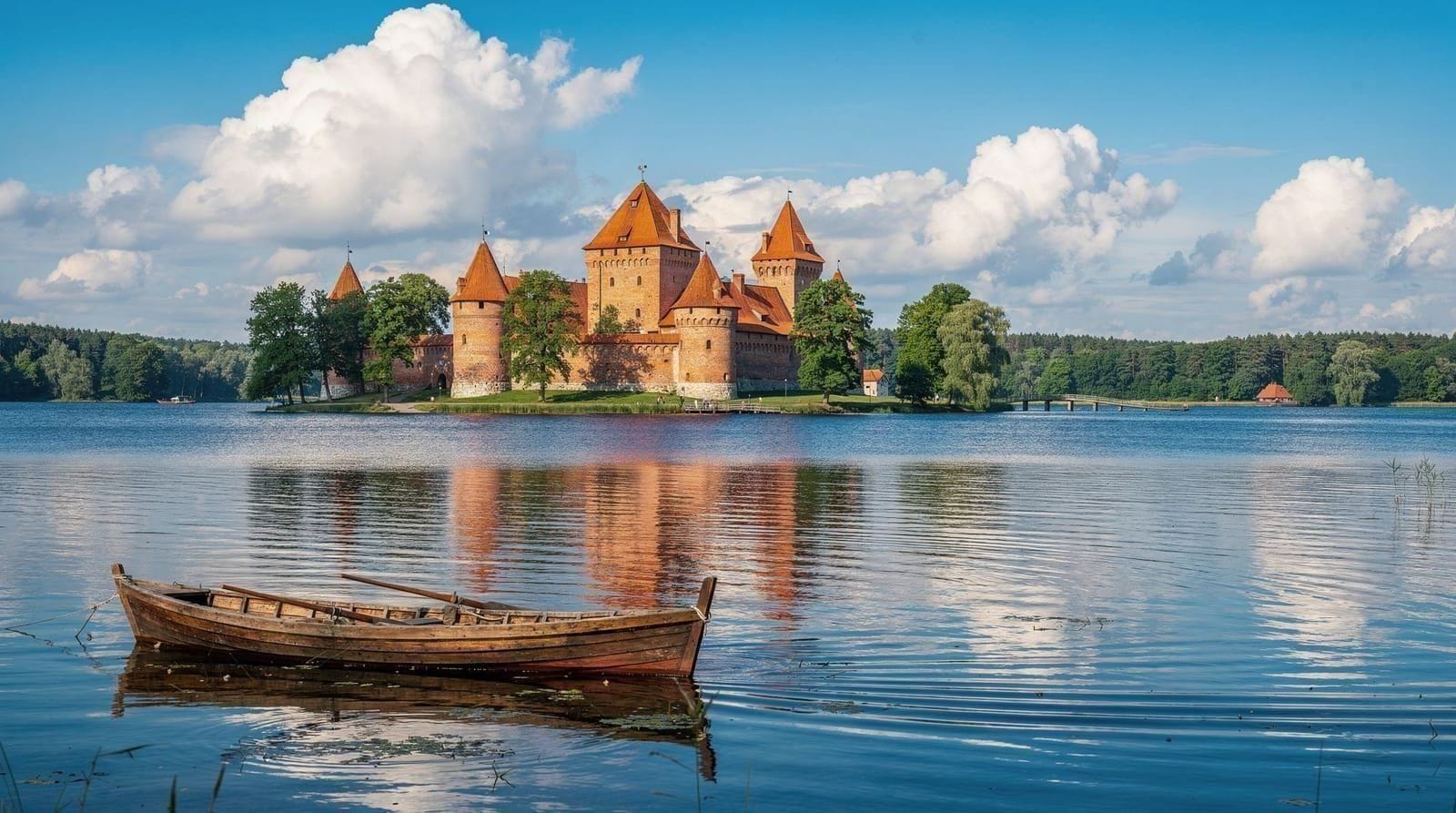
They’re different rather than directly comparable. Kernavė offers archaeological mounds, valley views, and a quieter, less crowded experience. Trakai offers a photogenic lake castle with more built structure and stronger name recognition. Both are roughly half-day trips from Vilnius; many visitors with more than three days do both rather than choosing.
Top experiences
Bookable activities with verified prices and instant confirmation on GetYourGuide.