Vilnius Old Town walking tour: which one to book
Vilnius: City highlights walking tour
Duration: ~2 hours
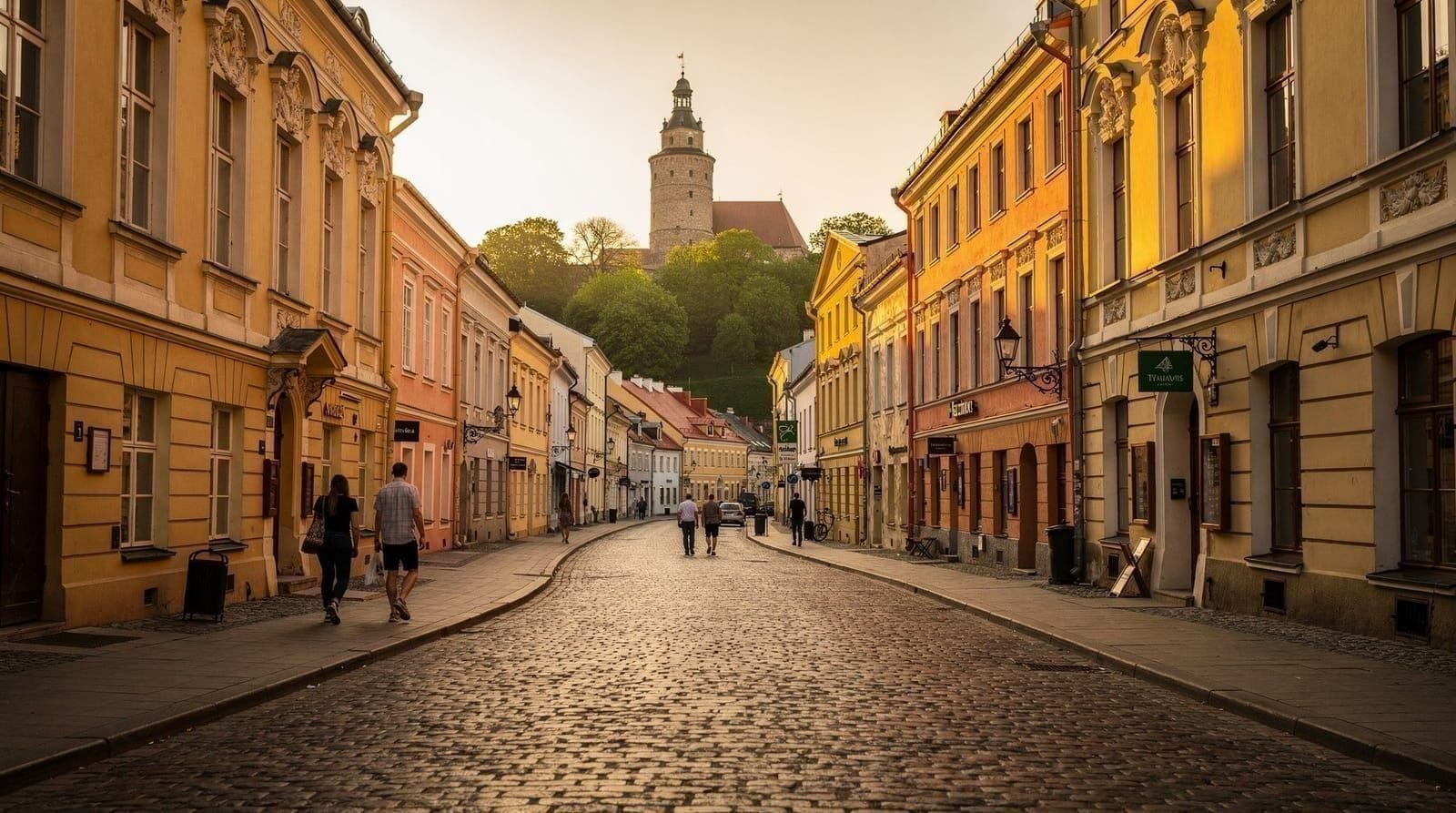
Vilnius Old Town is UNESCO-listed for good reason: the largest surviving Baroque old town in Northern Europe, packed with medieval courtyards, hidden passageways, and layers of history that span Gothic, Renaissance, Baroque, and Soviet chapters. The question is not whether to take a walking tour, but which one delivers the most without padding the clock with filler.
This page compares the four main walking tours on offer, so you can pick the format that fits your travel style and budget.
| Where | Starts near Cathedral Square, Old Town |
| Cost | Around €14–€38 per person depending on format |
| Time needed | 2.5–3.5 hours |
| Getting there | 5-minute walk from the main bus and train hub |
| Best time | Morning departures avoid the worst heat and crowds |
What the city highlights tour covers
The Vilnius city highlights walking tour is the benchmark against which everything else is measured. Running approximately 2.5 hours, it covers the essential geography of the Old Town — Cathedral Square, Gediminas Avenue, St. Anne’s Church, Pilies Street, the medieval gates, and the Gate of Dawn (Aušros Vartai) with its chapel of the Black Madonna.
The guide walks you through the literal layout of the city and layers in the big historical beats: the Grand Duchy of Lithuania, the Polish-Lithuanian Commonwealth, the Russian Empire, two Soviet occupations, and independence in 1990. Good guides make these chapters feel connected rather than a list of dates.
Group size typically runs 10–20 people. The pace is moderate — not rushed, but you will not linger more than 5 minutes at any single spot. It starts from Cathedral Square, which is easy to find, and there are usually two daily departures in summer.
What it does well: Efficient coverage, good price-to-content ratio, English-speaking guides with genuine local knowledge. Where it falls short: Large groups mean you can miss commentary in noisy sections; the guide cannot adapt the itinerary to your interests.
The panoramic walking tour: higher ground
The panoramic walking tour differs by including the climb to Gediminas Tower, the medieval castle that sits on a hill above the Old Town. From the top, you get the best free panorama in Vilnius — a view across the red-tiled rooftops toward the Neris and Nemunas river valleys. Tower entry is typically included in the ticket price (saves you the separate €5 entry fee).
This tour suits people who are less pressed for time and want a slightly more active experience. Duration is usually 3 hours. The downside: if it is raining or the tower is closed for maintenance, you lose the differentiating feature. Check the operator’s refund policy before booking.
Snacks-included tours: food angle on Old Town
The Old Town tour with snacks adds three to four food stops where you taste local Lithuanian products — dark rye bread, local cheese, cepelinai dumplings, or seasonal items depending on the day. It runs 3 to 3.5 hours and costs €10–€15 more than a standard tour.
This format works well if you arrive mid-morning and want to graze rather than sit down for a formal lunch immediately. It is not a full food tour (see the Vilnius food tour page for that), but it gives a genuine taste of the food culture alongside the history. Group sizes tend to be smaller — 8 to 12 people.
For a dedicated food focus without the architecture lecture, check the food and drink guide for Vilnius.
Small-group local guide: the private-feel option
The small-group tour with a local guide caps at six to eight participants. Price per person is higher (typically €25–€35), but the experience is closer to a private tour. You can ask questions freely, the guide adjusts the pace and depth to the group, and you spend more time on whatever interests people most.
Recommended if you are travelling with a couple who shares your interests, or if you find large group tours frustrating. Departure times are more limited — often just one morning slot — so book ahead.
Practical comparison
| City highlights | Panoramic | With snacks | Small group | |
|---|---|---|---|---|
| Duration | 2.5 h | 3 h | 3–3.5 h | 2.5–3 h |
| Group size | 10–20 | 10–20 | 8–12 | 6–8 |
| Approx. price | €14–€18 | €16–€20 | €25–€35 | €28–€38 |
| Tower entry | No | Yes | No | No |
| Food included | No | No | Yes | No |
How a walking tour fits your Vilnius itinerary
If you are spending 2 days in Vilnius, a walking tour on day one is the most efficient way to orient yourself before exploring independently on day two. For a weekend in Vilnius, book it first thing on Saturday morning to know where to return to.
The Old Town sits immediately south of Cathedral Square — all tours start within five minutes’ walk of the city’s main bus and train hub. You can walk from most central hotels in under 15 minutes.
After any walking tour, the obvious next moves are: Vilnius Cathedral and its crypt, the University courtyards, or crossing into Užupis for an hour of bohemian street culture. For architecture nerds, the Baroque architecture guide digs into what you will have just seen.
The key stops you will visit: what to know in advance
Understanding what you will see helps you get more out of the tour. A few notes on the main sites:
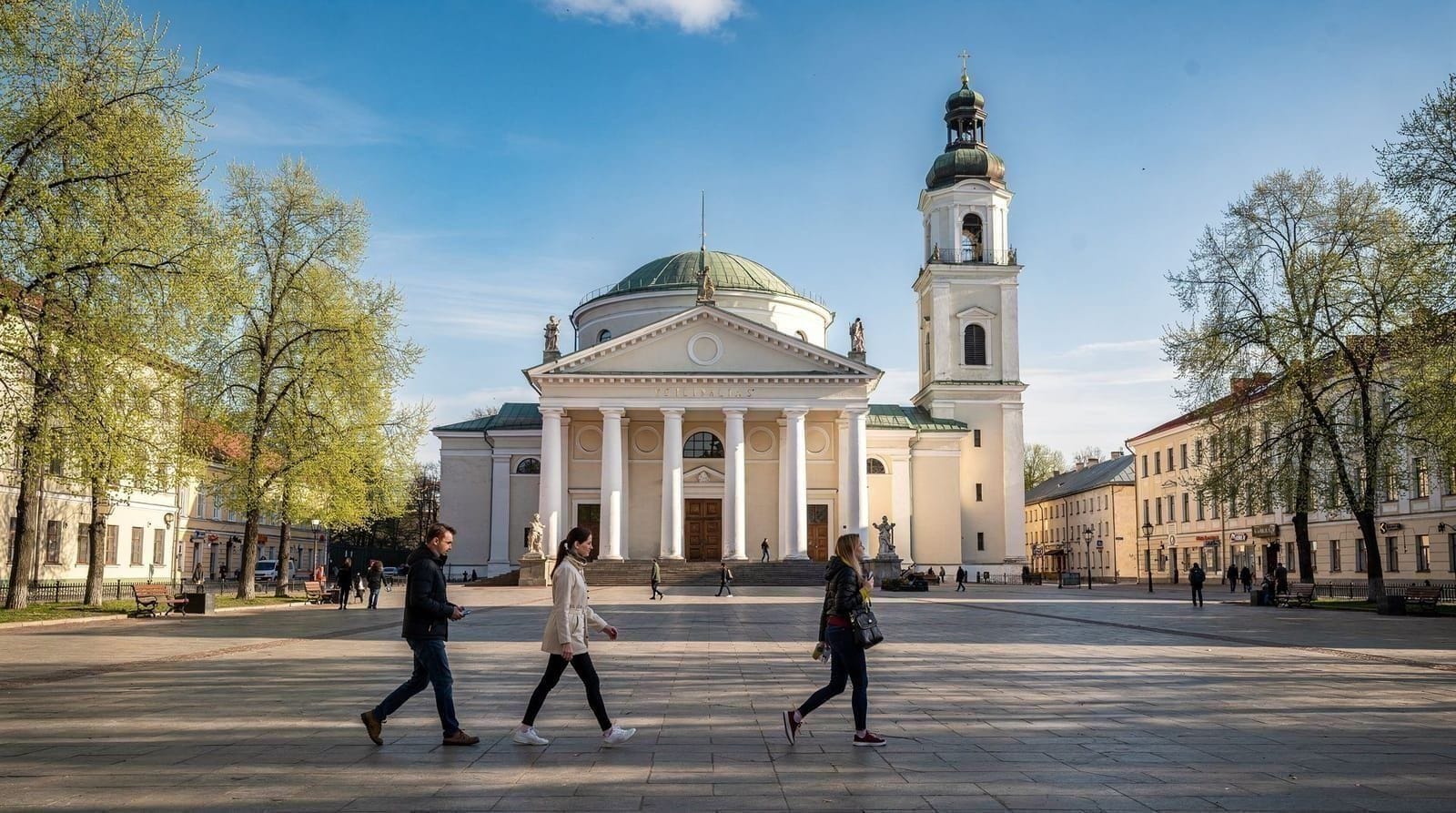
Cathedral Square is the geographical heart of Vilnius — a large open square dominated by the neoclassical Cathedral of St. Stanislaus and St. Vladislaus. Look for the “miracle tile” in the paving (Stebuklas), where locals make a wish and turn around three times. It is marked with a brass cross.
Pilies Street (Castle Street) is the main artery from Cathedral Square into the medieval heart. The street is charming but also where the most aggressive tourist restaurant touts operate. Your guide will steer you off the main drag into the courtyards and alleyways that first-time visitors typically miss.
St. Anne’s Church is the Gothic red-brick church that Napoleon allegedly wanted to take back to Paris in his palm. The architecture is extraordinary — 33 different types of brick in the Gothic lacework facade. It stands alongside the much larger Bernardine Church in a complex that reveals how the medieval city was layered.
The Gate of Dawn (Aušros Vartai) is the only surviving gate of the original city wall. The chapel above the gate houses the Black Madonna of Vilnius — an icon venerated across Catholic Europe, particularly in Poland. You walk under the gate as traffic moves through; pilgrims climb to the chapel level above. A guide can get you into the chapel at the right moment to see the icon properly.
The medieval town walls — most have been demolished but the surviving sections and their footprint are visible in the street plan. A good guide shows you where the walls ran and what the city’s medieval limits looked like.
What guides don’t always cover
Some aspects of Vilnius’s history rarely make the standard 2.5-hour walking tour due to time constraints. If these interest you, ask your guide or explore independently afterward:
- The Jewish quarter: The streets south of the Cathedral were once the heart of a thriving Jewish community of 100,000. Almost nothing physical remains of it, which is itself the point. The Jewish heritage tour covers this specifically.
- The Soviet TV tower: Not in the Old Town but visible on the horizon, and the site of the 1991 civilian resistance that led to Soviet soldiers shooting protesters. It is a 20-minute trolleybus ride from the centre.
- Kernavė: The pre-medieval Lithuanian capital, a UNESCO site 35 km north of Vilnius with earthwork mounds and an outdoor museum of Lithuanian prehistoric culture. The Kernave and Paneriai guide covers the logistics.
Tourist trap to avoid
Do not confuse these operator-run tours with the “free” walking tours that depart from Gediminas statue near Cathedral Square. They are not free — guides expect €10–€15 in tips and the income pressure shows in how aggressively they are run. Pay upfront for a structured tour; you know what you are getting.
Choosing a guide: what differentiates the good ones
Vilnius has a relatively small pool of English-speaking tour guides, and the same individuals often work across multiple operators. What distinguishes the best:
Depth on specific periods. Vilnius’s history is unusually complex — it has been capital of Lithuania, part of Poland, occupied by Russia twice, then Nazi Germany, then Soviet Union, then independent again. A guide who can make these layers feel chronologically coherent rather than chaotic is worth their fee. Ask a guide a specific question before the tour starts: “What happened to Vilnius during the first Soviet occupation in 1940–1941?” If they answer precisely, you are in good hands.
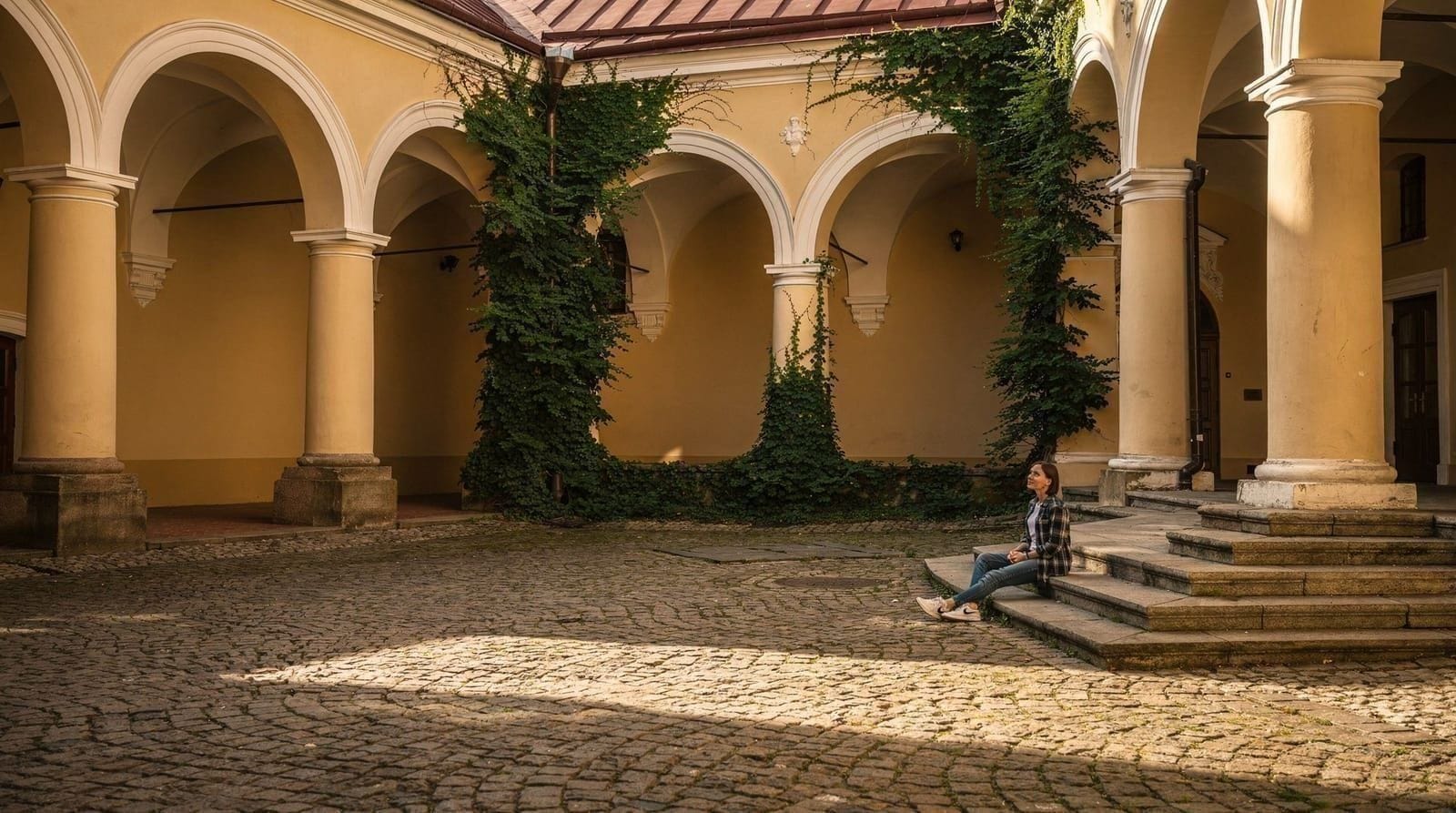
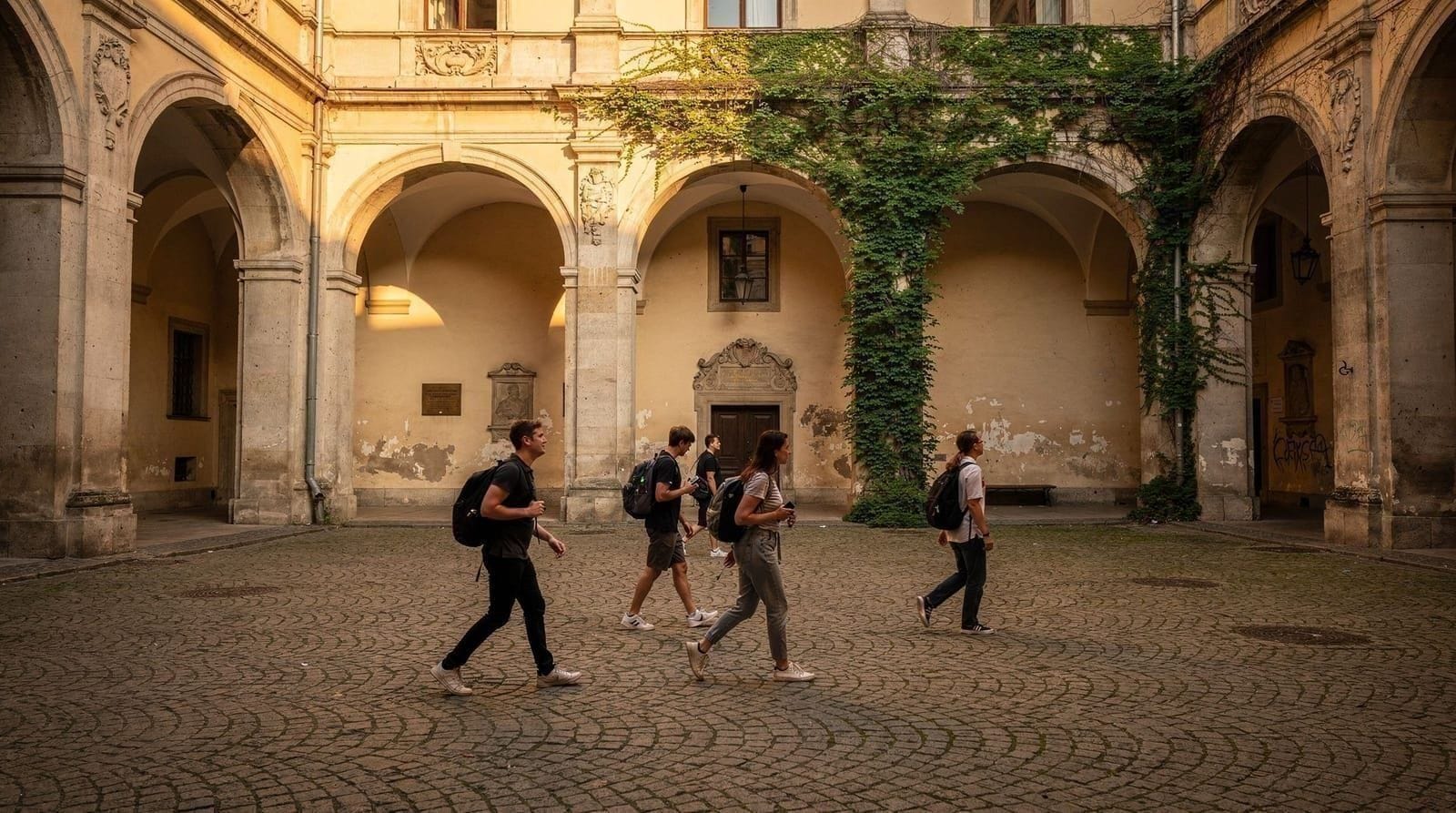
Knowledge of courtyards. The Old Town’s inner courtyards are semi-private spaces — residential buildings built around shared central yards that are not obvious from the main streets. A guide who knows which gates to push open and which courtyards to enter takes you off the tourist path. Some of these courtyards contain medieval architecture, Soviet-era murals, or unexpected garden spaces. This is the local knowledge that a foreign guidebook cannot replicate.
Honest about the restoration history. Vilnius Old Town was significantly damaged in WW2 and subsequently restored in the Soviet period. Some of what looks medieval is 1970s Soviet reconstruction. A confident guide tells you which is which rather than presenting everything as authentically ancient.
Language quality. Most guides who work English-language tours are genuinely fluent, but pace varies. If you find yourself struggling to follow, it is acceptable to tell the guide early in the tour rather than suffering through it.
Who should skip the walking tour entirely
If you have already spent time in Vilnius before, or if you are a very experienced traveller in Central and Eastern Europe, a self-guided walk with the Vilnius Old Town guide and an audio tour app will serve you better. The Old Town is compact enough that you can cover the essential route in two hours with a good map.
Combining the walking tour with a bike tour
If you would rather cover more ground at a faster pace, the Vilnius city bike tour is a genuinely different way to see the same city — you cover parks and riverside stretches a walking tour skips, at the cost of the courtyard-level detail a good walking guide provides. Most visitors do the walking tour first for orientation and grounding in the history, then a bike ride later in the trip once they know the geography and want to move faster between sights.
What a good guide adds beyond a guidebook
The honest case for paying for a guide rather than reading the Vilnius Old Town guide independently comes down to three things: access (guides know which courtyard gates are unlocked and which chapel doors open at which hours), sequencing (a good route avoids backtracking and times the Gate of Dawn chapel visit for a quieter moment), and the ability to answer follow-up questions in real time rather than researching them afterward. None of this is essential — the Old Town is compact and walkable with a phone map — but it changes a pleasant walk into a more informed one.
Seasonal considerations for booking
| Season | Conditions | Departure frequency |
|---|---|---|
| Summer (Jun–Aug) | Warm, long daylight, busiest | Multiple daily |
| Spring/Autumn | Mild, fewer crowds | Daily, most operators |
| Winter (Dec–Feb) | Cold, icy cobblestones, atmospheric | Often once daily |
Booking a day or two ahead is sufficient outside peak summer weekends; in July and August, book at least two to three days out for the small-group and panoramic tours specifically, since capacity is limited. Shoulder-season travellers (April–May, September–October) generally get the best combination of mild weather, thinner crowds, and easy last-minute availability.
Frequently asked questions about Vilnius Old Town walking tours
Do tours run in winter?
Yes, year-round — though departure frequency drops to once daily in November to March. Dress warmly; temperatures in January average -3°C and the Old Town’s cobblestone streets get icy. The winter in Vilnius guide has full packing advice.
Is the tour wheelchair accessible?
Mostly not — Vilnius Old Town has heavy cobblestone paving and steep sections near Gediminas Hill. The flatter Cathedral Square / Pilies Street route is manageable for most mobility needs, but confirm with the operator before booking.
Can I combine with the KGB Museum?
Yes, easily. A morning walking tour finishes by noon; the KGB Museum is a 10-minute walk from Cathedral Square and typically takes 1.5–2 hours. See the Soviet history guide for context before visiting.
What languages are available?
English is available on every departure. Some operators offer German, French, or Spanish on specific days — check the booking page at time of purchase.
Are there tours specifically for Vilnius Jewish history?
Yes — this is covered by a dedicated tour. See the Vilnius Jewish heritage tour page for a proper comparison of those options.
Is the Užupis district included?
Standard 2.5-hour tours usually reach Užupis briefly or mention it without entering. For proper time in Užupis — the eccentric “republic” with its own constitution — book a longer tour or allow an extra hour after the main tour ends. The Užupis guide covers it in depth.