Vilnius Jewish heritage tour: which one to choose
Vilnius: Jewish heritage 3 hour tour
Duration: 3 hours
Pre-war Vilnius was one of the great Jewish cities of Europe. Known as the “Jerusalem of Lithuania” (Yerushalayim de Lita in Yiddish), it had a Jewish population of roughly 100,000 — around 40% of the city — that had accumulated over 500 years, survived multiple Russian pogroms and restrictions, and produced some of the most significant figures in Jewish intellectual history. The Vilna Gaon (Elijah ben Solomon Zalman, 1720–1797) — the foremost Torah scholar of his era — was born and lived here. The YIVO Institute for Jewish Research was founded here in 1925.
Between 1941 and 1944, almost all of it was destroyed. A guided Jewish heritage tour is the most effective way to understand what Vilnius was, what was lost, and what traces remain.
| Where | Old Jewish Quarter, Old Town (Paneriai optional, 10 km out) |
| Cost | Around €15–€30/person for group formats; €80–€150 total for private with transfer |
| Time needed | 2.5–3 hours (half-day with Paneriai) |
| Best time | Year-round; museum closed Saturdays |
| Booking | Advance recommended, especially for the private transfer option |
The 3-hour Jewish heritage walking tour
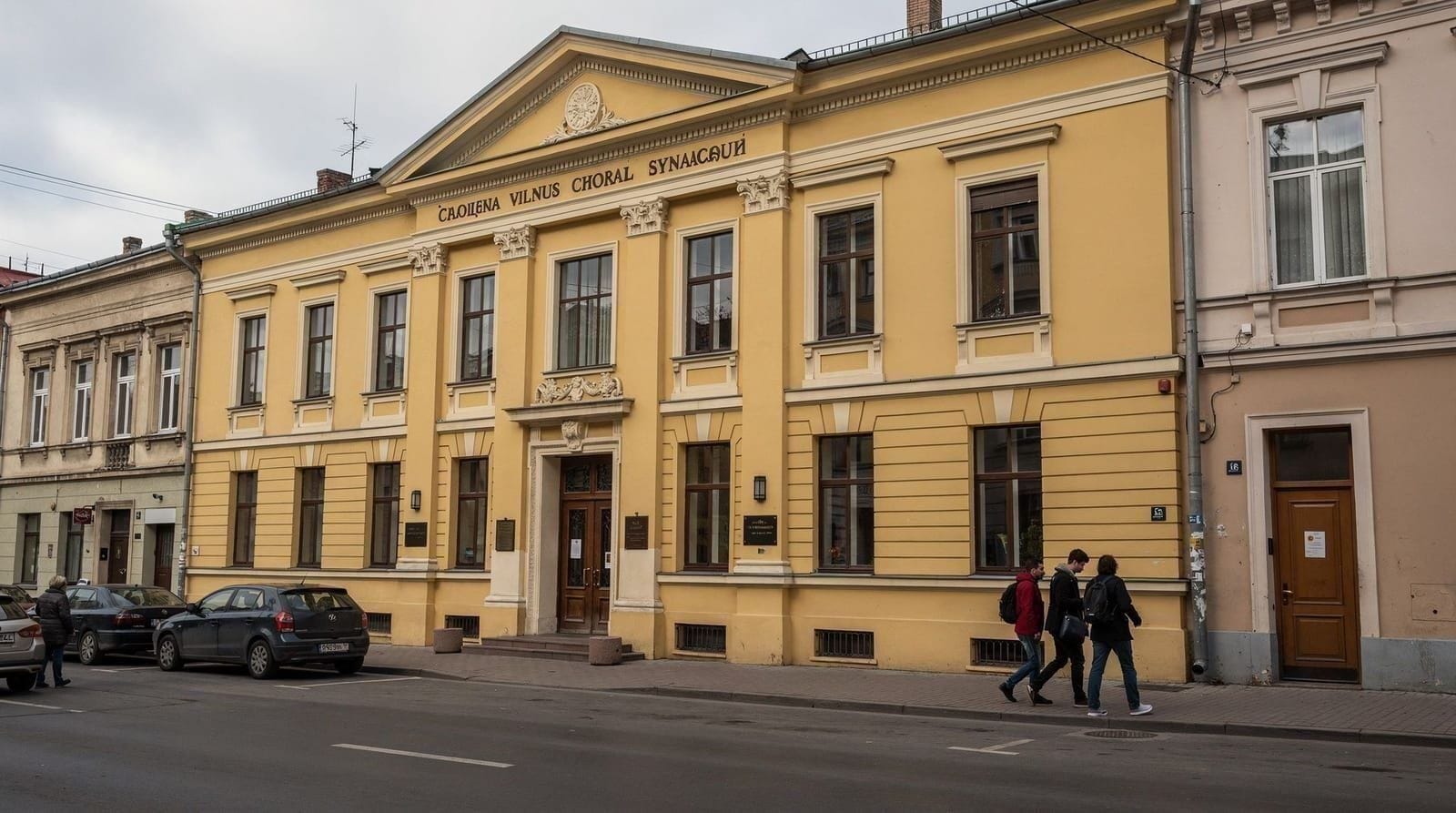
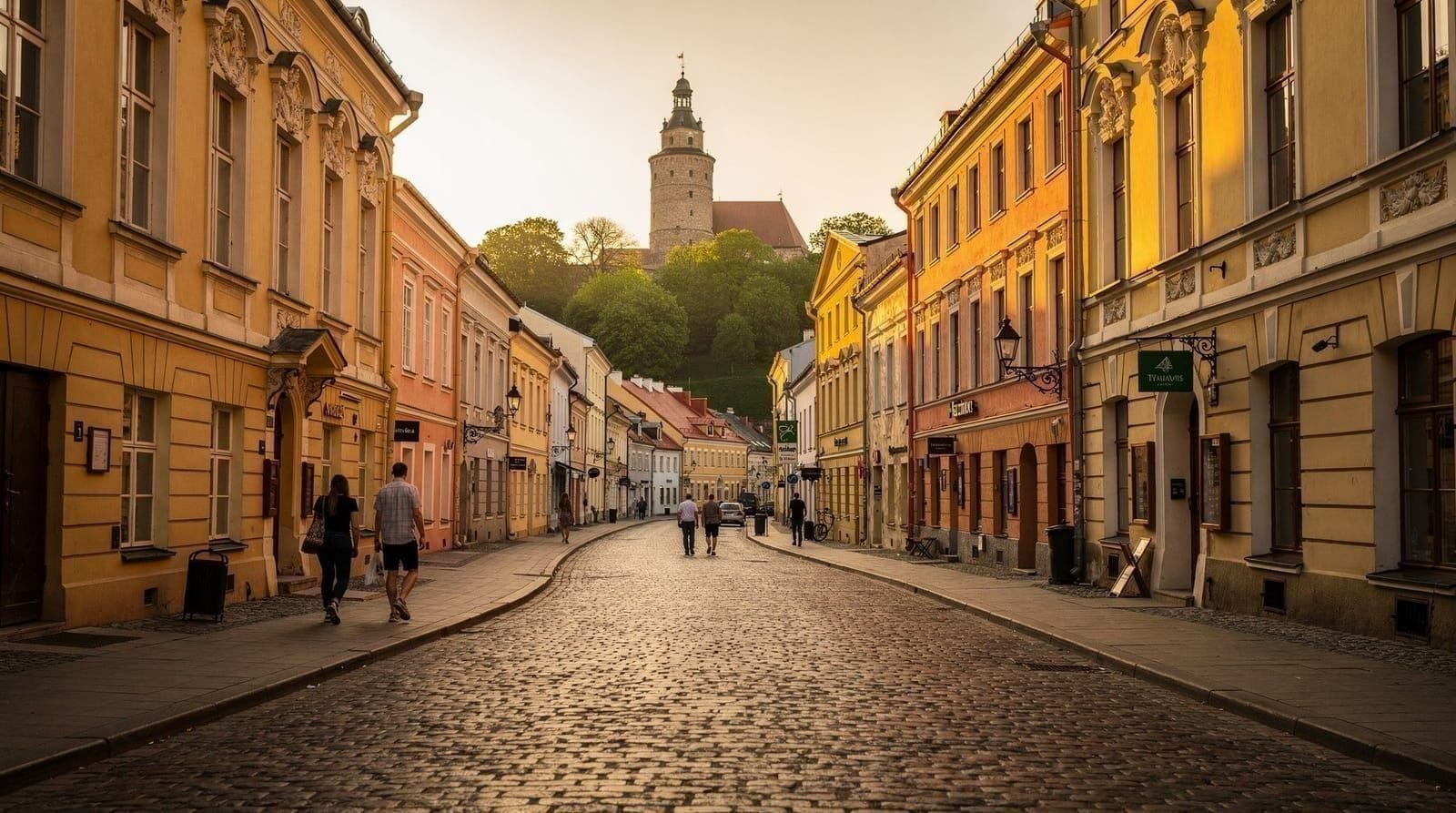
The 3-hour Vilnius Jewish heritage tour is the main group format. It covers the Old Town sites within walking distance: the Old Jewish Quarter (once a city-within-a-city with its own streets, institutions, and synagogues), the site of the Great Synagogue (now a primary school — the guide will explain what was there and why it was demolished by Soviet authorities in 1955), the surviving Choral Synagogue (the only synagogue of many dozens that remains standing), and the Vilna Gaon Jewish State Museum.
A good guide does not only narrate destruction. The tour covers the full arc: the community’s centuries of presence, its intellectual richness (the Yiddish press, the Bund, the YIVO, the writers and artists), the Judenrat, the ghetto period from 1941 to 1943, the resistance within the ghetto (including the FPO — the United Partisan Organisation), and what happened at Paneriai. For deeper background on the Vilna Gaon and the intellectual heritage, the Jewish Vilnius guide is essential reading.
Who this suits: Anyone with an interest in European Jewish history, World War II, or the texture of pre-war Eastern Europe. It is not exclusively a tour for Jewish visitors — the content is historical and contextual, appropriate for all backgrounds.
The 2.5-hour Jewish quarter tour
The 2.5-hour Jewish quarter walking tour covers similar geography in a slightly shorter format, with more focus on the physical street-level tour of the Old Jewish Quarter. It is a tighter, slightly faster walk that prioritises the spatial experience of walking through streets that were once the ghetto over the deeper narrative layers.
This format works if you have a prior grasp of the history and want mainly to see the physical space — to walk the same streets and understand the geography of the ghetto walls, the gates, and the courtyards. If this is your first serious engagement with the subject, the 3-hour tour provides better context.
Price difference is typically €5–€10 per person in favour of the shorter tour.
Private Jewish heritage tour with transfer
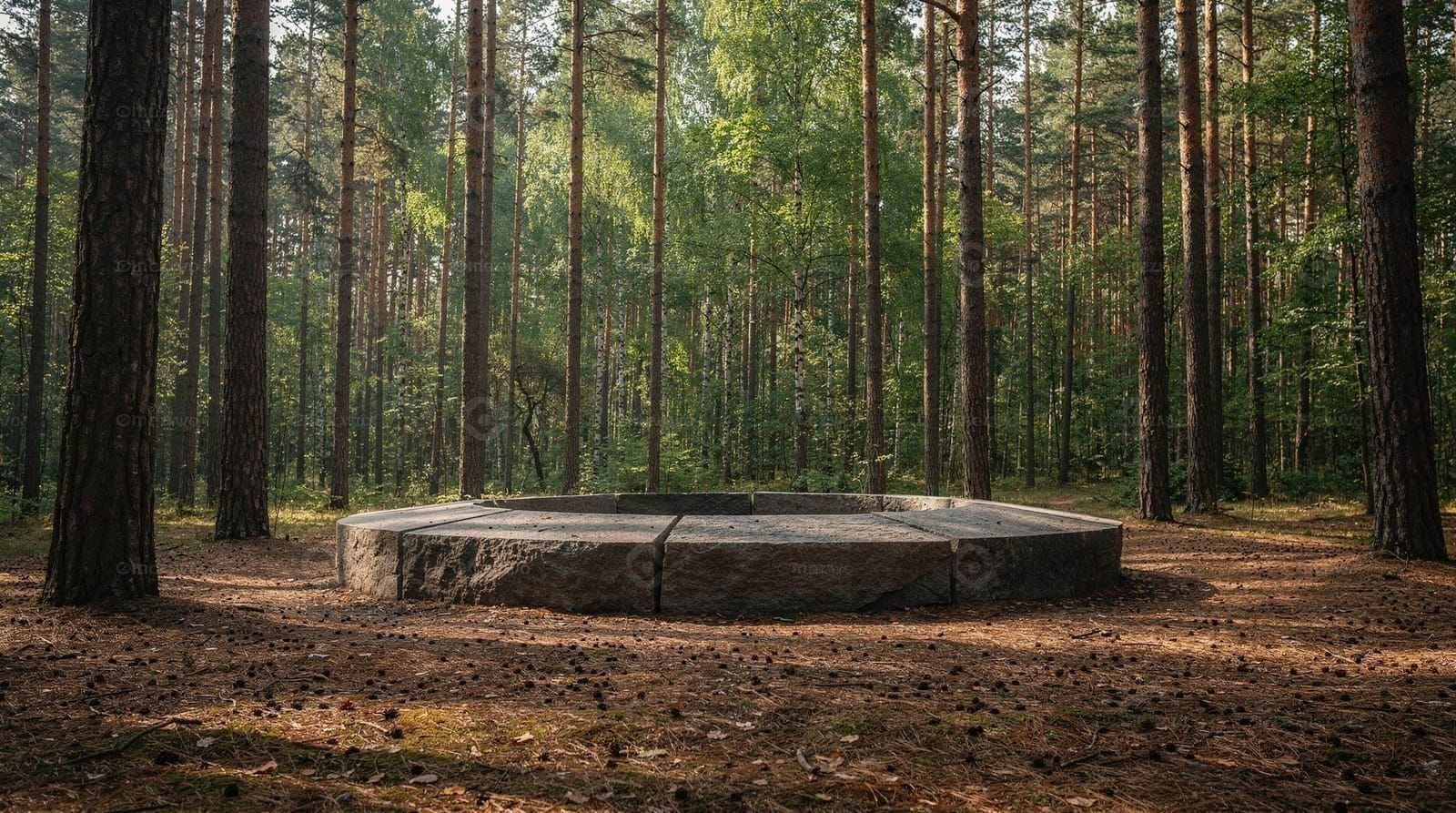
The private Jewish heritage tour with transfer is the comprehensive option: a private guide, transport included, and the ability to include Paneriai (the forest memorial 10 km from the city centre where the massacres took place) within the tour time.
Paneriai is the site that completes the picture. The Old Town walk shows you the streets of the community; Paneriai shows you where it ended. The pits where approximately 70,000 people were murdered are marked and accessible. A small museum at the site documents the chronology and includes personal testimonies. The combination of Old Town and Paneriai in a single guided half-day creates a coherent historical journey that neither site achieves alone.
Recommended for: Visitors with a specific connection to the community (family history research), educators, writers, or anyone who wants to go beyond the surface-level tour. The private format also means the guide can adjust depth, pace, and specific content to your interests and prior knowledge.
If the private tour cost (typically €80–€150 for two people) is a constraint, you can visit Paneriai independently by suburban train (15 minutes from Vilnius station, about €1.50 each way). The Paneriai memorial guide covers the independent visit logistics.
The two ghettos: what you will walk through
During the German occupation (1941–1944), the Vilnius Jewish population was confined to two ghettos established in September 1941. The Small Ghetto (south of Vokiečių Street) was liquidated within weeks — its residents murdered at Paneriai in late September and October 1941. The Large Ghetto (north, centred on today’s Žydų, Gaono, and Stiklių Streets) survived until September 1943, with approximately 20,000 people confined in an area where 4,000 had previously lived.
Walking these streets today, you encounter no physical trace of the ghetto walls — they were torn down — but the street plan is unchanged. Your guide will show you where the ghetto gates stood, identify specific buildings that played roles in the community’s organisation (the Judenrat headquarters, the Jewish hospital, the cultural institutions that continued operating inside the ghetto), and mark the sites of the two main collection points where deportees were gathered before transport to Paneriai.
The FPO (Fareynike Partizaner Organizatsye — United Partisan Organisation) operated inside the Large Ghetto from early 1942. Led in part by Abba Kovner, the FPO concluded early that the German intention was total extermination rather than forced labour — a conclusion that was politically contested inside the ghetto at the time. When the liquidation began in September 1943, part of the FPO escaped through the city sewers to join Lithuanian partisan units in the forests. A small number survived the war.
This history is available in the written Jewish Vilnius guide, but walking the streets where it happened with a guide who knows the specifics transforms the material.
Combining Jewish heritage and Soviet history
These two threads of Vilnius dark history are historically entangled but thematically distinct. The Nazi occupation (1941–1944) destroyed the Jewish community; the Soviet occupation (1940–1941, 1944–1990) reshaped the rest of the city, including demolishing the Great Synagogue. The KGB Museum and Soviet tours cover the Soviet chapter separately.
For a 5-day or longer trip, you have time for both. On a shorter visit, the Jewish heritage tour is more historically distinctive (you cannot experience this in many cities) while the KGB Museum is excellent but comparable in form to similar institutions in Tallinn, Vilnius, and Riga.
Format comparison
| 3-hour group | 2.5-hour group | Private with transfer | |
|---|---|---|---|
| Duration | 3 h | 2.5 h | 4–5 h |
| Group size | 8–15 | 8–15 | 1–6 |
| Paneriai included | No | No | Yes (optional) |
| Approx. price/person | €20–€30 | €15–€25 | €80–€150 total |
| Depth | Comprehensive | Spatial focus | Full context |
The Vilna Gaon Jewish State Museum
The Vilna Gaon Jewish State Museum (Naugarduko g. 10, Vilnius) is the principal institution documenting Jewish Lithuanian (Litvak) history and culture. It has three separate locations in Vilnius covering different aspects: the main museum on the Holocaust in Lithuania; the Tolerance Centre covering the broader history of Lithuanian Jewish community life; and the Green House (Žaliasis Namas) which covers Holocaust specifically.
What the museum contains: Pre-war community life photographs and artifacts, documentation of the ghetto period, survivor testimonies, information on the partisan resistance, and coverage of post-war commemoration efforts. The collection is significant and the curation has been substantially upgraded in recent years with European cultural heritage funding.
The Vilna Gaon figure: Elijah ben Solomon Zalman (1720–1797), known as the Gaon (Genius) of Vilna, was the pre-eminent rabbinic scholar of his era and one of the most influential Jewish thinkers since Maimonides. His approach — rigorous textual scholarship applied to the entire breadth of Jewish law and mysticism — defined the Lithuanian Jewish scholarly tradition (Litvak learning) that shaped Jewish intellectual life for two centuries. He never left Vilnius; students came to him from across Europe.
The museum has a small memorial space dedicated to the Gaon. His actual gravesite in the Jewish cemetery on Šiaurinė g. is accessible for respectful visits. A guided heritage tour typically mentions the Gaon’s intellectual legacy; the museum provides the fuller context. The Jewish Vilnius guide covers both the Gaon’s significance and the museum in detail.
Practical notes
Language: All three tours operate in English. Some operators offer Hebrew or Russian at specific departure times.
When to visit: Year-round availability. The Vilna Gaon Jewish State Museum is closed on Saturdays (Shabbat) and on Jewish holidays.
Photography at Paneriai: Respectful photography is appropriate. Follow your guide’s lead and the on-site guidelines.
Combination with the Old Town: Most tours start near Cathedral Square or the old Jewish Quarter entrance and finish in the same area, making it easy to continue with a Vilnius Old Town walk the same day.
Contemporary Jewish Vilnius: what remains
Post-war Vilnius had a very small Jewish population — most survivors had emigrated to Israel, the US, or Western Europe. Contemporary Vilnius has a Jewish community of approximately 2,000 to 4,000 people (estimates vary), which is small relative to the pre-war community but constitutes a genuine community with institutions.
The Choral Synagogue (Pylimo g. 39) is the only surviving synagogue from what were once dozens in Vilnius. It was spared during the Nazi occupation because the Germans used it as a storage facility. It is currently the active synagogue of the Vilnius Jewish community, with services on Shabbat and holidays. Respectful visitors are welcome outside service times; entry is free but donations are welcomed.
The Jewish Community of Lithuania (Pylimo g. 4) has a community centre, a library, and a cultural programme that includes lectures, exhibitions, and heritage events. Their calendar of events is a good indicator of what is happening in contemporary Lithuanian Jewish cultural life.
The Vilna Gaon Jewish State Museum (multiple locations, main address Naugarduko g. 10/2) has a research and genealogy department that assists family history researchers. If you have Lithuanian Jewish ancestry, contacting the museum before your visit is worth doing — they can often suggest specific archive sources and local researchers.
The contemporary community’s situation is marked by what Lithuanian Jews call the “double genocide” debate — a historiographical controversy about the relative weight given to Soviet deportations versus the Holocaust in Lithuanian national memory. This is a live and sometimes contentious subject; a good guide will address it honestly rather than avoid it.
Preparing before you go
A short amount of preparation makes the tour land harder, in a good way. Reading the Jewish Vilnius guide beforehand gives you the names and dates so the guide’s narrative builds on something rather than introducing everything cold. If you plan to include Paneriai, read the Paneriai memorial guide in advance too — the site itself has minimal on-site interpretation beyond the small museum, and arriving with context changes what you notice.
If you have specific family history connections to Vilnius, consider emailing the Vilna Gaon Jewish State Museum’s research department before your trip rather than during it — response times can be slow, and a heritage tour is a poor moment to be waiting on a reply.
It is also worth reading a little about the Choral Synagogue and the Jewish Community of Lithuania’s current calendar before you arrive, since some tours pass these active institutions but do not always have time to stop; knowing what you are walking past adds meaning even when the guide keeps moving.
Choosing between the three formats: a practical decision guide
If this is your only dark-history activity in Vilnius and you want the fullest single narrative, book the 3-hour walking tour — it covers the community’s life, not only its destruction, and sets up everything else you will see in the Old Town. This is also the safest default for mixed groups where interest levels vary, since it gives everyone enough context without requiring prior reading. If you already know the history well (perhaps from your own family research or prior reading) and want to spend your time walking the actual ghetto streets rather than hearing background narrative repeated, the 2.5-hour quarter tour is the tighter, more spatially focused option. If Paneriai matters to you — and for many visitors with a genuine connection to the subject, it is the most important single site — the private tour with transfer is worth the extra cost, because reaching Paneriai independently by train and finding your way through the wooded memorial site without guidance loses much of the context.
Frequently asked questions about Vilnius Jewish heritage tours
Is there a synagogue to visit in Vilnius?
The Choral Synagogue on Pylimo Street is the one surviving historic synagogue. It is open for visits outside of service times and is active as a place of worship for the small contemporary Jewish community in Vilnius. Entry is free but donations are welcomed.
Where is the Great Synagogue site?
On Žydų Street (formerly “Jewish Street”) in the Old Town, now partly occupied by the Vilnius Primary School no. 3. The site is unmarked from the street but a guided tour will show you the original footprint and the partially excavated foundations visible from the school courtyard.
What is YIVO and is it still in Vilnius?
The YIVO Institute for Jewish Research was founded in Vilnius in 1925 and relocated to New York in 1940 before the German invasion. Its archive, partially dispersed during the war, is now based in New York. Some materials were repatriated to Vilnius; the Martynas Mažvydas National Library of Lithuania holds a portion of the recovered YIVO collection.
Can I research family history on a heritage tour?
Not directly — tours cover general history, not individual family records. For genealogical research, the Vilna Gaon Jewish State Museum has a specialist department and can point you toward the relevant archives. Contact them before your visit.
Is the Paneriai memorial suitable for children?
The site is not suitable for young children. The content — mass graves, a documentation of systematic murder — is not appropriate for under-14s. The family day trips guide suggests age-appropriate alternatives.
How does Vilnius Jewish heritage compare to Warsaw or Kraków?
Different in character. Warsaw’s POLIN Museum is the largest and most comprehensive institution on Polish Jewish history. Kraków’s Jewish quarter (Kazimierz) retains more physical pre-war fabric. Vilnius is significant for the depth of intellectual tradition, the specific geography of the Old Jewish Quarter, and the Paneriai site. If you are touring multiple Eastern European cities, each has distinct material — they do not substitute for each other.