Vilnius Cathedral Square — a complete visitor guide
Vilnius: City highlights walking tour
Duration: ~2 hours
What is Vilnius Cathedral Square and what can you see there?
Cathedral Square (Katedros aikštė) is the main public square of Vilnius, framed by the neoclassical Vilnius Cathedral, its freestanding belfry, the Gediminas Monument, and the entrance to the hill castle. It is free to enter and open at all hours. The cathedral interior is also free.
Cathedral Square (Katedros aikštė) is where Vilnius’s public life converges. Surrounded by the cathedral’s white neoclassical columns on the west, Gediminas Hill rising steeply to the east, and the opening of Gedimino prosp. to the north, it is both a ceremonial centrepiece and an everyday gathering place. Locals cut through it on the way to work; tourists photograph the columns at golden hour; schoolchildren sit on the steps. Understanding what happened on this square is central to understanding Vilnius.
| Where | Katedros aikštė, northern edge of the Old Town |
| Cost | Free to enter; cathedral interior free; belfry and Palace of Grand Dukes ticketed |
| Time needed | 15–20 minutes for the square alone, half a day with the belfry, palace and Gediminas Tower |
| Getting there | 20-minute walk from the train/bus station, or a €3–5 Bolt from the Old Town |
| Best time | Early morning before 9 am for quiet and good light |
The cathedral
Vilnius Cathedral (Vilniaus arkikatedra bazilika, Šventaragio gatvė 1) has been rebuilt at least five times on this spot. The first Gothic cathedral was commissioned by Jogaila after Lithuania’s formal Christianisation in 1387, on a site associated with pagan worship going back centuries — the sacred fire of the thunder god Perkūnas reportedly burned here before Christianisation.
The current building is neoclassical, designed by Lithuanian architect Laurynas Stuoka-Gucevičius and completed in 1801. The six Doric columns of the portico give it a Greek temple appearance that is unusual for a Catholic cathedral in this part of Europe. Stuoka-Gucevičius was deliberately referencing the Pantheon. Three Baroque towers visible in 18th-century paintings were removed in the redesign.
Interior highlights:
- St. Casimir’s Chapel: the richest Baroque interior in Lithuania, built 1623–36 to house the relics of Lithuania’s patron saint. Marble walls, silver altar, portrait medallions of the Jagiellonian dynasty. Access occasionally restricted during services.
- Royal tombs: the crypt beneath the cathedral contains the remains of Grand Duke Alexander Jagiellon and his wife Helena of Moscow (early 16th century), along with other Polish-Lithuanian royalty. Crypt tours are available on request (€3).
- High altar: the current high altar dates from the late 18th century and features two large canvases — “St. Helena and the Holy Cross” (copy of a Rubens original) and “St. Stanislaus Reviving the Dead”.
- Nave frescoes: largely post-Soviet restoration work (1993–2002) based on fragments and historical records. The quality is good but the visitor should know this is restoration, not original 18th-century paint.
The cathedral is open Monday–Saturday 7 am–7 pm, Sunday 7 am–6 pm. Entry is free. Mass schedules are posted at the door; attending a Sunday morning service is a moving experience regardless of religious affiliation.
The belfry
The freestanding belfry (Katedros varpinė) on the north side of the square dates from the early 16th century but incorporates a lower section from the medieval city walls — one of only two surviving towers of the original Vilnius fortification ring. It was later given a Baroque top and then a neoclassical cap to match the cathedral redesign.
The belfry is open to climbers seasonally (generally May–October, 10 am–5 pm, €4). The view from the upper platform is lower than Gediminas Tower but gives a different angle: the square and cathedral facade are directly in front, and the street grid of the Old Town spreads out to the south and east.
The Stebuklas tile
Look for the word “Stebuklas” (Miracle) inlaid in the paving stones near the base of the belfry. This mosaic marks the Vilnius end of the Baltic Way — the human chain of two million people that stretched 675 km through Estonia, Latvia, and Lithuania on August 23, 1989, exactly 50 years after the Molotov–Ribbentrop Pact was signed. The chain connected Tallinn, Riga, and Vilnius in a peaceful demonstration demanding independence from the Soviet Union.
The Baltic Way is one of the most remarkable acts of non-violent political resistance in modern European history. Lithuania declared independence seven months later, on March 11, 1990.
Spinning on the Stebuklas three times and making a wish is an informal local tradition that emerged organically — no one can say exactly when it began. Whether or not you wish for anything, taking a moment to understand what the tile commemorates is worthwhile.
The Gediminas Monument
The bronze equestrian statue of Grand Duke Gediminas at the eastern edge of the square was unveiled in 1996 (sculptor Vytautas Kašuba). It replaced a Lenin statue that stood in the same spot from 1952 to 1991 — the Lenin was removed on August 23, 1991, three days after Lithuania’s independence was definitively recognised.
Behind the Gediminas Monument, three granite columns mark the spot where Lithuanian independence demonstrations gathered in 1988–89. The whole cluster of monuments in the eastern half of the square condenses several centuries of Lithuanian political history into a very small area.
The Palace of Grand Dukes
On the south side of Cathedral Square, the reconstructed Palace of the Grand Dukes of Lithuania (Valdovų rūmai) opened in 2018 after 16 years of construction. The palace that stood here from the 14th to the 17th century was a major Renaissance complex — one of the finest in the region — and was demolished piece by piece under Tsarist rule in the 19th century as a deliberate act of cultural erasure.
The reconstruction used original foundations and fragments recovered in archaeological digs. The museum inside covers the Grand Duchy at its peak, when Vilnius was the capital of a polity stretching from the Baltic to the Black Sea. Entry: €10 adults, €5 students. Closed Monday.
Events calendar
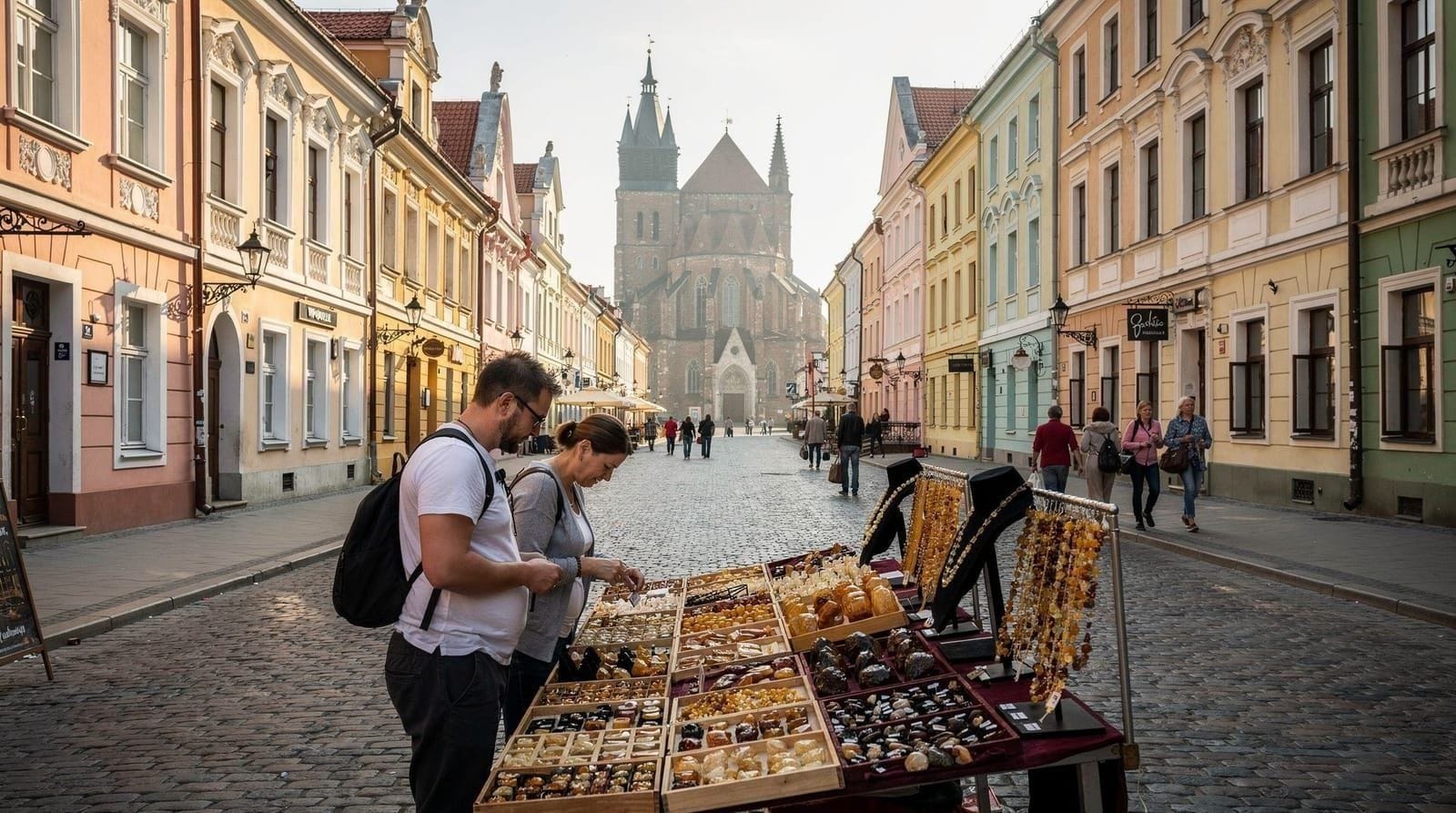
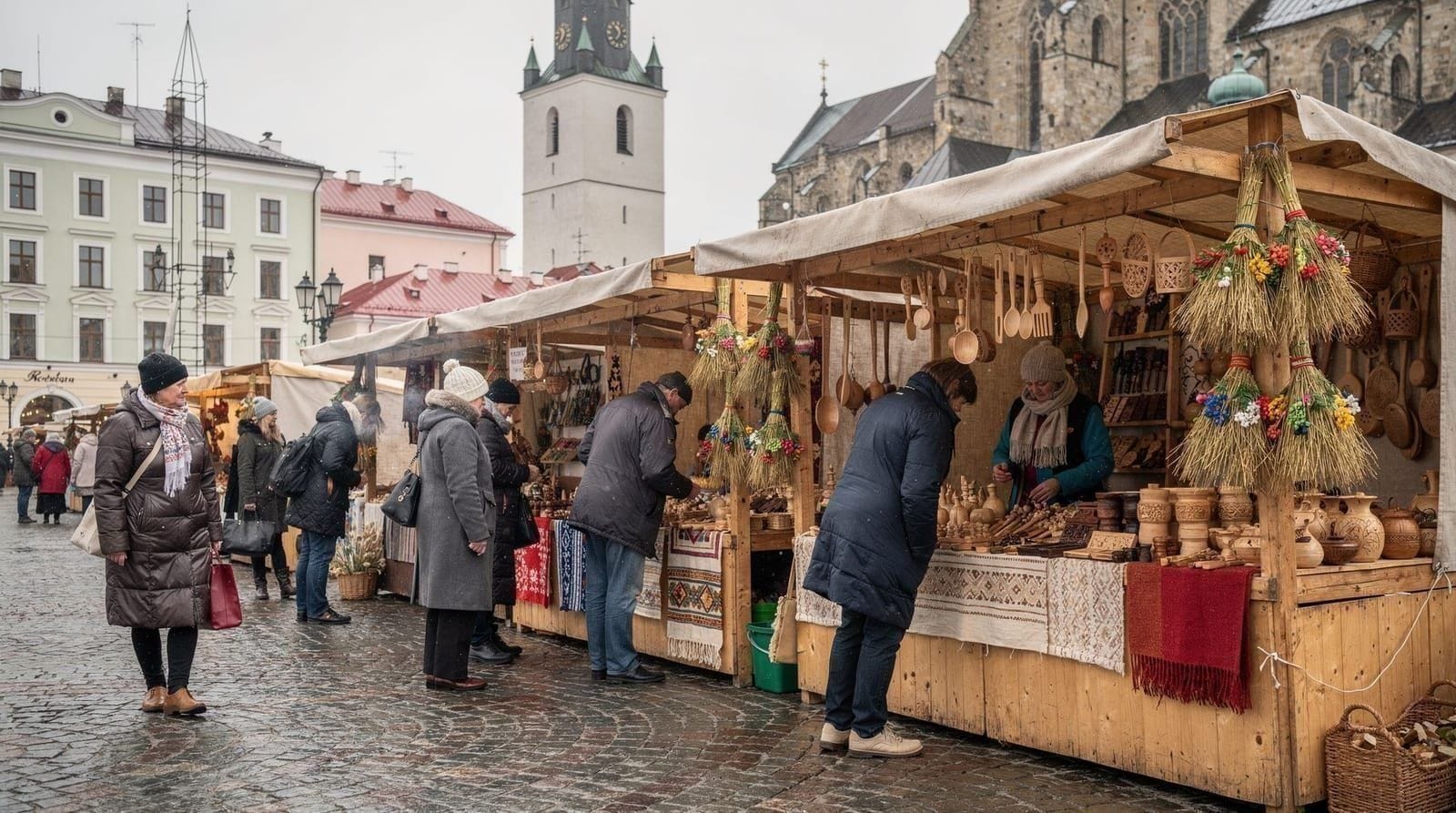
- Kaziukas Fair (early March, usually the first weekend): The most important craft market in Lithuania, held since the 17th century. The square and surrounding streets fill with artisan stalls selling wicker, ceramics, amber, and the traditional Kaziukas verbos (dried flower bouquets). Extremely crowded on Saturday; Sunday is calmer.
- Independence Day (March 11): State ceremony, flag-raising at the cathedral, national anthem.
- Baltic Way Anniversary (August 23): Outdoor commemorations. In significant years, large public events.
- Vilnius Festival (June): Classical concerts on the Cathedral steps. Programme varies annually; check vilniusfestivals.lt.
- Christmas Market (late November–January 6): The largest Christmas market in the Baltics, covering the whole square. Quality of goods is uneven — mass-produced ornaments alongside genuine artisan work. Entry is free; mulled wine (€3–4) and cepelinai (€6–9) from stalls.
A guided walking tour starting from Cathedral Square provides essential context for the layered history concentrated in this small area — pagan origins, Lithuanian Christianisation, Soviet-era erasure, and independence.
Practical details
- Address: Katedros aikštė, Vilnius 01143
- Getting there: 20-minute walk from the central train/bus station. Bolt from Old Town accommodation: €3–5. Bus lines 1, 2, and several others stop on Gedimino prosp. within 200 m.
- Toilets: Public toilets behind the belfry (€0.50). McDonald’s on Gedimino prosp. 5 (free with purchase).
- Best time to visit: Early morning for photography and quiet contemplation; the square is mostly empty before 9 am. Events can make it difficult to see the monuments in summer weekends.
- Surrounding cafés: Cili Kaimas on Pilies gatvė 8 (just around the corner, good cepelinai, €8–14), or Pergalė on Gedimino prosp. 1 for Lithuanian sweets and coffee.
Combining the square with Gediminas Hill
Cathedral Square is the natural starting point for climbing Gediminas Hill directly behind it — either on foot or via the funicular — to the tower and castle ruins above. See the Gediminas Tower and castle guide for opening hours, the funicular, and the view from the top, which is the best single panorama of the Old Town. Most visitors do the square and the hill together as a single 1.5–2 hour stop.
A panoramic walking tour that starts at Cathedral Square and continues up Gediminas Hill is a good way to see both without navigating the funicular schedule or ticket queue yourself.
The square in the wider Old Town story
Cathedral Square sits at the hinge between the university quarter and the rest of the Old Town — see the Vilnius Old Town guide for how it fits a broader walking route, and the Vilnius University guide for the adjacent campus, whose Church of St. Johns is one of the city’s finest Baroque interiors (covered in the Vilnius Baroque architecture guide). The layered history condensed into this small square — pagan origins, Christianisation, Tsarist demolition, Soviet occupation, independence — is explored further in the Vilnius legends and myths guide.
Seasonal events on the square
Beyond the year-round monuments, the square transforms for two major annual events: the Kaziukas Fair craft market in early March, and the Vilnius Christmas Market from late November through early January. Both are worth timing a visit around if your travel dates allow, though both also bring significant crowds — arrive early on weekends during either event.
Frequently asked questions about Vilnius Cathedral Square
How long should I spend at Cathedral Square?
The square itself takes 15–20 minutes to walk through. The cathedral interior adds 20–30 minutes. If you include the belfry climb, Palace of Grand Dukes, and Gediminas Tower, the whole complex can fill a half-day.
Can I attend a Mass at Vilnius Cathedral?
Yes. Mass times are posted at the entrance. Weekend services (especially Sunday 10 am and noon) are well-attended and visitors are welcome to observe from the side aisles. Do not walk through the nave during Mass.
Is Cathedral Square the same as Town Hall Square?
No. They are two different squares about 600 m apart. Cathedral Square (Katedros aikštė) is in the north, near the castle hill. Town Hall Square (Rotušės aikštė) is in the south of the Old Town, on Didžioji gatvė.
Where can I park near Cathedral Square?
There is no parking on the square itself. The nearest multi-storey is on Arsenalo gatvė (behind the National Museum). Street parking on Šventaragio gatvė and Kosciuškos gatvė (metered, €1.50–2/hour). In summer, spaces fill by 9 am.
Should I visit Cathedral Square before or after Gediminas Hill?
Before — the square is the natural starting point, and climbing the hill afterwards (on foot or by funicular) makes a logical sequence rather than doubling back. See the Gediminas Tower and castle guide for the climb itself.
Is Cathedral Square worth visiting twice, once by day and once at night?
Yes, if your schedule allows. The cathedral’s columns are lit at night and the square has a very different, quieter atmosphere after the day-trip crowds and event stalls have gone — particularly appealing outside the Kaziukas Fair and Christmas Market periods.
Top experiences
Bookable activities with verified prices and instant confirmation on GetYourGuide.