Kernavė and Paneriai day trip from Vilnius
Vilnius: Trakai kernave private full day
How do I visit Kernavė and Paneriai from Vilnius?
Paneriai is 10 km from Vilnius — take a suburban train (15 min, €1) to Paneriai station. Kernavė is 35 km north-west — best reached by car (45 min) or infrequent bus from Vilnius bus station. Both can be combined in one day, or paired with Trakai for a fuller excursion.
Kernavė and Paneriai are two of the least visited but most significant sites in the Vilnius area. They have almost nothing in common — one is a prehistoric archaeological site with river valley views; the other is a Holocaust mass murder site covered in pine forest. What they share is the fact that most visitors to Lithuania never quite get around to them, despite both being closer to Vilnius than Trakai.
This guide treats both sites honestly: what they are, how to reach them, how long to spend, and how they fit into a day from Vilnius.
| Paneriai | 10 km, ~15 min by train, free entry, 1.5–2 hrs |
| Kernavė | 35 km, ~45 min by car, museum €5, 1.5–2 hrs |
| Combined | Full day, easiest with a car or private tour |
| Without a car | Paneriai easy; Kernavė bus is infrequent — check ltglink.lt |
| Mood | Paneriai is sombre; Kernavė is open, scenic, low-key |
Paneriai: a short train ride, a heavy history
Paneriai is 10 km south-west of Vilnius — so close that the Soviet authorities tried to reframe it as a generic war memorial to discourage specific commemoration of Jewish victims.
Between 1941 and 1944, the site served as the primary execution ground for the Jews of Vilnius and the surrounding region. German Einsatzgruppen (mobile killing units) and members of Lithuanian auxiliary police forces brought victims here in trucks, forced them to undress, and shot them into pits that had been dug before the war as fuel storage tanks. Estimates of the total killed range from 70,000 to 100,000, of whom approximately 70,000 were Jewish. Others murdered here included Soviet prisoners of war and Polish civilians from the Vilnius region.
The site was used again in 1943–44 when the perpetrators, anticipating Soviet reoccupation, forced Jewish prisoners to exhume and burn bodies to destroy evidence. Several prisoners escaped through a tunnel they dug with their hands; their testimony was the first direct evidence of what had happened at Paneriai.
Visiting Paneriai today
The memorial museum (Agrastų g. 17, open Tuesday–Sunday, free entry) is small but carefully organised. It documents the killings with photographs, documents, and survivor testimony, and does not soften the evidence. There is a plan of the site showing the locations of the shooting pits.
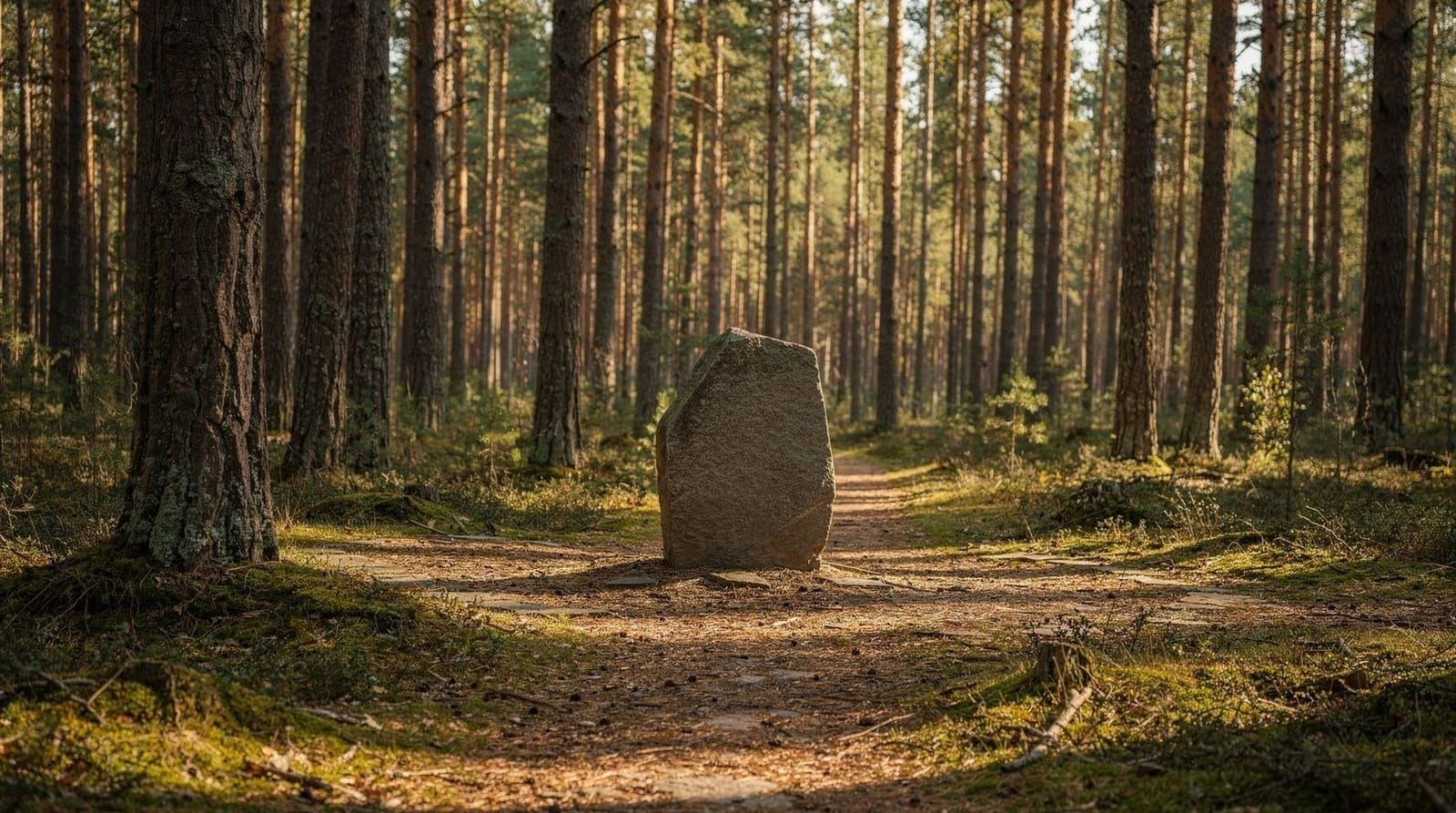
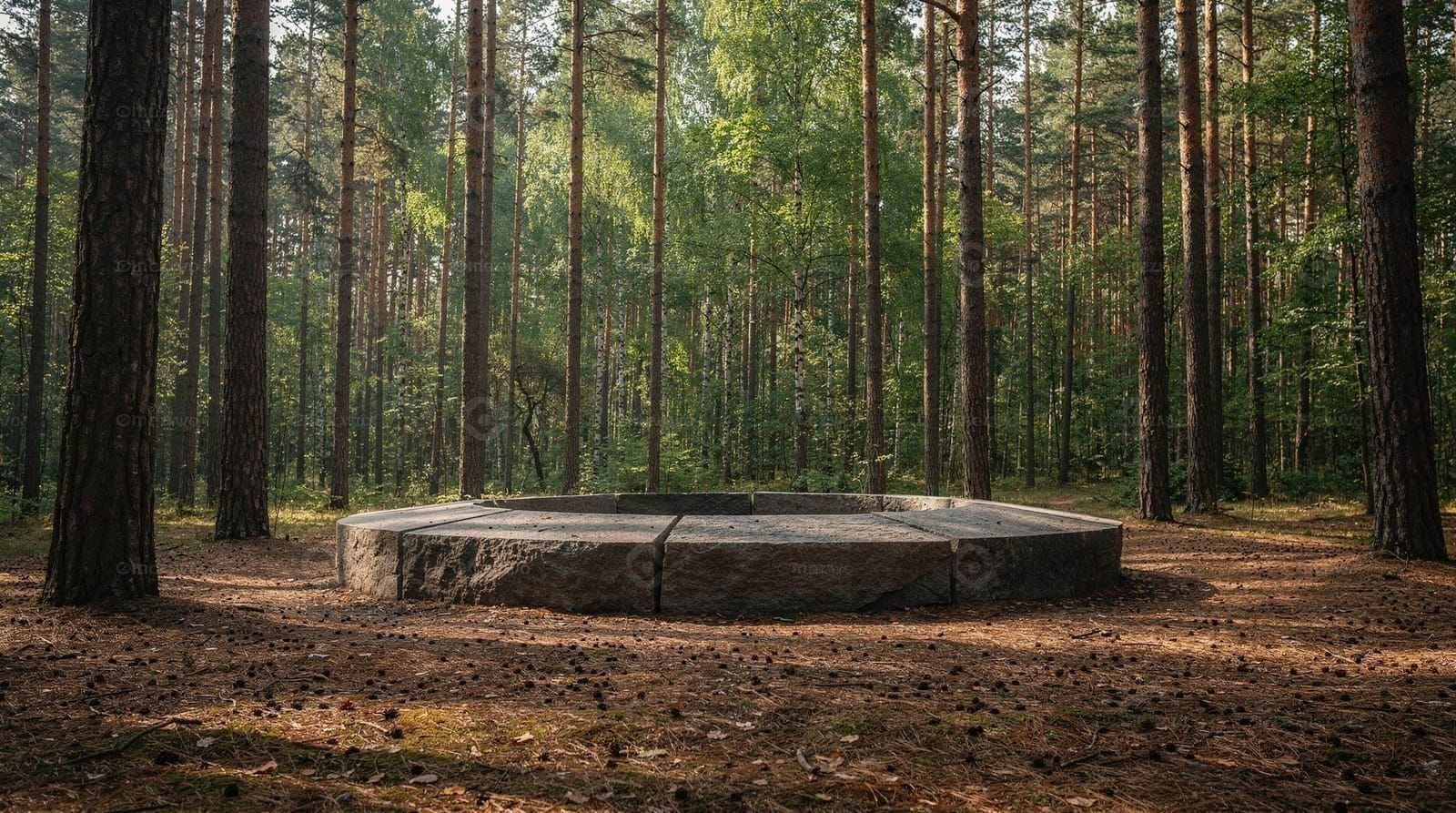
Outside, the excavated pits are marked with low memorial stones, each identifying the approximate number of victims in that pit. Walking among them takes 30–45 minutes. The site is in pine forest — quiet, birdsong, the complete opposite of what happened here. That contrast is its own kind of testimony.
Allow 1.5–2 hours in total for museum and site.
Getting there: Take a suburban train from Vilnius Central Station to Paneriai station — 15 minutes, approximately €1, trains run roughly hourly. From the station, follow signs 500 metres to the memorial site. The walk is straightforward.
The site is sometimes included in Jewish heritage walking tours of Vilnius and its surroundings — see the Jewish Vilnius and Vilna Gaon guide for context on Vilnius’s pre-war Jewish community.
What Paneriai means in Lithuanian history
Paneriai is inseparable from the destruction of Vilnius’s Jewish community — what the Nazis called the “liquidation” of the Vilna ghetto. Before the Second World War, Vilnius was one of the most significant Jewish cities in Europe. The community numbered approximately 100,000 people at the start of the 20th century; by 1939, it had declined somewhat but still constituted about one-third of the city’s population. The city had been called the “Jerusalem of Lithuania” since the 18th century — a reference to its extraordinary concentration of Jewish scholarship, publishing, and communal life.
The killings at Paneriai began in July 1941, within weeks of the German occupation of Lithuania. By the end of 1941, more than 40,000 Jews had been murdered here. The process was systematic and fast — faster than almost anywhere else in occupied Europe. Historians attribute this partly to the geography (the fuel pits already existed, providing ready-made mass graves), partly to the collaboration of Lithuanian auxiliary forces, and partly to the particular efficiency of the Einsatzgruppe A deployed in the Baltic region.
The Vilna ghetto was maintained until September 1943, when the remaining inhabitants were transported to Paneriai and killed or sent to labour camps in Estonia. By the time the Red Army liberated Vilnius in July 1944, fewer than 2,000 Jews remained in the city. The pre-war community of 100,000 had been reduced to a remnant.
This history is what makes Paneriai different from a battlefield or a ruin. The site is not where armies fought — it is where a civilian population was systematically murdered over three years, within easy distance of a major European city, in conditions that were not secret. The museum at Paneriai presents this evidence carefully and without sensationalism. Understanding the Jewish history of Vilnius before visiting the site deepens the experience considerably.
Kernavė: Lithuania’s first capital
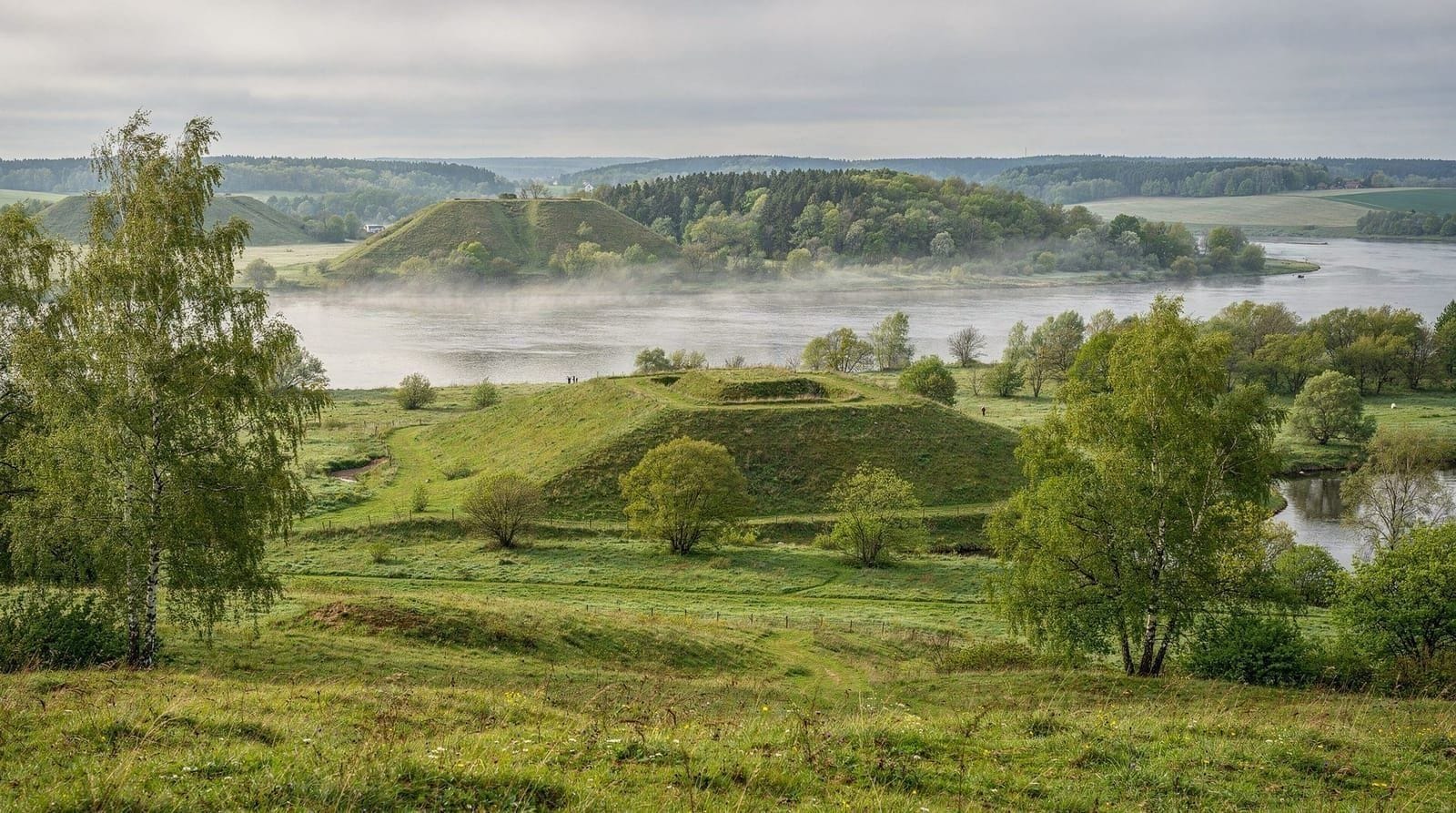
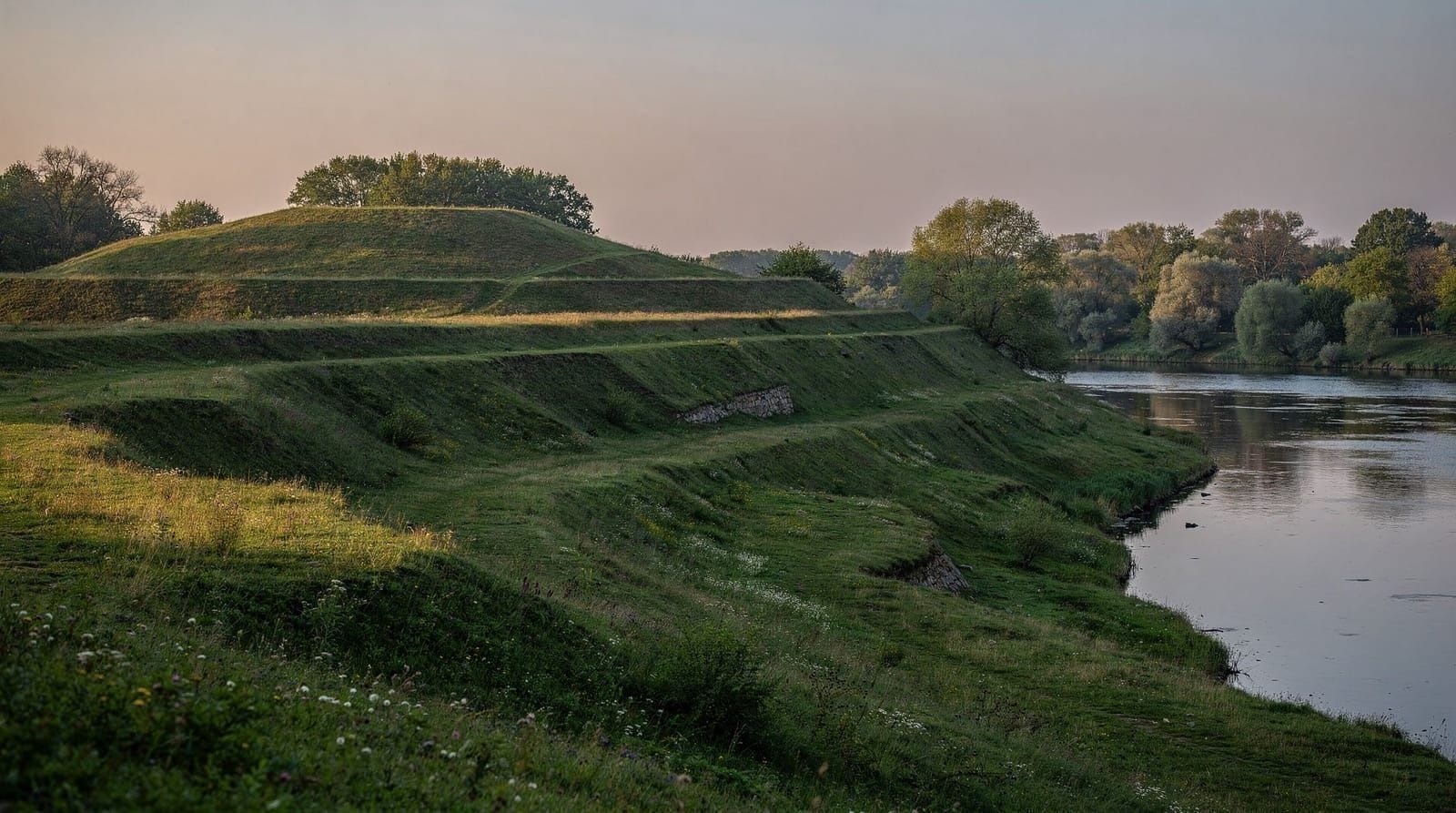
Kernavė is 35 km north-west of Vilnius, in the Neris river valley. Five earthen hillforts rise above the river on the north bank — Lizdeika, Kriveikiškis, Mindaugas’ Throne, Pilies, and Altar Hills — their crests artificially flattened for fortification, their slopes steep enough to be formidable defensive obstacles even now.
The site was inhabited from the Mesolithic period (10,000 BCE) but reached its peak as a settlement in the 13th century. Kernavė is believed to be the site of the first historical capital of the Lithuanian state — the Duchy that Mindaugas (Lithuania’s first and only king, crowned 1253) ruled from before Vilnius became the permanent capital under Gediminas in the 14th century.
UNESCO designated Kernavė a World Heritage Site in 2004. The designation recognised not just the hillforts but the entire cultural landscape: medieval settlement remains, early Christian churches, and an archaeological stratigraphy spanning 10,000 years.
Visiting Kernavė today
The Archaeological Museum of Kernavė (Kernavės g. 4, open Tuesday–Sunday, €5 entry) has an informative permanent exhibition with artefacts from excavations: medieval weapons, jewellery, ceramics, tools. The models of what the hillforts looked like at their medieval peak are particularly useful.
The hillforts themselves are free to walk at any time. The path from the museum takes about 10 minutes to the base of the first mound. The climb to the top of any of the major hillforts takes 5–10 minutes — the slopes are steep and can be slippery when wet. The views from the top of Mindaugas’ Throne Hill across the Neris valley are extraordinary: a wide valley with the river winding below, forest on the far bank, silence.
Allow 1.5–2 hours: museum (45 min) + hillfort climb and valley walk (1 h).
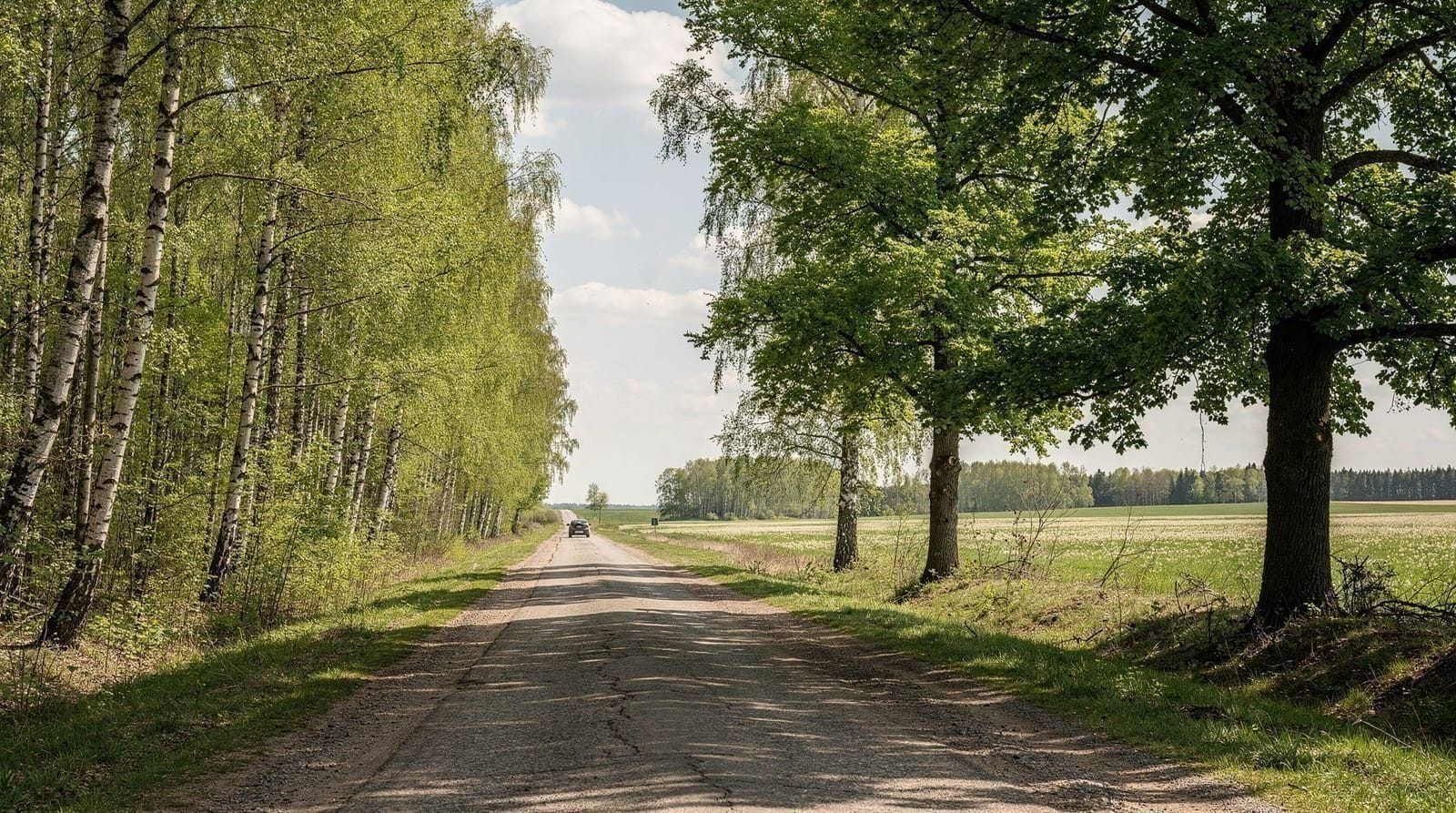
Getting there: By car from Vilnius, take the Molėtų pl. (road 101) north-west — 35 km, 45 minutes. Parking at the museum is free. By public transport, buses run from Vilnius bus station to Kernavė approximately 4–5 times daily, with irregular service on weekends — check timetables at ltglink.lt before you go and confirm return times, as missing the last bus creates a problem.
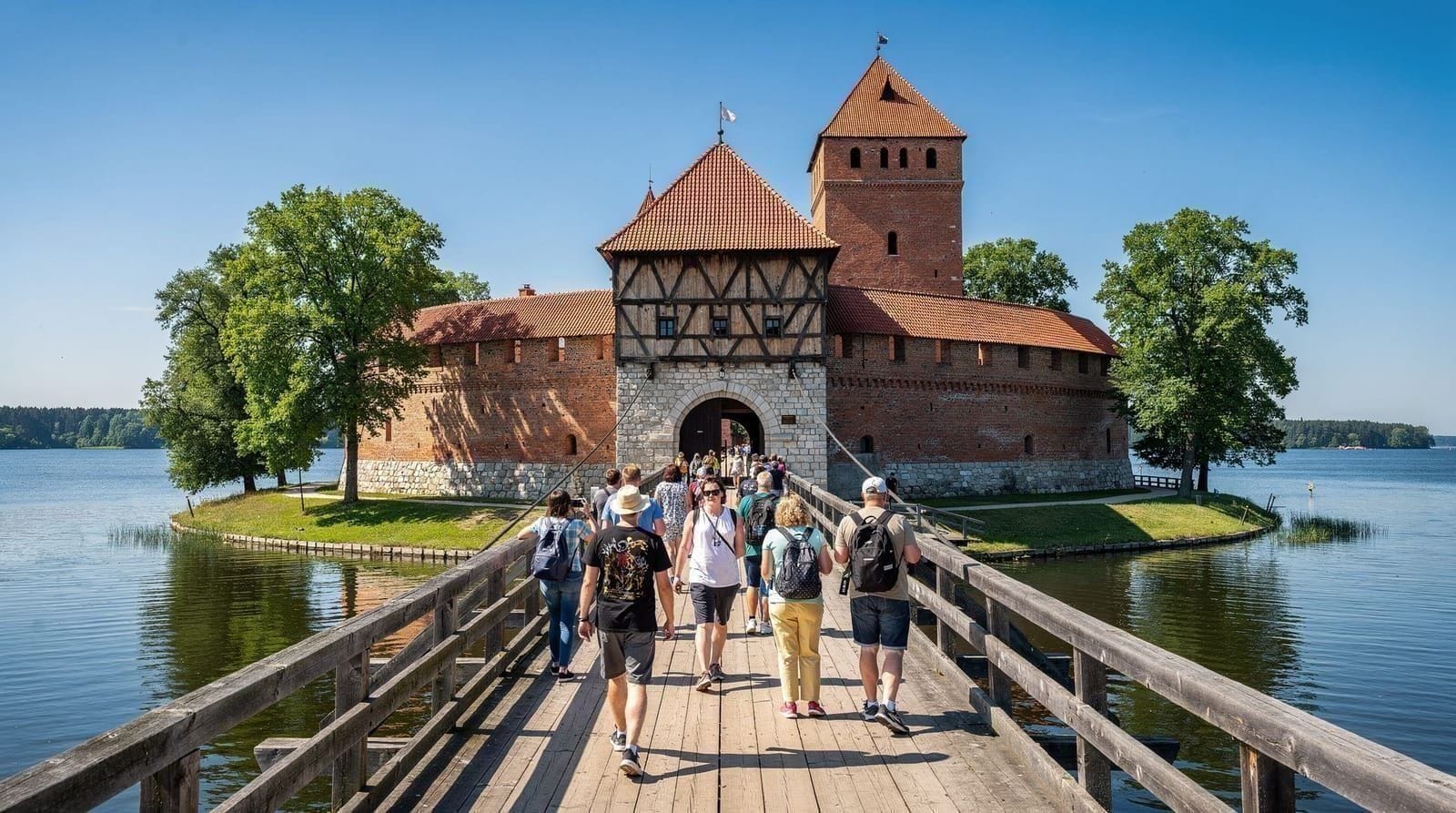
Combined with Trakai: Kernavė and Trakai are 40 km apart and work as a natural pair on a private guided tour or by car. Trakai → Kernavė → Vilnius loops comfortably in a full day.
Book a private guided tour to Trakai and KernavėThe archaeology of Kernavė in depth
The five hillforts at Kernavė are the most visible element of a much more extensive archaeological complex. Excavations since the 1960s have uncovered traces of continuous human habitation from the Stone Age through the medieval period — an unusual depth of stratigraphy that made the UNESCO designation straightforward.
The earliest occupation dates to approximately 9,000 BCE, when the Neris valley was first settled after the retreat of the last glaciation. The valley floor was rich in fish, the surrounding forests in game, and the natural terracing of the riverbank made the hillforts positions defensible with relatively little construction. Archaeological evidence suggests near-continuous occupation through the Bronze Age and Iron Age, with the density of settlement increasing dramatically in the 10th–13th centuries as Lithuanian tribal confederacies became more politically organised.
The 13th century represents the site’s historical peak. The concentration of hillforts, the size of the settlement remains in the valley below, and documentary references in foreign chronicles (including German crusading orders’ records) all point to Kernavė as a major political centre during the period of Lithuanian state formation. King Mindaugas — the only person ever to rule Lithuania as a crowned monarch, his coronation recognised by Pope Innocent IV in 1251 — appears to have maintained a residence here.
After Mindaugas’s assassination in 1263, Kernavė lost its political primacy. The shift of power to Vilnius under Gediminas (who built the tower that still overlooks the modern city) in the early 14th century effectively ended Kernavė’s role as a capital, and the site was later damaged by Teutonic Knight raids. What you see today is partly natural erosion, partly medieval damage, and partly the gradual reclamation by vegetation — the hillforts now covered in grass look gentle and pastoral, quite unlike their original timber-and-earth fortification character.
The Statehood Day (July 6th) celebrations at Kernavė, held annually to mark the 1253 coronation of Mindaugas, give the site its most vivid public moment — medieval reenactment, craft markets, and folk performances on the hillfort slopes. It is the largest annual event at the site and worth planning around if your timing allows.
Combining Kernavė and Paneriai in one day
With a car, this is a comfortable full day:
- 9:30 am — Drive to Paneriai (15 min), visit memorial and museum (1.5 h)
- 11:30 am — Drive to Kernavė (50 min via Vilnius ring road and road 101)
- 12:30 pm — Lunch at a café in Kernavė village (basic options near the museum)
- 1:30 pm — Museum visit (45 min)
- 2:30 pm — Hillfort walks (1 h)
- 3:30 pm — Drive back to Vilnius (45 min)
Without a car, the combination is awkward. Paneriai by train is simple; Kernavė by public transport requires checking bus schedules and allowing for delays. A private car hire for the day (€60–80 including fuel) or a private guided tour handles both without stress.
Book a private guided tour covering Paneriai, Trakai, and KernavėIf you’d rather build the day around the castle rather than the archaeology, a Trakai-focused private tour that also stops at Paneriai is worth comparing before you book:
Private tour combining Trakai Castle and the Paneriai memorialThe valley below Kernavė: what to see beyond the hillforts
The Kernavė UNESCO designation covers the entire cultural landscape of the Neris valley at this point — not only the hillforts but the valley floor and the adjacent river terraces. Spending time in the valley itself, rather than rushing back after the hillfort climbs, reveals additional layers.
The Neris river at Kernavė is clean enough for swimming in summer (no official beach, but the riverbank has been used for bathing for centuries). The valley floor contains traces of the medieval town that stood here — stone foundation remnants and earthworks that are less dramatic than the hillforts but visible to a careful eye. The meadows in the flood plain are managed to preserve their historical character and contain unusual botanical diversity — in late spring and early summer, wildflowers cover the valley floor.
Walking the valley from the museum to the furthest hillfort and back takes approximately 2–3 hours at a relaxed pace, with time to climb at least two or three of the mounds. The views from different hillforts are distinct — some look primarily across the river valley, others give a clearer sense of the relationship between the fortifications and the medieval settlement below.
Short on time? Which one to prioritise
If you can only fit one of the two into your trip, the choice depends on your interests rather than convenience — both are roughly equally easy to reach.
Choose Paneriai if you’re interested in 20th-century history, the Holocaust, or Jewish heritage — it’s a short train ride and pairs naturally with a visit to the Jewish Vilnius and Vilna Gaon guide sights in the city itself, or with the KGB Museum for the fuller occupation-era picture.
Choose Kernavė if you’re interested in archaeology, medieval history, or simply want a scenic outdoor half-day away from the city — the hillforts and valley views are the more classically “day trip” experience, and combine naturally with Trakai Castle on the same route.
For the fuller menu of options beyond these two, the best day trips from Vilnius guide ranks all the realistic choices side by side, and the Kernavė and Paneriai destination pages cover each site’s wider context if you want more than a single-day-trip view.
Best time of year to visit
Kernavė is at its best from late spring to early autumn (May–September), when the hillfort slopes are green, the valley wildflowers are out, and the climbs are dry underfoot — winter visits are possible but the slopes can be icy and slippery, and the valley views lose some of their colour. July 6th (Statehood Day) is the single best date if a lively medieval festival appeals, but expect crowds and book accommodation in Vilnius early if you’re timing a trip around it.
Paneriai is less seasonal — the memorial and museum are meaningful year-round, and the quiet pine forest arguably suits the sombre atmosphere better in the grey months of autumn and winter than in bright summer sunshine. Rain or snow doesn’t meaningfully detract from the visit, unlike at Kernavė where wet weather makes the hillfort paths harder going.
Historical context
Paneriai and Kernavė together span a remarkable historical range — from the Bronze Age to the 20th century. The two sites also illustrate the complexity of Lithuanian national identity: a country that had a medieval grand duchy that stretched from the Baltic to the Black Sea, and that also experienced both Soviet occupation and collaboration in the Holocaust.
The Museum of Occupations (KGB Museum) in Vilnius addresses both the Soviet and Nazi periods in the city itself. Paneriai is the outdoor counterpart to understanding what happened outside the city walls.
Kernavė, by contrast, is a story of origin: of the early state formation that eventually produced the Grand Duchy of Lithuania and the country that exists today.
Practical notes
Paneriai:
- Address: Agrastų g. 17, Paneriai, Vilnius district
- Access: Suburban train from Vilnius Central Station (Paneriai stop), 15 minutes
- Entry: Free
- Opening hours: Museum Tue–Sun, 10 am–4 pm (check for seasonal changes); memorial site open at all times
- Duration: 1.5–2 hours
Kernavė:
- Address: Kernavės g. 4, Kernavė, Širvintos district
- Access: By car 45 minutes; by bus check ltglink.lt for current timetable
- Entry: Museum €5, hillforts free
- Opening hours: Museum Tue–Sun, 10 am–5 pm
- Duration: 1.5–2 hours
Frequently asked questions about Kernavė and Paneriai
Why is Kernavė a UNESCO World Heritage Site?
UNESCO recognised Kernavė as an “exceptional testimony to the development of human settlements over a period of some 10 millennia.” The combination of prehistoric, medieval, and early modern layers in a single intact cultural landscape is very rare in Europe.
Is Paneriai the same as the Ponary massacre?
Yes. Ponary is the Polish name for the same place (Paneriai in Lithuanian, Ponar in Yiddish). The mass killings at this site are documented in multiple Jewish testimonies and survivor accounts, and became known internationally through the work of historians including Yitzhak Arad.
How emotionally demanding is visiting Paneriai?
It is a sober experience. The museum is factual rather than graphic. The memorial pits in the forest are quiet and understated. Visitors who have read about the Holocaust in Lithuania — particularly through accounts like the diary of Herman Kruk or the Vilna Gaon’s history — will find the site deeply affecting. Others find it a necessary but manageable historical visit. Allow yourself time afterwards; don’t rush immediately to the next attraction.
Is Kernavė suitable for children?
Yes — older children (8+) who are interested in history or archaeology will find the hillforts engaging, and the climb to the top is an adventure in itself. The museum’s exhibits are well-illustrated and accessible. Very young children may find the hillfort climbs challenging.
What is the Statehood Day celebration at Kernavė?
Statehood Day (July 6th, commemorating the 1253 coronation of Mindaugas) is celebrated at Kernavė with a large medieval festival — craft markets, reenactors, cultural performances. It is the biggest annual event at the site and draws visitors from across Lithuania.
Can I visit Paneriai and Kernavė without joining a tour?
Yes, both are independently accessible. Paneriai is straightforward — the train from Vilnius Central Station takes 15 minutes and the memorial is a 500-metre walk from the station, well signposted. Kernavė is harder without a car, since buses from Vilnius run only a handful of times daily and weekend service is irregular; check ltglink.lt and confirm the return schedule before you set off, since a missed last bus means an expensive taxi back.
Is one day enough to properly see both Kernavė and Paneriai?
Yes, if you have a car or join a private tour — the suggested itinerary above covers both sites with a relaxed pace and a lunch stop, finishing with time to spare. Without a car, doing both in one day is tight because of Kernavė’s limited bus schedule; consider treating them as two separate half-day trips instead, or booking a private tour that removes the transport uncertainty entirely.
Top experiences
Bookable activities with verified prices and instant confirmation on GetYourGuide.