Soviet history in Vilnius — what to see and understand
Vilnius: Soviet walking tour
What are the best sites for understanding Soviet history in Vilnius?
The KGB Museum (former KGB headquarters on Gedimino prosp. 40) is the essential starting point. The TV Tower (site of the January 1991 killings), the Vilnius Cathedral (converted to an art gallery in Soviet times), and the Soviet-era architecture of Lazdynai district all add depth. The atomic bunker outside Vilnius is extraordinary if you can reach it.
Soviet history is embedded in Vilnius at every level — in the names that were changed and changed back, in the monuments that were removed (and some that were not), in the buildings repurposed for atheist propaganda and then reconsecrated, in the districts built to house workers from across the USSR, and in the living memory of citizens who navigated between complicity, resistance, and survival under totalitarian rule.
This guide covers the physical sites that bring that history into visible form, and the historical context necessary to understand them.
| Essential site | KGB Museum, Gedimino prosp. 40 |
| Cost | Free (TV Tower, memorials) to around €9 (TV Tower deck), €8 (KGB Museum) |
| Time needed | Half a day for the core sites in central Vilnius |
| Further afield | Atomic bunker (~25 km), Grūtas Park (~130 km) |
| Best approach | Start at the KGB Museum, then walk to the Parliament and TV Tower |
Two Soviet occupations: the essential distinction
Lithuania experienced two distinct Soviet occupations with different characteristics.
The first occupation (June 1940 – June 1941) was the immediate consequence of the Molotov–Ribbentrop Pact’s secret protocols, which assigned Lithuania (along with Latvia, Estonia, and eastern Poland) to the Soviet sphere. The Lithuanian government was given an ultimatum to admit Soviet troops in June 1940 and comply with the establishment of a “People’s Government.” Lithuania was formally incorporated into the USSR in August 1940.
The first occupation lasted barely twelve months but established the pattern of Stalinist control: nationalisation of industry and land, mass arrests of political, military, and intellectual figures, and the first mass deportation — June 14–17, 1941 — which sent approximately 17,000 Lithuanians to labour camps and “special settlements” in Siberia and Central Asia. Many did not return.
The second occupation (July 1944 – March 1990) followed the defeat of Germany and lasted nearly five decades. This period involved forced Sovietisation — collectivisation of agriculture, suppression of religious practice, Russification of public life and education — alongside the continuation of repression against any form of actual or perceived political opposition.
The Armed Resistance (Forest Brothers) fought a guerrilla war from 1944 into the early 1950s, involving approximately 30,000 active fighters at peak. The resistance was ultimately crushed through a combination of military operations, mass arrests, and informer networks, at enormous cost in human life.
The second mass deportation, Operation Priboi (May 22–28, 1948), sent another 29,000 Lithuanians — primarily the families of resistance fighters, religious figures, and “kulaks” (farmers deemed to own too much land) — to Siberia.
By the early 1950s, the armed resistance was broken. The subsequent decades involved passive resistance, cultural preservation (particularly of the Lithuanian language and Catholic practice in defiance of official atheism), and eventually the organised political opposition of the Sąjūdis (Reform Movement) in 1988–1990.
Key sites for Soviet history in Vilnius
The KGB Museum (Museum of Occupations and Fights for Freedom)
Gedimino prosp. 40 · Tuesday–Saturday 10 am–6 pm · Adults €8
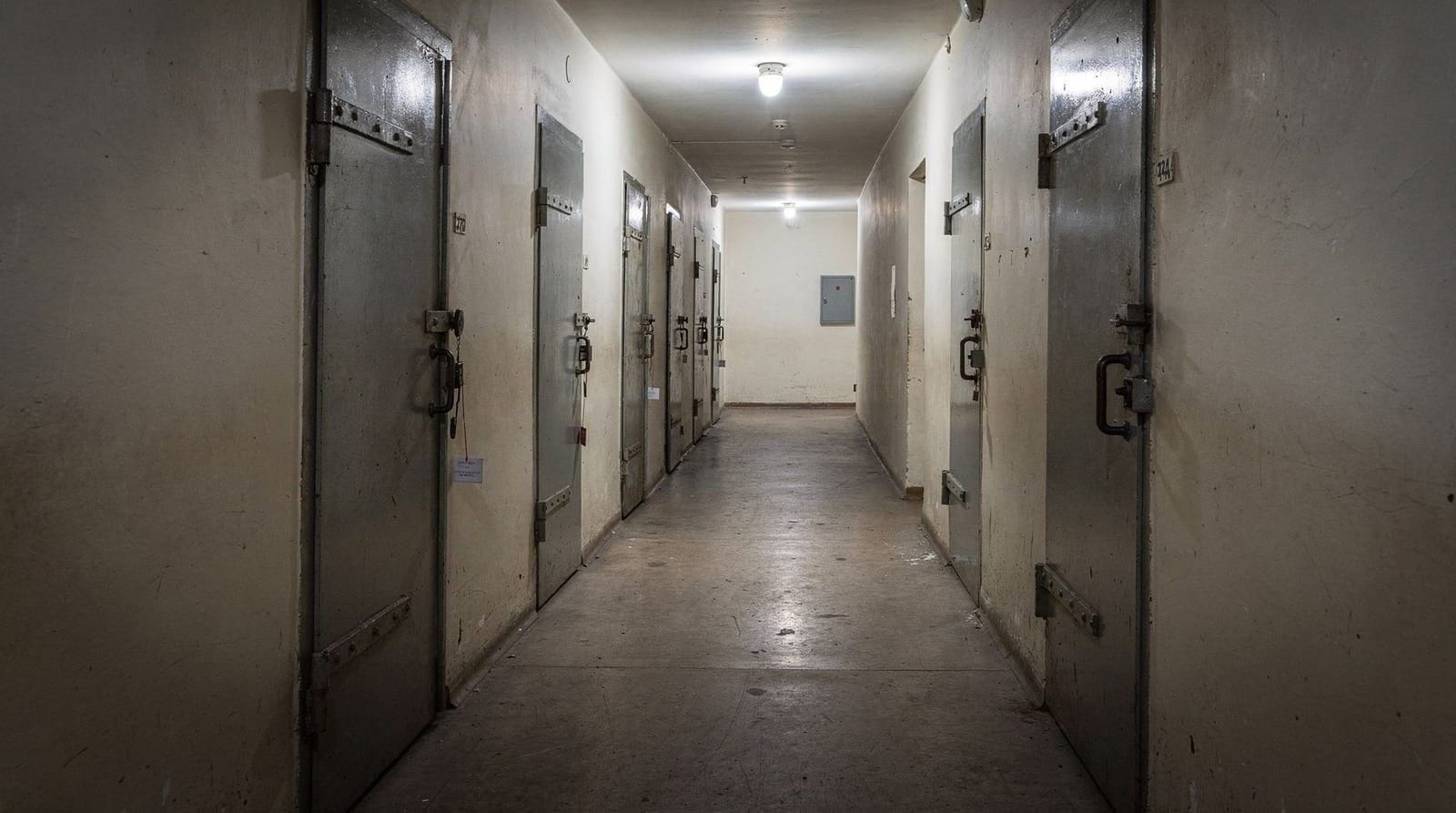
The former KGB headquarters is the essential site. The basement prison, interrogation rooms, isolation cells, and execution chamber are preserved and open to visitors. The documentary exhibition covers both Soviet occupations, the deportations, the armed resistance, and the independence movement. See the dedicated KGB Museum guide for full details.
A guided KGB Museum tour provides the historical depth necessary to understand what the building’s individual rooms represent.
Vilnius TV Tower (Laisvės prosp. 57)
Open daily 10 am–9 pm · Observation deck €9
The 326-metre Vilnius TV Tower, built in 1974–1980, is the tallest structure in Lithuania. It is significant not only architecturally but historically: it was here, in the pre-dawn hours of January 13, 1991, that Soviet tanks and the Alfa unit of the KGB attacked Lithuanian civilians defending the tower during the attempted Soviet crackdown on the independence movement.
The observation deck (165 m) has a good view over Vilnius and the surrounding countryside. More importantly, the ground floor contains a permanent exhibition on the January 13 events — photographs, video footage including amateur recordings from that night, and the memorial plaques for the 14 civilians killed. This is genuinely moving, particularly the footage of ordinary Vilnius residents — workers, students, pensioners — standing in front of tanks with their hands out.
Getting there: Trolleybus 16 from Gedimino prosp. (central city) to Sausio 13-osios gatvė, or Bolt (€5–8 from Old Town).
The Vilnius Parliament (Seimas) and January 13 memorials
Gedimino prosp. 53
The Parliament building (Seimas) is where the Lithuanian government declared independence on March 11, 1990 — the first Soviet republic to do so. On January 13, 1991, tens of thousands of civilians surrounded it to defend it against anticipated Soviet assault.
The outdoor barricades and defensive structures are no longer present, but the memorial plaque on the exterior wall names the 14 who died defending the TV Tower. The concrete fortifications that Lithuanian citizens built spontaneously that January night have been recreated in miniature at the entrance. The Parliament area is a public space and can be visited at any time.
Soviet-era architecture
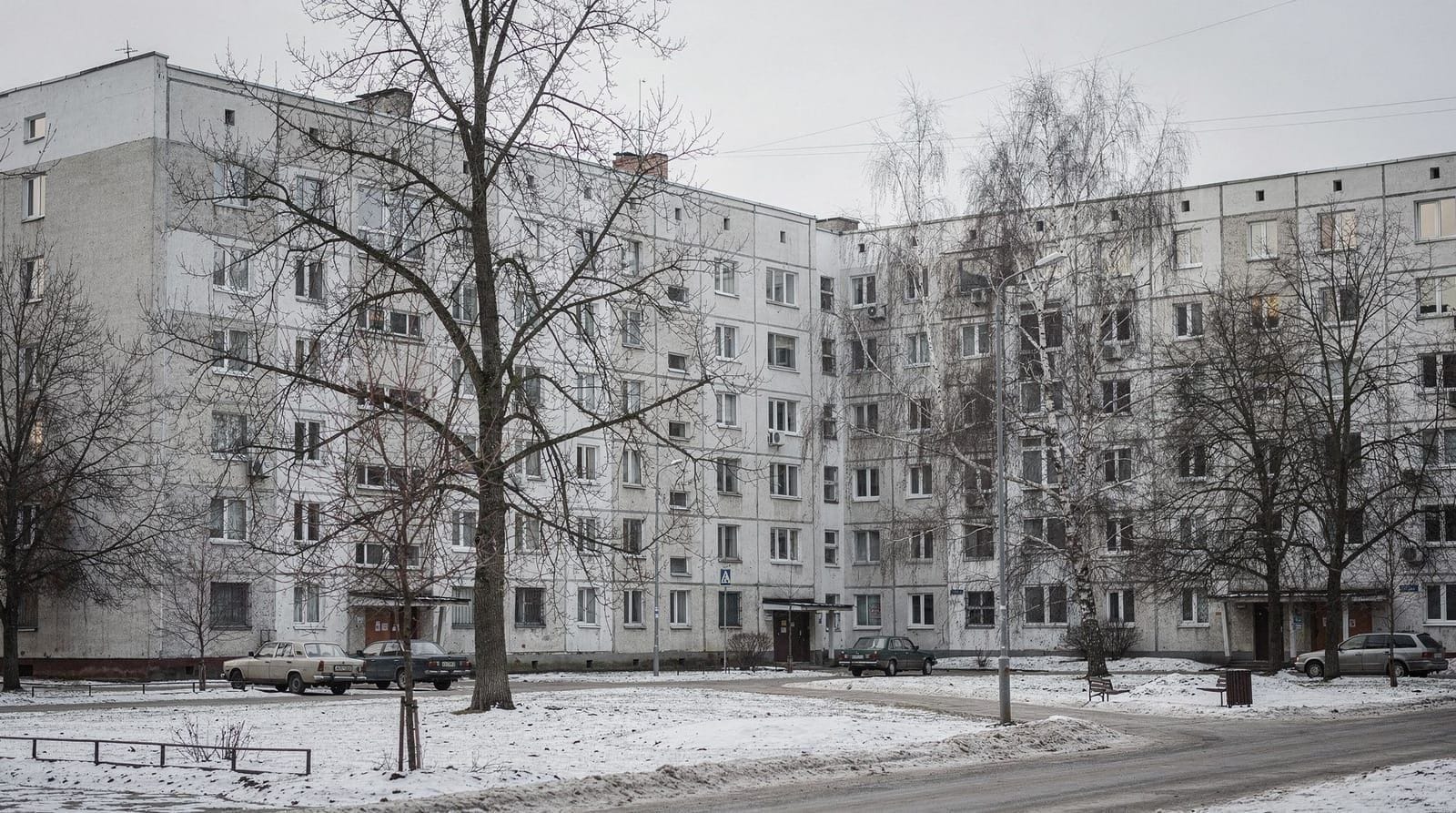
The Lazdynai residential district (west of the Old Town, accessible by Bus 31 or 32) is the best-preserved example of Soviet prefabricated housing in Vilnius — a district of “paneliai” (panel apartment buildings) from the 1970s that won the Lenin Prize for Architecture in 1974. The buildings are utilitarian but not depressing — the district was specifically designed with green space, children’s facilities, and a walking network that was relatively progressive by Soviet urban planning standards of the time. Many Vilnius residents still live here and the area has been gradually upgraded since independence.
The Žirmūnai district (north of the Neris, accessible by Bus 2 or 3) shows a similar Soviet residential development from the 1960s, with the characteristic wide avenues and standardised block architecture. These districts are not the dark socialist dystopias of some Western imagination — they were functional answers to a real urban housing problem, and understanding them is part of understanding the Soviet period honestly.
Soviet sculpture remaining: The square in front of the Ministry of Education (Volano gatvė) has a Soviet-era functional sculpture that was not removed after independence. Several Vilnius parks contain Soviet-era stone and concrete sculptures of workers, partisans, and children — usually without interpretation. The contrast with the pre-independence period, when Lenin and other political figures dominated public space, is itself informative.
The atomic bunker
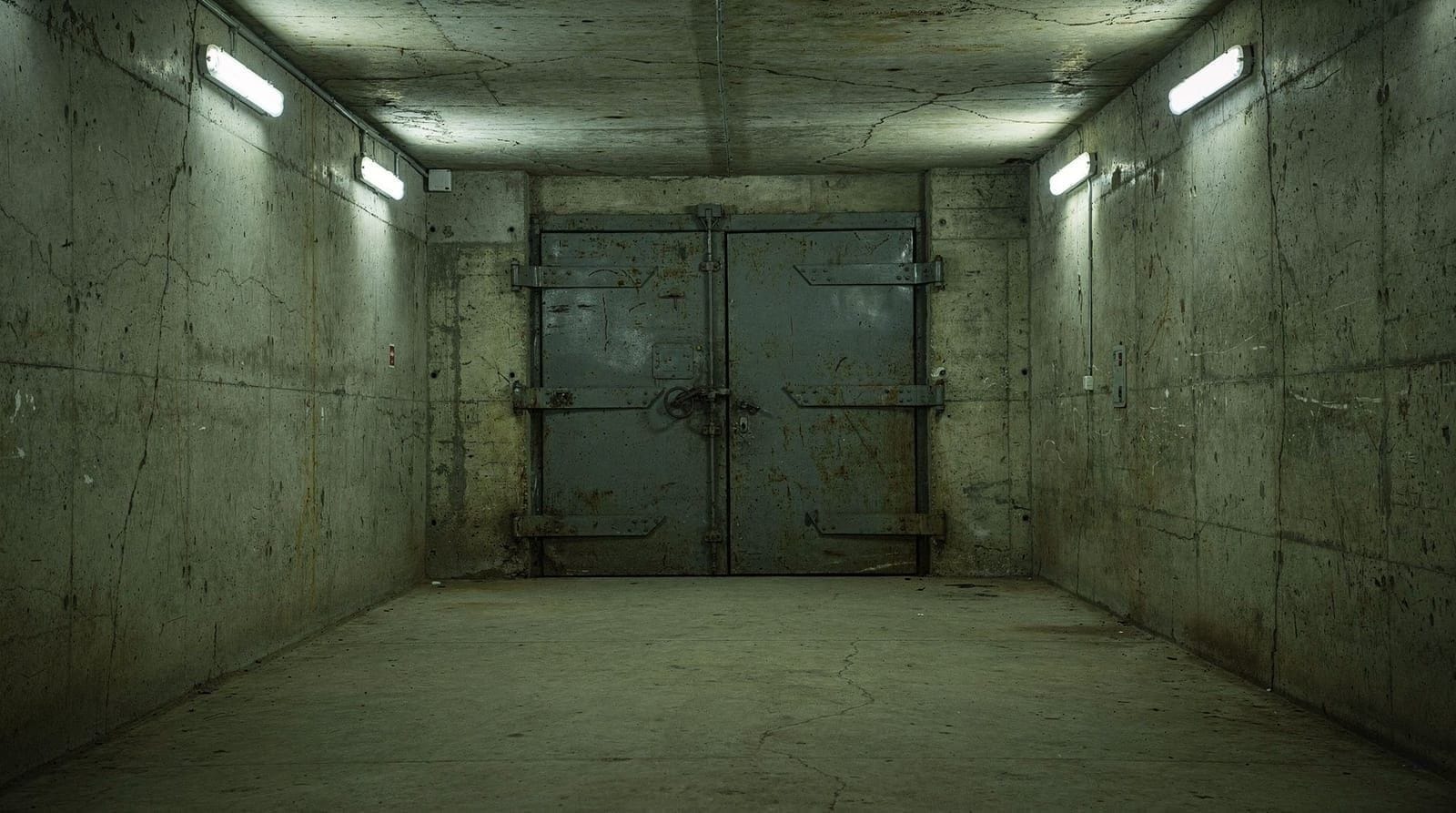
Approximately 25 km northwest of Vilnius, near the small town of Kariai, the Civil Defence Headquarters (Civilinės saugos štabas) was built in 1984 to house the Soviet leadership of the Lithuanian Soviet Republic in the event of nuclear war. It was kept entirely secret during Soviet rule — local residents were told the site was a military communications installation.
The bunker extends three floors underground and contains living quarters for 300 people (food and water for 90 days), a hospital, a radio station, a command centre, and filtration systems for nuclear fallout. It was never used. After independence, it sat abandoned until being opened for guided tours in 2015.
A combined KGB Museum and atomic bunker tour is the most immersive Soviet history experience available in the Vilnius area — roughly 3.5 hours covering the KGB basement and the bunker interior.
Grūtas Park (near Druskininkai)
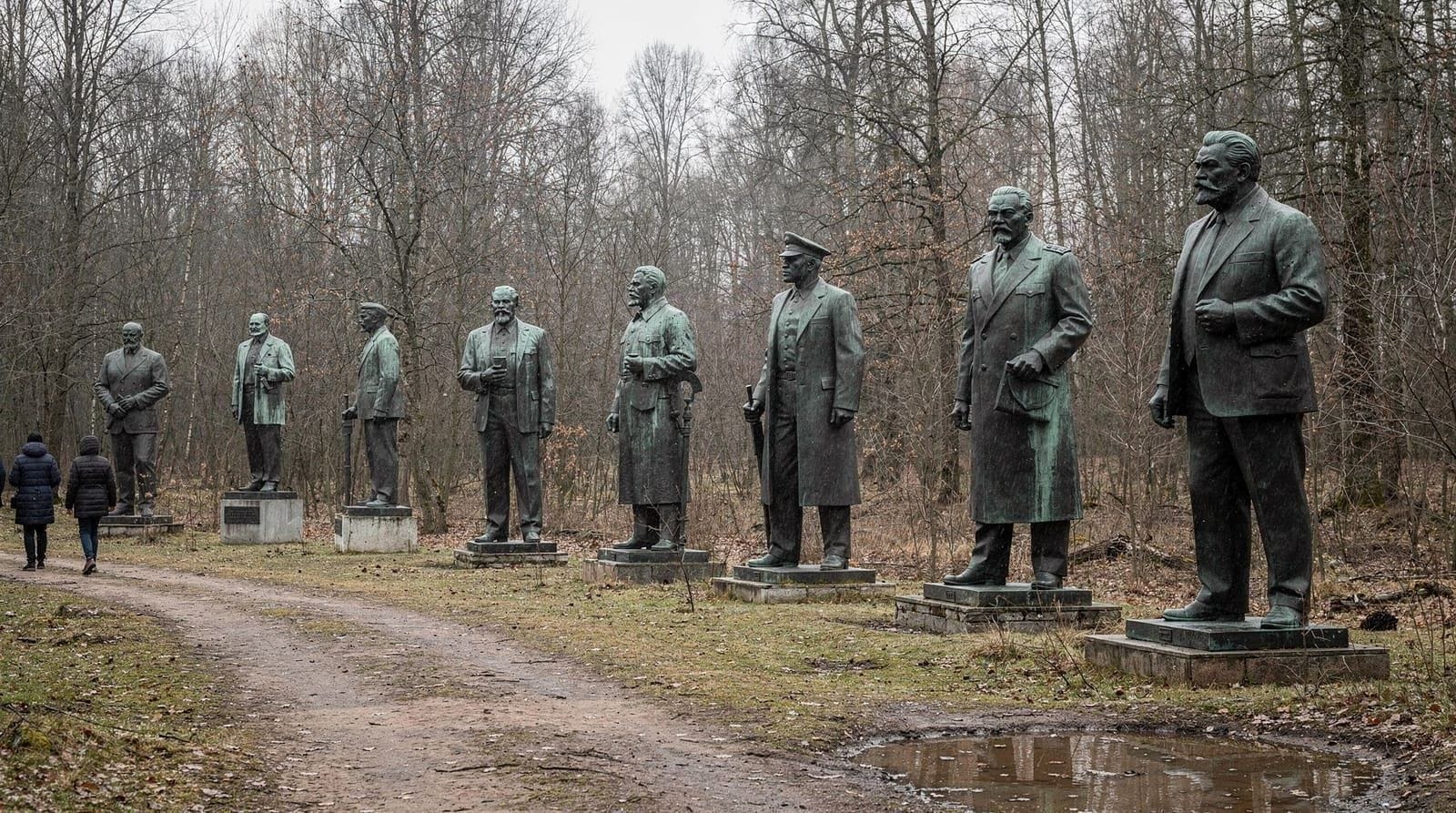
Not in Vilnius but closely related: the Grūtas Park near Druskininkai (130 km south) is an outdoor sculpture park housing the Soviet-era monuments removed from public spaces across Lithuania after independence — Lenins, Leninist-revolutionary figures, war memorials in Soviet style. See the dedicated Grūtas Park guide.
Beyond Soviet history: the wider 20th century
The Soviet occupations are one chapter of a wider 20th-century story that also includes the Nazi occupation (1941–1944) and the destruction of Vilnius’s Jewish community — the Jewish Vilnius and Vilna Gaon guide and the Paneriai memorial guide cover that history in depth. Understanding all three periods together — first Soviet occupation, Nazi occupation, second Soviet occupation — gives a far more complete picture than any single guide can provide, since Lithuania experienced them as a continuous sequence of trauma rather than isolated episodes.
If you’re building a Soviet-history day around the sites above, the Old Town guide covers the wider historical layers of central Vilnius beyond the Soviet period specifically, and the where to stay in Vilnius guide is useful if you’re planning your accommodation around walking access to Gedimino prospektas and the sites listed here.
A practical half-day itinerary
For visitors with half a day to dedicate to this history: start at the KGB Museum (Gedimino prosp. 40) in the morning — allow 1.5–2 hours. Walk down Gedimino prospektas to the Parliament (Seimas) to see the January 13 memorial plaque, then continue to the TV Tower if you have transport arranged (it’s outside easy walking distance). Finish with lunch in the Old Town, reflecting on how much of what you’ve seen sits within a few hundred metres of the cafés and shops of everyday Vilnius life today.
The independence movement
The Lithuanian independence movement (Sąjūdis, established June 1988) organised from within the Soviet system using Gorbachev’s glasnost policies as limited cover. The movement grew with extraordinary speed — within months of its founding, Sąjūdis was drawing hundreds of thousands of people to public events.
The Baltic Way (August 23, 1989) — a human chain of 2 million people stretching from Tallinn to Vilnius — is the most powerful symbol of Baltic independence. The Vilnius end of the chain anchored at Cathedral Square (see the Stebuklas tile in the Cathedral Square guide).
Lithuania declared independence on March 11, 1990. The Soviets responded with economic blockade, troops, and ultimately the January 13, 1991 violence. The independence was definitively recognised internationally in September 1991.
A Soviet Vilnius walking tour covers the major sites of Soviet history in the Old Town and Gedimino prosp. with detailed historical narration — the most efficient way to understand the spatial geography of Soviet and independence-era Vilnius.
Frequently asked questions about Soviet history in Vilnius
Are there any Stalin-era buildings in Vilnius?
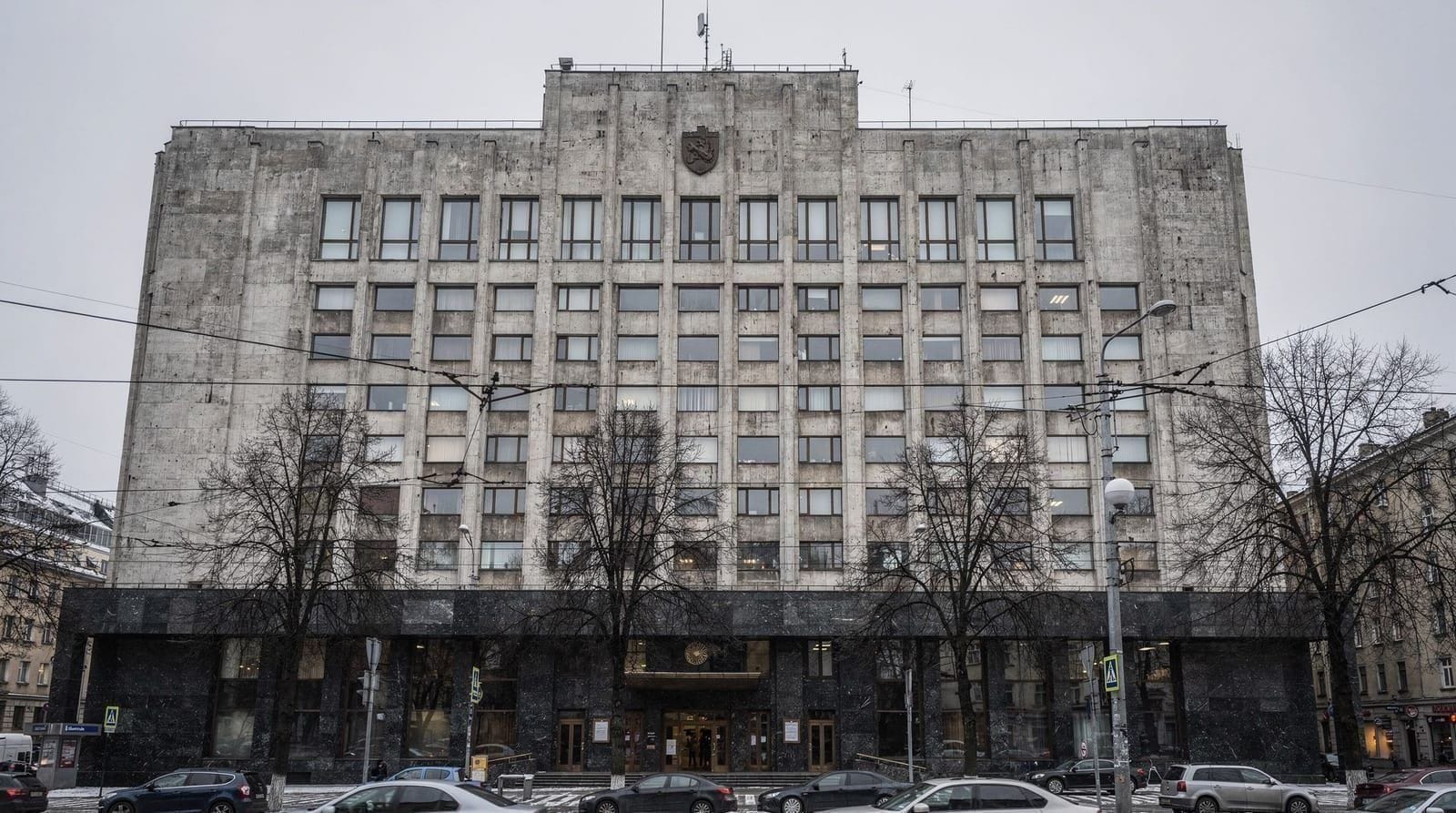
Yes, though few compared to cities like Riga or Tallinn that were more intensively developed during the Stalin period (1945–1953). The main railway station on Geležinkelio stotis has Soviet-era wings. The government district on Gedimino prosp. has several 1950s neoclassical administrative buildings in Soviet style.
How did the Catholic Church survive Soviet rule in Lithuania?
The Catholic Church was not destroyed but was severely restricted. Churches were closed (some repurposed as museums, galleries, or warehouses), priests were monitored and some imprisoned, and religious education was banned. Underground samizdat publication — most famously the “Chronicle of the Catholic Church in Lithuania” (published 1972–1989) — documented repression and maintained religious and national consciousness. The Church was deeply intertwined with the independence movement of the 1980s.
What happened to the Lithuanian language under Soviet rule?
Lithuanian was technically permitted as a language of instruction in schools (unlike in some Soviet republics). However, Russian was the language of advancement — higher education, the Communist Party, the military, the security services all operated in Russian. Russification pressure was systematic. The revival of Lithuanian as the sole state language was one of the first acts of the independence movement in 1988.
Where can I buy Soviet-era memorabilia in Vilnius?
The Halės Market (Pylimo gatvė 58) has stalls selling Soviet medals, pins, photographs, and small objects — prices are reasonable and the pieces are genuine. Avoid any shop near Cathedral Square selling “Soviet memorabilia” at tourist prices — the same items cost three to five times more. The Antique Market at Gedimino prosp. 51 on Sundays is a good source.
How does Soviet history relate to the Holocaust sites near Vilnius?
They’re distinct but overlapping histories. The Holocaust occurred during the Nazi occupation (1941–1944), between Lithuania’s two Soviet occupations, and is documented at Paneriai and in the Jewish Vilnius guide. Soviet repression — deportations, the KGB, the Gulag — is a separate system of state violence covered by the sites in this guide. Lithuania’s 20th century involved both, in sequence, and understanding one doesn’t substitute for understanding the other.
Is one day enough to cover Soviet history in Vilnius properly?
A half-day covers the essential central sites (KGB Museum, Parliament, TV Tower) comfortably. A full day allows you to add the atomic bunker outside the city. Grūtas Park, being 130 km south near Druskininkai, realistically needs its own separate day trip rather than being squeezed into a Vilnius-focused itinerary.
Top experiences
Bookable activities with verified prices and instant confirmation on GetYourGuide.