Vilnius baroque architecture — a traveller's guide to the style
Vilnius: City highlights walking tour
Duration: ~2 hours
Why does Vilnius have so much Baroque architecture?
Vilnius became a major centre of Jesuit activity after 1569, and the Baroque style became the Jesuits' chosen architectural language for Counter-Reformation church-building. The city expanded significantly in the 17th century, and the wealth of the Polish-Lithuanian Commonwealth funded an extraordinary building programme.
Vilnius contains one of the most concentrated collections of Baroque architecture in northern Europe. This is not an accident: the city experienced its greatest architectural flowering in the 17th and early 18th centuries, precisely when Baroque was the dominant European style, and the wealth of the Polish-Lithuanian Commonwealth funded an extraordinary burst of church and palace construction. What survived the subsequent wars, Tsarist neglect, and Soviet repurposing is still remarkable.
| Where | Old Town, concentrated around Didžioji gatvė and Antakalnis |
| Cost | Free entry to nearly every church on this walk |
| Time needed | 3–4 hours for the full self-guided sequence |
| Getting there | Walkable from Cathedral Square; St. Peter and Paul’s needs a 25-minute walk or a short bus ride |
| Best time | Weekday mornings, avoiding service times |
Why Vilnius became a Baroque city
Understanding the political and religious context explains the architecture better than any individual building description.
In 1569, the Union of Lublin merged the Kingdom of Poland and the Grand Duchy of Lithuania into the Polish-Lithuanian Commonwealth — the largest state in Europe at the time. Vilnius was already an important city, but it now became the second capital of a major power. Investment in the city intensified.
Simultaneously, the Jesuit Order arrived in Vilnius in 1569. The Jesuits were the shock troops of the Counter-Reformation, and they chose Baroque as their architectural weapon: theatrical, overwhelming, emotionally persuasive. The Vilnius Jesuit church (begun 1604, now St. Casimir’s) set the template. Within a century, Jesuit-influenced patrons had built or rebuilt dozens of churches across the city.
The Baroque style that developed in Vilnius took on local characteristics: twin bell towers — almost always — flanking a central nave; facades that are relatively restrained on the exterior but erupt into extravagant plasterwork, sculpture, and fresco inside; and a preference for white walls that made the interiors luminous even in the Baltic winter.
A distinctive subset — sometimes labelled “Vilnius Late Baroque” or “Vilnius Rococo” — emerged in the 18th century with even more fluid, curvilinear facades. The Church of St. Catherine on Vilniaus gatvė is the best surviving example.
The key buildings: a walking sequence
St. Casimir’s Church (Šv. Kazimiero bažnyčia)
Didžioji gatvė 34 · Open Monday–Saturday 10 am–6 pm; Sunday 10 am–noon, 3 pm–6 pm · Free entry
The first major Baroque church in Vilnius, begun in 1604. The black-and-white tiled floor, the chapels with portrait medallions of members of the Jagiellonian dynasty, and the central dome make this the clearest example of the Jesuit template. During Soviet rule it was used as a Museum of Atheism (1963–1988) — an irony that feels almost too perfect. The chapel of St. Casimir has exceptional silverwork.
Church of St. Johns (Šv. Jonų bažnyčia)
Inside Vilnius University, accessed from the Great Courtyard | Open Monday–Saturday 10 am–6 pm | Free entry
A 15th-century Gothic church remodelled multiple times, with the current Baroque interior largely from the 17th and 18th centuries. 18 side chapels, each decorated individually. The wooden ceiling fresco and the high altar retable are the highlights. Architecturally, the twin-towered facade on the courtyard side is one of the finest Baroque compositions in the city.
Church of St. Peter and Paul (Šv. Petro ir Povilo bažnyčia)
Antakalnio gatvė 1 · Open daily 9 am–6 pm · Free entry · 25 minutes walk from Cathedral Square or Bus 2, 3, 32 northbound
This is the one Baroque interior in Vilnius that genuinely astonishes. Built 1668–1685 on the commission of the military commander Mykolas Kazimieras Pacas, the interior contains over 2,000 individual stucco figures — angels, saints, warriors, hunting scenes, allegorical figures — covering every surface of the nave, chapels, and apse. The craftsmen were Italian (Giovanni Pietro Perti and Giovanni Maria Galli led the team).
The effect is overwhelming in a way that photographs do not adequately convey. Budget 30 minutes at minimum. The church is a 25-minute walk north from Cathedral Square but the route along Kosciuškos and Antakalnio is pleasant. Worth the detour.
St. Theresa’s Church (Šv. Teresės bažnyčia)
Aušros Vartų gatvė 14 · Open daily 7 am–7 pm · Free entry
Built 1635–1654 for the Discalced Carmelites, with one of the most complete early Baroque facades in Vilnius — the stepped pilasters, rounded arch entrance, and decorative niches are textbook Counter-Reformation. The interior has been altered less than most Vilnius churches and retains a more unified Baroque feel. Located directly beside the Gates of Dawn, so easy to combine.
Church of St. Catherine (Šv. Kotrynos bažnyčia)
Vilniaus gatvė 30 · Currently undergoing restoration; exterior always visible
The best example of the late Baroque / early Rococo transition in Vilnius, with an undulating twin-towered facade (1747–1773) that shows the style at its most playful. Currently closed for restoration but the facade is fully visible from the street and worth pausing at.
Church of the Holy Spirit (Šv. Dvasios bažnyčia)
Dominikonų gatvė 8 · Open daily 7 am–7 pm · Free entry
The Dominican church and monastery complex, rebuilt in Baroque style through the late 17th and early 18th centuries. The interior has an unusually complete set of side altars dating from the original construction — 16 altars, each with different sculptural programmes. The holy springs in the crypt (said to have miraculous properties, particularly for eye conditions) draw Lithuanian pilgrims throughout the year.
The palaces and secular Baroque
Baroque was not only a religious style. Several grand residential palaces in the Old Town date from the 17th–18th century.
Pac Palace (Pac rūmai, Didžioji gatvė 7): The grandest surviving Baroque palace in Vilnius, built for the Pac family in the mid-17th century. Now part of the Lithuanian government complex; the courtyard and exterior are publicly accessible.
Chodkevičiai Palace (S. Daukanto aikštė): A heavily remodelled complex with Baroque origins. Now the Presidential Palace — open for guided tours on specific dates (check prezidentas.lt).
Sapieha Palace (Rinktinės gatvė 1, Antakalnis): A ruined Baroque pleasure palace from the early 18th century, damaged in multiple wars and never restored. The surviving shell is dramatic precisely because it is not a tidy reconstruction. Accessible through a gate off Rinktinės gatvė.
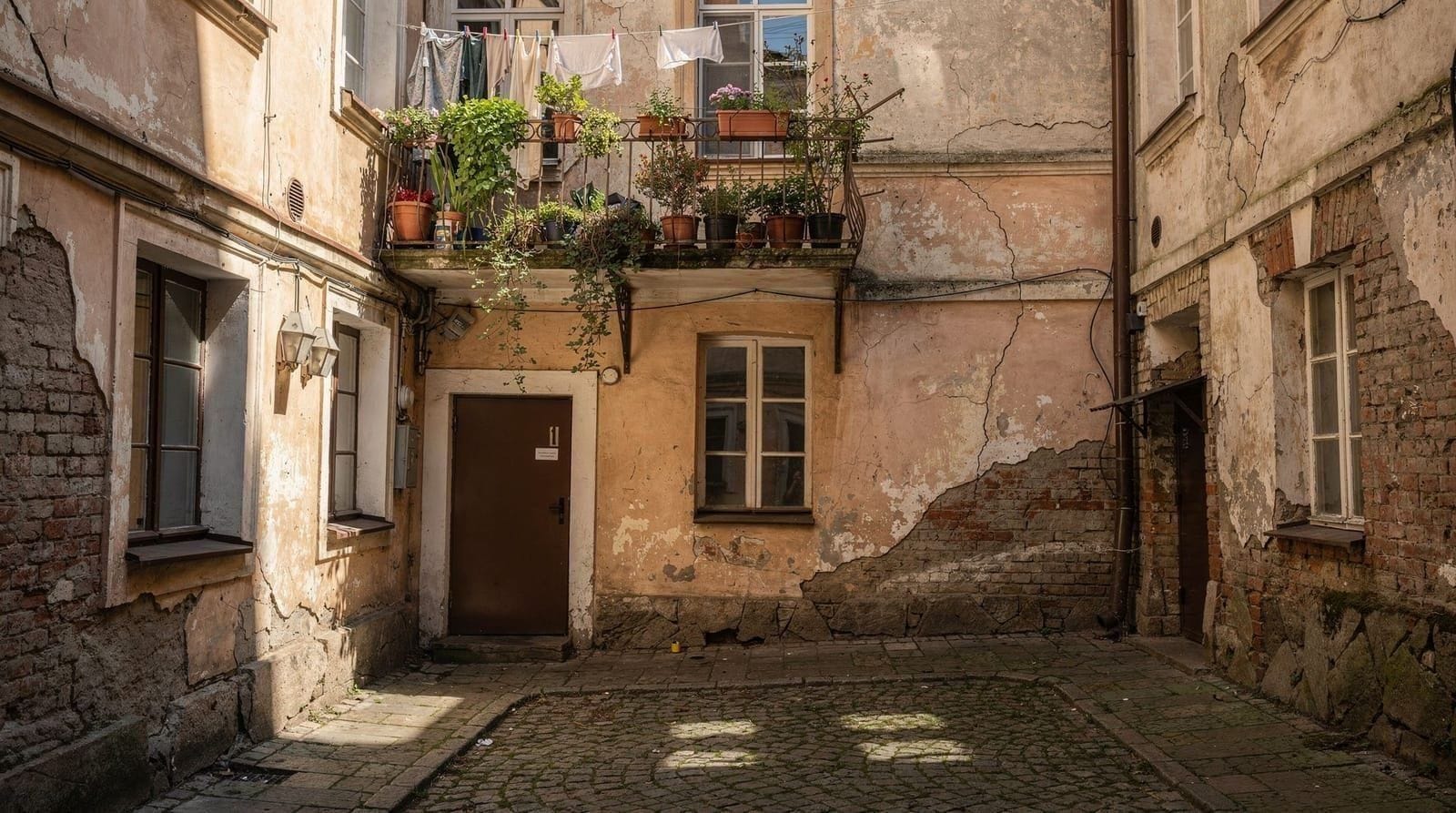
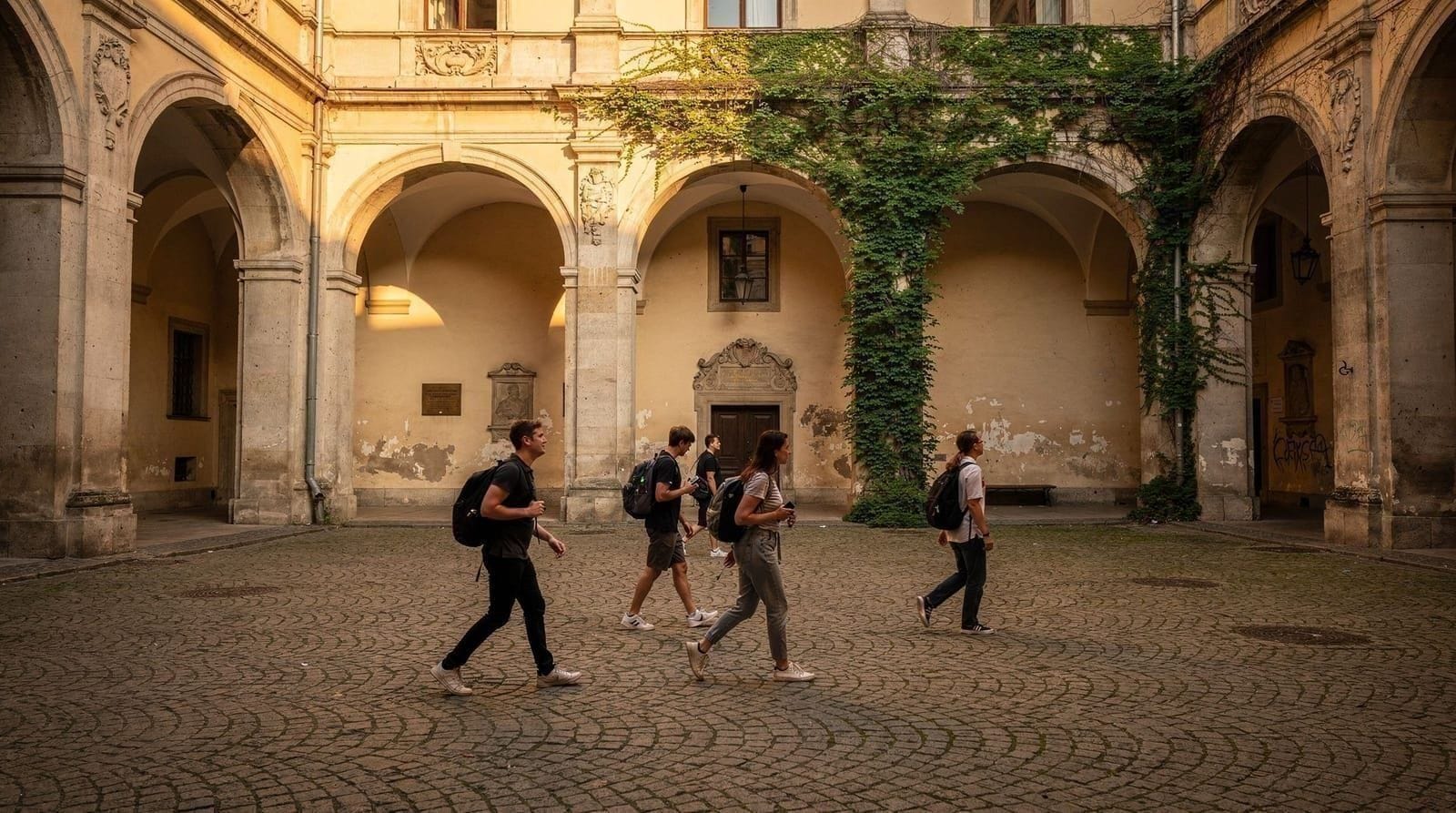
The courtyards of Vilnius tour covers the architectural heritage of the historic courtyard network, including several Baroque interiors and palace courtyards not visible from the street.
How to self-guide the architectural walk
A logical sequence for a half-day Baroque walk (approximately 3–4 hours, mostly flat):
- Start at Cathedral Square — understand the neoclassical exterior before diving into Baroque
- Walk south on Pilies gatvė to Šv. Jono gatvė and enter Vilnius University — Church of St. Johns
- Continue south on Didžioji gatvė — St. Casimir’s Church (20 minutes)
- Continue south to St. Theresa’s Church and the Gates of Dawn
- Double back north on Vilniaus gatvė, pausing at the Church of St. Catherine facade
- Loop to Church of the Holy Spirit on Dominikonų gatvė
- Walk north on Pilies/Katedros to Cathedral Square again, then bus or taxi to St. Peter and Paul’s
This covers six Baroque monuments plus the city’s main public spaces in a logical geographical sequence. Wear comfortable shoes — cobblestones throughout.
A small-group guided walk from a local guide condenses this knowledge efficiently if you have less than a full day.
Baroque against the rest of the Old Town
Baroque is the dominant note in Vilnius, but not the only one. Cathedral Square, at the start of this walk, is neoclassical rather than Baroque — see the Vilnius Cathedral Square guide for the contrast, and to understand what came immediately before. A short walk east, St. Anne’s Church shows the Flamboyant Gothic style that predates the Baroque wave by more than a century; the St. Anne’s and Bernardine guide makes a useful before-and-after companion to this walk. The Vilnius Old Town guide ties all of this into a single wider route if you want the full Old Town picture rather than an architecture-only walk.
The university’s role in the story
Vilnius University, whose Church of St. Johns appears early in this walk, was itself a Jesuit foundation and one of the reasons Baroque took hold here so thoroughly — the university’s courtyards and library are themselves part of the same architectural moment. See the Vilnius University guide for the fuller campus history, and the Vilnius legends and myths guide for some of the folklore attached to specific churches on this route, including St. Casimir’s.
Best time of year for this walk
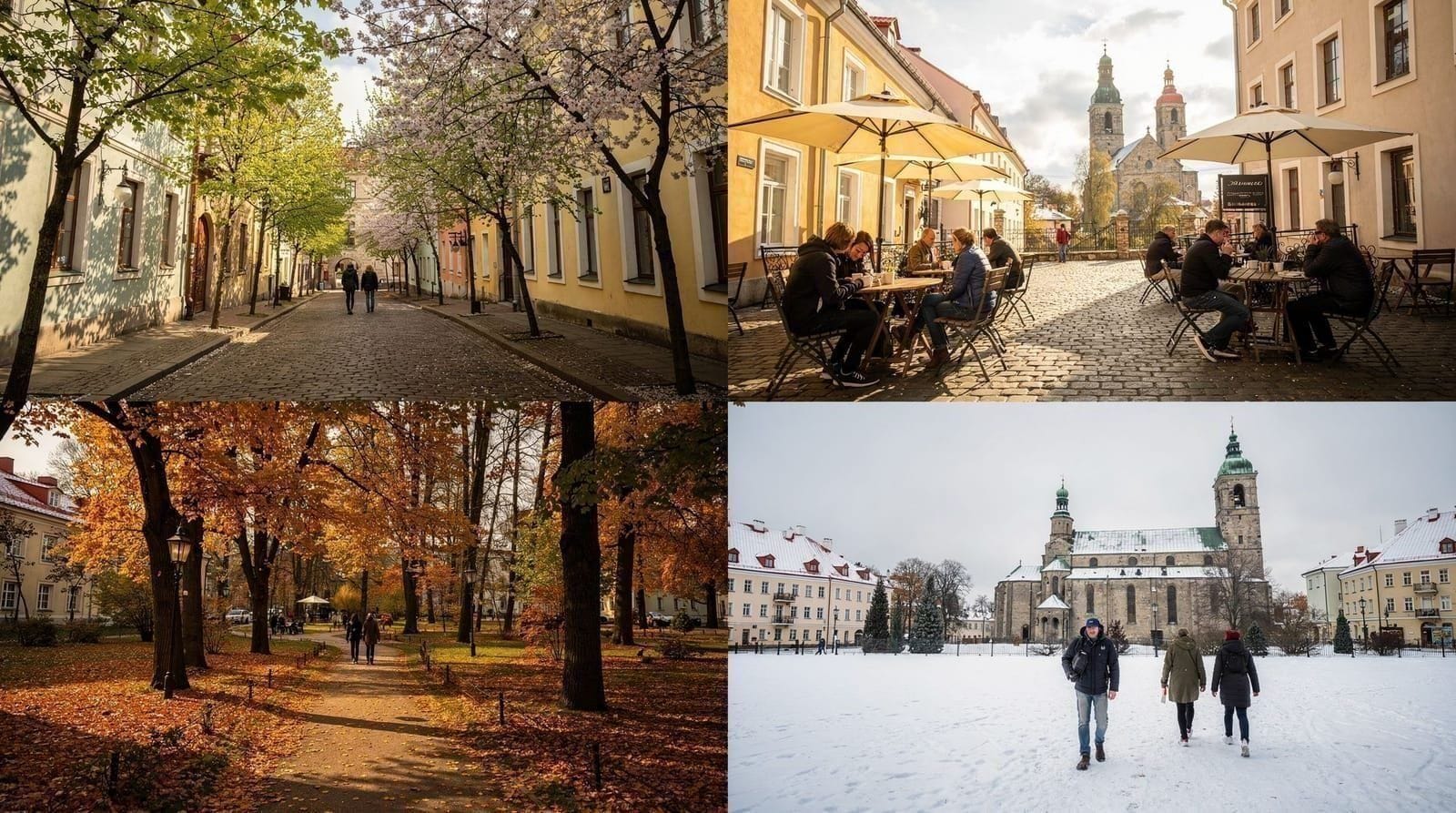
Baroque interiors read best in good daylight, since many rely on white plasterwork that changes character with the light. See the best time to visit Vilnius guide for a season-by-season breakdown; in short, spring and early autumn combine good light with manageable crowds, while winter interiors — lit mostly by candlelight and low windows — have a different, more austere character worth seeing at least once.
Frequently asked questions about Vilnius Baroque architecture
Are all the Baroque churches in Vilnius Catholic?
Most, yes. Lithuania is predominantly Catholic, and the Baroque building campaign was driven by the Jesuit Order and wealthy Catholic noble families. The Orthodox church (Šv. Dvasios pravoslavų bažnyčia on Aušros Vartų) uses a very different architectural tradition and is a significant exception.
What materials were used in Vilnius Baroque?
Primarily brick (local kilns were active from the medieval period) with lime plaster rendering that was then painted white or pale ochre. The ornamental sculpture used both local limestone and imported marble. The plasterwork in St. Peter and Paul’s used Italian techniques brought by the craftsmen directly.
Can I photograph inside Vilnius Baroque churches?
Most churches permit photography without flash. Some request that photography stops during services. St. Casimir’s Church and St. Peter and Paul’s are the most visitor-friendly. Check notices at each entrance.
Is there an architectural museum in Vilnius?
The Palace of the Grand Dukes of Lithuania (Cathedral Square) covers medieval and early modern architecture with excellent scale models. The Vilnius City Museum (Didžioji gatvė 31) has permanent exhibitions on urban history including architectural development. The Lithuanian Architecture Museum (Šv. Kazimiero gatvė) maintains archives but has limited public exhibitions.
How much time should I set aside for this walk if I only have one day in Vilnius?
Half a day is enough to see the core sequence — St. Casimir’s, the university’s Church of St. Johns, St. Theresa’s and the Gates of Dawn — without a bus detour to St. Peter and Paul’s. With a full day, add St. Peter and Paul’s and the Church of the Holy Spirit and you’ll have covered the essential Baroque story of Vilnius.
Do I need a guide to appreciate the Baroque churches, or is self-guided enough?
Self-guided works well if you read up beforehand — the sequence above and the individual church descriptions give most of what a guide would explain. A guide adds value mainly for the Jesuit and Counter-Reformation historical context and for spotting details (specific saints, family crests, restoration history) that aren’t obvious without background knowledge.
Top experiences
Bookable activities with verified prices and instant confirmation on GetYourGuide.