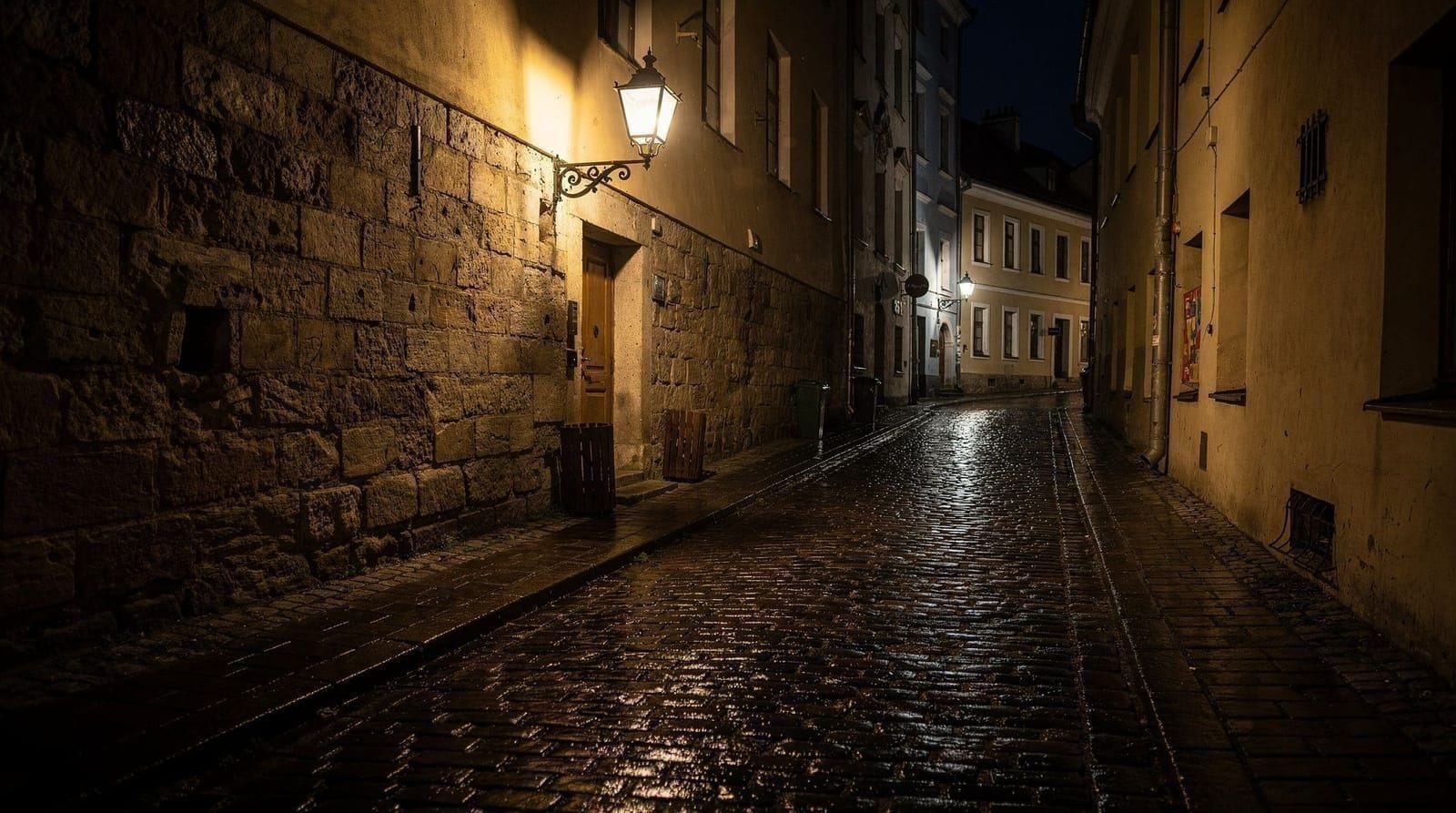
Why Užupis is Europe's quirkiest neighbourhood
Sometime in the spring of 1997, a group of Vilnius artists, musicians, and general troublemakers decided their riverside neighbourhood had suffered enough neglect. Rather than petition the city council, they did something more satisfying: they declared independence.
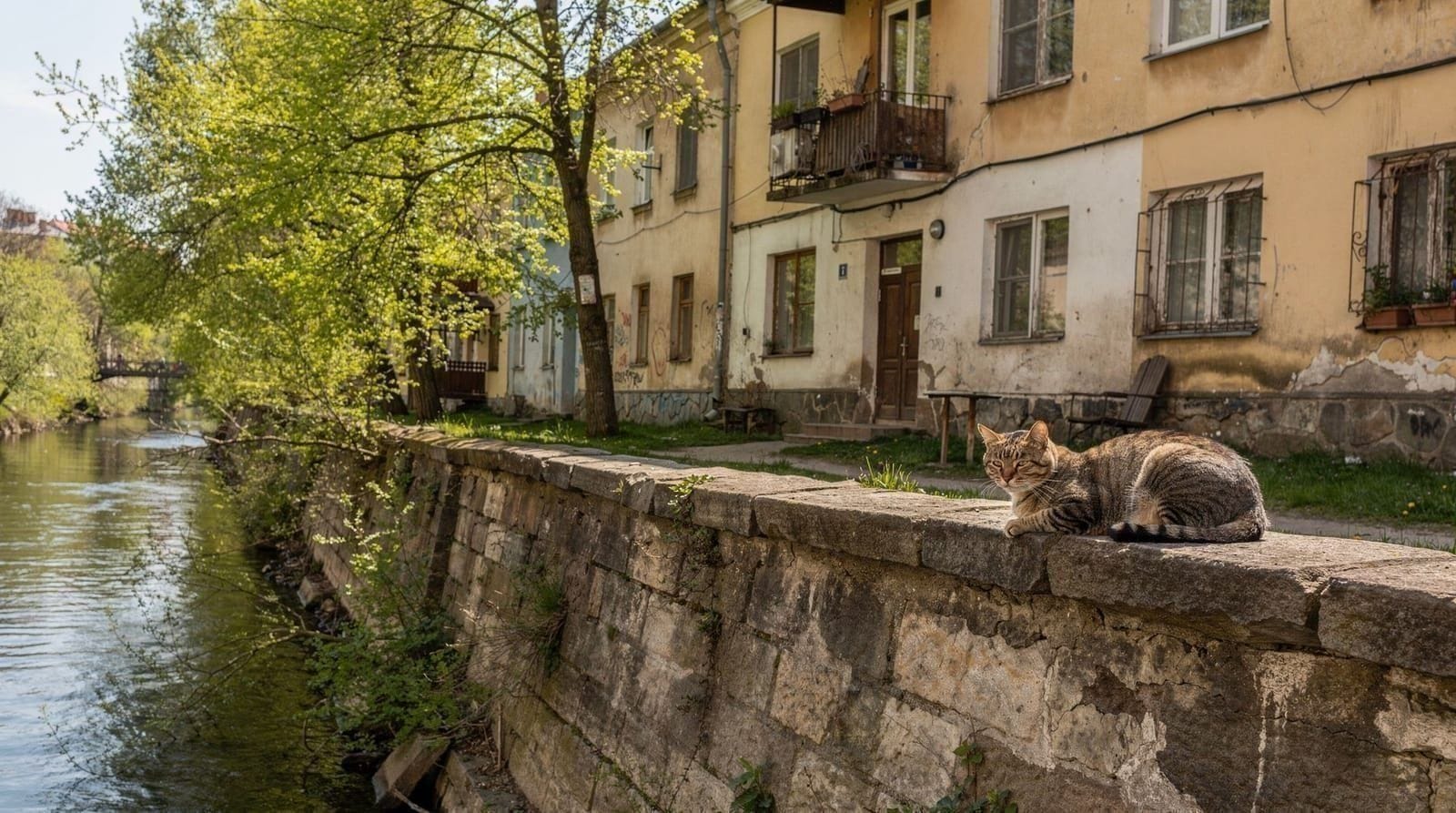
The Republic of Užupis was born on 1 April — April Fools’ Day, which is also, not coincidentally, the official holiday of the republic. It has a president, a cabinet of ministers, an army of around twelve men, and a constitution that includes such articles as “A dog has the right to be a dog” and “A cat is not obliged to love its owner, but must help in time of need.”
This is not performance art. It is, in its own way, entirely serious.
| Where | Across the Vilnelė River, a 5-minute walk from Pilies gatvė |
| Cost | Free to enter and walk; food/drink from around €8-12 |
| Time needed | 2-3 hours for a proper visit; 1 hour for a quick look |
| Getting there | On foot from the Old Town via the Užupis bridge |
| Best time | Weekday mornings; April 1 for the independence celebrations |
What makes Užupis different from any other “arts district”
Every European city has an arts district. Usually it involves a converted warehouse, some expensive coffee, and a mural that’s been photographed so many times the authenticity has been photographed out of it. Užupis predates the formula and, crucially, remains genuinely inhabited by the people who built its identity.
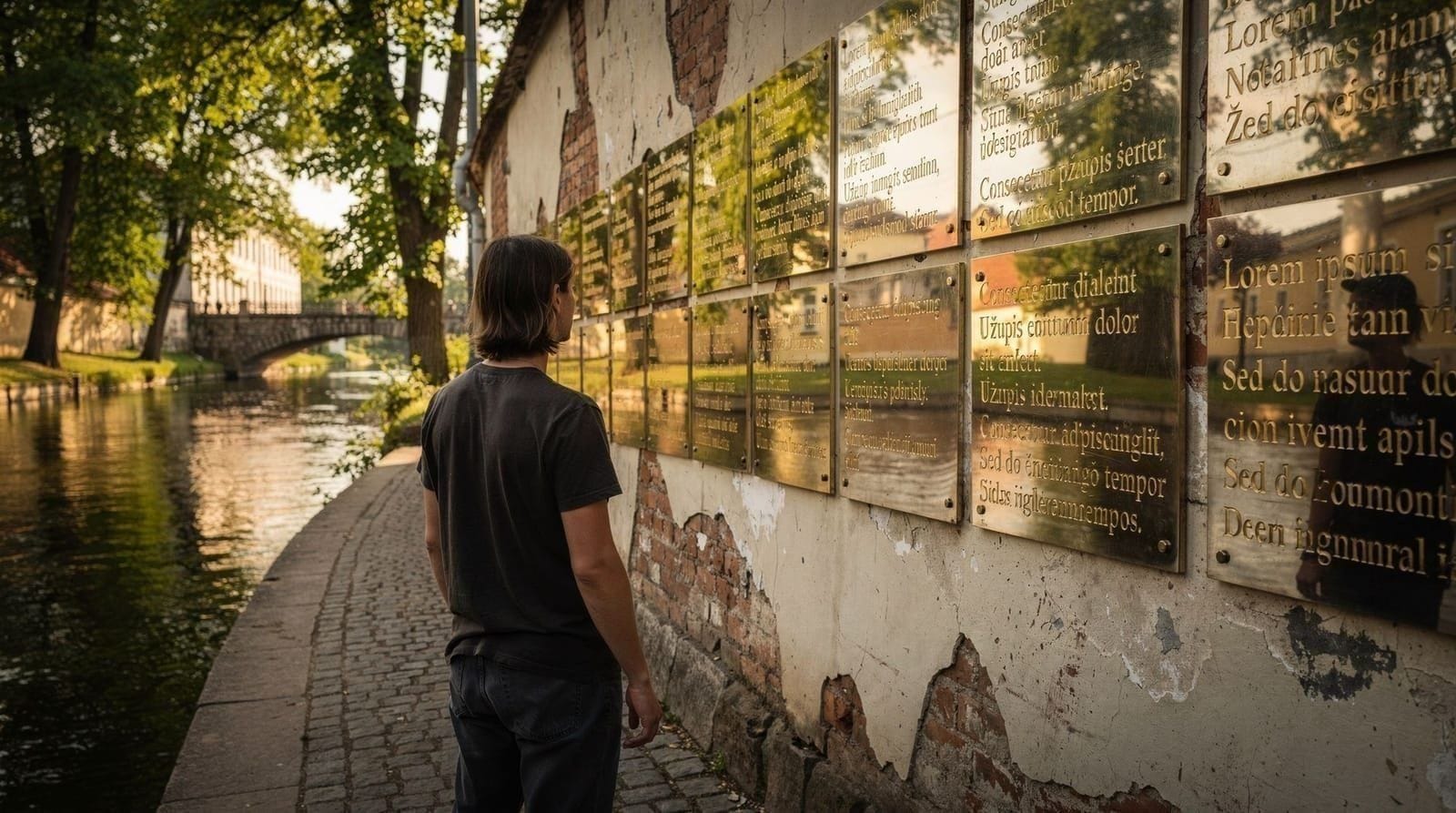
The neighbourhood sits in a bend of the Vilnelė River, separated from Vilnius Old Town by a bridge. Cross that bridge and you pass the Užupis constitution, engraved on mirrored panels in dozens of languages — Catalan, Swahili, Hebrew, Japanese. The constitution is worth reading slowly. Article 12: “A person may be happy.” Article 37: “Do not surrender.” Article 41: “Do not fight back.”
It sounds absurd until it doesn’t.
The area was genuinely poor and rundown through the 1990s. Romas Lileikis — painter, musician, and the republic’s first (and effectively permanent) president — moved here because the rents were cheap. The declaration of independence was partly a joke and partly a genuine act of community pride. Residents started cleaning up the streets, painting the buildings, inviting artists. The joke became a neighbourhood.
The constitution on the wall
The engraved constitution panels are on Paupio gatvė, just after the bridge from Old Town. Budget ten minutes here. The panels catch the light at different angles depending on the time of day — morning is better, when the sun comes from the east and the text becomes easier to read.
Article 9 gets quoted most often: “Everyone has the right to understand — or not understand.” In Lithuanian: “Kiekvienas turi teisę suprasti arba nesuprasti.” The original was written in Lithuanian, then translated by volunteers. Some translations diverge interestingly from the source.
The mermaid sculpture at the end of the bridge — Bernardas Bučas’s 2002 piece — is the republic’s unofficial symbol. She faces not the river but Old Town, which some locals interpret as meaningful and others say is simply where the light was better for the sculptor.
Walking through the republic
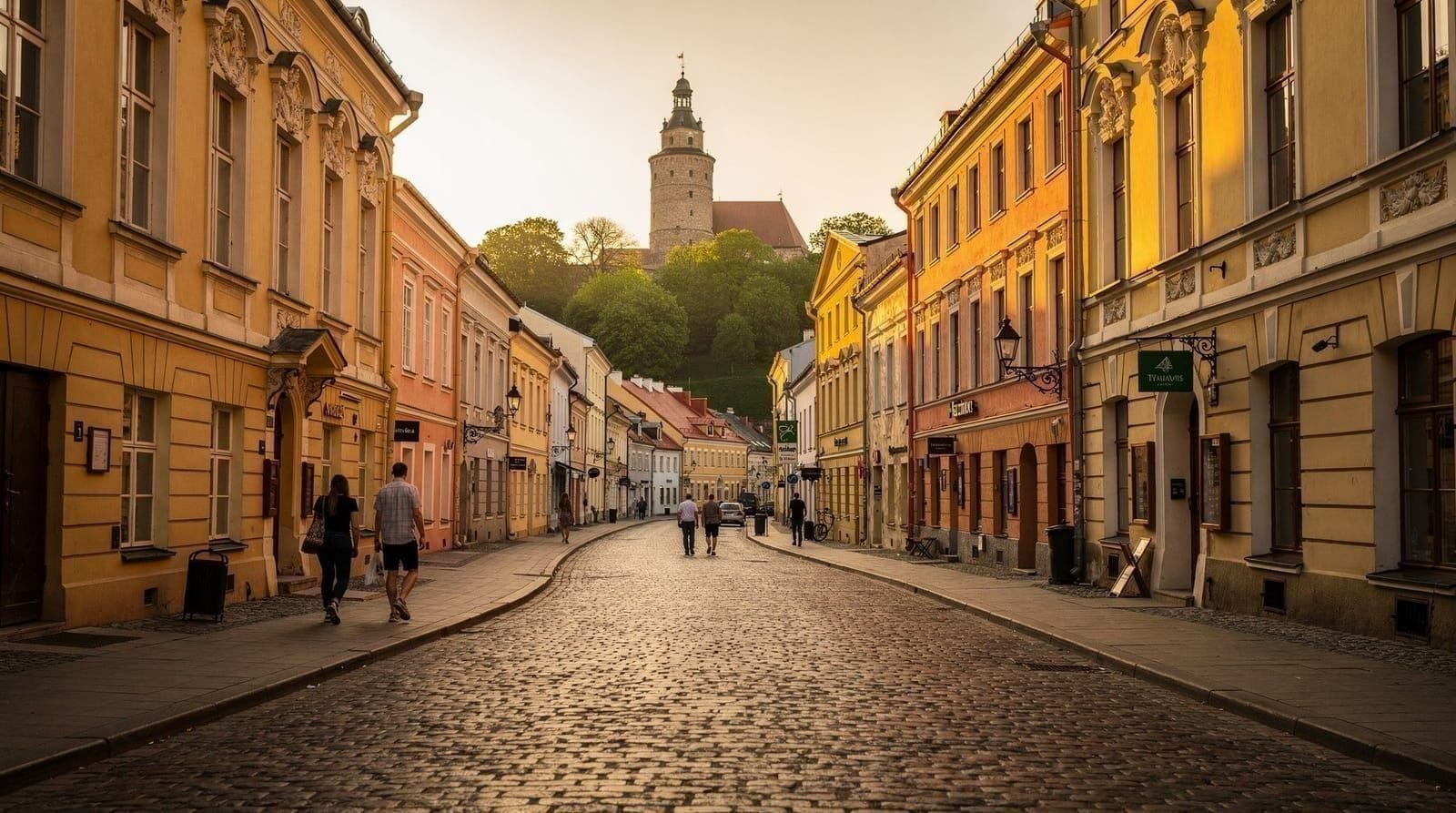
Užupis is small — maybe twenty minutes end to end on foot. The streets are cobbled and hilly, and several of them dead-end at the river. This is not a neighbourhood for efficient tourism; it rewards wandering.
Užupio gatvė is the main artery. On it you’ll find Café Užupis (Užupio g. 2), which has been operating in various forms since before the republic existed and serves decent Lithuanian lunch food for €8-12. Don’t expect anything formal. The walls are covered in decades of accumulated art, notes, and what might be municipal documents.
Angel Bernardas Bučas made the trumpet-blowing angel on a column at the Užupio and Malūnų intersection — installed in 2002, it’s become the republic’s most-photographed landmark, though the mermaid arguably has more personality. The angel faces southeast, toward the sun.
Further in, the streets become quieter and the buildings start to look genuinely vernacular — some painted in colours that you wouldn’t quite call tasteful but that somehow work, others left in the weathered plaster that characterises Vilnius’s poorer districts before renovation money arrived.
Ertlio Namas gallery (Užupio g. 40) shows contemporary Lithuanian art and is free to browse. The Art Incubator building nearby hosts studios that are sometimes open on weekends. Don’t plan too rigidly — the district’s character comes from what you discover rather than what you schedule.
For the fuller picture of the district as a place to stay or base yourself, rather than just visit for an afternoon, the Užupis destination guide and the Užupis Republic guide cover accommodation and longer-stay logistics.
Where to eat and drink beyond Café Užupis
Café Užupis anchors the main street, but the district has quietly built a wider food and drink scene worth knowing about. A handful of small wine bars and natural-wine shops have opened on the quieter side streets in the last few years, alongside a couple of genuinely good coffee roasters that predate the district’s current popularity. None of it is expensive by Western European standards — a coffee and pastry runs €4-6, a light lunch €8-12 — but it has shifted noticeably upmarket from the artists’-squat prices of the 1990s. If you want a fuller sense of where Vilnius actually drinks and eats away from the tourist strip, the Vilnius food guide and Vilnius coffee scene guide both cover Užupis addresses alongside the rest of the city.
April Fools’ Day in Užupis
On 1 April, Užupis celebrates its independence with considerable enthusiasm. The guards at the border checkpoint — there is a border checkpoint, naturally — check passports and issue republic stamps. There’s live music, outdoor exhibitions, and speeches. The president appears. The army (all twelve of them, in handsome if non-regulation uniforms) performs.
It’s one of the more enjoyable free events in the Vilnius calendar. Arrive before noon; by afternoon the main streets are packed and the improvised nature of the whole thing starts to strain under the weight of Instagram.
If you’re visiting in winter, the republic is quieter but the atmosphere is different and arguably more authentic — no tourist groups, just the neighbourhood going about its business.
The flip side: gentrification arithmetic
It would be dishonest to write about Užupis without noting the obvious tension. The neighbourhood became interesting because poor artists moved there. It became famous because it was interesting. Now the apartments cost twice what they did in 2010, several of the original studios have closed, and some of what remains is self-consciously quirky rather than accidentally so.
The €15-18 cocktails at one or two of the newer bars represent a different Užupis than the one the republic was founded to celebrate. The coffee shops are increasingly indistinguishable from their counterparts anywhere in northern Europe.
The neighbourhood is still worth visiting, emphatically. The constitution is real, the angel is real, the mermaid is real, and a significant number of the people who made the place what it is are still there. But visit knowing you’re arriving late to the party, not at its founding.
Practical details
Užupis is a five-minute walk from Pilies gatvė in the Old Town — follow Literatų, then cross the Užupis bridge. There’s no admission charge; the republic is perpetually open. The constitution panels are free to read at any hour.
For a guided perspective, the small-group Užupis walking tour covers both the republic and the wider Old Town context.
See Užupis with a local guide who knows the republic’s real historyThe Vilnius Old Town guide covers the wider district if you’re planning a full day. The legends and myths guide adds context to some of the stranger stories you’ll hear in the neighbourhood — Užupis has accumulated more than its share.
For a small-group deep dive into the republic’s founding and its current tensions, rather than just the highlights, a dedicated Užupis discovery tour goes further than a general Old Town walk.
Small-group Užupis Republic discovery tourApril 1 vs a regular day
| April Fools’ Day (April 1) | Any other day | |
|---|---|---|
| Atmosphere | Festival: live music, speeches, the “army” on parade | Quiet, residential, contemplative |
| Crowds | Packed by afternoon | Light, even on summer weekends mid-morning |
| Passport stamps | Yes, at the border checkpoint | Occasionally, informally, not guaranteed |
| Best for | First-time visitors who want the spectacle | Photographers and anyone who prefers unhurried wandering |
| Cost | Free | Free |
Frequently asked questions about Užupis
Is Užupis a real country?
No — it’s a self-declared artistic republic within Vilnius. It has no legal standing under Lithuanian or international law. Citizens of Vilnius pay Lithuanian taxes and carry Lithuanian passports. The republic is real in the sense that its community takes it seriously; it is not real in the sense of sovereignty.
Can you get an Užupis passport stamp?
Yes, on 1 April (the republic’s independence day), the border guards stamp passports and issue republic entry visas. On other days, some cafés and the republic’s “embassy” (a room in a local building) may stamp documents informally, but it’s not guaranteed.
Is Užupis safe to visit?
Yes. It’s a residential neighbourhood in a safe European city. The riverside paths after dark are quiet rather than dangerous, but as with anywhere, basic awareness is sensible.
How long does a visit to Užupis take?
Two to three hours allows you to read the constitution, walk the main streets, visit the mermaid and the angel, browse a gallery, and have lunch. A quick visit is one hour. April Fools’ Day celebrations run most of the day.
What’s the best time to visit Užupis?
Morning on a weekday for a quiet, unhurried experience. April 1 for the celebrations. Avoid summer weekend afternoons when the narrow streets become genuinely crowded.
Is Užupis worth visiting if I’m only in Vilnius for one day?
Yes, if you have a few spare hours — it’s a five-minute walk from the Old Town, so it doesn’t require a separate trip. See the Vilnius in 2 days on a budget itinerary for how it fits into a short visit.
Can you stay in Užupis rather than the Old Town?
Yes — a small but growing number of apartments and guesthouses operate in Užupis itself, offering a quieter, more residential base a short walk from the main sights. The Užupis destination guide has more on accommodation in the area.