Vilnius ghost tours — what to expect and which to book
Vilnius: Ghost tales private walking tour
Duration: 2 hours
Are Vilnius ghost tours worth doing?
Yes — if you choose the right operator. The best tours combine genuine local history, documented stories of the Old Town's darker past, and atmospheric evening walking through locations that transform at night. Avoid "scary experience" tours that prioritise jump scares over historical content; the best Vilnius ghost tours are fundamentally good history walks told after dark.
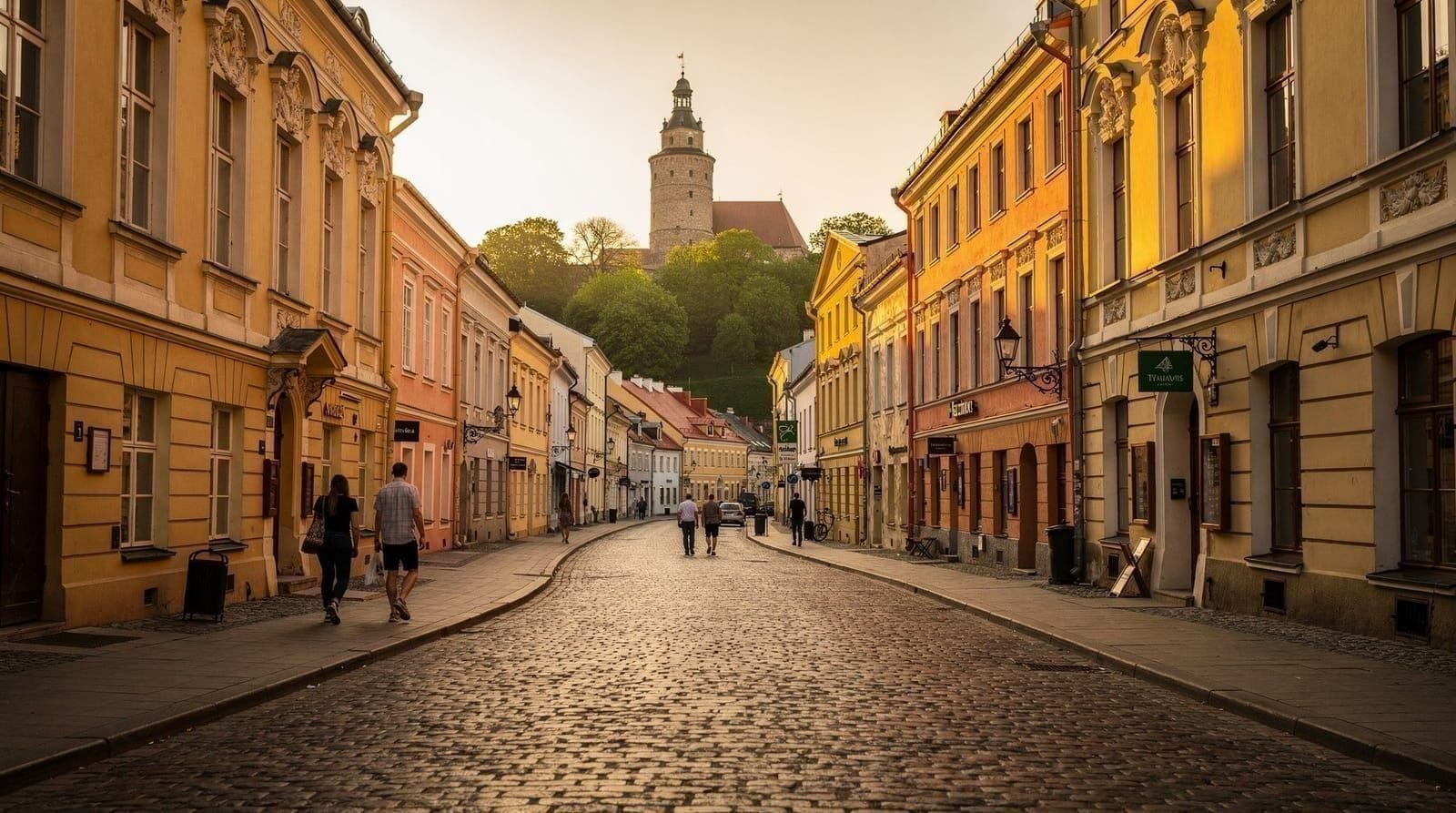
Vilnius is genuinely well-suited to ghost tours. The Old Town’s medieval street grid, its passages through arched courtyards into unexpected dark corners, the catacombs beneath the churches, the layers of history that include plague, siege, occupation, and execution — all of these give a ghost tour in Vilnius more historical substance than the equivalent in many European cities where the “ghosts” are largely invented for tourist consumption.
The best Vilnius ghost tours are not primarily about entertainment — they are evening history walks through locations that look very different after dark, with stories that are well-grounded in documented events and local folklore tradition. The worst are theatrical jump-scare experiences with minimal historical content. This guide helps you choose between them.
| Where | Old Town, meeting at Cathedral Square or Town Hall Square |
| Cost | around €18–28 group, €60–120 private (up to 6) |
| Time needed | 1.5–2.5 hours depending on tour type |
| Getting there | Walkable from any Old Town accommodation |
| Best time | Evenings year-round; October–March tours start in full darkness |
What a good Vilnius ghost tour covers
The strongest tours in Vilnius share several characteristics:
Genuine historical grounding: The sites visited have documented histories — documented deaths, documented events, documented witnesses — rather than invented supernatural backstories. Vilnius’s history provides ample material: plague epidemics (the 1710 epidemic killed a third of the city’s population), executions in Old Town courtyards, the trauma of multiple occupations.
Local folklore tradition: The pre-Christian Lithuanian mythology (see the Vilnius legends guide) provides a distinctive cultural context for the supernatural stories. The best guides understand the difference between old Baltic folklore and 20th-century ghost-story conventions.
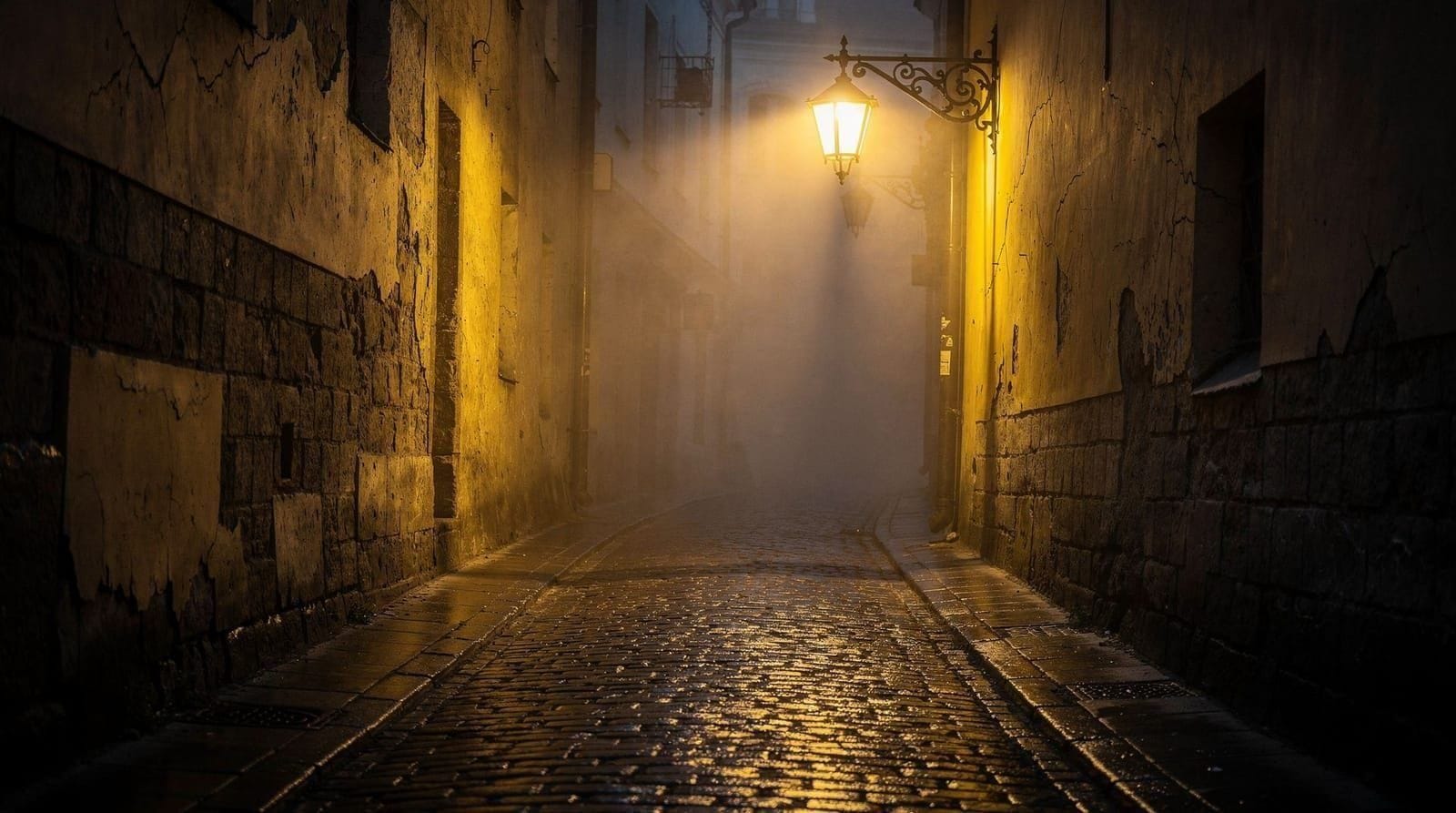
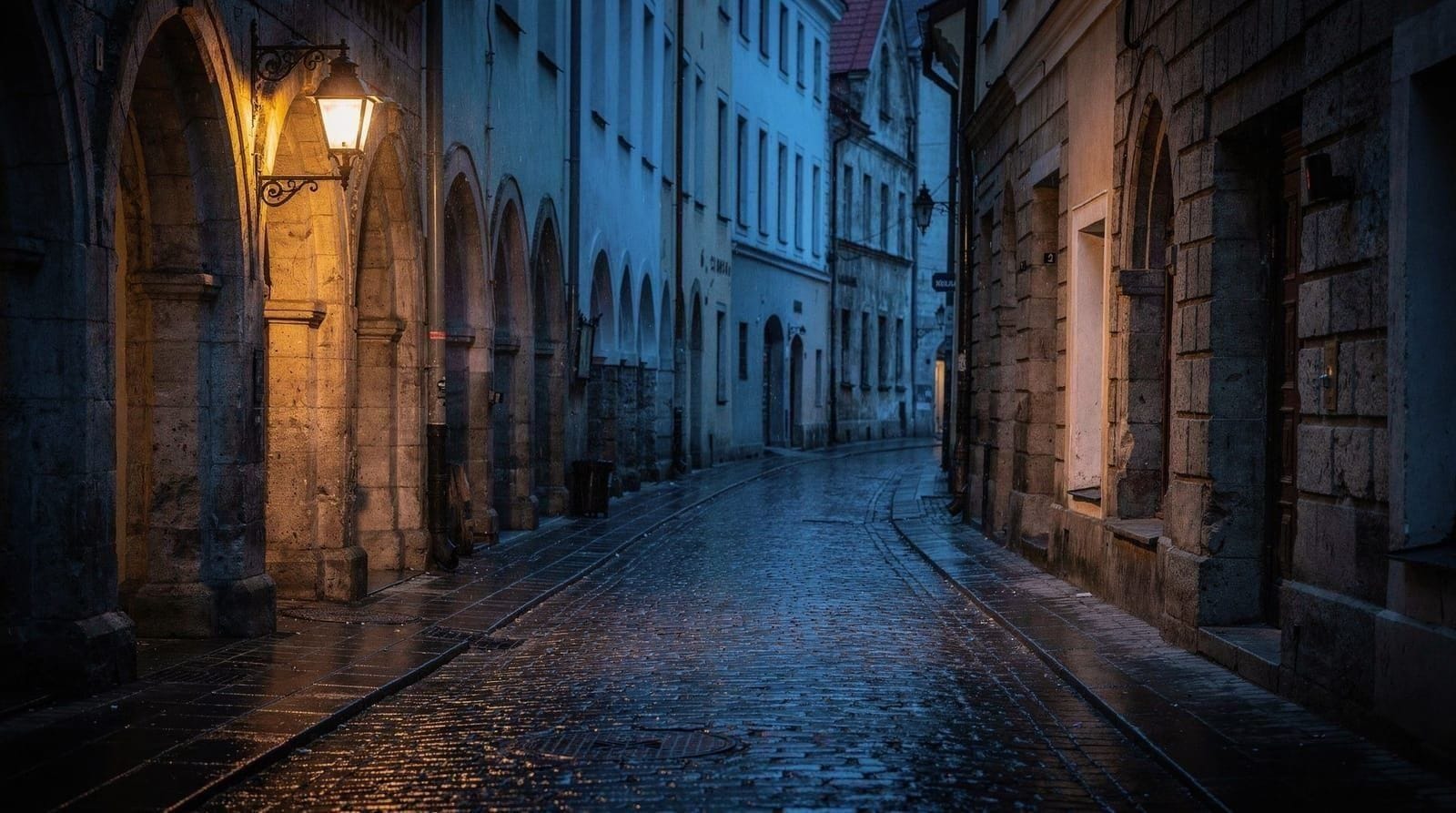
Atmospheric locations: The Old Town’s courtyards, the Bernardine Garden at night, the passages beneath the Church of St. Michael, the area around the former Great Synagogue — these locations have an atmospheric weight that functions differently at 9 pm than at 2 pm. A good ghost tour uses physical space to reinforce the narrative.
Calibrated mystery: The best guides are honest about what is documented and what is legendary — which makes the supernatural elements more effective, not less. If everything is presented as equally “true,” the stories blur into white noise. When a guide says “this is documented in 17th-century court records” and then “this is local tradition with no documentary basis,” the contrast creates genuine texture.
Tour types available in Vilnius
Evening ghost walking tours (group)
The standard format: a guide leads a group of 6–20 people through 8–12 locations in the Old Town over 1.5–2 hours, telling the stories associated with each. Most meet at Cathedral Square or Town Hall Square. Price: €18–28 per person.
English-language group tours typically run at 8 pm in summer (June–August) and 6:30–7 pm in spring/autumn/winter. Some operators run two departure times in peak season.
The Vilnius haunted Old Town walking tour (2 hours) covers the main Old Town ghost-story locations with an English-speaking guide. Standard format, well-reviewed, good for first-time visitors.
Private evening tours
Private tours allow the itinerary to be customised, start times to be adjusted, and smaller groups (couples, families) to have more direct interaction with the guide. Cost is typically €60–120 for 2 hours for a group of up to 6, but price varies considerably by operator.
The private ghost tales walking tour is a 2-hour private format covering the Old Town’s supernatural folklore with individual attention — particularly good for those with prior knowledge of Lithuanian history who want a deeper conversation with the guide.
Catacombs tours
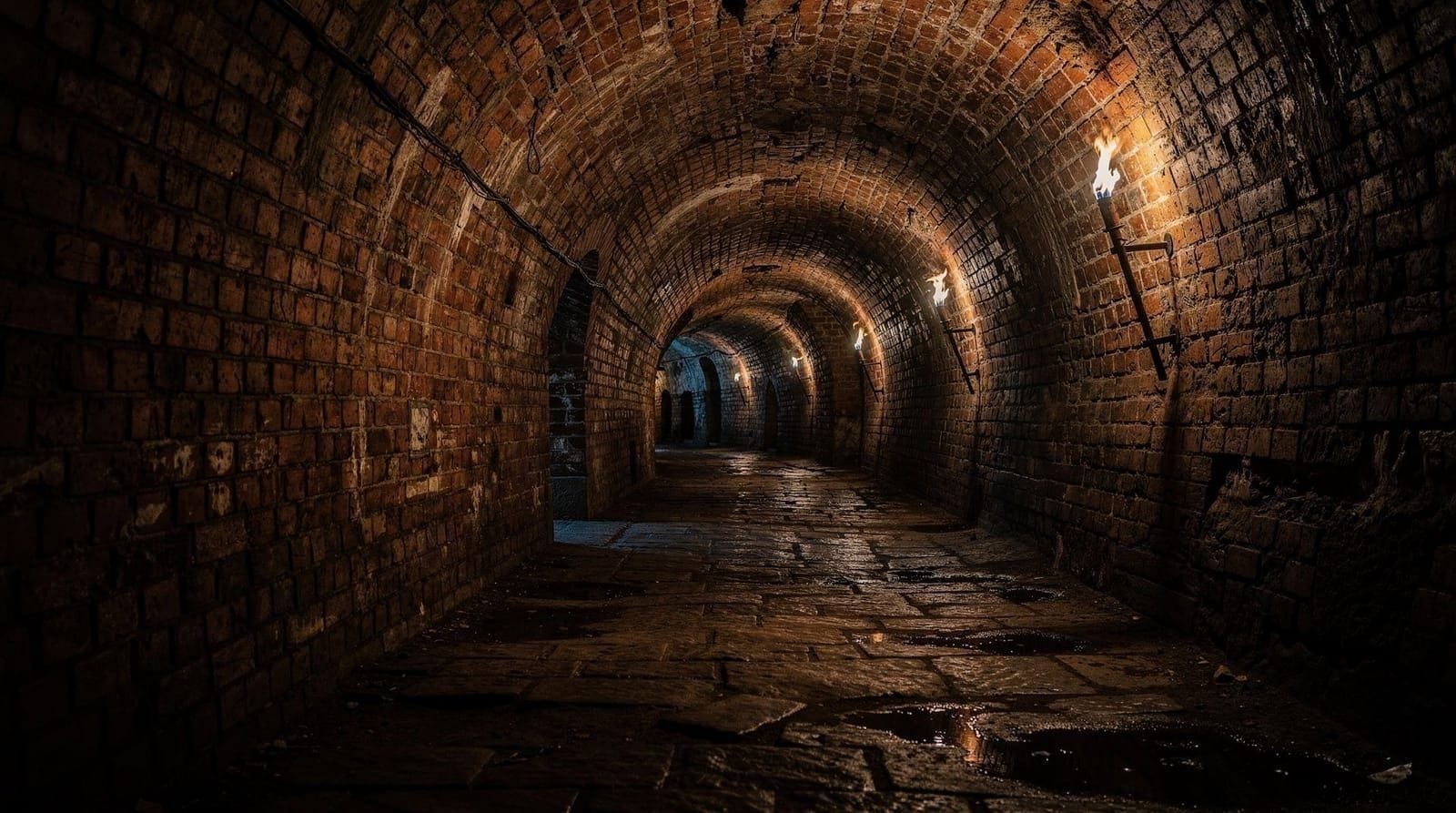
The most distinctive option in Vilnius. The accessible underground spaces beneath the Old Town — primarily the burial vaults of several Old Town churches, genuine 17th–18th-century catacombs — are the physical heart of the “underground Vilnius” tradition. Tours include the vaults and passages, historical explanation of the burial practices, and the accumulated ghost stories of specific spaces.
The Vilnius catacombs tour (2.5 hours) is the most immersive option for those interested in the genuine underground history of the city. It is not a theatrical experience — it is a guided visit to real historical spaces with real documented occupants. Claustrophobia note: some passages are low and narrow. If you are uncomfortable in confined underground spaces, this tour is not for you.
Self-guided mystery walks
For those who prefer their own pace or cannot make a scheduled departure, self-guided mystery walks — using app or paper guide — offer a flexible alternative. Quality varies; the better products are genuinely researched and presented. Expect to pay €5–15 for a good self-guided format.
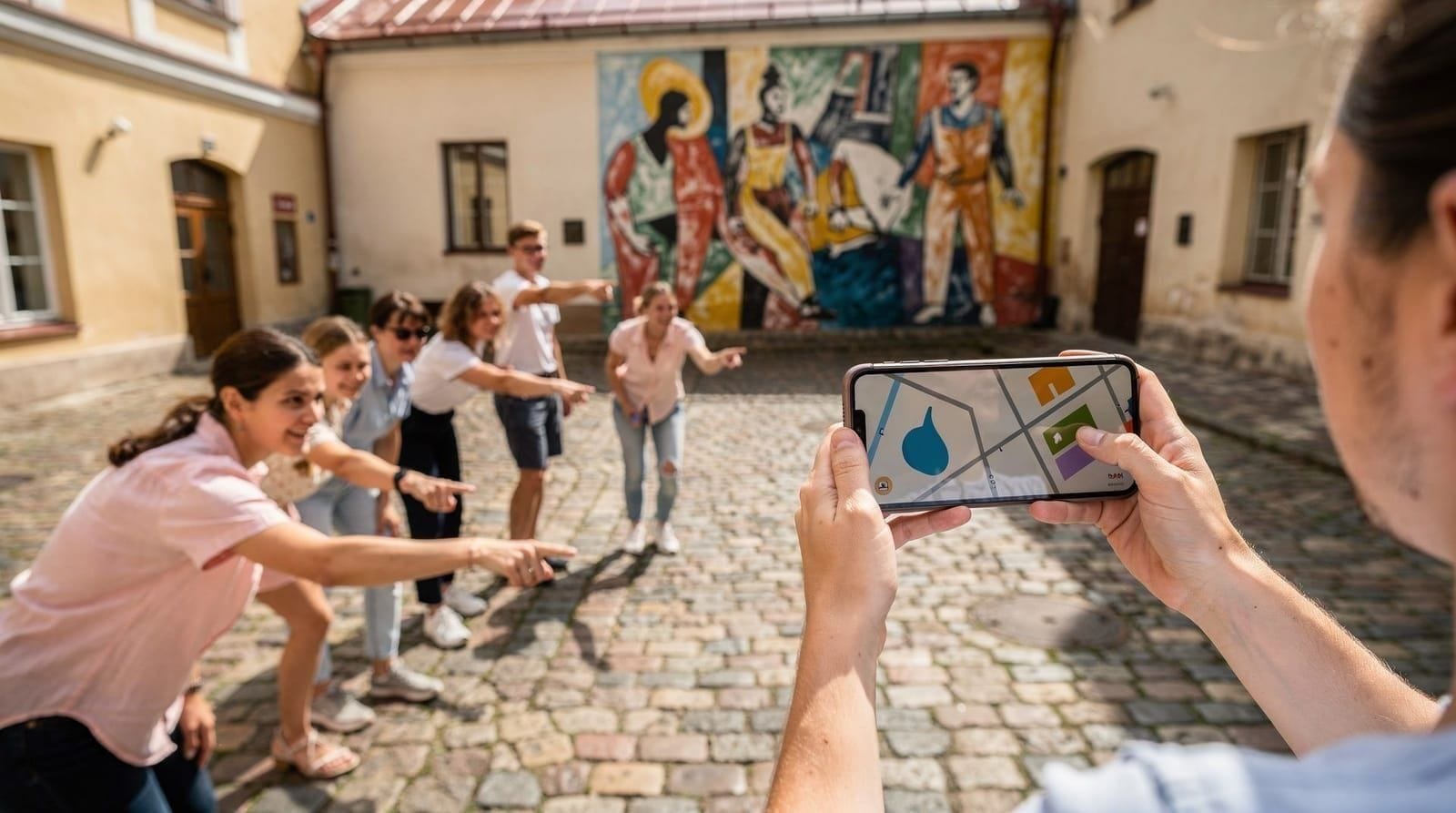
The Vilnius Mysterious Miracles gaming walk is an app-based puzzle walk through the Old Town that combines historical sites with puzzle-solving elements — more oriented toward entertainment than historical depth but well-produced and appealing for families and groups.
Key locations on ghost tours
The following are the sites that appear most consistently across ghost tours — knowing what they are before your tour helps you engage more deeply with the guide’s account.
Cathedral Square at night: The Stebuklas tile, the belfry’s shadow, and the entrance to the Lower Castle excavations all look different in darkness. Several ghost tours begin here and the guide typically covers the pre-Christian history of the site — the sacred fire that allegedly burned on the hill before Christianisation.
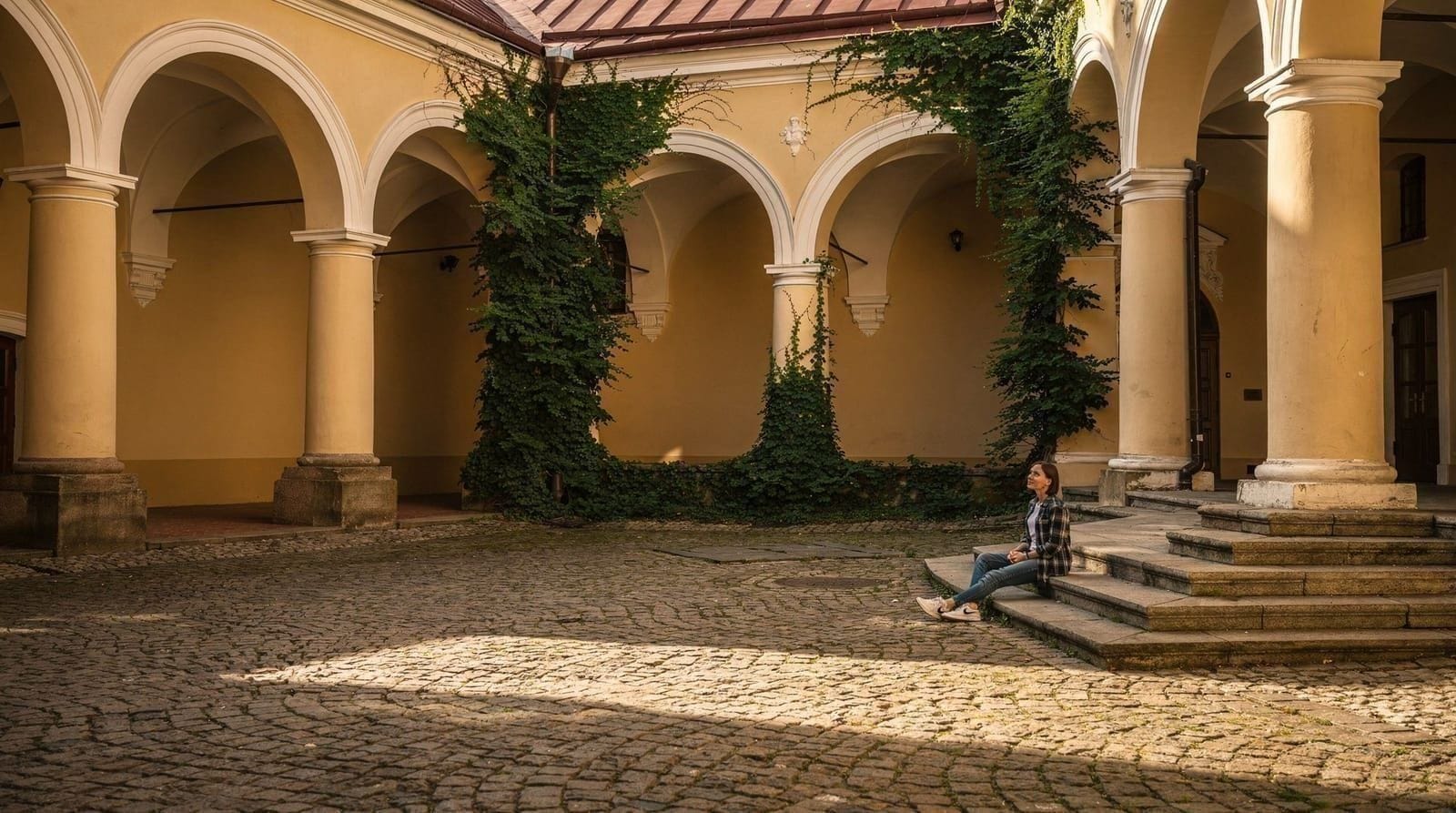
Pilies gatvė courtyards: The passage through arched gates into the dark interior courtyards of Old Town buildings is the most atmospheric element of any evening Old Town walk. Several courtyards have documented histories of plague deaths, judicial executions, and — in the case of the former Jewish quarter — the violence of 1941.
Šv. Onos (St. Anne’s) Church area: The gothic facade at night, lit from below, is among the most striking visual moments of any evening walk. Ghost tour guides typically tell the story of the architect’s fate (legend holds he killed himself after completing the building, to prevent anything as beautiful from being built elsewhere).
The Bernardine Garden: Closes at dusk officially but the area adjacent to the Vilnia River is accessible and particularly atmospheric in autumn and winter.
The Church of St. Michael (Šv. Mykolo bažnyčia): On Šv. Mykolo gatvė. The former Benedictine convent church has accessible underground vaults — this is the main catacombs tour location. The building dates from the 16th century and has been through multiple repurposings including Soviet-era use as an architecture museum.
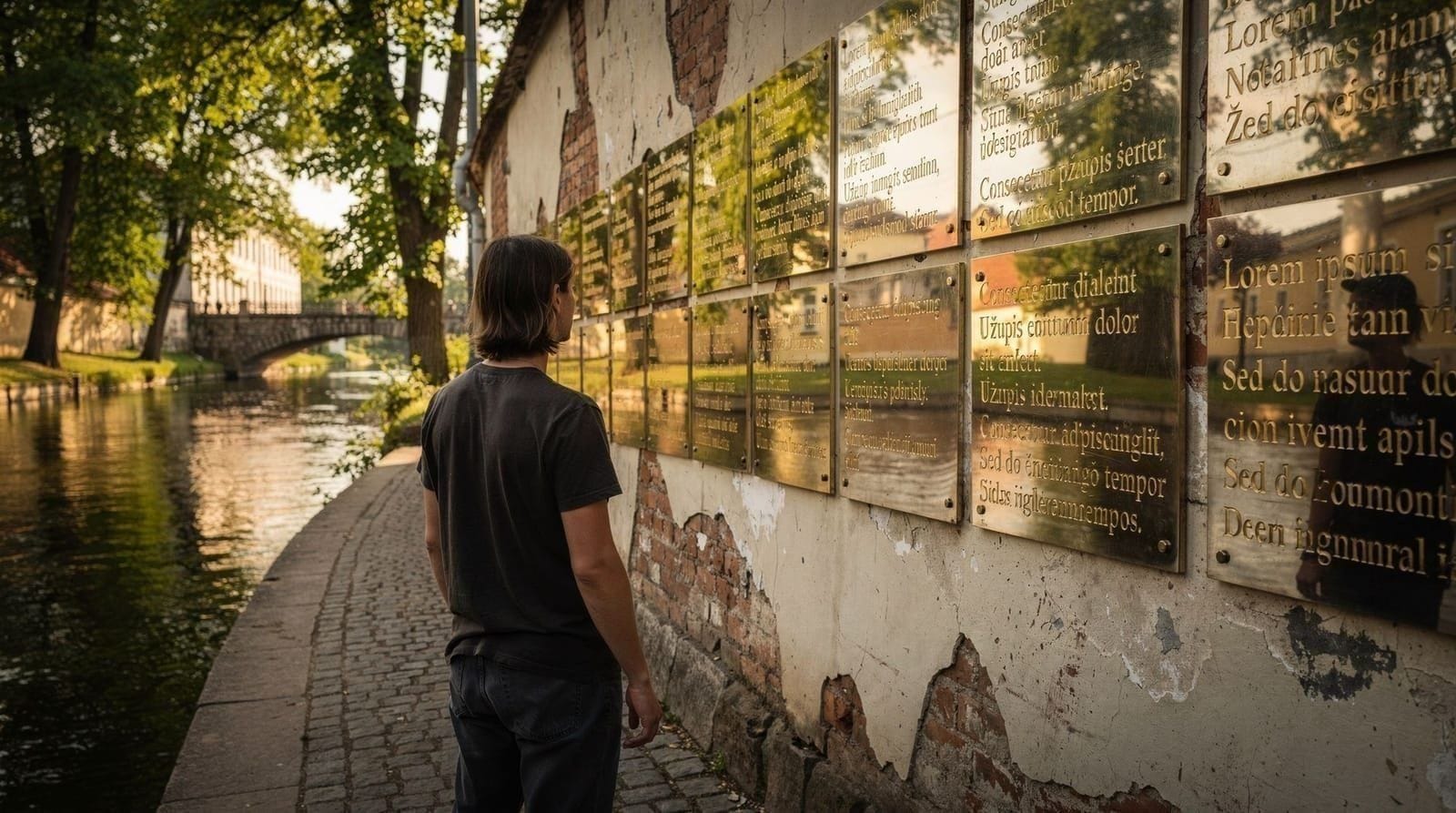
Literatų gatvė: The small street of writers’ memorial plaques near Pilies gatvė. Several ghost tours include this street because of its association with writers who died in tragic or violent circumstances, and the eerie quality of small portraits and texts covering an entire narrow street wall at night.
The former Great Synagogue site: Žydų gatvė, Old Town. Ghost tours vary in how they address this site — some include it with appropriate historical seriousness, acknowledging the 1941 events. The best guides treat it as a place of real historical weight rather than a generic “ghost spot.”
Practical information
Meeting points: Most tours meet at Cathedral Square (Katedros aikštė) or Town Hall Square (Rotušės aikštė). Confirm the exact meeting point when booking — they are about 600 m apart.
What to wear: Comfortable shoes that handle cobblestones. Evening temperatures in Vilnius are cooler than day temperatures even in summer — bring a layer. In October–March, a warm coat is necessary.
Weather: Ghost tours run in rain (bring a compact umbrella or waterproof). Tours are cancelled only in severe weather (lightning, heavy storm). Check with the operator on the day if weather is uncertain.
Photography: You may photograph freely on walking tours. The catacombs tour has specific guidance from the guide — follow it. Night photography in the Old Town requires either a good camera with low-light capability or accepting phone-camera limitations; flash is generally unhelpful in dark courtyard photography.
Tour end points: Most tours end in or near the starting area (Cathedral Square or Town Hall Square). Both areas have bars and cafés open late in summer.
Pairing a ghost tour with daytime sightseeing
A ghost tour works best as the closing act of a day already spent getting to know the Old Town by daylight, not as a first introduction to the city. Walking the Old Town in daylight first means you recognise the courtyards, church façades and street layout when the guide leads you back through them after dark — the contrast is part of what makes the format effective. For the historically inclined, pairing an evening ghost tour with a daytime visit to the KGB Museum of Occupations and Genocide gives a fuller picture of the darker layers of Vilnius history that ghost tours only touch on in passing. Visitors curious about the pre-Christian folklore referenced throughout most tours should also read the Vilnius legends and myths guide beforehand — it explains the Baltic pagan tradition in more depth than any single evening walk can cover.
Užupis after dark
Most organised ghost tours stick to the Old Town proper, but Užupis, the self-declared “republic” across the Vilnia River, has its own quieter, more melancholic evening atmosphere worth exploring independently before or after a booked tour. The narrow lanes and the riverside path are atmospheric without being staged for tourists, and it pairs naturally with dinner at one of the neighbourhood’s bars — see the Vilnius nightlife guide for options that stay open late enough to fit around an 8 pm tour.
Vilnius ghost tours vs other Baltic capitals
Ghost tours are available in Riga and Tallinn, and comparison is worthwhile:
Tallinn’s ghost tours (operating in the unusually well-preserved medieval Old Town) are excellent and arguably the most theatrical in the Baltics. Riga’s equivalent is solid but the Old Town is smaller and the supernatural heritage thinner.
Vilnius’s advantage is the depth and distinctiveness of its historical material — the Lithuanian pagan tradition, the specifically Lithuanian quality of the legends, and the unusual layering of pre-Christian, medieval, Jewish, Russian imperial, and Soviet histories in the same small space. This gives Vilnius ghost tours a distinctive cultural flavour that rewards visitors with some prior knowledge of the city’s history.
Frequently asked questions about Vilnius ghost tours
What is the scariest ghost tour in Vilnius?
The catacombs tour involves actual underground spaces with low ceilings and darkness — the most genuinely unsettling physical experience. For jump-scare style entertainment, Vilnius is not the right city; the quality operations focus on history and atmosphere rather than theatre. If pure fright is your criterion, escape rooms (the Vilnius VR Escape Room is on the GYG catalogue) may be more appropriate.
Are the stories on ghost tours real or invented?
The best tours are honest about this distinction. Some stories have clear documentary grounding (plague records, court documents, newspaper accounts). Others are local legend with no verifiable historical basis. A guide who presents everything as equally “true” is either uninformed or oversimplifying. Ask your guide how they distinguish between documented events and oral tradition — their answer tells you a lot about the quality of the tour.
Can I combine a ghost tour with dinner?
Yes. Several Old Town restaurants on Pilies gatvė and Didžioji gatvė serve until 10–11 pm. Etno Dvaras (Pilies gatvė 16) is convenient and reliable for Lithuanian food before an 8 pm tour start. Alternatively, the area around Town Hall Square has restaurant terraces that work well for a pre-tour meal.
Is there a difference between ghost tours in summer and winter?
Yes — significant. In June and July, darkness falls after 10 pm in Vilnius, which means the “atmospheric darkness” that is part of the ghost tour experience arrives late. Some summer tours start at 8 pm but the route is not fully dark until 10 pm. October and November tours begin in darkness immediately and the atmosphere is enhanced by the weather. Ghost tours in December snow are memorable and uncrowded. See the Vilnius in winter guide for what else the season adds to a trip.
Are ghost tours suitable for children?
Group walking tours are generally fine for older children and teenagers who can handle historical content about plague, executions and occupation-era violence; they are not staged horror experiences. The catacombs tour is less suitable for young or anxious children given the confined, dark spaces. Parents should judge based on their own child’s sensitivity to serious historical themes rather than expecting jump-scare content to be the concern.
Top experiences
Bookable activities with verified prices and instant confirmation on GetYourGuide.