Vilnius legends and myths — the stories behind the city
Vilnius: Ghost tales private walking tour
Duration: 2 hours
What is the most famous legend of Vilnius?
The Iron Wolf dream of Gediminas — the Grand Duke dreamed of a giant iron wolf on a hill, howling as if with the voices of a hundred wolves. The pagan priest Lizdeika interpreted this as a sign to found a great city here. Gediminas built his capital at Vilnius, and the legend holds that the wolf's howl symbolises the city's enduring fame.
Vilnius is one of those cities where the boundary between recorded history and living legend is genuinely difficult to locate. Lithuania was the last pagan country in Europe — Christianity came here only in 1387, long after the rest of the continent — and the pre-Christian tradition of sacred groves, sacred fires, and divine rivers left deep marks on the oral culture. When Christianity arrived, the old stories did not disappear. They absorbed the new religious vocabulary and continued.
The legends of Vilnius are not merely tourist entertainment. They reflect a genuine mythological tradition that scholars of Baltic religion and folklore have been documenting since the 19th century. The stories contain traces of real practice and belief even when the events themselves are clearly legendary.
| Where | Cathedral Square, Old Town, Užupis, Vilnia gorge |
| Cost | Free to explore independently; guided tours around €18–28 |
| Time needed | 2 hours for a guided legends walk, or a self-paced afternoon |
| Getting there | All key sites are walkable within the Old Town |
| Best time | Evening for the ghost-tour locations, daytime for the rest |
The Iron Wolf and the founding of Vilnius
Grand Duke Gediminas is hunting near the confluence of the Vilnia and Neris rivers. On a hill above the smaller river, he makes his camp for the night. He dreams of an enormous iron wolf standing on the hilltop, howling with a voice as loud as a hundred wolves.
In the morning, he summons the pagan priest Lizdeika — a holy man who had been found as a child in an eagle’s nest, left there by unknown forces, and raised in the sacred groves. Lizdeika interprets the dream: the iron wolf represents a city of iron — powerful, invulnerable. The wolf’s voice symbolises the fame that will sound across the world. “Build your capital here,” says Lizdeika. “Its name will ring through the ages.”
Gediminas builds Vilnius.
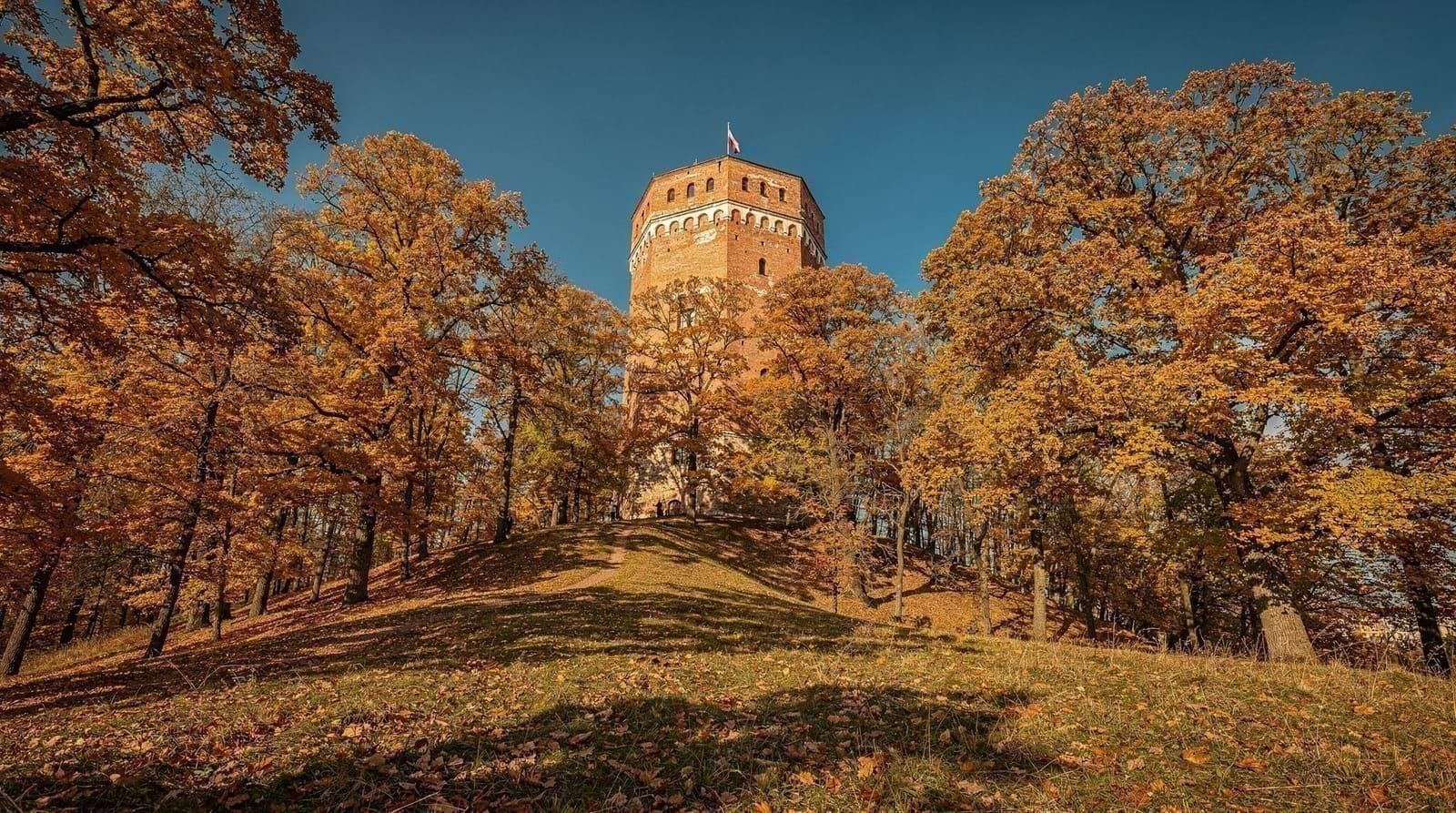
The iron wolf has been the heraldic symbol of Vilnius from the earliest records. The Gediminas Monument in Cathedral Square shows the Grand Duke on horseback; behind it, three granite columns mark independence commemoration events. The iron wolf appears on the city’s modern coat of arms, on civic signage, and on the bronze wolf statue in the courtyard of the Lower Castle. The tower on the hill above — Gediminas Tower and Castle — remains the physical anchor of the legend and the best viewpoint from which to imagine the hill as Gediminas would have seen it.
The historical context for the legend: Gediminas was a real person, Grand Duke of Lithuania approximately 1316–1341, who chose Vilnius as his capital and sent the famous Latin letters to western European cities and the Pope inviting merchants and craftsmen to settle here. The choice of the river confluence was strategically rational. The dream narrative belongs to a genre of founding myths common across medieval Europe (and well beyond) — in which the choice of a city’s location is legitimised through divine or visionary sanction.
The sacred fire of Perkūnas
Before Christianity arrived in 1387, the hill of Gediminas was said to house one of the sacred fires dedicated to Perkūnas — the thunder god of the Baltic pagan tradition, whose oak groves and sacred fires were maintained by vestals (sacred women) across Lithuania. Perkūnas was not a minor deity in the pagan pantheon but the most powerful force of the sky, associated with storms, justice, the harvest, and the combat against evil.
The story holds that when Jogaila accepted baptism and imposed Christianity on Lithuania, one of the most significant acts was the extinction of the sacred fire on the hill. The vestalkas who maintained it wept; some, the legend says, refused to let the fire die and carried embers into the forests to maintain the old worship in secret for generations.
The Jesuit church that later stood on a site associated with the pagan fire (the area around Vokiečių gatvė) was said to be built with deliberate symbolic intent — the Christian sacred building replacing the pagan one. This is a common missionary strategy documented across Europe.
Perkūnas in the landscape: The oak tree was sacred to Perkūnas throughout the Baltic world. Several ancient oaks in the forests surrounding Vilnius are still called “Perkūnas oaks” in local tradition. The storm patterns that gather over the Gediminas hill in summer — the hill catches thunderstorms with unusual frequency — contribute to the persistence of this association in local consciousness.
The Vilnia River and its spirits
The Vilnia (Vilnelė in Lithuanian — “Little Vilnia”) is a small river that gives the city its name, flowing through the gorge below the eastern part of the Old Town, past the Bernardine Garden and Užupis. In pagan tradition, rivers were animated by spirits — the aitvaras, household spirits, and the lauma, supernatural women associated with water, fate, and transformation.
Several legends are associated with the Vilnia. The most widely known:
A young woman from a noble family fell in love with a woodcutter — a love that violated social boundaries. The gods, displeased (the specific deity varies in different versions), transformed her into the river — fleet, beautiful, always moving, never reaching her destination. In another version, she chose transformation herself, to flow past the city forever and be present at all its events.
The name connection (Vilnia = the river that gives Vilnius its name) makes the legend function as an etymology myth as well as a love story. Similar transformation stories appear in the founding myths of other European cities whose names derive from rivers.
The physical Vilnia is a small, fast river — perhaps 5–10 metres wide at most points — that runs in a deep gorge through the Pūčkoriai Exposure (geological clay cliffs) east of the city. The gorge is accessible by footpath from Užupis (approximately 3 km from the Old Town). Walking it in spring when the water is high and the willows are in bud is one of the less-known pleasures of the Vilnius region.
The Wheel of Fortune: the Gypsy’s curse
On Pilies gatvė, the main pedestrian street of the Old Town, there is a location (the specific spot varies in different tellings) associated with a curse placed by a Roma woman in the 18th or 19th century. The story holds that she was expelled from the market by merchants, cursed the spot, and declared that those who build here and become prosperous will lose everything.
The legend is told in different forms — some versions set it on the square by the church, others near a specific courtyard. Like most urban legends of this type, it is probably not attached to a historical event but has accumulated around a place that has had unusual commercial misfortune over the centuries. Buildings on Pilies gatvė have indeed changed ownership and function many times since the 19th century — but so have buildings on every main commercial street in every European city.
The legend is more interesting as social commentary: it encodes a cultural memory of the Roma community’s marginalization and the moral risks of commercial greed, and it persists in a form that keeps those themes in circulation even without historical documentation.
The underground city
Vilnius legends universally agree on one thing: beneath the city lies another city. Tunnels connect the castle to the cathedral to the university to the churches; there are rooms full of treasure; there are spaces where time moves differently; there are passages that emerge in places kilometres from their entrance.
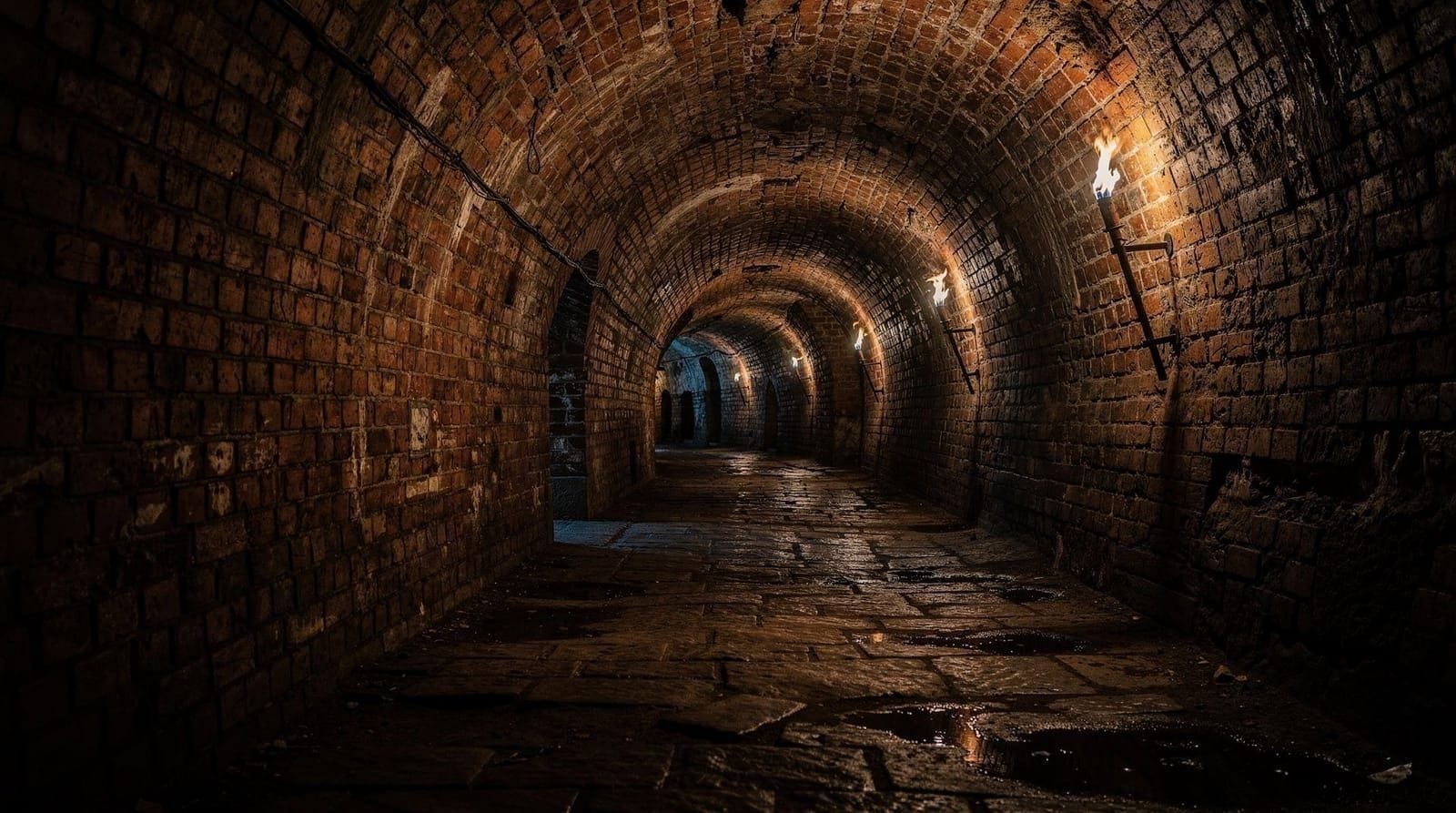
The archaeological reality is more modest but genuinely interesting: documented medieval cellars beneath the Old Town buildings, some connecting passages between adjacent structures, and sections of the city wall’s interior spaces. The catacombs beneath the Church of St. Michael (Šv. Mykolo gatvė) are partially accessible on guided tours and contain a genuine network of burial vaults from the 17th–18th centuries.
The legend of a tunnel from Gediminas Castle to Trakai Castle (28 km away) is not archaeologically credible. The legend of a tunnel from the Great Synagogue (on Žydų gatvė) to the Vilna Gaon’s house is also not documented — but the fact that such a legend attached itself to these two locations, linking the seat of Jewish religious authority to the home of its greatest scholar, is itself culturally revealing.
The Vilnius catacombs tour takes visitors into the accessible underground spaces beneath the Old Town — actual medieval and early modern vaults and passages, with the history and legend of what they contain.
The Amber Mermaid of the Baltic
A legend less specific to Vilnius but deeply embedded in Lithuanian coastal culture — relevant to anyone visiting Palanga or Klaipėda — tells of the amber mermaid Jūratė, goddess of the sea, who falls in love with a mortal fisherman named Kastytis. The thunder god Perkūnas, enraged by the liaison between an immortal and a mortal, kills Kastytis with a lightning bolt, shatters Jūratė’s amber palace at the bottom of the sea, and chains the goddess to its ruins.
The Baltic amber that washes up on the Lithuanian coast is explained in the legend as fragments of Jūratė’s palace, driven ashore by the waves. The mermaid’s tears for Kastytis are the smaller, tear-shaped amber pieces.
The legend is one of the most widely known in Lithuanian folklore — it was made internationally famous by Maironis (Jonas Mačiulis, 1862–1932), Lithuania’s national poet, who wrote it as a verse poem in 1897. The Amber Museum in Palanga displays amber pieces with reference to the Jūratė legend; the Curonian Spit’s wave-polished amber beaches are the legend’s physical setting.
The Vilna Gaon and the legends of the Jewish Quarter
Vilnius was once called the “Jerusalem of Lithuania” for its status as a centre of Jewish scholarship, and its own body of legend grew up around the Vilna Gaon (Elijah ben Solomon Zalman, 1720–1797), the most influential rabbinic scholar of his era. Stories told of his prodigious memory, his ascetic study habits, and his refusal of honours are woven through with the kind of embellishment typical of veneration narratives — the boundary between documented biography and pious legend is, as with the pagan stories, genuinely blurred. The Jewish Vilnius and the Vilna Gaon guide covers the historical figure and the surviving sites in more depth, including what remains of the old Jewish Quarter after the devastation of the Holocaust — a history that any visitor engaging with Vilnius’s legendary past should also engage with directly.
Where the legends meet the architecture
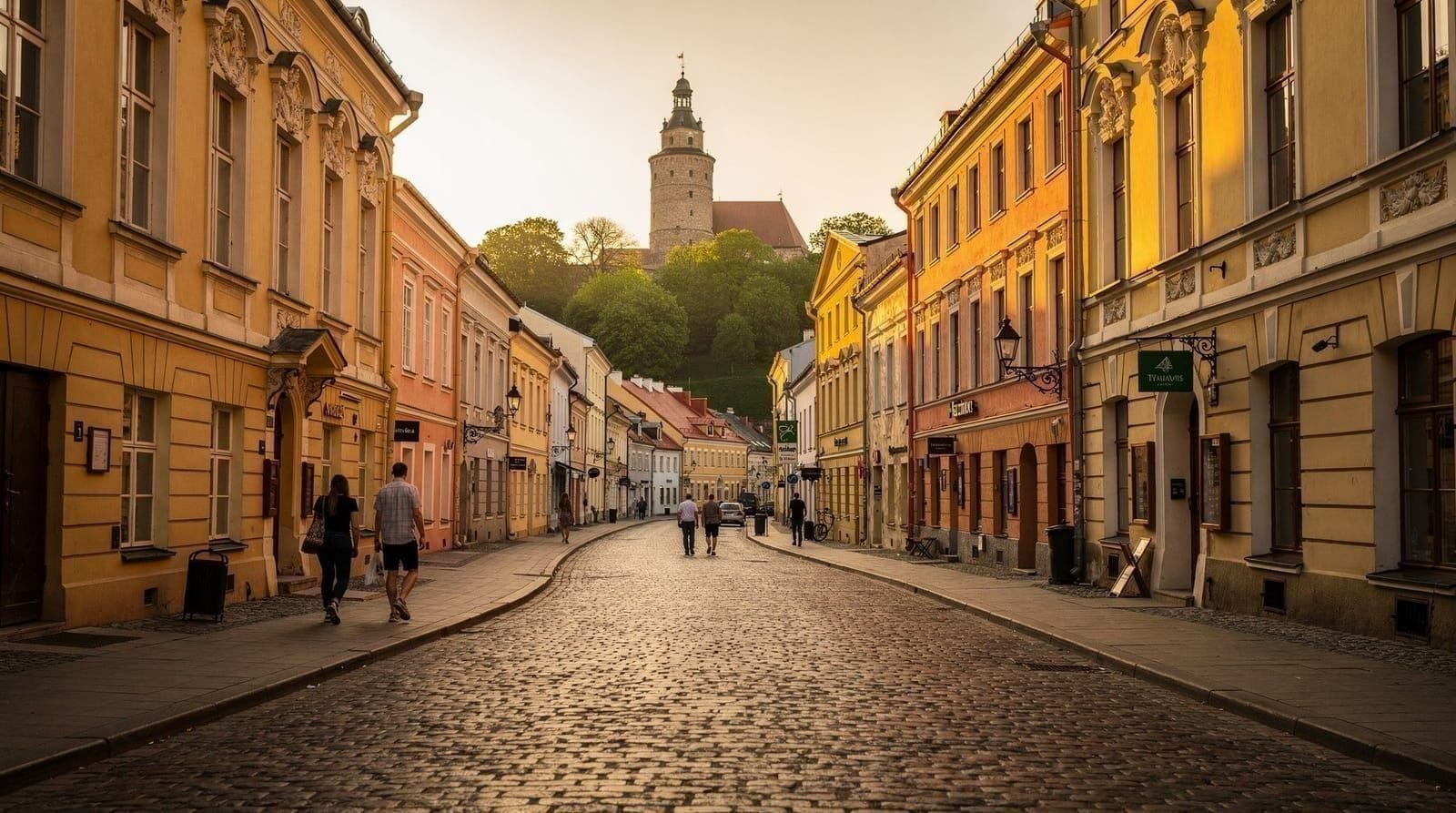
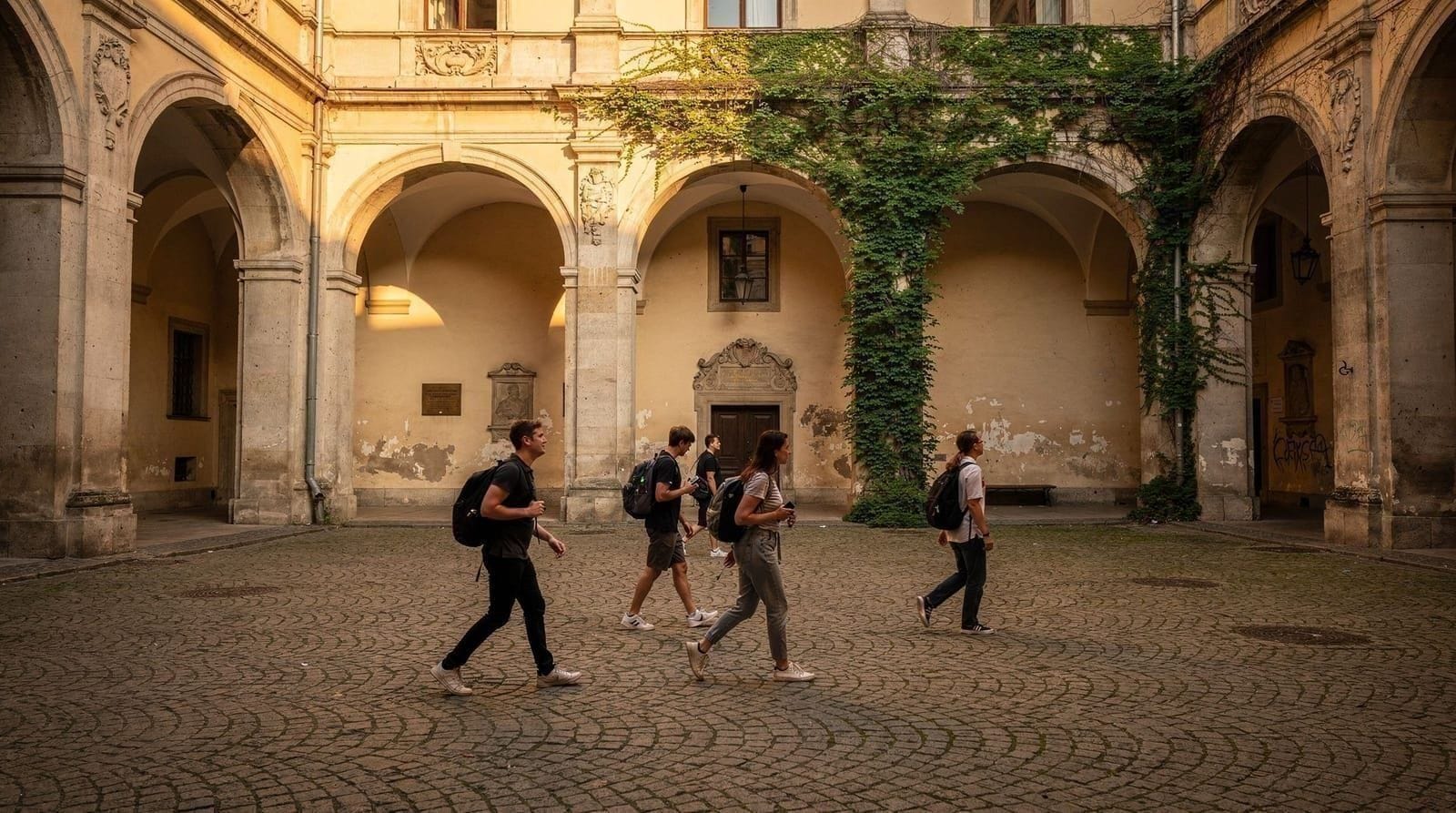
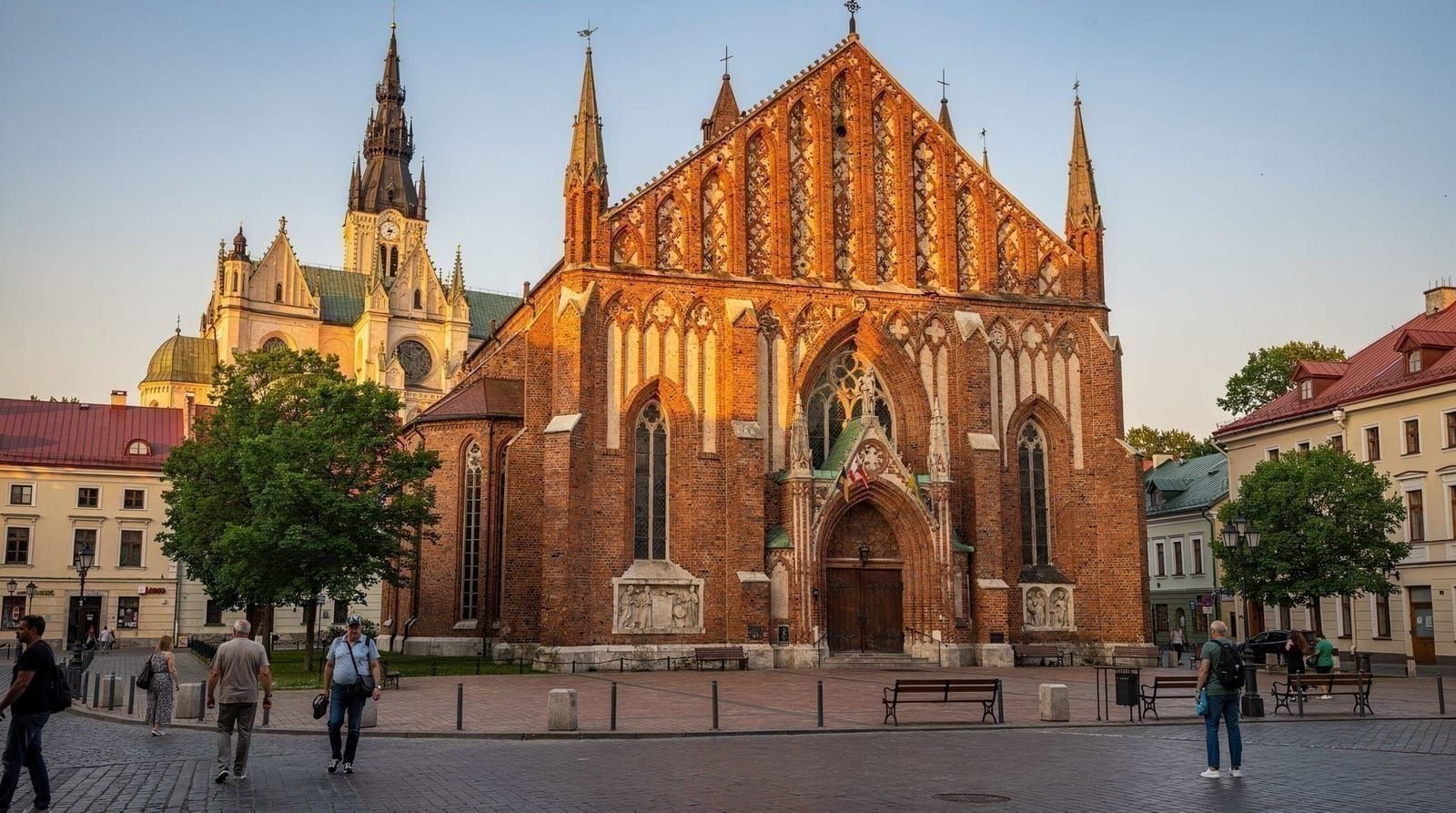
Many of the city’s legends are anchored to specific buildings rather than abstract locations, which makes them easy to fold into an ordinary sightseeing walk. St Anne’s Church and the Bernardine complex carries its own architect legend — a Gothic masterpiece so admired that Napoleon reportedly wanted to carry it back to Paris in the palm of his hand. Vilnius University, one of the oldest in Eastern Europe, has its own layered mythology of ghostly scholars and hidden courtyards; the Vilnius University guide covers the campus in detail. For a broader orientation to how these sites fit together on foot, the Vilnius Old Town guide is the best starting point before you go looking for any specific legend.
Legends in the cityscape today
The living presence of these legends in Vilnius manifests in several ways:
The Stebuklas tile: Cathedral Square. The tradition of spinning and wishing on the Baltic Way memorial tile has acquired a quasi-magical character — tourists seek it out as a “wishing stone” without necessarily knowing its political significance.
The Onos Square iron wolf: The bronze wolf at the entrance to the Lower Castle courtyard is visited, touched, and photographed constantly. Rubbing its nose is said to bring luck.
Užupis: The self-declared “Republic” across the Vilnia river operates with a mythology of its own — its constitution, its angels, its patron-angel statue, and its deliberate cultivation of bohemian unpredictability are a living extension of the urban legendary tradition. See the Užupis guide.
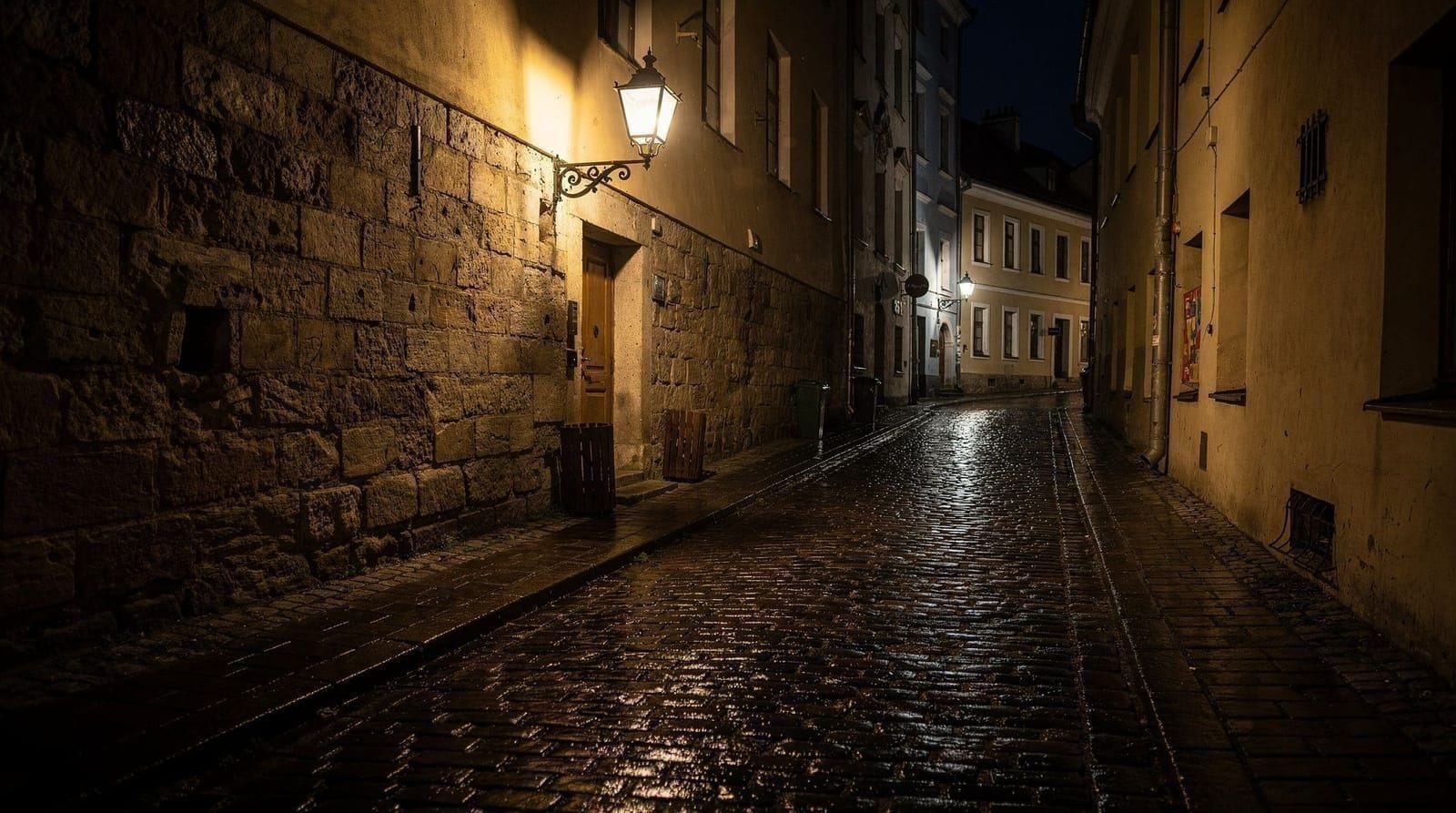
Evening ghost tours: Several operators offer evening tours that combine the documented legends with genuinely atmospheric Old Town locations — courtyards, passages, and buildings where deaths and dark events have been recorded. See the ghost tour guide.
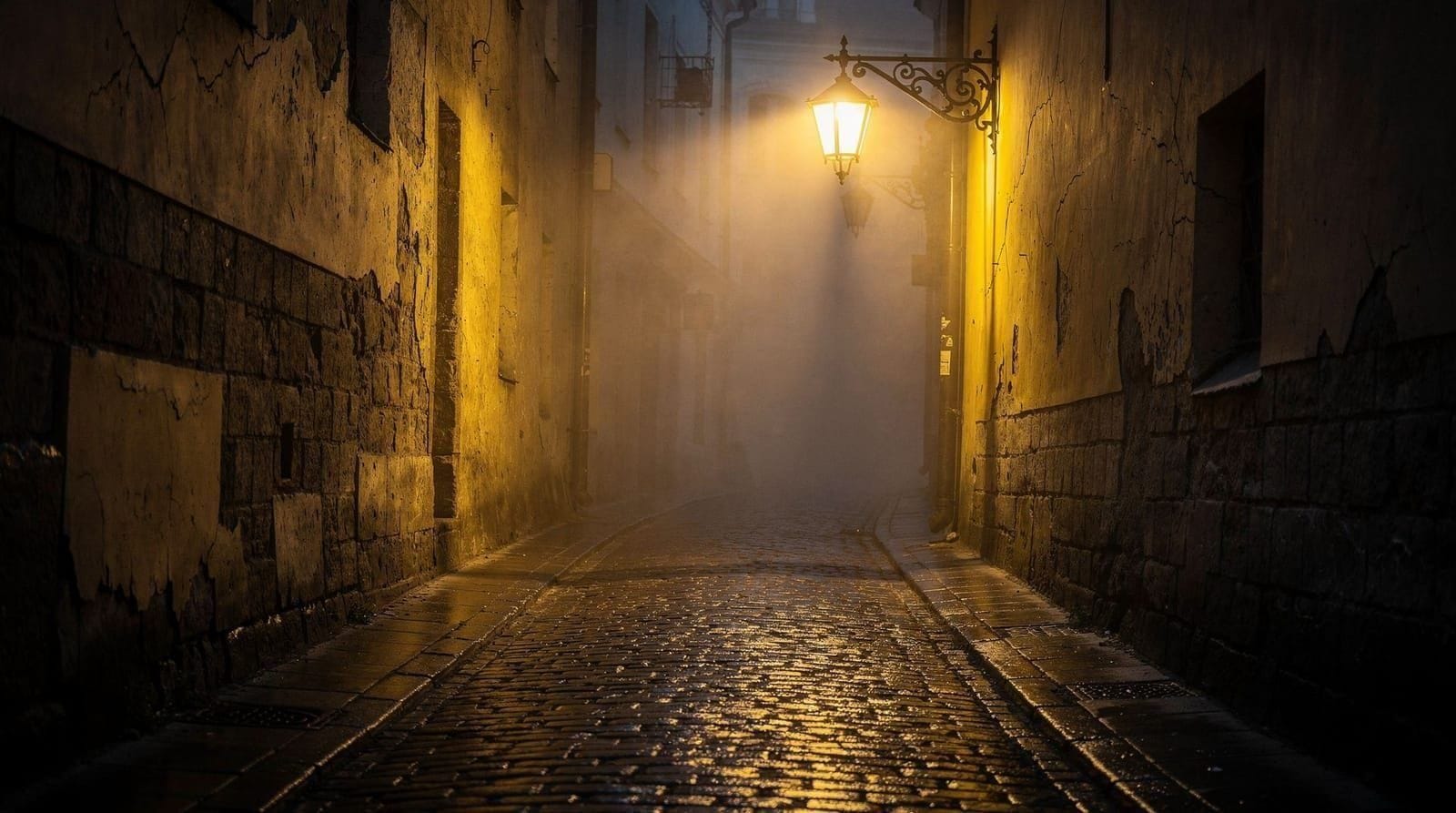
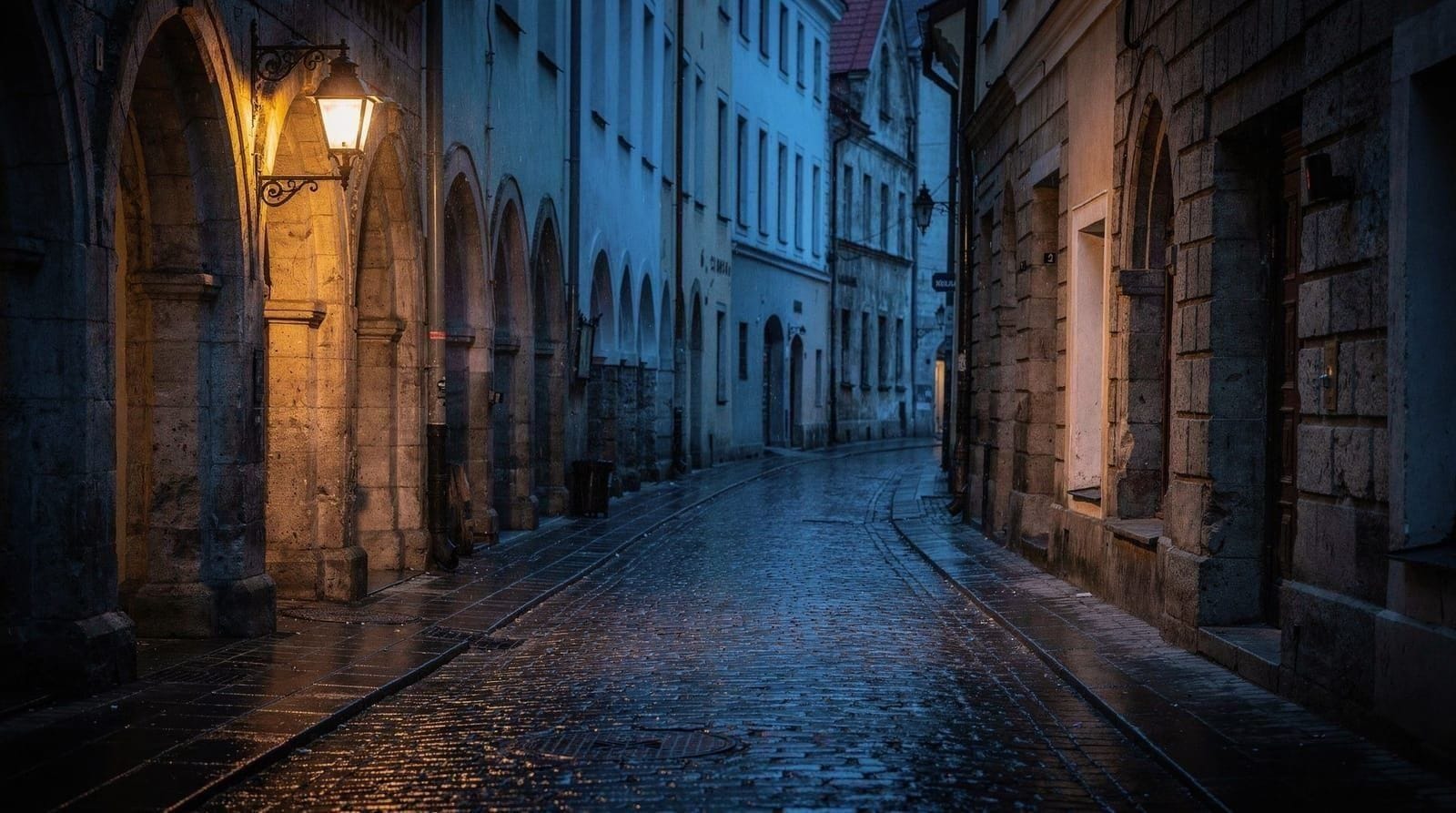
An evening ghost tour of the Old Town weaves the city’s legends and documented historical drama into a two-hour walk through atmospheric locations that function very differently in darkness than in daylight.
Frequently asked questions about Vilnius legends
How old are the Vilnius founding legends?
The Iron Wolf legend is first recorded in the Lithuanian chronicles of the 15th century, though it presumably circulated in oral form earlier. The pre-Christian religious traditions underlying the legends (sacred fires, river spirits) date from the deep pagan past — archaeologically documented at Lithuanian sites from the Bronze and Iron Ages.
Are there any living practitioners of the old Baltic pagan traditions?
Yes. The Romuva movement — a reconstructed Lithuanian paganism founded by Jonas Trinkūnas in the 1960s and continuing today — maintains Baltic pagan practices including fire festivals, seasonal rituals, and veneration of the old deities. Several hundred active practitioners exist in Lithuania, with visibility growing since independence. The Joninės (Midsummer, June 24) celebrations in Vilnius include neo-pagan elements.
Where is the best place to hear the legends told?
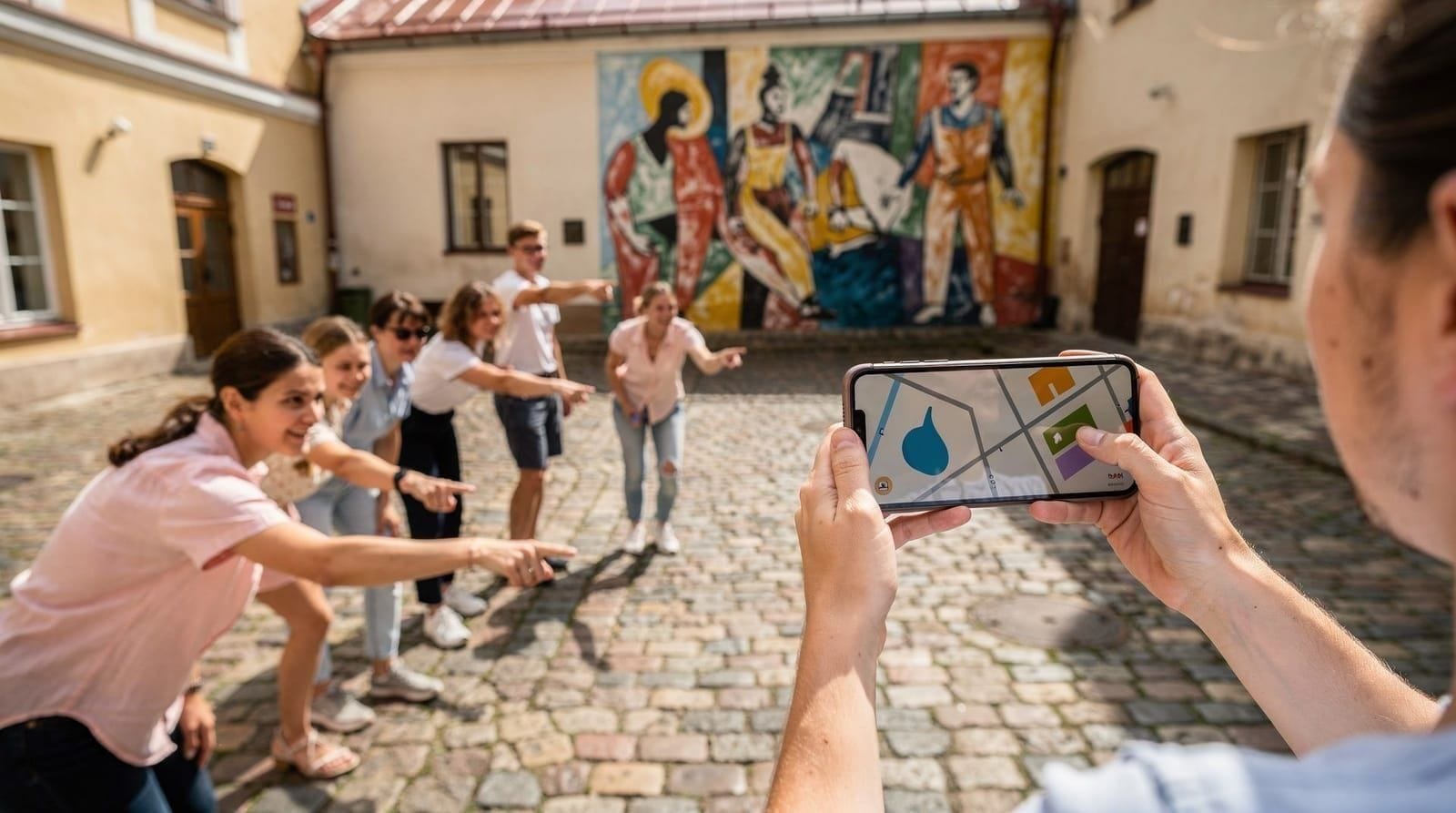
In person and in context: an evening guided tour of the Old Town is the most immersive option. The Vilnius Old Town guided ghost walk typically covers 8–12 legendary locations in 2 hours. The Vilna Gaon Museum and the national folklore archives (LLTI) have extensive documented collections for those wanting academic sources.
Is there a book of Vilnius legends in English?
“Lithuanian Tales and Legends” (various compilations) and “Legends of Vilnius” (published by Vilnius City Municipality) are available in bookshops in the Old Town. The university bookshop on Šv. Jono gatvė stocks the broadest selection. Lithuanian mythology in English is also well-covered in Marija Gimbutas’s works, though her interpretive framework is contested by later scholars.
Do the legends connect to anywhere outside Vilnius?
Yes. The Jūratė and Kastytis amber legend belongs to the Baltic coast around Palanga and Klaipėda, and several Vilnius founding myths reference Trakai, the earlier Lithuanian seat of power. If you’re extending a trip to the coast, the amber legend gives an extra layer of meaning to a Curonian Spit or Palanga visit.
Can children enjoy the legends of Vilnius?
Yes, generally — the Iron Wolf and the Jūratė and Kastytis story both work well for children, being closer to fairy tale in tone than the darker ghost-tour material. The pagan sacred-fire and Roma-curse stories touch on heavier themes and are better suited to older children with some historical context.
Top experiences
Bookable activities with verified prices and instant confirmation on GetYourGuide.