Trakai Castle tour: which day trip to book from Vilnius
Vilnius: Trakai half day sightseeing tour
Duration: 4 hours
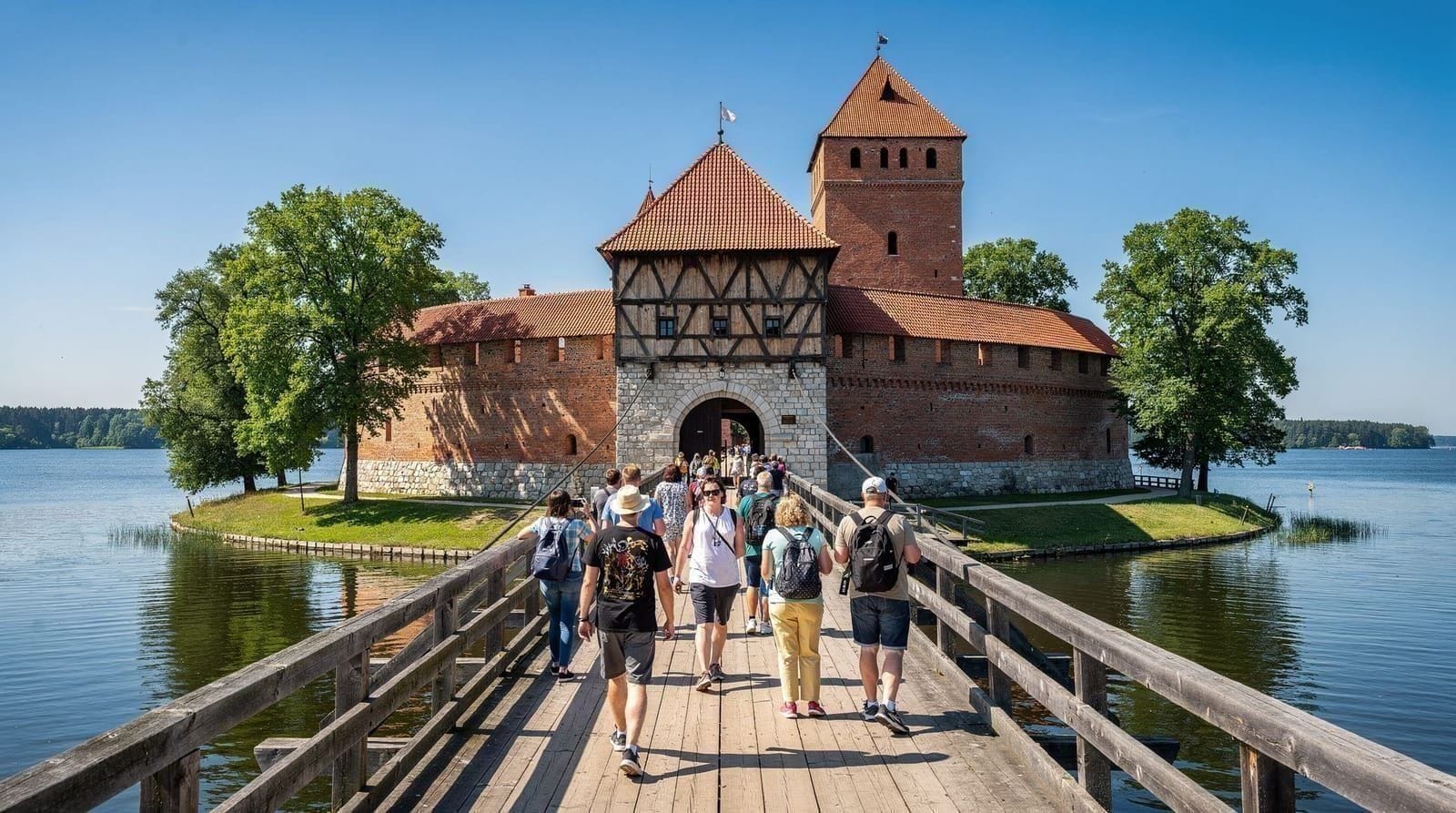
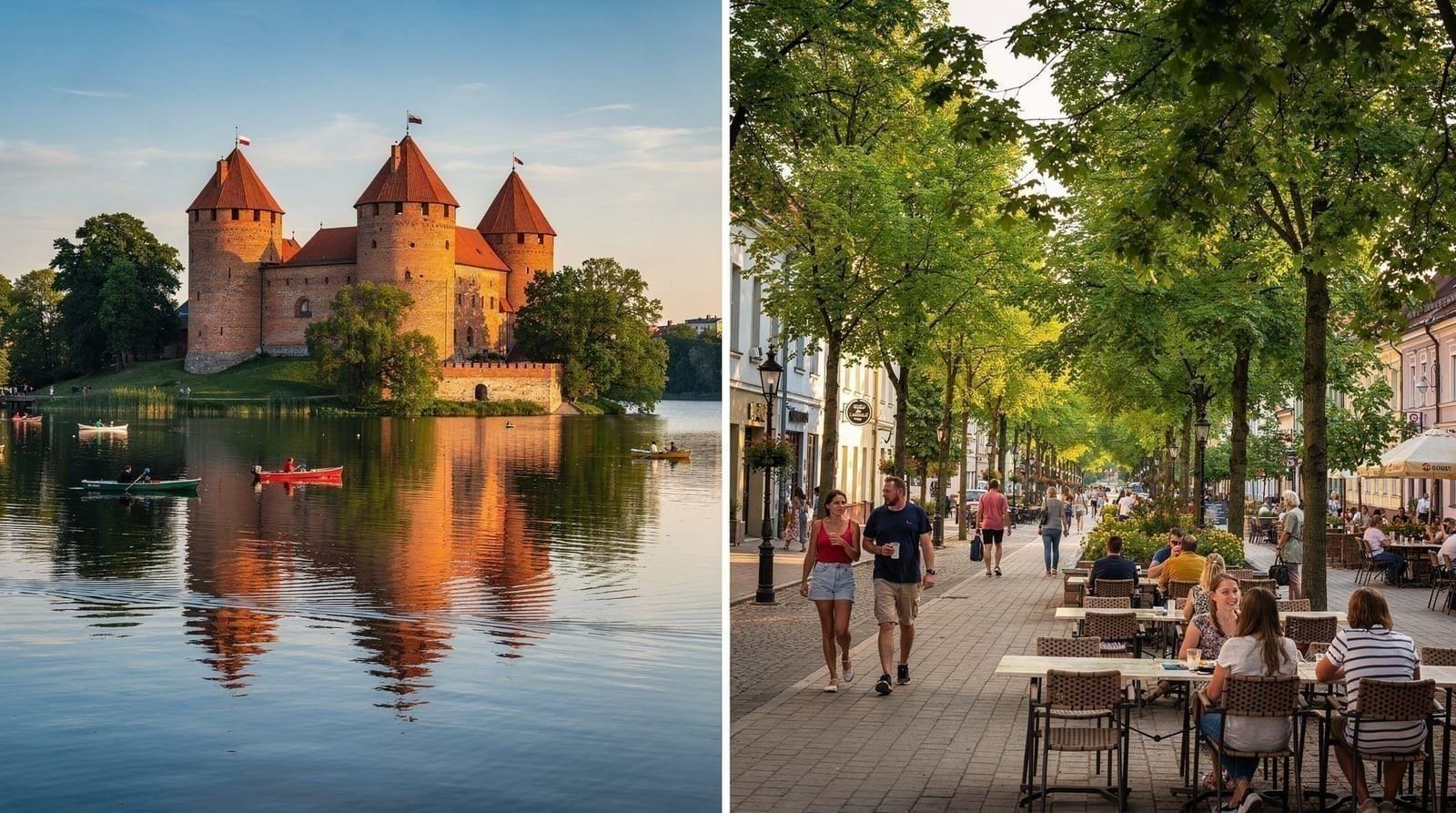
Trakai Island Castle is the most photographed sight in Lithuania — a Gothic red-brick fortress sitting on an island in the middle of a lake, 28 km from Vilnius. The combination of medieval architecture, water, and relatively easy logistics makes it the default first day trip for most visitors. The question is whether to join a guided tour or go independently by train.
This page breaks down the main tour formats so you can decide what makes sense for your trip.
| Where | Trakai, 28 km / 35–40 min from Vilnius |
| Cost | Guided tours around €25–€45/person; independent train around €2 each way plus €12 castle entry |
| Time needed | 4–5 hours round trip on a guided tour; a full day if adding Kernavė or Uzutrakis Manor |
| Getting there | Guided minibus pickup, or direct train/bus from Vilnius |
| Best time | Arrive before 10:00 or after 16:00 in July–August to avoid the worst crowds |
The standard half-day sightseeing tour
The Trakai half-day sightseeing tour is the most popular format: a minibus or small coach picks up from central Vilnius hotels, drives to Trakai (35–40 minutes), allows around 90 minutes to two hours at the castle and lakeside village, then returns. Total duration is 4 to 5 hours, typically finishing by early afternoon — leaving you the rest of the day in Vilnius.
What is included varies, but most operators cover transport and a local guide who walks you through the castle’s history: its construction in the 14th century under Grand Duke Vytautas, its role as the political seat of the Grand Duchy of Lithuania, and its 20th-century restoration (it was substantially rebuilt between 1950 and 1987, which is either charming or slightly dishonest depending on your perspective — a good guide will tell you this). Castle entry (€12 for adults) may or may not be included; check the booking page.
Best for: First-time visitors who want context and convenience without the logistics of public transport.
The minivan format
The Trakai half-day minivan tour operates the same route but in a smaller vehicle — typically 6 to 10 seats versus 20+ on a coach. Group dynamics are noticeably better: the guide can speak at normal volume, questions get answered properly, and there is no waiting around for stragglers. The price difference versus the standard group tour is usually €5–€10 per person.
The format is a straightforward upgrade if you dislike large groups. It suits families with children where a more controlled environment helps. Departure times may be more limited, so book a day or two in advance.
Private Trakai tour
For two to four people, a private Trakai half-day tour starts to become cost-competitive on a per-person basis while offering complete flexibility: your guide meets you at a time and location of your choice, you control the pace, and you can extend the visit to include the Karaite village and the ethnographic museum (the Karaites are a small Turkic-speaking community that Vytautas brought from Crimea in the 14th century — one of the more unusual historical footnotes in Lithuanian history).
Private tours also allow you to combine Trakai with nearby sites on the same outing. The Kernave UNESCO site is 35 km north of Trakai; combining both in a private day car tour is a sensible use of time. See the Kernave and Paneriai guide for that combination.
Best for: Couples and families who want depth, flexibility, and the ability to ask questions without an audience.
Audio guide minibus: self-paced listening option
The Trakai audio guide minibus tour provides transport in a minibus with a recorded audio commentary rather than a live guide. This appeals to people who prefer consuming information at their own pace and do not want to keep pace with a group; it is also cheaper. The tradeoff is that you cannot ask follow-up questions and the content is fixed regardless of your interests.
If you speak Lithuanian, Polish, or Russian and would normally reach for a local source, this format is redundant. For everyone else, it is a reasonable budget option.
Going independently: the public train case
Before booking any tour, consider the independent option: trains from Vilnius station to Trakai run roughly hourly, take 35–40 minutes, and cost around €2 each way. Trakai station is about a 25-minute walk from the castle along the lake peninsula — the walk is genuinely pleasant in good weather. Castle audio guides are available to rent at the entrance.
The case for a guided tour comes down to context: without a guide, you are walking through a beautifully restored castle with limited interpretation of what you are looking at. If you have already read the Trakai Castle day trip guide in advance, you may be better served going independently and saving the money. If you want the history delivered in person, book a tour.
Price and format summary
| Half-day sightseeing | Minivan | Private | Audio minibus | |
|---|---|---|---|---|
| Group size | 15–25 | 6–10 | 1–6 | 8–15 |
| Duration | 4–5 h | 4–5 h | Flexible | 4–5 h |
| Live guide | Yes | Yes | Yes | No (audio) |
| Castle entry | Check operator | Check operator | Check operator | Usually not |
| Approx. price/person | €25–€35 | €30–€45 | €80–€120 total | €18–€28 |
How Trakai fits a broader Lithuania itinerary
On a 3-day Vilnius and Trakai itinerary, Trakai naturally fills day two as a morning or afternoon excursion. On a 5-day trip with day trips, it fits on day two or three alongside an afternoon back in Vilnius.
For context on choosing between Trakai and Kaunas as your main day trip, the Trakai vs Kaunas comparison guide lays out the differences without favouring either.
What the castle actually contains
Trakai Island Castle is a museum (open Tuesday–Sunday, closed Monday, approximately 10:00–19:00 in summer, 10:00–17:00 in winter; €12 adult entry). The interior displays cover the history of the Grand Duchy of Lithuania, the castle’s role as the seat of power under Vytautas the Great (1392–1430), and the subsequent centuries of decline and partial ruin.
A significant portion of the current structure is the result of 20th-century restoration. The castle was partially ruined from the 17th century onward and the reconstruction project — running from 1955 to 1987 — was controversial for its interpretation decisions. Some architectural historians consider it over-restored; others accept that the restored structure effectively communicates what Vytautas’s castle looked like. A good guide will be honest about this.
The towers are accessible and the views of the lake from the upper levels are genuinely excellent. The dungeon level has exhibits on medieval castle life, including period weaponry and artifacts recovered from the site. Plan 60 to 90 minutes for a thorough internal visit.
Outside the castle, the peninsula walk takes you past the ruins of the mainland Trakai Castle (partially intact) and through the narrow streets of the old wooden village toward the Karaite settlement. The Karaite house-museum (ethnographic museum of the community’s traditions) is on the main village street and takes 30 to 45 minutes.
Trakai practical details
- Getting there by train: Direct train from Vilnius Station, departing roughly hourly, 35–40 minutes, €2 each way. Trakai station is a 25-minute walk from the castle along the lake — a pleasant route, not a chore.
- Getting there by bus: Buses from Vilnius bus station run approximately every 30–60 minutes and drop closer to the castle entrance than the train.
- Parking: €3–€5 for a few hours near the castle entrance in summer. Busy on summer weekends from around 11:00.
- Peak season: July and August bring significant day-tripper crowds. Arrive early (before 10:00) or late afternoon (after 16:00) to avoid the worst. The best time to visit guide notes spring and early September as optimal for day trips.
What to do after the castle
Most tours return you to Vilnius by early-to-mid afternoon. If you have more time in Trakai, the lakeside walk to Užutrakis Manor — the neo-Gothic summer residence of the Tiskevicius family, with its English-style park — adds an hour of pleasant strolling. The Karaite restaurant Kibinine on the main street serves the community’s signature stuffed pastry (kibinai, filled with meat or cheese) for around €3–€4 each — worth trying while you are there.
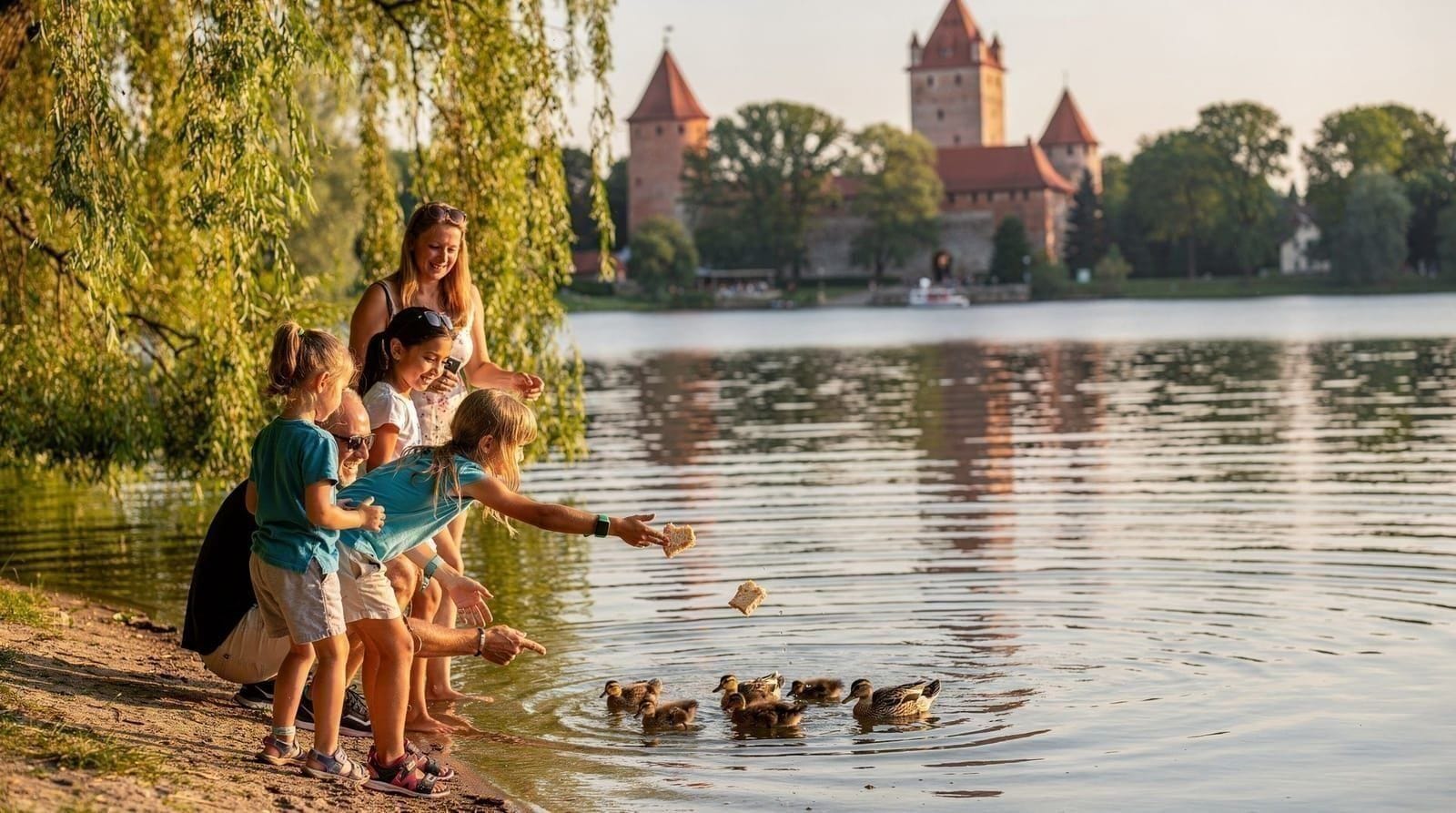
For more family-friendly day trip options, Trakai is consistently the top pick because of the lakeside environment and the castle’s visual impact with children.
The Karaites: Trakai’s most unusual community
One of the most historically interesting aspects of Trakai that most standard tours touch on only briefly is the Karaite community. The Karaites (Karajai in Lithuanian) are a small Turkic-speaking religious group brought to Lithuania from Crimea by Grand Duke Vytautas around 1397 — used as guards and archers, owing to their reputation as skilled fighters.
There are approximately 200 to 300 Karaites remaining in Trakai today, making it one of the last intact Karaite communities in the world. They maintained their Turkic language (Karaim) and their distinct religious tradition (Karaism, a form of Judaism that rejects Talmudic interpretation and relies on the Torah alone) through six centuries in Lithuania.
The Karaite Kenesa (prayer house) on Karaimų Street is small and modest — it holds about 40 people — and is the only Karaite kenesa still in use in the entire Slavic and Baltic world. Visits are possible outside service times.
The kibinai pastry that Trakai is famous for is Karaite in origin: a crescent-shaped pastry filled with minced lamb (traditionally), onion, and spices. Every restaurant and stall in Trakai serves them; the best are at Kibinine (Karaimų g. 65) where the proprietors are actually of Karaite origin. They cost €3–€5 each and are substantial enough for a light meal.
A knowledgeable tour guide will tell you about the Karaites; a great one will walk you through the kenesa street specifically. If yours skips it, the 10-minute walk down Karaimų Street from the castle is worth doing independently.
Uzutrakis Manor: the extension most tours skip
Most half-day tours return to Vilnius before reaching Uzutrakis Manor, the neo-Gothic 19th-century summer residence about 3 km from the castle along the lakeside path. The Trakai and Uzutrakis Manor tour with boat ride combines the castle visit with the manor’s English-style park and a boat crossing on the lake, giving a fuller half-day than the castle alone. It suits visitors who have already seen the castle on a previous trip, or anyone who wants the quieter, less crowded side of Trakai’s lake system. For the fuller independent picture of what lies beyond the castle itself, see the Trakai beyond the castle guide.
Trakai in the context of a wider Lithuania trip
The Trakai destination page gives an overview of the town beyond the specific tour formats compared here, useful if you are deciding how much time to allocate before booking anything. If you are still working out how to get between Vilnius and Trakai and other day-trip destinations without a rental car, the getting around Vilnius guide and the Vilnius Pass and tickets guide both cover local transport passes and options that can make independent day trips more cost-effective than they first appear.
Frequently asked questions about Trakai Castle tours
Is the castle open in winter?
Yes, but hours are reduced (typically 10:00–17:00 in winter, 10:00–19:00 in summer). The lake can freeze, which changes the visual experience dramatically — atmospheric but very cold. Check the Vilnius in winter guide for season-specific advice.
Are there boat tours on the lake?
Yes — rowing boats and pedal boats can be rented from the lakeside for about €8–€12 per hour. Some operators offer guided rowing tours that circumnavigate the castle island. These are seasonal (May–October). For a more structured version, the guided canoe tour around Trakai Castle Island covers the lake from water level with a guide explaining the castle’s defensive layout as seen from the water — a genuinely different perspective from the standard land tour. Visitors who prefer paddling under their own power can also combine it with the kayaking near Vilnius guide for other lake options in the region.
Is Trakai suitable for children?
Very — the castle format (you can walk through the towers and ramparts), the lake setting, and the relatively short travel distance all make it one of the best options for families. See the family day trips guide.
Can I go to Trakai by car?
Yes. Parking near the castle costs around €3–€5 for a few hours. Driving gives you flexibility but you lose the guide’s commentary unless you book a private tour or use a downloaded audio guide. Car rental in Lithuania covers the practicalities if you need a vehicle for the broader trip.
Is one visit to Trakai enough, or should I go back?
For most visitors, one half-day visit covers the castle and village comfortably. If you have a genuine interest in the lake system, Karaite heritage, or photography, a second, quieter visit outside peak hours — or an extension to Uzutrakis Manor — rewards the extra time. See the Trakai beyond the castle guide for what a longer visit can include.