Trakai castle day trip from Vilnius
Vilnius: Trakai half day sightseeing tour
Duration: 4 hours
How do I get from Vilnius to Trakai castle?
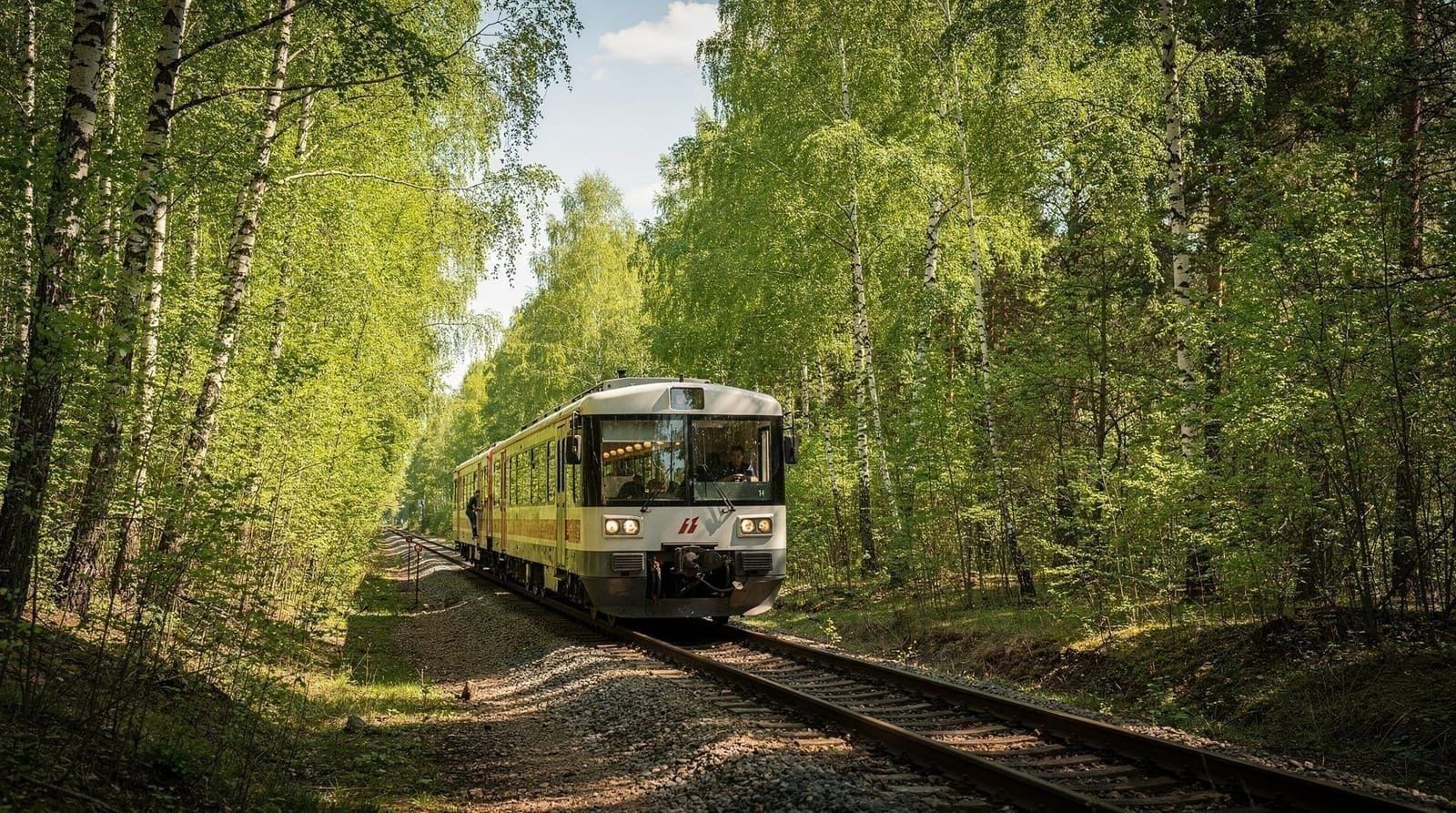
Take the train from Vilnius Central Station — 30 minutes, €1.50 one-way, trains run roughly every 1–2 hours. From Trakai station, walk 1.2 km to the island castle. You can also take a bus from the bus station (similar time, similar cost) or book a guided half-day tour including transport.
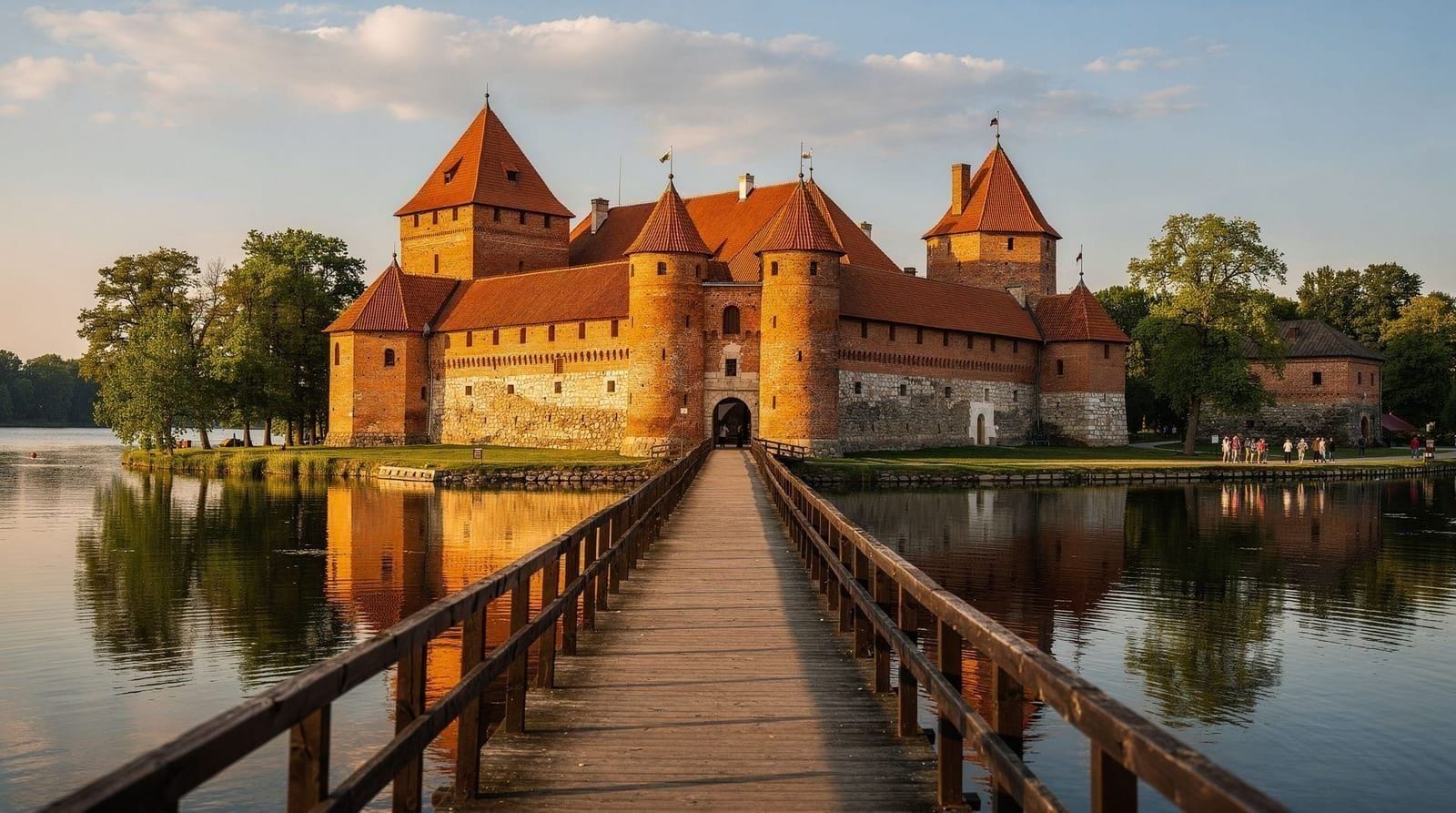
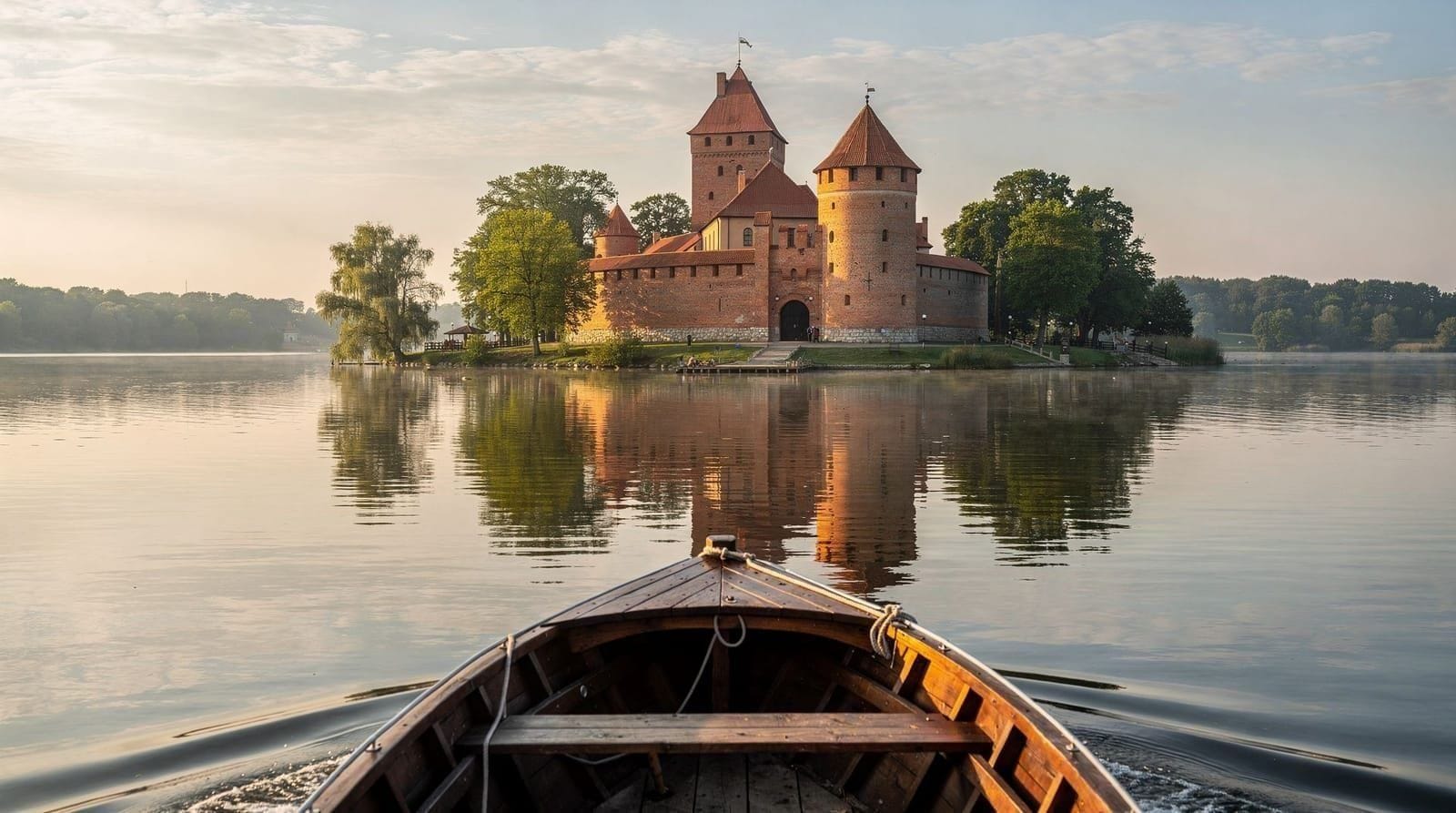
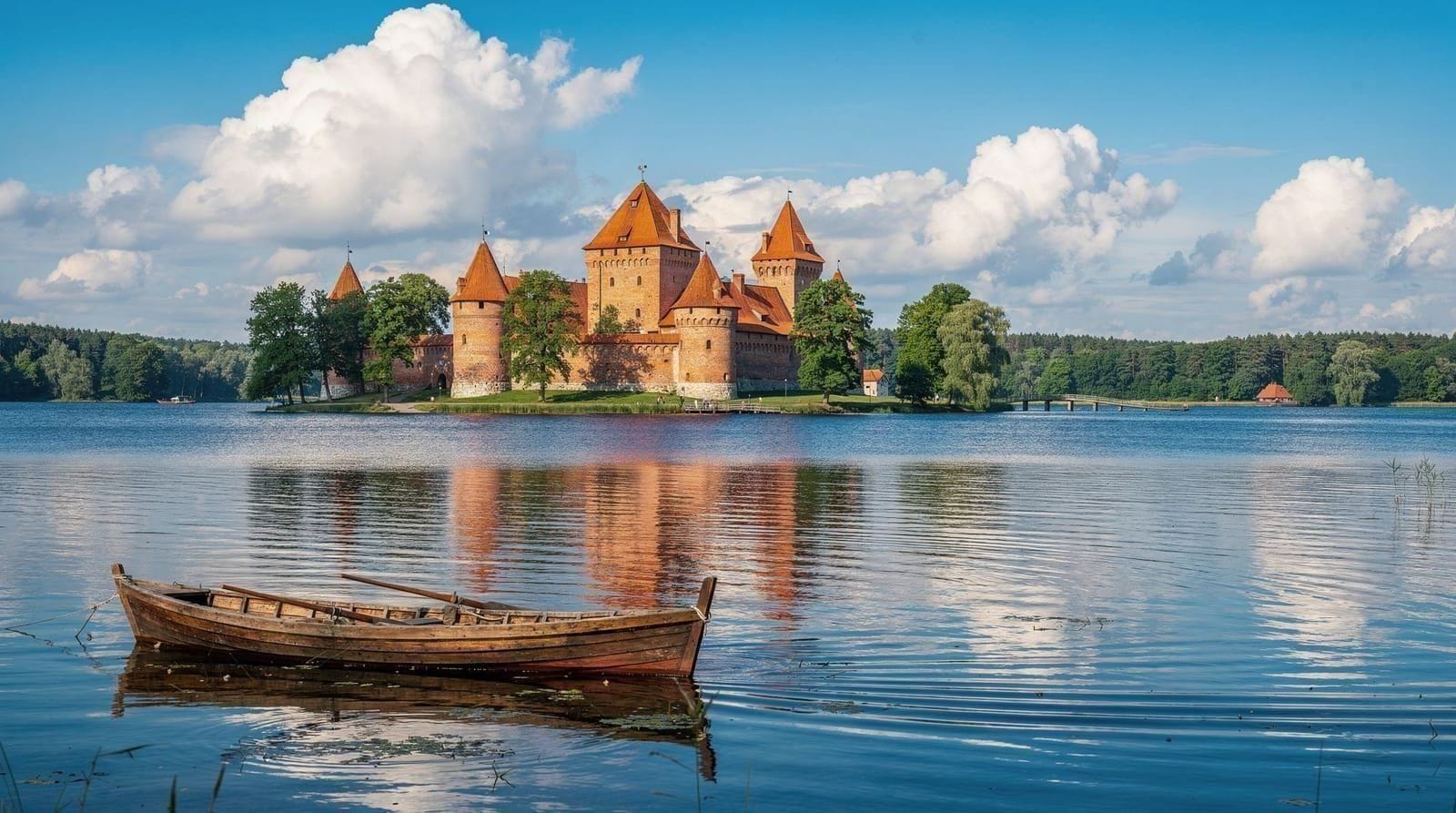
Trakai is Vilnius’s most visited day trip for a simple reason: a red-brick Gothic castle sits on a small island in the middle of a lake, surrounded by pine forest and water. It is not a restored ruin — it is a working museum with well-curated rooms, and the lake itself is genuinely beautiful. At 28 km from the capital, it is also the easiest possible excursion from Vilnius.
This guide covers every practical detail: how to get there, what the castle is actually like inside, where to eat, and how to spend an optional full day rather than a half-day.
| Where | Trakai, 28 km west of Vilnius |
| Cost | Around €12 castle entry, €30–40/person for a full day |
| Time needed | Half-day minimum, full day for Karaim quarter and Užutrakis Manor |
| Getting there | Train (30 min, €1.50) is the easiest option from Vilnius |
| Best time | Weekday mornings, or summer evenings after 6 pm |
For the fuller route breakdown, see the dedicated Vilnius to Trakai guide; this page focuses on the castle visit itself and how to spend the day around it. Trakai is also one of the most popular picks in our best day trips from Vilnius guide.
Getting from Vilnius to Trakai
By train (recommended): Trains run from Vilnius Central Station to Trakai station approximately every 1–2 hours throughout the day. Journey time: 30 minutes. Ticket price: €1.50 one-way, purchased at the station or on the TRALIS app. The first train typically departs around 6:30 am; the last return train is around 9 pm (verify the current timetable at ltglink.lt).
From Trakai station, it is a 1.2 km walk east to the causeway leading to the island castle. The walk takes 15 minutes and passes along the lakefront.
By bus: Buses depart from Vilnius bus station (Sodų g. 22) roughly every 30–60 minutes. Journey time: 30–40 minutes. Tickets: €1.80–2.50. Buses stop closer to the town centre than the train station, which is slightly less convenient for the castle walk.
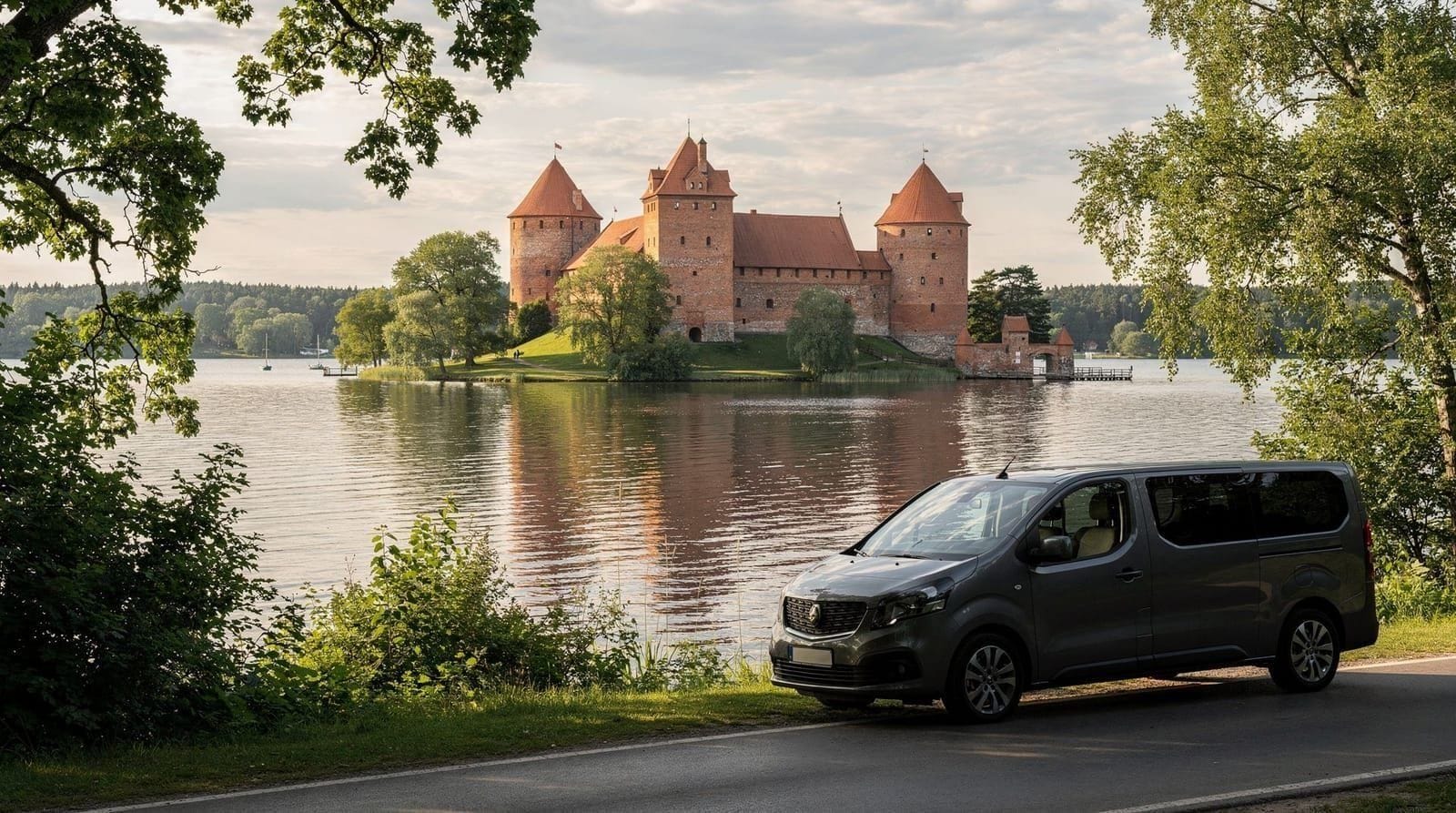
By guided tour: Organised half-day and full-day tours from Vilnius collect you from your hotel and include transport both ways. This is genuinely convenient if you are travelling as a family or want commentary, and the price (€25–45 per person) is reasonable for what you get. If you want to combine Trakai with Kernavė or Paneriai in one excursion, a tour is the practical option.
Book a half-day guided tour to Trakai including transportBy car: From Vilnius city centre, take the A1 highway west. Journey: 30 minutes, parking available near the causeway (free in side streets, small fee in designated lots in summer). A car is useful if you want to visit Užutrakis Manor (2 km from the castle) or combine with Kernavė (another 30 minutes north).
Trakai castle: what to expect inside
Trakai Island Castle was the residence of Lithuania’s Grand Dukes in the 14th and 15th centuries and one of the largest castles in the Baltic states at its peak. After centuries of damage, it was comprehensively restored between 1960 and 1987 — the red brick is not original, but the layout and scale are accurate.
The castle museum covers:
- Lithuanian Grand Duchy history (14th–16th centuries): surprisingly well done, with original weapons, coins, and documentary evidence of the duchy that once stretched from the Baltic to the Black Sea
- Karaim history: the Karaim people — a Turkic ethno-religious group — were brought to Trakai by Grand Duke Vytautas around 1397 as royal guards; a small community of roughly 250 still lives here, one of the last surviving Karaim communities in the world
- Applied arts and archaeology: period furniture, ceramics, glassware
The highlight is the upper courtyard, which offers views across Lake Galvė in all directions. Allow 1.5–2 hours for the full museum. Audio guides are available in English for €3.
Castle admission: €12 adults, €6 children (7–18) and students, free under 7. Closed Mondays September–May. Open daily June–August, 10 am–7 pm.
The history of Trakai castle
Trakai’s position on an island in Lake Galvė was not accidental. The Grand Duchy of Lithuania needed a defensible residence as it expanded across Eastern Europe in the 14th century, and the natural moat provided by the lake made Trakai nearly impregnable before the era of artillery.
The castle’s most significant period was under Grand Duke Vytautas the Great (reigned 1392–1430), who made Trakai his principal residence. Under Vytautas, the Lithuanian state reached its territorial maximum — stretching from the Baltic Sea in the north to the Black Sea in the south, and from what is now Poland in the west to the outer edges of modern Russia in the east. The castle at Trakai was, for this brief period, effectively the administrative heart of one of the largest empires in European history.
After the transfer of the capital to Vilnius and a series of wars with the Teutonic Knights and later the Muscovite state, Trakai declined. By the 17th century, the castle was a ruin. The restoration that took place under Soviet rule between 1960 and 1987 was comprehensive enough to make the building fully usable, though historians debate how closely the reconstructed interiors reflect the medieval originals. What is beyond dispute is that the castle’s exterior silhouette — red towers reflected in still water — is one of the most recognisable images in Lithuanian tourism.
One practical detail worth knowing: the castle is built on two connected islands. The outer island (reached via a wooden bridge from the causeway) holds the outer ward, which is now partly used for events and outdoor exhibitions. The inner island, connected by another bridge, holds the main palace tower and the museum galleries. Both are included in the single entrance ticket.
The Karaim quarter and kibinai
Walk back from the castle along Karaimų gatvė (Karaim Street) to pass the Karaim Kenesa (prayer house) and the oldest surviving wooden Karaim houses — narrow, three-windowed buildings dating from the 18th and 19th centuries.
The food associated with Trakai is kibinai (singular: kibinas): crescent-shaped pasties filled with mutton or beef, curd cheese, or vegetables. They are baked, not fried, and cost €1.50–2.50 each. The best place to try them is Senoji Kibininė (Karaimų g. 65) — a simple restaurant run by the Karaim community that has been serving kibinai for decades. There are now several competing kibinai restaurants on the same street; quality varies.
Avoid the restaurants immediately at the castle exit, which mark up meals significantly for captive tour-group audiences.
Who are the Karaim of Trakai?
The Karaim (Lithuanian: karaimai) are one of the most unusual communities in Europe — a Turkic people who practice a form of Judaism that predates the Talmudic tradition. Their origins are debated, but most scholars trace them to the Khazar and Crimean Karaim communities of the early medieval period.
Grand Duke Vytautas brought approximately 380 Karaim families from Crimea to Trakai around 1397, apparently to serve as elite warriors and personal bodyguards. They maintained their language (Karaim, a Turkic language now critically endangered), their religious practices, and their community distinctiveness through centuries of Lithuanian, Polish, Russian, and Soviet rule.
Today, the Trakai Karaim community numbers roughly 250 people — a tiny proportion of a global Karaim population estimated at fewer than 2,000. The Kenesa on Karaimų gatvė is one of only a handful of functioning Karaim prayer houses remaining in the world. The community maintains a small museum adjacent to the Kenesa that is occasionally open to visitors.
The Karaim cuisine brought from Crimea and adapted to Lithuanian ingredients is the most direct everyday encounter most visitors have with this history. Kibinai are specific to the Trakai Karaim tradition and differ from the similar-looking belyashi pastries found elsewhere in the post-Soviet world.
Lake Galvė: kayaking, rowing, and boat tours
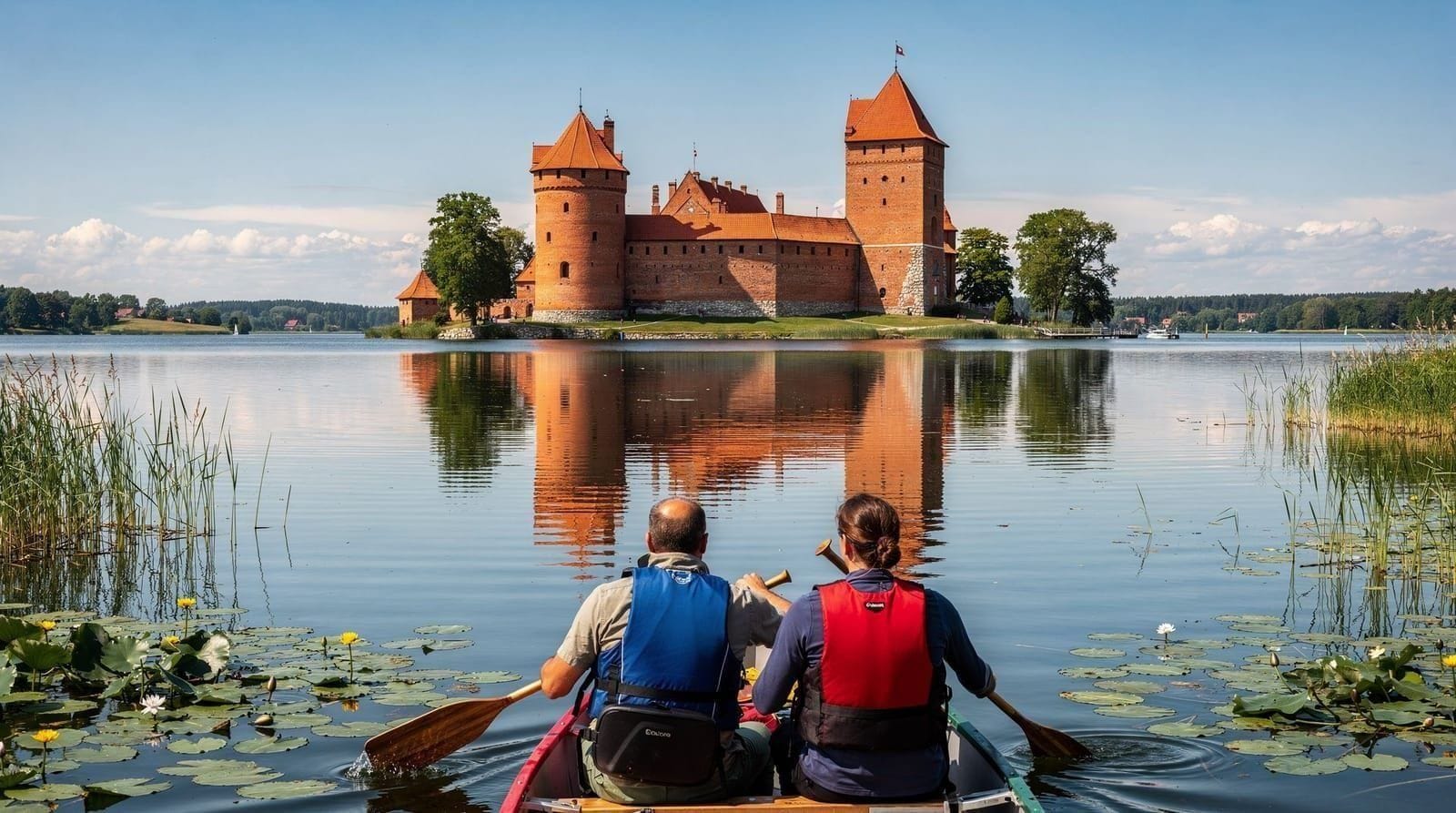
Lake Galvė has 21 islands and excellent clear water. In summer (May–September), several rental points operate along the causeway leading to the castle:
- Kayak or canoe rental: €8–12/hour, no experience required
- Rowing boats: €5–8/hour
- Electric motorboats: €15–25/hour
Paddling around the island and viewing the castle from the water is genuinely one of the better experiences in the area — worth an extra hour if the weather is cooperative.
Book a guided canoe tour around Castle IslandFor a more structured water experience, guided kayak tours and boat trips with commentary run regularly in season. The Užutrakis Manor (a 19th-century estate on the eastern shore of the lake) is reachable by water taxi or a 2 km walk — its restored English landscape garden is worth seeing.
Užutrakis Manor: the overlooked extension
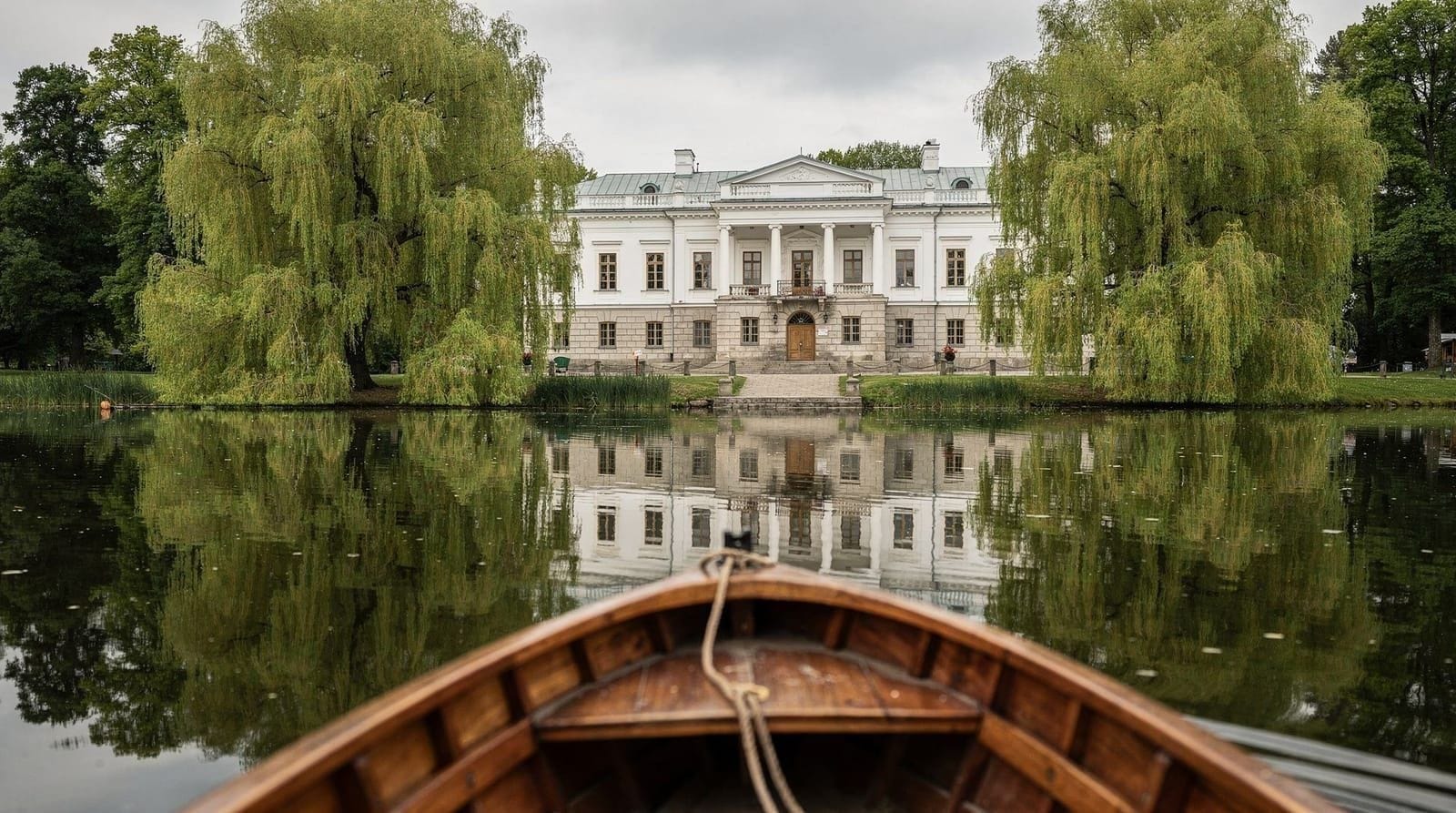
Two kilometres east of Trakai castle, on the opposite shore of Lake Galvė, Užutrakis Manor (Užutrakio dvaras) is the most undervisited attraction in the area. The manor house, built in the late 19th century for the Tyszkiewicz family (a prominent Polish-Lithuanian noble family), was restored in the 1990s and surrounded by a formal park that is one of the better examples of 19th-century landscape garden design in Lithuania.
The park covers approximately 12 hectares with formal French-style parterres near the house and wilder English-style grounds towards the lake. The views from the lakeside terrace back across the water to Trakai castle are among the finest in the region — the castle’s silhouette from this angle is different from the standard postcard view.
Getting there: walk 2 km along the lake road from Trakai town (pleasant in good weather), take a water taxi from the castle causeway (operating seasonally, €3–5 each way), or cycle (bike rental available in Trakai town).
Entry to the manor grounds: €5 adults, €2.50 children. The manor house interior is also open for guided tours in summer. Allow 1–1.5 hours.
Full-day Trakai: a suggested schedule
For those who want to go beyond the standard half-day:
- 9:00 — Arrive Trakai by train; walk to causeway along the lake road
- 9:30 — Trakai castle: museum and upper courtyard (2 hours)
- 11:30 — Walk Karaimų gatvė; visit Karaim Kenesa and wooden houses
- 12:30 — Kibinai lunch at Senoji Kibininė
- 13:30 — Kayak or canoe rental on Lake Galvė (1.5 hours)
- 15:00 — Walk or water taxi to Užutrakis Manor; explore the park (1.5 hours)
- 17:00 — Coffee in Trakai town; walk back to station
- 18:00 — Train to Vilnius
This is a genuinely full day. If you want more flexibility, drop Užutrakis and spend more time on the water.
Combining Trakai with other destinations
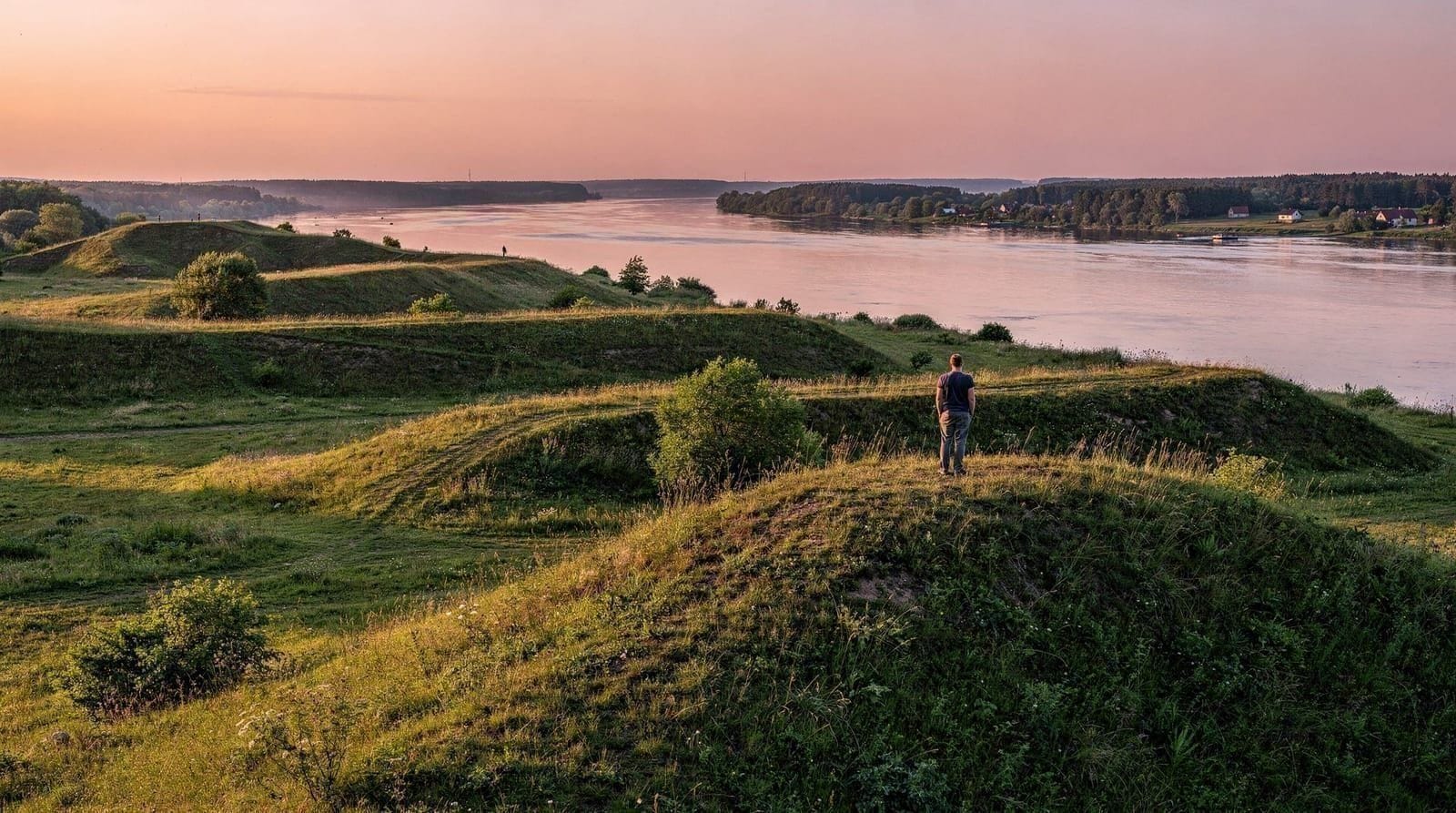
Trakai + Kernavė: A private guided tour linking both stops is a popular option — Trakai for the castle, then Kernavė’s UNESCO archaeological mounds (35 km further north). Total time: 6–7 hours. See the Kernavė and Paneriai day trip guide for details.
Trakai + Paneriai: Some tours include the Paneriai Holocaust memorial as a contextual stop before arriving at Trakai. It makes for a historically rich if emotionally demanding day.
Trakai + Kaunas: Technically possible but requires a car and a very early start. Better to choose one destination per day.
Trakai in different seasons
Spring (April–May): The lake is cold but the park scenery is fresh. Fewer tourists, lower accommodation prices. May is particularly good — warm enough for the kayak rental to open, quiet enough that the castle interior feels intimate rather than crowded.
Summer (June–August): Peak season, and for good reason. The lake is swimmable, kayak and boat rentals are fully operational, the Užutrakis Manor is open, and the long evenings give the castle an extraordinary light quality after 6 pm. The downside is weekend crowds in July and August — if you visit on a Saturday in summer, arrive before 10 am.
Autumn (September–October): The forests around the lake turn amber and gold. The lake remains calm. September is arguably the best month for photography — the light is lower and warmer than summer, and the reflections on the still autumn water are exceptional. October gets cold quickly.
Winter (November–March): The castle is open (closed Mondays) with reduced hours. If the lake freezes, the visual effect — the red-brick castle rising from white ice — is remarkable. Crowds are minimal. The Karaim restaurants remain open.
Practical notes
Getting back: The last trains from Trakai to Vilnius run at around 8–9 pm. Check ltglink.lt on the day. If you miss the last train, local taxis or Bolt are available.
Crowds: The castle is busiest June–August, particularly on weekends. Weekday morning visits are the most relaxed. The castle interior has limited capacity in some rooms, and tour groups can clog the courtyard.
Weather: The lake and castle are exposed. Bring a layer even in summer. The castle is partially covered, but the courtyards are not.
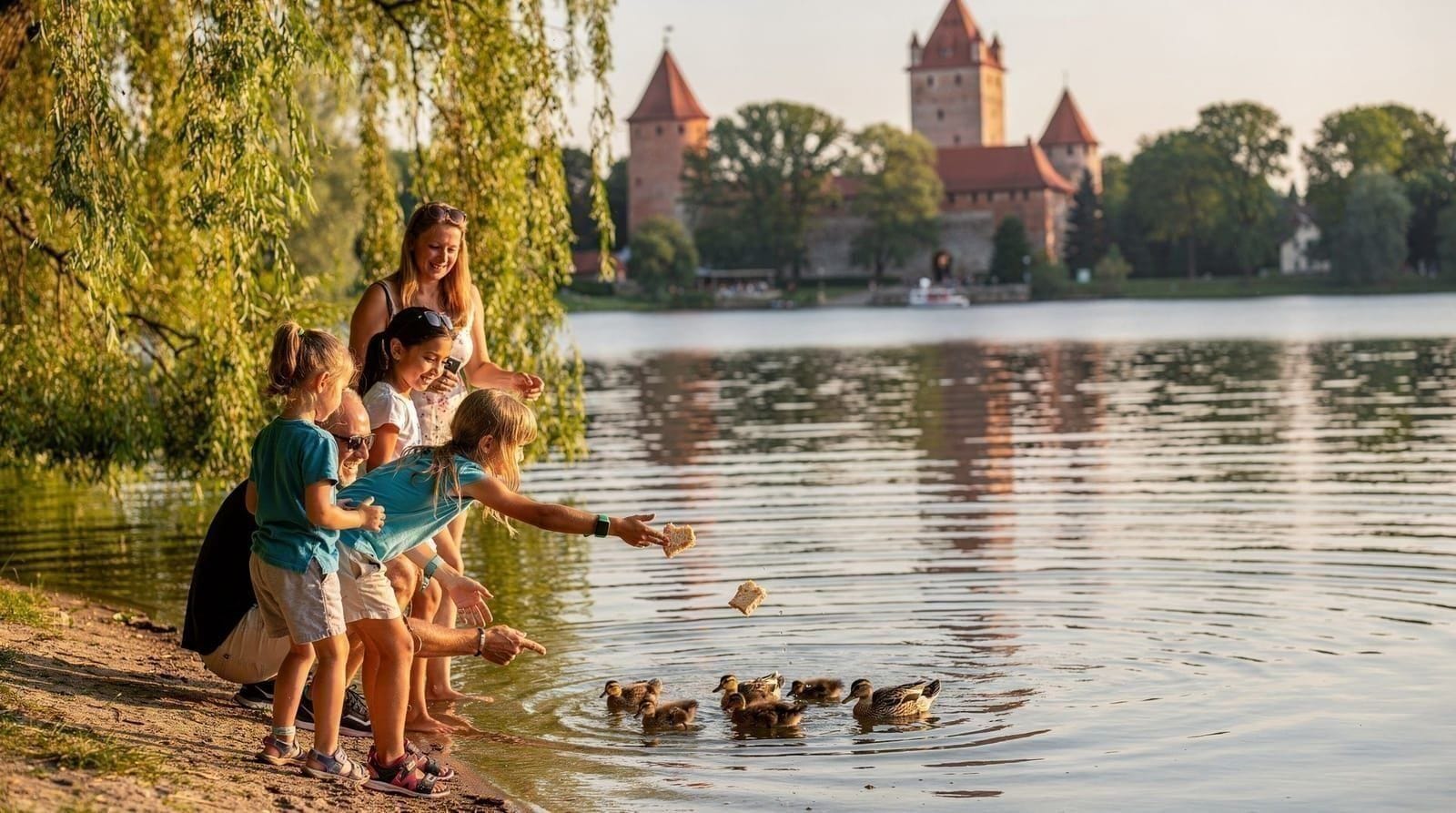
Children: Trakai is excellent for families — short journey, a proper castle, water activities, and friendly food. See the Vilnius with kids guide for more family logistics.
Budget: A comfortable Trakai day trip costs approximately €30–40 per person: transport (€3 return train), castle entry (€12), lunch (€8–12), kayak hire (€10). Budget visitors can do the train, castle, and a kibinai lunch for under €20.
Accessibility and practical limitations
The causeway and outer courtyard are flat and manageable for wheelchairs and strollers, but the castle’s interior involves narrow spiral staircases in the main tower that are not accessible — most of the ground-floor museum rooms are reachable without stairs, but the upper-floor exhibits and the tower views are not. If mobility is a concern, call ahead (the castle can advise on which rooms are step-free) or plan to enjoy the exterior, the causeway walk, and the lakefront rather than the full museum route. Toilets are available near the ticket office and inside the outer ward. There is no cloakroom for large luggage, so this is not a practical stop with wheeled suitcases — do it as a day trip from Vilnius rather than en route between cities.
Trakai from Kaunas or without going via Vilnius
Most visitors do Trakai as a day trip from Vilnius, but it is also reachable directly if you are based in Kaunas: a bus or private transfer takes roughly 1–1.5 hours, and some organised tours combine Kaunas, Trakai and Vilnius sightseeing in a single long day. This works best with a car or a booked transfer, since public transport between Kaunas and Trakai directly is limited compared with the frequent Vilnius–Trakai train. If you’re deciding which city to base yourself in for exploring both Trakai and Kaunas, see the Trakai vs Kaunas day trip guide for a direct comparison.
Trakai with children or as part of a longer trip
Trakai is one of the easiest successful day trips with kids — a short train ride, a real castle to explore, and water activities that break up the sightseeing. See the Vilnius with kids guide and the family day trips from Vilnius guide for how it compares to other family-friendly options. If you’re building a wider Lithuania trip and want to see how Trakai fits alongside other excursions, the best day trips from Vilnius guide covers the full set, and the Trakai destination overview has the wider context on the town itself beyond just the castle.
Boat ride from Trakai to Užutrakis Manor is a relaxed way to combine the castle and the manor without the 2 km walk each way.
Frequently asked questions about the Trakai castle day trip
Is it possible to walk from the train station to the castle?
Yes, easily. The walk from Trakai station to the island castle is 1.2 km, takes 15 minutes along the lake road, and is pleasant. There are no hills or difficult terrain.
Do I need to book castle tickets in advance?
No booking is required for individual visitors. You buy tickets at the castle entrance. In peak summer weekends, small queues can form — arrive before 10 am to avoid them.
Are there restaurants in Trakai besides kibinai places?
Yes — there are several cafés and restaurants along Karaimų gatvė and near the town square. Bočiai (Karaimų g. 53) is reliable for Lithuanian food at reasonable prices. Avoid the outdoor food stalls immediately at the castle exit.
Can I swim in Lake Galvė?
There are designated swimming areas along the lake, and swimming is popular in summer. The water is clean and relatively warm by July–August (18–22°C). There are no lifeguards.
How does Trakai compare to Kernavė?
Trakai is more photogenic and has better infrastructure for visitors. Kernavė is more historically important (likely site of the first Lithuanian capital) but quieter and more understated. Both are worth visiting if you have two days; for a one-day visit, Trakai wins on spectacle.
Is Trakai worth visiting if I’m also going to Kaunas?
Yes — they cover different ground. Trakai is a compact castle-and-lake half-day, while Kaunas is a full city with its own Old Town and museums. See the Trakai vs Kaunas day trip guide if you’re deciding between them for a single free day, though most itineraries have room for both on separate days.
Can I do Trakai as a half-day trip and still see the highlights?
Yes. The castle museum, a walk along Karaimų gatvė, and a kibinai lunch fit comfortably into 3–4 hours, including the train there and back. Add kayaking or Užutrakis Manor only if you have a full day free.
Top experiences
Bookable activities with verified prices and instant confirmation on GetYourGuide.