Best day trips from Vilnius
Vilnius: Trakai half day sightseeing tour
Duration: 4 hours
What are the best day trips from Vilnius?
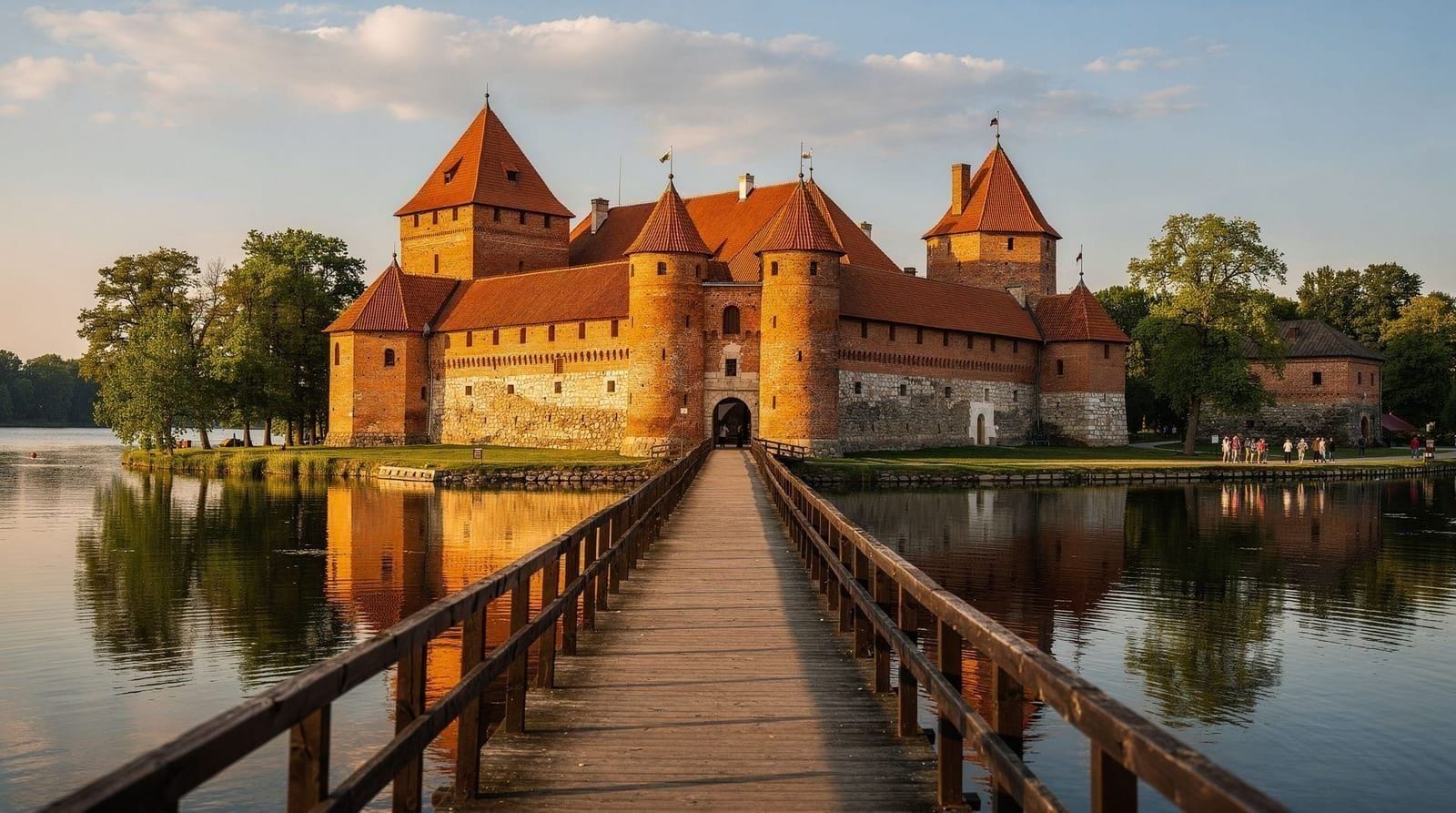
Trakai (28 km, 30 min) is the easiest and most iconic. Kaunas (1 h) rewards architecture fans. The Hill of Crosses (2.5 h) is genuinely unmissable. The Curonian Spit (3.5 h) is Lithuania's top natural wonder. Druskininkai (1.5 h) suits spa-and-forest lovers; Kernavė (45 min) suits history buffs.
Vilnius is one of the best-positioned capital cities in Central Europe for day trips. Within three hours in any direction you reach a UNESCO World Heritage dune spit, an island castle, a Samogitian pilgrimage hill covered in hundreds of thousands of crosses, Lithuania’s second city with a remarkable interwar streetscape, and a Soviet-era spa town with a surreal Stalin statue park. None of these require a rental car — though a car opens up more flexibility.
What follows is an honest ranking of the seven most worthwhile day trips, with real travel times, costs, and what to watch out for.
| Easiest | Trakai — 30 min by train, no booking needed |
| Most rewarding | Hill of Crosses — a genuine bucket-list site |
| Best value group option | Rental car for 3-4 people, from around €35-55/day |
| Longest day | Curonian Spit — around 3.5 hours each way |
| Best in winter | Druskininkai — spa hotels and the Snow Arena |
How to get around: the transport reality
Lithuania’s public transport is honest and functional, not exceptional. Trains run on time and cost very little (Vilnius–Trakai costs €1.50; Vilnius–Kaunas costs €6–8). Long-distance buses (Lux Express, toks.lt) are comfortable for routes like Vilnius–Druskininkai.
The gap: anything north of Kaunas gets complicated by train. To reach the Hill of Crosses by public transport, you take a train to Šiauliai (2 h), then a bus or taxi the final 12 km to the hill — which works but eats into your day. For those routes, a guided group tour is almost always better value than cobbling together public transport and return taxis.
Renting a car from Vilnius Airport or Old Town is straightforward (Europcar, Hertz, Sixt, Easicar — budget €35–55/day). For a group of three or four, a car often costs less than four guided-tour spots. Our car rental in Lithuania guide has the full rundown on paperwork, insurance and road rules if you go this route, and trains and buses in Lithuania covers the public-transport network in more depth than this overview can.
Trakai: the obvious first choice
Distance: 28 km · Time: 30 minutes by train or bus · Train cost: €1.50 one-way
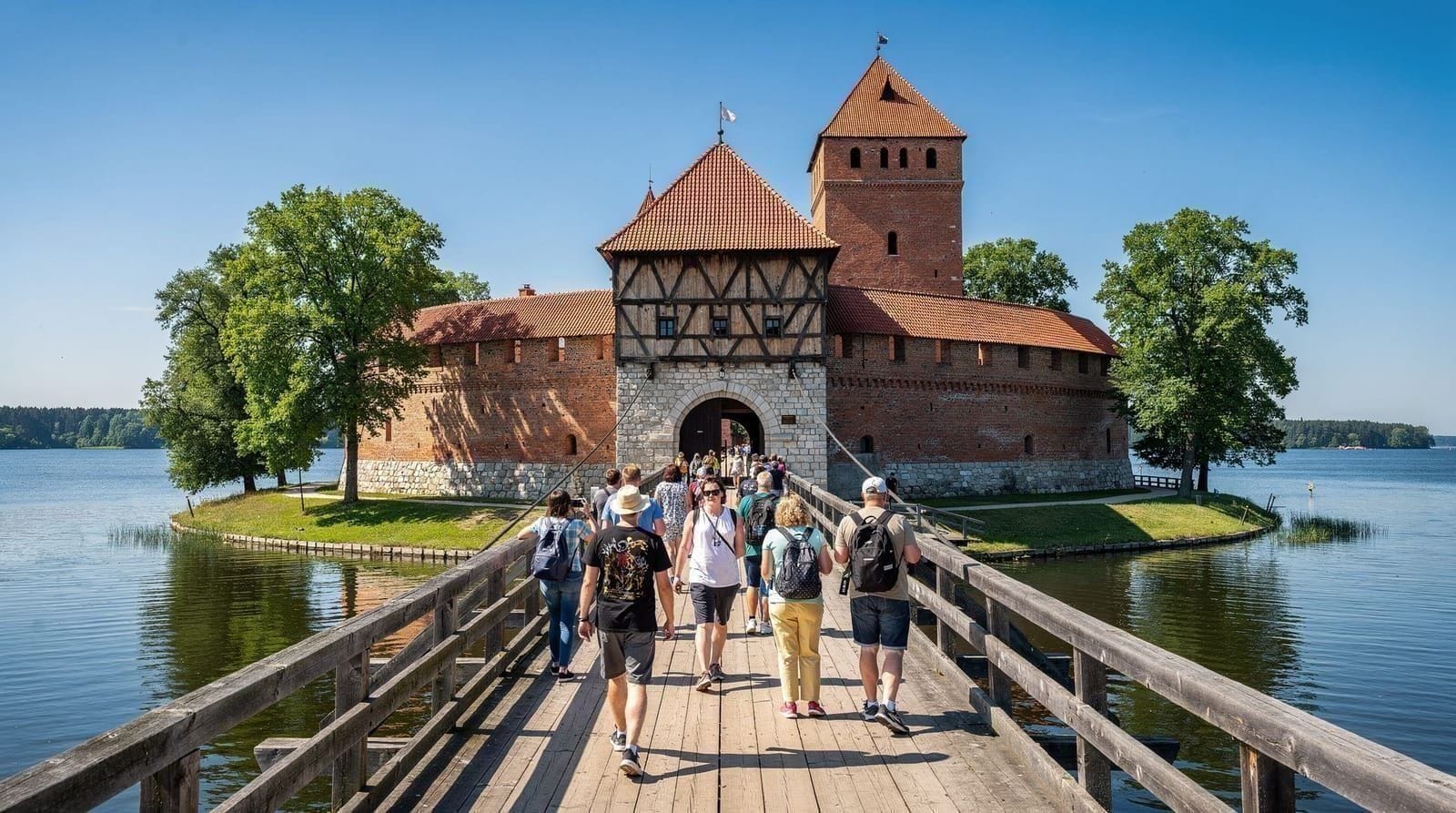
Trakai is Vilnius’s essential day trip for good reason. The red-brick island castle rising from Lake Galvė looks exactly like a fairy-tale fortress should, and it has the substance to match: the castle museum covers Lithuanian grand duchy history well, and the lake itself is beautiful for kayaking in summer.
The town is small and straightforward: castle, lake, a handful of cafés. The main thing to eat is kibinai — crescent-shaped pastries filled with meat or curd, made by the Karaim community who have lived in Trakai since the 14th century. Senoji Kibininė on Karaimų gatvė is the most reliable spot; €1.50–2.50 per pastry.
Castle admission: €12 adults, €6 children (includes museum). Kayak rentals on the lake cost €8–12/hour. The trip is perfectly doable in a half-day, leaving Vilnius on a 9 am train and returning by 2 pm.
Tourist-trap note: the restaurants immediately outside the castle gates charge 30–40% more than those two streets back. Walk up Karaimų gatvė instead.
Book a half-day guided tour to TrakaiFor a fuller breakdown of the castle, the museum and the lakefront, see our dedicated Trakai castle day trip guide.
Kaunas: Lithuania’s most underrated city
Distance: ~100 km · Time: 1 hour by train or bus · Train cost: €6–8 one-way
Kaunas is doing what cities rarely manage: becoming genuinely more interesting as more people discover it. The Old Town has a medieval castle ruin and a pedestrianised main street (Laisvės alėja), but what makes Kaunas distinctive is the interwar modernist architecture — a dense cluster of Art Deco and functionalist buildings from the 1920s–40s that earned UNESCO recognition in 2023.
The Ninth Fort, 4 km from the city centre, is one of the most significant Holocaust memorial sites in Europe: approximately 50,000 Jews were murdered here between 1941 and 1944. It is heavy going but essential for anyone interested in Lithuania’s 20th-century history.
Allow 5–6 hours in Kaunas for a comfortable visit: Old Town + Laisvės alėja, then the Ninth Fort, then lunch. Avilys Brewery (Vilniaus g. 34) serves good craft beer and Lithuanian food at honest prices.
Trains run approximately every 30–45 minutes from Vilnius. Last return trains run late evening. There is no reason to pay for a private transfer.
Our full Kaunas day trip guide covers the modernist architecture trail and the Ninth Fort in more depth, including a suggested walking route.
Hill of Crosses: worth every kilometre
Distance: ~210 km · Time: ~2.5 hours by car; 2 h by train to Šiauliai + taxi/bus
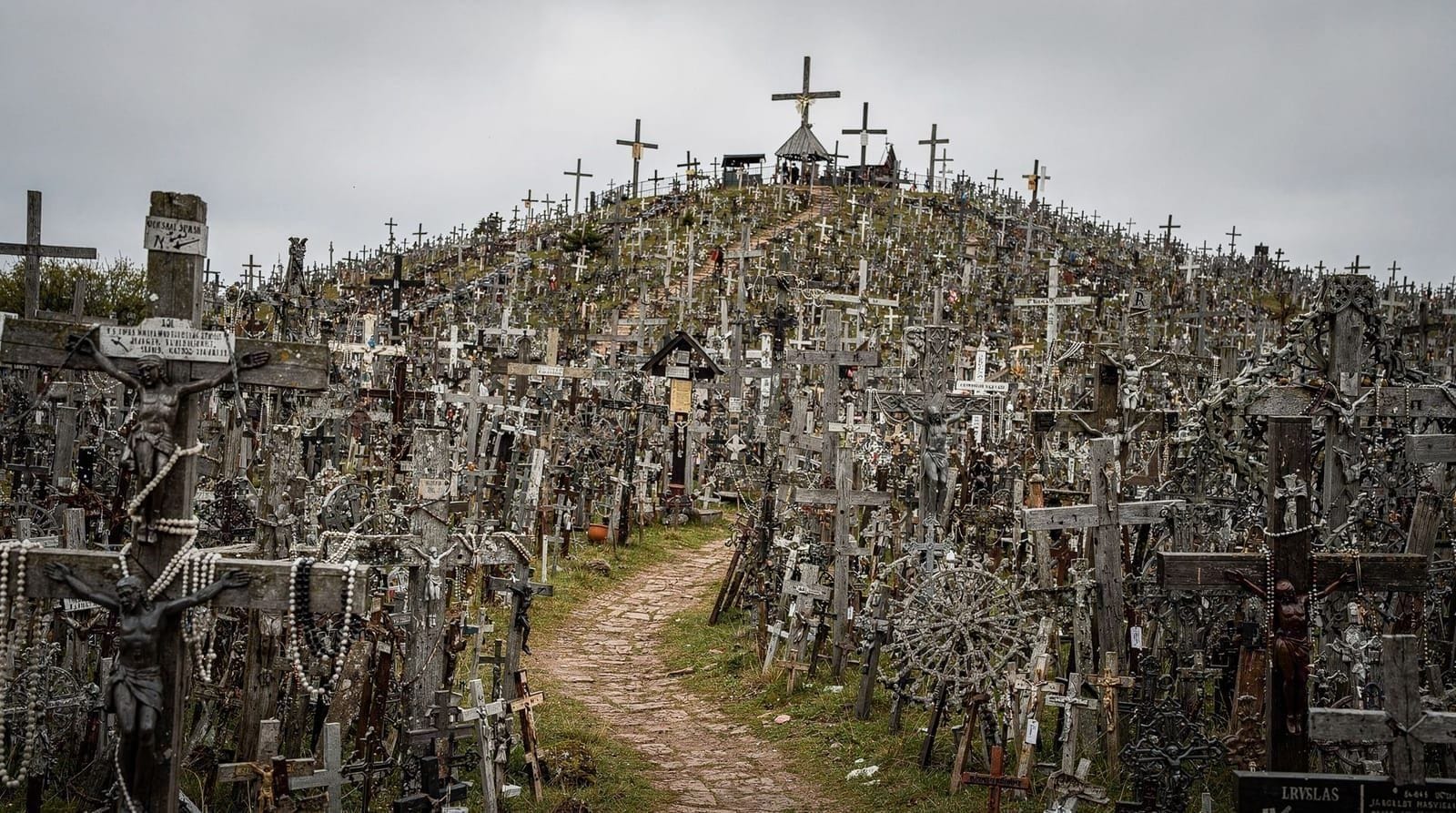
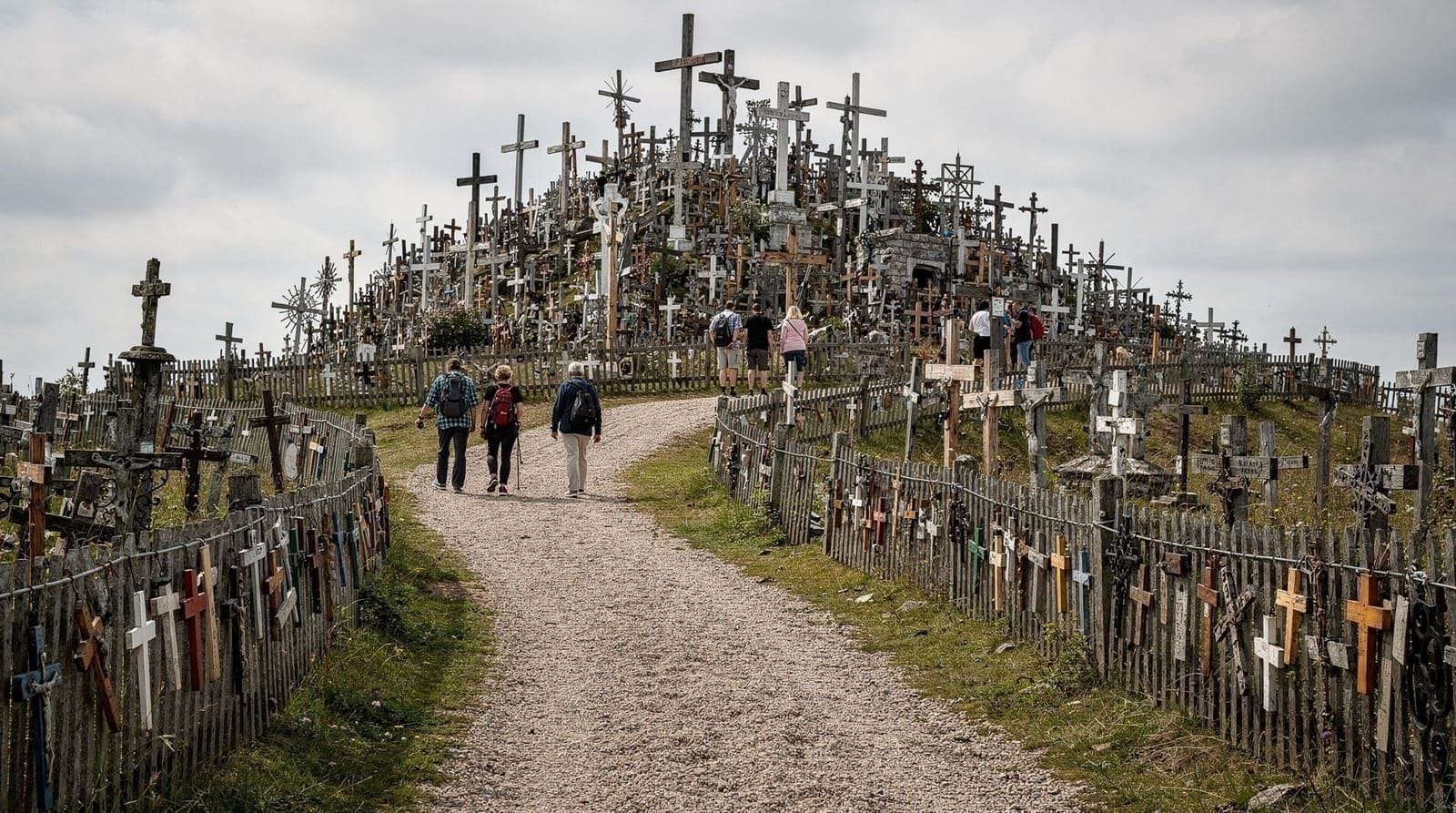
The Hill of Crosses (Kryžių kalnas) near Šiauliai is the most spiritually and visually powerful site in Lithuania. An estimated 200,000+ crosses, rosaries, crucifixes, and devotional objects cover a small glacial mound in the middle of flat Samogitian countryside. Soviet bulldozers cleared it three times during the occupation; each time locals rebuilt it overnight.
The site itself takes 1–1.5 hours. Combine with a walk through Šiauliai town (pleasant but not essential) or a stop at Pakruojis Manor if driving.
The practical complication: Šiauliai is 210 km north, and there are no direct services from Vilnius that stop at the Hill. A guided full-day tour from Vilnius is the cleanest option — usually departing at 8–9 am, returning by 7–8 pm, cost €35–60 per person depending on group size.
Book a full-day guided tour to the Hill of CrossesSee our Hill of Crosses day trip guide for the full history and a closer look at what to expect on site.
Curonian Spit: Lithuania’s natural wonder
Distance: ~310 km · Time: ~3.5 hours by car or organised tour
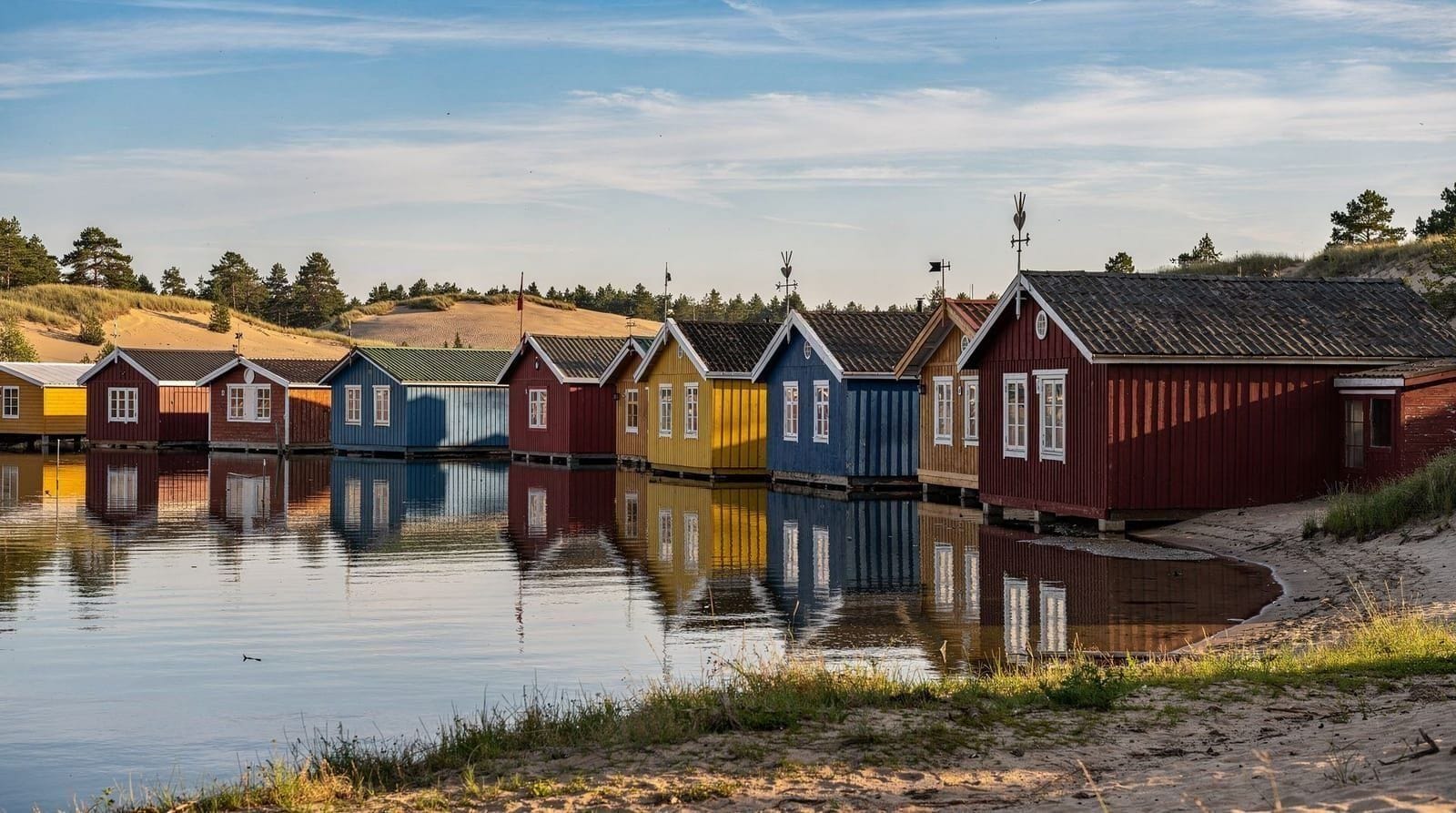
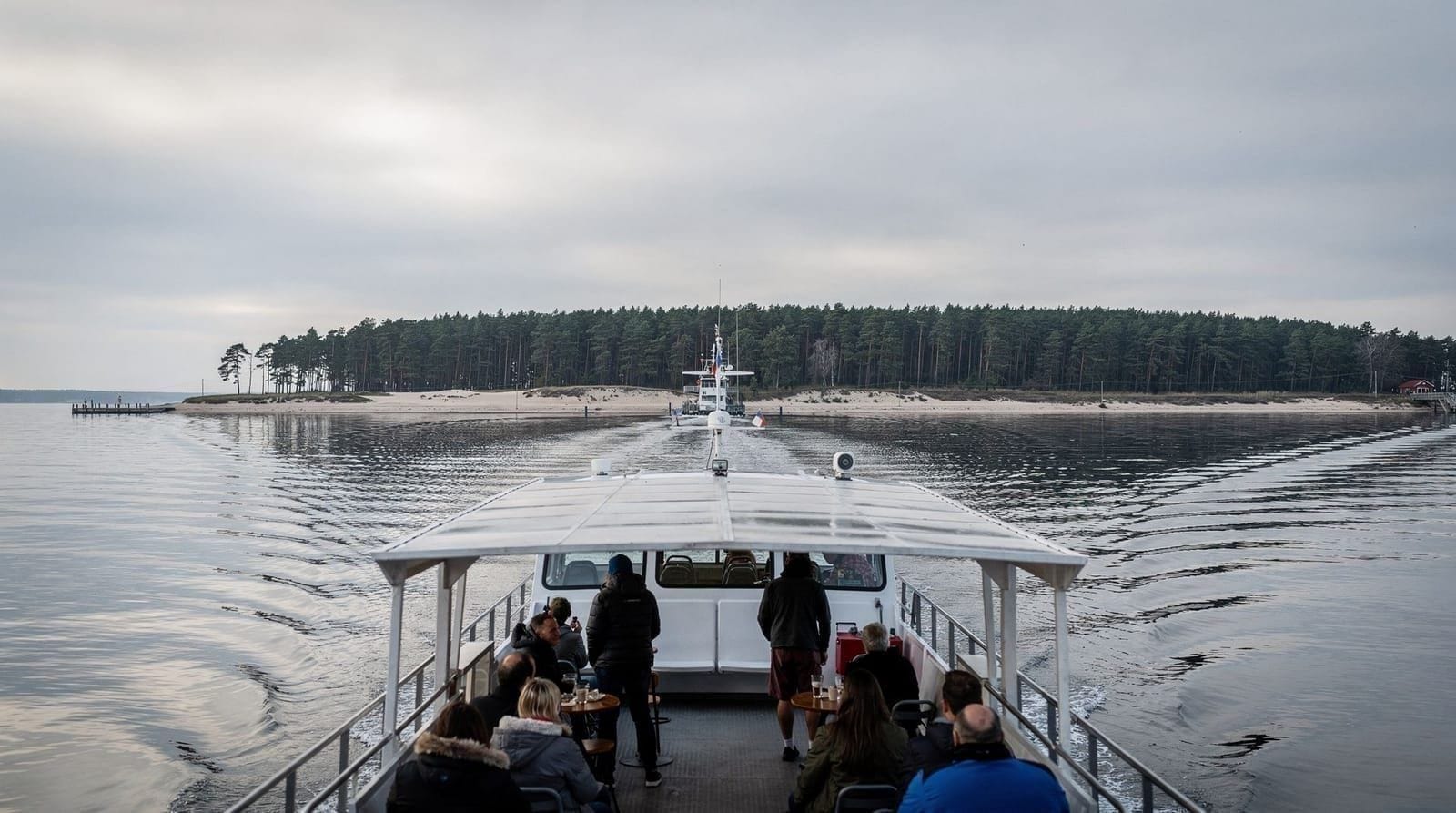
The Curonian Spit is a 98-km-long UNESCO World Heritage sand peninsula separating the Curonian Lagoon from the Baltic Sea. The Lithuanian half runs from Klaipėda (reached by ferry from the mainland) to the Russian border at Nida. The dune landscape — some dunes reach 60 m — is unlike anything else in the Baltics.
As a day trip from Vilnius, it is a long day: count on departing by 7 am and returning by 9–10 pm. Organised group tours handle the logistics (Vilnius → Klaipėda by coach, then ferry, then guided tour of the spit) for €45–70 per person.
If you can arrange one night in Nida, do that instead. The village itself — painted fishermen’s cottages, Thomas Mann’s summer house, the Parnidis dune at sunset — deserves more than a rushed afternoon.
Best season: June–August. Outside these months, many businesses on the spit are closed, the ferry runs limited service, and the beaches are cold.
Book a full-day organised tour to the Curonian SpitIf you’re weighing a day trip against an overnight, the Curonian Spit day trip guide lays out both options side by side.
Druskininkai: spa town with a Soviet detour
Distance: ~130 km · Time: ~1.5 hours by direct bus · Bus cost: €8–12 return
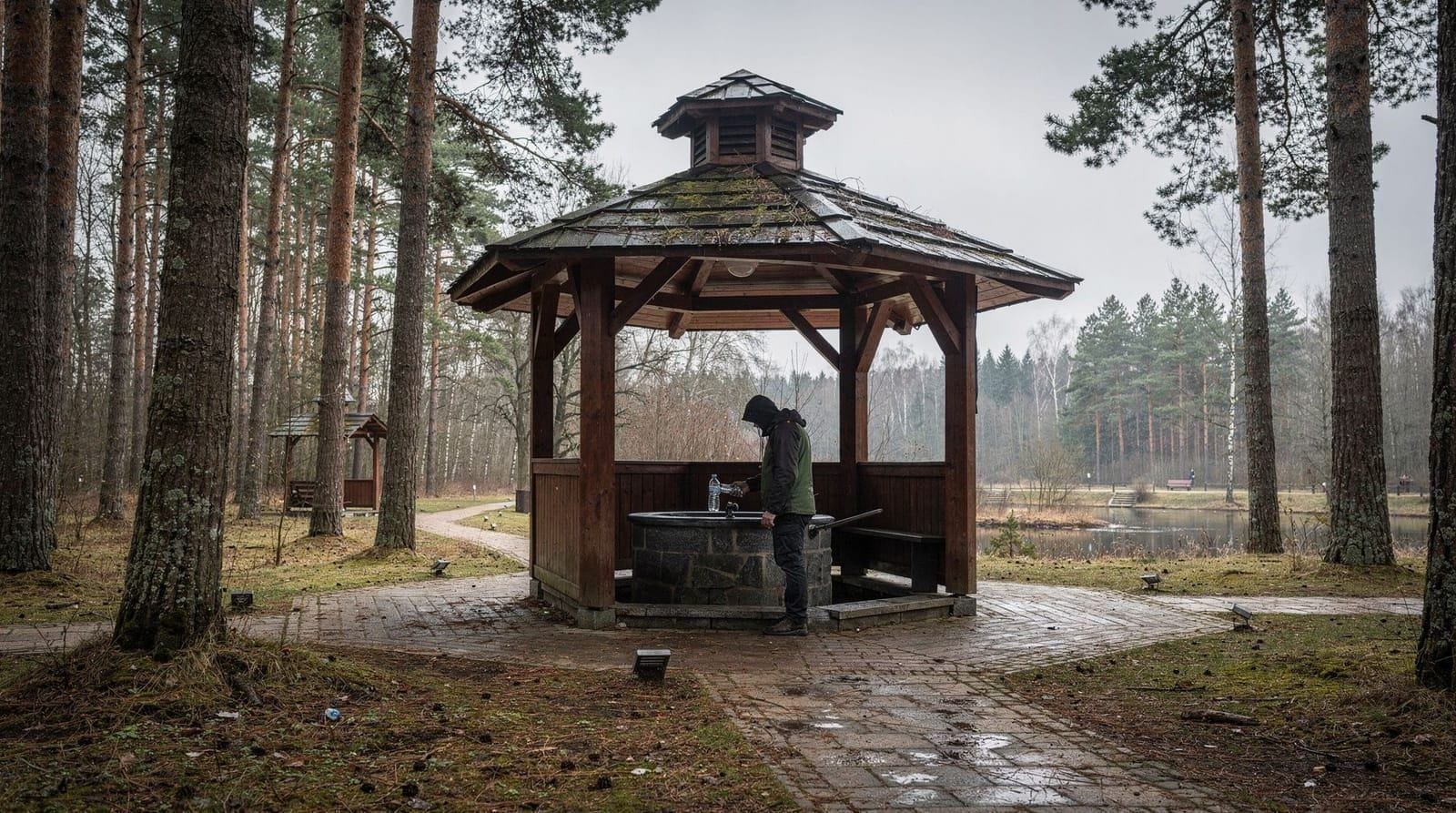
Druskininkai in southern Lithuania (Dzūkija region) is a quiet spa town on the Nemunas river that has operated as a health resort since the 19th century. The town itself is pleasant and low-key: pine forest, mineral water fountains in the streets, a large water park (Aqua Park, day pass ~€25), and several mid-range spa hotels.
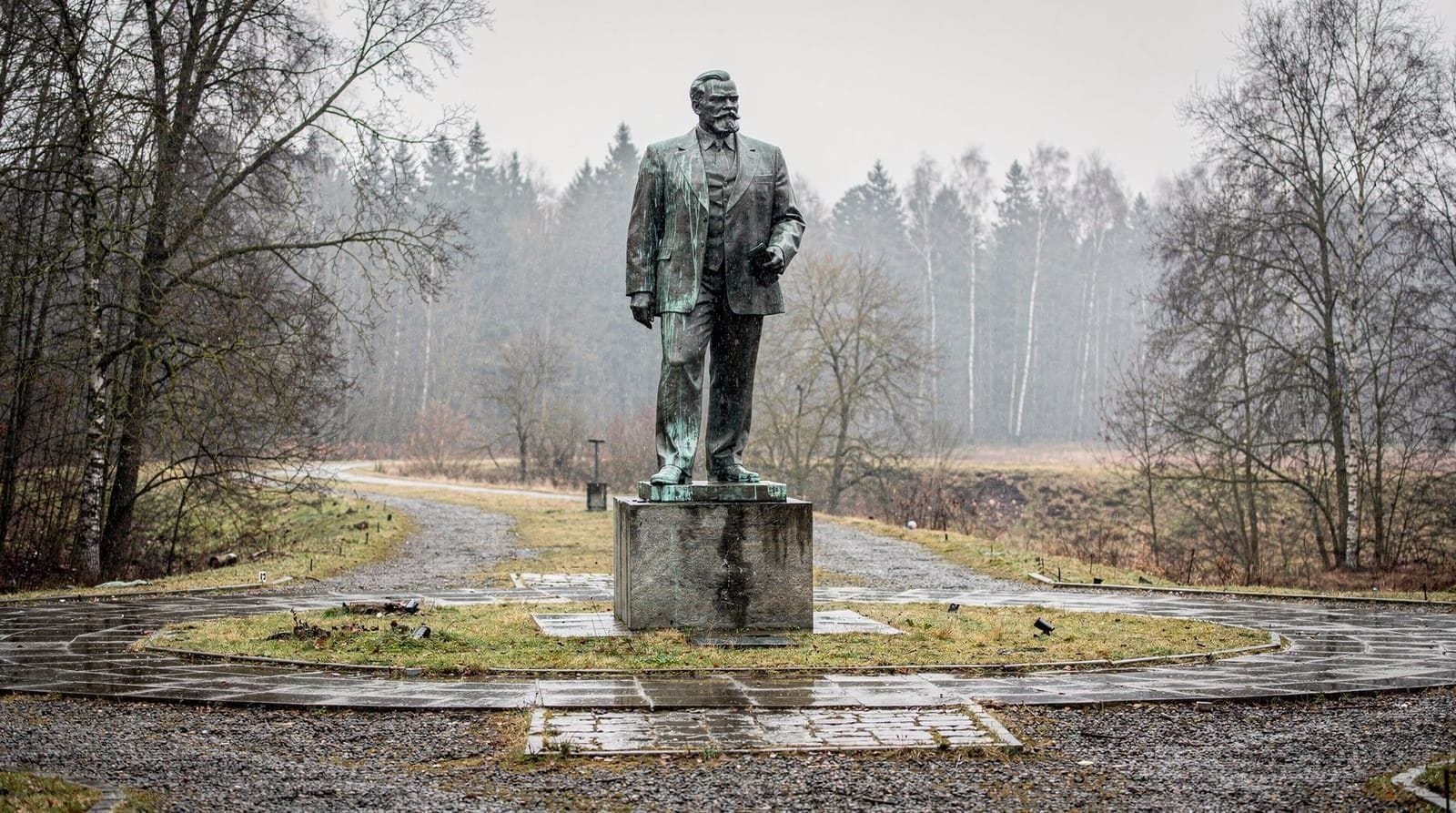
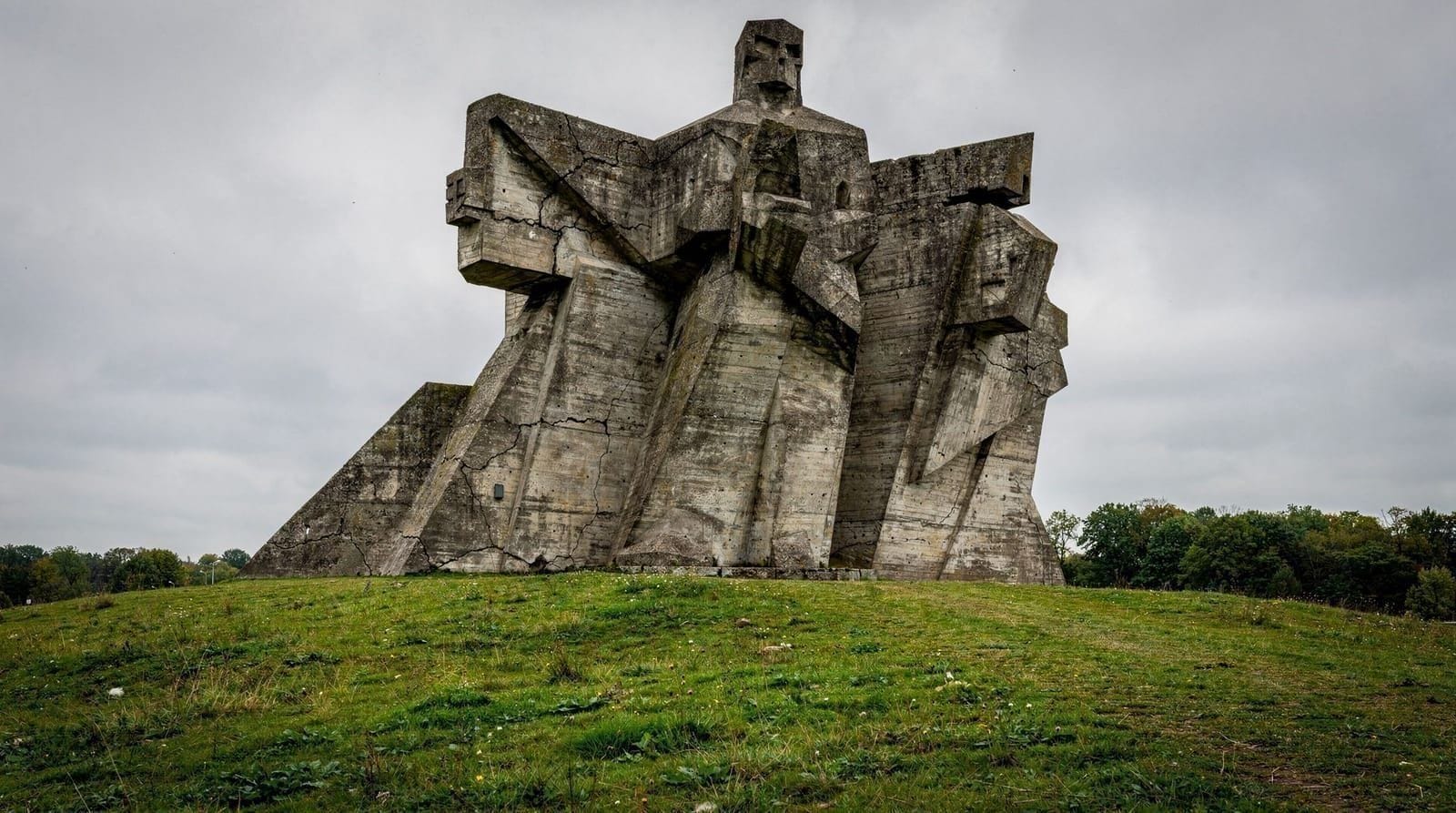
The main draw for non-spa visitors is Grūtas Park (colloquially “Stalin World”), 8 km from town. It is a Soviet-era outdoor sculpture park where decommissioned statues of Lenin, Stalin, and other communist figures were relocated after Lithuanian independence in 1990 — now surrounded by forest trails, guard towers, and barbed wire. Admission €10. It sounds grim; it is actually rather surreal and fascinating.
Buses run from Vilnius bus station 5–7 times daily. The journey is comfortable. No train service.
Our Druskininkai day trip guide covers Grūtas Park and the Aqua Park in detail, and the separate Druskininkai spa guide is worth reading if the spa hotels are the main draw for you.
Kernavė: archaelogy and quiet fields
Distance: 35 km · Time: 45 minutes by car; about 1 h by infrequent bus
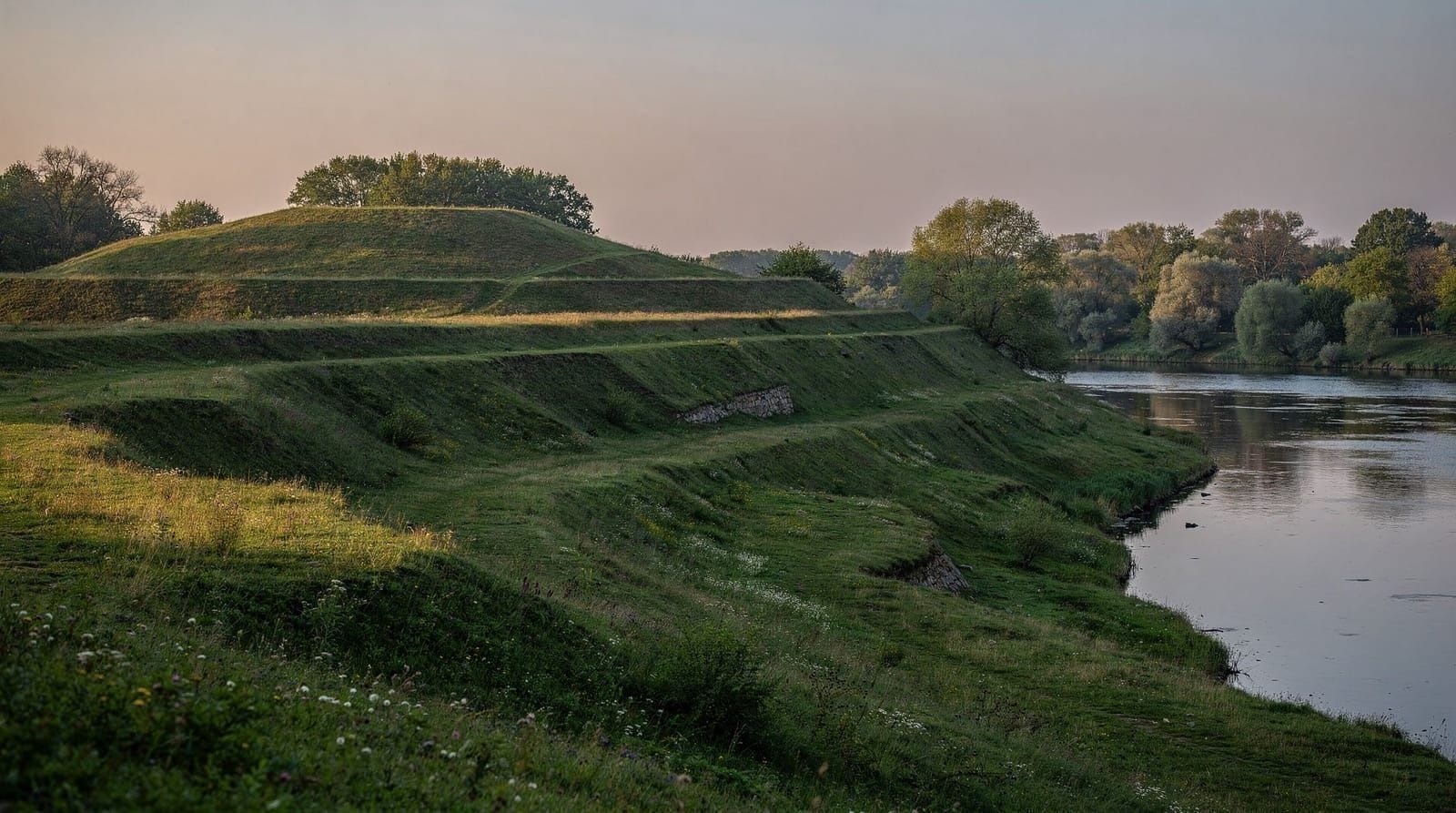
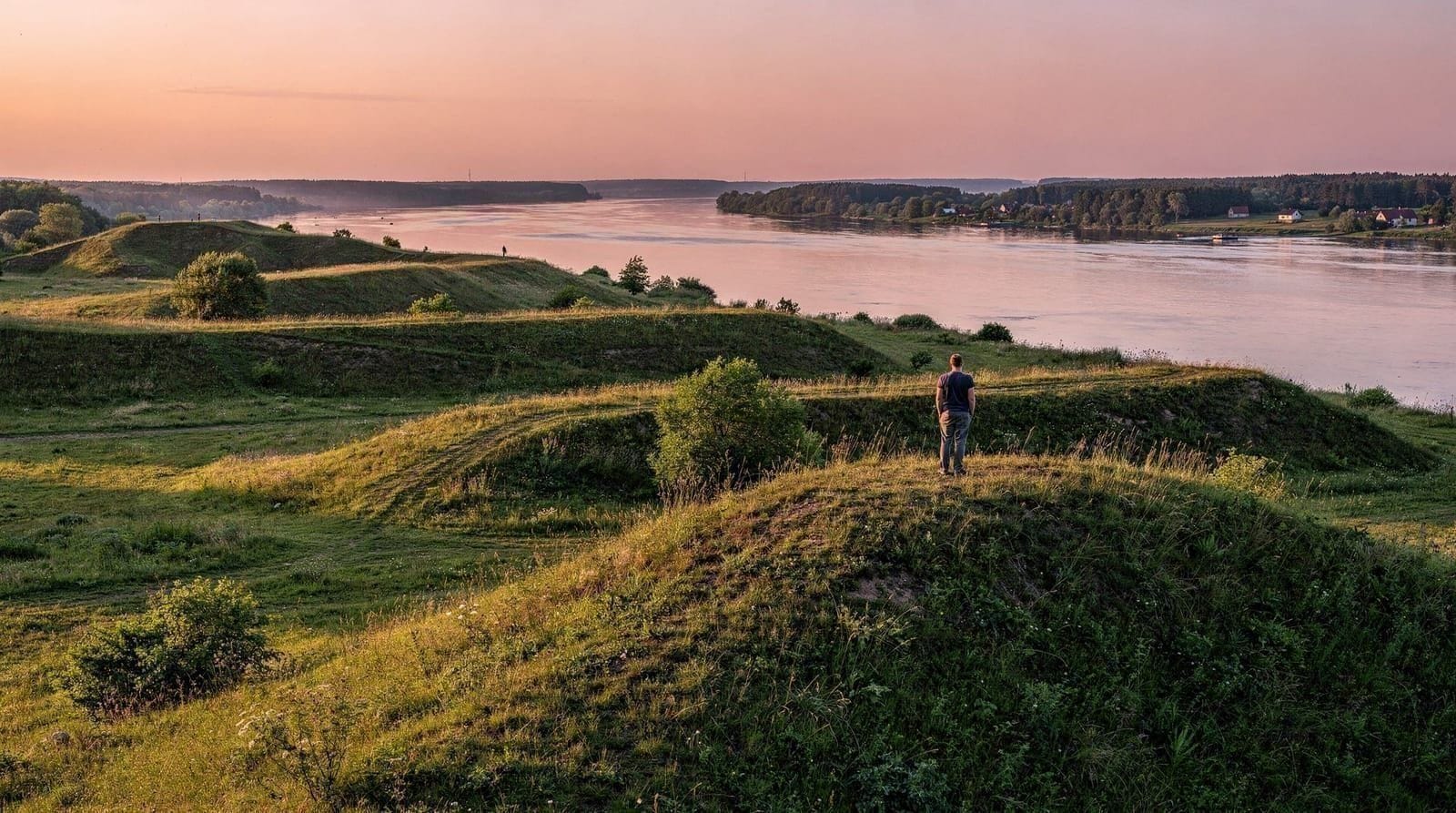
Kernavė is Lithuania’s most important archaeological site — a series of five earthen mounds (piliakalnis) above the Neris river valley, on the presumed site of the earliest Lithuanian capital. It is a UNESCO World Heritage Site since 2004.
The site is peaceful and uncrowded (very unlike Trakai). The small museum explains the Bronze Age through medieval history of the site. The views from the top of the mounds across the river valley are worth the climb alone.
A car is easier than public transport (buses from Vilnius are infrequent), and Kernavė works well combined with a Trakai visit. See the Kernavė and Paneriai day trip guide for a combined itinerary covering both sites.
Paneriai: sober, necessary
Distance: 10 km · Time: 15 minutes by suburban train · Train cost: €1
Paneriai (Ponary in Polish; Ponar in Yiddish) is the Holocaust mass murder site on the outskirts of Vilnius where between 70,000 and 100,000 people — mostly Jewish residents of Vilnius — were shot by German Einsatzgruppen and Lithuanian auxiliaries between 1941 and 1944. It is not a day trip in the tourist sense; it is a 2–3 hour visit that provides essential context for Vilnius’s history.
The memorial museum (free entry) is understated and well-curated. The pits where victims were killed and buried are marked clearly. Trains run from Vilnius Central Station approximately hourly; get off at Paneriai station.
This can be combined with Trakai on a longer day — some guided tours link both stops, offering historical counterpoint. Our Paneriai memorial guide has more background on visiting respectfully.
Driving vs public transport: which makes financial sense
The choice between renting a car and using public transport is not just about convenience — it depends on group size, and the maths shift meaningfully depending on how many people you are travelling with.
Solo traveller or couple
For one or two people, public transport beats driving on almost every route:
- Trakai: Train €1.50 each way = €3 total for two. A rental car for the day (€40 minimum) would cost more than thirteen times as much for the same destination.
- Kaunas: Train €6–8 each way = €12–16 total for two. Still far cheaper than a car day.
- Druskininkai: Bus €8–12 return each. Total €16–24 for two, comfortable and direct.
- Hill of Crosses: This is the exception — a guided group tour at €35–55 per person is actually cheaper than a rented car (€40 day + fuel €25–30 roundtrip + parking) once you factor in a solo driver’s costs. Two people on a guided tour: €70–110 total. Two people by car: €65–70 total. Roughly equal.
Group of three or four
A group of three or four tilts the maths decisively towards renting a car:
- A mid-range rental car (e.g. Volkswagen Golf, Opel Astra class) costs €35–55/day from Vilnius Airport including insurance. Add €20–30 for fuel for most routes.
- Total car cost for a group of four: €65–85 split four ways = €16–21 per person per day.
- Compare to: four guided-tour tickets to the Hill of Crosses at €50 each = €200. Or four bus tickets to Druskininkai (€10 each) = €40 in public transport alone, before any taxis to Grūtas Park.
- Net saving per person for a group of four taking a car versus a guided tour: €25–35 on the Hill of Crosses route, more on the Curonian Spit.
Specific route cost comparison (group of 4)
| Route | Car (total) | Per person | Public transport/tour | Per person |
|---|---|---|---|---|
| Trakai | €40 car + €6 fuel = €46 | €11.50 | €6 total train | €1.50 |
| Kaunas | €40 car + €15 fuel = €55 | €13.75 | €32 total train | €8 |
| Hill of Crosses | €40 car + €30 fuel = €70 | €17.50 | €160–200 tour | €40–50 |
| Druskininkai | €40 car + €20 fuel = €60 | €15 | €40 bus + taxis | €15 |
| Curonian Spit | €40 car + €50 fuel = €90 | €22.50 | €180–280 tour | €45–70 |
Summary: Trakai and Kaunas are cheapest by public transport regardless of group size. For Hill of Crosses, Curonian Spit, and multi-stop itineraries, a group of three or four saves money with a rental car.
Matching travellers to day trips
Different types of travellers get different things from the same destinations. Here is honest guidance by traveller type.
Solo traveller
Best choices: Kaunas (the independent café culture on Laisvės alėja makes it easy to spend a full day without feeling conspicuous; the Ninth Fort is powerful without needing company) and Trakai (the castle museum is self-guided and the lake walk is pleasant alone). Hill of Crosses is excellent solo — guided group tours mean you are not isolated. Curonian Spit solo by tour works well too.
Avoid solo with a rental car if you are unfamiliar with Lithuanian road conventions (left-turn priority rules differ slightly from Western Europe).
Couple
Almost all day trips work equally well for couples. Druskininkai is particularly good — the spa hotel day-pass option (access to pool, spa, and sauna) suits a relaxed couple’s day and costs €35–60 each at hotels like Europa Royale Druskininkai. Trakai with kayaking on the lake is a low-effort, high-reward half-day. Curonian Spit is the most romantic option — the Nida dunes at sunset, if you can manage an overnight stay.
Family with a toddler (under 3)
Keep it simple: Trakai by train is the only day trip that genuinely works stress-free with a child under three. The journey is 30 minutes, the castle walk from the station is flat and pushchair-accessible, and there are places to sit and feed a child near the lakefront. Everything else involves longer travel times or terrain that is difficult with a pushchair.
See the full family day trips guide for age-specific advice on destinations beyond Trakai.
History buff
The non-obvious answer: Kaunas + Ninth Fort is the best single-day combination for serious history interest. The Ninth Fort’s Holocaust memorial and museum are among the most significant in the Baltic states. Adding the interwar modernist architecture of Kaunas (its history as the provisional capital 1919–1940 tells the story of the Lithuanian state being built from nothing) makes a full, intellectually dense day.
Paneriai is essential but short — combine it with Trakai or add it as a morning stop before any longer trip. Hill of Crosses provides the counterpoint: Lithuanian resistance culture and religious identity under occupation. Grūtas Park (Druskininkai) is the most visually surreal history destination.
Nature lover
Curonian Spit is the clear winner — the dune landscape is genuinely dramatic and unlike anything else in Central Europe. If that is too far, Kernavė has beautiful river valley views from the hillforts. Druskininkai offers forest trails around the town (the Dzūkija National Park is nearby) and the Nemuno riverbanks.
In spring (May) and autumn (September), the landscape around any of these destinations is at its most attractive. See the spring and autumn guide for seasonal specifics.
Seasonal matrix: which trips work when
Not all day trips are equally good in all seasons. Here is an honest month-by-month summary.
| Destination | Jan–Feb | Mar–Apr | May–Jun | Jul–Aug | Sep–Oct | Nov–Dec |
|---|---|---|---|---|---|---|
| Trakai | Good (castle only) | Good | Excellent | Busy | Excellent | Good (quieter) |
| Kaunas | Good | Good | Excellent | Good | Excellent | Good |
| Hill of Crosses | Good | Good | Excellent | Excellent | Excellent | Good |
| Curonian Spit | Not recommended | Limited | Good | Excellent | Good | Not recommended |
| Druskininkai | Excellent (Snow Arena) | Good | Good | Good | Good | Excellent (spa) |
| Kernavė | Limited | Good | Excellent | Good | Excellent | Limited |
| Paneriai | Good | Good | Good | Good | Good | Good |
Key: Curonian Spit is genuinely poor outside May–September — most businesses close and the ferry runs on a minimal schedule. Druskininkai is actually at its best in winter because the spa hotels offer their most competitive packages and the Snow Arena is the main draw. Hill of Crosses in snow (January–February) has a particular atmosphere that summer visitors miss.
Weather contingency planning
Lithuania’s weather is genuinely unpredictable in the shoulder seasons, and a wet day changes which trip makes sense.
If rain is forecast: Kaunas holds up well — most of the day (Old Town streets, the Ninth Fort museum, cafés on Laisvės alėja) has covered or indoor options. Grūtas Park near Druskininkai is outdoors but manageable under an umbrella since walking distances between statues are short.
If it’s clear and warm: prioritise Trakai (kayaking on Lake Galvė), the Curonian Spit (the dunes and beaches are the entire point), or Kernavė (the hillfort views are best in good light).
If it’s a grey, cold day: the Hill of Crosses arguably gains atmosphere — fewer visitors, a starker mood that suits the site. Druskininkai’s spa hotels are, if anything, more appealing when the weather outside is unpleasant.
Check forecasts the evening before rather than the morning of, since guided-tour cancellations (rare, but they happen for the Curonian Spit ferry crossing in high wind) need enough notice to rebook.
Money-saving tips for day trips
Train discount cards: LTG Link (ltglink.lt) sells various discount cards. The “Savaitgalio bilietas” weekend return ticket on some routes costs less than two single tickets. Students with ISIC cards get reduced fares. Children under 7 travel free; children 7–16 pay half price.
Group discounts at sites: Trakai castle, Ninth Fort (Kaunas), Rumšiškės open-air museum, and Grūtas Park all offer group rates for groups of 10+. If you are travelling with a larger group, confirm group rates directly with the site rather than buying individual tickets.
Pack your own lunch: Restaurant prices at popular day-trip destinations (particularly around Trakai castle gates and Grūtas Park entrance) run 30–50% above the Vilnius equivalent for similar food. Packing lunch from Vilnius’s Halės turgus market (open Tuesday–Sunday) costs very little and improves quality. A half-kilo of good Lithuanian cheese, bread, and smoked meat costs €6–8 and feeds two people.
Free sites: Paneriai memorial museum is free. The Hill of Crosses itself is free to visit (the path and the site have no entry charge). Kernavė archaeological park entry is modest (€4–5) and the hillforts themselves are open. Walking the Curonian Spit dunes requires no ticket; it is only the Parnidis dune viewpoint area that has an optional small fee.
Off-peak tours: Guided tour prices for popular routes (Curonian Spit, Hill of Crosses) are typically 10–20% lower outside June–August. If your dates are flexible, booking a September or May tour instead of a July one saves money and usually provides better experience with smaller group sizes.
Combining two day trips into one
If your time in Vilnius is limited, several of these destinations pair naturally without turning into a marathon.
Trakai + Kernavė is the easiest combination by car — both are west/northwest of Vilnius, roughly 30-45 minutes apart, and neither needs more than half a day on its own. This is the pairing most private tours and drivers offer.
Paneriai + Trakai works as a sober-then-scenic day: the Paneriai memorial takes 2-3 hours in the morning, leaving the afternoon free for the castle and lake.
Kaunas + Rumšiškės open-air museum is a common guided-tour combination — the museum, 20 minutes from Kaunas, recreates traditional Lithuanian rural life and pairs well with the city’s urban architecture.
Trying to combine three sites in one day from Vilnius (for example Trakai + Kaunas + Kernavė) is technically possible with a car and an early start, but it rushes each stop and is not recommended for a first visit — better to pick two.
Practical planning notes
Money: Lithuania uses the euro. Day-trip tours cost €35–70 per person for guided options; public transport for Trakai and Kaunas costs under €20 total including entry.
Booking: Trakai and Kaunas need no advance booking for independent visits. Hill of Crosses and Curonian Spit tours should be booked 24–48 hours ahead in peak season (June–August).
Children: Trakai is ideal for families; see the family day trips from Vilnius guide for age-specific advice.
Season: Most day trips work year-round, but the Curonian Spit is best May–September; Druskininkai’s Snow Arena (indoor ski slope, €15–20/day) makes it worthwhile in winter.
Frequently asked questions about day trips from Vilnius
Do I need to book day trips in advance?
For independent visits to Trakai or Kaunas — no. For guided tours to the Hill of Crosses, Curonian Spit, or Druskininkai in June–August, book 24–48 hours ahead. Private tours can often be arranged same-day outside peak season.
Are guided tours worth the cost compared to going independently?
For Trakai and Kaunas, going independently is cheaper and perfectly easy. For the Hill of Crosses and Curonian Spit, a guided tour often costs similar to or less than cobbling together train + bus + taxi, and saves significant logistics stress.
What is the cheapest day trip from Vilnius?
Trakai by train (€1.50 each way + €12 castle entry) is the cheapest substantive day trip. Paneriai by suburban train (€1 each way + free museum) is technically the cheapest, but it is not a typical leisure trip.
Can I visit two destinations in one day?
Trakai + Kernavė by car: yes, comfortably. Trakai + Kaunas by train: technically possible but rushed. Hill of Crosses + Šiauliai in a guided tour: standard. Kaunas + Rumšiškės open-air museum: a common guided-tour combination.
Is Vilnius a good base for Baltic day trips?
It is an excellent base for Lithuanian destinations. Reaching Riga (3.5 h by bus) or Tallinn (4.5 h+) requires an overnight or a very early departure — those are better as multi-day extensions than day trips.
Which day trip has the best food?
Kaunas has the best independent restaurant scene. Trakai’s kibinai pastries are the most distinctive food experience. Druskininkai has a quieter café culture that suits a slow afternoon.
Do I need a car to see everything on this list?
No. Trakai, Kaunas and Paneriai are all easy by train, and Druskininkai is a comfortable direct bus. A car mainly helps for the Hill of Crosses and for combining two stops, such as Trakai and Kernavė, in one day.
Which day trip is best for a first-time visitor with only one free day?
Trakai. It needs no advance booking, the train takes 30 minutes, and the castle delivers the clearest “postcard Lithuania” moment of any day trip within easy reach of Vilnius.
Top experiences
Bookable activities with verified prices and instant confirmation on GetYourGuide.