Car rental in Lithuania — guide for 2026
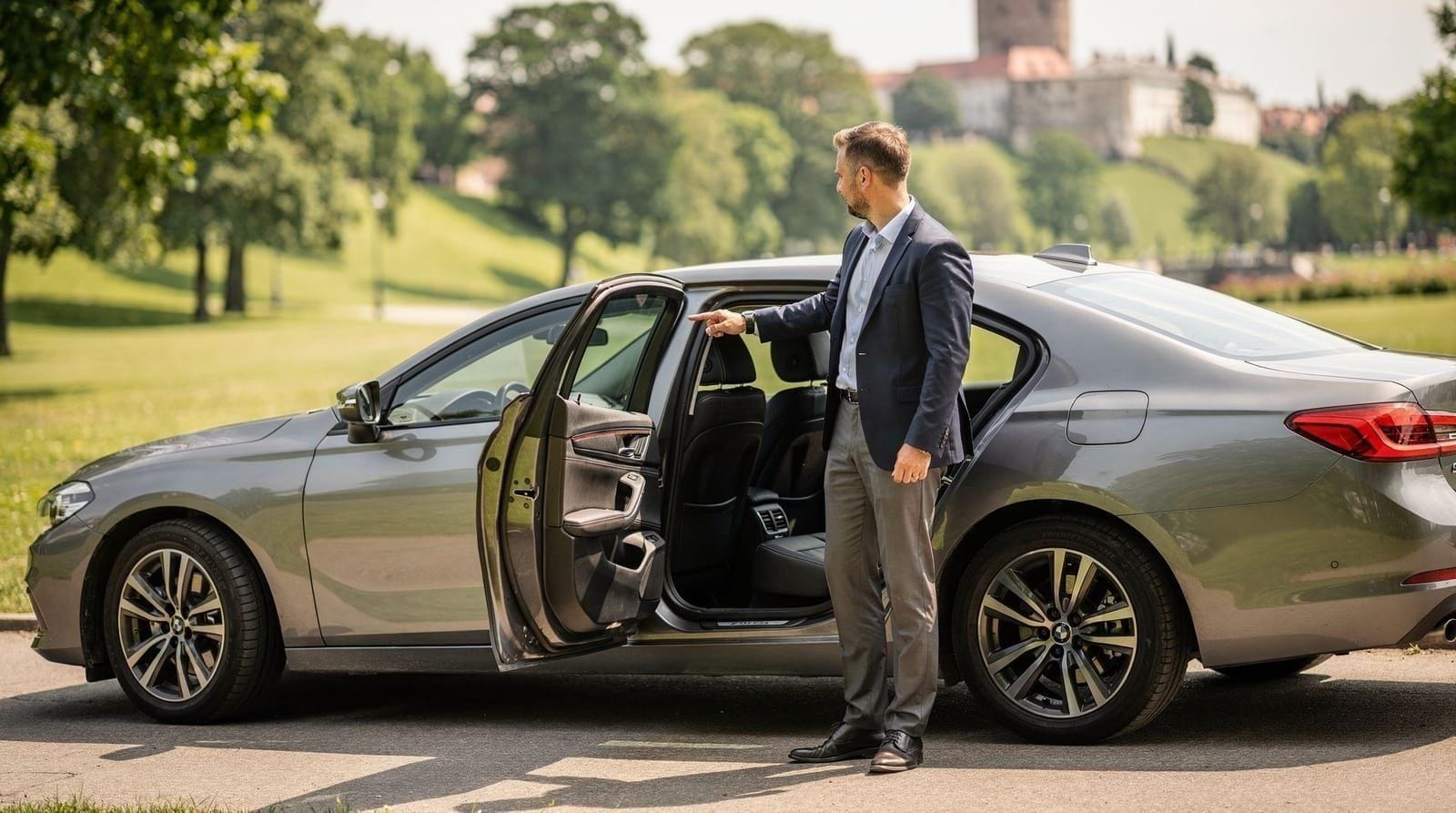
Vilnius: Full day private assistant driver
Do you need a car in Lithuania?
Not for Vilnius itself or the main train/bus-served routes (Trakai, Kaunas, Klaipėda). A car becomes genuinely useful for Druskininkai, the Hill of Crosses without a tour, Aukštaitija National Park, Kernavė, and smaller rural destinations. Economy cars rent from €25-45/day at Vilnius Airport.
Lithuania is a good country to drive. The main motorways are well-maintained, traffic outside Vilnius and Kaunas is light, and the distances between major sights are manageable. A car is not needed in Vilnius itself, but opens up a different quality of experience for rural Lithuania.
| Pick-up | Vilnius Airport is easiest for most visitors |
| Cost | Economy from around €25-40/day, insurance extra |
| Alcohol limit | 0.04% BAC — effectively zero |
| Headlights | Dipped beam required at all times |
| Best for | Druskininkai, Hill of Crosses, Aukštaitija, rural Dzūkija |
Do you need a car?
You don’t need a car for:
- Vilnius city (walkable and well-served by Bolt and public transport)
- Trakai (train takes 30 min; see Vilnius to Trakai)
- Kaunas (frequent trains; see Vilnius to Kaunas)
- Klaipėda and Curonian Spit (direct bus, then ferry)
- Paneriai (suburban train, 15 min)
A car genuinely helps for:
- Druskininkai (130 km south — good bus service but car gives flexibility for Grūtas Park, forests, and the Dzūkija National Park)
- Hill of Crosses (210 km — can be visited by organised tour, but driving lets you stop at Pakruojis Manor, Tytuvenai, and the Šiauliai Bicycle Museum on the same day)
- Aukštaitija National Park (Anykščiai area, 110 km — the Treetop Walk, steam railway, and lake circuits require a car or specific tour to do flexibly)
- Kernave (35 km — bus service exists but infrequent; car makes it a relaxed half-day)
- Rural Dzūkija and Žemaitija — smaller villages, forest lakes, and ethnographic farmsteads with no public transport
For a fuller comparison of car versus train/bus/tour across all the main routes, see our best day trips from Vilnius guide, and for Druskininkai and the Hill of Crosses specifically, the Druskininkai day trip and Hill of Crosses day trip guides both cover car versus organised-tour logistics in more depth.
Where to rent a car
Vilnius Airport
The best pick-up point for most visitors. All major international operators have desks in the arrivals hall:
- Hertz (hertz.lt)
- Europcar (europcar.lt)
- Sixt (sixt.lt)
- Avis (avis.lt)
- Budget (budget.lt)
Local operators (Aurica, Renlux) sometimes offer lower base rates but watch for hidden insurance charges — read the full terms.
Vilnius city centre
Pickup options in the city centre exist with most operators but are slightly less convenient than airport collection if you are driving immediately out of the city.
Kaunas Airport / City
If you fly into Kaunas, car rental desks are in the Kaunas Airport arrivals hall. Picking up in Kaunas and dropping off in Vilnius (one-way rental) is available but attracts a one-way fee.
Rental prices (2026 estimates)
| Car category | Daily rate (excl. insurance) | Fully insured estimate |
|---|---|---|
| Economy (Fiat 500, VW Polo) | €25-40/day | €45-70/day |
| Compact (VW Golf, Skoda Octavia) | €35-55/day | €55-85/day |
| SUV/Estate | €55-90/day | €80-130/day |
| 7-seat minivan | €80-120/day | €110-160/day |
Weekly rates are significantly cheaper — a 7-day economy rental can average €22-30/day.
Fuel: Lithuania uses regular 95 octane petrol (benzinas) and diesel (dyzelinas). Petrol prices in 2026 average approximately €1.50-1.70/litre — among the lower prices in the EU. Many Lithuanian motorway stations (Viada, Circle K, Neste) have 24-hour self-service card payment.
Insurance options
This is where car rental costs can escalate. Typical rental prices include CDW (Collision Damage Waiver) with a high excess (€1,000-2,000). Options:
- Super CDW / FullCover: Reduces excess to €0, costs an additional €10-20/day
- Third-party insurance: Included in all rentals
- Travel insurance with car rental cover: Some travel insurance policies cover the CDW excess — check your policy before paying for rental company excess reduction
If your home credit card has car rental cover, verify the terms for Lithuania specifically before relying on it.
Driving in Lithuania: rules and practicalities
Speed limits
| Zone | Summer | Winter |
|---|---|---|
| Urban (signed) | 50 km/h | 50 km/h |
| Outside built-up areas | 90 km/h | 80 km/h |
| Motorways | 130 km/h | 110 km/h |
Speed limits are strictly enforced with a nationwide speed camera network. Fines are significant — €150-600 for common violations. Do not exceed limits.
Alcohol limit
0.04% BAC — effectively zero. Lithuania’s limit is stricter than most EU countries. A single beer can put a light drinker over the limit. Zero tolerance is the practical standard for drivers.
Headlights
Headlights (dipped) must be on at all times — day, night, any weather. This is enforced and fines apply. Modern rental cars typically have automatic daytime running lights that satisfy this requirement, but confirm with your rental company.
Emergency equipment
Lithuanian law requires: reflective vest accessible from inside the car, fire extinguisher, first-aid kit. Rental cars from major operators include these — check before leaving the car park.
Winter driving
If visiting November–March, ensure your rental car has winter tyres (mandatory in Lithuania October–April on certain roads — rental companies automatically fit winter tyres in season). Ask to confirm when collecting.
Road conditions
A1 motorway (Vilnius–Kaunas–Klaipėda): Excellent. Motorway standard with modern service stations.
A2 (Vilnius–Panevėžys), A3 (Vilnius–Minsk direction): Good standard.
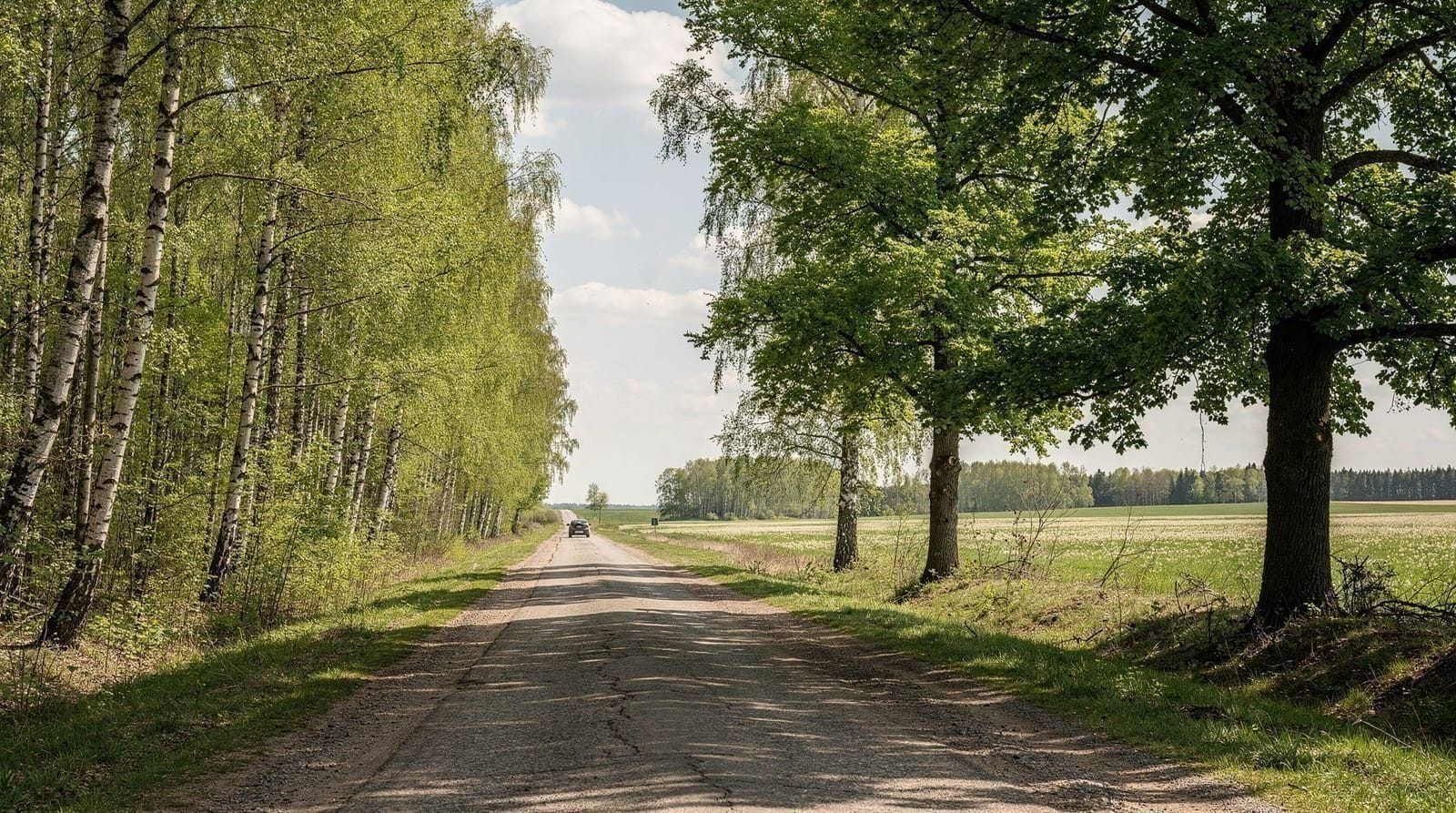
Secondary roads (100-series): Variable — most are paved but some have uneven surfaces or no central markings. Reduce speed on unfamiliar rural roads.
Forest/country lanes: Some are gravel (žvyras kelius). Rental car contracts typically restrict off-road use — check if gravel roads are permitted.
Parking
In Vilnius: The Old Town has extensive paid parking zones and restrictions. Parking inside the pedestrianised core is prohibited for most vehicles. Use the P+R lots at the city edge or paid car parks at the edge of the Old Town (€1.50-3/hour). Pay via Ringo app or parking meters.
Outside Vilnius: Free parking is the norm in smaller cities and at tourist sites. Druskininkai, Trakai, and most natural park entry points have large free car parks.
Petrol stations
Well-distributed along all major routes. Circle K, Viada, Neste, and Lukoil are the main chains. All accept card payment. Self-service is standard — insert card or use app. Attendant-served stations still exist in some smaller towns.
Driving itineraries that benefit from a car
3-day southern circuit (from Vilnius)
Day 1: Vilnius → Kernavė (45 min, UNESCO mounds) → Druskininkai (arrive afternoon, spa evening)
Day 2: Druskininkai → Grūtas Park (15 min drive) → Dzūkija National Park forest walk → Druskininkai or Vilnius
Day 3: Return to Vilnius via Trakai (30 min off route)
3-day northern circuit (from Vilnius)
Day 1: Vilnius → Kaunas (1 hour) → Ninth Fort → Pažaislis
Day 2: Kaunas → Hill of Crosses, Šiauliai (2.5 hours) → Pakruojis Manor
Day 3: Šiauliai → Anykščiai (2 hours, treetop walk) → Vilnius
Vilnius–Klaipėda–Curonian Spit (4-5 days)
Vilnius → Kaunas (day 1) → Klaipėda (day 2) → Curonian Spit overnight in Nida (days 3-4) → return via Palanga beach (day 5) → back to Vilnius or Kaunas Airport for departure.
Vilnius: Full day private assistant driverGPS, apps and staying oriented
Google Maps and Waze both work reliably across Lithuania, including rural roads, and are the simplest navigation option — no need to pay for a rental company’s GPS unit unless you prefer a dedicated screen. Download offline maps in advance if your data roaming is limited, particularly for the Aukštaitija and Dzūkija national park areas where signal can be patchy in dense forest.
The Ringo app handles paid parking in Vilnius and several other Lithuanian cities, and is worth installing before you arrive rather than hunting for it at a machine. For motorway tolls on the A1, cash or card at the barrier is simpler than trying to pre-register a foreign card with the toll system.
Car rental vs. private driver vs. guided tour: cost comparison
For a group deciding how to reach a specific destination, the maths vary a lot by group size and route. As a rough guide for a full-day excursion:
| Option | Typical cost | Best for |
|---|---|---|
| Self-drive rental | €45-90/day all-in (car + fuel + insurance) | Groups of 2-4, flexible itineraries |
| Private driver with car | €120-220/day, split across the group | Jet-lagged travellers, no interest in driving on the right |
| Guided group tour | €35-70 per person | Solo travellers and couples, routes like the Hill of Crosses |
For a solo traveller or couple, a guided tour or the train/bus combination is usually cheapest for well-served routes like Trakai and Kaunas — see trains and buses in Lithuania. For a group of three or four with a flexible itinerary, self-drive rental generally wins on both cost and freedom.
Alternatives to car rental
If you need a car for just one day’s excursion, a private driver with car can work out comparable in price (split across 3-4 people) and removes the driving stress — useful if you are jet-lagged or unfamiliar with driving on the right.
For day trips on the well-served routes (Trakai, Kaunas), the train and bus combination is cheaper and easier than renting a car. See trains and buses in Lithuania.
Frequently asked questions about car rental in Lithuania
Can I drive a Lithuanian rental car into Latvia or Estonia?
Usually yes with major operators (Hertz, Europcar, Sixt) — but notify them in advance and confirm it is permitted in your rental agreement. Cross-border driving may affect insurance coverage.
Can I drive into Belarus or Russia from Lithuania?
No — this is prohibited by all major car rental operators and is strongly inadvisable for most Western citizens. Check current government travel advisories before planning any cross-border travel to Belarus or Russia.
Is there toll on Lithuanian motorways?
The A1 (Vilnius–Kaunas–Klaipėda) has a toll section — collect a ticket at the entrance and pay at the exit (approximately €3-6 for the full Vilnius-Klaipėda stretch). Card payment accepted.
What should I do if I have an accident in Lithuania?
Call 112 (European emergency number, works throughout the EU). For minor accidents with no injuries — take photos, fill in the European Accident Statement form (provided by rental company). Contact your rental company. Insurers in Lithuania operate similarly to elsewhere in the EU.
Is automatic transmission available?
Yes, but manual (stick shift) is more common and cheaper. Most European and Lithuanian drives are manual — if you need automatic, specify at booking and verify availability, especially for economy-class cars.
Can I combine a rental car with the Curonian Spit ferry?
Yes — most rental cars are permitted on the Klaipėda–Smiltynė ferry to the Curonian Spit, but confirm this is covered in your rental agreement before booking, since some contracts restrict ferry crossings. See the Vilnius to Klaipėda and Curonian Spit guide for the full route.
Top experiences
Bookable activities with verified prices and instant confirmation on GetYourGuide.