Baltic capitals week: Vilnius, Riga, and Tallinn in 7 days
Vilnius: To riga private sightseeing stops
Can you do all three Baltic capitals in a week? Yes — the Vilnius–Riga–Tallinn route is a classic, and 7 days gives 2 days per city with 1 day for transit and the Hill of Crosses stop. Buses (Lux Express, Ecolines) connect all three capitals; the route is entirely doable without a car or flights. Budget €65-90/person/day across the three countries.
| Where | Vilnius → Riga → Tallinn (or reverse) |
| Cost | around €700-1,100/person for the week, excl. flights |
| Time needed | 7 days, 2 per city plus transit |
| Getting there | Fly into Vilnius, bus onward; fly home from Tallinn |
| Best time | May-June or September for weather and lower crowds |
The Baltic capitals triangle
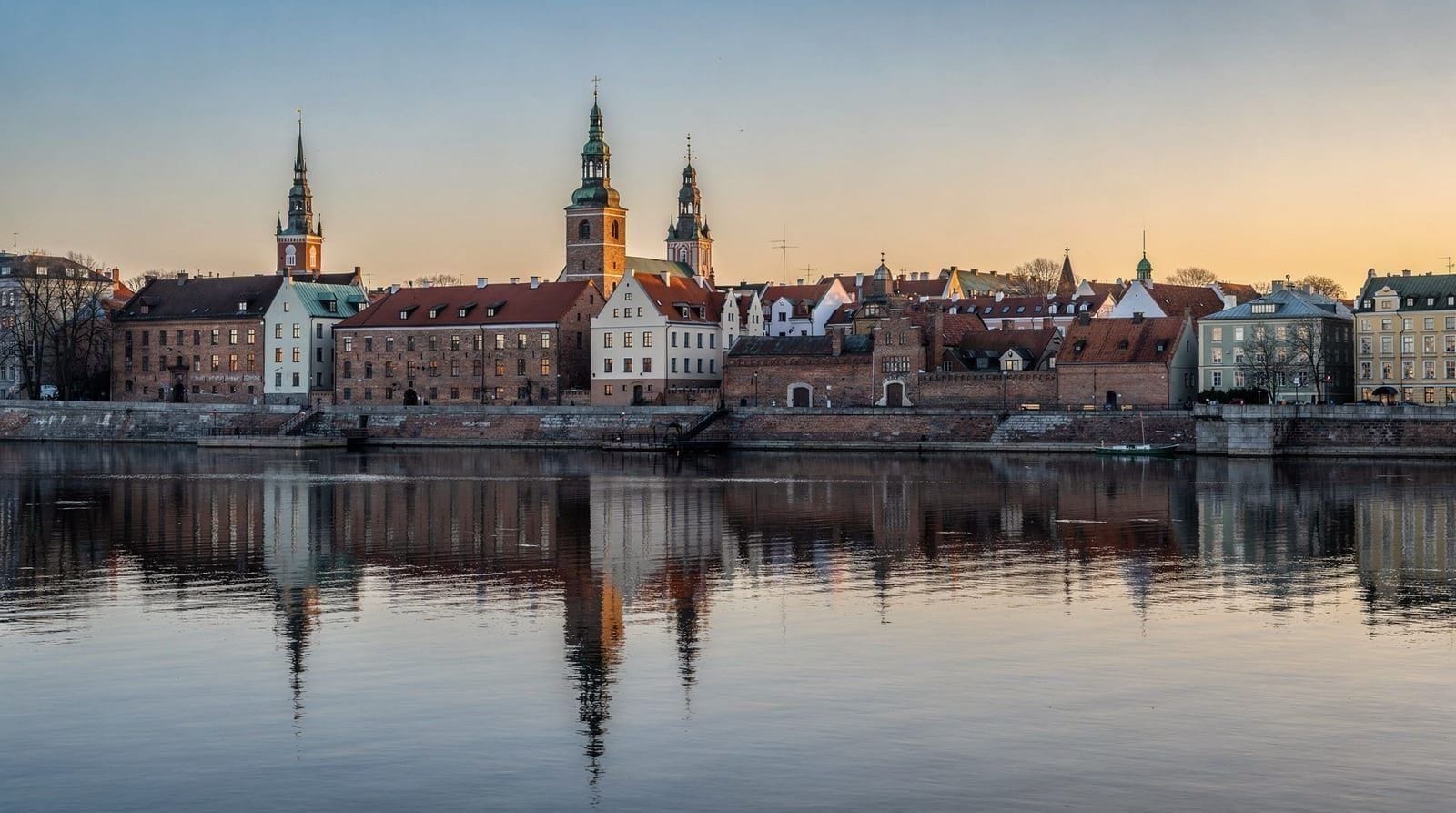
The three Baltic states — Lithuania, Latvia, and Estonia — share a post-Soviet independence story but have quite distinct national characters, architectures, and atmospheres. Seeing all three in a week is ambitious but achievable, and the north-south route (or its reverse) is one of Europe’s most satisfying ground-level journeys.
Vilnius: baroque, Catholic, medieval-meets-modernist, cheapest of the three. Riga: Art Nouveau capital, cosmopolitan, with the largest Old Town of the three. Tallinn: medieval Hanseatic gem, Estonian culture, the most visited.
This itinerary runs south to north (Vilnius → Riga → Tallinn), which suits most travellers flying into Vilnius and home from Tallinn (or vice versa — the route works equally well in reverse). Fly or overnight bus for the Tallinn–home leg.
Transport: Lux Express and Ecolines buses connect all three capitals. Vilnius–Riga: 4 hours, €15-30. Riga–Tallinn: 4.5 hours, €15-35. Comfortable coaches, on-time. No car or train needed.
Day 1: Vilnius — arrival and first afternoon
Arrive in Vilnius (VNO Airport, bus 88 to centre €1, 25 min, or Bolt €8-10). Check in near Old Town — one of the compact area’s hotels or hostels.
Afternoon (14:00–18:30): The Vilnius Old Town in a compact first pass: Cathedral Square (free), up to Gediminas Tower (€5, 45 min), down through Vilnius University courtyards (€6, 30 min), past Gates of Dawn to Užupis (45 min).
The goal on Day 1 is to understand the city’s shape and atmosphere rather than to tick every museum. Walk slowly, note what to return to.
Evening: Džiaugsmas (Trakų g. 1, mains €14-18) or Etno Dvaras (Pilies g. 16, mains €8-12) for a first Lithuanian meal. Try cepelinai if you haven’t — the national potato dumpling dish.
Day 2: Vilnius — museums and essentials
Morning (9:30): The KGB Museum (Aukų g. 2A, €8, Tue–Sun 10:00–18:00) is the most important thing to see in Vilnius and in Lithuania broadly. The former KGB headquarters — operated by the Soviet secret police — has its basement cells intact. 1.5-2 hours.
Vilnius: City highlights walking tour Vilnius: Warsaw bus transferLate morning: Jewish Vilnius heritage sites — the former Great Synagogue site, Žydų gatvė, Vilna Gaon State Museum (€4). Vilnius was once “the Jerusalem of Lithuania” with one of Europe’s greatest Jewish communities. The Holocaust erased most of it; understanding this history is essential context for the Paneriai stop you’ll pass on the way north.
Lunch: Halės turgus market (Pylimo g. 58, €5-7 for a meal) or Bistro 18 (Šv. Ignoto g. 4, €9-12 mains).
Afternoon: St Anne’s and Bernardine Church (free, the most striking Gothic facade in Lithuania), then back through Užupis if you haven’t explored it fully. Or: hot-air balloon flight over Vilnius if you want the aerial view and have booked ahead (€110-150/person, departs at dawn — plan for Day 1 pre-dawn arrival).
Evening: Sweet Root (Užupio g. 22, tasting menu €30-45, book ahead) for the best meal in Vilnius, or a craft beer evening at Špunka (Užupio g. 9).
Day 3: Vilnius to Riga — via Hill of Crosses
This is the transit day, but it includes the most distinctively Lithuanian stop on the whole route.
Option A: Organised transfer Vilnius–Riga via Hill of Crosses Several operators run one-way transfers from Vilnius to Riga with stops at the Hill of Crosses and Rundale Palace in Latvia. Journey time ~8 hours total. Cost: €35-60/person. This is the most efficient option for non-drivers.
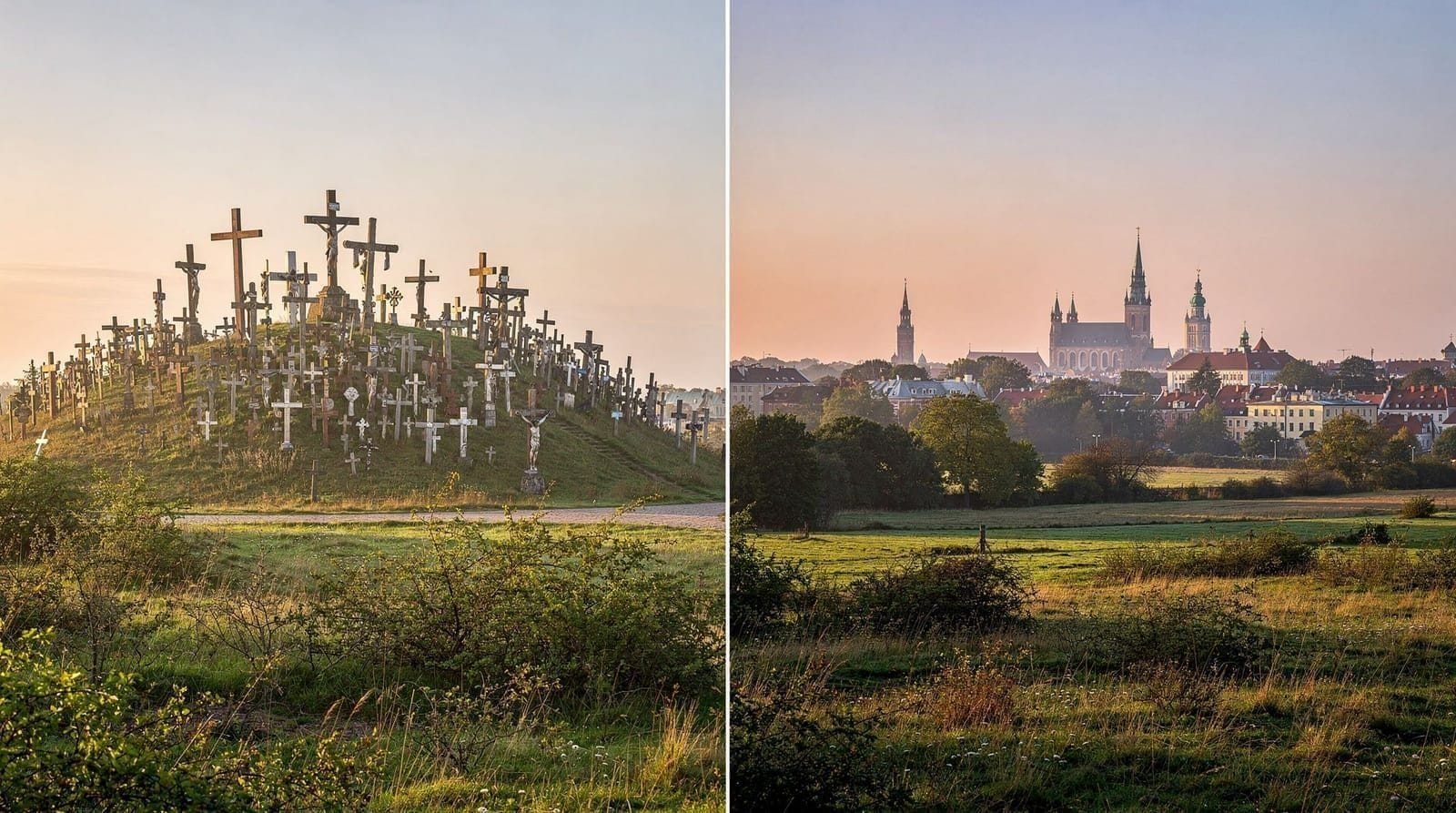
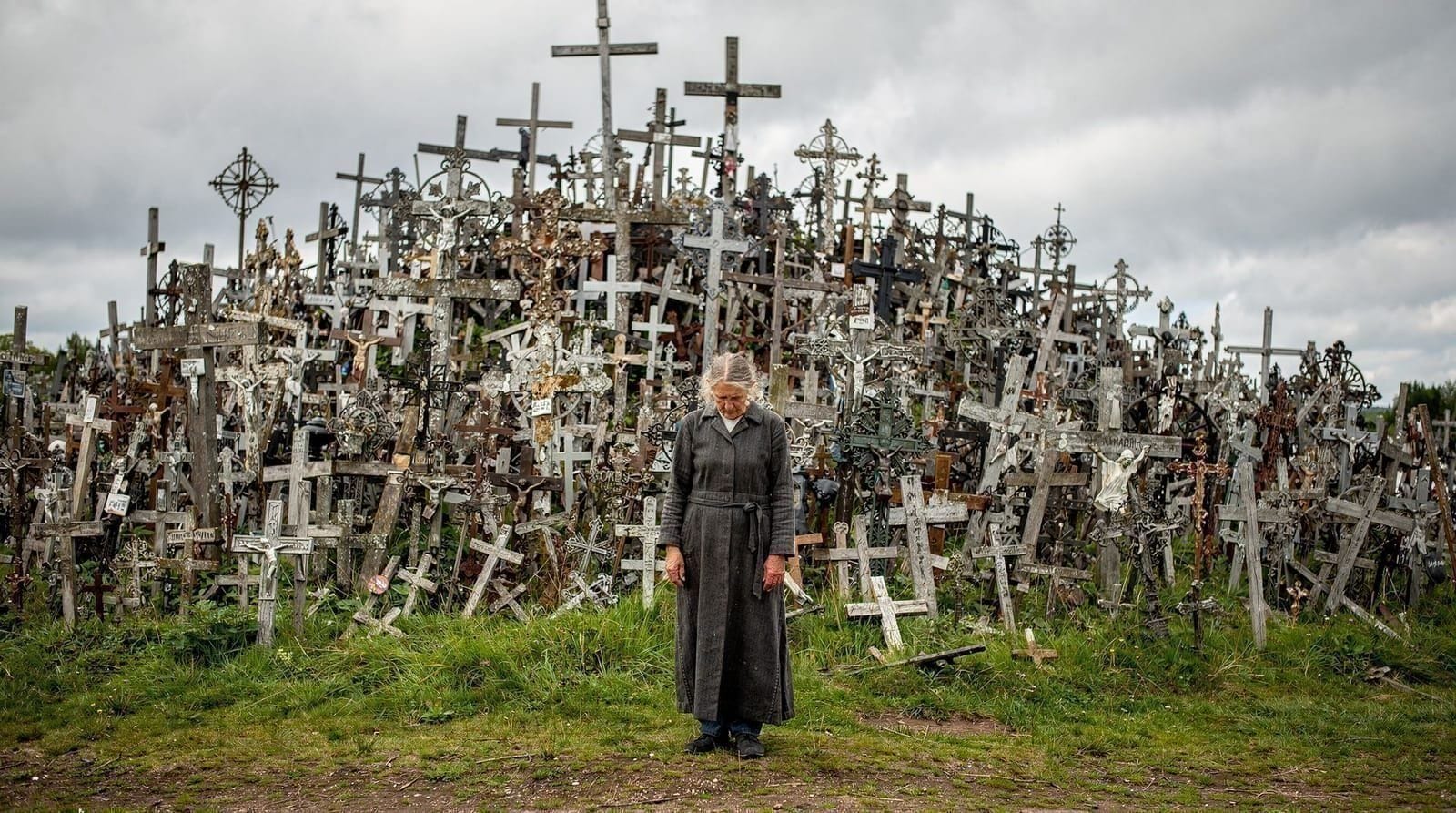
Vilnius: To riga hill of crosses rundale palaceOption B: Independent by bus Take an early Lux Express or Ecolines bus Vilnius to Šiauliai (~2.5 hours, €8-12). Taxi from Šiauliai to Hill of Crosses (12 km, €7). Spend 45-60 minutes at the site — free, open always. The hundreds of thousands of crosses, rosaries, and devotional objects represent centuries of Lithuanian spiritual resistance. Then bus or taxi back to Šiauliai, then bus to Riga (2 hours, €10-15).
A shorter alternative if you’d rather do the Hill of Crosses as a separate half-day and take a direct Vilnius–Riga connection:
Vilnius–Riga sightseeing day tripArrive Riga: afternoon or evening, depending on option chosen. Check in near Riga Old Town.
Evening in Riga: Walk the Riga Old Town (slightly larger than Vilnius’s, different in character — more Germanic, less baroque). Dinner at Rikšas (Kungu iela 3, Latvian cuisine, mains €10-16).
Day 4: Riga
Riga is beyond the scope of a Vilnius-focused site, but the key stops for two days in the Latvian capital:
Riga Old Town and Cathedral: The largest old town in the Baltics by area. The Latvian Art Nouveau buildings along Alberta iela are the architectural highlight — over 800 Jugendstil buildings concentrated in one district, the largest Art Nouveau collection in Europe.
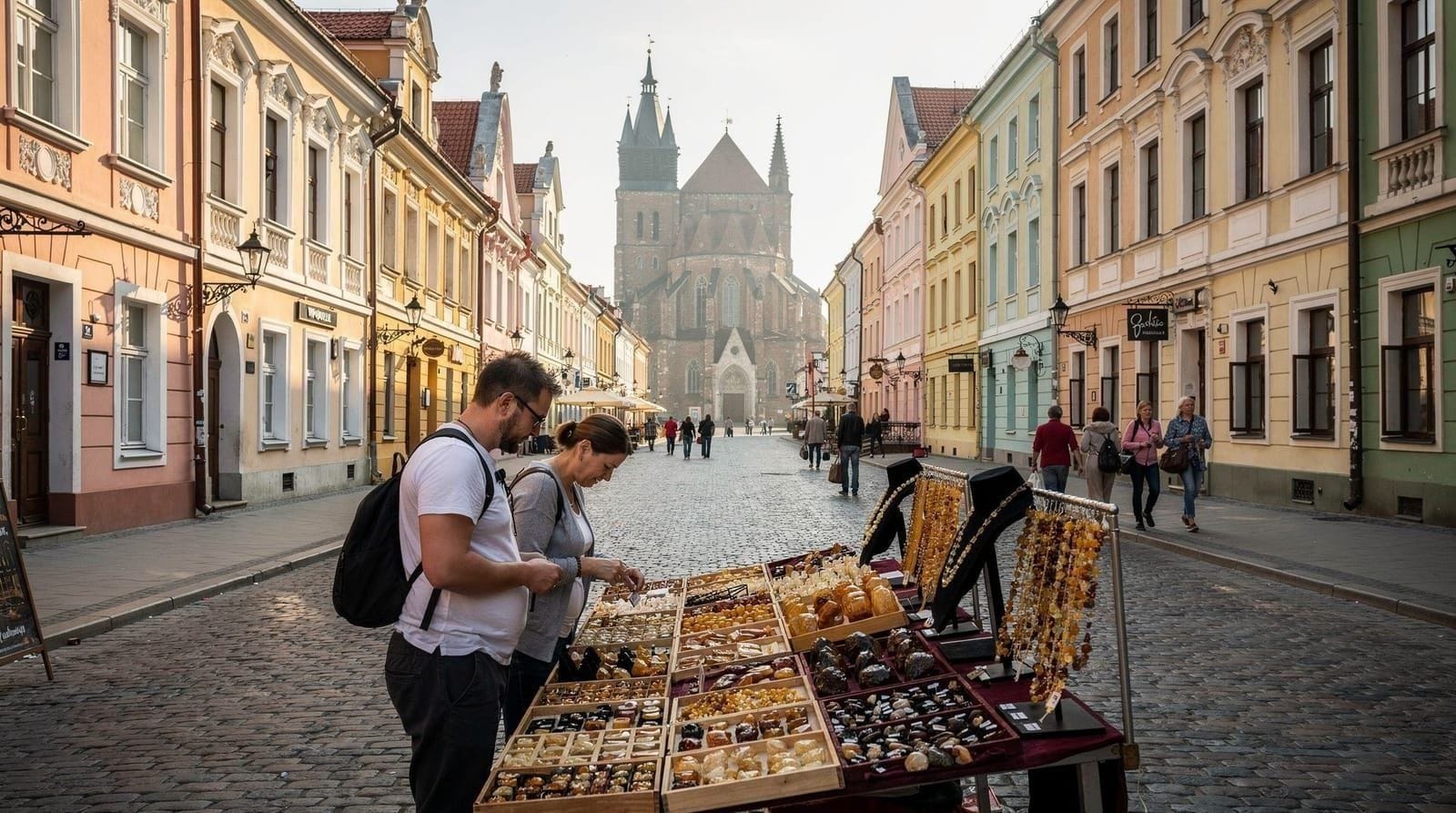
Riga Central Market: In former Zeppelin hangars by the river — one of Europe’s largest covered markets. Fresh produce, local dairy, amber, and local beer at the stalls.
Latvian Ethnographic Open-Air Museum: 10 km from the centre, this outdoor museum of traditional Latvian rural architecture and folk culture is one of the best of its type in Europe. Half-day.
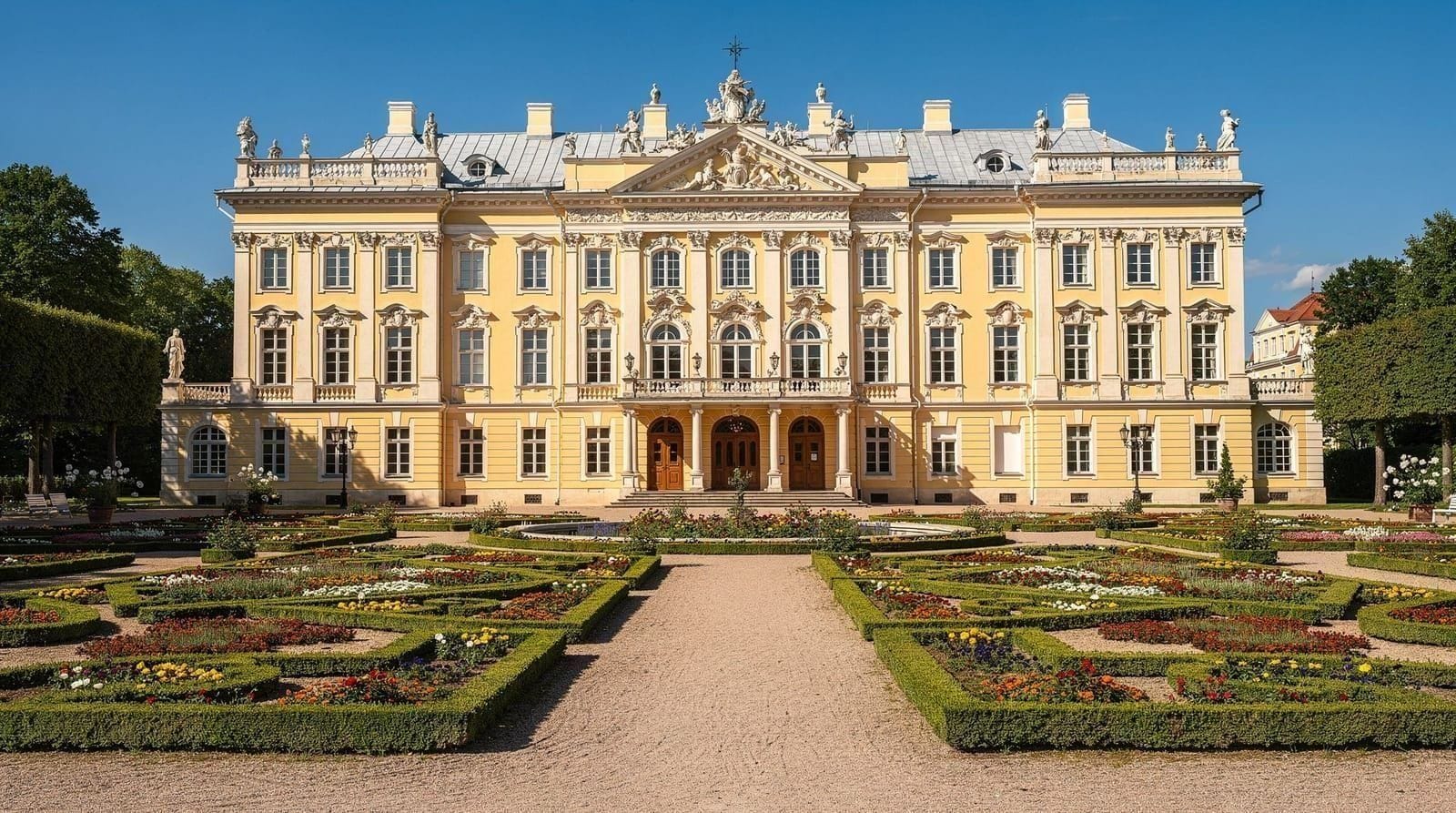
Rundale Palace (80 km south, day trip): Baroque palace with 138 rooms, designed by Bartolomeo Rastrelli (who designed the Winter Palace in St Petersburg). If you didn’t stop here on Day 3, it’s worth a half-day trip from Riga.
Dinner in Riga: Folkklubs Ala Pagrabs (Peldu iela 19): a cellar bar-restaurant serving Latvian craft beers and substantial Latvian food in a vaulted underground space. Mains €8-12, beers from €4.
Day 5: Riga to Tallinn
Lux Express or Ecolines bus, 4.5 hours, €15-35, several daily departures. The journey runs along the Via Baltica, passing through the Estonian border (no passport control for EU citizens) and arriving in Tallinn by early afternoon.
Afternoon in Tallinn: Check in near Tallinn Old Town. The Upper Town (Toompea): the fortified hill with the Dome Cathedral (free), Alexander Nevsky Cathedral (free), and the Kohtuotsa viewing platform with the city skyline view that appears on every Tallinn postcard.
Lower Old Town walk: The medieval Raekoja plats (Town Hall Square) is Tallinn’s centrepiece — arguably the best-preserved medieval square in Northern Europe. The Town Hall (€5, tower view) and the surrounding streets of 14th-15th century merchant houses are the core of the visit.
Evening in Tallinn: Leib Resto ja Aed (Uus 31, modern Estonian, mains €18-24) or Vanaema Juures (“Grandmother’s Place”, Rataskaevu 10/12, traditional Estonian cooking, mains €12-16).
Day 6: Tallinn
Morning: Medieval Tallinn in depth. The Viru Gate (15th century, one of the original city gates), the Dominican Monastery (partial ruins, €4), and the Medieval Pharmacy (Raeapteek, founded 1422 — claimed to be Europe’s oldest continuously operating pharmacy, free to view outside).
Afternoon: Kadriorg Park (15 min by tram from Old Town): the baroque park and palace built by Peter the Great. The KUMU Art Museum (Estonia’s national art museum, €10) is in the park grounds — one of the best contemporary art buildings in Northern Europe.
Kalamaja district: The hipster neighbourhood northwest of Old Town, similar in spirit to Vilnius’s Užupis but Estonian in character. The Telliskivi Creative City (former industrial complex converted to market, bars, and studios) has the best street food and independent shopping in Tallinn.
Evening: F-Hoone (Telliskivi 60a, Kalamaja, open kitchen, mains €12-18) or NOA Restaurant (Ranna tee 3, fine dining, mains €24-35, worth booking for a last-night occasion).
Day 7: Tallinn departure
Most flights from Tallinn (Tallinn Airport, TLL, 4 km from centre) depart morning or early afternoon. Grab a final coffee at Kohvik Rukis (Pikk 7, Old Town, flat white €3) before heading to the airport (taxi ~€10, 15 min; bus €2, 30 min).
If flying evening: consider a half-day trip to Lahemaa National Park (70 km from Tallinn, Estonia’s most accessible nature reserve with manor houses, coast, and bog walks). Car rental needed.
Transport and budget summary
Inter-city transport:
- Vilnius → Šiauliai/Hill of Crosses: bus €8-12 or tour €35-60
- Šiauliai → Riga: bus €10-15 (~2 hours)
- Riga → Tallinn: Lux Express/Ecolines €15-35 (~4.5 hours)
- All buses bookable at luxexpress.eu or ecolines.net
Daily budget comparison (2026):
- Vilnius: cheapest — meals €25-35, accommodation €60-90 mid-range
- Riga: slightly more — meals €30-40, accommodation €70-100
- Tallinn: most expensive — meals €35-50, accommodation €80-120
Total week budget (per person): €700-1,100 excluding flights.
Vilnius: To riga private sightseeing stopsVariations on this route
Reverse direction: Flying into Tallinn and out of Vilnius works equally well and can be cheaper depending on the season — check both directions before booking flights. The itinerary reads the same in reverse, just flip Day 1 and Day 7.
Short on time — cut to 5 days: Drop one day from Vilnius and one from Riga, keeping a single day in each and the full two days in Tallinn (most visitors rate it the most immediately impressive of the three). See the 7 days Lithuania highlights itinerary if you’d rather spend the whole week in Lithuania instead of splitting across three countries.
Add more time: With 10 days, add a day in Riga for Rundāle Palace and a day trip from Tallinn to Lahemaa National Park. The 10-day Lithuania grand tour is a Lithuania-only alternative if the Baltic-triangle pace feels too rushed.
Which city to prioritise if you’re short on time
Anyone who’s done the full triangle comes away with opinions — worth knowing before you book. The Vilnius vs Riga and Vilnius vs Tallinn comparison guides go into more depth than the two lines below:
Vilnius wins on food-to-price ratio and underrated museums (the KGB Museum is the single best thing on the whole route). Riga wins on architecture — nowhere else in the Baltics has anything like the Art Nouveau district. Tallinn wins on medieval atmosphere and is the easiest to fall in love with on a first visit, which is also why it’s the most crowded in summer.
Trains, buses, and getting around within each city
There’s no direct rail link connecting all three capitals yet (Rail Baltica is under construction), so buses are the backbone of this itinerary — see the trains and buses in Lithuania guide for the Lithuanian leg specifically. Within each city, walking covers almost everything; none of the three old towns need public transport once you’ve arrived. Vilnius Airport connects to the centre by bus 88 (€1, 25 minutes) or Bolt (€8-10); see the Vilnius airport to city centre guide for the full breakdown, including the reverse trip if you’re flying home from Vilnius instead of Tallinn.
7-day itinerary at a glance
| Day | City | Focus |
|---|---|---|
| 1 | Vilnius | Arrival, Old Town first pass |
| 2 | Vilnius | KGB Museum, Jewish heritage |
| 3 | Transit | Hill of Crosses, bus to Riga |
| 4 | Riga | Old Town, Art Nouveau district |
| 5 | Transit | Bus to Tallinn, first walk |
| 6 | Tallinn | Medieval core, Kadriorg, Kalamaja |
| 7 | Tallinn | Departure or Lahemaa half-day |
Frequently asked questions about the Baltic capitals itinerary
Which Baltic capital is best for a first visit?
All three have different strengths. Vilnius has the best food-to-price ratio and the most underrated museums. Riga has the most impressive architecture (Art Nouveau district). Tallinn has the best-preserved medieval centre and is most developed for international tourism. If you can only choose one, Tallinn is the most immediately impressive but Vilnius offers the most for independent travellers.
How do you get between Baltic capitals without flying?
Buses are the most practical option. Lux Express and Ecolines both run comfortable coaches with Wi-Fi. Vilnius–Riga: ~4 hours, €15-30. Riga–Tallinn: ~4.5 hours, €15-35. There are no direct rail connections between all three capitals (the Rail Baltica high-speed line is under construction, expected in the late 2020s). The bus services are reliable and comfortable.
Is 2 days enough for each Baltic capital?
Two days per city is sufficient for the main highlights if you’re efficient. It’s not enough to go deep. Most people who visit all three come away with a favourite and plan a return trip — typically Vilnius or Riga, which feel less saturated with tourism than Tallinn in July–August.
What currency do you need in each Baltic capital?
All three Baltic states use the Euro — Lithuania since 2015, Latvia since 2014, Estonia since 2011. No currency exchange needed within the three countries.
Is a Schengen visa valid for all three Baltic states?
Yes. Lithuania, Latvia, and Estonia are all EU member states and members of the Schengen Area. A single Schengen visa covers all three. EU and EEA citizens travel with an ID card only. US, UK, Canadian, Australian, and New Zealand citizens are visa-free for up to 90 days within Schengen.
Is the Hill of Crosses worth stopping at on the Vilnius-Riga route?
Strongly yes. It’s the most singularly Lithuanian sight in the country — a hilltop covered with hundreds of thousands of crosses, rosaries, and devotional figures representing centuries of spiritual resistance. It takes 45-60 minutes and requires minimal detour from the main Vilnius–Riga route (12 km north of Šiauliai on the A216).
Can you do the Baltic capitals with only two days in Vilnius beforehand?
Yes, though most first-time visitors wish they’d allotted more. Two days in Vilnius covers Old Town, the KGB Museum, and Užupis comfortably, but leaves little room for Trakai. If Vilnius is the priority and the other two capitals are secondary, consider the Lithuania-focused 7 days Lithuania highlights itinerary instead, which trades Riga and Tallinn for Trakai, Kaunas, and the Curonian Spit.
Top experiences
Bookable activities with verified prices and instant confirmation on GetYourGuide.