Hot air ballooning in Vilnius — the complete guide
Vilnius: Hot air balloon ride hotel transfer
Can you go hot air ballooning in Vilnius?
Yes. Vilnius has several professional balloon operators offering flights year-round, with May through September being the best season. Flights last 1 to 1.5 hours in the air, launch from the suburbs of Vilnius or from Trakai, and cost €100-180 per person depending on whether champagne and hotel transfers are included. Advance booking of 24-48 hours is required; all flights are weather-dependent.
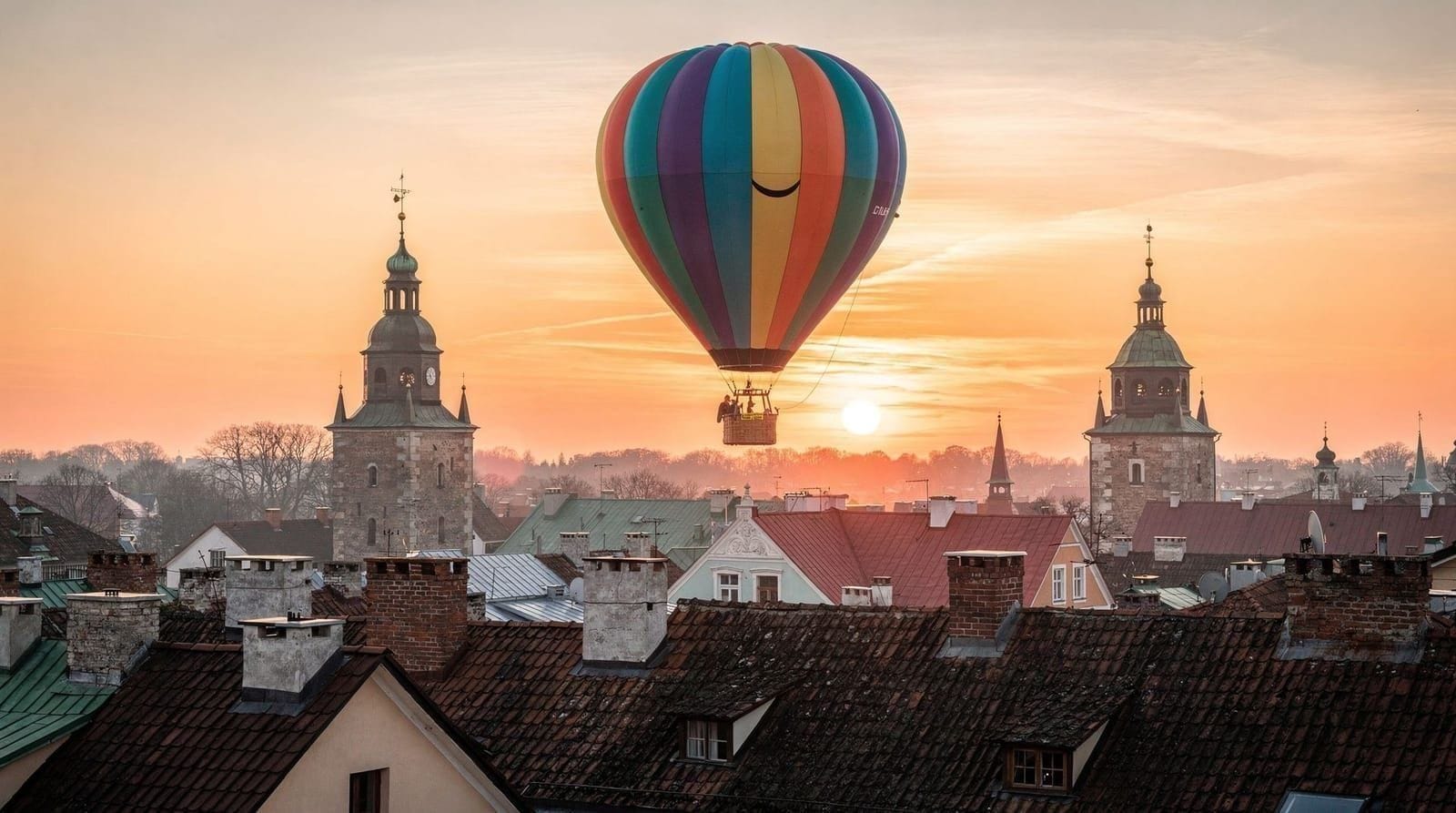
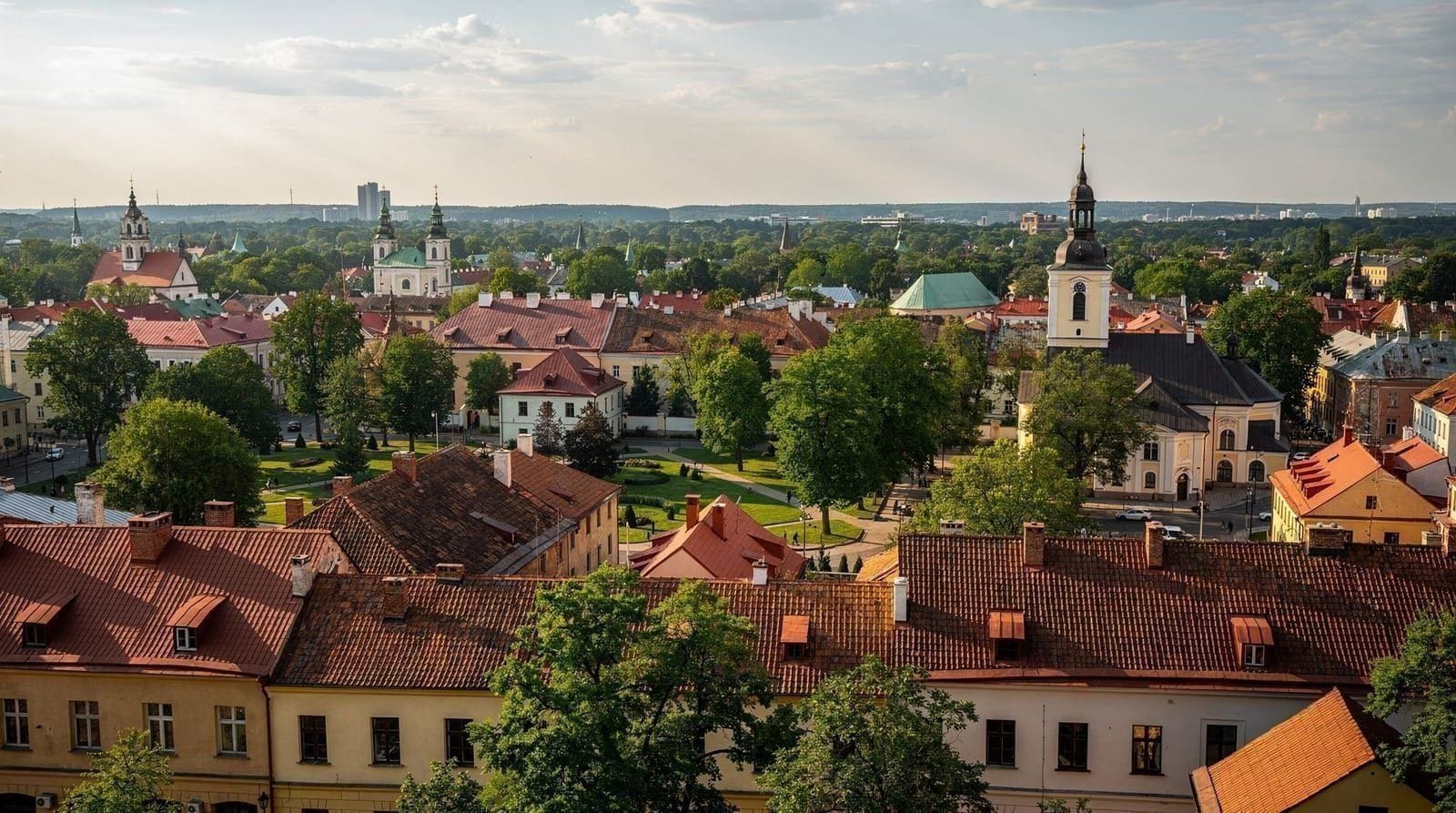
There is a particular moment, about 10 minutes after the basket lifts off the ground, when Vilnius reveals itself in a way that no map, photograph, or rooftop bar can replicate. The copper spire of St. Anne’s Church appears below you. The Neris curves west through its tree-lined valley. The Old Town’s terracotta and grey roofscape stretches out in every direction, and beyond it the forested hills that ring the city — pine and oak and birch — show you why medieval travellers called this place the Rome of the North.
| Where | Suburban Vilnius or Trakai (operator confirms on the day) |
| Cost | around €100–180/person, more with champagne + transfer |
| Time needed | 3–4 hours total (briefing, 1–1.5 h flight, landing) |
| Season | May–September best; some winter flights on clear days |
| Booking | 48–72 hours ahead; 1–2 weeks for July/August weekends |
Hot air ballooning is not an unusual activity in Lithuania. It is, in fact, one of the things the country does remarkably well.
Why Vilnius works so well for ballooning
The geography is genuinely favourable. Vilnius sits on relatively flat terrain with gently rolling hills, none of them high enough to create dangerous downdrafts or turbulent airflows for balloon flights at normal operating altitudes. The city is encircled by forests — roughly half of Vilnius’s municipal area is forested — which means landing zones are never far away.
The Baltic light is a separate matter entirely. In summer, dawn arrives early and the sun stays low for a long time, casting that long, amber, northern-latitude light that makes everything look cinematic. Morning balloon flights in June and July launch at around 05:30-06:00 to catch this light. Evening flights in the same months can take off at 20:00 and still land in full daylight.
Then there is the UNESCO Old Town. Vilnius’s historic centre is one of the largest surviving Baroque old towns in Eastern Europe, and viewing it from 400-600 metres above gives you an architectural comprehension that ground-level exploration simply cannot match. You understand the defensive logic of Gediminas Hill, the way the Old Town is cupped between the Neris and the Vilnelė rivers, and the remarkable density of church towers — Vilnius has over 30 churches, and from above they look like a forest of spires.
For context on the city you’ll be floating above, the Vilnius Old Town guide covers the key landmarks and their history. The Gediminas Tower guide explains what you’re looking at when the tower appears below you.
The best season for ballooning
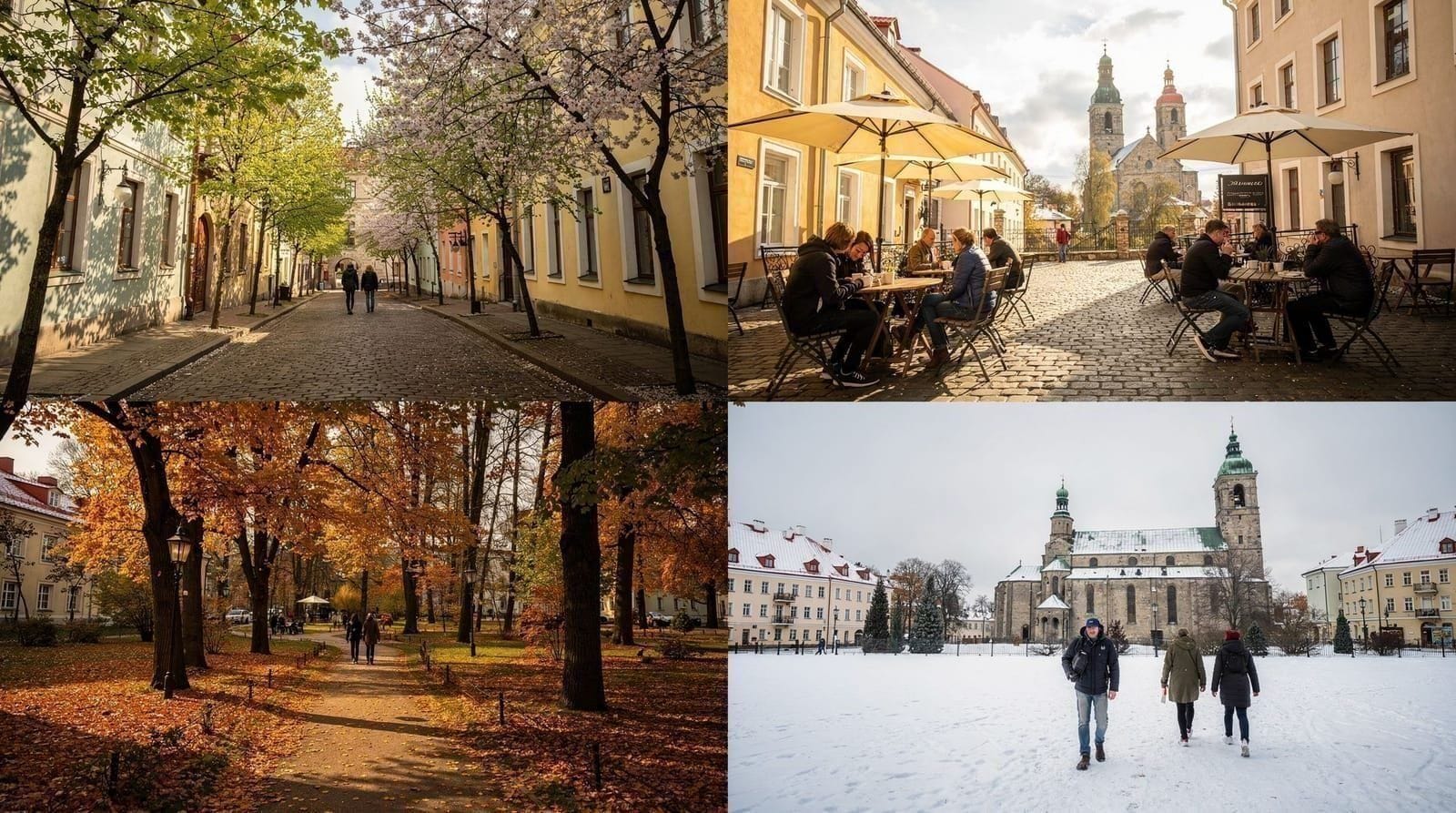
May through September is the operating window for most Vilnius balloon operators, with June, July, and August being peak months. Here is what each month offers:
May brings long days, mild temperatures, and the apple and cherry trees in blossom around the Trakai lakes — an exceptional time for the Trakai launch. Early May can still have unsettled weather.
June is ideal: warm mornings, relatively stable high-pressure systems, and the longest days of the year. Dawn flights around the summer solstice launch at 05:00 and give you extraordinary low-angle light.
July and August are the most popular and the most reliably warm. Book well in advance — these months sell out several weeks ahead for weekend flights.
September is excellent and often underrated. The morning mists that rise from the Neris in early autumn add drama to photographs, the tourist crowds thin, and the deciduous forests begin showing early autumn colour by mid-month.
October sees flights operating on clear days, but wind patterns become less predictable and the chance of cancellation rises significantly. Some operators suspend regular flights and move to bespoke bookings only.
Winter flights are offered by a small number of operators on specific calm days, but these are special-occasion experiences with very limited availability.
What a balloon flight involves from start to finish
A typical balloon excursion with one of the main Vilnius operators runs something like this:
Meeting and briefing (45-60 minutes before launch). The crew meets passengers at the designated launch field — usually in the suburbs south or west of the city centre, typically a 20-30 minute drive from the Old Town. Operators providing hotel transfers collect you from your accommodation. The pilot gives a safety briefing: how to brace for landing, where to stand in the basket, what the burner noise sounds like (louder than most people expect), and what to do if the balloon descends faster than planned (standard landing procedure, not an emergency). This is also when you sign the standard waiver.
Inflation and launch. Watching a hot air balloon inflate is a spectacle in itself. The crew lays out the envelope on the ground, attaches it to the basket, and uses a powerful fan to fill it with cold air. Then the burner — a roar of propane flame — heats the air inside and the envelope rises slowly to vertical. The basket is uprighted (passengers step in while it’s still tilted, then it lifts to vertical), and after the pilot checks conditions, the ground crew releases the balloon.
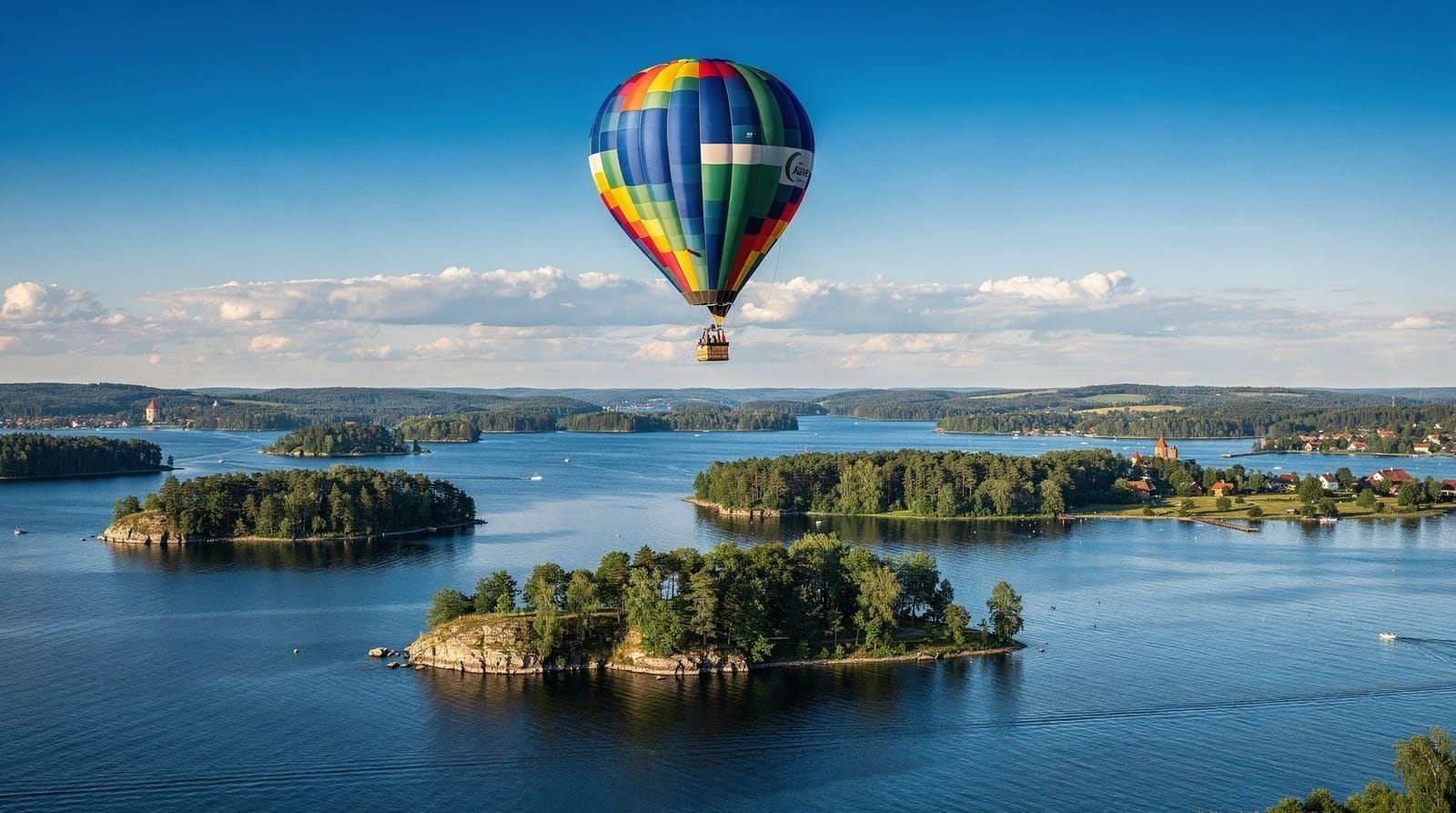
The flight (1 to 1.5 hours). Initial ascent is the most dramatic — the ground recedes surprisingly fast. Most Vilnius flights cruise at 300-800 metres, though pilots can take the balloon lower over fields or higher depending on conditions. You drift with the wind; the pilot controls altitude with burner blasts (up) and venting valves (down). Over Vilnius this typically means a southwesterly or westerly track carrying you over the Old Town and then out over the forested suburbs. Over Trakai, flights often circle the lakes at lower altitude for extended castle views.
The basket holds 8-16 passengers depending on the operator and the specific balloon. There is no engine noise between burner blasts — the silence of ballooning is one of its surprises. Birds have been observed flying alongside Vilnius balloons at altitude.
Landing. The pilot identifies a suitable field and begins a controlled descent. Landing can be gentle (a smooth touchdown on flat ground) or bumpy (a dragging landing if wind speed increases at the last moment). Pilots are trained for both; neither is dangerous. The basket is retrieved by the ground crew who have been following in a van below.
The champagne tradition. Hot air ballooning has a 240-year-old tradition of celebrating landings with champagne — the Montgolfier brothers used wine to toast the world’s first balloon flight in 1783 and to reassure French farmers that the strange object landing in their fields was harmless. Vilnius operators maintain this tradition with champagne, sparkling wine, or non-alcoholic options for drivers and those who prefer not to drink. The celebration also includes a certificate of flight.
A flight with champagne and snacks included packages this whole ceremony into the ticket price.
Vilnius city launch vs Trakai launch: which to choose
This is the most common question for first-time balloon passengers in Lithuania, and the honest answer is that both are excellent and the choice depends on your priorities.
Vilnius city launch
- Views: UNESCO Old Town, Gediminas Tower, Neris River bends, Vilnelė River valley, the forest belt around the city, distant hills to the west
- Launch zone: suburban fields 5-15km from the city centre; some operators launch from areas closer to the old town
- Best for: architectural photography, understanding the city’s layout, first-time visitors who are primarily here for Vilnius
- Drawback: the city’s suburban ring has some industrial and residential areas that are less photogenic at lower altitudes
Trakai launch
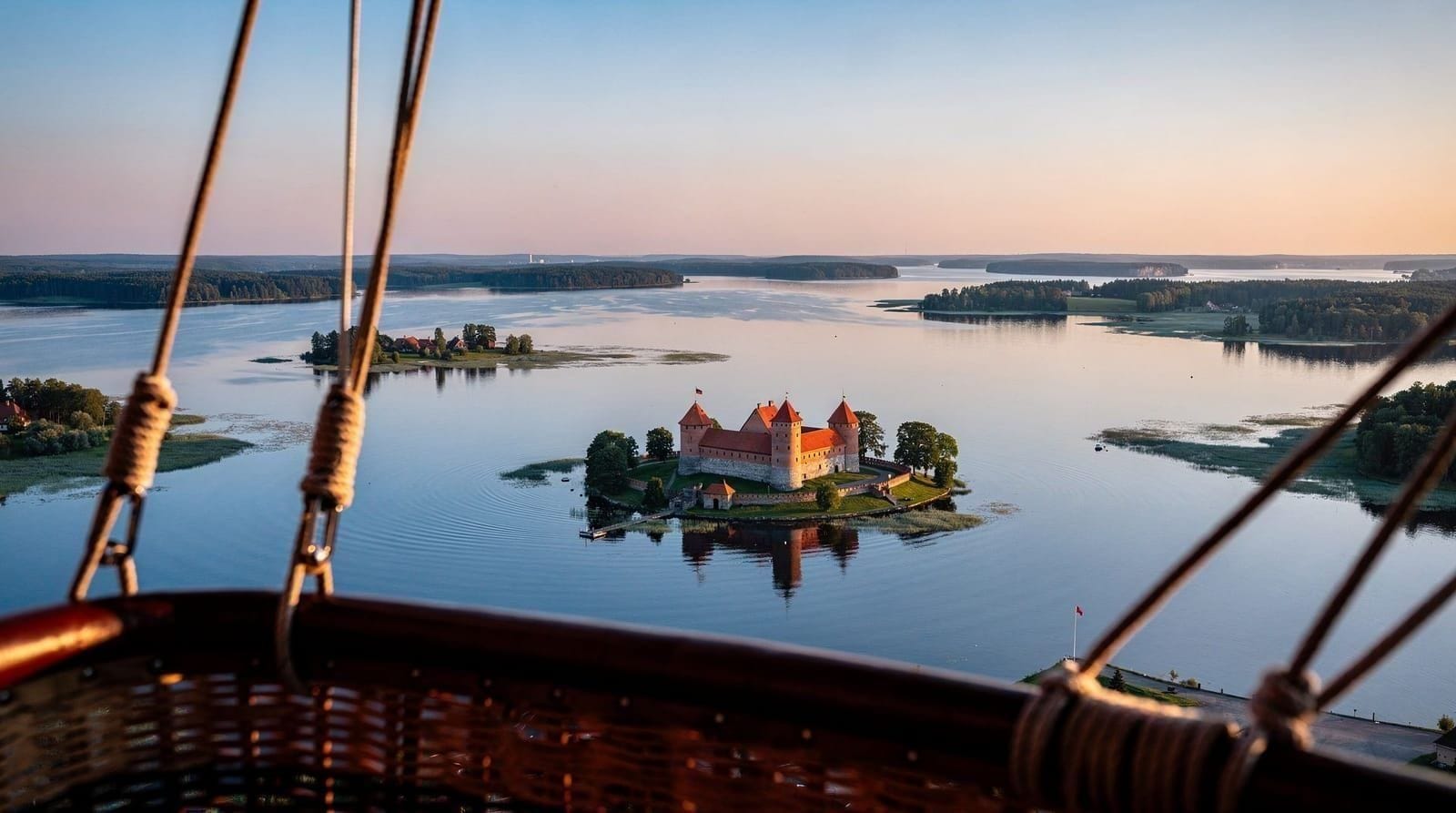
- Views: Trakai Island Castle (14th century, red-brick, on a lake island), Lake Galvė and its satellite lakes, forested peninsula, Trakai town, distant Vilnius skyline on clear days
- Launch zone: fields around Trakai, roughly 28km from Vilnius
- Best for: landscape and castle photography, those who have already explored the Old Town, families (the castle is universally recognisable)
- Drawback: requires travel to Trakai (operators with hotel transfers handle this)
The dedicated Trakai balloon flight is one of the most photographed balloon experiences in the Baltics, particularly in morning light when the castle’s reflection sits clear in the lake.
Some operators offer a flexible booking — balloon over Vilnius or Trakai — where the pilot chooses the launch point based on wind direction on the day. This is actually a sensible option: experienced pilots know which site will give better views given the day’s wind, and trusting that judgement often results in a better flight.
| Vilnius launch | Trakai launch | |
|---|---|---|
| Signature view | UNESCO Old Town rooftops | Island Castle + Lake Galvė |
| Distance from city | 5–15 km | ~28 km |
| Best for | Architecture, first-time visitors | Landscape, families, castle photos |
| Access without a car | Easier (closer transfers) | Needs a hotel-transfer package |
Prices and what is included
Prices across Vilnius operators as of 2026:
| Package | Typical price per person |
|---|---|
| Standard flight, no transfers | €100-120 |
| Standard flight with hotel transfer | €120-145 |
| Flight with champagne ceremony | €120-150 |
| Flight with champagne + hotel transfer | €130-180 |
| Private basket (couple, add-on) | €250-350 |
Children typically pay the same as adults; a few operators offer a small discount for under-12s. Most operators have a minimum group size of 4-6 passengers; if a flight doesn’t reach minimum numbers, it may be rescheduled (you will be notified in advance).
What is always included: pilot, fuel, insurance, landing certificate.
What varies: champagne ceremony (check booking details), hotel transfer (explicitly stated in premium packages), photographs (some pilots take group shots, others don’t — bring your own camera).
The hotel transfer balloon package is the most convenient option if you don’t have a rental car — early morning launches are difficult to reach by public transport.
The main operators
Oreivystės Centras (Ballooning Centre) is the largest and longest-established hot air balloon operator in Lithuania, operating since the 1990s. They run multiple balloons and are the operator behind most of the GetYourGuide-listed flights. English-speaking pilots; professional equipment; strong safety record.
Sky Lithuania is a smaller operator with a focus on premium and private flights. Particularly popular for proposals, anniversaries, and corporate events. Their balloons are slightly smaller (typically 8 passengers maximum) which some people prefer.
Both operators are members of the Lithuanian Aviation Association and operate under Lithuanian Civil Aviation Authority regulations.
Booking logistics and weather policies
Book at least 48-72 hours in advance for weekday flights. Weekends in July and August can sell out 1-2 weeks ahead. Morning flights (the most photogenic) sell faster than evening flights.
Weather cancellation policy: if the pilot determines conditions are unsafe, the flight is cancelled and rescheduled or refunded. You will typically receive a cancellation message the evening before or by 04:00 on the morning of the flight. Accepted reasons for cancellation include wind speed above 20km/h, thunderstorm risk, rain, and visibility below minimums.
Note that a mild overcast sky does not necessarily mean cancellation — diffuse cloud cover can actually produce beautiful, even lighting for photography. The pilot’s decision is final.
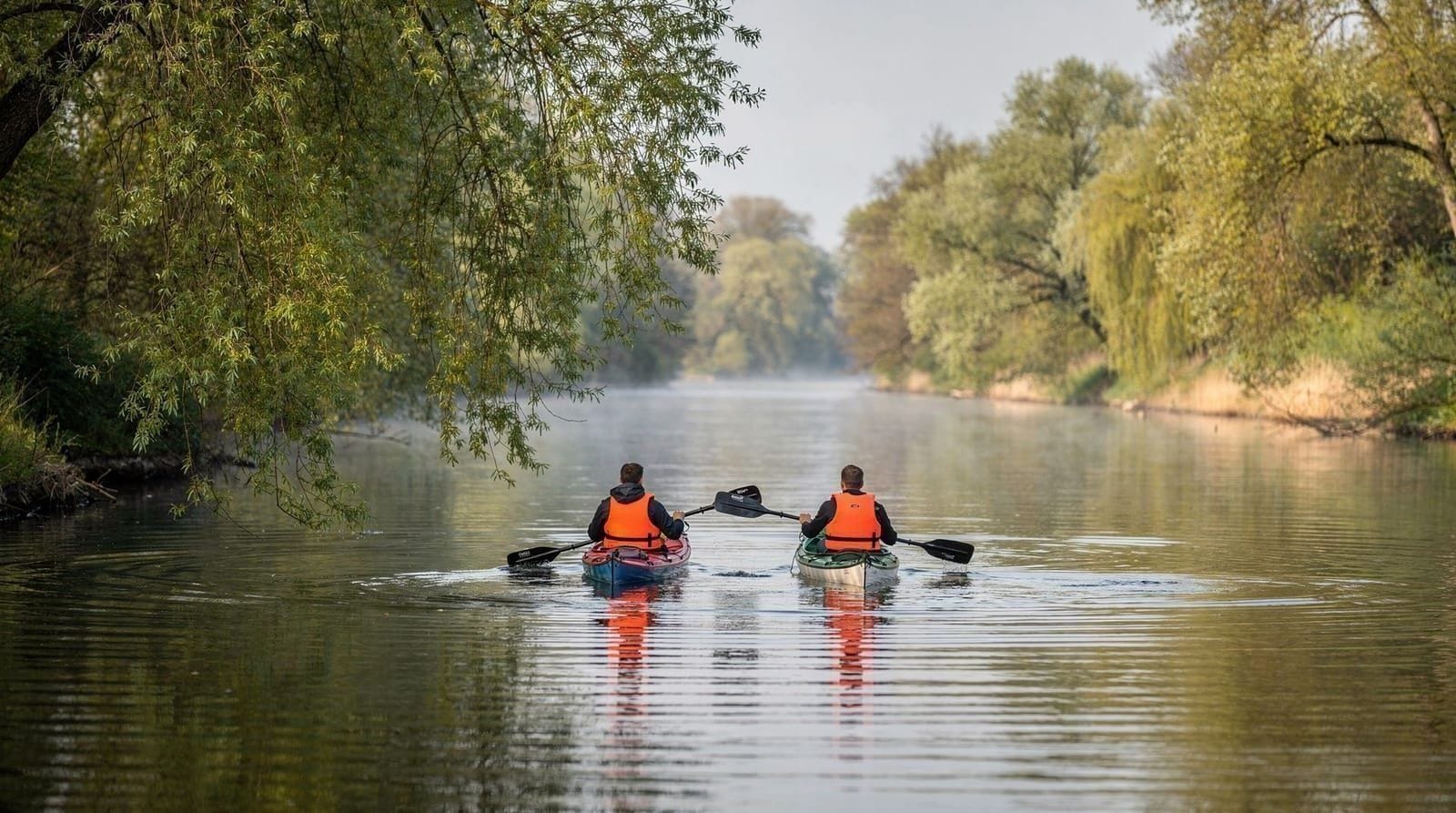
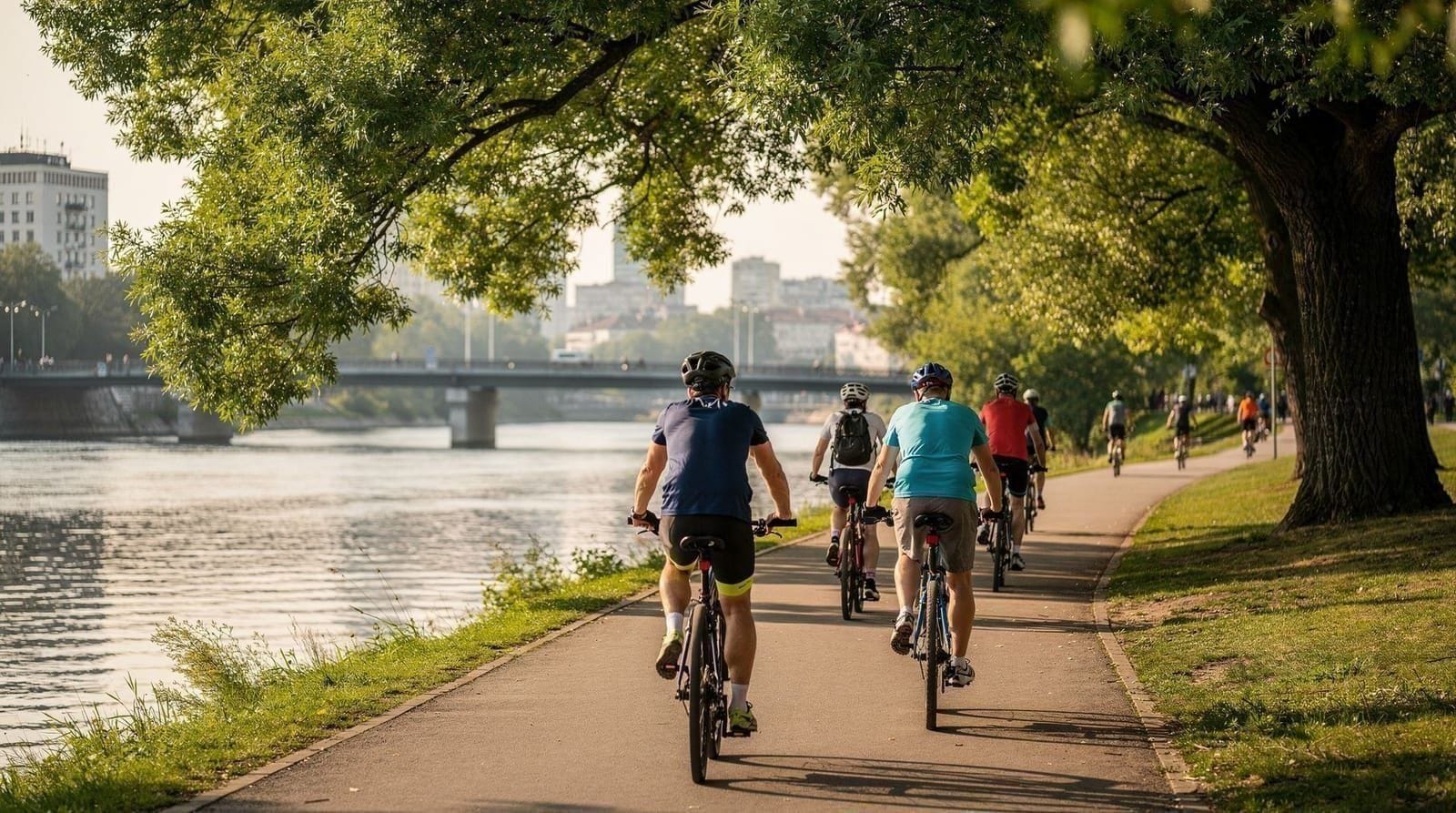
If your travel dates are fixed, book early and have a backup plan if weather cancels your flight. Vilnius in summer offers plenty of alternatives: the kayaking options near Vilnius and cycling routes around the city are both excellent days out if ballooning is delayed.
What to wear and bring
Clothing:
- Layers are essential. At ground level in July it might be 22°C; at 600 metres above Vilnius it is typically 16-18°C with wind chill making it feel cooler
- Closed-toe shoes with flat, non-slip soles — no heels, no open sandals
- Light jacket or windproof layer regardless of ground temperature
- Cap or hat (the burner radiates heat upward; a cap protects your head)
- Avoid long flowing scarves or loose clothing near the burner area
Gear:
- Camera or smartphone — bring it fully charged; basket vibration is minimal, so longer exposures are possible
- Sunglasses (the sunrise angle in morning flights is directly at eye level)
- Small water bottle (stays cooler in a bag)
Leave at home or in the van:
- Large backpacks (no room in the basket)
- Umbrellas (dangerous near the burner and envelope)
- Valuable items you wouldn’t want to lose on a windy landing
Family ballooning in Vilnius
Balloon flights are genuinely family-friendly with the right children. Most operators set the minimum age at 6 years. Children should be tall enough to see over the basket edge — typically around 120cm — both for safety and so they can actually enjoy the views.
The flight itself is very smooth. The basket does not sway or rock; it moves with the wind, so there is no relative motion to cause motion sickness. The burner is loud and startling at first — this is worth warning children about before launch. After the first blast, most children find it exciting rather than frightening.
Teenagers consistently rank balloon flights among their favourite experiences in Lithuania, so if you’re planning a trip around how many days to spend in Vilnius, a balloon flight is worth building into a 3-4 day itinerary.
Photography tips for balloon flights
The golden hour light of morning and evening flights is your friend. A few specifics:
Camera settings: Start with auto mode and adjust as the light changes. In the low morning light, ISO 400-800 with a fast shutter speed (1/500 or faster) will freeze any motion.
Composition: Include the balloon envelope in some shots — use a wide-angle lens to capture the envelope, basket, and landscape together. Other passengers and the pilot add scale and human interest.
The castle shot (Trakai): Shoot as you approach from the north or northeast — this gives you the classic view of the island castle with its reflection. The water is usually still in early morning.
Old Town from above: The St. Anne’s and Bernardinai church complex, Vilnius Cathedral and its bell tower, the Gates of Dawn at the south end of the Old Town — these are the set-piece landmarks. Identify them on a map before the flight.
Phone cameras: Modern flagship phones shoot excellent landscape photos at altitude. The main limitation is zoom — a phone can’t reach the castle detail that a telephoto lens can. Bring both if possible.
How ballooning fits into a Vilnius trip
Ballooning works best in the context of a longer Vilnius stay rather than as a day-trip activity from another city. Because flights are weather-dependent and early morning, you need to be staying locally and have schedule flexibility.
A 3-4 day Vilnius itinerary naturally accommodates a balloon flight: book it for day 2 or 3, leaving day 1 free to orient yourself in the city and identify the landmarks you’ll want to spot from above.
If you’re also planning to visit Trakai on the ground, do the balloon flight first — seeing the castle from above makes the ground visit even more interesting because you understand the castle’s relationship to the surrounding lakes. The Vilnius to Trakai guide covers all the ground-level options.
For accommodation near the Old Town, where to stay in Vilnius covers the main neighbourhoods and their proximity to balloon transfer pickup points.
Getting around Vilnius before and after your flight
Early morning balloon flights (05:00-06:00 departure) are almost impossible to reach by public transport, which is why hotel transfer packages exist. If you have a rental car — see the car rental in Lithuania guide — driving to the launch site is straightforward. The operator will send coordinates.
Evening flights are more accessible: most launches happen 1-2 hours before sunset, which in July means 19:00-20:00, when buses and taxis are running normally.
After your flight, the champagne ceremony typically takes 30-45 minutes, and hotel transfers bring you back by mid-morning (for dawn flights) or by 22:00-23:00 (for evening flights).
Final decision guide
Choose Vilnius city launch if: you want to understand the city’s layout from above, architectural photography is your priority, or you haven’t yet had time to explore the Old Town on foot.
Choose Trakai launch if: the island castle is on your must-see list, you want the most photogenic single image, or you prefer landscape over urban.
Choose flexible Vilnius or Trakai if: you want the pilot to optimize the experience based on conditions — experienced local pilots consistently make good calls.
Choose champagne package if: you’re celebrating anything at all, or if you simply want the full traditional experience rather than just the flight.
Vilnius ballooning is reliable, professionally run, and one of the genuinely memorable things to do in Lithuania. The views justify every euro.
Booking as a gift or for a special occasion
Balloon flights are a popular gift booking in Lithuania — for anniversaries, birthdays, proposals, and retirement celebrations. Most operators sell a gift voucher that the recipient redeems by choosing their own date within a validity window (typically 6-12 months), which sidesteps the weather-dependency problem: the giver doesn’t have to guess a date that will actually fly.
If you’re planning a proposal, tell the operator in advance. Pilots who are told ahead of time can often time the champagne ceremony, choose a quieter corner of the basket for the moment, or coordinate with the ground crew for photos on landing. Spontaneous in-flight proposals without advance notice are riskier — the basket holds up to 16 people and privacy is limited, so a booked private basket for two is the more reliable option if the moment itself needs to be undisturbed.
Corporate and group bookings (full-basket charters) are available from both main operators for team events or larger celebrations, usually priced per basket rather than per person above a certain group size — contact operators directly for group rates, as these are not standard listed packages.
Booking a balloon flight as part of a longer trip
Because flights are weather-dependent, the single most useful piece of trip-planning advice is to schedule your balloon flight early in your stay rather than on the last morning. If it’s cancelled for weather, an early slot leaves you a backup day; a last-morning slot leaves you nothing. This matters most on shorter trips — see how many days in Vilnius for how a balloon flight fits into a 3-day or longer itinerary, and best time to visit Vilnius for the fuller seasonal picture beyond just ballooning weather.
If you’re staying somewhere with easy access to both the Old Town and the suburban launch fields, transfers are simpler — see where to stay in Vilnius for neighbourhoods that keep early-morning pickup times reasonable.
Frequently asked questions about hot air ballooning in Vilnius
How far in advance should I book a balloon flight in Vilnius?
Book 48-72 hours in advance as a minimum. In July and August, popular morning slots on weekends can sell out 1-2 weeks ahead. If your travel dates are fixed, book as soon as you’ve confirmed your accommodation.
What happens if my flight is cancelled due to weather?
Operators will contact you the evening before or early morning with any cancellation. You will be offered a rescheduled flight on a later date or a full refund. Because Vilnius weather in summer is generally stable, cancellations happen but are not the norm — perhaps 1 in 5 flights faces some delay or rescheduling.
Can I take a hot air balloon flight in Vilnius in winter?
A handful of operators offer winter flights on specifically clear, calm days. These are rare and require flexibility — you cannot plan a winter flight in advance, only stay alert for weather windows. The lack of leaves on the trees in winter gives unusually clear views of the Old Town skyline.
Is there a weight limit for balloon passengers?
Most operators have a weight limit of 100-120kg per person. This is a basket weight distribution issue, not a safety stigma. Contact the operator directly if you have questions; they can often accommodate passengers above standard limits by adjusting basket loading.
Can I book a private balloon for two people?
Yes. Private basket bookings for couples (2 passengers) are available from both main operators and cost roughly €250-350 for the pair. These are popular for proposals and anniversaries. Book well in advance and inform the operator if it’s a special occasion — many pilots are willing to coordinate a champagne moment at altitude.
Should I choose a morning or evening flight?
Morning flights (05:00-06:00 in June/July) generally have calmer, more stable air and the low golden light most photographers prefer, but they demand an early start and are harder to reach without a hotel transfer. Evening flights are more convenient logistically — public transport and taxis run normally — and still catch good light in the hour or two before sunset, though conditions can occasionally be slightly less stable than dawn.
Is hot air ballooning safe?
Yes, within the normal safety profile of a well-regulated aviation activity. Lithuanian operators fly under Civil Aviation Authority regulation, pilots are licensed and experienced, and flights are cancelled rather than flown in unsafe conditions. Landings can be bumpy but pilots are trained for both smooth and dragging touchdowns; neither is dangerous.
Top experiences
Bookable activities with verified prices and instant confirmation on GetYourGuide.