Kayaking and canoeing near Vilnius — the complete guide
Vilnius: Sunset kayak tour verkiu park
Duration: 3 hours
Where can you kayak or canoe near Vilnius?
The four best options are the Neris River through the city (rentals from €46, tours available), Verkiai Regional Park sunset kayak tours (around €58, 3 hours), the Vilnelė River through bohemian neighbourhoods (2-hour canoe trip), and the Trakai lakes around the island castle (guided tours from €35, 2.5 hours). All are accessible from Vilnius within 30-60 minutes. No prior experience is required for most routes.
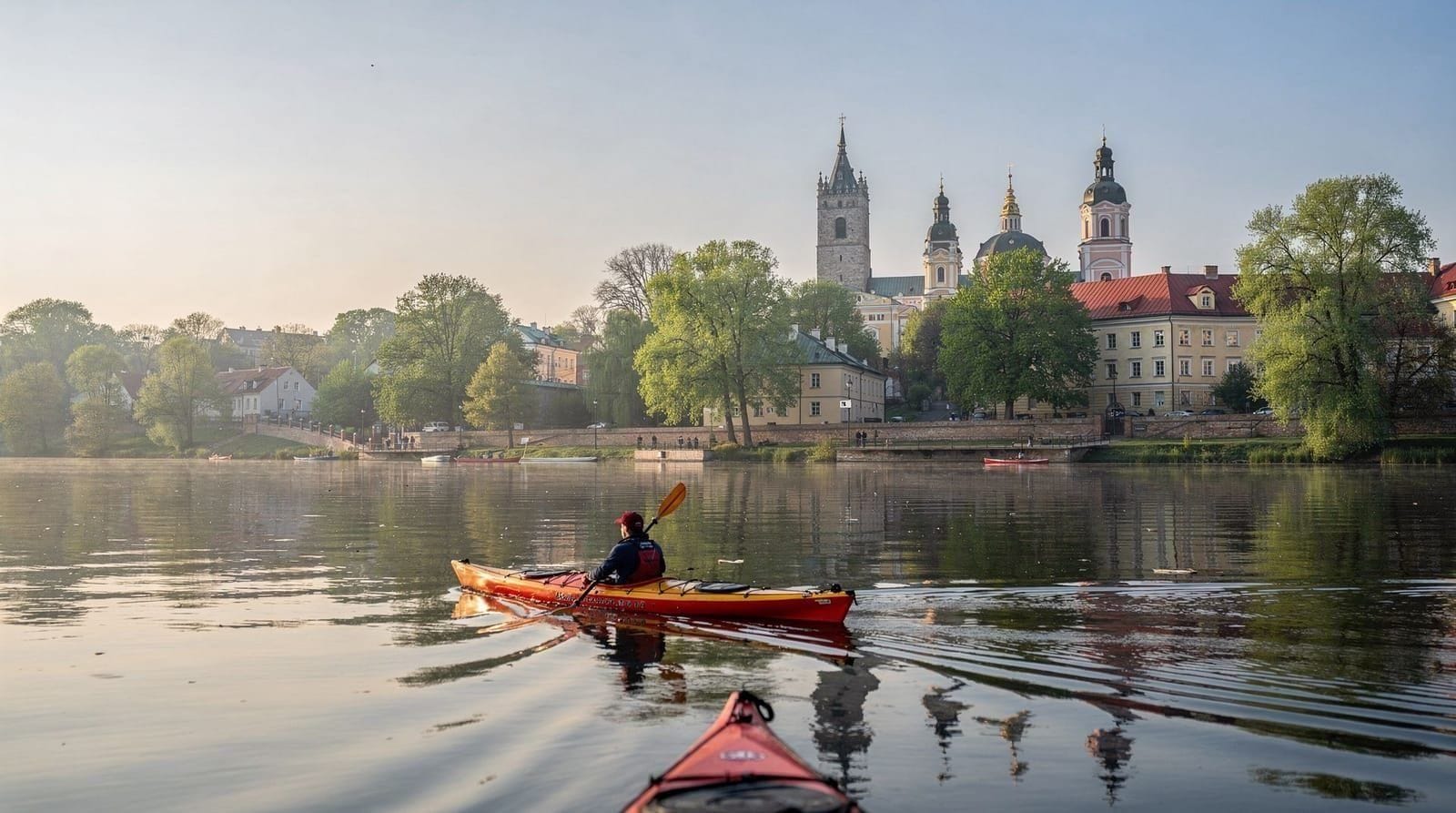
The Neris River enters Vilnius from the northwest, bends in a wide arc past the forested hills of Verkiai, curves below the Old Town, and exits east through the industrial suburbs. Most visitors see it from bridges. Paddling it is a completely different experience — the city seen from water level, the cathedral spires and Gediminas Tower appearing above the treetops as you drift around a bend, kingfishers darting ahead of the kayak.
Vilnius is not typically associated with water sports, but it should be. The city has over 100 rivers and streams within its municipal boundaries, and the Neris and Vilnelė offer genuinely excellent kayaking conditions — slow currents, clean water, and scenery that ranges from urban-historic to forested wilderness, sometimes within the same hour’s paddle.
| Best for first-timers | Neris River rental (city section, no rapids) |
| Best guided experience | Verkiai sunset kayak tour |
| Cost range | around €35–58 per person depending on route |
| Time needed | 2–3 hours for most routes |
| Season | May–September; June is the sweet spot |
| Booking | Advance booking recommended for Verkiai and Trakai in summer |
The five best kayaking and canoeing options near Vilnius
Here is an honest ranking of the main options, from most accessible to those requiring more planning:
1. Neris River rental — urban paddling through the city
The Neris River through Vilnius is the most accessible kayaking option. The river is 30-60 metres wide through the city section, with a gentle current of 1-2 km/h. It has no technical whitewater sections in this stretch. A solo kayak renter with no previous experience can manage the standard routes without difficulty.
Several operators rent kayaks and canoes from launch points on the Neris within or near the city. The typical rental includes the vessel, paddle, life jacket, and a waterproof bag for your phone and valuables. Some operators offer shuttle service — you paddle downstream and they collect you at a downstream point, so you don’t have to paddle back against the current.
The most popular city route runs from the Žirmūnai bridge area downstream past Vingis Park and the Old Town before turning back, or continuing downstream toward the Paneriai forest area for a full-day paddle. This gives you views of the Old Town riverbank, Gediminas Tower rising above the trees, and the dense pine forests of Vingis Park from the water.
Neris River kayak rental costs around €46 for a 3-hour session and is available from spring through autumn.
What makes it special: The combination of historic city skyline and forested riverside is unusual in European capitals. You can paddle beneath the Old Town and watch trams crossing the Green Bridge above you.
Practical notes: The Neris current is gentle enough that paddling upstream is manageable for fit adults, but a downstream-only route with shuttle pickup is easier. Bring sun protection — the river is exposed.
2. Verkiai Regional Park sunset kayak tour — the most atmospheric option
This is the standout guided kayaking experience near Vilnius, and it’s one worth prioritising if your schedule allows it.
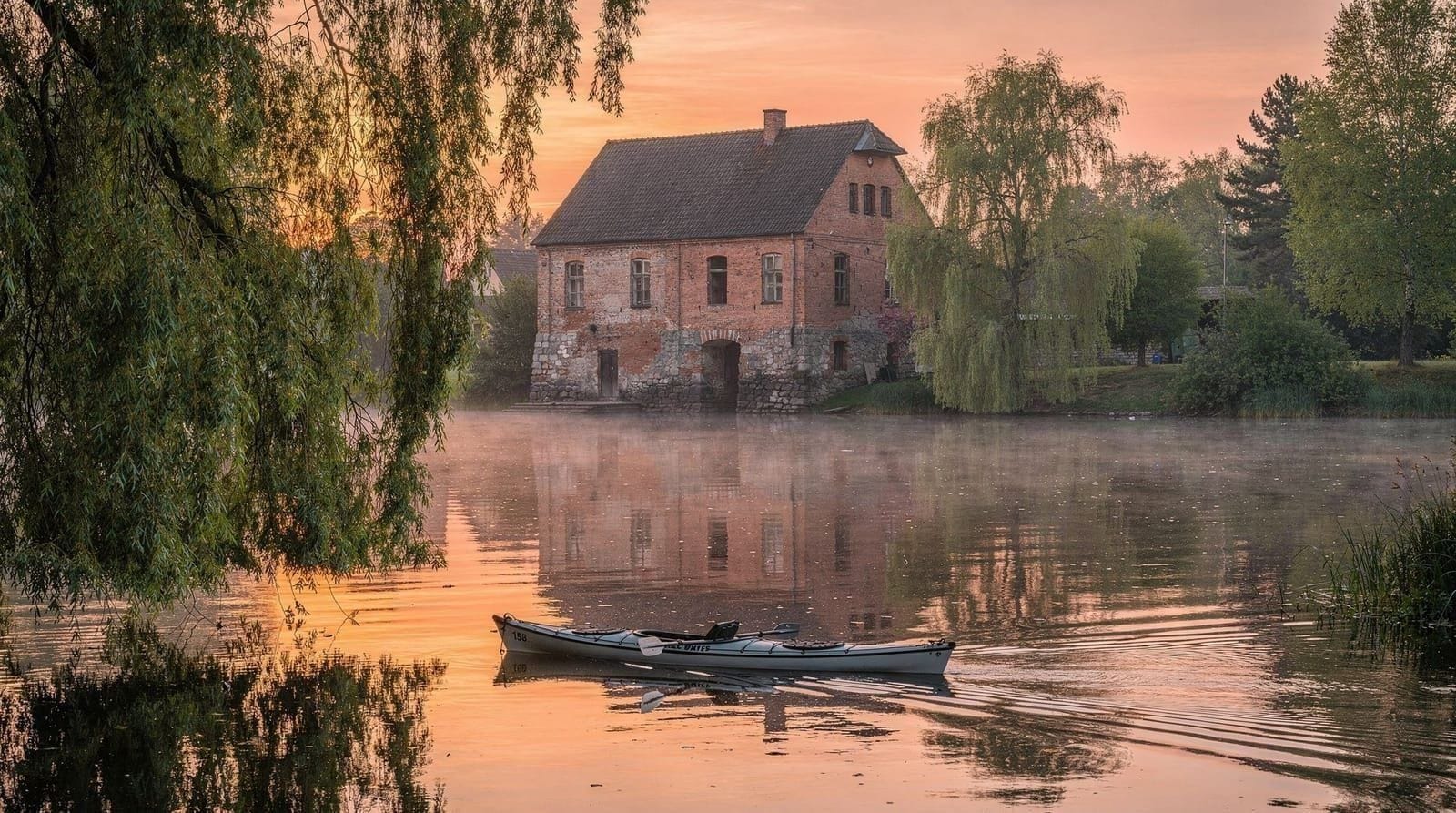
Verkiai Regional Park covers 4,800 hectares of forest, river valleys, and meadows immediately north of the city. The Neris winds through forested gorges in this section, with limestone escarpments rising above the water and forests of oak, elm, and ash meeting at the riverbank. At sunset in June or July, when the light turns amber and bats begin hunting over the water, the Neris through Verkiai looks like a scene from a nature film.
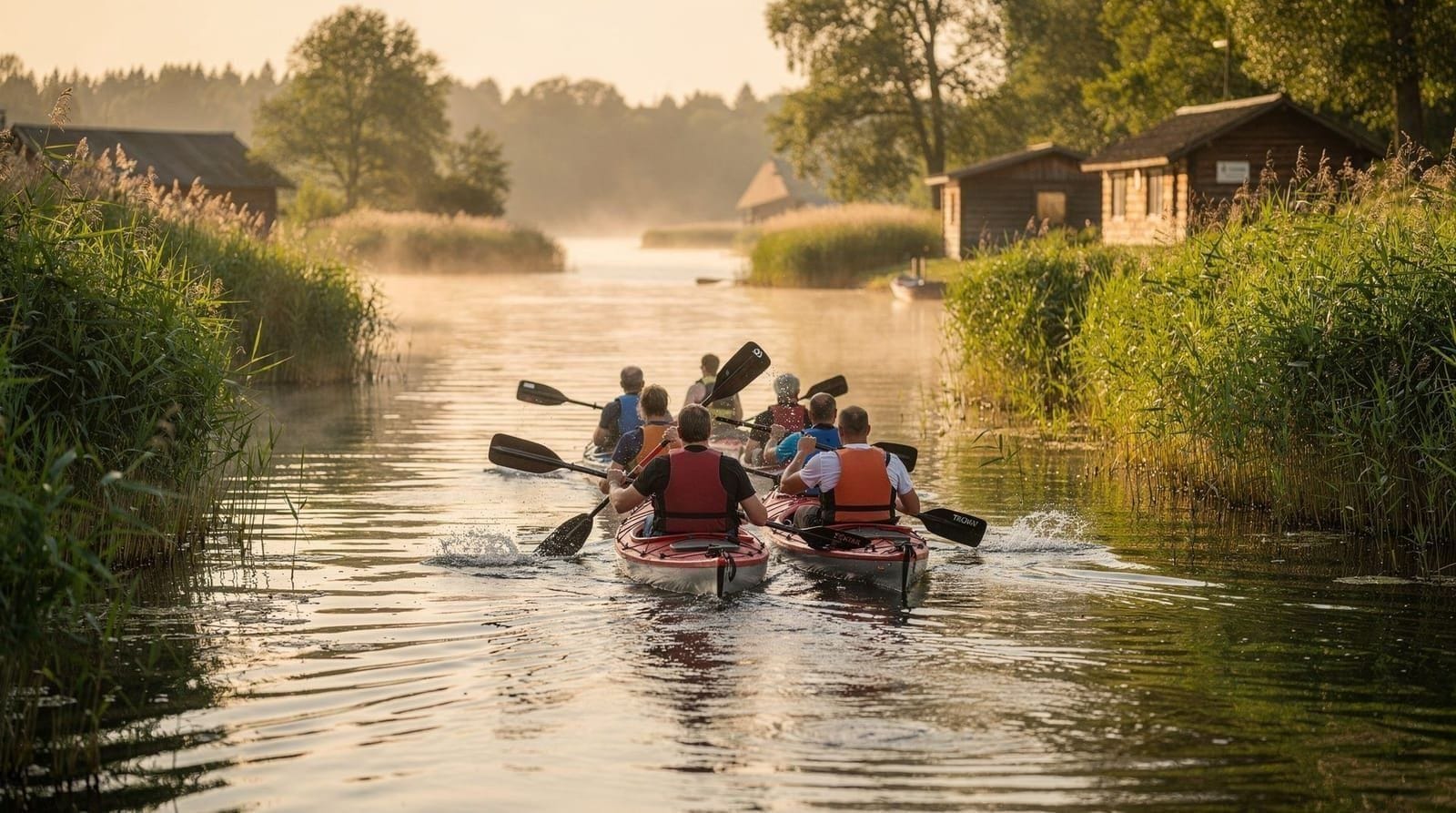
The sunset kayak tour in Verkiai Park is a guided 3-hour session that costs around €58 per person. The guide explains the park’s ecology, the water quality improvements of recent decades, and the wildlife you might encounter — kingfishers, herons, and in the early mornings, otters. The tour is suitable for beginners.
What makes it special: The combination of forested gorge scenery, golden evening light, and expert-guided wildlife spotting makes this the best single kayaking experience near Vilnius. Groups are kept small.
Practical notes: Tours depart in late afternoon to catch the sunset; exact times depend on the season. Transport from Vilnius to the launch point is arranged by the operator. Book at least 48 hours in advance in summer.
3. Vilnelė River canoe trip — the bohemian river route
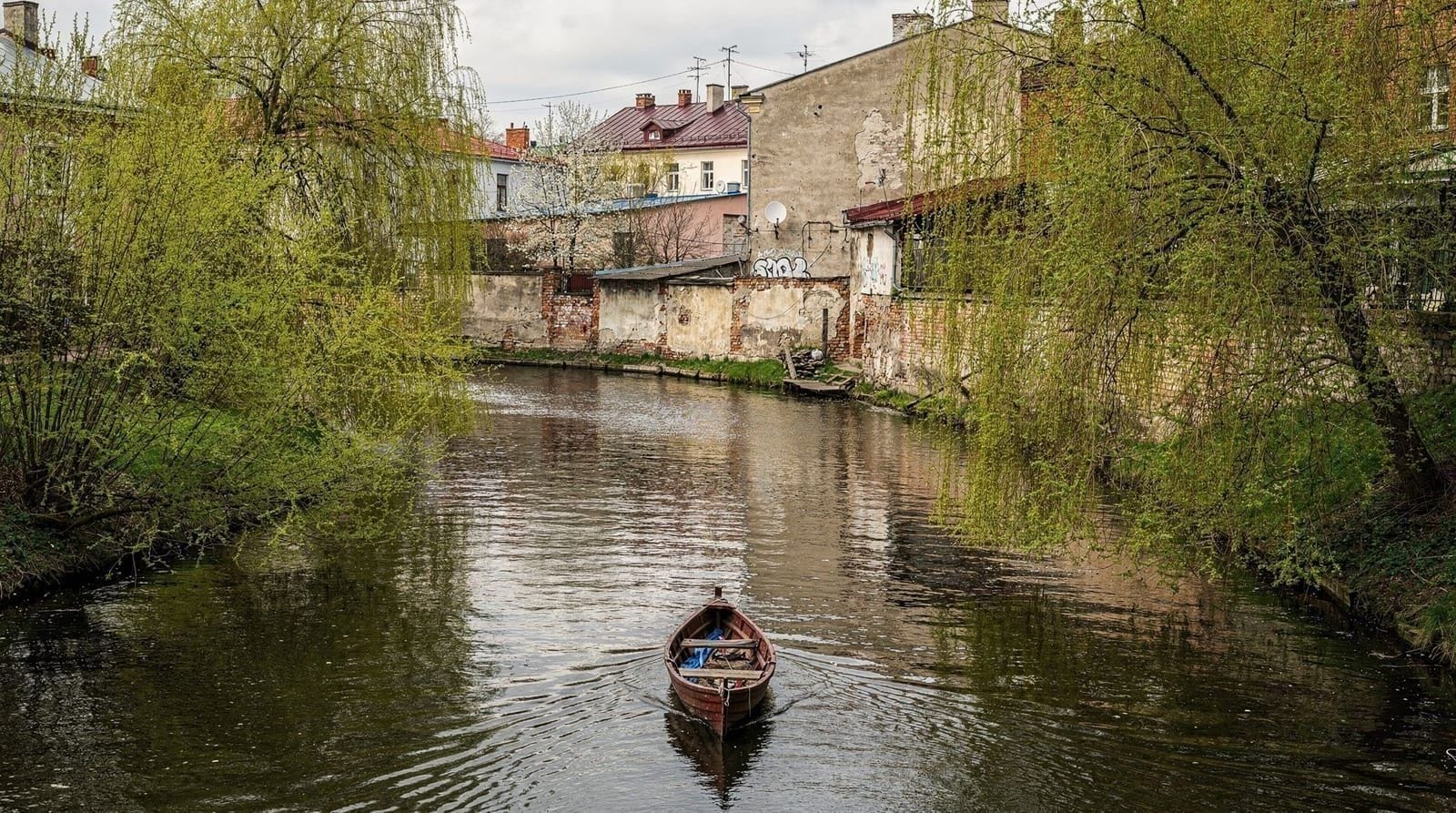
The Vilnelė (the smaller river whose name means “little Vilnia”) flows through Užupis — the self-declared bohemian republic — before joining the Neris. A canoe trip on the Vilnelė is a 2-hour experience that gives you a completely different perspective on the parts of Vilnius that most visitors see only from bridges and streets.
The route passes under old stone bridges, alongside the overgrown banks of Bernardinai Garden, and through the narrow limestone-walled gorge section before the Vilnelė broadens toward its confluence with the Neris. The scale of the river is intimate — the banks are close, which means you can hear the city sounds on both sides and catch glimpses of courtyards and gardens from the water.
The Vilnelė River canoe trip is a 2-hour guided experience. Groups are small. The Vilnelė is shallow in late summer (August-September) — operators will inform you if water levels affect the route.
What makes it special: The Vilnelė flows through the most characterful parts of old Vilnius. Paddling it gives you access to views and perspectives that are entirely invisible to pedestrians.
Practical notes: The Vilnelė is narrower than the Neris, with overhanging trees and some gentle bends requiring basic paddle control. Still suitable for beginners but slightly more technical than the Neris.
For context on the Užupis neighbourhood you’ll be paddling alongside, the Užupis Republic guide covers the history and character of this remarkable district.
4. Trakai lakes — paddling around a medieval island castle
Trakai is 28km southwest of Vilnius, and its main attraction — the 14th-century brick island castle — sits on an island in Lake Galvė, connected to the shore only by wooden bridges. The approach by kayak or canoe, rounding a forested peninsula to suddenly see the red-brick towers reflected in the water, is one of the great small moments of Lithuanian travel.
Lake Galvė and the surrounding Trakai lakes form a complex of interconnected water bodies separated by narrow straits and forested islands. A full morning’s kayaking can cover the main castle island, the adjacent Galvė strait, and several of the smaller surrounding lakes. The water is clear and the shores are forested; birdlife includes white-tailed eagles, which nest in the Trakai area.
The guided kayak tour at Trakai runs 2.5-3 hours and costs from around €35 per person. Guides explain the castle’s history while paddling — the Teutonic Knight battles, the Karaite community that settled here in the 14th century, and the castle’s dramatic 20th-century restoration. Rental-only options are available for those who prefer to explore independently.
What makes it special: The combination of medieval architecture, island geography, and reflective lake water is exceptionally photogenic. Morning visits have the advantage of calmer water before afternoon winds.
Practical notes: Trakai is a major tourist destination and the waterfront gets busy in July and August. Morning tours before 10:00 are significantly quieter. See the Vilnius to Trakai guide for transport options — the train from Vilnius takes 35 minutes.
5. Žemaitija National Park canoe — the wild nature day trip
This is not near Vilnius — Žemaitija National Park is in western Lithuania, roughly 3-3.5 hours from Vilnius by car — but it deserves mention as the premier full-day canoeing experience in Lithuania. The park’s Lake Plateliai and the rivers feeding it pass through genuine boreal wilderness: bog, old-growth pine, and shorelines where you might not see another person for an hour.
The Žemaitija canoe and picnic trip is a full-day excursion including transport from the Klaipėda area. For visitors splitting their Lithuania trip between Vilnius and the Curonian Spit coast, this makes an excellent addition to a Klaipėda base.
Which option should you choose?
| Route | Difficulty | Duration | Guided or self-paddle | Best for |
|---|---|---|---|---|
| Neris River, Vilnius | Easy | 3 hours | Both | First-timers, families, a quick city-water fix |
| Verkiai sunset tour | Easy | 3 hours | Guided | Atmosphere, wildlife, photography |
| Vilnelė canoe | Easy-moderate | 2 hours | Guided | Seeing Užupis from an unusual angle |
| Trakai lakes | Easy | 2.5–3 hours | Both | Combining paddling with the castle visit |
| Žemaitija (day trip) | Easy | Full day | Guided | Wild nature, if based near Klaipėda |
If you only have time for one, the Verkiai sunset tour edges out the others on atmosphere alone, but the Trakai lakes make the most sense logistically if you’re already building a Trakai day trip into your itinerary — you get the paddle and the castle in one outing.
Logistics and practicalities
Getting to the launch points
Neris River city rentals: Multiple launch points exist within or just outside the city centre. The operator will send GPS coordinates; most are reachable by public transport or a 10-minute taxi from the Old Town.
Verkiai Park: The park is in the northern suburbs, about 7km from the city centre. Operators offering Verkiai tours handle transport from a central Vilnius meeting point. By bike, the Neris cycling path runs all the way to Verkiai — the cycling in and around Vilnius guide describes this route.
Trakai: Train from Vilnius Geležinkelio stacija takes 35 minutes. Trains run regularly throughout the day. The kayak launch points in Trakai are 10-15 minutes’ walk from the station. See trains and buses in Lithuania for schedules.
What to bring
For any kayaking session:
- Change of clothes in a waterproof bag (you may get splashed; on the Vilnelė you will almost certainly get splashed)
- Water bottle (minimum 1 litre per person)
- Sun protection (hat, sunscreen on exposed skin)
- Footwear that can get wet — old trainers or sandals with heel strap
- Waterproof case or dry bag for phone — operators usually provide one but bring your own to be sure
- Light snack for sessions over 2 hours
Leave at the car or accommodation:
- Large backpacks (no room in the kayak)
- Valuables beyond your phone
- Anything that can’t survive a dunking
What operators provide
All reputable operators include:
- Kayak or canoe (single and tandem options usually available)
- Paddle
- Life jacket (PFD) in your size
- Basic safety briefing
- Waterproof bag for phone
Guided tours additionally include:
- Experienced guide with knowledge of the route and local ecology
- Safety cover throughout the trip
- Sometimes snacks and water
Group and family options
Most operators accommodate groups of 4-20 people. Larger groups should contact operators directly for coordinated bookings — a fleet of kayaks and canoes can be arranged for corporate events, stag and hen parties, and school groups.
Canadian-style tandem canoes are available from most operators and are the best choice for families with children or for paddlers who want a more relaxed experience than a solo kayak. The tandem canoe is inherently more stable and allows one person to rest while the other paddles.
Solo kayaks are the most responsive and the most fun for people who want to control their own speed and direction. Sit-on-top kayaks (as opposed to sit-in) are more comfortable for beginners and make self-rescue much simpler if you capsize.
Water quality and safety
The Neris River has undergone significant improvement since the 1990s. Under Soviet rule, industrial discharge went largely untreated; since Lithuanian independence in 1990 and especially since EU accession in 2004, water treatment standards have transformed the river. The sections used for recreational kayaking are monitored regularly.
The Vilnelė is similarly improved, though it runs through a more urbanised catchment and can carry higher turbidity after heavy rain. Operators monitor conditions and will postpone trips if recent heavy rainfall has significantly affected water quality.
Standard advice: don’t drink the river water; wash hands before eating; if you capsize, rinse any cuts. None of this is unusual for urban river kayaking anywhere in Europe.
The Neris in the city section has no weirs or rapids on the recreational routes. The current is gentle enough that a beginner who capsizes can easily self-rescue or reach the bank. Life jackets are mandatory and are provided. Operators have trained guides on all group tours.
The Verkiai Regional Park context
Since the Verkiai sunset tour is the top recommendation, it’s worth understanding what the park actually is. Verkiai Regional Park (Verkių regioninis parkas) is the largest urban park in Lithuania and one of the largest urban parks in the Baltic states at 4,800 hectares. It encompasses the Neris river valley north of Vilnius, multiple forest types, meadows, and the ruins of Verkiai Palace (a late 18th-century estate of the Vilnius bishops).
The park is home to over 200 plant species, 150 bird species, and an assortment of mammals including roe deer, wild boar, and foxes. The Neris through Verkiai is noticeably wilder in character than the city section — the banks are less developed, the trees are larger, and the bird activity is substantially higher.
Access to Verkiai Park on foot or by bike from the city centre takes about 1-1.5 hours via the Neris riverside cycling and walking path. By bus, several routes serve the northern suburbs near the park.
For those who want to combine kayaking with other activities in Verkiai Park, the Vilnius parks and green spaces guide covers the park’s walking trails and viewpoints.
Combining kayaking with other Vilnius activities
Kayaking works well as a complement to the more typical Vilnius experiences. Here are logical combinations:
Morning kayak + Old Town afternoon: A 3-hour morning session on the Neris (08:00-11:00) leaves the rest of the day for the Old Town. By the time you finish paddling, the cathedral and main sights are fully open and the midday tourist peak hasn’t yet arrived.
Vilnelė canoe + Užupis walk: The Vilnelė canoe route ends near the Užupis neighbourhood. Change out of your river clothes, walk across the bridge, and explore the Republic of Užupis — a logical sequence that connects two of Vilnius’s most distinctive experiences.
Trakai kayak + castle visit: Paddle in the morning, visit Trakai Castle in the afternoon. The kayak gives you the exterior lake views and photography; the castle interior (an excellent historical museum) is best visited in early afternoon when the morning tour buses have left. The Vilnius to Trakai guide covers the full day-trip logistics.
Sunset kayak + dinner: The Verkiai sunset tour ends as the restaurants are getting busy. Depending on your pickup and return, a 20:00 Vilnius dinner booking is realistic after a 17:00-20:00 sunset tour. The best restaurants in Vilnius guide covers options near the Old Town.
If you’re planning an active trip to Vilnius, the how many days in Vilnius guide suggests itinerary structures that can accommodate kayaking alongside the city’s main cultural sights.
Season-by-season guide
April: Water levels are high from snowmelt. The Neris runs faster than in summer. Experienced paddlers find this exciting; beginners should wait for calmer conditions. Air temperature is 8-14°C — cold in wet clothes.
May: Water levels drop to a manageable level. Trees are coming into leaf along the riverbanks. Birdlife is at its most active (spring migration and nesting). Recommended for those who want quiet conditions and don’t need warm water.
June: The optimal month. Long days, warm evenings, birdlife active, water clear and green. The Verkiai sunset tour is at its most spectacular — the summer solstice sunset in Vilnius is around 22:00.
July: Peak season. Warmest water (18-22°C), longest days. Busy on the Trakai lakes at weekends. Book all guided tours in advance.
August: Still excellent. Late August begins to see the first hints of autumn colour on the deciduous trees. Water levels drop to their annual low — the Vilnelė can be very shallow in dry years.
September: Underrated month for kayaking. Early autumn colours along the Neris and Verkiai are vivid. Cooler temperatures (15-20°C) are comfortable for paddling. Crowds thin. Best month for photography.
October-November: River temperatures drop below 10°C. Most tour operators suspend regular schedules. Experienced paddlers with appropriate kit can still arrange rentals; guided tours are by special arrangement only.
Kayaking near Vilnius without a car
None of the routes above require a rental car. The Neris city rentals and the Vilnelė canoe route are within a short taxi or public-transport ride of the Old Town; Verkiai tour operators collect guests from a central Vilnius meeting point; and Trakai is reached by a 35-minute train that runs frequently throughout the day, with the launch points a short walk from the station (see getting around Vilnius for the wider transport picture). If you’re staying centrally and don’t want to think about logistics at all, the guided options — Verkiai, Vilnelė, and Trakai — are the simplest, since transport, equipment and a guide are bundled into one booking.
For visitors who prefer independence and already have some paddling experience, self-guided rentals on the Neris or at Trakai give more flexibility on timing and route, at the cost of arranging your own transport to the launch point and navigating without a guide’s local knowledge. Bikes are a good middle option for reaching Verkiai independently — the Neris cycling path runs the whole way, as covered in the cycling in and around Vilnius guide.
Frequently asked questions about kayaking near Vilnius
Can I rent kayaking equipment in Vilnius city centre?
Rental operators are based at riverbank locations rather than in the Old Town itself, typically 2-5km from the main tourist area. Transport to the rental point is usually the main logistical step — operators provide detailed directions, and most are reachable by public transport or a short taxi ride.
What is the difference between kayaking and canoeing for a beginner?
A kayak has you sitting low in the hull with a double-bladed paddle. A canoe has you sitting higher (or kneeling) with a single-bladed paddle. For beginners, the main practical difference is stability — a wide, flat-bottomed canoe (like a Canadian canoe) is more stable than a touring kayak. Operators near Vilnius offer both; canoes are recommended for families and beginners who prioritise stability. Neither requires previous experience on these calm river routes.
Are there lockers or changing facilities at the kayak launch points?
Most operators provide basic dry-bag storage for valuables and a designated area for changing. Full changing rooms and showers are not standard at outdoor launch sites. Plan to arrive in your paddling clothes or with a change of clothes you can manage outdoors. After the session, changing at your hotel is more comfortable than improvising at the riverside.
Is it possible to kayak the Neris from Vilnius to Trakai?
The Neris does not connect directly to Trakai — the Trakai lakes are in a separate hydrological system reached via the Vokė River. A kayak trip from Vilnius to the Trakai area is theoretically possible with a portage, but this is a multi-day route for experienced paddlers and requires advance planning. The practical option for most visitors is train to Trakai for kayaking there, and separate kayaking in Vilnius.
What wildlife might I see while kayaking near Vilnius?
The Neris through Verkiai and the Trakai lakes both offer good wildlife sightings. Regular species include: kingfishers (the Neris is particularly good), grey herons, great cormorants, and in summer, numerous species of dragonfly. The Trakai lakes host white-tailed eagles — Lithuania’s largest bird of prey with a 2.4m wingspan. On the riverbanks, you may spot roe deer and occasionally foxes at dusk. The best time for mammal sightings is early morning.
Can I combine kayaking with a hot air balloon flight over Vilnius or Trakai?
Yes, and plenty of visitors do — both are popular, weather-dependent, early-morning-or-evening activities that don’t overlap in timing, so they slot into the same trip without competing for the same slice of your day. See the hot air ballooning near Vilnius guide for how the flights work and how to combine one with a Trakai kayak session.
Do I need to book in advance, or can I turn up and rent a kayak?
Neris River rentals in the city can often be booked same-day in shoulder season, but the Verkiai sunset tour and Trakai kayaking fill up on summer weekends and are worth booking at least a few days ahead. If your Vilnius trip is short and kayaking is a priority rather than a maybe, book before you land — see the Vilnius pass and tickets guide for how advance booking fits the wider city-planning picture.
Is kayaking near Vilnius a good fit for a first visit, or should I save it for a return trip?
It works well on a first visit if you have more than two days in the city — pair a morning paddle with an Old Town afternoon, as described above. If you’re tight on time and it’s your only visit, prioritise the Old Town, Gediminas Tower and Trakai Castle first; see how many days in Vilnius for how to fit both in without rushing either.
Top experiences
Bookable activities with verified prices and instant confirmation on GetYourGuide.