Cycling in and around Vilnius — routes, rentals, and guided tours
Vilnius: City bike tour highlights
Duration: 2.5 hours
Is cycling a good way to get around Vilnius?
Yes, though with caveats. Vilnius has expanded its cycling infrastructure significantly — 50km+ of bike lanes — and the Neris riverside path to Verkiai Park is excellent. However, the Old Town is hilly and has cobblestones, making e-bikes a better choice for casual riders than standard cycles. CycloCity bike share costs €1/hour or €5/day. Private rentals run €12-20/day for standard bikes and €20-35 for e-bikes.
| Bike share | CycloCity, around €1/hour or €5/day |
| Rental | Around €12-20/day standard, €20-35/day e-bike |
| Best route | Neris riverside to Verkiai Park, mostly flat |
| Day trip | Vilnius to Trakai, 28km, train return with bike |
| Watch for | Old Town cobblestones and tram tracks |
Vilnius has spent the last decade building a case for itself as a cycling city. The results are uneven but genuine. A network of over 50 kilometres of dedicated bike infrastructure now connects the Old Town to Vingis Park, the Neris riverside to the northern forests of Verkiai, and the main residential neighbourhoods to the city centre. CycloCity electric bike-share docks sit outside the train station, along the riverside, and within walking distance of Cathedral Square.
The city is not Amsterdam. The Old Town’s cobblestones and significant hills will test any cyclist who hasn’t factored in an e-bike. But the flat Neris riverside route is one of the best urban cycling experiences in the Baltics, and the 28km route to Trakai is genuinely scenic from start to finish.
The city cycling network
Vilnius has invested substantially in cycling infrastructure since 2015. The current network is anchored by several main axes:
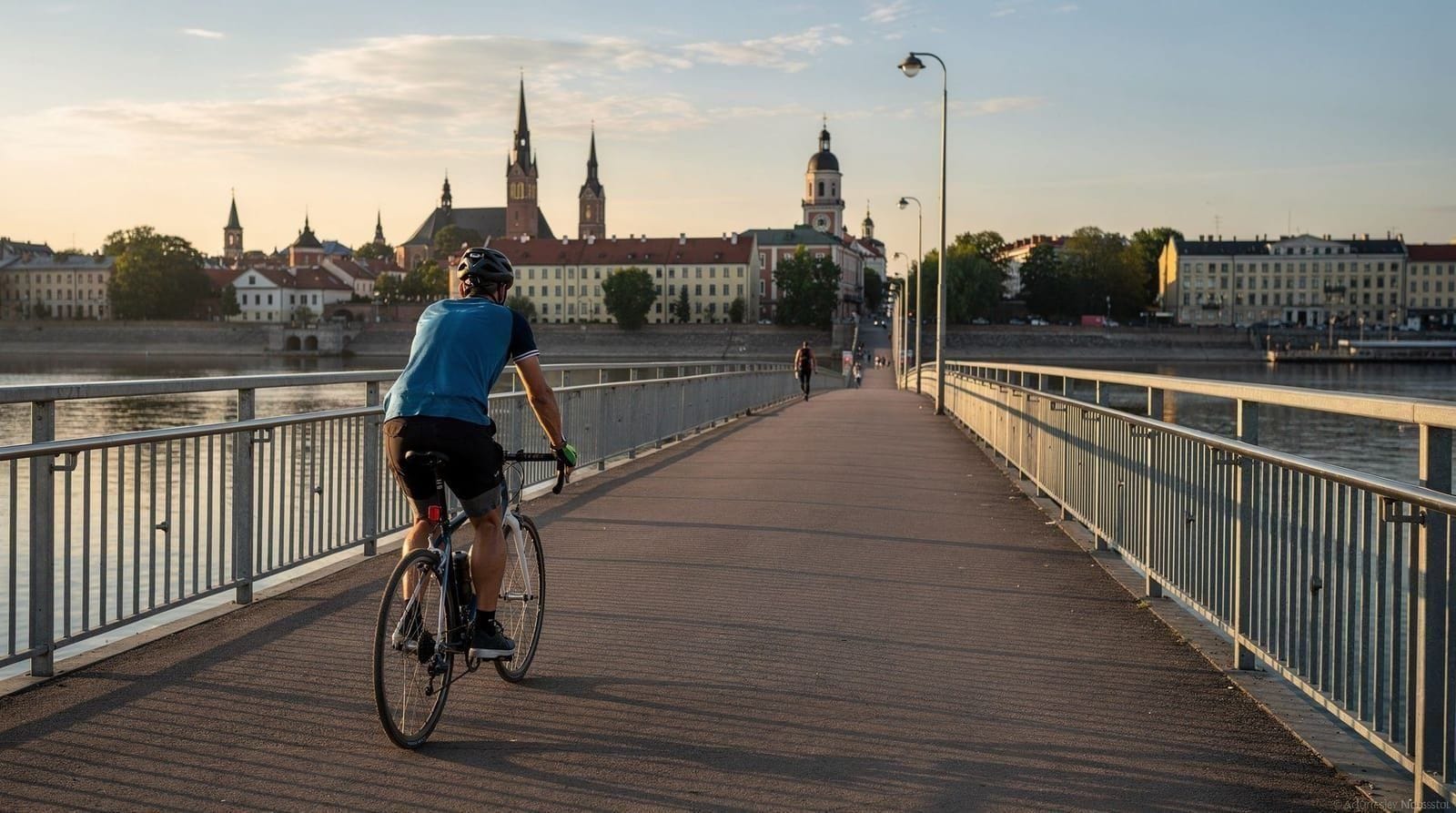
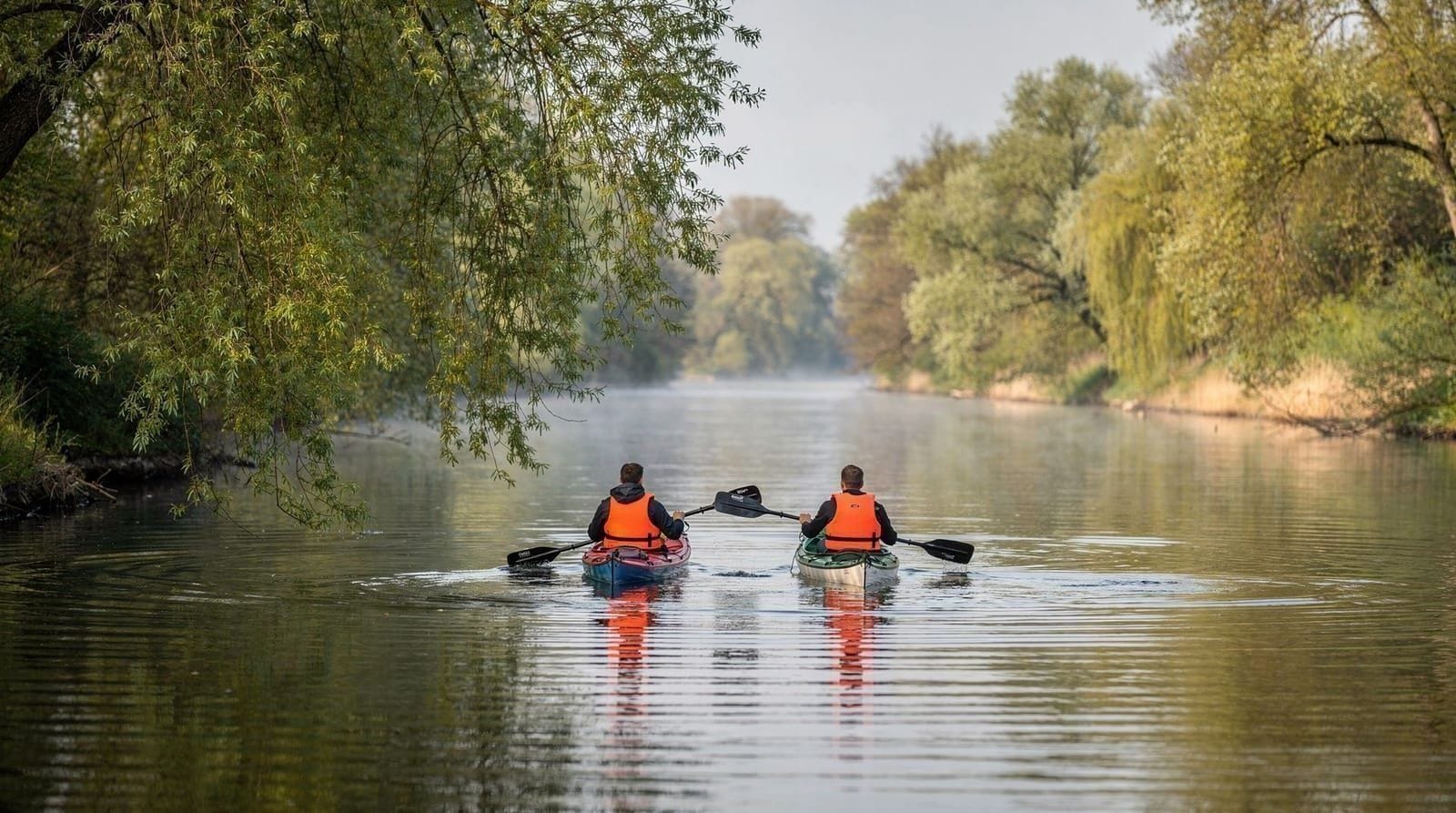
The Neris riverside path is the backbone of the network and the most pleasant urban cycling route in Vilnius. It runs for over 20km along both banks of the Neris, from the eastern suburbs through the city centre and out to Verkiai Regional Park in the north. The path is predominantly separated from traffic, mostly flat, and lined with trees and park spaces for much of its length. It connects Vingis Park on the south bank to Verkiai Park on the north — a natural there-and-back that takes 2-3 hours at a relaxed pace.
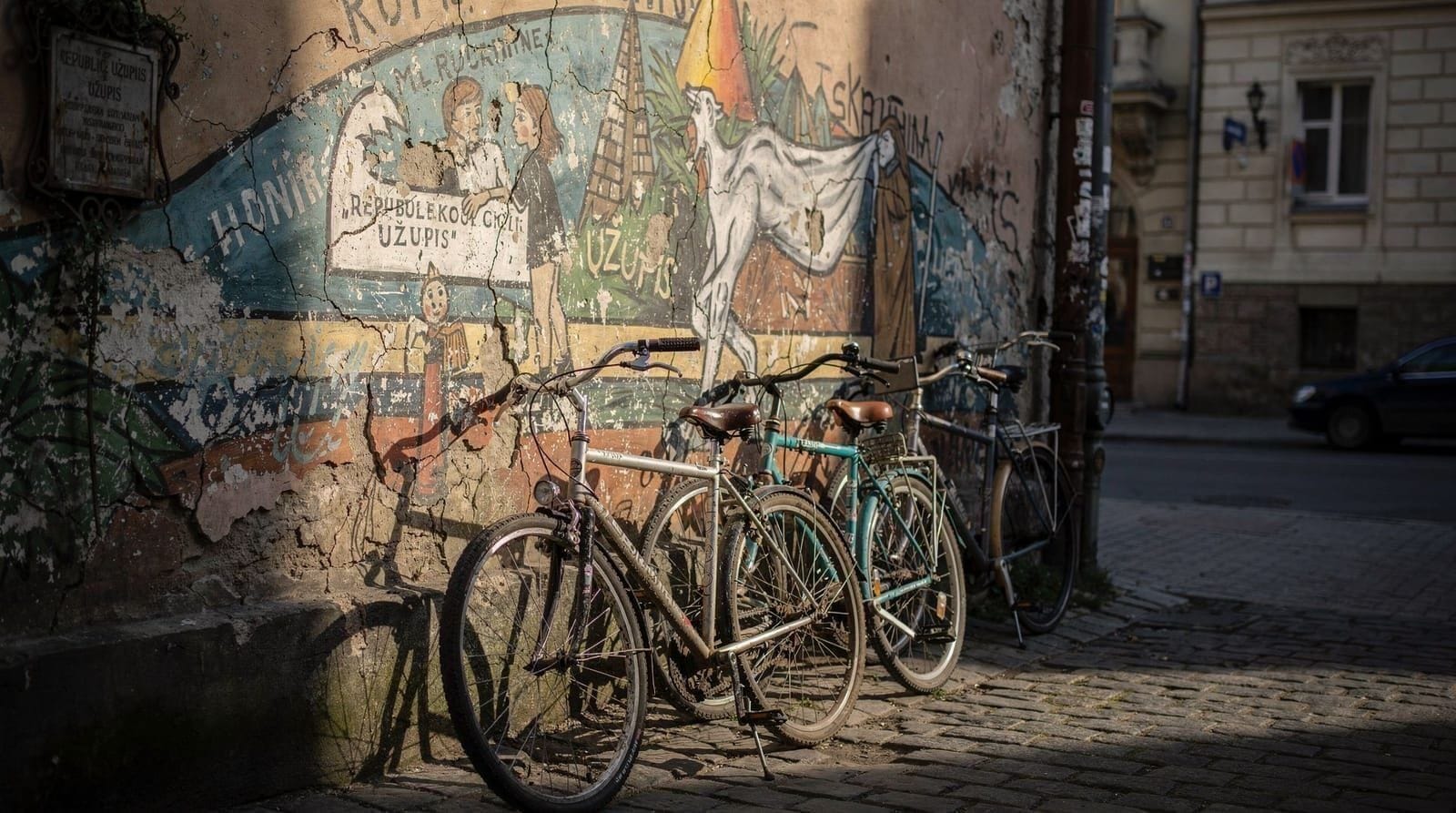
The Old Town circuit is possible but technically demanding. Pilies gatvė (the main pedestrian street) is closed to cyclists; you route around it via Vilniaus gatvė and the Cathedral Square. The hills between the Cathedral and Gediminas Tower, and the streets rising into Užupis, require gear work. E-bikes handle this without difficulty; standard bikes require fitness. The reward is the most direct access to the major historical sights.
Žvėrynas neighbourhood is one of the most pleasant cycling areas — a late 19th-century residential quarter of wooden villas west of the city centre, with the Neris on its northern edge and minimal traffic on its interior streets. The cycling paths through Žvėrynas connect to the main riverside path.
Antakalnis and Šnipiškes — the residential districts north of the Old Town and across the Neris — are served by a growing network of bike lanes and are relatively flat. These are everyday commuting routes rather than scenic destinations, but they connect the eastern approach to Verkiai Park.
CycloCity bike share: the practical choice for short rides
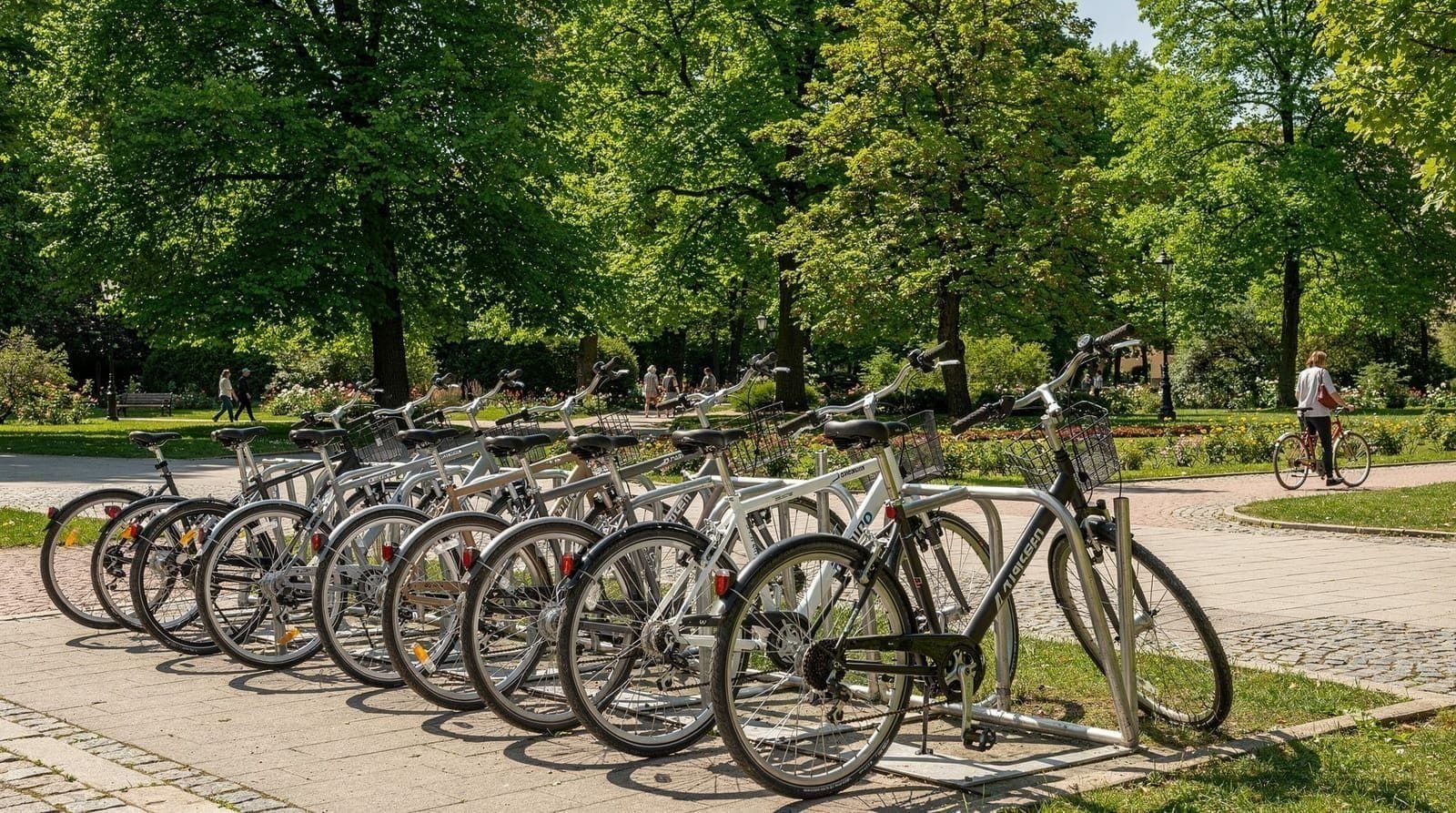
CycloCity is Vilnius’s electric bike-share scheme and is by far the most convenient option for visitors who want to cycle occasionally rather than commit to a full rental.
How it works: Register through the CycloCity mobile app (available for iOS and Android) or at any docking station terminal using a contactless bank card. Check out a bike at any docking station; return it to any other station when you’re done.
Cost: €1 per hour or €5 for a day pass (unlimited 45-minute rides with free station-to-station trips as long as each ride is under 45 minutes — the standard bike-share model). For most sightseeing purposes, the day pass at €5 is good value.
The bikes: CycloCity uses pedal-assist e-bikes, which means the electric motor activates when you pedal rather than when you use a throttle. This is ideal for Vilnius’s hills — the assistance cuts in exactly when you need it climbing toward Gediminas Tower or into Užupis. The bikes are heavy (around 22kg) but stable.
Docking station coverage: Stations are concentrated in the city centre and main residential areas, with roughly 500-800m spacing in the core zone. The Neris riverside path has stations at regular intervals. Coverage thins out in the further suburbs.
Limitations: CycloCity bikes are not ideal for multi-hour excursions or off-road paths. The 45-minute ride limit per checkout encourages station-hopping rather than sustained riding. For a day trip to Verkiai Park or Trakai, a full rental bike is more practical.
Bike rental shops
For longer rides and day trips, renting from one of the city’s bike shops gives you more flexibility than CycloCity.
Most rental shops cluster near the Old Town and along the Neris waterfront. Prices vary slightly but the typical range is:
| Bike type | Hourly | Half-day (4h) | Full day |
|---|---|---|---|
| Standard city bike | €3-5 | €10-14 | €12-20 |
| Mountain bike | €4-6 | €12-16 | €15-22 |
| E-bike | €6-8 | €18-25 | €20-35 |
| Tandem | €6-8 | €18-24 | €20-30 |
A passport or other government ID is typically required as deposit. Most shops open at 09:00. Helmets, locks, and route maps are usually included.
For a simple rental with no fuss, the Vilnius 1-day bike rental handles booking in advance, which is useful in summer when quality rental bikes can be limited.
Guided bike tours: the best way to start
If you’re new to Vilnius and want to orientate yourself by bike rather than by walking tour, a guided cycling tour is one of the most efficient options.
City highlights bike tour (2.5 hours)
The standard city highlights tour covers the main Old Town sights, Gediminas Hill, the riverside path, and the Žvėrynas neighbourhood. Guides are typically English-speaking and provide historical and cultural context as you ride.
The Vilnius city bike tour runs around 2.5 hours and costs €25-35 per person. Groups are typically 6-12 people. Bikes and helmets are provided. This is the right choice for first-time visitors who want both exercise and orientation — you cover significantly more ground in 2.5 hours by bike than by foot.
Alternative and off-the-beaten-track tour
A smaller number of operators run alternative Vilnius cycling tours that specifically avoid the main tourist circuit in favour of Soviet-era architecture, street art districts, and the city’s less-visited residential areas.
The private alternative bike tour is a tailored version for smaller groups (or solo travellers) who want an experienced guide with local knowledge rather than a standard route. These tours typically go into Naujininkai and Viršuliškės — the Soviet-era panel-block districts — and through the Paupys district on the Vilnelė river, which has been extensively redeveloped with street art and independent businesses.
If you’ve already read the Soviet history guide or the Užupis Republic guide, this kind of alternative tour deepens what you already know.
Cycling to Verkiai Regional Park
The Neris riverside cycling path to Verkiai Regional Park is the best recreational cycling route within the city limits — 10km from the Old Town area, mostly flat, and ending at one of the most peaceful forest landscapes in urban Lithuania.
The route follows the north bank of the Neris upstream from the Žirmūnai bridge, passing through the parkland at the confluence of the Neris and Vilnelė, then continuing through progressively wilder landscape to the Verkiai estate ruins and the forested gorge sections of the park.
The return is by the same path, or you can cross to the south bank via one of the bridges and loop back through Žvėrynas and Vingis Park — a 25-30km circuit that takes 2.5-3 hours at a comfortable pace.
Verkiai is covered in more detail in the Vilnius parks and green spaces guide, which also covers the park’s walking trails and historic sites.
Cycling from Vilnius to Trakai: the 28km route
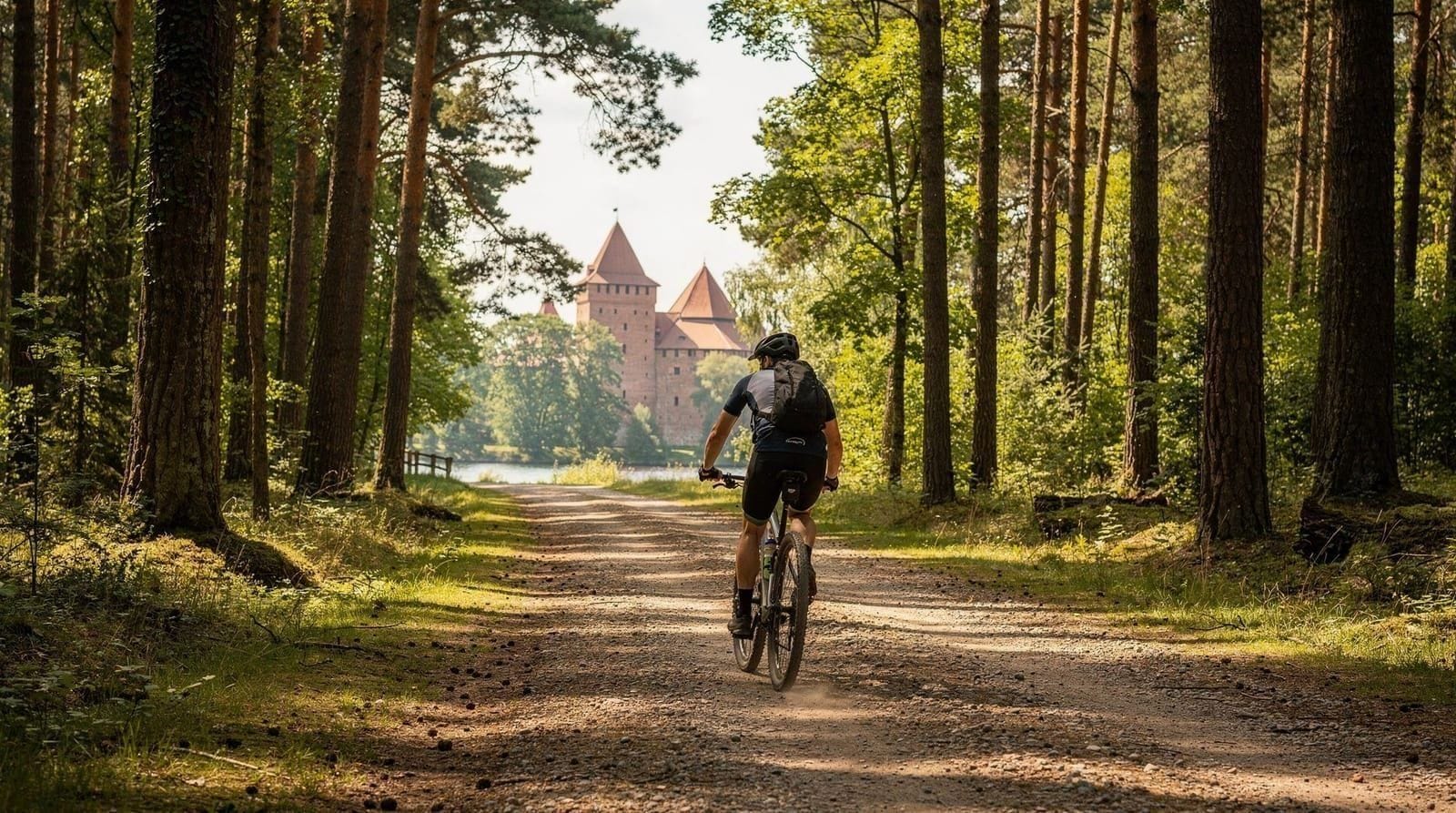
This is the headline long-distance cycling option near Vilnius and genuinely worth doing. The route from central Vilnius to Trakai covers roughly 28km each way, and the terrain is manageable: the first 10km through Vilnius’s southern suburbs has the most climbing, then the route flattens through pine forest and farmland to arrive at Trakai through the lakeside approach that gives you the first views of the castle.
Route options:
The main cycling route follows the A1 highway corridor on a separate bike path for much of the way, though this section is less scenic than the alternatives. The more enjoyable approach uses secondary roads through the villages of Lentvaris and Aukštieji Paneriai — quieter traffic, prettier landscape, but requires a downloaded offline map as signage is inconsistent.
Train return with bike:
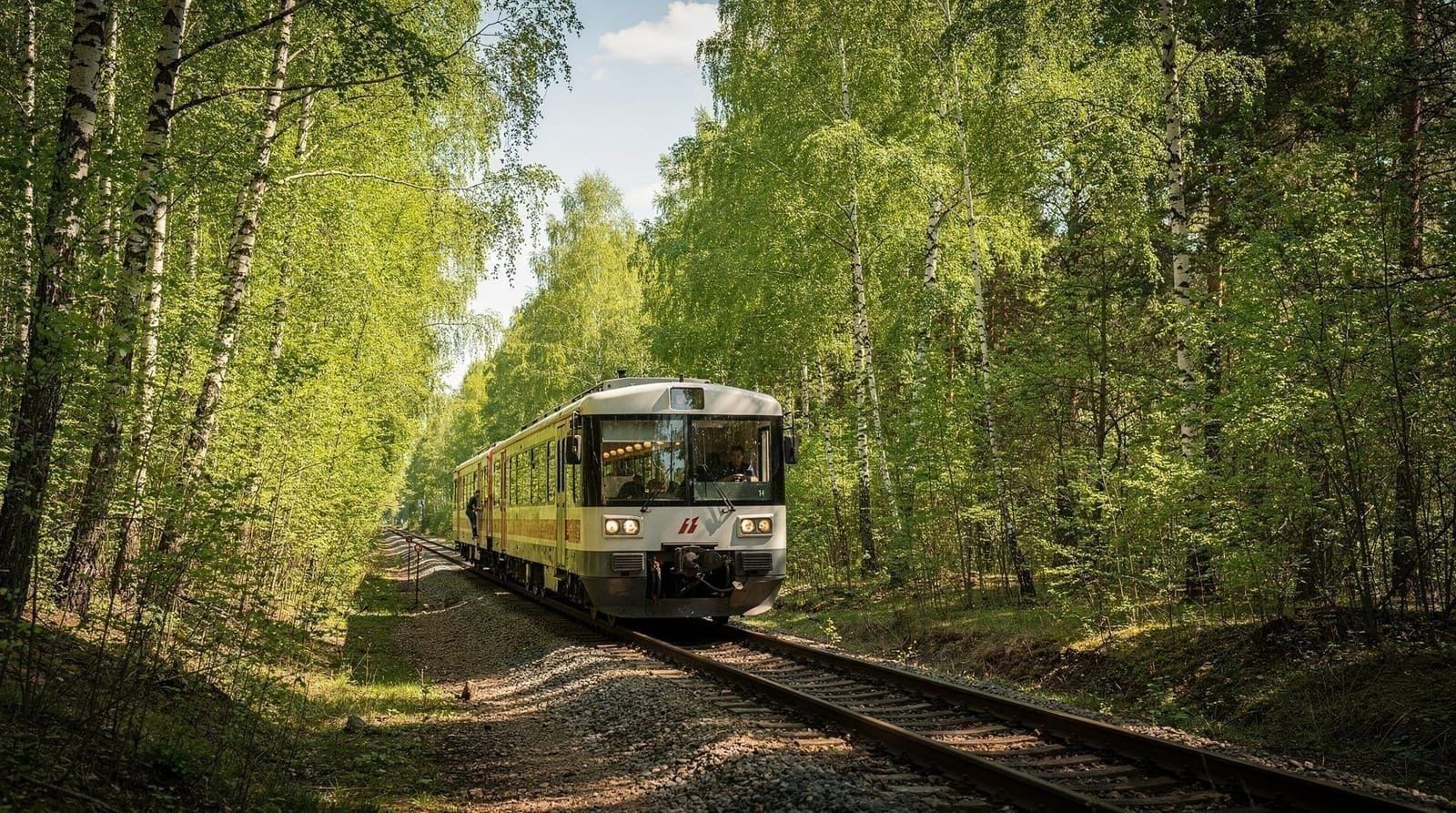
The self-guided Trakai bike route with train return is the popular solution to the 28km return journey. Take the train from Trakai back to Vilnius (35 minutes), bike loaded in the designated wagon. The train fare is roughly €2-3 each way; bike carriage is an additional €0.50-1. Trains run every 1-2 hours.
The self-guided Vilnius to Trakai bike tour with train return package handles all the logistics — bike, route map, train advice — and is the most practical way to do this trip without renting independently.
What you’ll see:
The route passes through Paneriai (where a major Holocaust memorial site is located — see the Paneriai Memorial guide), through pine forest sections, and across farmland with views of the Trakai lake system beginning to appear 5-6km before the town. The final approach along the lakeside is genuinely beautiful.
Allow a full day: 2-2.5 hours cycling to Trakai, 2-3 hours exploring Trakai and the castle, late afternoon train back. See the Vilnius to Trakai guide for what to do once you arrive.
E-bike vs standard bike: which to choose
| Standard bike | E-bike | |
|---|---|---|
| Old Town hills | Hard work, especially to Gediminas Hill | Assistance activates when pedalling |
| Cost | Cheaper — €12-20/day | More — €20-35/day |
| Best for | Fit riders, flat riverside routes | Casual riders, Old Town circuit, hot days |
| Trakai route (28km) | Doable but tiring for casual cyclists | Comfortable, especially outbound |
| Weight | Lighter, easier to carry on stairs/trains | Heavier, less practical for train boarding |
For most visitors doing a single Old Town circuit, the e-bike is worth the extra cost. For the flat Neris riverside or the Trakai route, a standard bike is perfectly comfortable for anyone with reasonable fitness.
Family cycling: what works with children
Vingis Park’s 3km outer loop is the easiest family cycling in Vilnius — flat, largely traffic-free, and popular enough that other families and slow riders are the norm rather than the exception. The Neris riverside path toward Vingis is similarly manageable for children old enough to ride independently.
Child seats and trailers are available at some (not all) rental shops — call ahead to confirm rather than assuming. The Old Town circuit and the Trakai route are not realistic with young children: cobblestones, hills, and distance all work against it. For a family day out that doesn’t depend on cycling stamina, see the Vilnius with kids guide for alternatives.
Cycling route profiles in brief
Route 1: Old Town and Cathedral circuit (5-8km, 1 hour, moderate) Suitable for reasonably fit cyclists. Covers Cathedral Square, Gediminas Hill (dismount and push up the steepest sections), Pilies gatvė area, Bernardinai Garden, Užupis bridge. E-bike strongly recommended for comfort.
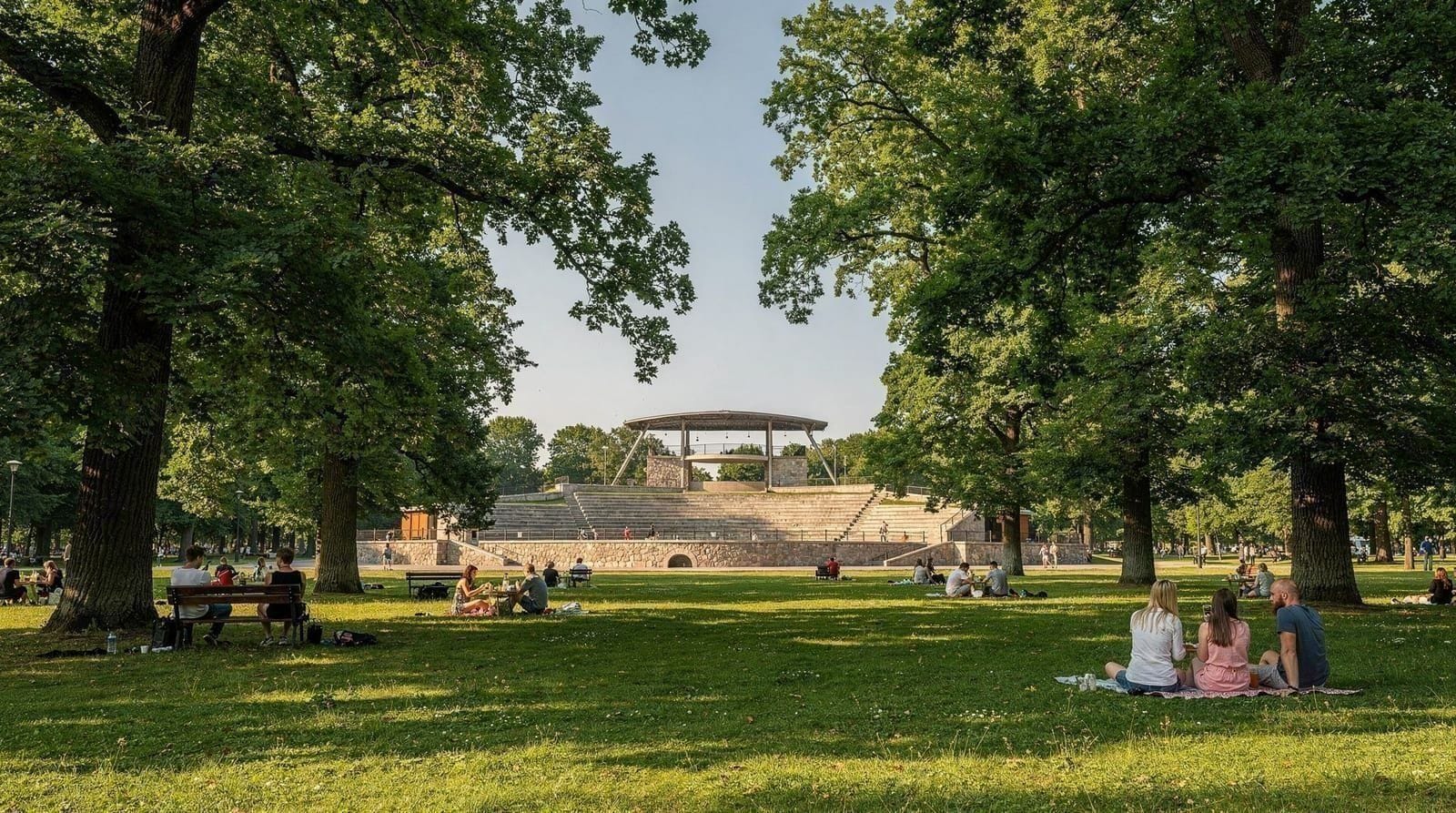
Route 2: Neris riverside to Vingis Park and back (8-12km, 1.5-2 hours, easy) Flat throughout. One of the best family cycling routes in Vilnius. Vingis Park has picnic areas and a large outdoor amphitheatre. The park’s 3km loop is ideal for children.
Route 3: Neris riverside north to Verkiai Park (20km round trip, 2-3 hours, easy-moderate) Flat riverside path with one or two gentle rises. The final approach to Verkiai through forested gorge is the highlight. Combine with a stop at the Verkiai Palace ruins and a walk down to the Neris lookout.
Route 4: Žvėrynas neighbourhood circuit (6-8km, 1 hour, easy) Explore the wooden villa streets of Žvėrynas west of the city centre. Very little traffic on the interior streets. Cross the Žaliasis Bridge for views back toward the Old Town.
Route 5: Vilnius to Trakai (28km one way, 2.5-3 hours, moderate) The one serious day-trip route. Mix of bike paths and secondary roads. Train return recommended. A full day out.
Safety and practical cycling advice
Cobblestones: Old Town streets are paved with granite cobblestones that are uneven and become slippery when wet. Slow down on cobblestones, especially on descents. Front panniers or bags on cobblestones create unpredictable handling.
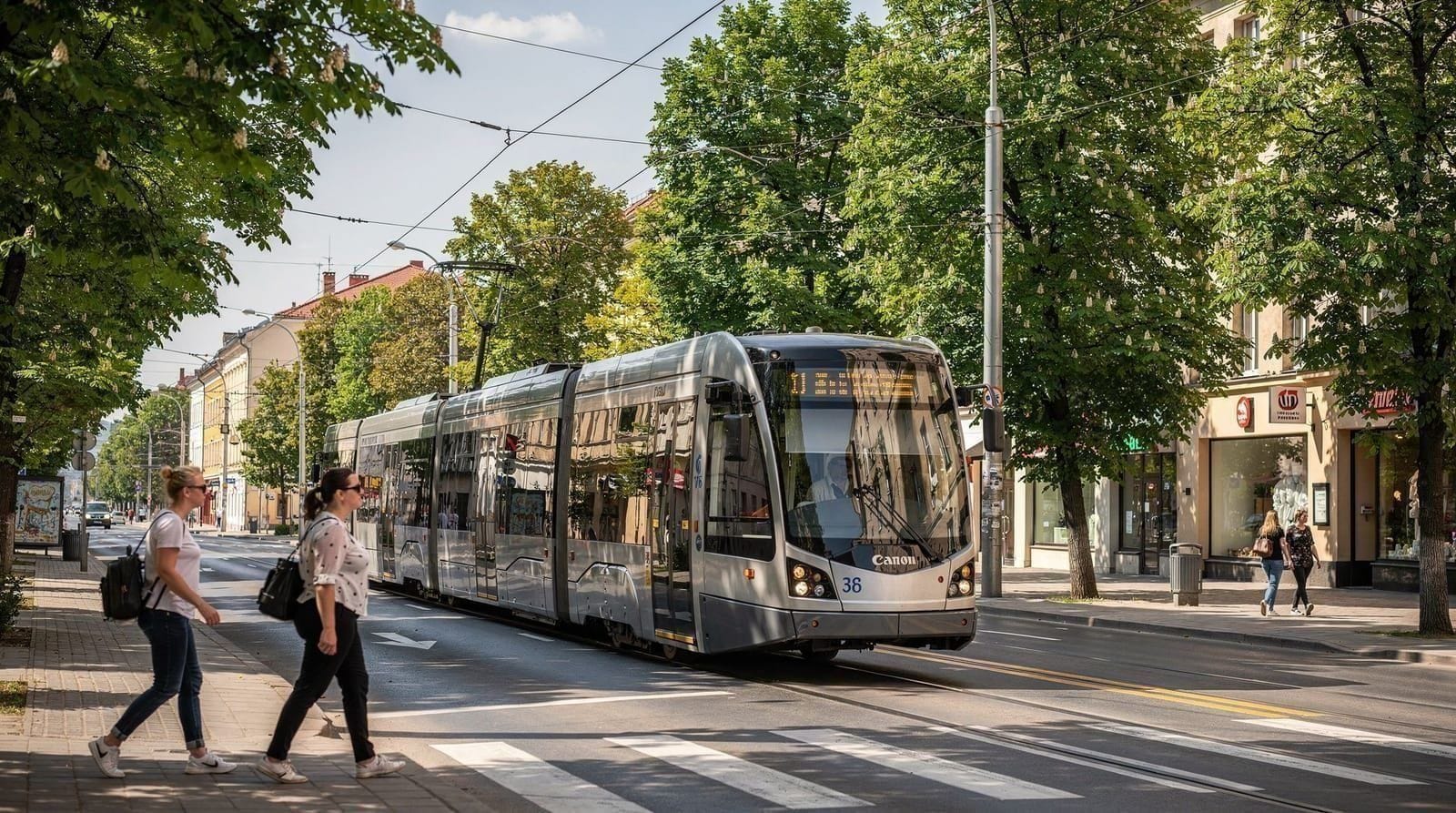
Tram tracks: Vilnius has several tram lines, and the tracks cross the road at low angles that can catch a bicycle wheel. Cross tram tracks at 90 degrees. This is the number one accident risk for cyclists in Vilnius; it sounds paranoid until it happens.
Traffic: Most Vilnius drivers are reasonably courteous to cyclists, especially on marked bike lanes. The main roads are fast; stick to the bike lane network and riverside paths as much as possible.
Locking: Use a quality D-lock, not just a cable lock. Vilnius has a low crime rate overall but bike theft happens. Lock to a fixed rack or post, not just to itself.
Night riding: Lights are legally required after dark and genuinely necessary — some sections of the riverside path are unlit. Most rental bikes have basic lights; check before you leave.
Weather: Vilnius weather in summer is generally pleasant for cycling (18-26°C), but afternoon thunderstorms are possible in July-August. Carry a compact rain layer for long rides. The shoulder seasons (May, September) are excellent for cycling — cool temperatures, long days, lower tourist traffic.
Insurance and liability: Most rental shops include basic third-party liability in the rental price, but check specifically for theft cover — if the bike is stolen while locked, some contracts hold the renter liable for a deposit-level excess. Ask before signing, and always use the lock provided rather than relying on the bike’s built-in wheel lock alone.
Cycling for budget travellers
Cycling is one of the best ways to see Vilnius on a budget. CycloCity at €5/day is cheaper than a single taxi journey. A day-long rental bike at €15-20 covers more ground than most visitors walk in two days.
For budget context: the Vilnius on a budget guide covers the full picture of affordable options, and the getting around Vilnius guide compares cycling against public transport and taxis in detail.
If you’re planning a 3-4 day itinerary, a bike day on day 2 or 3 — after you’ve already walked the Old Town core — is an efficient way to see the Neris riverside, Žvėrynas, and perhaps Vingis Park. The 2-day Vilnius itinerary builds this in; the weekend in Vilnius itinerary extends it to include a Trakai cycle.
Longer cycling tours from Vilnius
Lithuania as a whole is excellent cycling territory — flat to gently rolling, relatively low traffic density on rural roads, and a network of marked cycling routes through the national parks and coastal areas.
The most ambitious option available from Vilnius is the 7-day cycling tour from Klaipėda along the Curonian Spit and coast to Palanga. This is a professional guided tour covering 250-350km over a week, with accommodation and luggage transfer included. It starts with a journey from Vilnius to Klaipėda (by train or bus — see the Vilnius to Klaipėda guide) before the cycling begins.
For nature context on the Curonian Spit section of such a tour, the Curonian Spit nature guide covers the landscape, wildlife, and logistics of this UNESCO World Heritage coastline.
Frequently asked questions about cycling in Vilnius
Can I bring my own bike on the train in Lithuania?
Yes. Bikes are permitted in designated wagons on Lithuanian trains (operated by LTG Link). There is a small surcharge (typically €0.50-1 per journey). Not all trains have bike-carriage capacity — check when booking. The Vilnius to Trakai route is particularly popular with cyclists.
Is there a cycling path along the full length of the Neris River in Vilnius?
The cycling path follows the Neris for much of its length through the city, but it is not continuous on both banks end-to-end. The most developed section runs from the Geležinis Vilkas bridge area downstream, then north from the Žirmūnai bridge to Verkiai. Some gaps exist where the path moves away from the riverbank due to private land or industrial areas.
What are the best months to cycle in Vilnius?
May, June, and September are the best cycling months — long days, moderate temperatures (15-22°C), and relatively stable weather. July and August are warm but occasional afternoon thunderstorms require flexibility. April is often fine but can be cold and wet. October sees the best autumn foliage on the Neris riverside but brings unpredictable weather.
Are there cycling-specific cafés or repair stops along the routes?
Vilnius does not yet have a strong “cycling café” culture, but most cafés along the Neris riverside path have outdoor seating and bike parking. The Žvėrynas and Antakalnis neighbourhoods have several café options. Bike repair services are available from the main rental shops near the Old Town; puncture repair kits are worth carrying on longer rides.
Is cycling allowed in Vingis Park?
Yes. Vingis Park has dedicated cycling paths within the park, though shared use with pedestrians applies on the main promenade. The park’s 3km outer loop is particularly popular with cyclists and joggers. Cycling is not permitted on the pedestrian inner paths.
Do I need a helmet by law in Vilnius?
Helmets are legally required for cyclists under 18; adults are not legally required to wear one but it is strongly recommended, particularly given the tram-track and cobblestone hazards. Most rental shops include a helmet in the price — ask if it isn’t offered.
Is it possible to cycle from Vilnius all the way to the Curonian Spit?
Not as a direct route in the way the Trakai ride works — the distance (around 300km) is more realistic as a multi-day tour with support, such as the 7-day Klaipėda-to-Palanga coastal cycling tour, which starts after travelling to Klaipėda by train or bus rather than cycling the whole way from Vilnius.
Top experiences
Bookable activities with verified prices and instant confirmation on GetYourGuide.