Hill of Crosses day trip from Vilnius
Vilnius: Hill of crosses siauliai full day
Duration: 8 hours
How do I get from Vilnius to the Hill of Crosses?
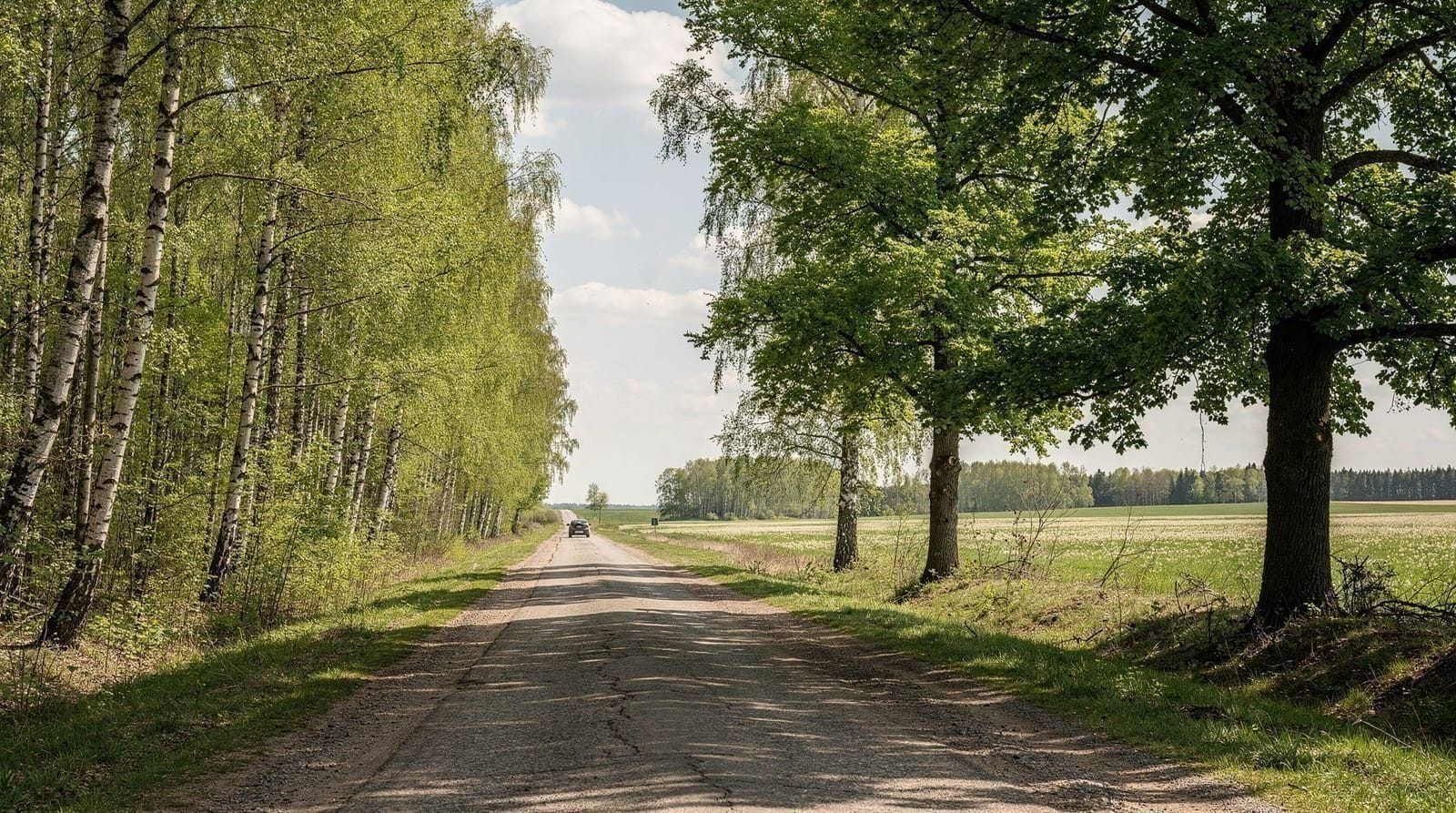
The Hill of Crosses is 210 km north of Vilnius, near Šiauliai. The easiest option is a full-day guided group tour (8–9 hours, €35–60 per person) departing from Vilnius. By public transport, take the train to Šiauliai (2 h) then a taxi or bus 12 km to the site. Driving is 2.5 hours each way.
The Hill of Crosses (Lithuanian: Kryžių kalnas) is not just a tourist attraction. It is one of the most significant sites of religious and national identity in the Baltic states — a place where Lithuanians, Soviet bulldozers, the Catholic church, and the concept of passive resistance all collided on a small glacial mound in the middle of flat Samogitian countryside.
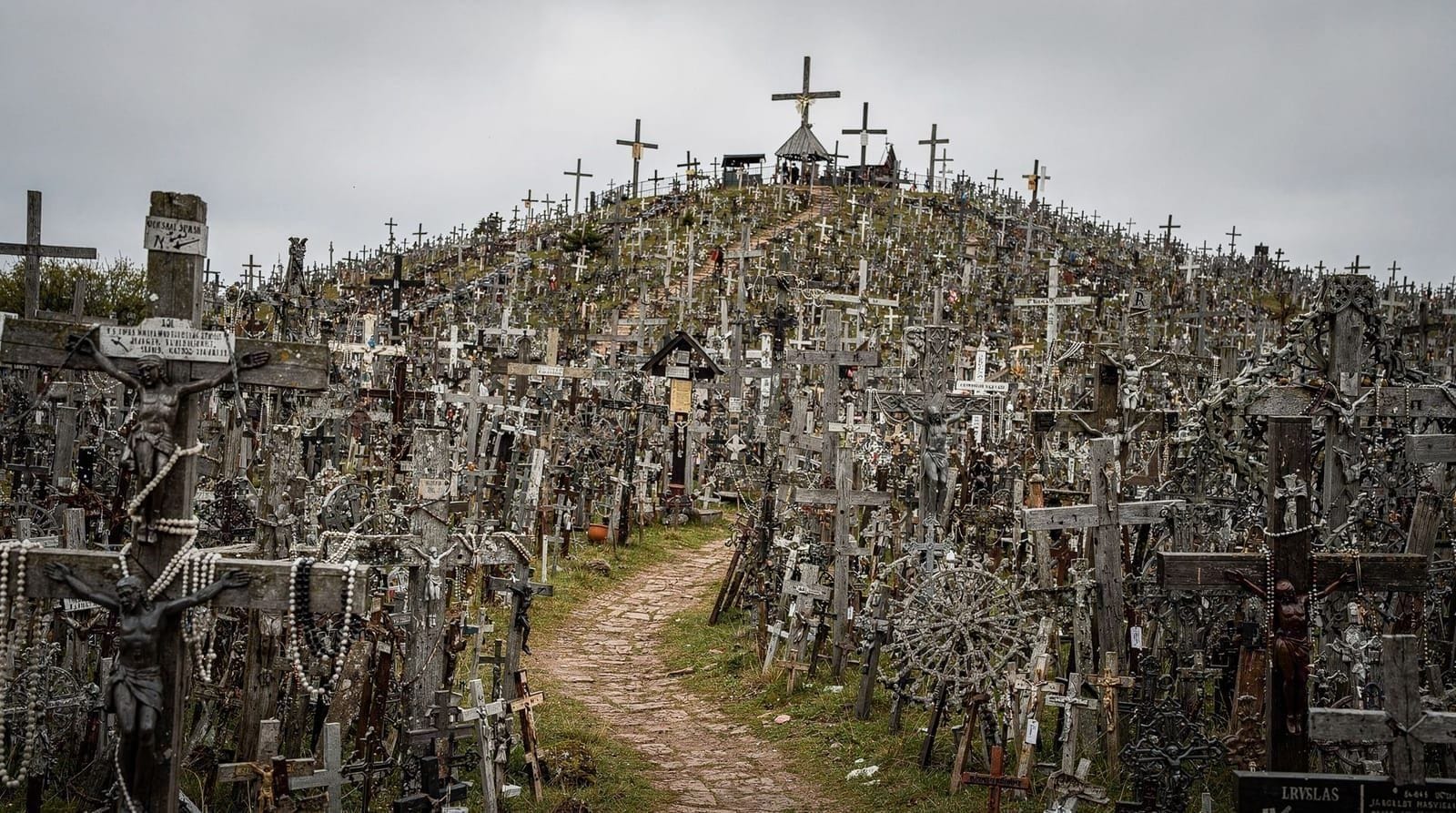
From a distance, the hill looks like a textured dark mass. Up close, you realise you are standing among an estimated 200,000 to 400,000 individual crosses, crucifixes, rosaries, statues, and devotional objects — many left by families of political prisoners, deportees, and Holocaust victims. Others were left by pilgrims who have travelled here from around the world.
It is a long day from Vilnius (210 km, 2.5 hours each way) but one that most visitors cite as their most memorable experience in Lithuania.
| Where | 210 km north of Vilnius, near Šiauliai |
| Cost | free entry; guided day tours around €35–60/person |
| Time needed | a full day; 1–1.5 h at the site itself |
| Getting there | Guided tour, train + taxi, or car (~2.5 h) |
| Best time | Morning or late afternoon light; quiet on weekdays |
The history behind the hill
The first crosses appeared on the hill in the early 19th century, probably after the failed uprisings against Russian imperial rule in 1831 and 1863. Under the Tsarist regime, displaying crosses here was an act of national defiance as much as religious devotion.
Under Soviet rule, the site became more politically charged still. The Soviet authorities viewed the Hill of Crosses as a counter-revolutionary symbol and ordered it destroyed three times — in 1961, 1973, and 1975. Each time, bulldozers cleared the crosses and trucks removed the debris. Each time, local people returned the following night and began rebuilding.
The hill survived. Soviet Lithuania did not.
Pope John Paul II visited in September 1993 and called the hill “a place of hope.” His visit cemented the site’s international prominence and today it draws pilgrims from across Catholic Europe and beyond.
Why the hill matters to Lithuanians
Understanding why Lithuanians attach such significance to the Hill of Crosses requires understanding what Soviet rule meant in concrete terms. Between 1941 and 1953, approximately 280,000 Lithuanians were deported to Siberia and Soviet Central Asia in multiple waves. These were not random selections — they targeted educated professionals, landowners, clergy, and anyone deemed a threat to Soviet authority. Many died during transport or in the harsh conditions of the labour camps. Those who survived returned decades later to a country that had officially rewritten its own history.
The crosses on Kryžių kalnas carried the names of the deported, the imprisoned, and the disappeared. They were acts of public memory in a state that denied those memories. Soviet authorities understood the political dimension clearly enough to deploy bulldozers three times. The fact that the crosses always returned was not merely religious persistence — it was a continuous low-level assertion that Lithuania’s people would remember what the state was trying to make them forget.
This context does not make the Hill of Crosses a purely political site. The religious dimension is equally real — Catholic devotion and Lithuanian national identity are deeply intertwined going back to the Christianisation of Lithuania in 1387, the last European nation to convert. But visitors who approach the hill as a quirky tourist attraction, without some awareness of the 20th-century history, miss most of what gives the place its power.
Getting from Vilnius to the Hill of Crosses
By guided tour (recommended): Full-day guided group tours from Vilnius are the most practical option for most visitors. They depart from central Vilnius at 8–9 am, include transport, a guide, time at the hill, and usually a stop in Šiauliai, returning to Vilnius by 6–8 pm. Cost: €35–60 per person depending on group size and inclusions.
Book a full-day guided tour to the Hill of CrossesBy public transport: Take a train from Vilnius Central Station to Šiauliai — journey time approximately 2 hours, cost €9–14, trains run 4–6 times daily. From Šiauliai, the Hill of Crosses is 12 km north of the city centre. Take bus no. 77 (infrequent, check timetable) or a local taxi (€10–12 one-way). The taxi option is more reliable and worth the cost. Plan: 2 h train + 20 min taxi + time at the site + return — a full day.
By car: The drive from Vilnius takes approximately 2.5 hours via the A1 motorway towards Kaunas and then north on the A9. Parking is available near the hill (small fee in season). A car gives you maximum flexibility — you can combine the Hill of Crosses with Šiauliai town, Pakruojis Manor, and return on your own schedule.
Riga route combination: Several tours link Vilnius → Hill of Crosses → Rundalė Palace → Riga as a one-way transfer. Ideal if you are already planning to travel to Riga.
What to expect at the site
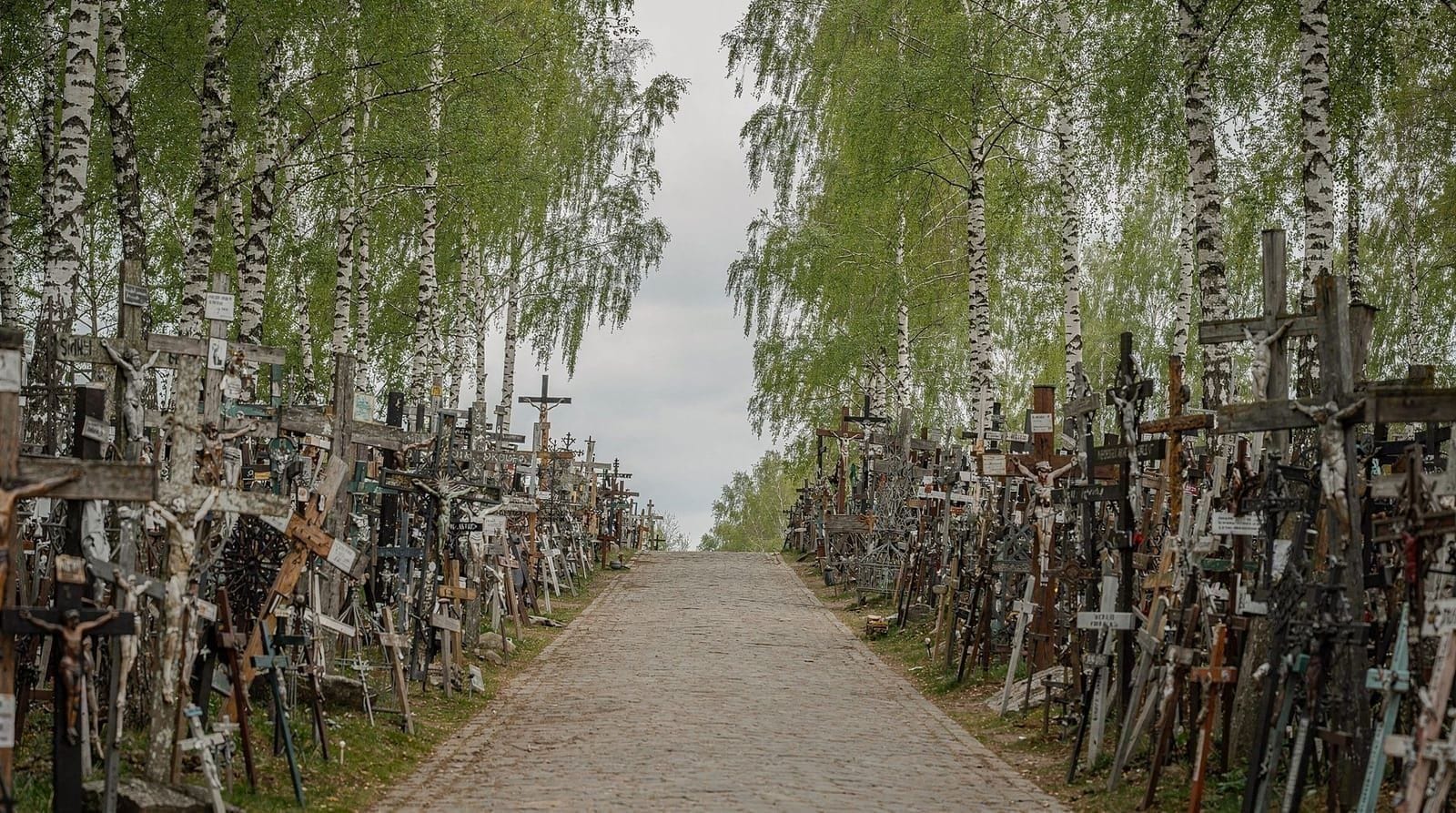
The Hill of Crosses is lower than you might expect — 10 metres above the surrounding plain at most. But approaching it, you hear it before you see it: the wind moving through thousands of hanging rosaries, small bells, and metal crosses creates a gentle constant sound that is unlike anywhere else.
The path from the entrance gate (where vendors sell crosses and refreshments) to the hill is about 200 metres along a raised wooden walkway over marshy ground. The walkway protects both the ground and the crosses.
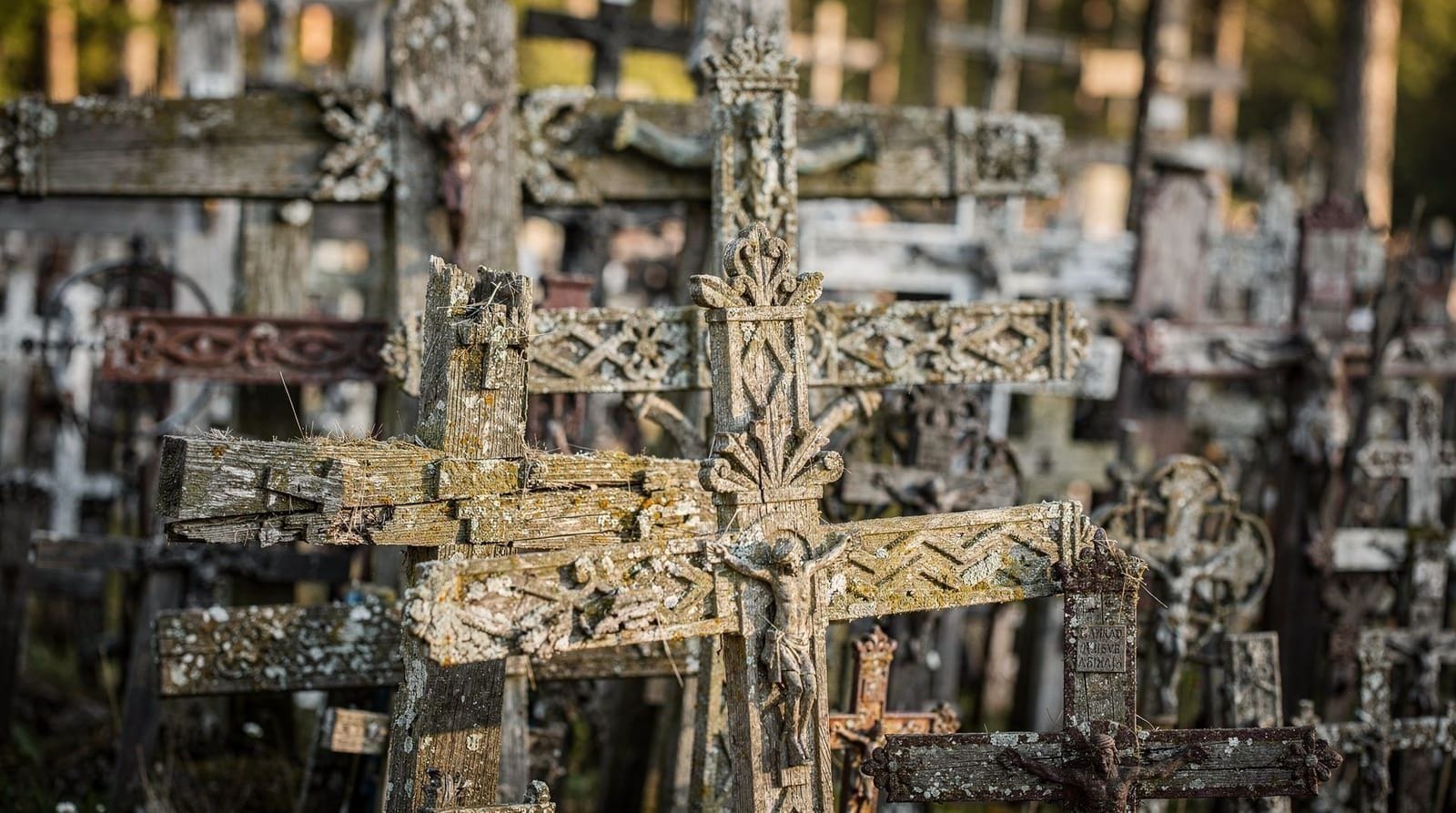
Once on the hill, you can walk freely among the crosses. There are no roped-off areas, no admission fee, and no barriers. Many crosses have inscriptions in Lithuanian, Polish, Russian, Italian, and other languages. Some mark family losses during the Soviet deportations; others are expressions of prayer or thanks. Looking closely at individual crosses is its own experience.
Allow 1–1.5 hours at the site itself. The light is best in morning or late afternoon.
Practical notes:
- No entry fee
- Basic toilets near the parking area
- Food stalls and small shops at the entrance (cold drinks, postcards, wooden crosses €1–5)
- The path can be muddy after rain — sturdy footwear advisable
- Photography is permitted and common; be respectful near praying visitors
What you will actually see
The sheer density of the hill repays slow observation. Looking across the hill from one end, the first impression is quantity — an incomprehensible number of objects compressed into a small space. Spend more time, and the detail becomes visible.
Large iron crosses, some several metres tall, form the structural skeleton. Around them, smaller wooden crosses are tied, nailed, or hung — some fresh and pale, some weathered almost black. Rosary beads are looped in their hundreds over any available protrusion. Small crosses from individual pilgrims are tucked into gaps, sometimes with handwritten prayers attached. Statues of the Virgin Mary and Christ stand at intervals. Lithuanian folk art woodcarvings — the distinctive Lithuanian dievdirbiai tradition of carved religious figures — appear among more conventional crucifixes.
Every country of Catholic Europe seems to have contributed: Polish inscriptions are common, as are Italian, Spanish, and Brazilian. Groups from Catholic parishes across the world arrive on pilgrimage, add their crosses in a brief ceremony, pray, and depart. On a normal weekday in summer, you might encounter Lithuanian pilgrims in the morning, a tour group from Italy or Spain in the afternoon, and a Lithuanian family adding a small cross at sunset.
The experience of being alone on the hill — which happens in early mornings, winter weekdays, or quiet autumn days — is different again. The sound of wind through the crosses in silence is one of the more memorable sensory experiences in Lithuania.
Combining with Šiauliai
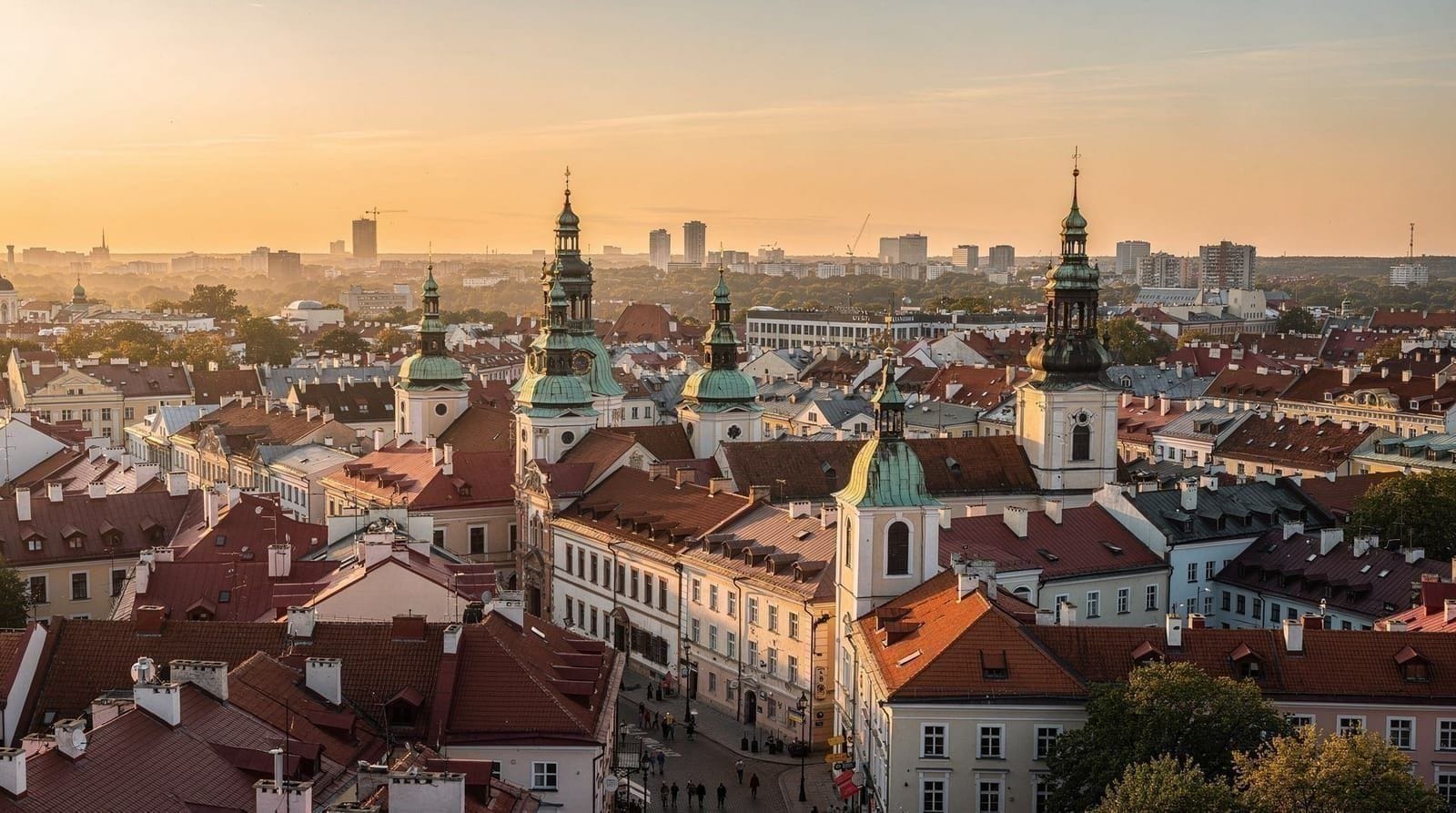
Šiauliai (pop. ~98,000) is Lithuania’s fourth-largest city and the regional hub of Samogitia. It is not a must-see destination in itself, but if you are already making the journey, it rewards a 1–1.5 hour stop.
Saulės laikrodis (Sundial Square): The pedestrianised old town square with a distinctive sundial sculpture and a pleasant café culture. Low-key and unpretentious.
Bicycle Museum (Nacionalinis Dviračio Muziejus, Vilniaus g. 139): A surprisingly large collection tracing the history of bicycles, including some very early models. Admission €4. Quirky and worth 45 minutes.
Aušros alėja: The main pedestrian boulevard — lined with Soviet-era buildings that are less remarkable than Kaunas’s interwar modernism but still give a flavour of Lithuanian provincial life.
Šiauliai has several decent lunch spots. Kolegos (Vilniaus g. 131) is a reliable café with Lithuanian food at honest prices; expect €8–12 for a full lunch.
Extended combinations
Hill of Crosses + Pakruojis Manor (38 km east of Šiauliai): Pakruojis is a beautifully restored 19th-century manor estate with a working mill, distillery, and period-furnished interiors. Less visited than the hill but genuinely impressive. Some tours include this stop.
Hill of Crosses + Žemaitija National Park: For those driving, the national park (119 km west) offers lake scenery, traditional wooden farmsteads, and walking trails. Too far for a single day from Vilnius unless you are an early riser.
Vilnius → Hill of Crosses → Riga (one-way transfer): Several guided tours position the Hill of Crosses as a stop on a Vilnius-to-Riga transfer route, also passing Rundalė Palace (a baroque masterpiece in southern Latvia). This is an excellent option for travellers moving north.
The Riga connection
Many visitors to the Hill of Crosses are making the Baltic capitals circuit — Tallinn, Riga, Vilnius — and the hill sits almost exactly on the road between Vilnius and Riga. The journey from Vilnius to Riga by road is approximately 300 km (3.5 hours); a stop at Kryžių kalnas adds perhaps 30 minutes off the direct route.
This makes the hill particularly suitable as a one-way excursion: travel from Vilnius to the Hill of Crosses in the morning, spend 1.5–2 hours at the site, continue north to Rundalė Palace in Latvia (another baroque gem, about 80 km further north), and arrive in Riga by evening. Organised tour operators offer this specific itinerary as a shared coach service several times weekly in summer.
If you are comparing itineraries for the Vilnius vs Riga route, the Hill of Crosses is one of the clearest reasons to spend a full day in transit rather than flying directly between the two capitals.
How this compares to other Vilnius day trips
The Hill of Crosses is the longest and most demanding of the popular Vilnius day trips — see best day trips from Vilnius for how it stacks up against shorter, easier options like Trakai. It shares some thematic ground with Kernavė and Paneriai, another site where Lithuanian history and memory intersect, though the Hill of Crosses is considerably further and more of a full-day commitment. First-time visitors to Lithuania should also check the first-time visitor tips guide before a long day trip like this one — it covers practicalities (cash for rural food stalls, weather layers) that matter more here than in the city.
Book a full-day tour combining the Hill of Crosses with Pakruojis ManorPractical details
- Address: Kryžių kalnas, approximately 12 km north of Šiauliai, signposted from the A11 road
- Entry: Free, open 24 hours (though night visits outside summer are very isolated)
- Parking: On-site parking, small seasonal fee
- Nearest café/restaurant: Basic food stalls at entrance; full restaurants in Šiauliai town (12 km)
- Accessibility: The wooden walkway is accessible for most visitors; the hill itself is uneven ground
Planning your day: a suggested schedule
For visitors using the train + taxi approach:
- 8:00 — Train from Vilnius Central Station to Šiauliai (arrives approximately 10:00)
- 10:15 — Taxi from Šiauliai station to the Hill of Crosses (20 minutes)
- 10:30 — Arrive at the hill; explore the site (1.5 hours)
- 12:00 — Taxi back to Šiauliai town centre
- 12:30 — Lunch at Kolegos or another café on Vilniaus gatvė
- 13:30 — Šiauliai town walk: Sundial Square, Bicycle Museum (1.5 hours)
- 15:30 — Walk to Šiauliai station
- 16:00 — Train back to Vilnius (arrives approximately 18:00)
For guided tours, the operator handles all logistics — you are typically back in Vilnius by 7–8 pm.
Frequently asked questions about the Hill of Crosses day trip
How many crosses are on the Hill of Crosses?
No one knows precisely. Estimates range from 200,000 to over 400,000 individual items, including large crosses, small crucifixes, rosaries, statues, and religious medallions. New crosses are added every day by pilgrims and visitors.
Is it disrespectful to visit as a non-Catholic?
Not at all. The hill welcomes visitors of all backgrounds and none. Many people who leave crosses are not religious but are honouring family members or simply participating in the tradition. Respectful behaviour — quiet voices near praying visitors, no clambering on crosses — is all that is required.
Can children visit the Hill of Crosses?
Yes, though the site’s history and significance can be difficult to explain to young children. The sensory experience — the sound, the scale, the density of crosses — is striking for children. The access path is manageable for children who can walk 400–500 metres total.
What if I visit during winter?
Winter visits are possible and can be very beautiful, with snow covering the crosses and creating an almost monochrome landscape. The site is deserted in winter, which is either peaceful or eerie depending on your preference. Dress very warmly — there is no shelter and Samogitia is exposed.
Is the Hill of Crosses worth it if I only have 2-3 days in Vilnius?
Probably not, honestly. At 210 km each way, this is a full-day commitment that competes directly with the Old Town, Trakai, or other closer options on a short trip. It’s better suited to visitors with 5+ days in Lithuania, or those already travelling the Vilnius–Riga road route, where the detour costs relatively little extra time.
Can I visit the Hill of Crosses independently without a guided tour?
Yes — the train-to-Šiauliai-plus-taxi route described above works well and costs considerably less than a guided tour, though it takes more planning and a longer overall day. A guided tour is mainly worth the premium for the historical context a guide provides, which is substantial here given the site’s political history.
Top experiences
Bookable activities with verified prices and instant confirmation on GetYourGuide.