Druskininkai day trip from Vilnius
Vilnius: Druskininkai grutas park transfer
How do I get from Vilnius to Druskininkai?
Direct buses run from Vilnius bus station (Sodų g. 22) to Druskininkai 5–7 times daily. Journey time is approximately 1.5 hours. Tickets cost €8–12 return. There is no train service; buses are the standard option.
| Distance | 130 km south-west, around 1.5 hours by direct bus |
| Cost | Around €40-90 for a full day depending on activities |
| Best for | Grūtas Park, spa/Aqua Park, forest walks |
| Best season | Year-round — summer for outdoors, winter for Snow Arena |
| Getting there | Direct bus (no train), car, or guided tour |
Druskininkai does not try to be Trakai or the Hill of Crosses. It is a quiet spa town of 12,000 people in the Dzūkija forest region of southern Lithuania, positioned on a bend in the Nemunas river, with a collection of pre-war villas, mineral spring fountains, and an extremely unlikely Soviet-era outdoor museum that is one of the most peculiar cultural sites in Europe.
It is also only 1.5 hours from Vilnius by direct bus — the second-easiest day trip after Trakai, and the most practical choice for a day that is less about historic sightseeing and more about woods, water, or unhurried resort pace.
Getting from Vilnius to Druskininkai
By bus (standard option): Direct buses run from Vilnius bus station (Sodų g. 22, adjacent to the Old Town) to Druskininkai bus station 5–7 times daily. Journey time: approximately 1.5 hours. Tickets: €4–6 one-way (€8–12 return). Book online at toks.lt or buy at the station window. The last return bus from Druskininkai to Vilnius is usually around 7–8 pm.
There is no train service between Vilnius and Druskininkai. The bus is the correct option for independent travellers.
By car: 130 km south-west via the A4 motorway towards Alytus, then south on the A9. Journey: 1.5 hours. Parking in Druskininkai is generally free in the main central streets. A car is useful for accessing Grūtas Park (8 km from town), the Nemunas riverbank trails, and Dzūkija National Park hiking areas.
By guided tour: Several Vilnius-based operators offer day trips combining Druskininkai with Grūtas Park, with transport included. Useful if you want to cover both efficiently without arranging your own Grūtas taxi.
Book a guided day trip to Druskininkai and Grūtas ParkIf you’re driving yourself, our car rental in Lithuania guide covers pickup points and road rules. For a wider view of how Druskininkai compares with Lithuania’s other day trips, see the best day trips from Vilnius guide.
Druskininkai town
The town centre is compact and pleasant — laid out on a grid of leafy streets with wooden pre-war villas (many now operating as guesthouses and spa hotels), a modest town square, and the distinctive feature that gives the town its name: natural mineral springs.
Mineral springs and drinking pavilion (Mineralinio vandens paviljonas, Kudirkos g. 22): Free to enter; you can fill your own glass or bottle with various mineral waters, each labelled with their supposed curative properties. Slightly sulphurous — an acquired taste, but part of the Druskininkai experience.
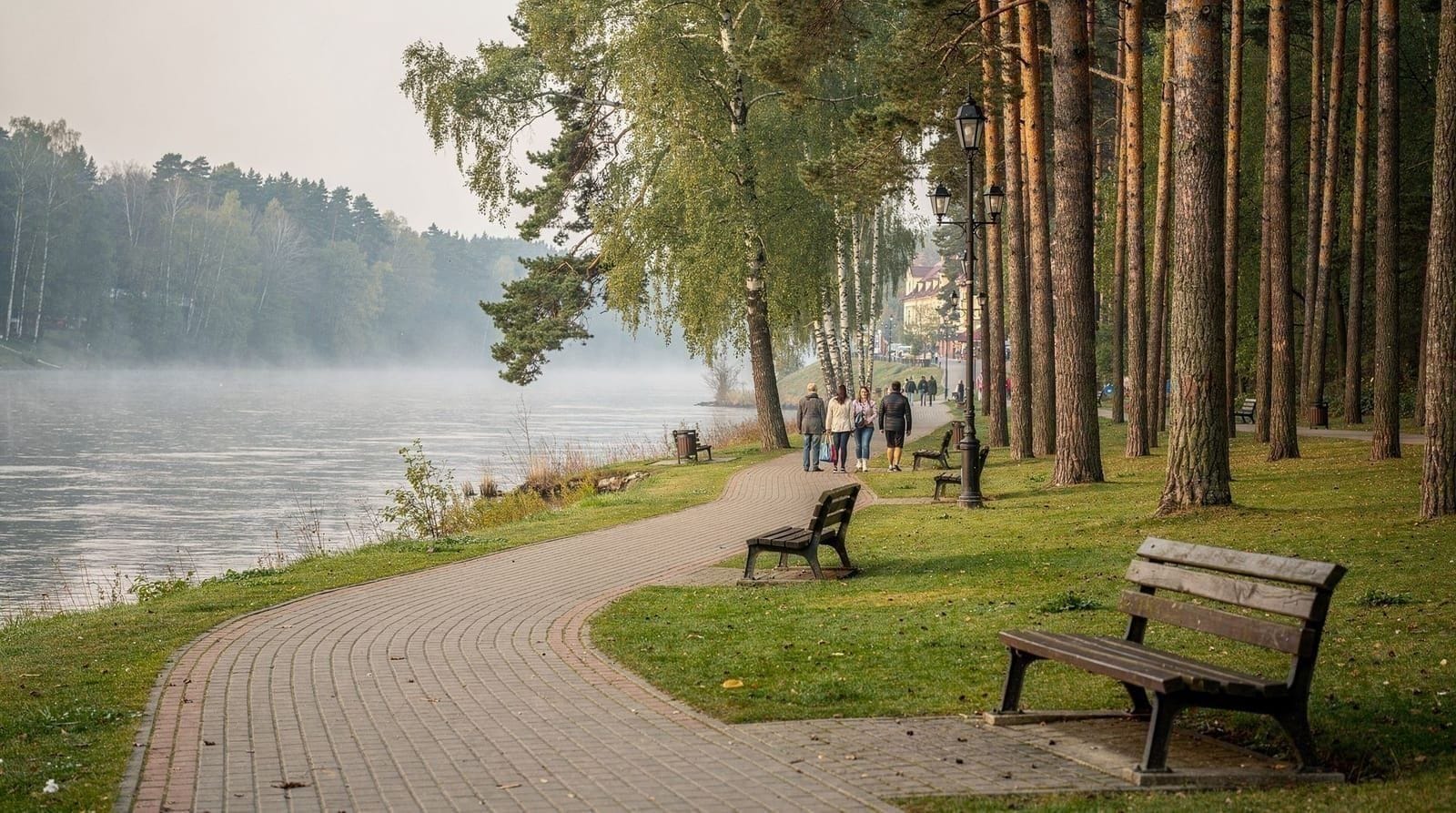
The promenade and lakefront: The main lakeside promenade along Laisvės al. is pleasant for an early morning or evening walk. Pedalo and rowing boat rentals operate in summer (€5–8/hour).
Čiurlionis Museum (M. K. Čiurlionio g. 35): The house museum of M. K. Čiurlionis, Lithuania’s most significant early 20th-century painter and composer, who was born in Druskininkai. The small collection of paintings and biographical materials is worthwhile for those interested in Lithuanian cultural history. Entry €4.
The history of Druskininkai as a spa town
Druskininkai’s identity as a resort town is older than most visitors realise. The Russian Tsar Alexander I granted the town resort status in 1837, recognising the mineral springs as medicinal — and this royal endorsement transformed what had been a small village into one of the most fashionable summer destinations in the western Russian Empire.
By the late 19th century, Druskininkai attracted aristocrats, intellectuals, and wealthy merchants from across Russia, Poland, and Lithuania. The wooden villas that still line the town’s quieter streets were built as private summer residences for these visitors — architecturally eclectic, often incorporating folk art decorative elements alongside Victorian-era ornamental woodwork. Walking the residential streets on the southern side of the town centre, away from the main commercial area, gives the most direct sense of this pre-war resort character.
The 20th century was disruptive for Druskininkai as for all of Lithuania. The town passed through Polish, Soviet, and Nazi occupation during the Second World War, with significant losses to its Jewish community (estimated at 6,000 people before the war, most murdered in 1941–42). After the war, the Soviets developed Druskininkai as a sanatorium destination for workers — building large institutional rest-house complexes alongside the surviving private villas. Some of these Soviet-era sanatorium buildings are still visible, their monumental scale at odds with the intimate wooden architecture around them.
Independence in 1990 revived private spa development. The Aqua Park, Snow Arena, and several large wellness hotels represent the post-Soviet investment wave. The town now occupies an interesting middle ground between 19th-century tsarist resort, Soviet sanatorium, and modern Baltic wellness destination — all three layers visible simultaneously.
Grūtas Park: the Soviet sculpture garden
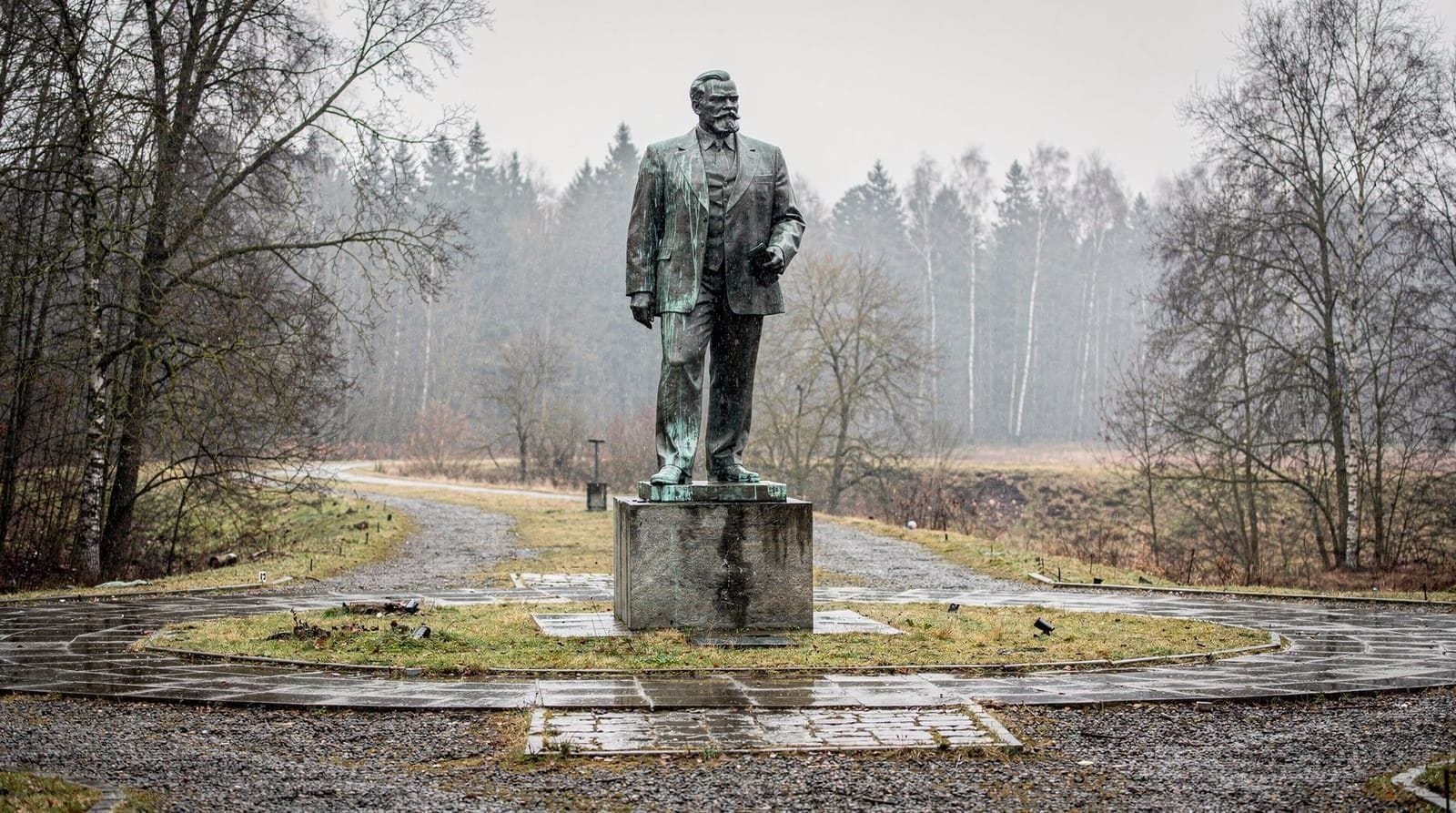
Grūtas Park (Grūto parkas), 8 km south of Druskininkai on Druskininkai–Lazdijai road, is one of the most surreal sites in the post-Soviet world. In 1999, following a national competition, entrepreneur Viliumas Malinauskas won the right to collect and display Soviet-era statues and monuments that had been removed from public spaces across Lithuania after independence in 1990.
The result is a 20-hectare outdoor park in dense pine forest where Lenin, Stalin, Vincas Mickevičius-Kapsukas (the first head of the short-lived Lithuanian Soviet government), Petras Cvirka, and dozens of other communist figures stand in landscaped grounds surrounded by recreated watchtowers, barbed wire, and a small railway that children can ride. A large indoor museum section has Soviet-era propaganda posters, documents, and everyday objects.
What makes the park interesting is its tonal ambiguity: it is simultaneously a memorial to Soviet oppression (many visitors are Lithuanians who lived through deportations and occupation) and a tourist attraction with a café and gift shop. The park does not satirise its subjects but it does not glorify them either — the context is provided by the museum section, which is honest about what each figure represented.
Admission: Adults €10, children €5. Open daily 9 am–6 pm (to 8 pm in summer). Café on-site.
Getting there from Druskininkai: Local taxi €10–15 one-way; agree on a return time with the driver for a round trip (€20–25). Some hotels in Druskininkai can arrange transfers. No reliable bus service directly to the park.
Reading Grūtas Park carefully
The statues in Grūtas Park are worth spending time with rather than rushing past. Many visitors experience the park as primarily comic — Lenin in his greatcoat pointing towards the future, surrounded by forest and birdsong — and the juxtaposition does have an absurdist quality. But the indoor museum section provides the corrective.
The exhibition documents the Soviet deportations from Lithuania in detail: the railway wagons used, the documents authorising mass arrests, the names and photographs of those deported, the conditions in the Siberian camps. Approximately 130,000 Lithuanians were deported between 1941 and 1953; tens of thousands died in transit or in the camps. The statues outside represent the ideology that produced these deportations. The museum makes that connection explicit.
Some Lithuanian visitors find Grūtas Park troubling for this reason — they feel the statues should have been destroyed rather than preserved as tourism. Others value the park precisely because it keeps visible what Soviet rule looked like and meant, rather than allowing it to fade from physical memory. Both positions are understandable. The park itself does not entirely resolve the tension, but it is better than ignoring it.
Aqua Park (Vandens Parkas)
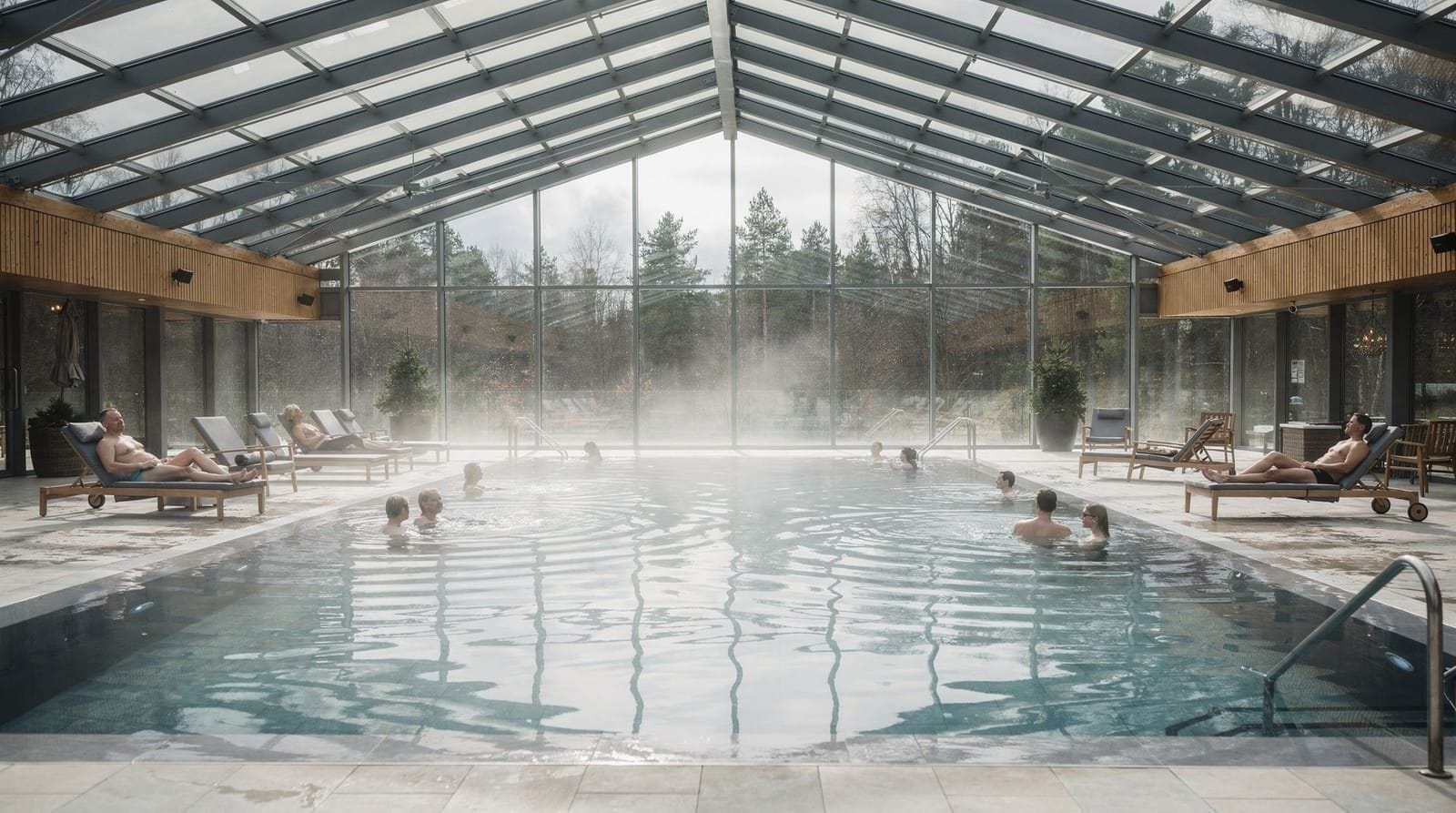
The Druskininkai Aqua Park (Vilniaus al. 13) is a large indoor and outdoor water park — one of the largest in the Baltic states — with pools, slides, wave pools, saunas, and spa facilities. It is unambiguously designed for relaxation and family entertainment.
Day pass: Adults €25–30 (higher on weekends), children €18–22. Entry includes access to all pools and slides; spa/sauna areas have a separate ticket. Lockers available (small deposit). Towel rental €3–4.
The park works for any season. In winter, the outdoor section is heated to create a strange but enjoyable experience of swimming outdoors in snow.
Book online (aquapark.lt) in advance for weekend visits in June–August — it sells out.
Snow Arena
The Snow Arena (Sniego arena, Druskininkai al. 5) is an indoor ski and snowboard slope — Lithuania’s only one — operating year-round. The slope is 450 m long with 35 m vertical drop; suitable for beginners and intermediates.
Lift pass: Adults €15–20/hour, children €12–15/hour. Equipment rental (skis or snowboard + boots + helmet) €10–15 additional. Lessons available for beginners (€20–25/hour with instructor).
It is genuinely useful if you want a ski experience without the Alps price tag, or if travelling with children who have never skied. For serious skiers, it is too limited for a full day.
Dzūkija National Park
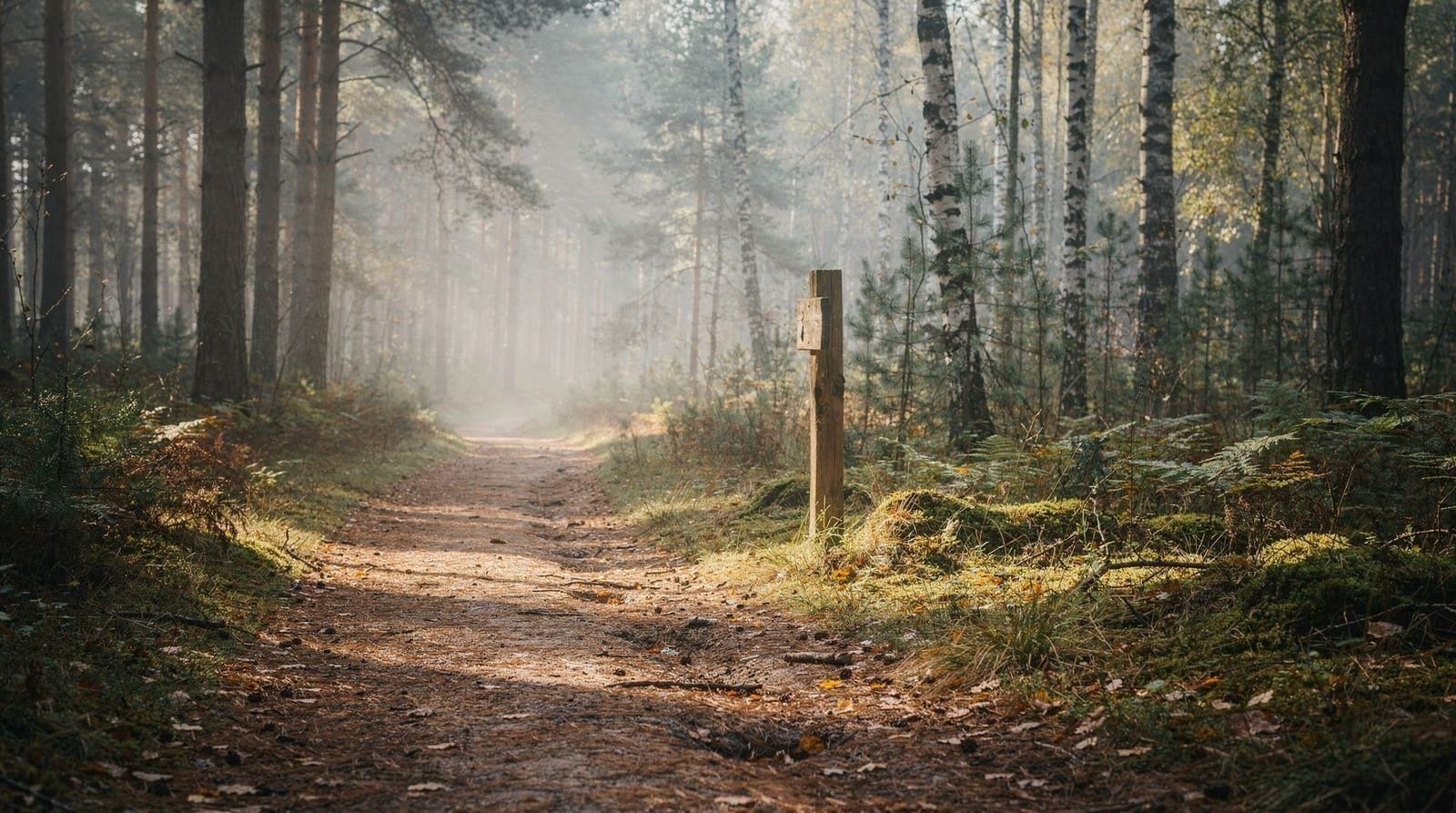
Druskininkai is at the northern edge of Dzūkija National Park — Lithuania’s largest national park, covering 55,000 hectares of pine forest, bog, and river valleys. The park is known for mushroom-picking culture (a serious Lithuanian tradition), old wooden farmsteads, and quiet walking and cycling trails.
From Druskininkai, you can access the park directly from the southern edge of town. The Nemunas riverbank trail runs through the park edge. For longer walks, the Marcinkonys area (50 km from Druskininkai) is the most pristine and least visited part. A car is needed for the full park experience.
Walking and cycling around Druskininkai
For visitors who want to spend their day outdoors rather than in the Aqua Park or Snow Arena, Druskininkai’s immediate surroundings offer genuinely pleasant forest walking and cycling.
The Nemunas riverbank path runs south from the town centre through mixed forest for several kilometres, connecting with small riverside picnic areas and sandy beaches (some officially designated for swimming in summer). The walk from the town centre to the first river beach is about 2 km — flat, well-marked, and shaded. In mushroom season (August–September), the forest floor here is rewarding for foragers.
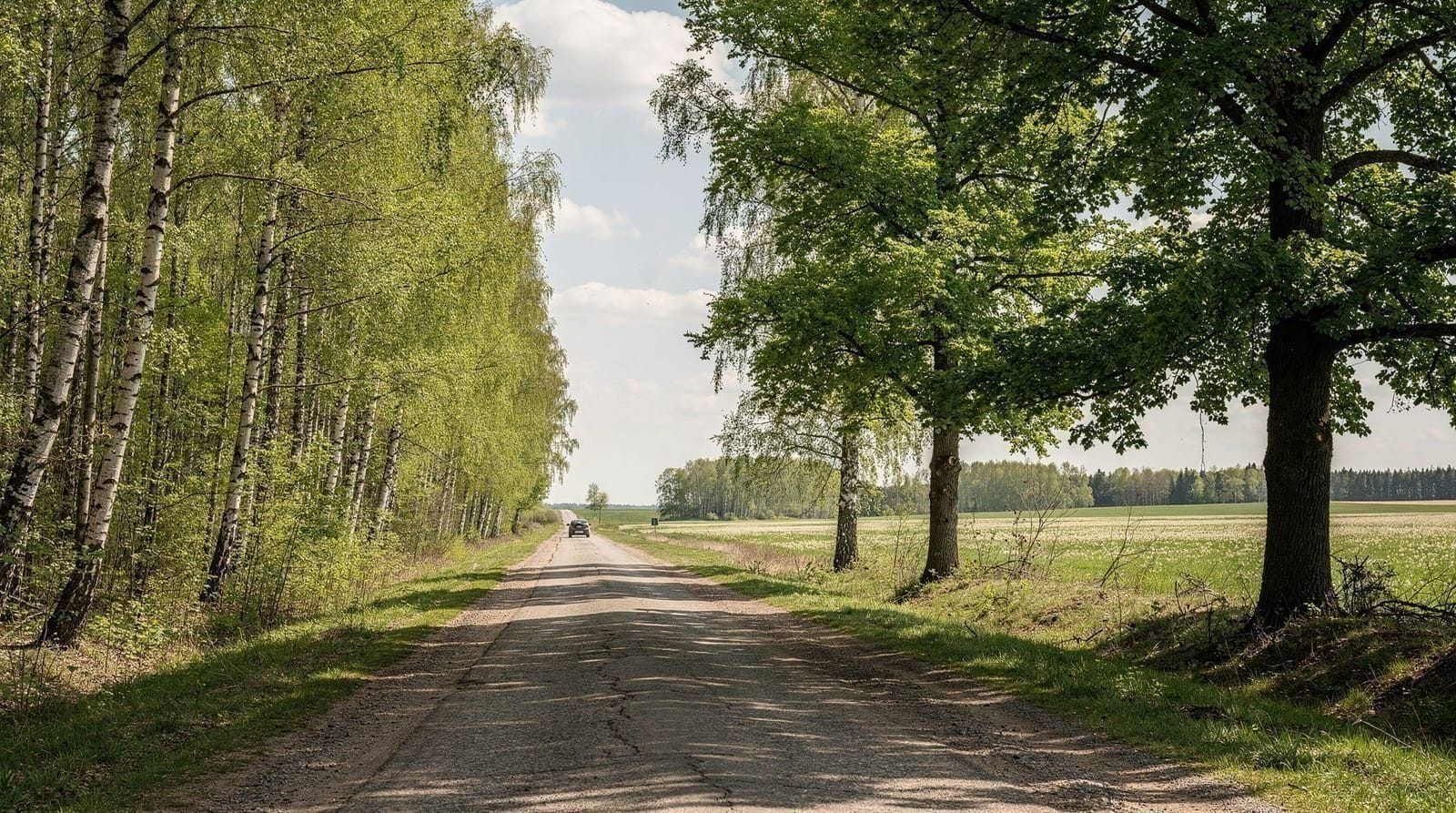
Bike rental is available from several shops near the town centre (€10–15/day for a standard bike, €20–25 for electric). The trail to Ratnyčia village (8 km each way) follows a pleasant rural road through pine forest and passes several traditional wooden farmsteads. Grūtas Park (8 km south) is also reachable by bike, making the cycling option a practical alternative to the taxi for Grūtas.
The tourist information centre (Gardino g. 1) has free maps of marked walking and cycling routes in the Druskininkai area.
Druskininkai vs Trakai and Kaunas: which day trip suits you
Druskininkai occupies a different niche from Vilnius’s other main day trips, and it’s worth being clear about which trip fits your priorities. The Trakai castle day trip is the right choice for classic sightseeing and photogenic architecture; the Kaunas day trip suits history and architecture enthusiasts. Druskininkai is the choice for relaxation, water parks, forest walks, and the singular experience of Grūtas Park — it has comparatively little in the way of conventional “sights” beyond that. Families with young children, or anyone wanting a day that isn’t primarily about walking and looking at buildings, tend to get the most out of Druskininkai; see also the family day trips from Vilnius guide for more age-specific comparisons.
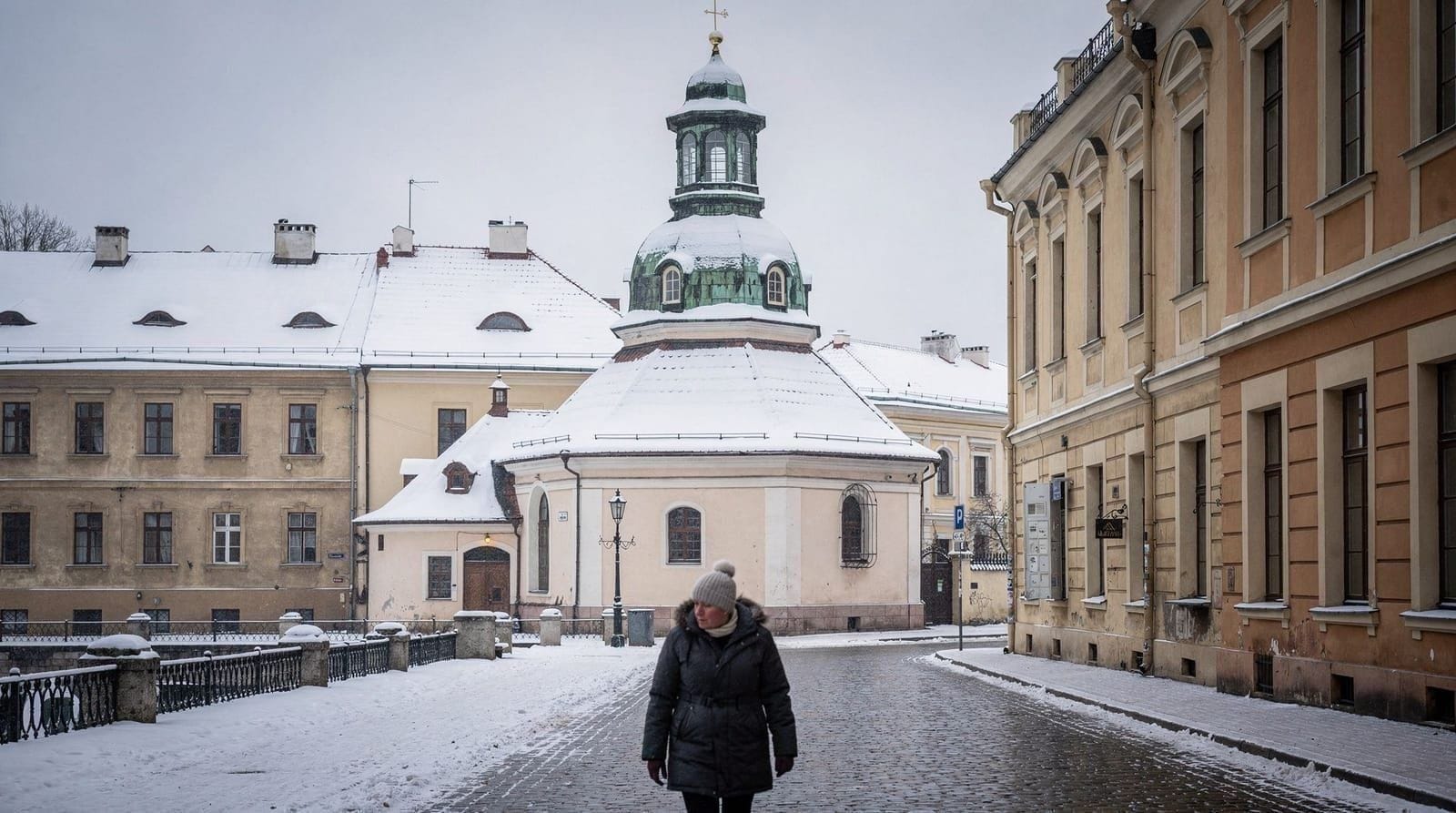
If your visit falls in winter, Druskininkai is also one of the few Lithuanian day trips that genuinely improves in the cold months — see Vilnius in winter for how this fits a winter itinerary generally.
Where to eat in Druskininkai
Sicilija (Vilniaus al. 7): Unexpected good pizza and Italian food in a Lithuanian spa town. Reliably popular and priced fairly at €10–14 for a main.
Kolonada (Vilniaus al. 13, adjacent to Aqua Park): Restaurant at the spa complex, standard Lithuanian food, convenient if you are already at the Aqua Park. Prices are slightly elevated as expected.
Café Miško Namas (Miško g. 1): Pine-forest-adjacent café with excellent coffee and cakes. Pleasant garden seating in summer.
The town square has several standard cafés — prices are reasonable by Lithuanian standards, 10–20% cheaper than Vilnius equivalents.
Practical planning
Budget: A comfortable Druskininkai day for one person costs:
- Bus return: €12
- Grūtas Park taxi + entry: €30–35
- Aqua Park half-day: €25
- Lunch: €12–15
- Total: ~€80–90
You can do a simpler day (bus + Grūtas + lunch + town walk) for €40–50.
Combination trips: Druskininkai and Grūtas Park work naturally together. Adding Dzūkija forest walks requires a car. Combining Druskininkai with Trakai or Kaunas in one day is not realistic — they are in opposite directions from Vilnius.
Best season: Druskininkai works year-round. Summer for outdoors and the spa lake; winter for the Snow Arena and Aqua Park’s heated outdoor pools. The summer weekend crowds at Aqua Park are real — book ahead.
For overnight visitors specifically interested in the spa hotels rather than a day trip, our dedicated Druskininkai spa guide covers the hotel options and treatments in depth, and the Druskininkai destination page has broader practical information.
Frequently asked questions about the Druskininkai day trip
Is there a direct train from Vilnius to Druskininkai?
No. There is no passenger rail service to Druskininkai. Direct buses from Vilnius bus station are the standard option (1.5 h, €4–6 one-way).
How do I get from Druskininkai to Grūtas Park without a car?
Take a local taxi from Druskininkai bus station or town centre to Grūtas Park (€10–15 one-way, 15 minutes). Agree on a pickup time with the driver for the return, or call for a taxi when you are done. There is no reliable bus service directly to the park entrance.
Is Grūtas Park appropriate for children?
Yes, for older children (8+) with some context. The park is outdoors with plenty of space to explore, the watchtowers are climbable, and the small train is popular with younger children. The indoor museum section has material about deportations and occupation that requires adult explanation. The overall atmosphere is absorbing rather than frightening.
What are Druskininkai mineral waters supposed to do?
Historically, Druskininkai mineral springs were promoted as treatments for digestive complaints, rheumatism, and skin conditions. The town became a tsarist-era health resort on this basis in the 19th century. The evidence base for most spa water claims is weak by modern medical standards, but drinking the slightly salty, sulphurous water is free and part of the local experience.
Can I do Druskininkai and the Curonian Spit on the same trip?
They are in opposite directions from Vilnius (Druskininkai is south-west, the Curonian Spit is north-west) and the distances are very different. They cannot be combined in a single day from Vilnius.
Is Druskininkai worth visiting if I don’t care about spas?
Yes — Grūtas Park alone justifies the trip for anyone interested in Soviet history, and the Dzūkija National Park forest walks are genuinely pleasant regardless of interest in the spa facilities. Skip the Aqua Park and Snow Arena if they don’t appeal and focus the day on Grūtas Park and a riverside walk instead.
Should I stay overnight in Druskininkai instead of a day trip?
If you want the full spa hotel experience with treatments and an unhurried pace, yes — see the Druskininkai spa guide for hotel options. For most visitors focused on Grūtas Park and a taste of the town, a day trip is sufficient.
Top experiences
Bookable activities with verified prices and instant confirmation on GetYourGuide.