Kaunas day trip from Vilnius
Kaunas: Sightseeing 2 hour tour
Duration: 2 hours
How do I get from Vilnius to Kaunas?
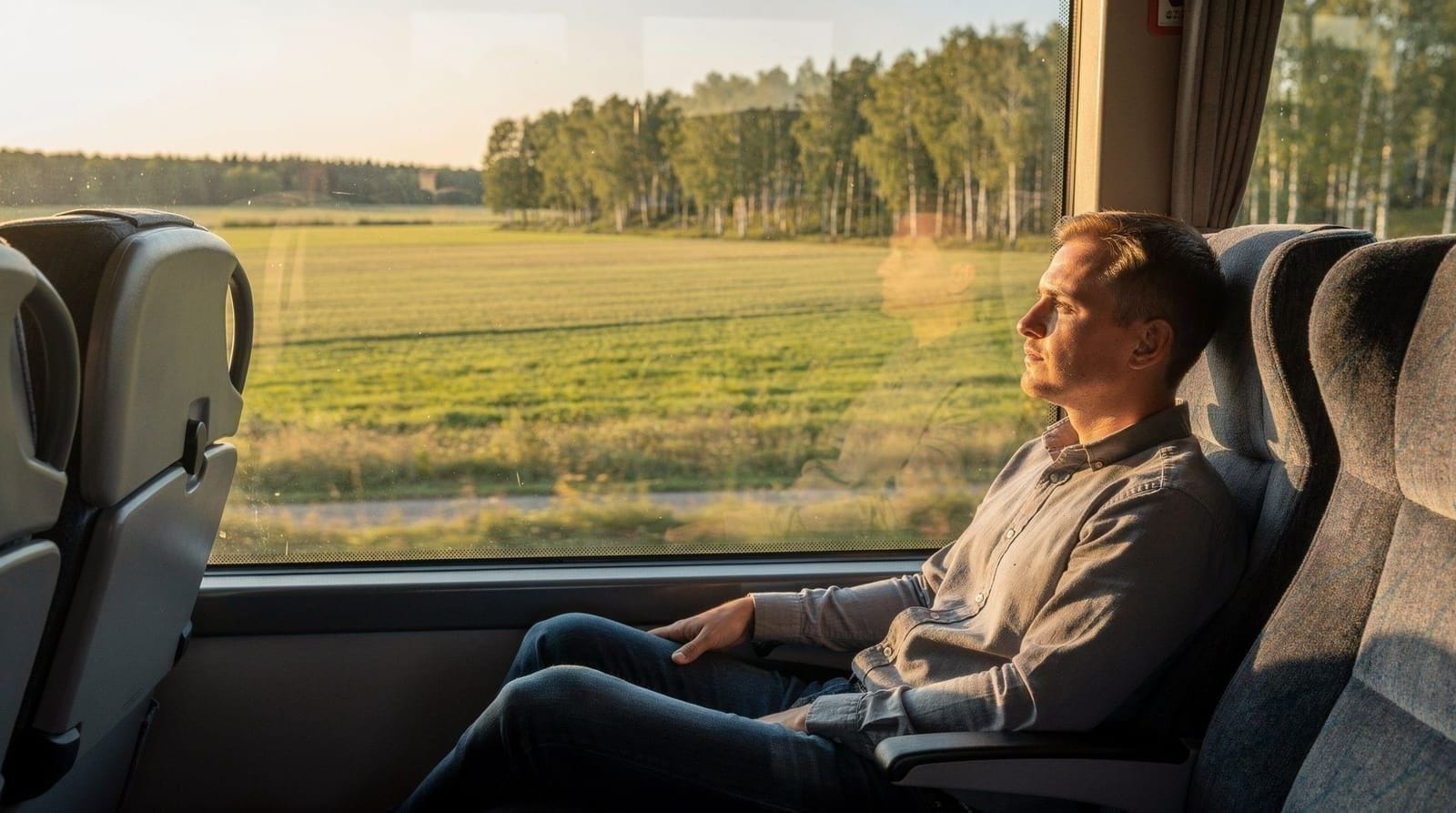
By train from Vilnius Central Station — 1 hour, €6–8 one-way, trains run every 30–45 minutes. Lux Express coaches are similar time and price. Kaunas is Lithuania's second city with a medieval old town, the UNESCO-listed interwar modernist district, and the Ninth Fort Holocaust memorial.
Kaunas is Lithuania’s most underrated city, and that is partly because Vilnius is so immediately compelling that most visitors never get around to the one-hour train journey south-west. The reward for making that journey is substantial: a medieval old town, a pedestrianised main boulevard, a UNESCO-recognised district of interwar modernist architecture, and one of the most significant Holocaust memorial sites in the entire Baltic region.
It is also completely different from Vilnius — less baroque, more gridded, with a brisk provincial energy rather than a capital’s self-consciousness. A full day in Kaunas leaves you understanding Lithuania better than you did before. For the ground-level transport logistics beyond what’s covered here, see Vilnius to Kaunas.
| Where | 100 km southwest of Vilnius |
| Cost | around €30–45/person for a comfortable day |
| Time needed | a full day (6–8 hours) |
| Getting there | Train, 1 h, around €6–8 each way |
| Best paired with | Rumšiškės open-air museum or Pažaislis Monastery |
Getting from Vilnius to Kaunas
By train (recommended): Trains from Vilnius Central Station (Vilniaus g. 16) to Kaunas run approximately every 30–45 minutes throughout the day, from around 5 am to 11 pm. Journey time: 1 hour to 1 hour 10 minutes. Ticket price: €6–8 one-way in economy (Ekonominis); buy at the station, on the LTG Link website, or via the LTG Link app. No advance booking required, but booking ahead guarantees a seat on busy morning services.
Kaunas station is in the Aleksotas district, 1 km south of the old town — a 15-minute walk or a short bus/trolleybus ride.
By Lux Express bus: The Lux Express coach service (luxexpress.eu) runs between Vilnius and Kaunas multiple times daily. Similar journey time, slightly higher price (€7–12), but the coaches have wifi and are comfortable. Departs from Vilnius bus station (Sodų g. 22).
By car: 100 km via the A1 motorway, approximately 1 hour. Parking in Kaunas is generally available in paid car parks near Laisvės alėja (€0.80–1.50/hour). Not significantly faster than the train once you account for parking.
Guided tours: Several operators run Kaunas day trips from Vilnius, usually including transport and a walking tour of the main sights. Useful if you prefer structure.
The old town
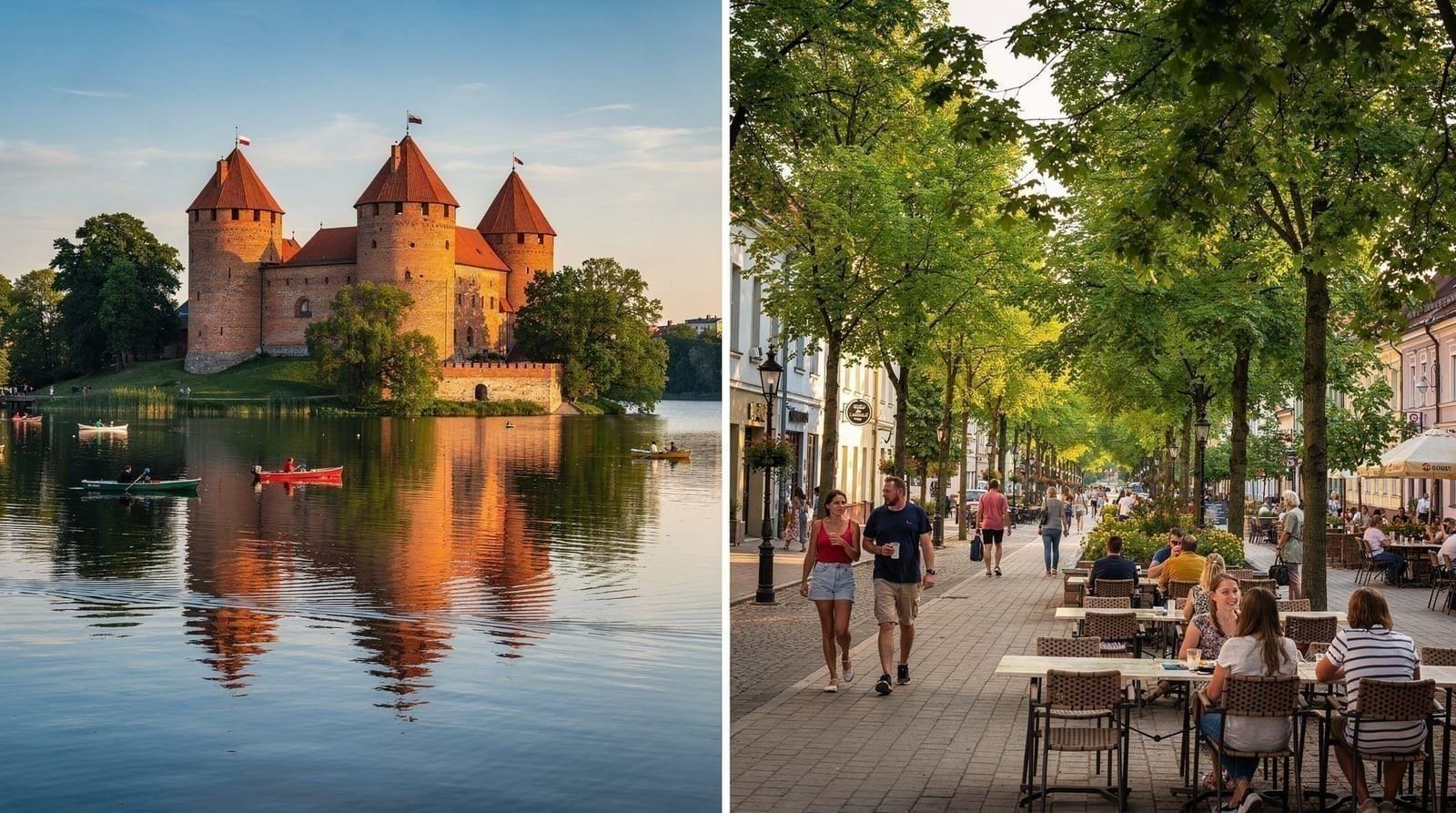
Kaunas Old Town occupies the confluence of the Nemunas and Neris rivers — the same geographical logic that governed medieval fortress placement across Central Europe. The area is compact and manageable on foot.
Kaunas Castle (Kauno pilis): The 14th-century Gothic castle is now a partial ruin with one restored tower. Entry is free to the exterior; the small interior museum costs €4. It gives a useful sense of how Kaunas grew from a Teutonic Order-era fortress.
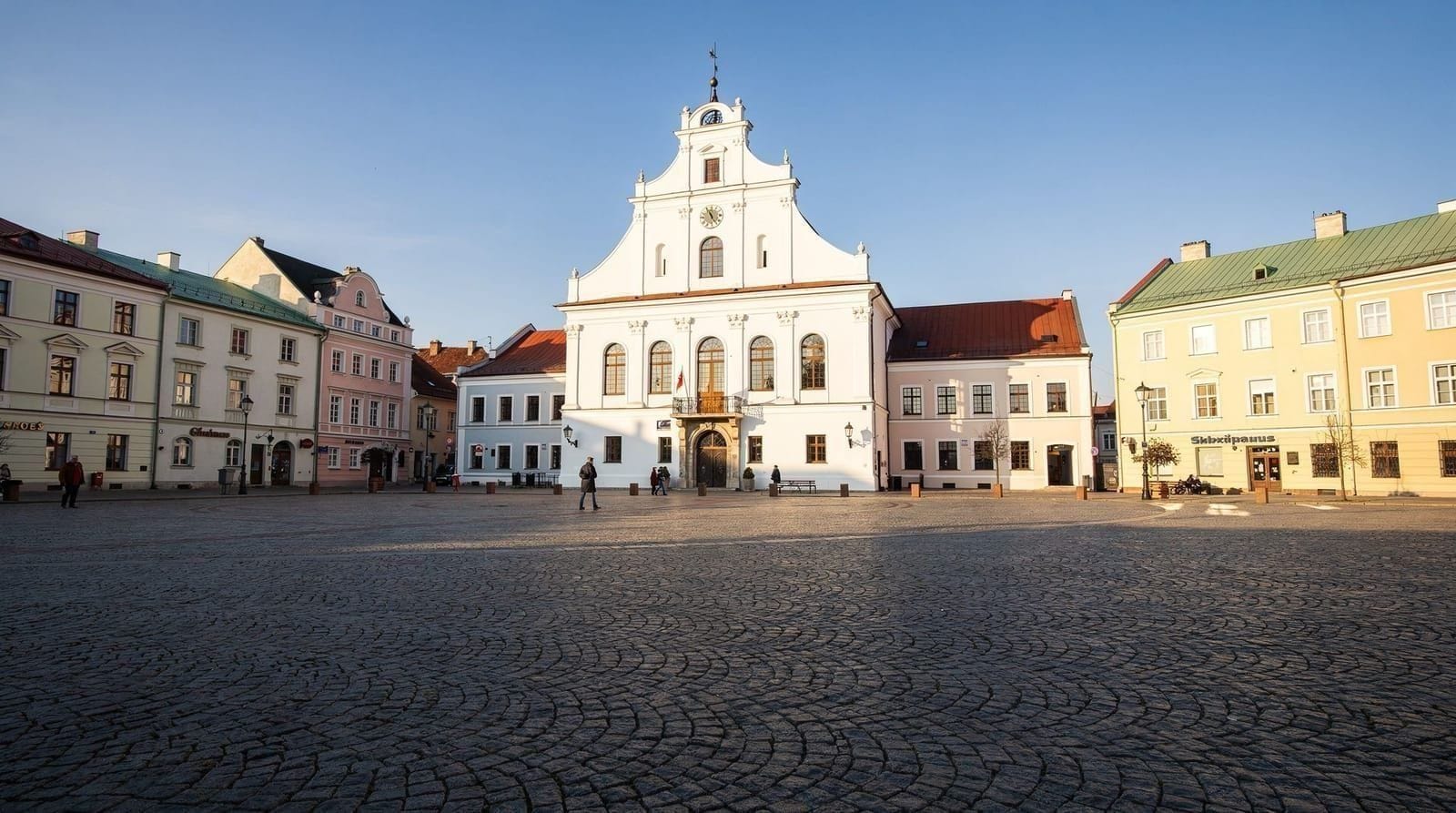
Town Hall Square (Rotušės aikštė): Kaunas’s main medieval square, surrounded by 16th and 17th-century architecture. The Town Hall itself (colloquially called the “White Swan” for its slender Baroque tower) is one of the most photographed buildings in the city.
St Francis Xavier Church and Monastery: The Baroque church behind Town Hall is larger and more elaborate than it appears from the exterior. Free entry.
Vytautas the Great Church: An early 15th-century Gothic church with interesting bas-reliefs and a restrained interior very different from the Baroque churches in Vilnius.
The old town has several cafés on and around Rotušės aikštė — standard tourist-strip prices. Better value is found two streets back. Kavos Akademija (Vilniaus g. 6) is a reliable coffee shop with local character.
The interwar modernist district
This is the reason to come to Kaunas that competitors rarely mention. Between 1919 and 1940, when Kaunas was Lithuania’s provisional capital (Vilnius was occupied by Poland), the city had to build rapidly. The result was a dense concentration of Art Deco and functionalist buildings that have survived remarkably intact — government ministries, banks, apartment buildings, private villas, a post office, a fire station, all built in a coherent modernist idiom.
UNESCO added “Modernist Kaunas: Architecture of Optimism” to the World Heritage List in 2023.
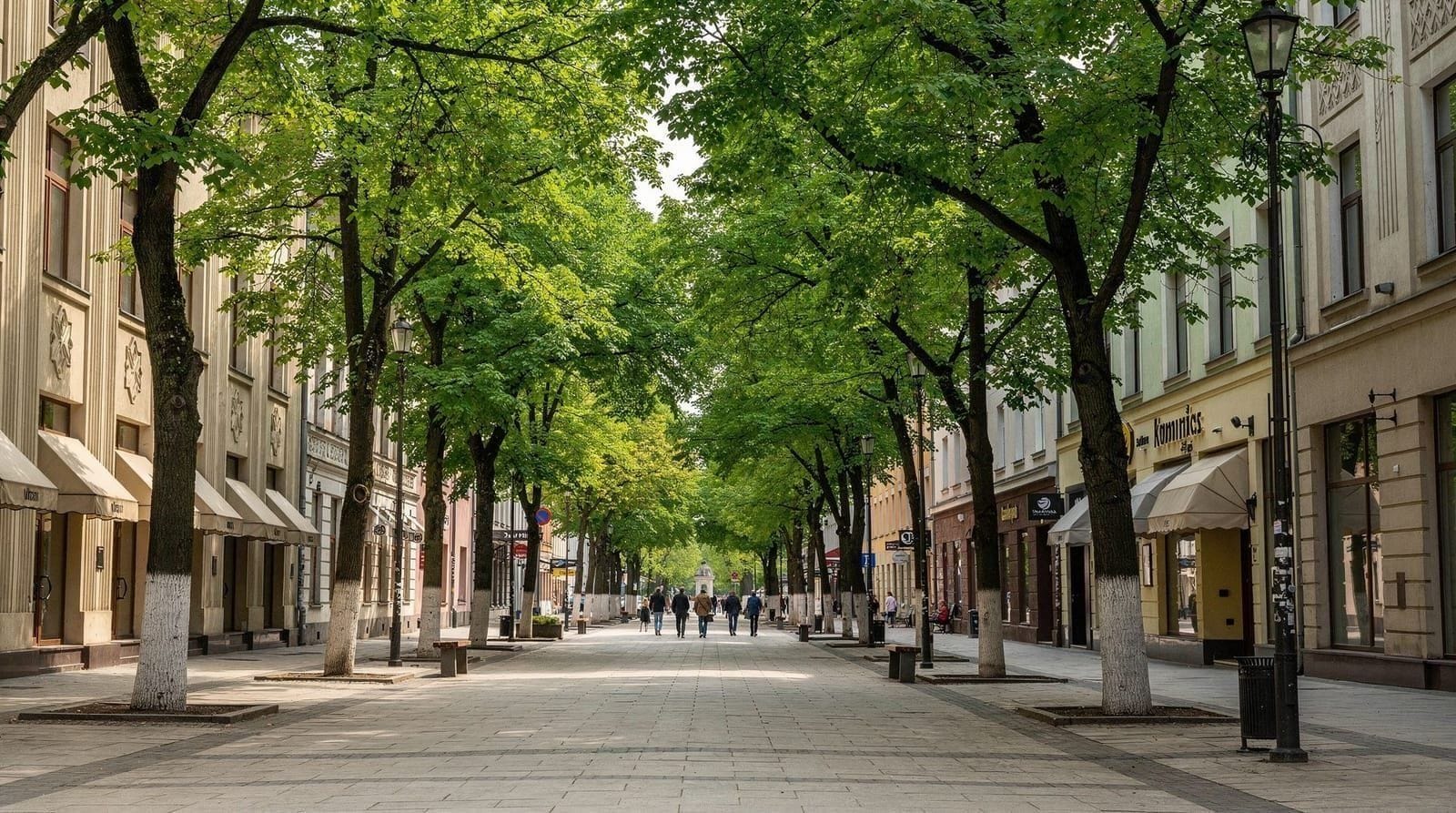
The area is centred on Laisvės alėja (Liberty Avenue), the 1.6 km pedestrianised main boulevard. Walking from one end to the other takes 20 minutes; a thorough architectural tour of side streets takes 2–3 hours.
Key buildings:
- Kaunas Post Office (Laisvės al. 102): A masterpiece of Lithuanian functionalism, built 1930–32
- State Insurance Building (Laisvės al. 79): Art Deco with characteristic geometric ornamentation
- Former Chamber of Commerce (Donelaičio g. 12): Stripped classicist modernism typical of late 1930s Baltic design
- Kaunas City Hall (Laisvės al. 96): Now partly a museum; the building’s own architecture is worth examining
The best way to understand this architecture is with a local guide — several specialists run 2-hour walking tours of the district for €15–20 per person. Alternatively, the M. K. Čiurlionis National Museum of Art (V. Putvinskio g. 55) has an exhibition on modernist Kaunas specifically.
Book a 2-hour guided sightseeing tour of KaunasUnderstanding the modernist district in context
Kaunas’s provisional capital status between 1919 and 1940 was an accident of geopolitics. When Lithuania declared independence in 1918, Vilnius was the obvious capital — it had been the historical seat of Lithuanian government for centuries. But in October 1920, Polish General Lucjan Żeligowski seized the Vilnius region in a staged military coup, and the city remained under Polish control (as “Wilno”) until 1939. Kaunas became the provisional capital by default.
The Lithuanian government responded by building — rapidly and ambitiously. Between 1920 and 1940, Kaunas effectively doubled in size and constructed an entirely new city centre around Laisvės alėja. The architects were trained in Vienna, Berlin, and Paris and brought back the modernist languages of the 1920s and 1930s — Art Deco, functionalism, stripped classicism, and Baltic rationalism. The result was a remarkably coherent built environment that has survived largely intact because Kaunas was never heavily bombed in the Second World War and was not subjected to the Soviet-era demolition campaigns that reshaped other Baltic cities.
Walking the side streets off Laisvės alėja — particularly Donelaičio gatvė, Kęstučio gatvė, and Mickevičiaus gatvė — reveals private villas and apartment buildings that are less well-known than the public monuments but equally interesting: curved balconies, geometric ornamental tiles, ironwork stair railings, and façades that would look at home in Warsaw, Prague, or Tallinn.
The M. K. Čiurlionis National Museum of Art (V. Putvinskio g. 55) is worth 1–1.5 hours independently of the architecture walk. It houses the largest collection of works by Mikalojus Konstantinas Čiurlionis — Lithuania’s most important artist — a symbolist painter and composer who died in 1911 at 35. His works, with their musical structure and dreamlike imagery, are among the most distinctive in early 20th-century European art and largely unknown outside Lithuania.
The Ninth Fort
The Ninth Fort (IX Fortas, Žemaičių pl. 73) is 4 km from the city centre, reachable by bus no. 23 or taxi (€5–7). Plan 1.5–2 hours.
The fortress was built by Tsarist Russia in the 1890s as part of Kaunas’s ring of fortifications. During the Nazi occupation of Lithuania (1941–1944), it became a primary extermination site. German Einsatzgruppen, assisted by Lithuanian auxiliary units, murdered approximately 50,000 people here — the majority Jewish residents of Kaunas (Kovno) and Jews transported from Germany, France, and Austria.
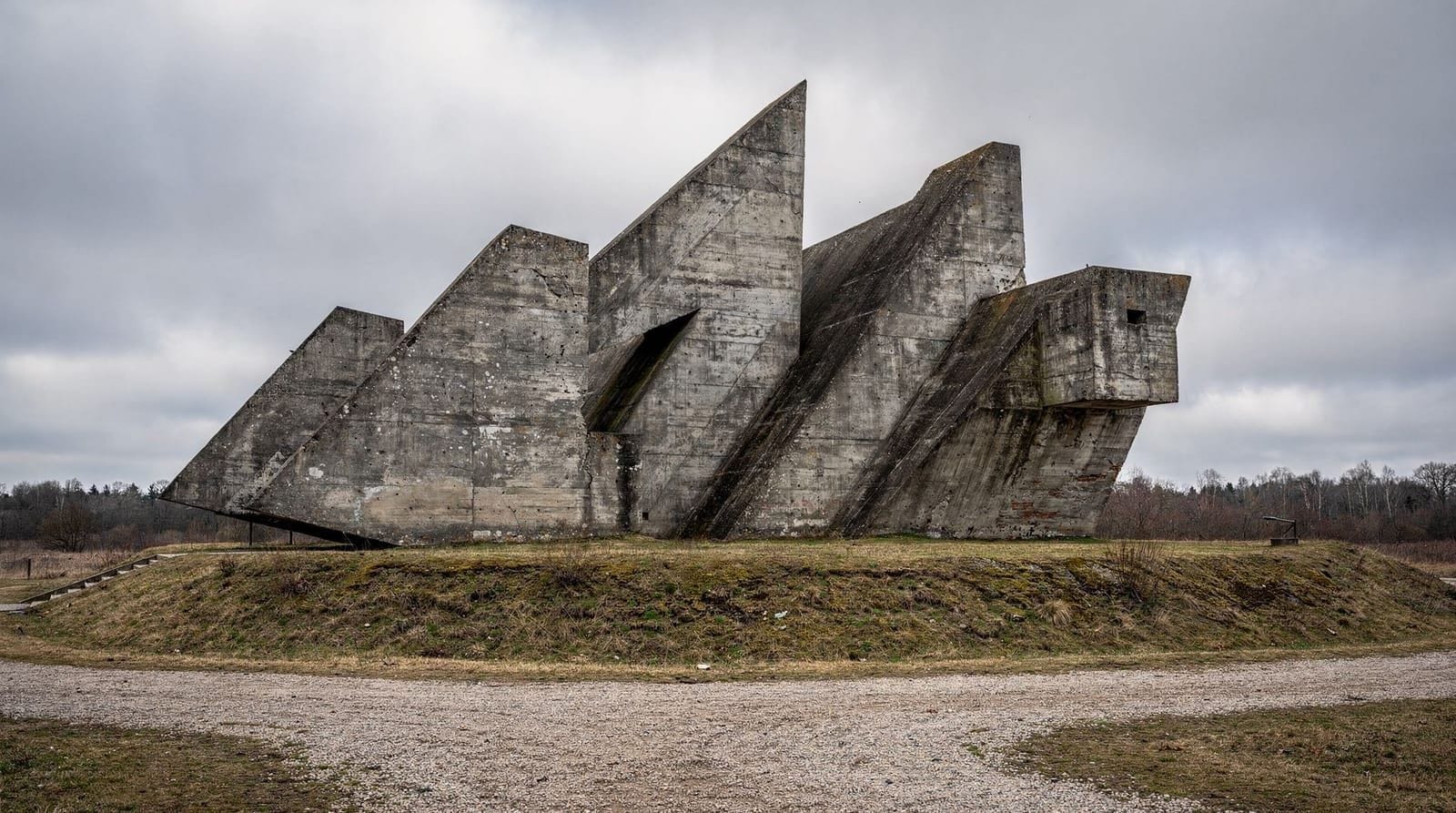
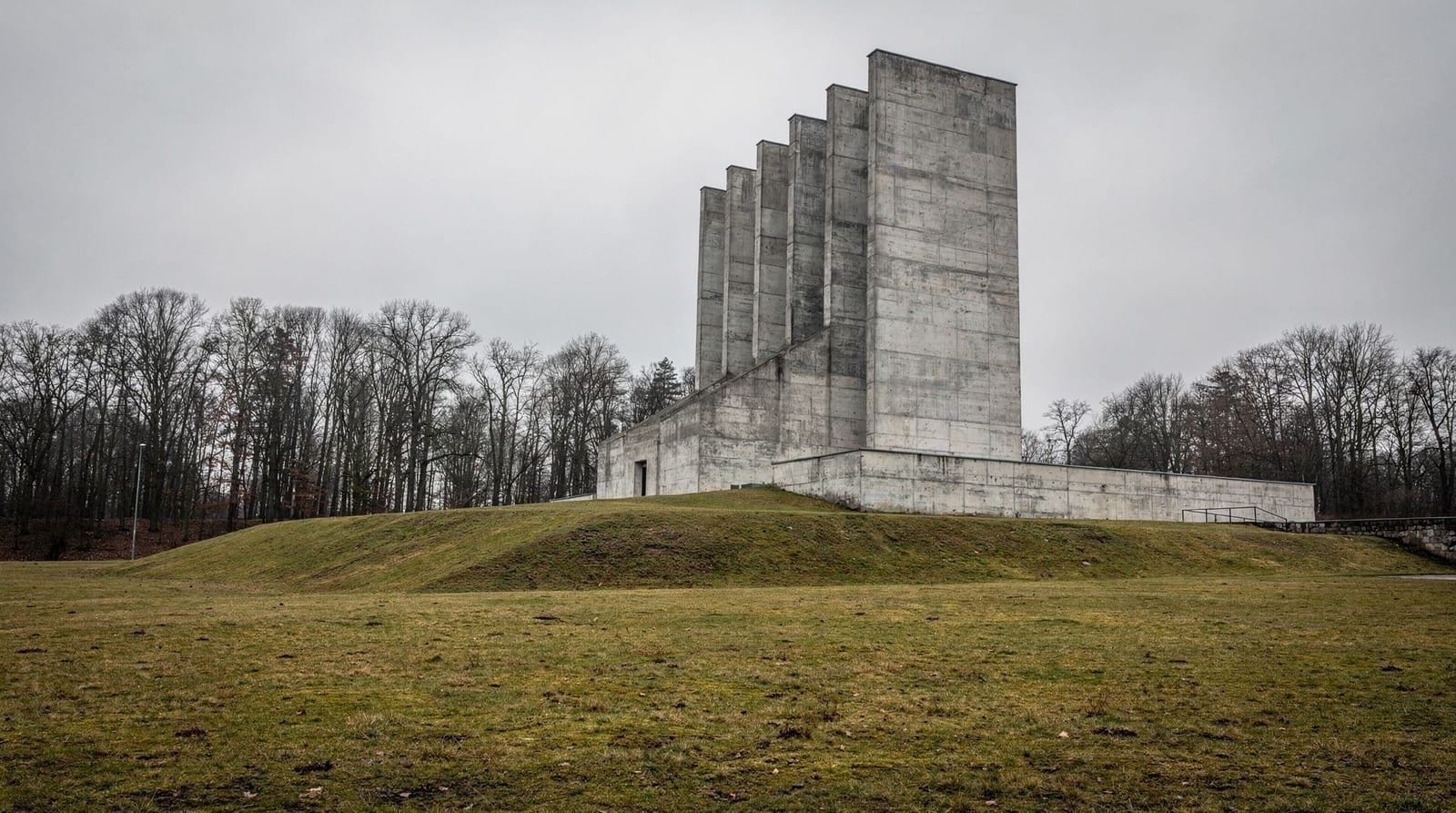
The museum is sober, evidence-based, and important. Photographs, testimony, and material evidence document the killings with considerable care. The exterior monument — a massive abstract sculpture by Alfonsas Ambraziunas, completed 1984 — is one of the most powerful war memorials in the Baltic states.
The Ninth Fort puts into context the Jewish history of Kaunas: before 1941, roughly 30,000 Jews (25–30% of the population) lived in the city. By the end of the war, fewer than 5% had survived.
Note: the site is not easy emotionally. Consider whether you want to end your day here or visit mid-morning to allow some recovery time before returning to Vilnius.
Book a guided tour of the Ninth Fort and Kaunas dark historyPažaislis Monastery
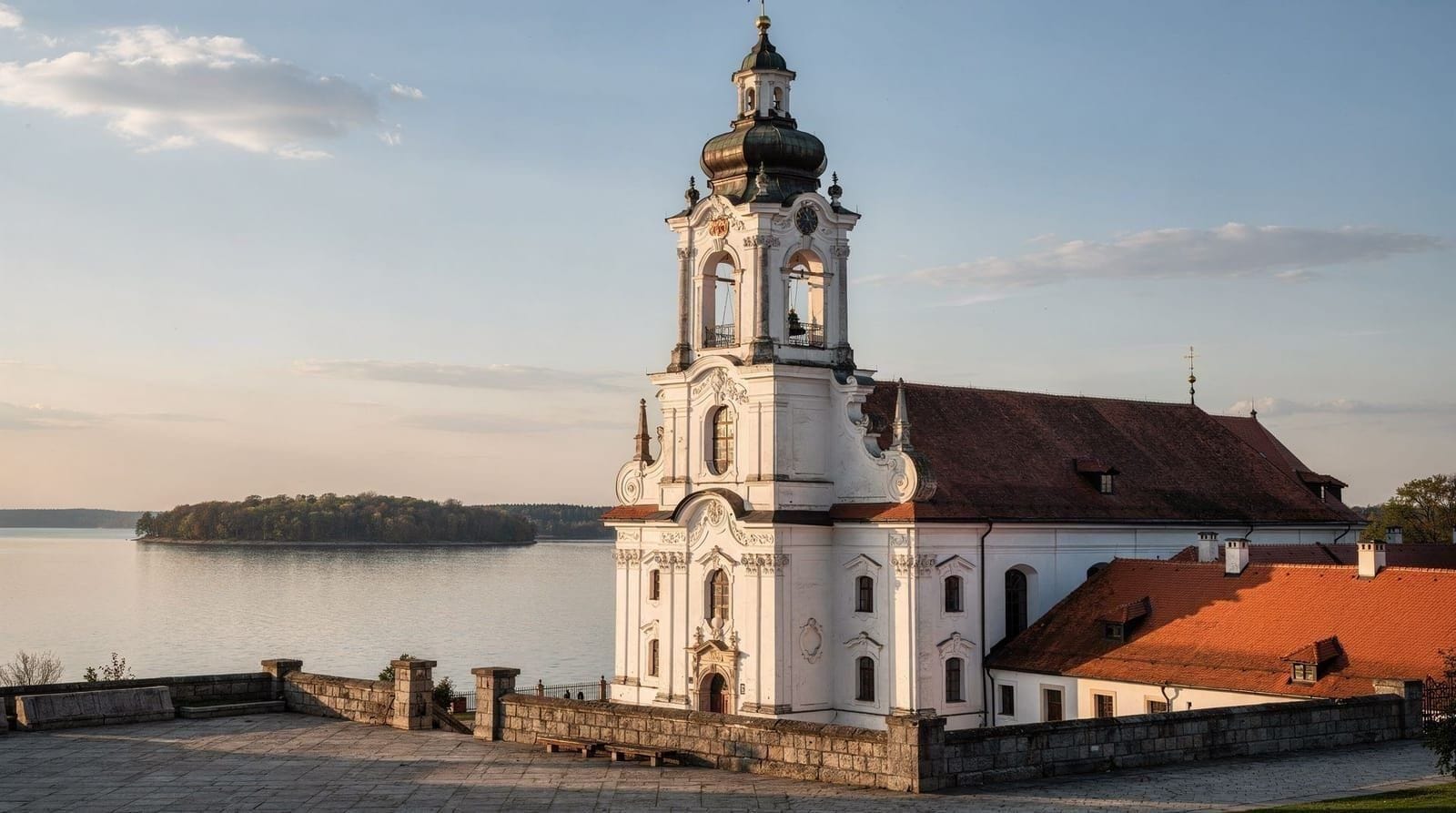
For visitors with more time or a car, Pažaislis Monastery (Kauno Pažaislio Vienuolynas, E. Glemžaitės g. 1) is 8 km east of Kaunas city centre, set on the shores of Kaunas reservoir. The 17th-century Camaldolese monastery is the largest Baroque architectural complex in Lithuania — an ensemble of church, chapels, cloister, and garden that rivals anything in Vilnius for ambition and scale.
The church interior has frescoes covering the dome and nave — executed by Italian artists in the 1680s and unusually well-preserved. The monastery grounds are free to walk; the church interior charges a small entry fee (€3).
Pažaislis is also the summer venue for the Pažaislis Music Festival (June–August), which brings classical performers to one of Lithuania’s most beautiful historic settings. Tickets €15–30.
Getting there: bus no. 23 from Kaunas city centre (journey 30 minutes), or by Bolt/taxi (€8–10). Some full-day tours from Vilnius include this stop.
Rumšiškės open-air museum
If you have a car and want to extend the day, the Lithuanian Open-Air Museum at Rumšiškės (18 km east of Kaunas) is one of the best folk architecture museums in Europe: 180 traditional wooden buildings relocated from across Lithuania, with working farmsteads, craft demonstrations, and period interiors. Admission €12, open daily May–October. Allow 2–3 hours.
Several guided day tours from Vilnius combine Kaunas + Rumšiškės + Pazaislis Monastery into a full day. This combination suits visitors who want maximum content from a single day trip and don’t mind a longer, more structured itinerary than the independent train-based version described above — useful if you don’t have a car, since Rumšiškės has no direct public transport link from Kaunas. It also pairs naturally with the Rumšiškės notes in the family day trips guide if you’re travelling with children who enjoy the working farmsteads and craft demonstrations.
Where to eat and drink in Kaunas
Avilys (Vilniaus g. 34): Kaunas’s best-known brewery pub. Good beer (brewed on-site), Lithuanian food at honest prices. Expect €10–15 for food + drinks. Popular with locals.
Bernelių Užeiga (Kęstučio g. 15): Traditional Lithuanian restaurant, reliable cepelinai and cold plates, mid-range prices. No tourist trap.
Lunch Kaunas covered market (Halė rinka, Miško g. 4): Cheap food stalls, local produce, good for a quick lunch under €8.
Coffee: Štaka (Laisvės al. 87) is the best independent coffee shop on the main boulevard.
Avoid the restaurants on Rotušės aikštė directly facing the Town Hall — quality varies and prices are elevated. Walk one block in any direction for better value.
Kaunas street art and contemporary culture
Kaunas has developed a notable street art scene in the past decade — an unexpected contrast with the interwar architectural heritage. The areas around Vilijampolė (north of the Neris river) and the former industrial districts near the railway station have attracted large-scale murals by both Lithuanian and international artists. A self-guided street art walk takes 1–1.5 hours and can be combined with the return journey to the station.
The city also supports an active independent café and creative space culture along Laisvės alėja and particularly on Kęstučio gatvė — several old apartment building courtyards have been converted into creative hubs with independent retailers, art spaces, and coffee shops. These are unmarked from the street and worth exploring. The courtyard at Kęstučio g. 27 is particularly well-regarded.
Practical day-trip planning
Suggested itinerary:
- 9:00 — Train from Vilnius
- 10:15 — Arrive Kaunas, walk to old town (15 min)
- 10:30 — Old town walk: castle, Rotušės aikštė, churches (1.5 h)
- 12:00 — Lunch at Avilys or covered market
- 13:30 — Modernist district walk along Laisvės alėja (1.5–2 h)
- 15:30 — Bus or taxi to the Ninth Fort (1.5 h)
- 17:00 — Return to city centre, coffee on Laisvės al.
- 18:30 — Train back to Vilnius (arrives 19:30–20:00)
This schedule is full but manageable. Drop the Ninth Fort if you want a more relaxed day; drop the modernist walk if history is your primary interest.
Money: Kaunas is slightly cheaper than Vilnius. Budget €30–45 for a comfortable day including lunch, entry fees, and transport.
Frequently asked questions about the Kaunas day trip
Is Kaunas better than Trakai as a day trip?
They offer completely different experiences. Trakai is scenic and quick (30 min, half-day possible). Kaunas requires a full day but offers more substance — architecture, history, food culture, two major museums. If you have two days for day trips, do both.
Can I visit Kaunas and Trakai on the same day?
By public transport, this is very difficult — the routes are different directions from Vilnius and switching between them takes time. By car, Kaunas + Trakai in one day is possible but rushed. Better to choose one.
How do I get between Kaunas train station and the old town?
Walk 1 km north (15 minutes), or take trolleybus no. 7 or bus no. 37 from the stop outside the station. Taxis and Bolt are also available (€4–5).
Is Kaunas safe?
Yes, very. Lithuania has one of the lowest crime rates in the EU. Kaunas is a normal mid-sized European city. Standard urban common sense applies: watch your pockets in crowded market areas.
What is the best thing to see in Kaunas in under 2 hours?
Walk from Kaunas Castle through Town Hall Square, then east along Laisvės alėja to the Kaunas Cathedral. This 2 km circuit covers the historical core and the beginning of the modernist district and takes about 1.5–2 hours at a comfortable pace.
How Kaunas compares to Vilnius’s other day trips
Kaunas sits at the more demanding end of the day-trip spectrum from Vilnius — a full day versus Trakai’s easy half-day. For a direct side-by-side, see Trakai vs Kaunas as a day trip, which weighs the two against each other for visitors who can only fit one. For the broader menu of options, best day trips from Vilnius covers Trakai, Kernavė, Druskininkai and the Hill of Crosses alongside Kaunas. Families should note that Kaunas works best for children 12 and older rather than younger ones — see family day trips from Vilnius for age-appropriate alternatives.
Is Kaunas worth it if I only have 2 or 3 days in Vilnius total?
Generally no — with only 2-3 days, the Old Town and Trakai give a better return on limited time. Kaunas rewards visitors with 4+ days in the region who want depth beyond the capital, since it demands a full day and offers a different kind of experience (architecture and 20th-century history) rather than instant visual payoff.
Top experiences
Bookable activities with verified prices and instant confirmation on GetYourGuide.