Curonian Spit day trip from Vilnius
Nida: Vilnius curonian spit all day tour
Can you visit the Curonian Spit as a day trip from Vilnius?
Yes, but it is a very long day. The Curonian Spit is 310 km from Vilnius — around 3.5 hours each way by car or coach. An organised day tour (departing 7–8 am, returning 9–10 pm) covers the highlights efficiently for €45–70 per person. Two days with an overnight in Nida is significantly better if your schedule allows.
The Curonian Spit is Lithuania’s most spectacular landscape: a narrow sand peninsula stretching 98 km along the Baltic coast, with Europe’s tallest coastal dunes piled on one side and the calm waters of the Curonian Lagoon on the other. It is a UNESCO World Heritage Site, and it deserves the designation — the dune landscape genuinely feels like another world.
From Vilnius, it is 310 km. That is a fact that no amount of enthusiasm can shorten. A day trip is possible and many people do it, but you should go in with clear expectations about how rushed it will feel. This guide gives you the honest calculation.
| Distance | 310 km from Vilnius, around 3.5 hours each way |
| Cost | Around €45-70/person for an organised day tour |
| Time needed | Full day (7-8am to 9-10pm) or better, 2 days with an overnight in Nida |
| Best season | May-September; many businesses close outside this window |
| Getting there | Organised coach tour, self-drive plus ferry, or bus plus ferry |
Is a day trip realistic?
Honestly: a day trip gets you to the Curonian Spit. Two nights in Nida lets you experience it.
A typical organised day tour departs Vilnius at 7–8 am, arrives at the spit by midday (after the 3.5 h drive to Klaipėda and the car ferry), gives you 4–5 hours on the spit (Juodkrantė village, Nida, Parnidis dune), and returns to Vilnius by 9–10 pm. You see the highlights. You are tired.
If you have the time, consider booking one or two nights in Nida (guesthouse options from €50–90/night in season) and returning independently by bus to Klaipėda and then train to Vilnius.
For visitors who are only in Lithuania for a few days, the day trip is the right call — just book it in advance, start early, and don’t expect a leisurely pace. The Vilnius to Klaipėda and Curonian Spit guide covers the same route from the transport-planning angle in more detail, and our Curonian Spit nature guide goes deeper into the ecology if that’s your main interest.
Day trip vs overnight: side by side
| Day trip | Overnight in Nida | |
|---|---|---|
| Time on the spit | 4-5 hours | 1-2 full days |
| Pace | Rushed, highlights only | Relaxed, can cycle the full length |
| Cost | €45-70/person (tour) | Tour cost + €50-90/night guesthouse |
| Best for | Limited time in Lithuania | Nature lovers, photographers, cyclists |
| Dead Dunes reserve | Usually skipped | Realistic to include |
Getting from Vilnius to the Curonian Spit
By organised tour (recommended): Several operators run full-day guided tours from Vilnius to the Curonian Spit, combining coach transport, the Klaipėda–Smiltynė car ferry (pedestrian entry included), a guided tour of the spit, and return transport. Cost: €45–70 per person. Depart 7–8 am, return 9–10 pm.
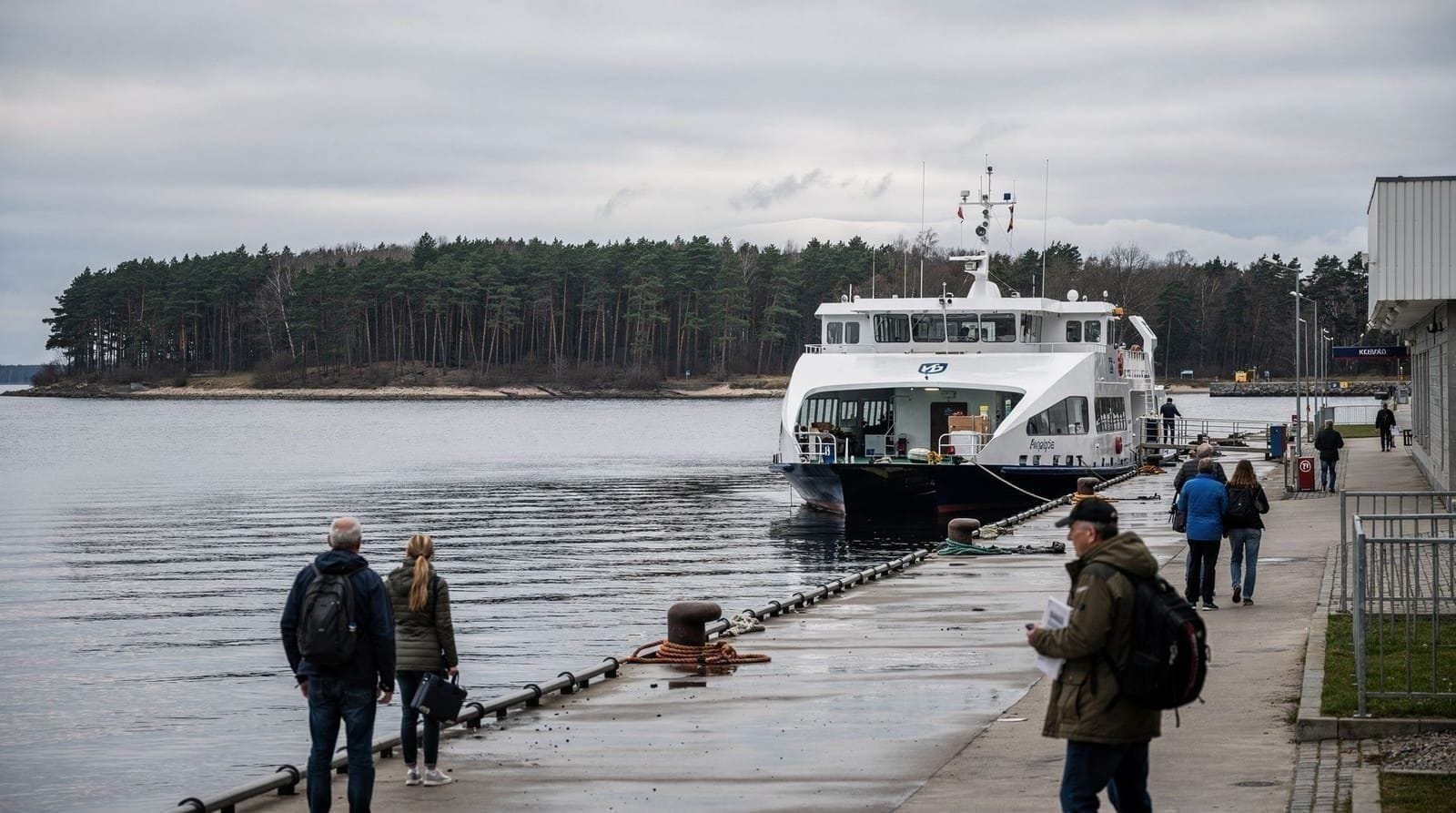
Book an organised day tour to the Curonian Spit from VilniusBy car: Drive from Vilnius to Klaipėda via the A1 motorway — approximately 3.5 hours. In Klaipėda, follow signs to “Keltas” (ferry). The car ferry runs 24 hours, every 30–60 minutes, from Old Town ferry terminal (Žvejų g.). Cost: €17–21 per car plus driver, €1–2 per additional passenger. The crossing takes 5–7 minutes. Pay on the Lithuanian side only; the return is free.
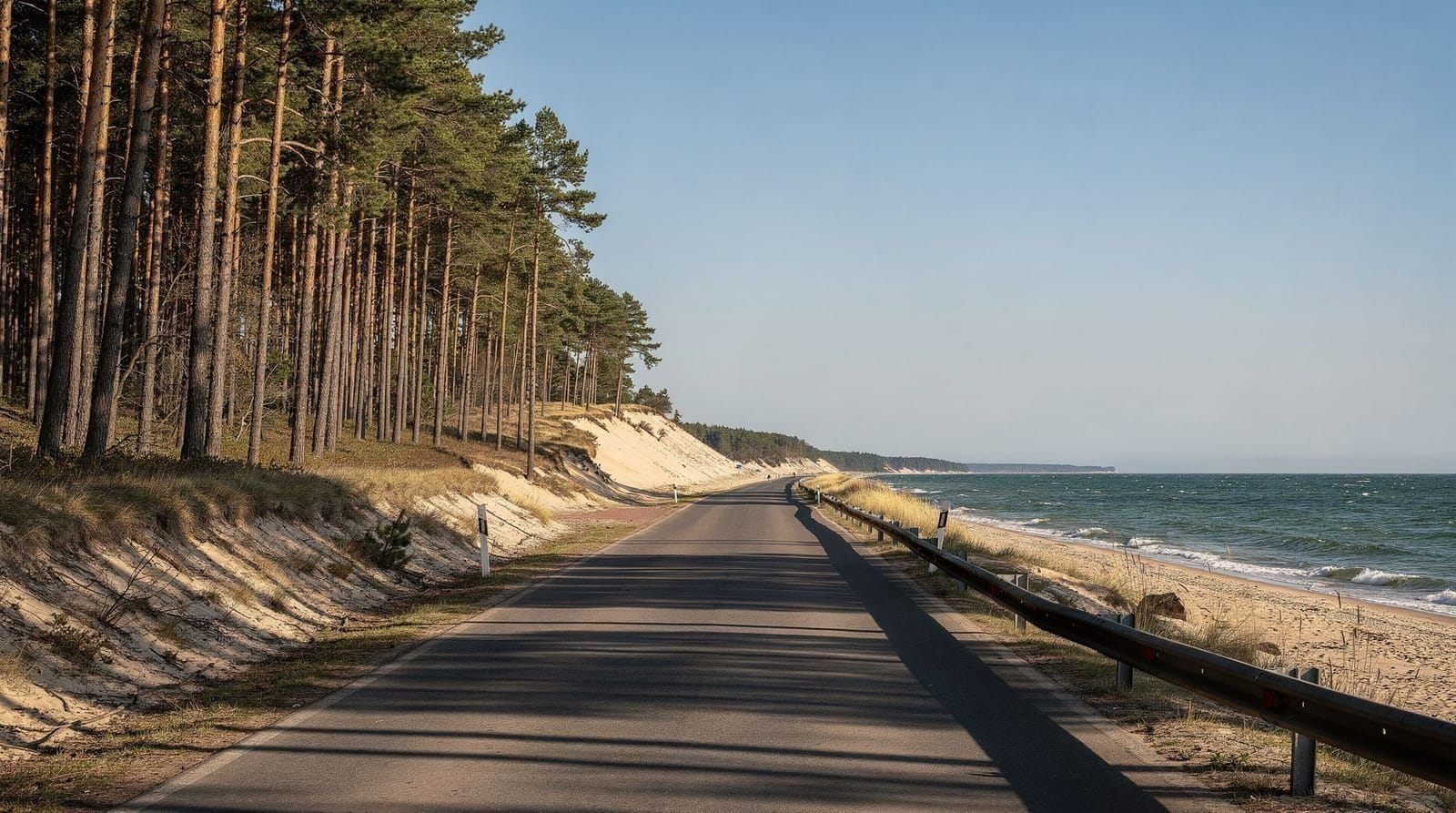
On the spit, the main road (Taikos al.) runs the length of the Lithuanian portion to the Russian border crossing at Nida. There is a national park entry fee for vehicles: approximately €10 per car.
By public transport (possible but laborious): Lux Express coaches run from Vilnius to Klaipėda bus station (3.5 h, €12–18). From Klaipėda, take the pedestrian ferry to Smiltynė (€1 each way) — the car ferry is not accessible without a vehicle. Then take a local bus south through the spit. This works but involves long waits and misses the main dune viewpoints not served by the bus route.
What to see on the Curonian Spit
Juodkrantė
The first village south of the ferry crossing, about 20 km from Smiltynė. Known for its amber sculptures along the lakeside promenade and the Witches’ Hill (Raganų kalnas) — a forest trail with carved wooden folk sculptures of Lithuanian demons, witches, and mythological figures. Allow 30–45 minutes.
Nida
The main destination at the southern end of the Lithuanian spit, 4 km from the Russian border. Nida has two distinct halves:
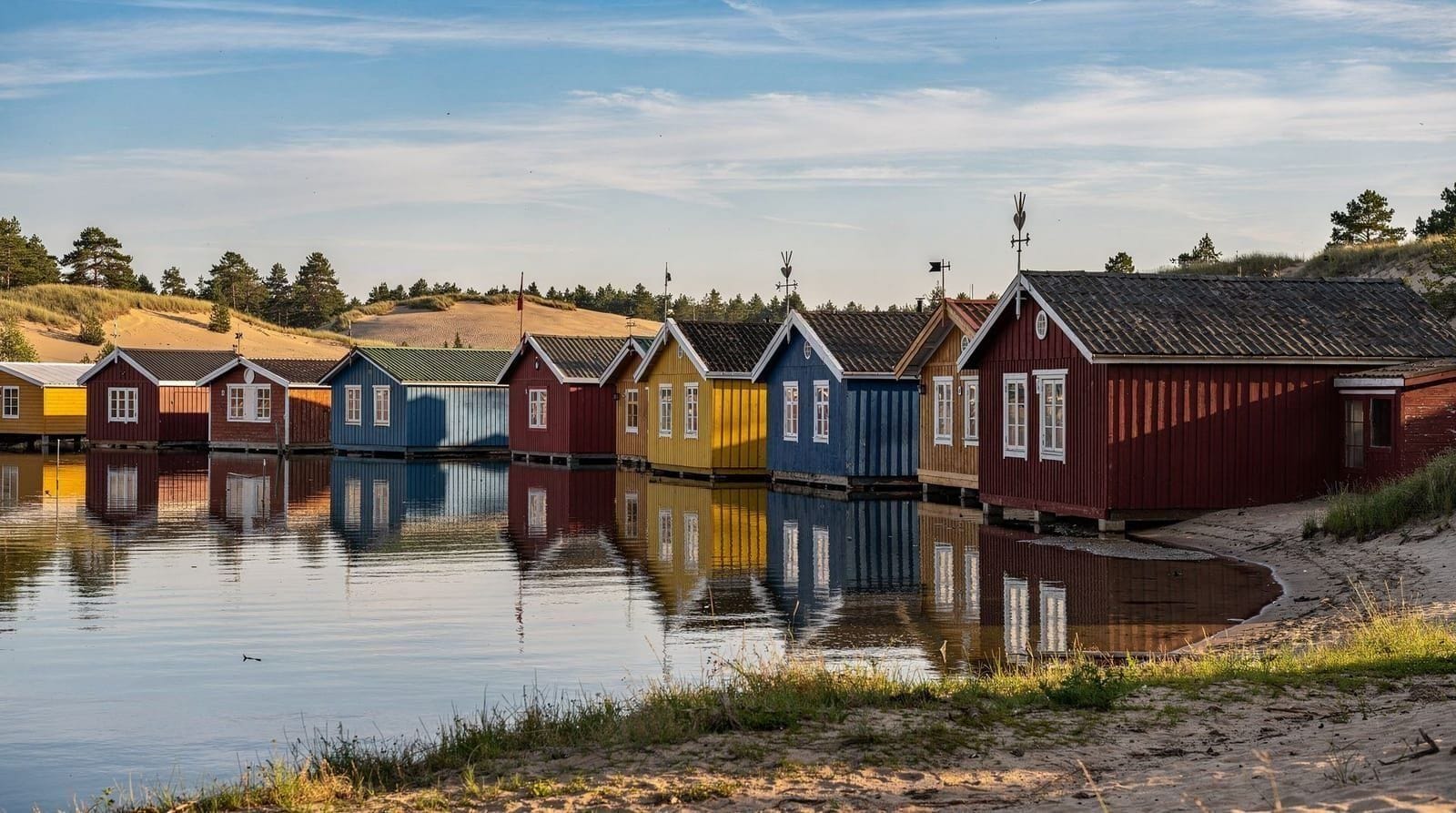
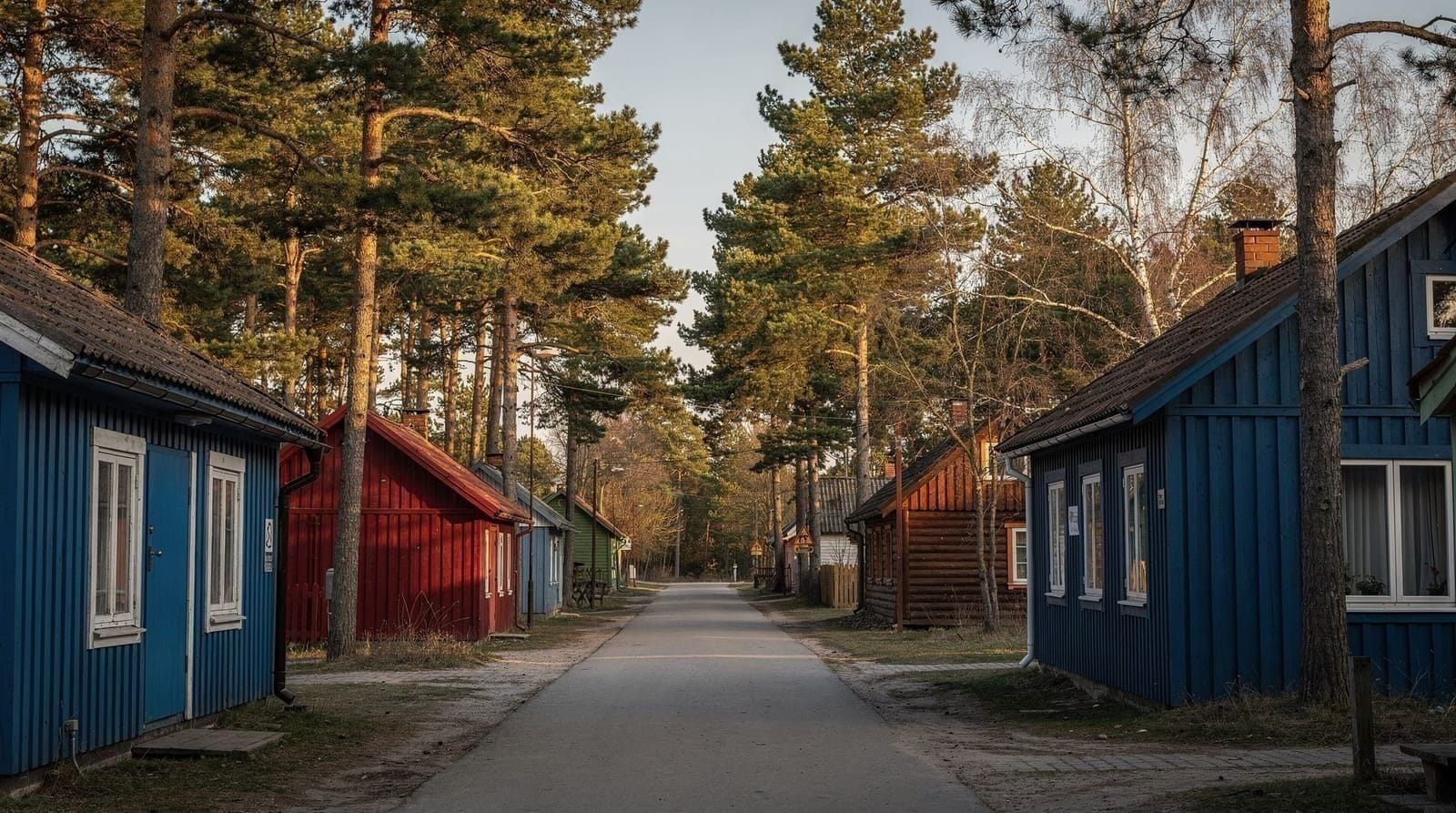
The village: Traditional Lithuanian fishing settlement with brightly painted wooden cottages (smėlynės), a small harbour, and the Thomas Mann House (Meno g. 17). The German Nobel laureate spent three summers here in 1930–32, calling it “a primeval world of God’s creation.” The house is now a small museum (admission €4) with his study reconstructed and an interesting exhibition on the house’s history across German, Lithuanian, and Soviet periods.
Nida Ethnographic Cemetery: Small, beautifully maintained cemetery with distinctive carved wooden grave markers (krikštai) that are characteristic of the Curonian fishermen’s tradition. Worth 20 minutes.
Parnidis Dune (Great Dune)
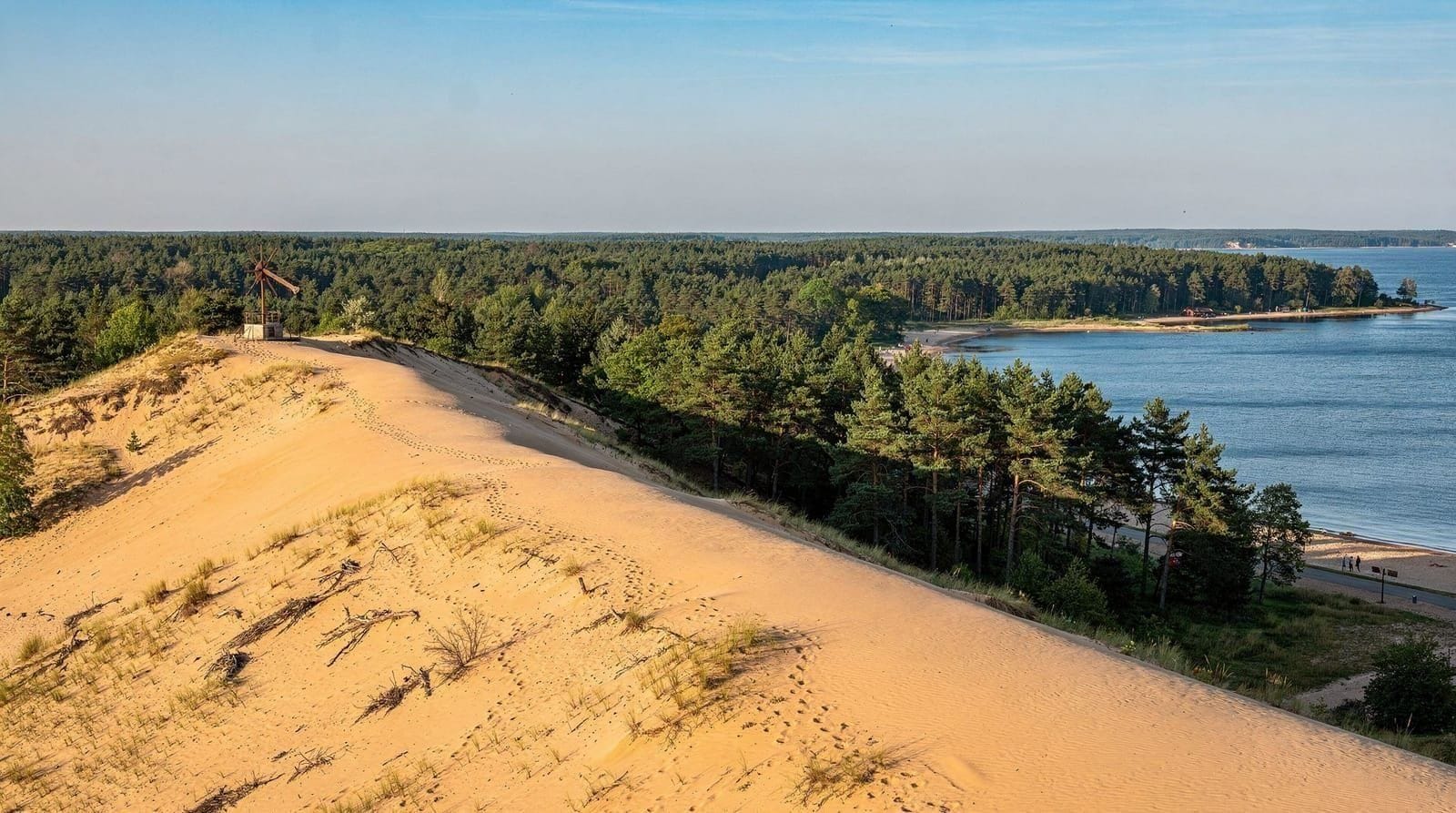
The Parnidis Dune (Parnidžio kopa) is 52 metres above sea level, immediately south of Nida village. A 3 km signposted walking trail from the village centre leads to the top. Views from the summit look east across the Curonian Lagoon towards the Lithuanian mainland, and south towards the Russian border (visible at 4 km). A large sundial monument on the crest was partially destroyed in a 1999 storm and has been partially restored.
The walk to the top takes 20–30 minutes and requires reasonable fitness — the path is sandy. The views justify every step.
Nagliai Nature Reserve (Dead Dunes)
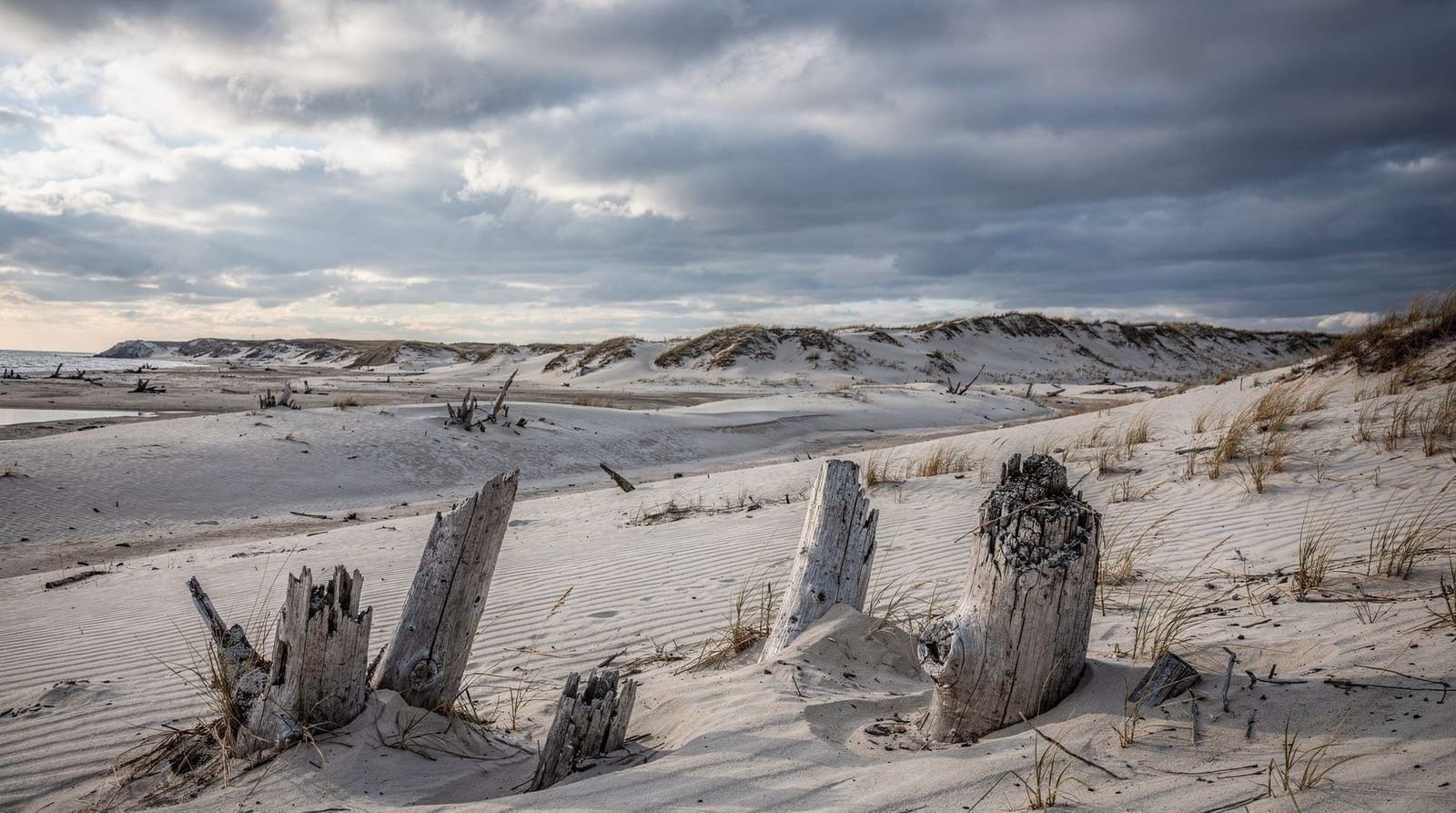
North of Nida, accessible by car or bike, the “Dead Dunes” are former dune ridges now partly stabilised by vegetation. A 3 km walking trail through the reserve gives a wilder, less-visited perspective on the spit’s dune landscape. This is usually skipped on day tours due to time constraints. See the Curonian Spit nature guide for more on the reserve’s ecology and wildlife.
The dune landscape: what makes it extraordinary
The Curonian Spit dunes are not simply large sand hills. They are part of one of the most dramatic ongoing geological processes in the Baltic region — a landscape that is both ancient and in constant motion.
The dunes were formed approximately 5,000 years ago as sand deposited by longshore drift accumulated along the coastal shelf. The peninsula has been migrating northward for millennia, driven by Baltic Sea currents and wind. At certain points, the spit is only 400 metres wide — on a clear day, you can see both the Baltic Sea and the Curonian Lagoon from a single high point.
Human settlement has complicated this natural process. The spit was originally forested, but intensive timber cutting in the 17th and 18th centuries destabilised the dunes. Sand began to migrate inland, burying several villages over the course of decades — an event documented in contemporary accounts and visible in the archaeological record. Replanting campaigns in the 19th century stabilised most of the active dunes, and the pine forests that cover much of the spit today are largely planted rather than natural.
The “Dead Dunes” of the Nagliai Nature Reserve are a remnant of the pre-stabilisation landscape — ridges of bare sand that have been fixed in place by the surrounding forest but still show the raw dune topography. Walking through them gives the clearest sense of what the entire spit once looked like.
The actively moving dunes, including Parnidis, are a continuous management challenge. The Curonian Spit National Park employs rangers specifically to maintain the dune areas — limiting access to some sections, planting dune grasses, and monitoring the rate of sand migration. Entry to the most sensitive dune areas is restricted to marked trails, and good footwear is essential: the sand is deep enough to slow walking significantly and hot enough in summer to burn bare feet.
The ferry crossing
The car ferry between Klaipėda (Old Town terminal, Žvejų g.) and Smiltynė is a brief but enjoyable part of the journey. The crossing takes 5–7 minutes across the narrow channel at the northern tip of the spit. The views from the ferry back towards Klaipėda’s old town and forward towards the spit’s pine forests are worth stepping out on deck for.
For pedestrians, there is a separate smaller ferry (€1 each way) running from the same terminal. It is less useful for independent day-trippers because local bus connections on the spit are infrequent.
Klaipėda: is it worth a stop?
Klaipėda (Lithuania’s only seaport, pop. ~145,000) is 3.5 hours from Vilnius and is the gateway to the Curonian Spit. On a day trip, you probably won’t have time for both a proper Klaipėda visit and a full spit tour. But if your coach arrives early, or if you come by car and want a stop before or after the spit:
The Old Town (Senamiestis) is compact and rewarding — German-influenced architecture, the Theatre Square with Simon Dach’s statue, and an active harbour promenade. Allow 1.5 hours. The Klaipėda destination page has more detail.
The Amber Museum at Palanga, 28 km north of Klaipėda (€5 entry), houses one of the best amber collections in Europe if you have extra time.
For a broader look at how this trip fits alongside Lithuania’s other day trips from Vilnius, see our best day trips from Vilnius guide, and the Curonian Spit destination page and Nida destination page both have more practical detail if you’re building a longer itinerary around this area.
Cycling the spit
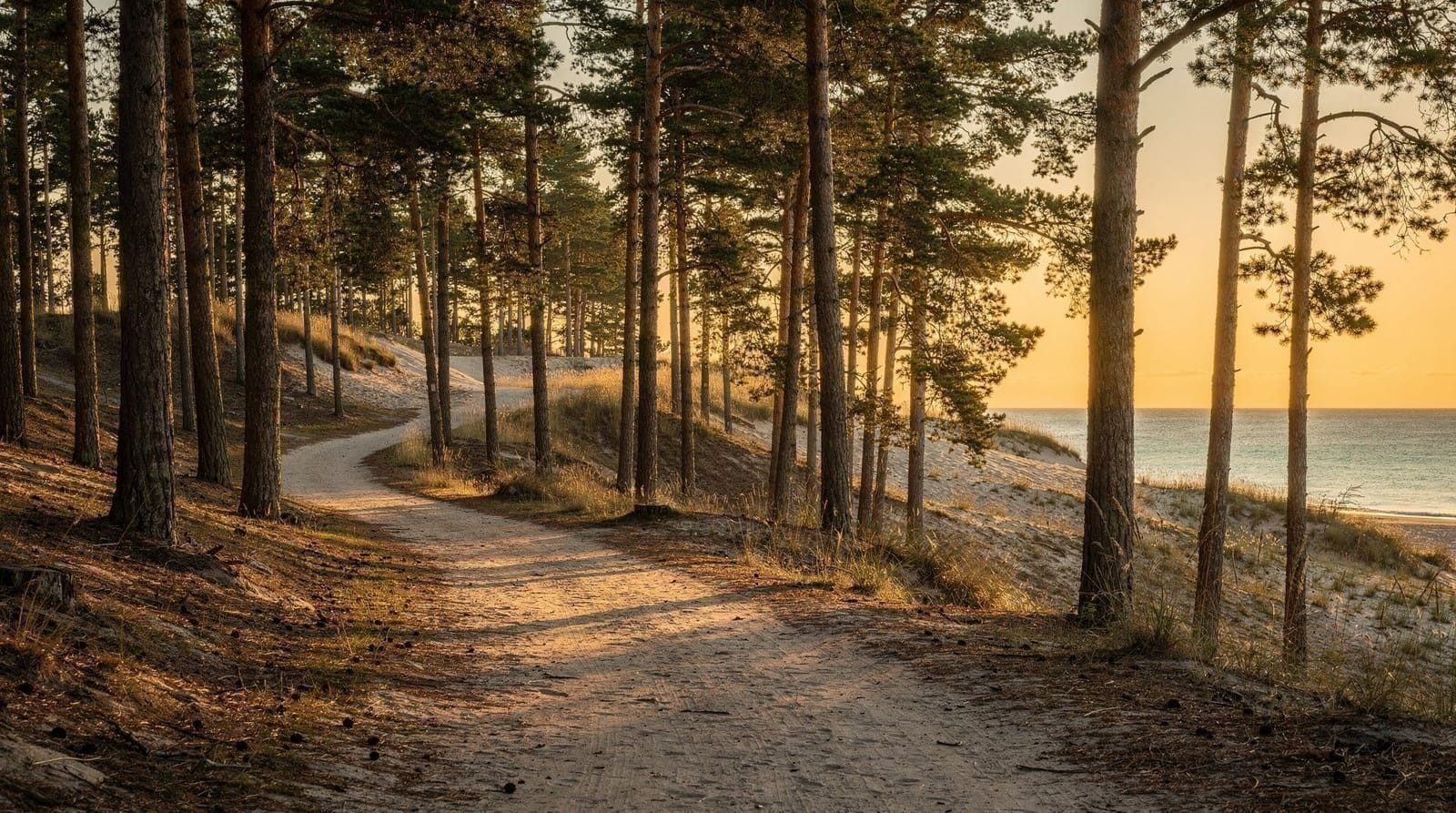
If you are staying overnight in Nida rather than making a day trip, cycling is the best way to explore the spit. The 52 km Lithuanian section has a dedicated cycling path running its entire length, well-separated from the main road and through forest and dune landscape. The entire one-way ride from Smiltynė to Nida takes 3–4 hours at a comfortable pace.
Bike rental is available in Nida (from €8/hour or €25/day), Juodkrantė, and at the Smiltynė ferry terminal. Electric bikes are increasingly available for those who want less effort on the sandy sections.
Day-trippers can hire a bike in Nida and cycle a shorter section — for example, the 20 km round trip from Nida to the Nagliai Nature Reserve viewpoint and back is manageable in 2–3 hours and covers some of the best scenery on the spit.
Amber on the Curonian Spit
The Curonian Spit has been associated with amber for thousands of years. Baltic amber — fossilised resin from coniferous trees that flourished approximately 40–50 million years ago — was carried by currents and deposited in large quantities along this stretch of coastline. The amber trade was one of the foundations of Baltic commerce from the Bronze Age through the medieval period.
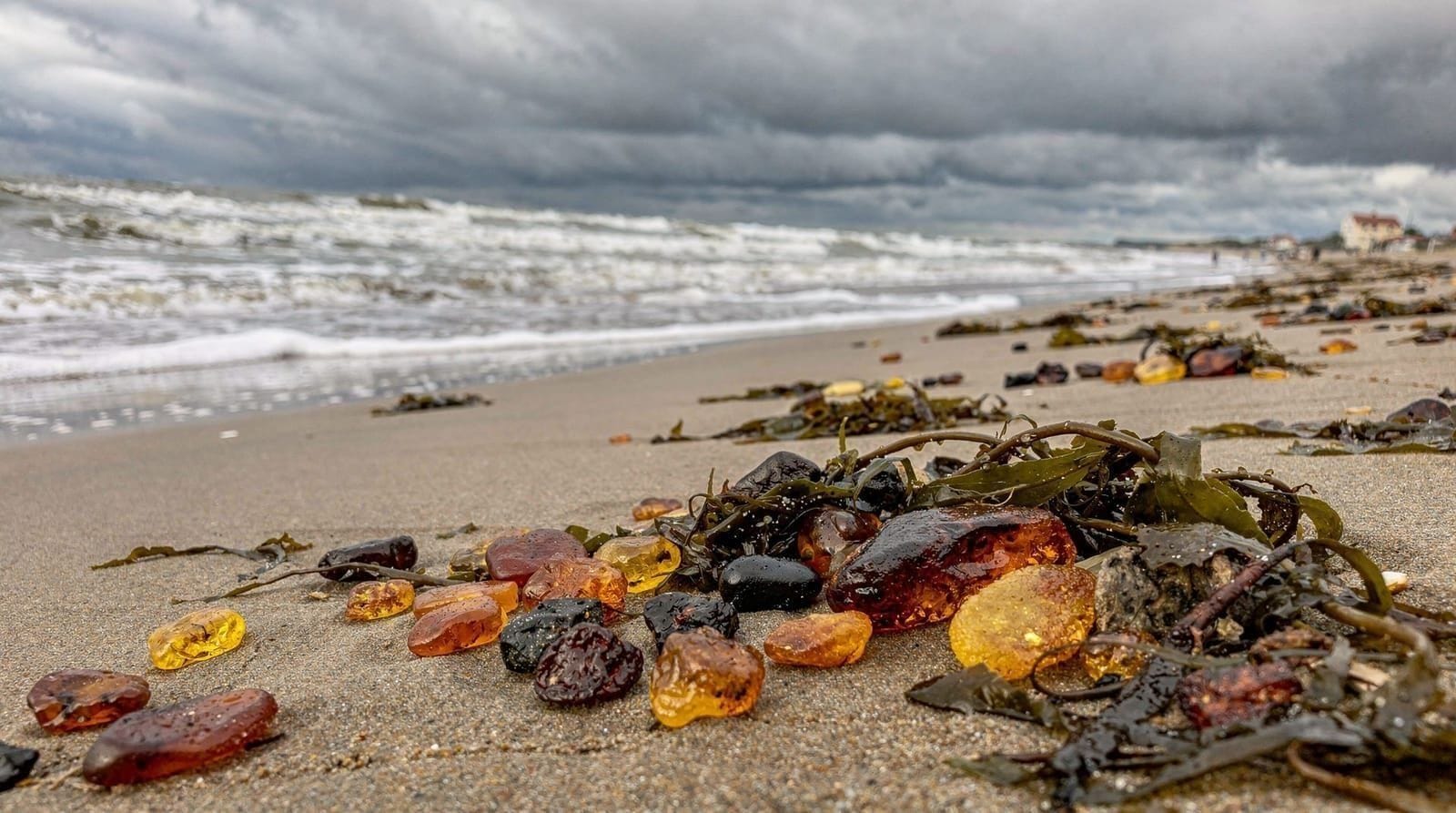
Today, amber is still found washed up on the beaches after storms, and amber-hunting walks along the Baltic Sea coast (particularly after rough weather in autumn and spring) remain a genuine activity rather than a purely touristy one. Vendors at Nida’s market and along the promenade sell amber jewellery, raw amber specimens, and amber novelties.
Advice on buying amber: genuine amber varies in colour from pale yellow through orange to dark red-brown, and many pieces contain insect or plant inclusions. A simple test — floating in saturated salt water — distinguishes real amber (which floats) from most synthetic imitations (which sink). Museum-grade amber jewellery from certified sellers carries authenticity documentation; beach-vendor amber is genuine far more often than the myths suggest, but quality varies widely.
When to go: a season-by-season note
June-August is peak season: warmest weather, swimmable Baltic Sea (18-22°C), full bus and ferry schedules, and every restaurant and shop open. It is also the busiest and most expensive time, and the ferry queue for cars can run long on summer weekends.
May and September are the honest sweet spot for this trip — most businesses are open, the weather is still pleasant, and the dunes are far less crowded. Cycling the spit is more comfortable without midsummer heat.
October brings dramatic skies and fewer people, but many restaurants and some accommodation start closing for the season.
November-April is not recommended for a day trip: many businesses on the spit close entirely, ferry services reduce, and the exposed dune walks are cold and often windy enough to be unpleasant.
Practical notes
What to wear: Even in July, the Baltic wind on the dunes can be cold. Bring a windproof layer. Sunscreen is essential on the dunes — there is no shade. Comfortable shoes (not sandals) for the Parnidis dune walk.
Food on the spit: Nida has several decent restaurants along the promenade — smoked fish (lydeka or ungurys) is the local speciality, served at market stalls for €5–8. Restaurant Purvynė (Pamario g. 9) is reliable. Prices are 20–30% higher than in Vilnius — expect to pay €15–20 for a sit-down lunch.
Water: Bring your own. Tap water is fine throughout Lithuania.
Pets: Dogs are allowed on the Curonian Spit, including on ferry. Major dune areas may have restrictions — follow signage.
Amber: Amber vendors operate on the spit and in Nida. Genuine amber is sold at Nida’s museum shop and at certified amber sellers. Random vendors on the beach sometimes sell simulated “amber” made from coloured resin — the immersion test (float in salt water — real amber floats; most fake materials sink) is a rough guide.
Frequently asked questions about the Curonian Spit day trip
How much does it cost to visit the Curonian Spit?
For a guided tour from Vilnius: €45–70 per person including transport and guide. Independently: Klaipėda bus/coach (€12–18 each way) + ferry (€1–21 depending on foot or car) + national park entry for vehicles (€10) + food and entry fees. Guided tours often work out cheaper for small groups of 1–2 people.
What is included in the Curonian Spit national park entry fee?
The entry fee (approx. €10 per car, €2 per pedestrian, paid at a toll booth upon entering the spit) covers access to the national park area, including beaches, dunes, and nature trails. Separate fees apply for museum entry (Thomas Mann House, €4) and some parking areas.
Can I rent a bike on the Curonian Spit?
Yes — bike rental is available in Nida (from €8/hour) and at a few other points on the spit. Cycling is an excellent way to cover the spit if you have time (the full Lithuanian section is 52 km, but just Nida to Juodkrantė and back is a manageable 40 km round trip).
Is swimming in the Baltic Sea possible?
Yes, from the western (Baltic Sea) side of the spit. Beaches are clean and Blue Flag rated. Water temperature reaches 18–22°C in July–August. The lagoon side (eastern shore) is calmer and warmer but not designated for swimming in all areas.
Is the Curonian Spit in Russia?
The southern half (45 km) is in the Russian exclave of Kaliningrad. Crossing the border requires a Russian visa and is not possible on a casual day trip — the border post at Nida is the end of the road for most visitors. The Lithuanian half (52 km, from Klaipėda/Smiltynė to Nida) is fully within the Schengen Area.
Is the Curonian Spit suitable for a day trip with children?
It can work, but the long drive (7 hours round trip minimum) is the main challenge with young children. If travelling with kids, an overnight in Nida is more comfortable than a rushed day tour — see the best day trips from Vilnius guide for age-specific advice on Lithuania’s day trips generally.
What is the closest alternative if the Curonian Spit feels like too far a trip?
Trakai and Kernavė are both much closer to Vilnius and give a different but still rewarding day out. If you specifically want dune or coastal scenery without the full journey, there isn’t a genuine substitute closer to Vilnius — the Curonian Spit’s landscape is unique in Lithuania.
Top experiences
Bookable activities with verified prices and instant confirmation on GetYourGuide.