Vilnius in spring and autumn — the honest case for shoulder season
Vilnius: City highlights walking tour
Duration: ~2 hours
Is spring or autumn a good time to visit Vilnius?
Both are excellent. May and September are the best months: mild temperatures (12–18°C), 30–40% lower accommodation prices than July–August, significantly fewer crowds, and the full range of attractions open. May has cherry blossoms in the Botanical Garden and longer days. September has golden light, harvest markets, and comfortable walking weather.
The case for visiting Vilnius in spring or autumn does not require elaborate argument: the prices are lower, the crowds are thinner, the major attractions are fully open, and the weather is pleasant without the extreme heat or daylight shortage of summer or winter respectively. For most visitors who are choosing when to go rather than working around fixed dates, May and September stand out as the two best single months to visit.
This guide covers both shoulder seasons honestly — including the specific weeks that work, the ones that don’t, and the distinct events that may make a particular spring or autumn date worth planning around. For the wider question of timing your whole trip, see the best time to visit Vilnius guide; this page goes deeper specifically on spring and autumn.
| Where | Old Town, Vingis Park, Bernardinai Garden, Trakai |
| Cost | around 20–35% below July–August peak prices |
| Time needed | May and September are the standout single months |
| Getting there | Full flight schedules; no seasonal reductions |
| Best time | Mid-May or September for the most reliable weather |
Spring in Vilnius: month by month
March: transition month
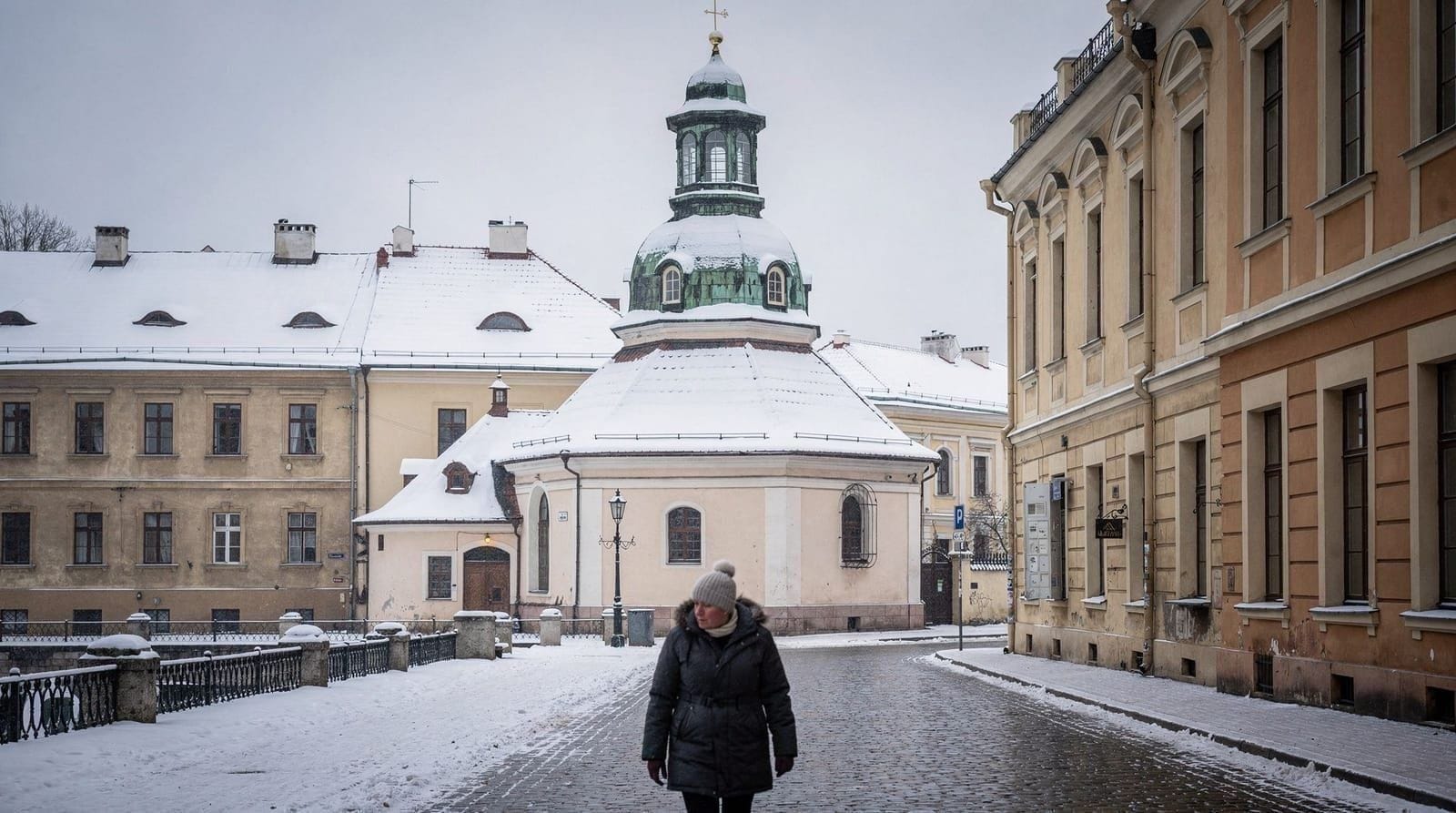
March in Vilnius is genuinely transitional — snow may still cover the Old Town in the first week; warm, sunny days may arrive by the last week. The average temperature climbs from 2°C at the start to 7°C by the end, but variability is the defining feature.
What works in March:
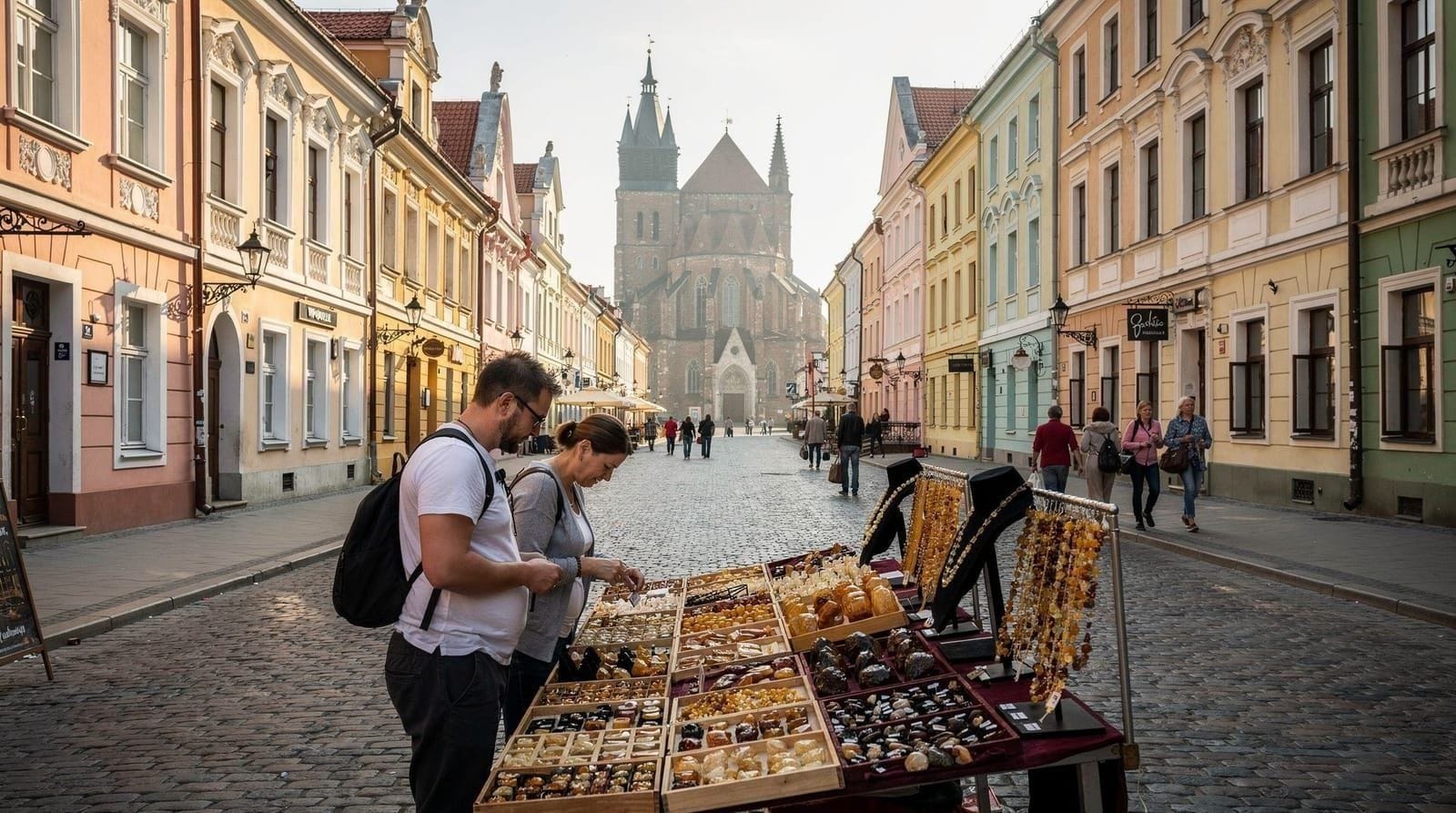
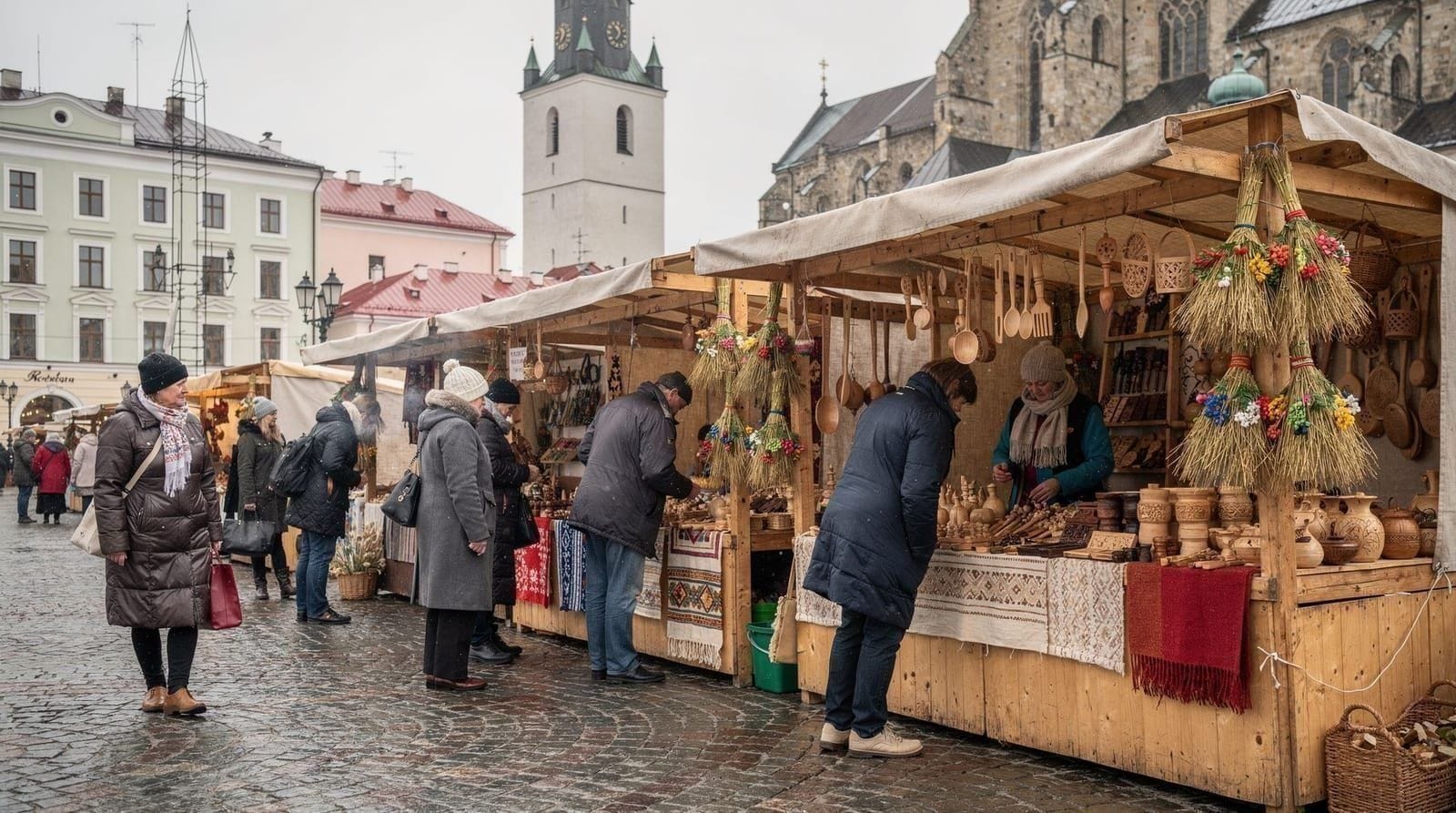
- Kaziukas Fair (early March): Lithuania’s largest traditional craft market occupies Cathedral Square and extends through the Old Town for a long weekend around St Casimir’s Day (March 4). This is a genuine national event — local craftspeople, not imported merchandise — with amber, linen, ceramics, candles, smoked meats, and flowers. Entry is free. See the Kaziukas Fair guide for full details.
- Museum visits without any queues whatsoever
- Very low accommodation prices — often the cheapest month after February
What doesn’t work in March: Outdoor café culture is not viable. Day trips to the Curonian Spit are pointless (most businesses closed). Hot-air ballooning depends entirely on weather conditions.
April: the awkward month
April in Vilnius is the month that most frequently disappoints visitors expecting European spring. Average temperatures of 8–13°C, regular rain, and trees that are still largely bare make April feel like it is still waiting for spring rather than delivering it.
What works in April:
- Everything indoor (museums, restaurants, cultural venues)
- Walking tours of the Old Town are feasible in waterproof clothing
- Trakai and Kaunas day trips (both work regardless of temperature)
- Easter weekend celebrations — Lithuania’s Catholic Easter is significant, with church ceremonies and markets
What doesn’t work in April: Beach or lake activities, outdoor café culture, hot-air ballooning (weather-dependent and operators have limited schedules). The Curonian Spit is mostly closed until May.
May: the standout spring month
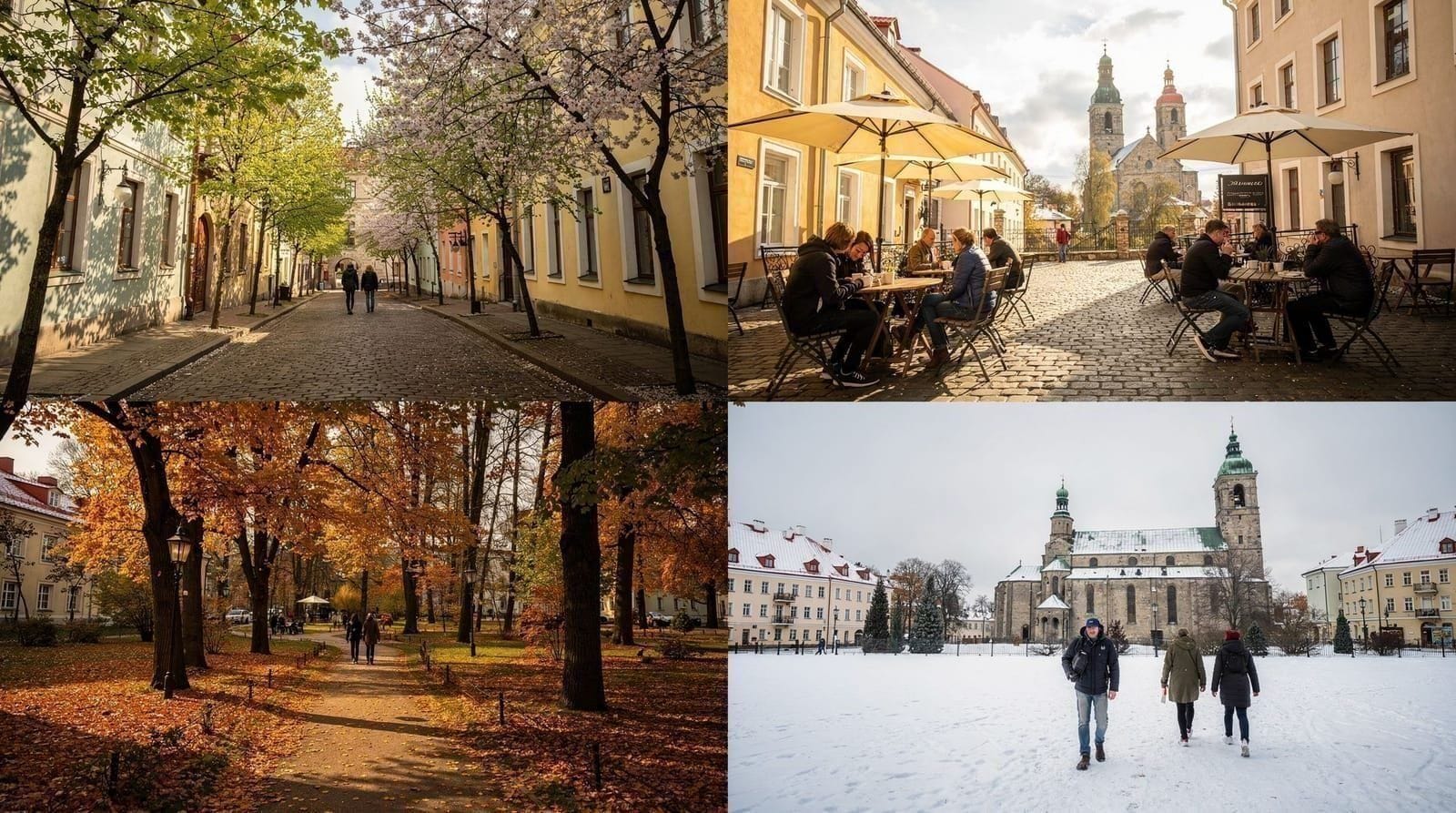
May is the turning point. Temperatures reliably reach 15–20°C by mid-May, daylight extends past 9 pm by the end of the month, and outdoor café season begins in earnest. Trees are fully leafed by early May, and the Bernardinai Garden and Vingis Park are at their best.
Why May works: It combines genuinely good weather with pre-peak-season accommodation prices (typically 20–35% below July), fully open attractions including Trakai with good lake conditions, and a city that is busy but not crowded. The May Day (May 1) weekend brings local festivities.
Vilnius Botanical Garden (Kairėnų g. 43): The Vilnius University Botanical Garden, 9 km from the Old Town, has extensive spring flowering in late April–May. Worth a half-day if you are visiting in the right week.
Day trips: All day trips from Vilnius are viable in May. The Curonian Spit opens for the season properly from mid-May — an excellent time to visit the dunes before peak-season crowds arrive.
Book a city highlights walking tour (perfect for spring weather)Autumn in Vilnius: month by month
September: the best autumn month
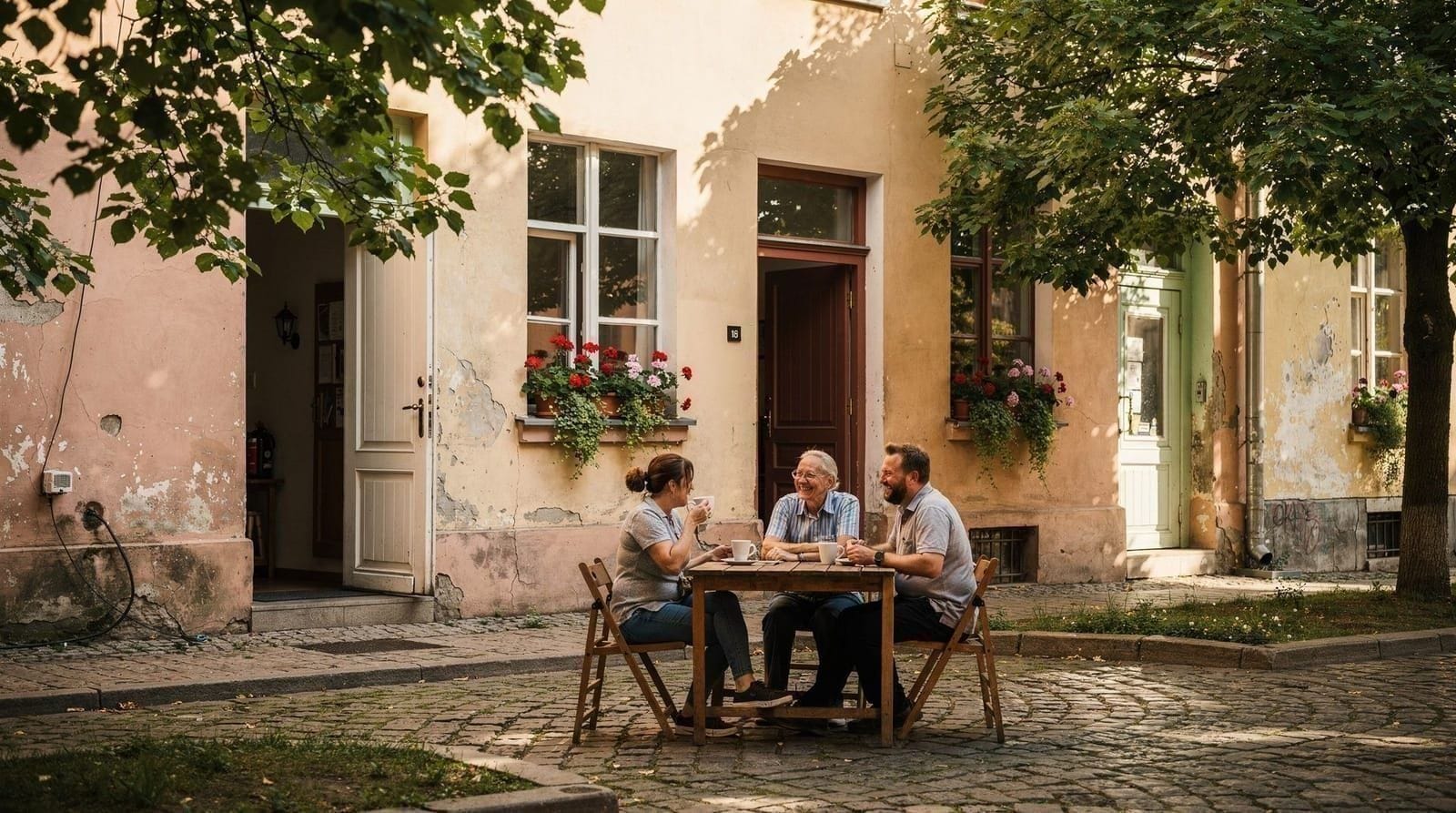
September in Vilnius is consistently one of the best months to visit. Temperatures of 15–20°C, stable sunny periods, and the late-summer golden light create the most photogenic conditions of the year. The tourist peak has passed — crowd levels drop noticeably after the last week of August — and accommodation prices return to shoulder-season levels.
Specifically good in September:
- Old Town walking without summer heat or crowds
- Day trips to Trakai (lake still warm enough for swimming, crowds manageable)
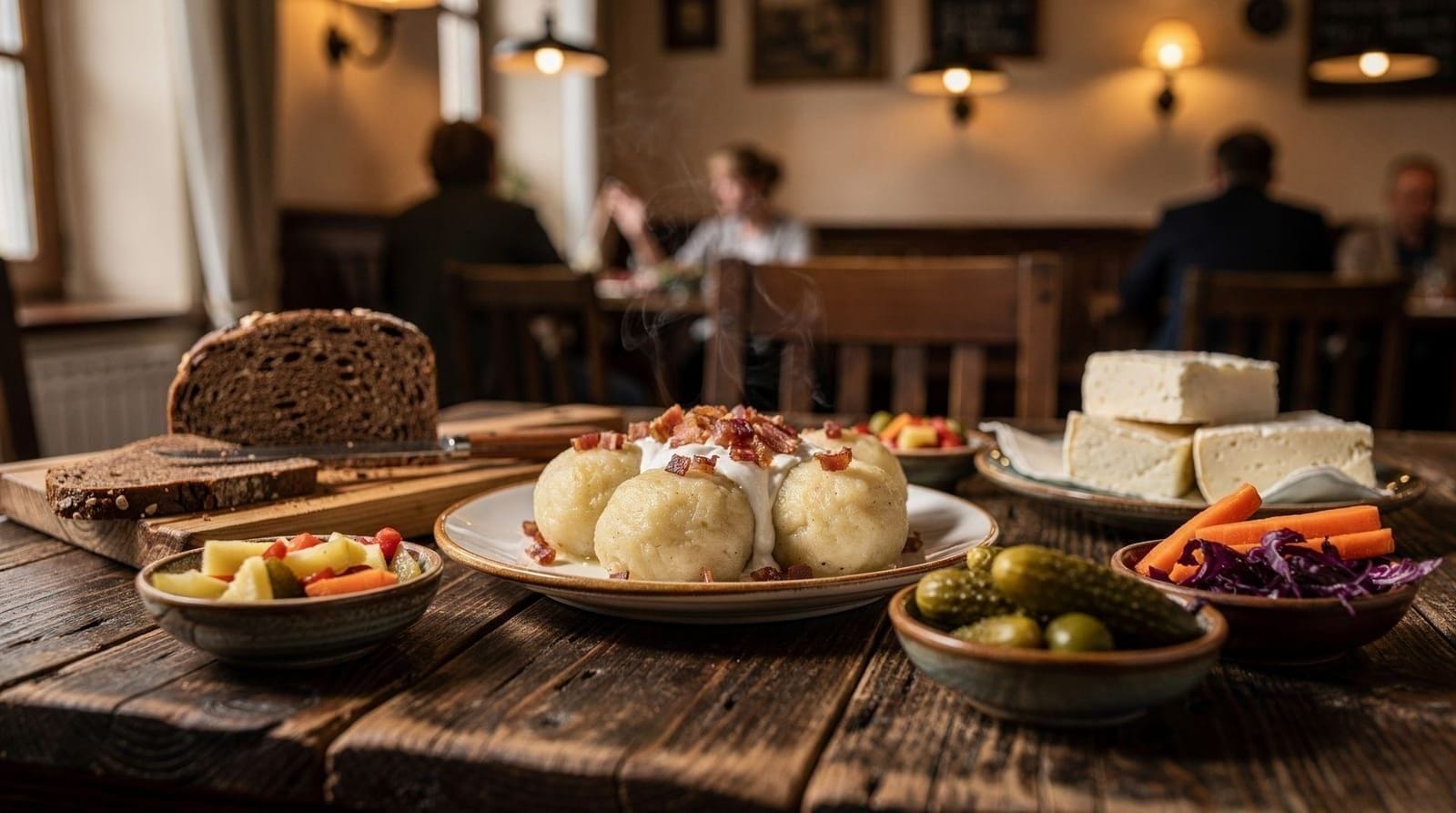
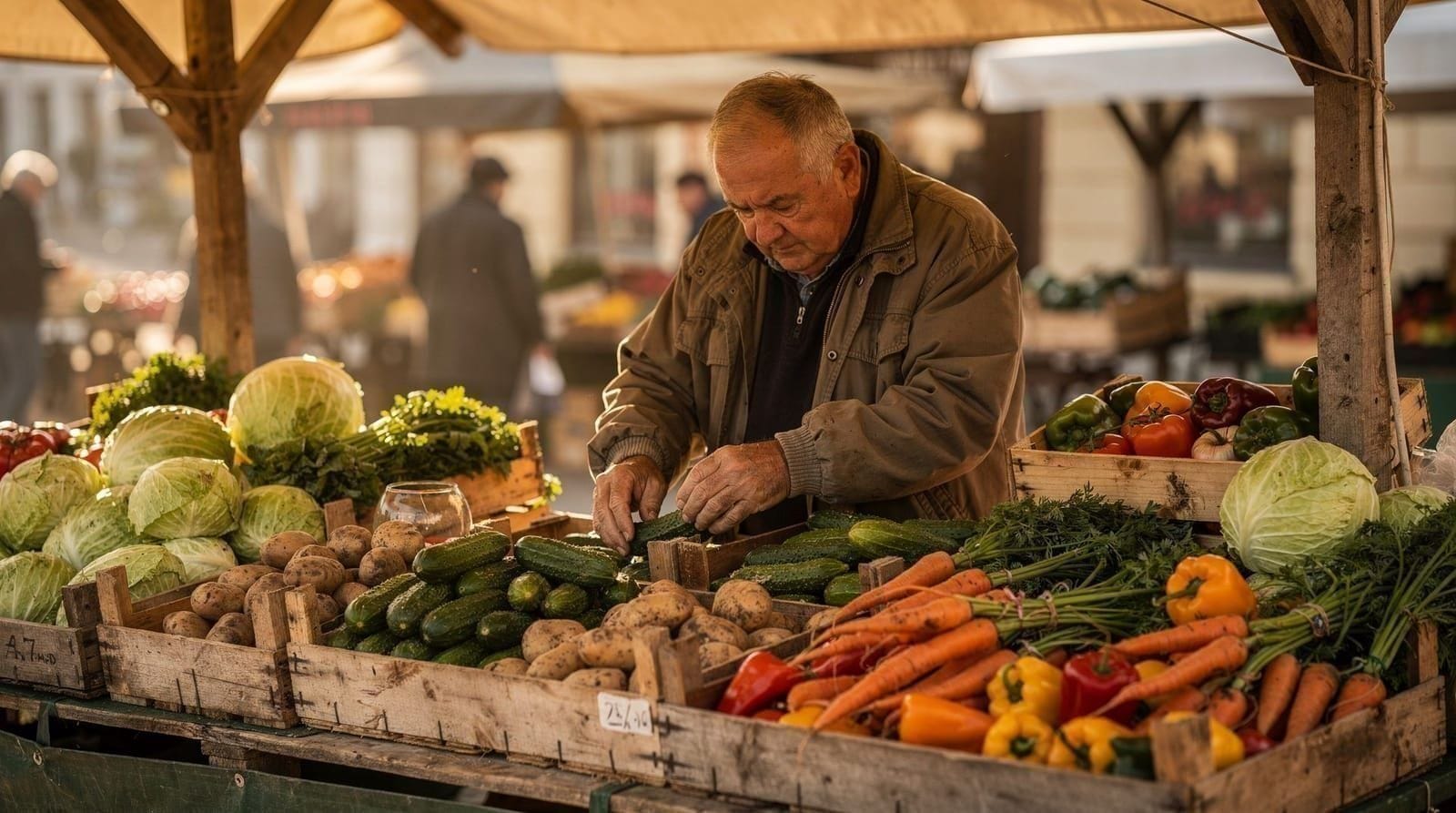
- Food culture: autumn harvest dishes appear on menus — mushroom soups, game, seasonal vegetables
- Outdoor café season is still fully active
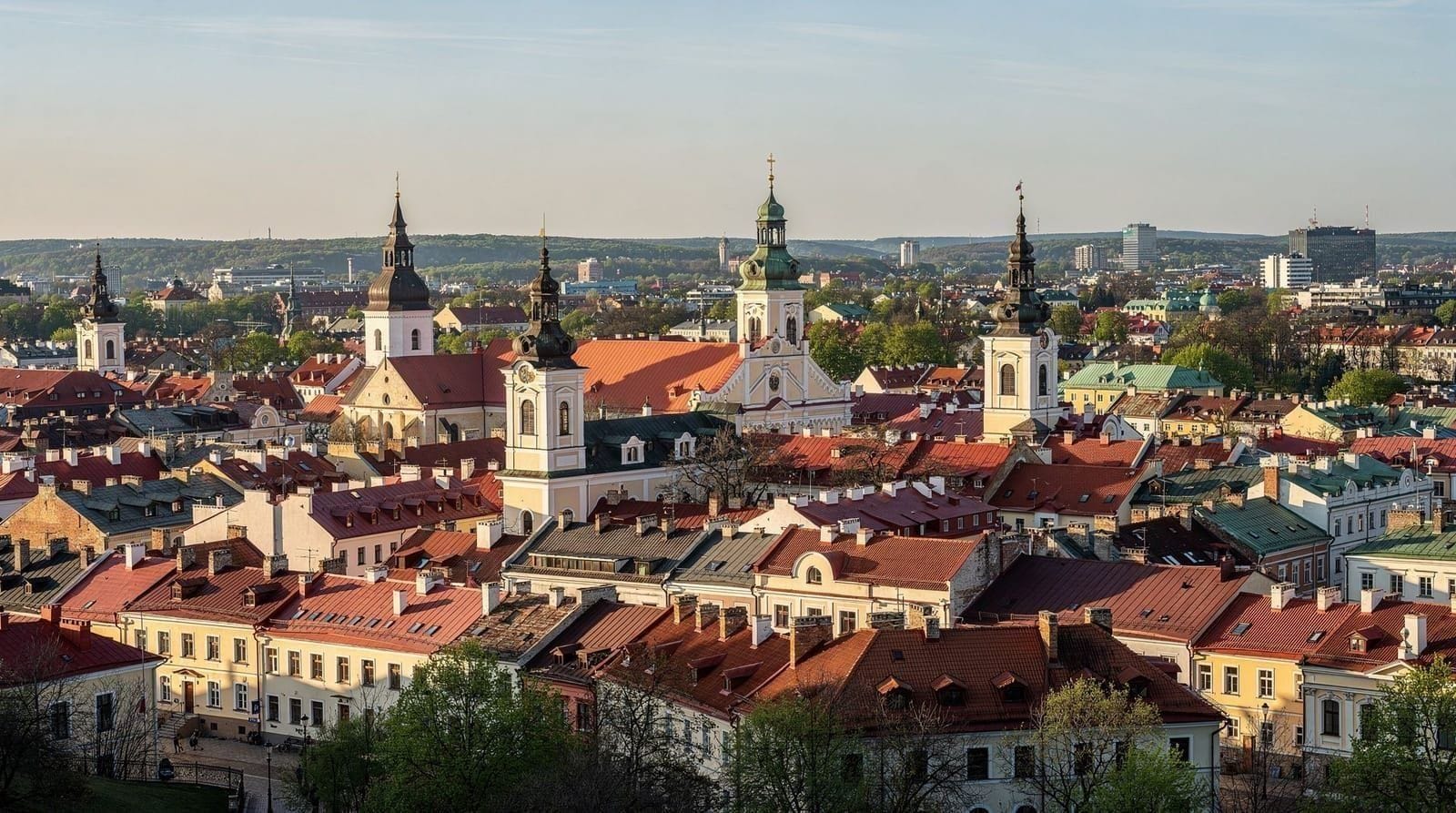
- The light: September afternoon light in Vilnius (the Baroque facades, the river, Gediminas Tower) is extraordinarily warm and photogenic
September food note: Lithuanian cuisine has a strong seasonal dimension. September brings wild mushroom dishes that are genuinely excellent — locally foraged ceps (baravykai) and chanterelles (voveraitės) appear on menus of quality restaurants. Try Žuvinė (Šv. Ignoto g. 14) or Ertlio Namas (Šv. Jono g. 7) for seasonal menus.
Book a food tasting tour of Vilnius — best in autumn harvest seasonOctober: the pivot
October moves from pleasant to challenging over its four weeks. The first week is often still warm enough for outdoor café visits (13–16°C); by the end of October, temperatures drop to 8–10°C and rain becomes more frequent. The trees turn in early October, giving Vingis Park and the Neris riverside their most colourful display of the year.
What works in October: Museum season is fully active. The Vilnius International Film Festival (KINO PAVASARIS) is in spring, but various October cultural events fill the calendar — check vilnius-events.lt. Restaurant quality remains excellent. Accommodation prices are low.
What changes in October: Outdoor tours become more weather-dependent. Hot-air ballooning is less reliable. The Curonian Spit tourist infrastructure starts closing down after mid-October.
November: winter begins
November in Vilnius is the greyest month — typically 5–8°C, frequent overcast skies, low daylight (10–12 hours falling to 8 hours by month’s end), and the beginning of the Christmas market season in the last week. The city between the end of autumn and the beginning of the Christmas period (roughly the first three weeks of November) is at its least photogenic and most local.
Why November might still work: If you want to experience Vilnius as a genuine European city rather than a tourist destination, November is when that happens. The Old Town in November is almost entirely Lithuanians going about their daily lives. Museum and restaurant quality is completely unaffected.
Late November: The Christmas market usually opens in the last week of November, bringing warmth and atmosphere back to Cathedral Square. See the Vilnius Christmas market guide for specifics.
Comparing spring and autumn
| Factor | Spring (May) | Autumn (September) |
|---|---|---|
| Temperature | 15–20°C | 15–20°C |
| Daylight | 15–16 hours | 13–14 hours |
| Crowds | Low-medium | Low-medium |
| Prices | 20–30% below peak | 20–30% below peak |
| Forests/parks | Fresh green | Golden/colourful |
| Best food | Spring vegetables | Mushrooms, game |
| Curonian Spit | Opens mid-May | Closes mid-October |
Both months offer very similar visitor conditions. May has longer days; September has warmer light and better autumn food. Choose based on which appeals aesthetically.
Shoulder season advantages in practice
Accommodation: In September, a well-located Old Town 3-star hotel that costs €130/night in July costs €75–90. An apartment that costs €90/night in July costs €55–65. The saving over a 5-night trip can easily exceed €250.
Guided tours: Many tour operators offer smaller group sizes (or the same group size with more individual attention) outside peak season. Private tour prices are negotiable for off-peak dates.
Restaurants: The restaurants that require booking 48 hours ahead in July often have walk-in tables available in May and September. You can be more spontaneous.
Museums: Genuinely uncrowded. The Museum of Occupations (KGB Museum), which can feel rushed in summer as tour groups rotate through, is calm and unhurried in May or September.
What is closed in shoulder season
Curonian Spit: Some restaurants, guesthouses, and beach facilities close for the season in October, reopening in May. The peninsula itself and the main sights (Nida village, Parnidis dune, Juodkrantė) remain accessible and are still worth visiting.
Outdoor tour operators: Hot-air ballooning is weather-dependent and some operators have reduced schedules in May before peak season. Canoe and kayak operators typically run from May to September.
Trakai castle: Open year-round but with reduced hours September–May (closed Mondays; verify opening hours before visiting).
Practical notes for shoulder season visitors
Packing: Both May and September require a light rain jacket and at least one warm layer for evenings. Temperature swings of 10°C between morning and afternoon are common. The “one coat” approach from summer does not work reliably.
Flights: Budget airline schedules to Vilnius (Ryanair, Wizz Air, LOT) are fully operational in spring and autumn; some charter routes reduce in October–March. Prices are generally 20–30% lower than July–August.
Public transport: Full schedule in both seasons. No reductions.
How shoulder season compares to the extremes
If you are weighing spring or autumn against the alternatives, the trade-offs are worth stating plainly. Vilnius in summer offers the longest days and the liveliest outdoor scene but comes with the highest prices and the biggest crowds at Trakai and the Curonian Spit. Vilnius in winter has its own charm — Christmas markets, snow on the Old Town rooftops — but daylight drops to around 7 hours and many outdoor day trips become weather-dependent. Shoulder season sits between the two: none of summer’s crowding, none of winter’s darkness, and prices closer to winter’s than summer’s. Budget-focused travellers should also read the Vilnius on a budget guide, since shoulder season pricing compounds well with other cost-saving strategies.
Parks and green space in shoulder season
Spring and autumn are arguably the best seasons to make use of Vilnius’s parks, which get less attention than the Old Town but are a genuine part of the city’s appeal. Vingis Park and the Bernardinai Garden are at their most pleasant in May, before summer heat, and again in late September and October when the tree colour peaks. The Vilnius parks and green spaces guide covers the full list, including which are walkable from the centre and which need a short bus or bike ride — useful for building an itinerary that mixes Old Town sightseeing with slower afternoons outdoors.
Frequently asked questions about spring and autumn in Vilnius
Is May or September better for a first visit to Vilnius?
Both are excellent; the choice is marginal. May has longer daylight hours (until 9 pm by month’s end) which is useful for evening walking tours and outdoor activities. September has better light for photography and more interesting seasonal food. If you have no strong preference, May is marginally easier for a packed sightseeing itinerary because of the extra daylight.
Are there any weeks to avoid in spring or autumn?
Lithuanian public holidays that create crowded domestic travel weekends: May 1 (Labour Day), June 24 (Joninės), and November 1 (All Saints’ Day, when Lithuanians travel to family graves). These are not tourist-crowd events but can affect accommodation availability and transport.
Is the Hill of Crosses accessible in spring and autumn?
Yes, fully accessible. The surrounding countryside is particularly beautiful in October when the birch forests are turning. The path can be muddy after rain — sturdy footwear advisable in both seasons.
What is the food culture like in Vilnius in autumn?
Lithuanian autumn food is excellent: wild mushrooms (foraged from the forests around Vilnius and Dzūkija), game dishes, hearty soups, and seasonal root vegetables. Several restaurants update their menus specifically for the September–November harvest period. This is arguably the best season for food in Lithuania.
Can I see the Northern Lights from Vilnius in spring or autumn?
Possibly. Vilnius is at 54°N latitude, which puts it at the southern edge of aurora borealis visibility. Strong solar activity (Kp index of 6 or higher) can make the Northern Lights visible from Lithuania during equinox periods (March–April, September–October) when geomagnetic activity is typically elevated. Not a reliable sight — check aurora forecast apps — but not impossible either.
Is Trakai worth visiting in spring or autumn rather than summer?
Yes, arguably more so. The lake island castle photographs beautifully in both seasons, the lake is still swimmable in September, and crowds are noticeably thinner than in July and August. Autumn adds colourful surrounding forests; spring adds fresh green and clearer light.
Do restaurants and hotels reduce their hours in shoulder season?
Some seasonal, tourist-facing venues near the Curonian Spit and smaller day-trip destinations reduce hours or close between October and April, but Vilnius itself operates on a normal year-round schedule — restaurants, museums and hotels in the city run full hours in both May and September.
Top experiences
Bookable activities with verified prices and instant confirmation on GetYourGuide.