Lithuania bucket list — 15 things to do before you leave
Lithuania is small enough to cover significantly in a week and interesting enough that two weeks still leaves things undone. The list below isn’t ranked — these are fifteen experiences that represent what the country does distinctly, without parallel in most of Europe, and without the tourist saturation that would hollow them out.
Some require planning; most don’t. All are worth doing.
| Best base | Vilnius, with day trips to Trakai, Kaunas, Šiauliai |
| Minimum time | 1 week for 8-10 items |
| Ideal time | 10-14 days for the full list |
| Rough total budget | around €600-900/person (excl. flights) |
| Booking needed | Only for hot air balloon and Hill of Crosses tours |
1. Stand at the Hill of Crosses at dawn
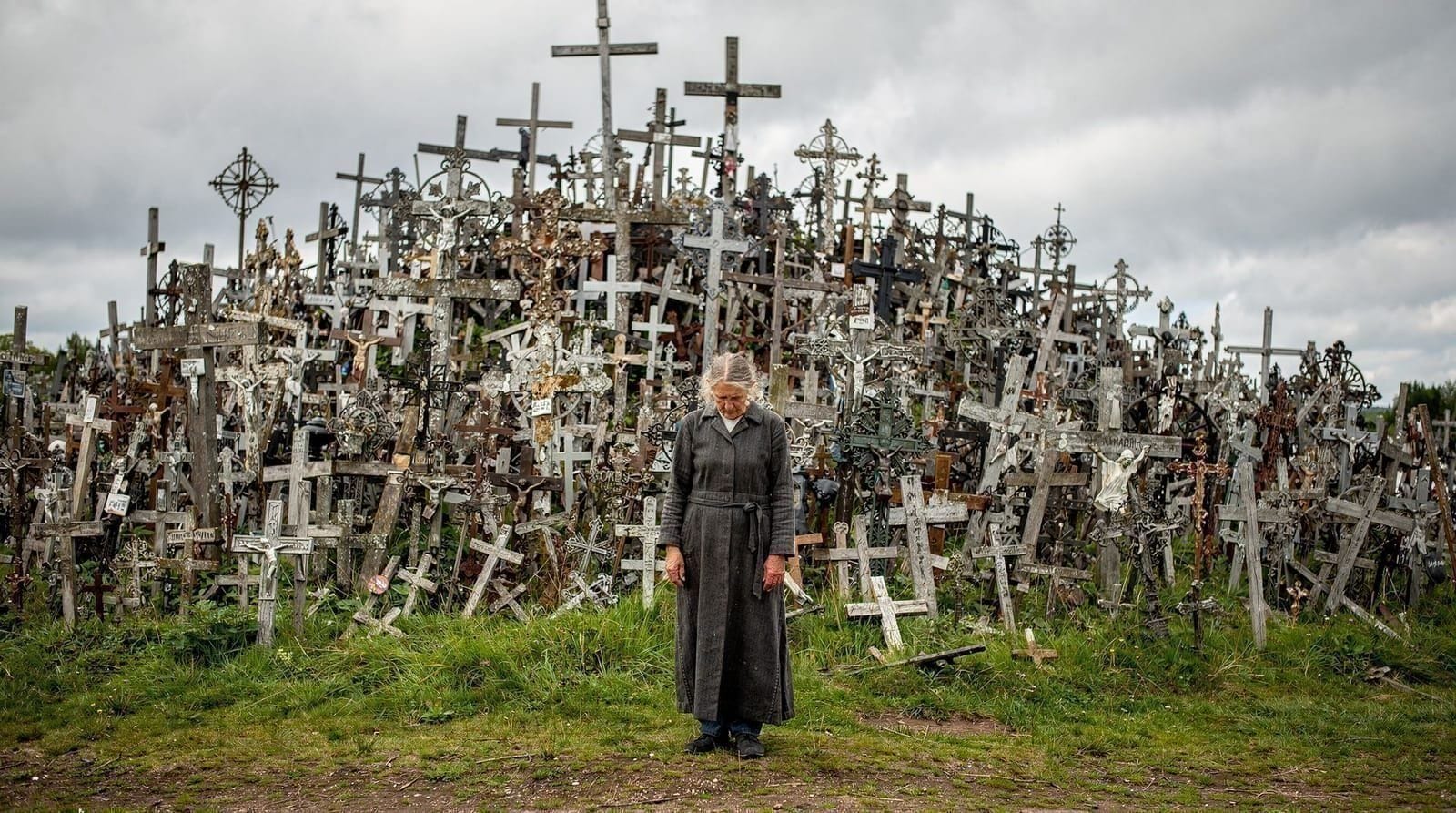
The Hill of Crosses near Šiauliai is one of those places where description consistently undersells the reality. Over 200,000 crosses — from tiny personal tributes to elaborate 3-metre wrought-iron sculptures — cover a low hill that was previously a Bronze Age burial mound. The site is active: people add crosses daily, place photographs, leave letters. Pilgrims come. Tour groups come. Curious tourists come. At dawn or dusk, when the light comes sideways through the mass of crosses, the effect is extraordinary.
Getting there requires either a rental car or a guided day trip from Vilnius (around €35-45 per person in a group, 2.5 hours each way). The trip is worth it.
Full-day guided tour from Vilnius to the Hill of Crosses and Šiauliai — the easiest way to get there without a car2. Eat cepelinai in a village canteen
Cepelinai (the national dish — enormous potato dumplings stuffed with meat or curd, topped with sour cream and bacon) are available in every tourist restaurant, but the best version is from a cafeteria-style lunch place serving the local workforce: a plastic tray, a crowded dining room, a single serving that constitutes lunch and eliminates dinner. Forto Dvaras in Vilnius (Pylimo g.) and similar establishments in every Lithuanian town. €5-6 for a complete meal. See the how to eat cepelinai guide for where to go and what to order.
3. Walk the Curonian Spit dunes
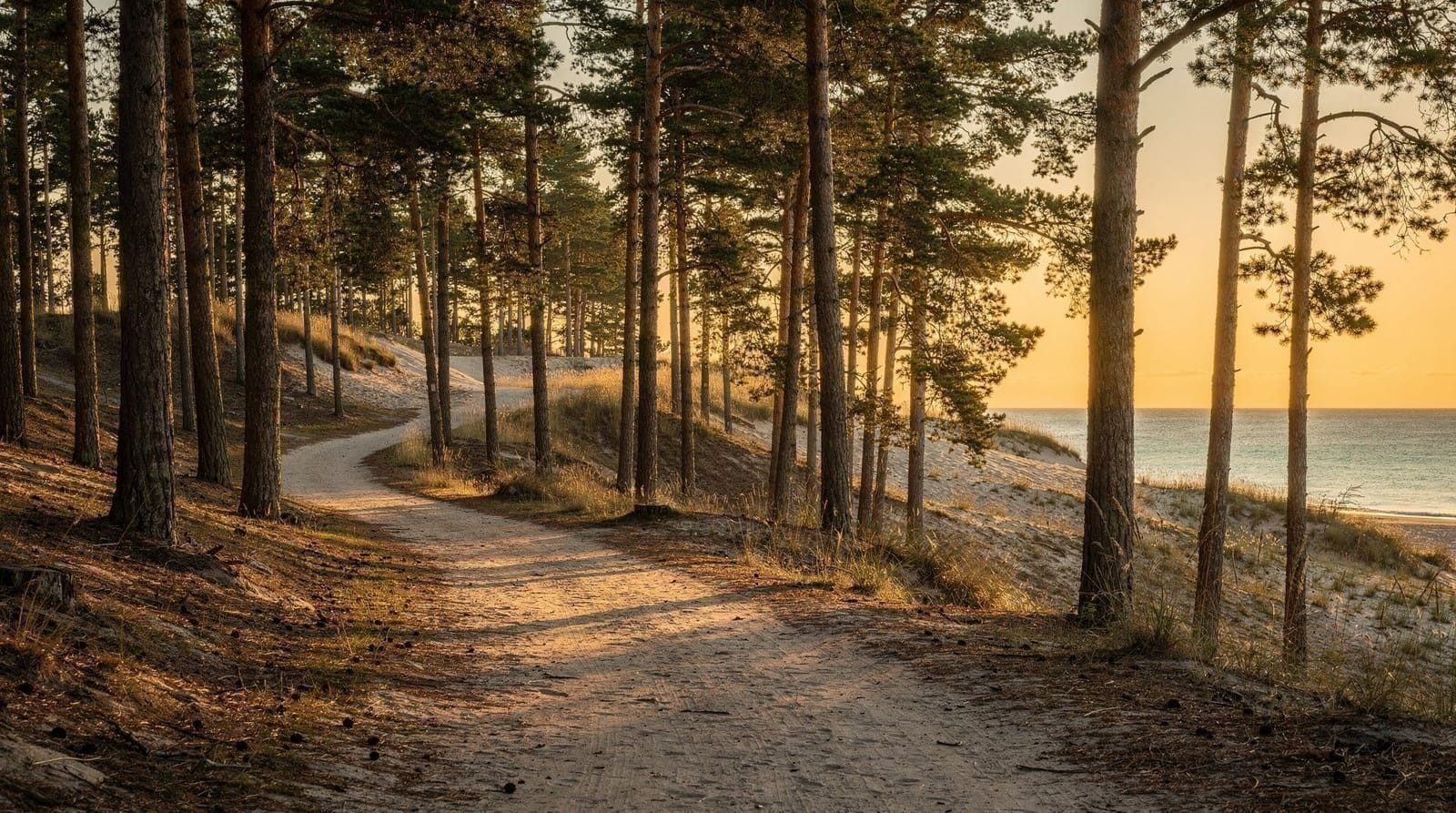
The Curonian Spit is a UNESCO World Heritage Site: a 98-km strip of land between the Baltic Sea and the Curonian Lagoon, covered by the largest sand dune system in Europe — dunes up to 60 metres high, pine forests, and villages. The Parnidis dune south of Nida gives the best view: the lagoon on one side, the sea on the other, and in clear weather the Russian enclave of Kaliningrad 50 km away.
Getting to the spit: drive to Klaipėda (310 km from Vilnius), take the car ferry (20 minutes, car + passengers €10-14), drive south to Nida. Or guided day trip from Vilnius (long day: 7-8 hours on the bus).
4. See Trakai Castle from the lake
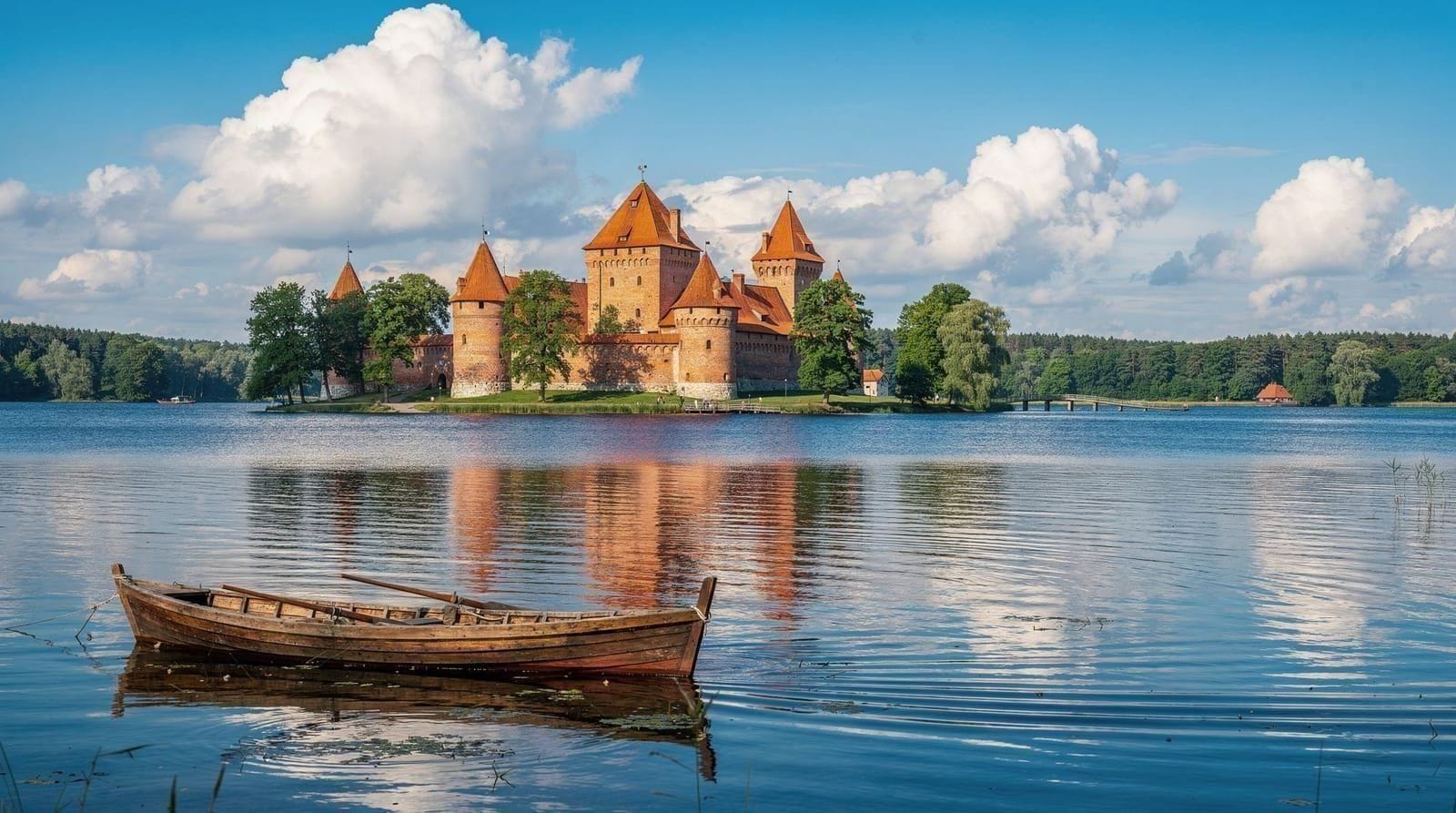
Trakai Castle is Lithuania’s most photographed landmark — a 14th-century Gothic brick castle on an island in Lake Galvė, 28 km from Vilnius. The view from the lake is better than from land, and the lake offers rowing boats for hire (€8-10/hour), kayaks, and guided canoe tours around the island.
The castle interior houses a reasonable museum of the Grand Duchy of Lithuania. More interesting is the Karaim community: a Turkic ethnic group that settled in Trakai in the 14th century, still speaking their own language and selling kibinai (half-moon pastries with meat or vegetable filling) from dedicated shops. Train from Vilnius: 30 minutes, €3-5 return.
Guided kayak tour around Trakai Castle island — better access to the castle from the water than rowing independently5. Have a pirts sauna experience
The Lithuanian pirts is a wood-fired sauna with a specific culture around it: you’re heated to high temperature, struck with a bundle of birch or oak branches (vanta) to increase circulation, then cool down in a lake, river, or cold plunge. It’s not a spa treatment — it’s a physical and social tradition, and Lithuanians take it seriously. The sauna culture guide covers the how and where.
6. Visit the KGB Museum (Museum of Occupations)
The KGB Museum in Vilnius (Aukų g. 2) is the former Soviet secret police headquarters, preserved largely intact. The basement cells where dissidents were interrogated and held are open to visitors; the documentation of the Soviet occupation, deportations, and resistance is thorough and sobering. One of the best Cold War museums in Europe. Budget 2-3 hours and don’t rush it. Admission €8.
7. Climb the Three Crosses hill at first light
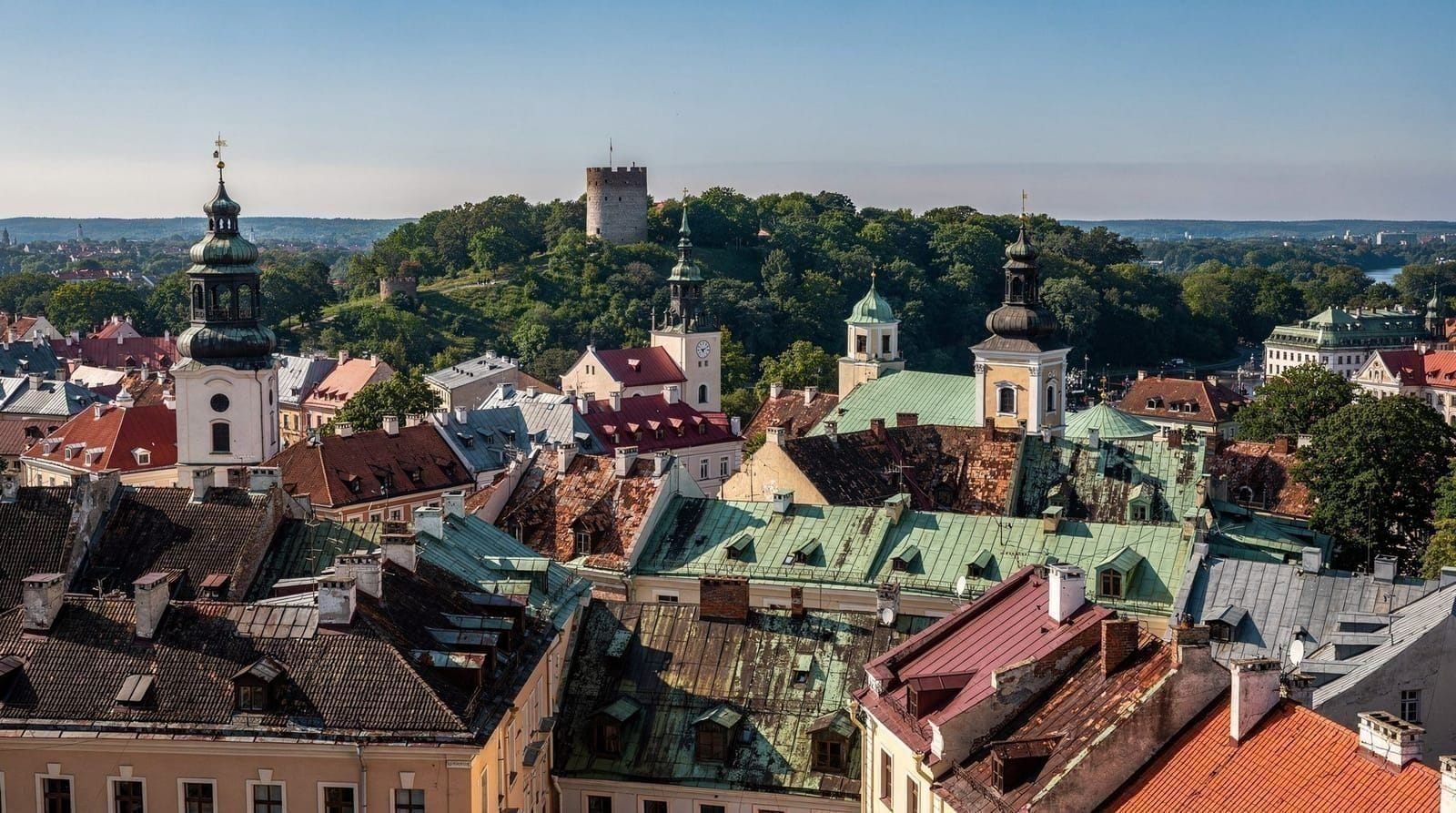
Free, always open, 15 minutes walk from Old Town — the Three Crosses monument on Kalnai Park hill gives the best view of the Old Town rooftops and Cathedral Square from the east. At 7am on a clear summer morning, you’ll have it to yourself. The crosses were removed by the Soviets in 1950 and restored in 1989, one of the first acts of cultural restoration as independence approached.
8. Take a hot air balloon over Trakai
At dawn, from a field outside Vilnius, a balloon lifts you to 400+ metres above the lake system around Trakai Castle. The castle appears below; the lagoon and surrounding forests stretch to the horizon. A champagne landing ceremony follows. This costs €130-170 per person and is worth every cent of it — it’s a genuinely different kind of experience from any other Vilnius activity.
Hot air balloon over Trakai lakes at dawn — the Vilnius area’s most memorable single experience9. Walk the Kernavė earthworks
Kernavė is a UNESCO World Heritage Site 35 km from Vilnius — four triangular earthwork mounds on a ridge above the Neris River, remains of a medieval settlement that was the first capital of Lithuania. The mounds are visually striking, particularly in morning mist, and the museum on site covers the archaeological layers going back to the Mesolithic period. Few tourists come here; the site is quiet even in summer. Bus from Vilnius: 1 hour, €3-4.
10. Eat at the Halės Turgus market
The Halės Turgus market hall in Vilnius (Pylimo g.) has been feeding the city since 1906. Open from 6am, it closes by early afternoon. Inside: smoked fish, aged cheese, rye bread with caraway, pickled mushrooms, wild berries, Lithuanian dairy products. The cafeteria section serves hot market food for €4-6 a dish. Arrive before 9am for the full selection and the complete sensory experience of a real food market, not a tourist market.
11. Walk Paneriai memorial
Paneriai is 10 km from Vilnius, reached by a 15-minute suburban train. Between 1941 and 1944, approximately 100,000 people were murdered here — primarily Lithuanian Jews, also Soviet prisoners and Polish intellectuals. The forested memorial site, with its mass grave pits visible and marked, is sobering and significant. A visit here is not a tourist attraction in the usual sense; it’s a historical witness. Allow 2 hours. The Paneriai memorial guide has full context.
12. Spend a night in Druskininkai
Druskininkai is Lithuania’s spa resort town in the forested south, 130 km from Vilnius. It has mineral springs, Soviet-era sanatoriums converted into modern spa hotels, and the adjacent Grūtas Park — an outdoor museum of Soviet-era statues removed from public spaces after independence (Lenin, Stalin, various generals — all standing in a forest clearing with original descriptions). A Friday-to-Sunday trip combines the Grūtas Park visit with actual spa treatment and the particular atmosphere of a resort town out of season.
13. Explore Kaunas interwar architecture
Kaunas was Lithuania’s provisional capital from 1920 to 1939 (while Vilnius was under Polish administration) and the result is an unusual concentration of interwar modernism — Functionalist apartment buildings, public institutions, and churches built in styles that blended Art Deco, Modernism, and Baltic folk elements. The Vytautas the Great War Museum, the Cathedral of the Resurrection (built in 1933, interiors in a specifically Lithuanian modernist style), and the Faculty of Arts at Vytautas Magnus University are among the more interesting buildings. Kaunas is UNESCO Creative City of Design; the designation is deserved.
14. Attend the Joninės midsummer fires
Joninės (24 June) is the Lithuanian midsummer festival — bonfires, flower crowns, song, and the tradition of searching for the fern flower at midnight (the fern doesn’t flower, but finding one is said to bring luck and is used as an excuse to be in a forest at midnight). This is one of the more genuinely pagan seasonal celebrations surviving in Europe, pre-dating Christianity in Lithuania. Events happen across the country; in Vilnius, Kalnai Park hosts a public celebration. In rural Lithuania, private bonfires on farmland are the tradition. See Vilnius in summer for the full calendar.
15. Read the Užupis Constitution
The last item on this list requires no transport and no ticket. Cross the Užupis bridge from Old Town, walk to Paupio gatvė, and read all 41 articles of the Republic of Užupis constitution, engraved on mirrored panels in forty languages. Allow fifteen minutes. Article 12: “A person may be happy.” Article 14: “A person may sometimes not know about his duties.” Article 35: “Do not surrender.” Article 41: “Do not fight back.”
The Užupis guide has the full story of how the republic came to exist and why it’s stranger than it looks.
How much time each item actually needs
Not all fifteen items cost the same in planning or travel time. This is the honest breakdown for sequencing a trip:
| Item | Time needed | Booking required |
|---|---|---|
| Hill of Crosses (1) | Full day (2.5hrs each way) | Recommended, especially group tours |
| Trakai Castle + lake (4) | Half day | No |
| Hot air balloon over Trakai (8) | Half day (dawn start) | Yes, book ahead |
| Curonian Spit dunes (3) | Full day, better as overnight | No, but ferry timing matters |
| Kaunas architecture (13) | Full day | No |
| Kernavė earthworks (9) | Half day | No |
| Druskininkai + Grūtas Park (12) | Overnight ideal | Spa hotel booking recommended |
| Vilnius-based items (2, 5, 6, 7, 10, 15) | 2-3 days combined | No |
Sequencing the list into a realistic trip
For a one-week trip, front-load the Vilnius-based items (2, 5, 6, 7, 10, 15) across your first two or three days while you adjust to the pace of the city, then use remaining days for Trakai (4, 8) and one longer excursion — Kaunas (13) or the Hill of Crosses (1), not both unless you have eight days or more. The Curonian Spit (3) is the item most worth treating as a genuine overnight rather than a rushed day trip; Nida’s guesthouses are inexpensive and the extra evening on the dunes at sunset is worth the logistics. For a fuller ten-to-fourteen day version of this list built into a day-by-day plan, the 10-day Lithuania grand tour itinerary and the shorter 7-day Lithuania highlights itinerary both sequence these same experiences with realistic transport times.
Frequently asked questions about Lithuania bucket list experiences
How many of these can I do in one week?
Realistically, 8-10 with good planning. Vilnius experiences (items 1, 6, 7, 10, 15) fill 2-3 days. Trakai (items 4, 8) is a day or half-day. Kaunas (13) is a day. Hill of Crosses (1) adds a long day. Curonian Spit (3) requires a dedicated day and a half minimum. Paneriai (11) is a half-morning from Vilnius.
Which experiences require a rental car?
The Hill of Crosses and Curonian Spit are difficult without a car unless you join guided group tours. Kernavė is doable by bus. Everything in Vilnius and Trakai is accessible by train or bus. The trains and buses guide covers the public transport logistics.
Is Lithuania suitable for a solo bucket list trip?
Very much so. The country is safe, English is widely spoken among working-age Lithuanians, the prices are among the lowest in the EU, and the scale is manageable. A solo traveller covering this bucket list in 10-14 days would spend €600-900 total (excluding flights) at a comfortable pace.
What should I prioritise if I only have three days?
Vilnius Old Town and KGB Museum (day 1), Gediminas Tower and Užupis (day 1 afternoon), Trakai by train (day 2 morning), Hill of Crosses by group tour (day 3 — long day, worth it). Cepelinai at Forto Dvaras. That’s a concentrated but solid introduction to Lithuania.
Is the Curonian Spit worth an overnight rather than a day trip?
Yes, if your schedule allows it. A day trip from Vilnius means 7-8 hours on the bus for a few hours on the dunes; staying a night in Nida lets you catch sunset from the Parnidis dune and explore at a slower pace without the return-bus deadline. Guesthouses in Nida are inexpensive relative to Vilnius.
Which single item on this list surprises people most?
The Kernavė earthworks and the Užupis Constitution both tend to surprise visitors — Kernavė because so few tourists know about it despite UNESCO status, and Užupis because reading all 41 articles takes longer, and provokes more reflection, than the “quirky neighbourhood” framing suggests.