Vilnius in summer — what to expect and what to do
Vilnius: Hot air balloon ride hotel transfer
Is Vilnius worth visiting in summer?
Yes — summer is the best season for outdoor activities, festivals, the Curonian Spit, and Trakai lake activities. Temperatures of 20–27°C, up to 17 hours of daylight, and a full calendar of events make June–August the most popular period. July and August are peak season — accommodation prices are highest and Old Town restaurants need booking ahead.
Vilnius transforms in summer. The narrow streets of the Old Town that feel intimate in winter become outdoor living rooms in June, July, and August — restaurant terraces spill onto cobblestones, the parks along the Neris river fill with cyclists and kayakers, and the sky stays light until after 10 pm on the solstice. For visitors who want to maximise outdoor activity and energy, summer is unambiguously the right time to come.
It is also the busiest and most expensive season. This guide gives an honest account of what each summer month offers and what to expect.
| Where | Old Town terraces, Vingis Park, Trakai, Curonian Spit |
| Cost | around 30–50% above shoulder-season prices |
| Time needed | June is the best single summer month |
| Getting there | Full flight schedules; book Old Town rooms 2–3 months ahead |
| Best time | June for value, July–August for peak festival energy |
Temperature and daylight
Vilnius is at 54°N latitude — approximately the same as Edinburgh or Copenhagen — which means genuinely long summer days. At midsummer (June 21–22), the city has almost 17 hours between sunrise and sunset. This is not just pleasant; it fundamentally changes how you can use the day. Dinner at 8 pm with sunlight still streaming through restaurant windows, a post-dinner walk in the Old Town at 10 pm still in daylight — it takes adjustment if you are coming from lower latitudes.
Temperatures in June–August average 20–27°C, though heat waves occasionally push temperatures to 32–35°C. These are not Mediterranean temperatures, but the combination with the extreme daylight makes summers feel long and full.
Rain: summer in Vilnius is not reliably dry. July is the rainiest month statistically, with afternoon thunderstorms common. These are usually short-lived. Pack a light rain jacket.
June: the recommended month
June is the argument for visiting Vilnius in summer rather than spring or autumn. The temperatures are warm without peak heat, the days are at their longest, and the city is busy but not overwhelmed. Accommodation prices in June are noticeably lower than July–August peak.
Joninės (June 24): Lithuania’s Midsummer celebration is a major cultural event. The holiday incorporates pre-Christian traditions — bonfires, flower crowns, folk singing, fern searches at midnight — alongside modern festival elements. Events are held throughout the city and in the countryside. The most atmospheric celebrations are outside the city (the Nemunas riverside, the Dzūkija forest region), but Vilnius hosts its own Joninės events in Vingis Park.
Vilnius Street Music Day (usually June): A city-wide free music festival where performers play at designated spots across the Old Town and beyond — classical, jazz, folk, pop, electronic. Entry to all performances is free; the day has a pleasantly spontaneous feel.
Vilnius Festival (June–July): A classical music festival running through June and into July, with performances at the Cathedral, Vilnius University courtyard, and other historic venues. Ticket prices are very reasonable by European standards (€8–20). See vilniusfestival.lt for the current season’s program.
July: peak season
July is Vilnius at peak summer. The Old Town is its busiest, accommodation prices are highest (3-star rooms that cost €60 in January cost €100–130 in July), and the best restaurants need advance booking. This is worth knowing but not a reason to avoid July — the city handles the volume without becoming unpleasant.
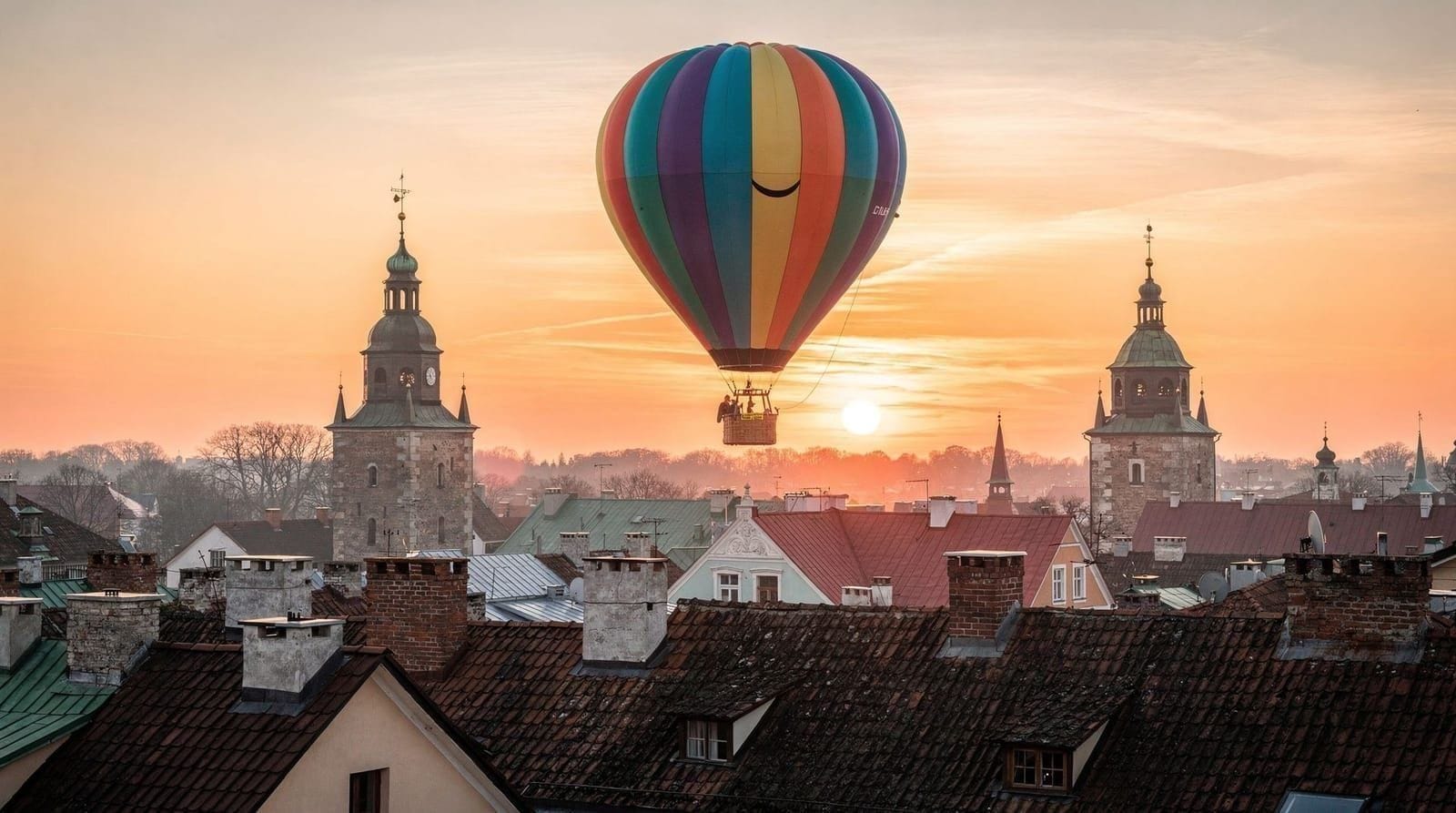
What July does best: Hot-air ballooning over the city and Trakai (best in the stable air of early morning, June–August). Kayaking on the Neris and Vilnelė rivers. Long evening meals on Old Town terraces with the sun still up. Day trips to Trakai for lake swimming and kayaking (the lake water reaches 22°C by July). Full access to the Curonian Spit’s beaches.
Tourist trap note: July brings the most aggressive touting in Old Town restaurants, particularly along Pilies gatvė and Vokiečių gatvė. Restaurants that have menu boards carried out to the pavement by a stand-up host are generally the ones to avoid — the menu boards often show lower prices than you actually pay. Walk into restaurants that aren’t actively recruiting customers.
Book a hot-air balloon ride over VilniusAugust: the late-summer window
August in Vilnius is very similar to July — warm, long days, peak crowds in the first two weeks, then a noticeable thinning out by the last 10 days as European summer holidays end. Late August (from around the 20th) is an underrated time to visit: still warm enough for outdoor activities, shorter queues, and slightly lower prices.
Daylight by late August: By August 31, sunset in Vilnius is around 8 pm — still a long evening but noticeably shorter than the solstice. The light in late August has a particular quality — warm and golden in the evenings, softer than the sharp summer sun of July.
The Curonian Spit in August: August is peak season on the Curonian Spit. Beach temperatures reach 20–22°C in the Baltic Sea, and the spit is at its most visited. Book accommodations in Nida well in advance for August weekends.
Joninės: midsummer in Lithuania
Joninės (also called Rasos or Kupola in older tradition) is Lithuania’s most important folk festival and one of the most genuinely pre-Christian celebrations in modern European culture. It falls on June 24th — St John’s Night, the old midsummer — and combines Christian feast-day observance with much older traditions that the Catholic church never fully replaced.
The central traditions of Joninės are not metaphorical or reconstructed — they are still practised in rural Lithuania and are taken seriously by Lithuanian families who might not consider themselves particularly folkloric in other contexts. Young women make flower crowns (vainikai) and float them on rivers; the direction the crown drifts is supposed to indicate the direction from which a future partner will come. Bonfires are lit and young men jump over them — a test of courage with its roots in pre-Christian solar ritual. The search for the mythical fern flower (paparčio žiedas) at midnight is a folk tradition that persists as a half-ironic, half-earnest rite: in Lithuanian folklore, the fern blooms once a year at midsummer midnight and grants magic powers to whoever finds it.
In Vilnius, the main Joninės celebration is in Vingis Park, with organised bonfires, folk music performances, and activities. This is accessible and family-friendly. For a more immersive experience, several tour operators offer Joninės excursions to rural estates or riverside locations outside the city where the traditions are observed more traditionally — herbal wreath-making, outdoor fires, folk songs sung by the river until midnight. These typically cost €30–50 per person and need booking in advance.
The Vilnius parks and green spaces guide has information on Vingis Park and other outdoor venues where summer events are held.
Summer activities
Hot-air ballooning: Vilnius and the surrounding region are excellent for hot-air ballooning, with flights typically departing at dawn or dusk from sites near the Old Town and near Trakai. Flights last approximately 1 hour and cost €120–180 per person. The best balloon flight period is June–August when the air is most stable. Multiple operators offer hotel pickup.
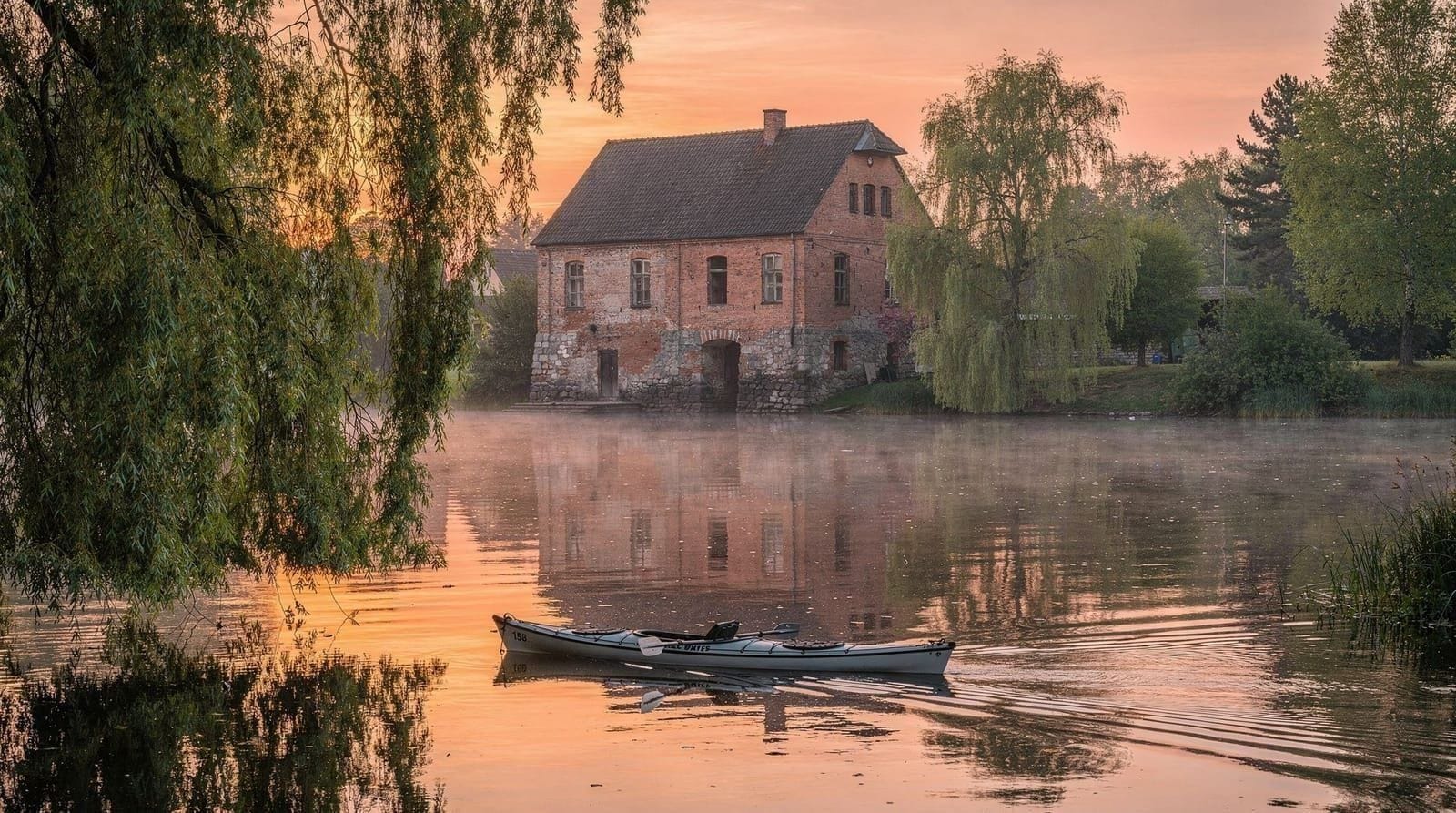
Book a hot-air balloon flight over Vilnius with hotel transferKayaking on Vilnius’s rivers: The Neris and Vilnelė rivers are accessible for kayaking right from the city. Several operators offer guided sunset kayak tours departing from Verkiai Regional Park (north of the city centre), lasting 2–3 hours. Standalone kayak rental on the Neris near the Old Town is also available from approximately €10/hour.
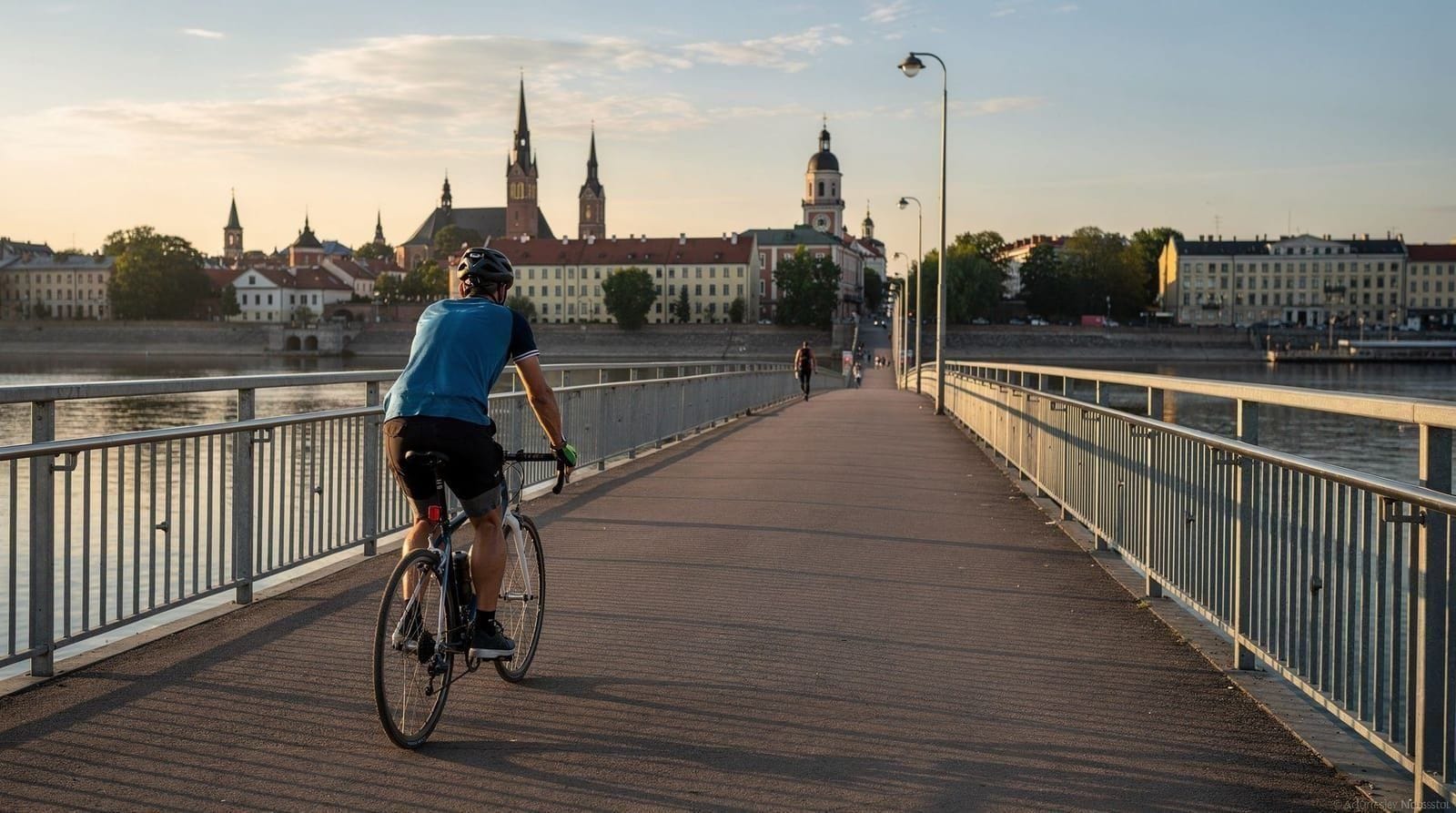
Book a sunset kayak tour in Verkiai Regional ParkCycling: The Vilnius cycle path network has expanded significantly in recent years, connecting the Old Town with parks and suburbs. Cycling to Trakai (28 km each way on a well-marked route) is a popular summer option for fit cyclists. Bike rental from €10/day at multiple Old Town locations.
Parks and outdoor spaces: Vingis Park (across the river from the Old Town) hosts large outdoor concerts and events in summer, including Lithuanian Song Festival performances. Bernardinai Garden (behind St Anne’s Church) is the most pleasant central green space. Verkiai Regional Park (north of the city) offers longer walks and river access.
The Old Town in summer: what changes
Summer transforms the physical experience of the Old Town in ways that photographs don’t fully capture.
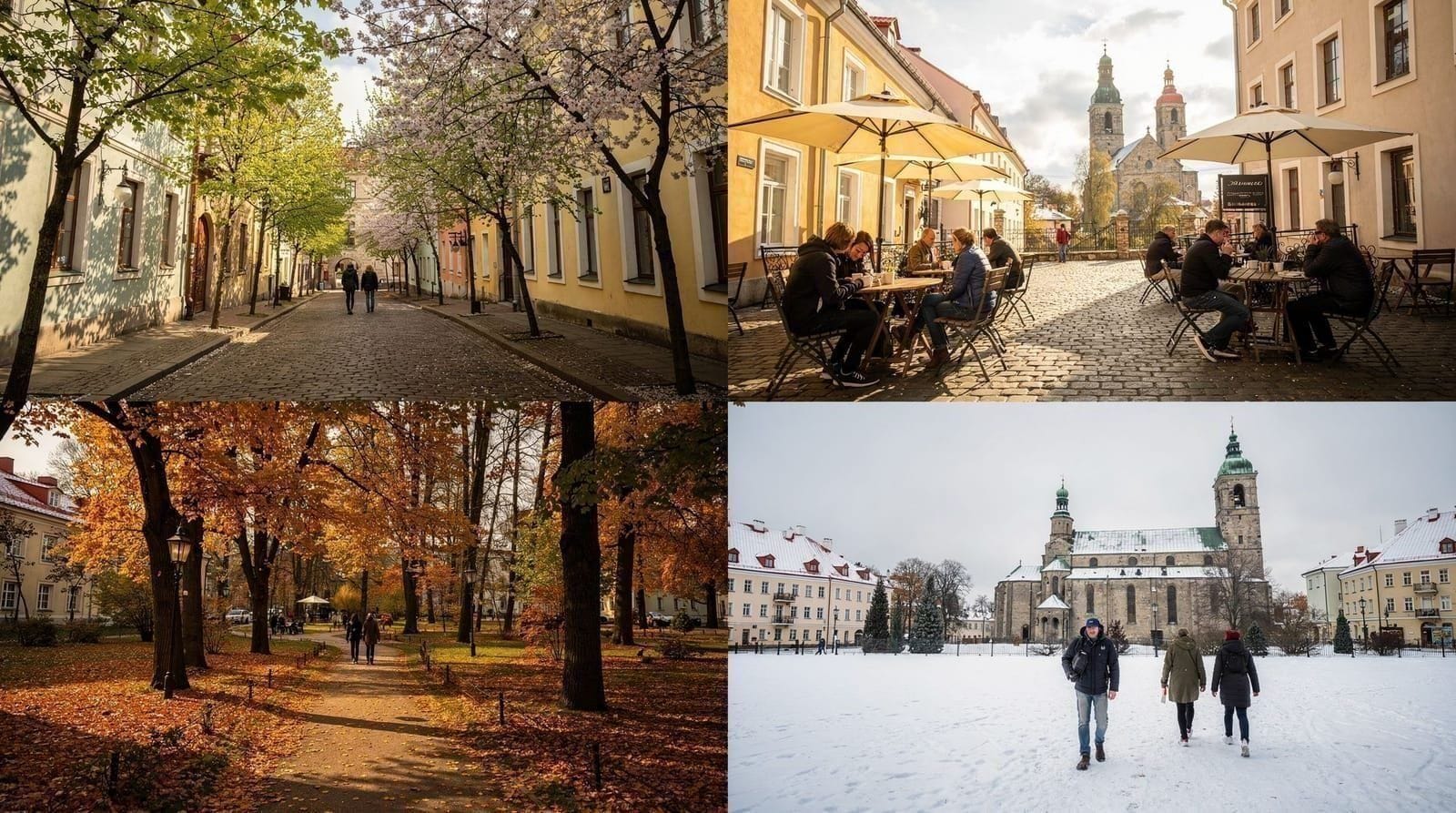
The outdoor terrace culture is the most immediate change. From May through September, restaurants extend into the street and into courtyard spaces that are inaccessible or uninviting in winter. Stiklių gatvė — one of the quieter Old Town streets — has several restaurants with courtyard seating that are genuinely pleasant on summer evenings. The outdoor seating on Vokiečių gatvė can be crowded and over-priced; the courtyards off the main streets are often better value and more atmosphere.
The light itself changes the city’s character. Vilnius’s Baroque architecture was designed for a northern European light environment — the pale stone and red-brick contrasts that look somewhat washed-out in flat winter light glow warmly in summer sun. Cathedral Square in particular looks completely different at 8 pm in July than at 3 pm in January — the afternoon sun rakes across the façades at an angle that makes the architectural detail pop.
The crowds change the pedestrian dynamics of the Old Town significantly. Pilies gatvė, the main tourist artery between Cathedral Square and the Town Hall, has a different character in summer: slower-moving, more tourist-dominated, with more street performers and vendors. The parallel streets — Šv. Jono gatvė, Literatų gatvė — are one block away and notably less crowded. The best way to navigate the summer Old Town is to treat Pilies gatvė as a landmark reference point rather than a walking route, and move through the parallel streets.
What gets crowded in summer
Cathedral Square: The main tourist hub gets very busy from 10 am onwards on July–August weekdays; weekends are worse. Morning visits (before 9 am) are much quieter.
Gediminas Tower: The funicular and tower can have 20–30 minute waits in July–August peak hours (11 am–3 pm). Visit early morning or evening.
Trakai: The island castle gets genuinely crowded on July–August weekends. Weekday visits and off-peak arrivals (before 10 am or after 3 pm) avoid the worst of it. Kayak rental queues can be long on Saturday afternoons.
Old Town restaurants: The best-regarded restaurants on and around Pilies gatvė, Stiklių gatvė, and Didžioji gatvė need booking 24–48 hours ahead in July. Walk-in availability improves after 9 pm.
Accommodation in summer
July–August prices for Old Town hotels and apartments are 30–50% higher than shoulder season. A mid-range 3-star hotel that costs €70/night in May costs €100–130 in July. Book 2–3 months ahead for July and August if you have fixed dates.
Budget option: Vilnius has good hostel accommodation for solo travelers (Pogo Hostel, Chill Hostel) at €18–25/night even in summer. Family/couple apartments via Airbnb or Booking.com are often better value than hotels.
Day trips in summer
Summer opens up the full day-trip map:
- Trakai: Best in summer for lake swimming and kayaking. Full castle hours (open daily until 7 pm).
- Curonian Spit: Only viable as a beach destination in June–August.
- Hill of Crosses: Works year-round, but summer gives the most pleasant visit.
- Druskininkai: Good in summer for forest walks and the lake; the spa facilities are available year-round.
See the best day trips from Vilnius guide for logistics. The Curonian Spit in particular deserves planning ahead — see the Curonian Spit day trip guide for transport options and whether a day trip or overnight stay in Nida suits your itinerary better.
Where to eat and drink outdoors
Summer is when the Vilnius food guide recommendations come alive on Old Town terraces rather than in indoor dining rooms. The courtyard restaurants off Stiklių gatvė are the best combination of atmosphere and value; the terraces directly on Vokiečių gatvė and Pilies gatvė are pleasant but priced for the location rather than the food. If beer is more your interest than a full meal, the Vilnius craft beer guide covers which bars have the best outdoor seating for a long summer evening, and the Vilnius nightlife guide covers how a summer evening out typically unfolds from dinner through to late-night options.
Packing for a Vilnius summer
Summer in Vilnius does not require extensive preparation, but a few points are worth noting:
Rain gear: July is the wettest month. A lightweight packable rain jacket takes up minimal space and means afternoon thunderstorms don’t disrupt plans. Umbrella culture in Vilnius is moderate — most people wait out short rain under café awnings.
Layers for evenings: Even in July, evenings cool quickly once the sun goes down, particularly near the river. A light fleece or cardigan is useful from around 9 pm.
Comfortable shoes: The cobblestones of the Old Town require flat, supportive footwear — tourist sandals and high heels both cause problems. Walking shoes or trainers are the standard choice.
Sun protection: The long daylight hours at this latitude mean extended UV exposure, particularly on the unshaded dune surfaces at the Curonian Spit and on open-air activities like hot-air ballooning. Sunscreen is more necessary than many visitors expect.
Frequently asked questions about Vilnius in summer
Does Vilnius have air conditioning?
Partially. Modern hotels and newer apartment rentals typically have air conditioning. Many older buildings and budget guesthouses do not. If you are visiting in July–August, specifically request air conditioning when booking accommodation — it matters during heat waves.
Are Vilnius parks free and open to the public?
Yes. All major parks (Vingis Park, Bernardinai Garden, Verkiai Regional Park) are free to enter and open continuously. The Botanical Garden (Kairėnų g. 43) charges a small entry fee (€3).
What should I do in Vilnius on a rainy summer day?
Museum visits (Palace of the Grand Dukes, Museum of Occupations, Energy and Technology Museum), café culture along Gedimino prospektas, the covered market at Halės turgus, or a cooking class. Lithuania’s indoor cultural scene is strong enough to fill a rainy day comfortably.
Is it worth paying more to visit Vilnius in summer versus spring?
For outdoor activities, yes — ballooning, kayaking, the Curonian Spit beaches, and lake swimming at Trakai are all dependent on warm weather. For museum and city sightseeing, May/September offer better value (shoulder-season prices, mild weather, fewer crowds) without sacrificing much.
Can I swim in the rivers or lakes near Vilnius?
Lake Galvė at Trakai has designated swimming areas (water temperature 18–22°C in July–August). The Neris and Vilnelė rivers in the city are not recommended for swimming — water quality monitoring is inconsistent and the currents can be strong. The beaches on the Curonian Spit (3.5 hours away) are the best swimming option for a day trip.
Which summer month should I choose if I can only pick one?
June, for most visitors. It has nearly the same long daylight hours and warm temperatures as July and August, but noticeably lower accommodation prices, thinner crowds at Trakai and Cathedral Square, and Joninės (June 24) as a genuine cultural event to build a trip around.
Is it too hot to walk the Old Town in July or August?
No. Vilnius summer heat (typically 20–27°C, occasionally spiking to 32–35°C) is manageable for walking, especially compared with southern European cities. Plan sightseeing for morning or early evening during any heat wave, and use the shaded courtyards and parallel streets off Pilies gatvė to cool off.
Top experiences
Bookable activities with verified prices and instant confirmation on GetYourGuide.