Kaziukas Fair in Vilnius — Lithuania's biggest craft market
Vilnius: Old town walking tour with snacks
When is the Kaziukas Fair in Vilnius?
The Kaziukas Fair (Kaziuko mugė) falls in early March, around St Casimir's Day on March 4. It typically runs for 3–4 days over the weekend nearest to March 4. The fair occupies Cathedral Square and extends through the Old Town. It is Lithuania's largest traditional craft market and a significant national cultural event.
If Vilnius’s Christmas market is the occasion when the city puts its best face towards tourists, the Kaziukas Fair is the occasion when Vilnius forgets tourists are watching. This is not a criticism — quite the opposite. The Kaziukas Fair is one of the most authentically Lithuanian cultural events you can experience, and its unselfconsciousness is part of what makes it worth planning around.
The fair dates to 1624, when it was first documented near the Church of St Casimir. It has been held almost continuously since then, surviving occupations, wars, and Soviet suppression (during which it was briefly reframed as a “spring market” while maintaining its essential character). Today it occupies Cathedral Square and spreads through the Old Town streets for 3–4 days in early March — Lithuania’s patron saint’s feast day, March 4, is the anchor point.
| Where | Cathedral Square and the Old Town streets |
| When | 3–4 days around March 4, St Casimir’s Day |
| Cost | Free entry; verbos and crafts from around €2 |
| Time needed | 2–4 hours to browse properly |
| Best day | Friday evening or Sunday morning for fewer crowds |
What happens at Kaziukas
Hundreds of artisan vendors occupy stalls across Cathedral Square, Gedimino prospektas, Pilies gatvė, and the surrounding streets. The goods are predominantly handmade Lithuanian crafts — this is not a place where you find imported wholesale products dressed up as artisan work. Vendors come from across Lithuania and from the Polish, Belarusian, and Latvian borderlands where Lithuanian craft traditions overlap with neighbouring ones.
The atmosphere is thick with early spring energy: the first thaw, families out on a cold weekend, the smell of mulled wine and smoked meats, the sound of folk music from several stages.
Friday evening: Traditionally the fair’s opening, with a ceremony and the first market stalls. Often the most locally attended evening.
Saturday: The biggest day — the most stalls, the most people, the most atmosphere. Arrive before noon if you want to browse without shoulder-to-shoulder crowds.
Sunday: Calmer; many families return for a second visit. Some stalls begin packing in the afternoon.
March 4 (St Casimir’s Day): Mass at St Casimir’s Church (Šv. Kazimiero bažnyčia, Didžioji g. 34) is central to the day for religious participants. The church is Vilnius’s oldest Baroque church and the feast day mass is a significant event.
The verbos: what makes Kaziukas distinctive
The verba is the symbol and the art object of the Kaziukas Fair, and it deserves explanation.
A verba is a handmade bundle or arrangement of dried plant materials — marsh grasses (papyrus), dried flowers, herbs, and coloured ribbons — crafted by artisans over the preceding months of winter. The tradition comes from eastern Lithuania, particularly the Vilnius region and Aukštaitija, where specific communities developed distinct regional styles.
Simple verbos for household use are small bundles of dried grasses costing €2–5. The artistic verbos — elaborate 1–2 metre-tall constructions with dozens of different dried plants arranged in geometric or organic patterns — are genuine folk art objects, priced from €20 to several hundred euros for exceptional examples.
The crafting of verbos is an active artistic tradition, not a museum piece. Several well-known verba artists have waiting lists and international collections. At the fair, you can watch demonstrations of how verbos are assembled.
The connection to Palm Sunday is liturgical — verbos are traditionally blessed on Palm Sunday (waving substituting for palm fronds in a northern climate where palms don’t grow). The pagan roots are deeper: the dried grasses and herbs were originally believed to protect the household over winter.
What to buy at Kaziukas
Verbos: The most distinctive purchase. Small simple versions from €2–5; artistic pieces from €20–100+. Look for the eastern Lithuanian regional styles — Dzūkija verbos use different plant combinations than Aukštaitija versions.
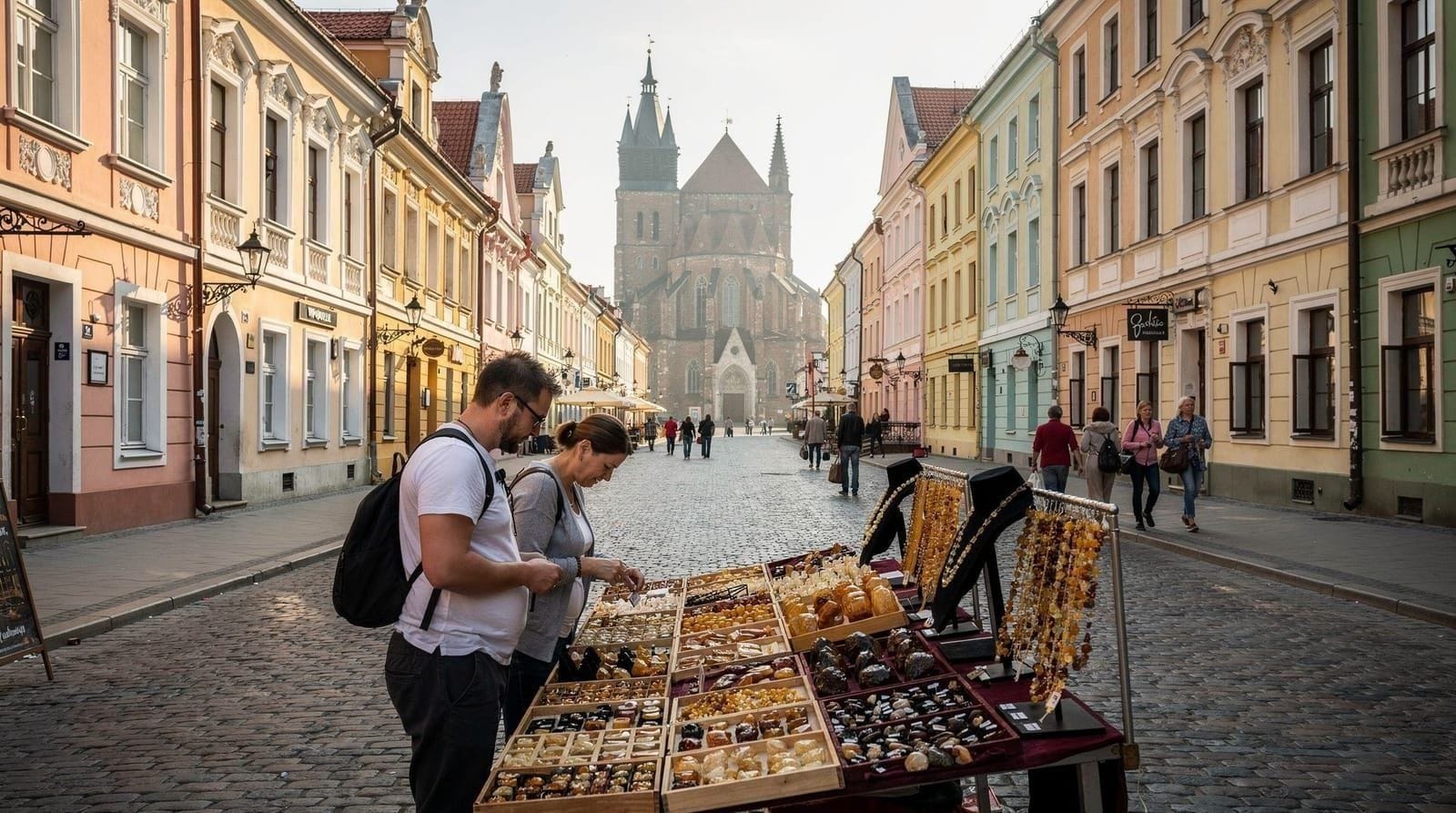
Amber: Kaziukas is one of the better amber markets — many vendors are direct producers from the coastal region, not importers. Look for vendors who can show documentation of Lithuanian origin. Uncut raw amber (gintaro laužas) sells by weight; finished jewellery prices vary widely. The Amber Museum shop (Šv. Mykolo g. 8, open year-round) is a reliable baseline for price comparison.
Ceramics: Lithuanian folk ceramics use distinctive glazes and patterns (spiral and solar motifs are common). The Aukštaitija region potters typically work in dark glazes; Žemaitija potters use lighter cream-brown tones. Practical items (bowls, cups, candleholders) from €8–25.
Linen textiles: Lithuania’s linen production tradition runs back centuries. Kaziukas stalls offer linen tablecloths, napkins, placemats, and household textiles — naturally woven rather than bleached white (typically a natural off-white or patterned). These are practical, durable purchases at fair prices (tablecloth from €25–60).
Carved wood: Wooden objects ranging from practical (spoons, chopping boards) to decorative (krikštai-inspired carved figures, suns, crosses). Prices from €5–50.
Dried herb bundles and wreath decorations: For the food and garden oriented: dried sage, thyme, oregano, chamomile in bundles; herbal wreaths for kitchen decoration. Very Lithuanian, very cheap (€2–8).
Candles: Traditional beeswax candles from Lithuanian beekeepers. The natural golden colour and honey scent are distinctive. Far superior to commercial white candles.
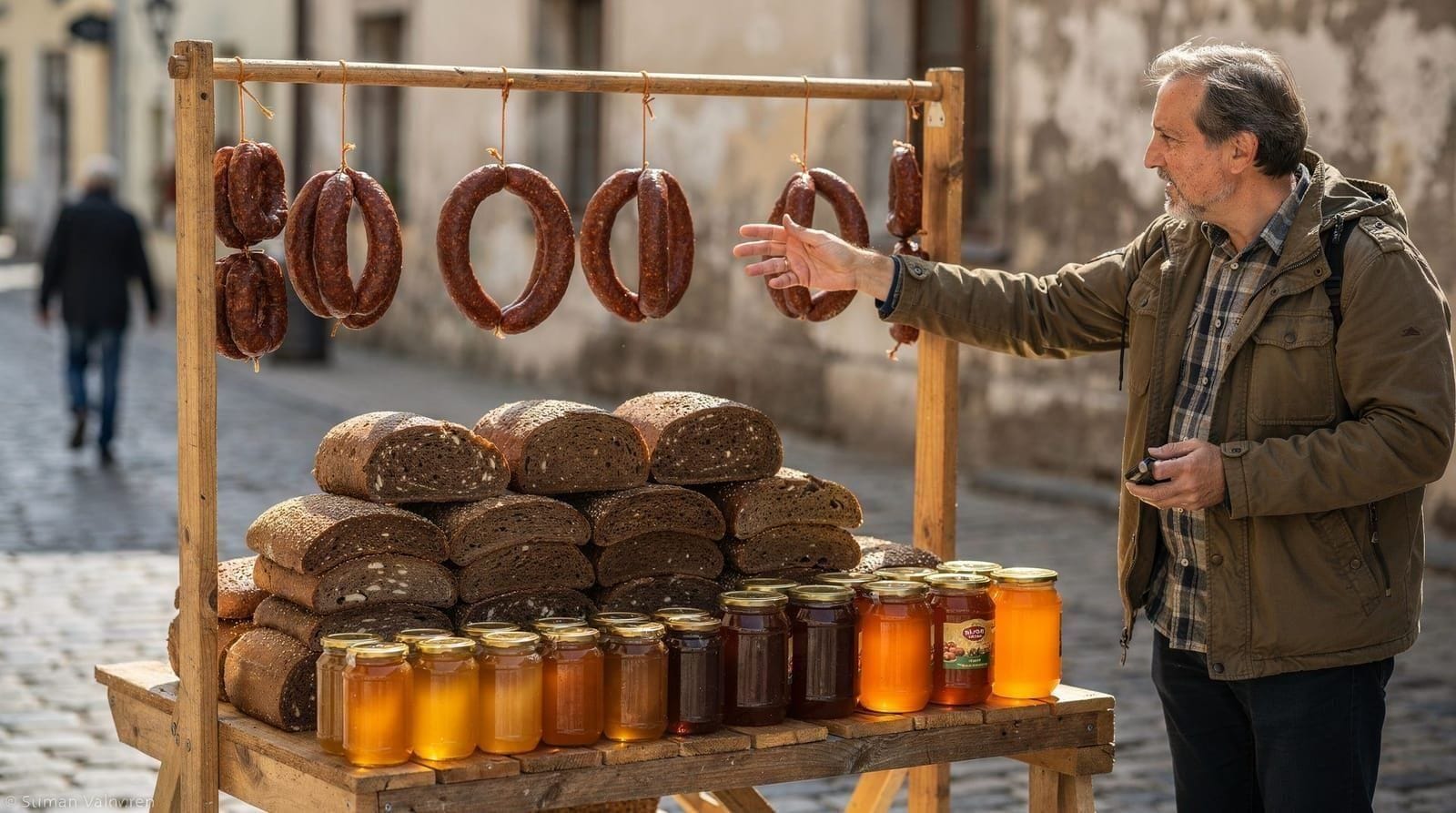
Food stalls: Smoked meats (dried sausages, smoked pork), traditional cheeses (varskės sūris — cottage cheese pressed into rounds, flavoured with caraway), pastries, and preserves. Prices are fair; quality is good.
What to avoid buying
“Amber”: Some vendors sell amber-coloured resin that is not amber. The classic test: amber floats in saturated salt water; most fakes sink. Alternatively, buy only from vendors with amber society certification or from the Amber Museum shop.
Mass-produced “folk” items: Not everything at Kaziukas is handmade. Some stalls sell commercially printed textiles or machine-carved objects that have no connection to the craft tradition. Ask the vendor to explain their process if uncertain.
Street food near Cathedral Square exit: Hot dogs and kebabs sold near the exits cater to people leaving rather than to locals at the fair. Better food is inside the fair itself or at Old Town restaurants.
Kaziukas vs the Vilnius Christmas Market
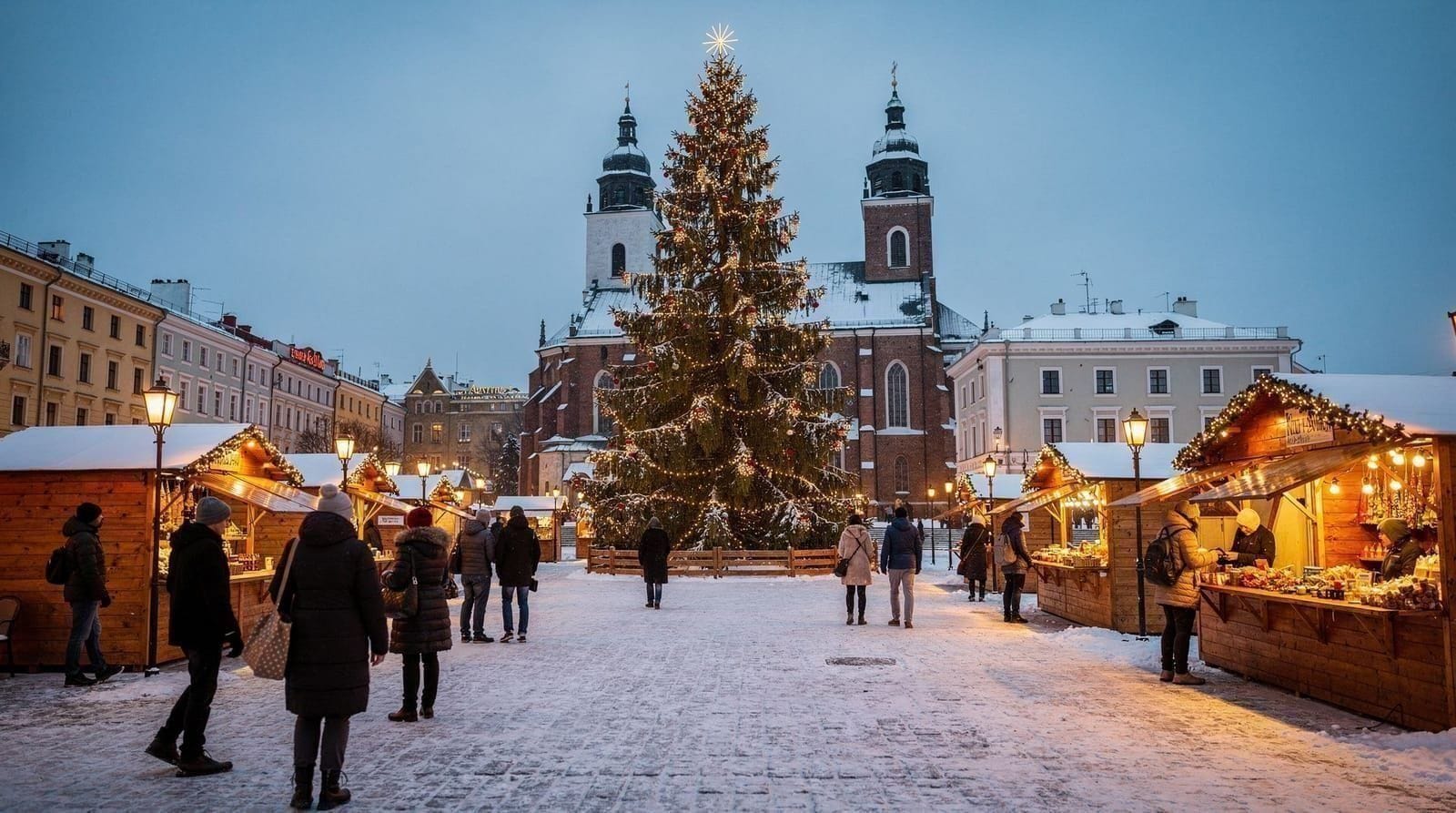
Visitors often ask how Kaziukas compares to the Vilnius Christmas Market, the city’s other major seasonal event. They’re different animals, and knowing the difference helps you decide whether to plan a trip around either.
| Kaziukas Fair | Christmas Market | |
|---|---|---|
| Timing | Early March, 3–4 days | Late Nov–early Jan, weeks-long |
| Character | Authentic Lithuanian craft fair, locals-first | Polished, tourist-friendly, festive lights |
| Main draw | Verbos, amber, folk ceramics, food stalls | Mulled wine, Christmas tree, holiday atmosphere |
| Crowd | Mostly Lithuanian families and craft buyers | Heavy mix of tourists and locals |
| Weather | Cold, 0–7°C, possible late snow | Cold, festive, often snowy |
If you want the more distinctly Lithuanian experience with less tourist polish, Kaziukas is the one to prioritise. If you want classic festive atmosphere with lights and a tree, the Christmas market delivers that more reliably.
Combining Kaziukas with sightseeing
The fair occupies Cathedral Square and the adjacent streets for 3–4 days, which means the area’s usual sightseeing access is modified but not blocked. You can still visit:
- Cathedral (Vilniaus katedra): Open year-round; Kaziukas doesn’t affect access
- Gediminas Tower: The funicular operates year-round; expect moderate queues
- Palace of the Grand Dukes: Open year-round; this is a good time to visit as tourists are not in peak numbers
For a full Kaziukas day:
- Morning: Arrive at Cathedral Square by 10 am, browse stalls before crowds peak
- Noon: Lunch at a restaurant on Pilies gatvė or Dominikonų gatvė (Old Town restaurants are open and not full on Kaziukas Saturday until early afternoon)
- Afternoon: Continue browsing, folk music stages, verbos demonstrations
- Late afternoon: Visit Gediminas Tower for views over the fair-filled square
- Evening: Old Town dinner; Friday evening has the most festive atmosphere
If you’d rather have a local explain what you’re looking at as you browse, a general city-highlights walk covers the Cathedral, Gediminas Tower and the wider Old Town layout that Kaziukas temporarily transforms:
Vilnius city highlights walking tourFor visitors staying more than a day, Kaziukas pairs naturally with the rest of a first Vilnius visit — see the Vilnius travel tips for first-time visitors for how to sequence the fair alongside the Old Town guide and other essentials, and the best restaurants in Vilnius for where to eat once the fair-food novelty wears off.
Historical background
The Kaziukas tradition is named after St Casimir (Šv. Kazimieras, 1458–1484) — a prince of the Jagiellon dynasty who declined the Polish crown on religious grounds, was known for his asceticism and charity, and died young. He became the patron saint of Lithuania in 1636. His feast day, March 4, was established as the occasion for the fair by city charter in the 17th century.
The fair survived the Russian imperial period with intermittent suppression, functioned through both world wars, was renamed and modified during the Soviet period but maintained its essential craft character, and was formally restored after Lithuanian independence in 1990.
The verbos tradition itself has roots predating the Christian holiday — the earliest documented reference to dried grass bundles in Lithuanian folk rites predates the adoption of the Kaziukas name.
Practical information
Dates: 3–4 days in early March, around March 4. The exact weekend varies by year — check vilnius-events.lt for the current year’s dates.
Location: Cathedral Square (Katedros aikštė), Gedimino prospektas, Pilies gatvė, and adjacent streets.
Entry: Free. You pay only for purchases and food.
Getting there: The fair is in the heart of the Old Town — walkable from any Old Town accommodation. Public bus/trolleybus to Gedimino prospektas + 5 min walk.
Weather: Expect 0–7°C, possible snow or rain. Dress in proper winter layers. Waterproof footwear advisable.
Language: Lithuanian is the dominant language at the fair. English is spoken at most stalls if you ask; vendors with tourist-oriented products will typically communicate easily in English.
Frequently asked questions about Kaziukas Fair
Is Kaziukas Fair crowded?
Saturdays are the busiest, particularly from noon to 4 pm. Cathedral Square can become genuinely crowded during peak hours. Arrive before 11 am or after 4 pm for more comfortable browsing. Fridays and Sundays are calmer.
Is Kaziukas only for Catholics?
No. The fair is a cultural and commercial event that anyone can attend and enjoy. The religious dimension (mass at St Casimir’s Church, the blessing of verbos on Palm Sunday) is a part of the tradition but does not affect visitor access to the market.
Can I buy verbos online before visiting?
Some Lithuanian artisans sell verbos through Etsy and Lithuanian craft websites (rankudarbiai.lt). However, buying in person at Kaziukas gives you the ability to assess quality directly and talk to the maker. The in-person experience is part of the point.
Is Kaziukas the same as Easter markets in other countries?
Structurally similar — a spring craft and food market with religious cultural roots — but the specific craft traditions are distinctively Lithuanian. The verbos have no direct equivalent in German or Polish Easter markets. Kaziukas predates the more decorative pan-European Easter market tradition by several centuries.
Are there similar fairs elsewhere in Lithuania during spring?
Yes — several smaller towns hold their own Kaziukas-related spring fairs. Kaunas and Klaipėda have their own versions. But the Vilnius Kaziukas Fair is the original and the largest, with the deepest craft tradition and widest selection of artisan goods.
Does Kaziukas Fair timing fit well with a general spring visit to Vilnius?
Yes — early March sits right at the start of the spring and autumn shoulder season, when the city is quieter and accommodation is cheaper than summer, but the fair itself brings a real spike in local footfall for those few days. Book Old Town accommodation a little earlier than you would for an ordinary March weekend, since Kaziukas is a known draw for Lithuanian visitors from other cities too.
Is Kaziukas suitable for a first visit to Vilnius, or is it too niche?
It works well for a first visit if your dates happen to align — it’s not a niche event, it’s Lithuania’s biggest traditional fair, and it gives you cultural context (craft traditions, food, the patron-saint story) alongside the usual Old Town sightseeing. Just don’t plan a first visit purely around it; treat it as a bonus layered onto the standard highlights rather than the main reason to pick early March.
Top experiences
Bookable activities with verified prices and instant confirmation on GetYourGuide.