The best Instagram spots in Vilnius
Vilnius rewards the patient photographer. Unlike Dubrovnik or Prague, the crowds here are manageable, the light is generous in summer (nearly 17 hours of daylight in June), and the city’s layered history — Gothic spires, Soviet concrete, and hand-painted bohemian murals — sits within a short walk of each other. The challenge isn’t finding beautiful things to shoot; it’s choosing what to leave out.
This isn’t a list of generic “must-see” angles. It’s a map of spots that actually work: what time to arrive, which focal length plays best, and the honest caveats about access and crowds.
| Where | Old Town, Užupis, Kalnai Park, Lazdynai, Trakai (day trip) |
| Cost | Mostly free; TV Tower deck around €10, Trakai castle around €10 |
| Time needed | A dedicated day, or spread across an early morning + one evening |
| Getting there | On foot in the Old Town; Bolt or bus for Lazdynai and the TV Tower |
| Best time | Sunrise for the tower and hilltops; blue hour for Cathedral Square |
Gediminas Tower at sunrise (and why to skip golden hour crowds)
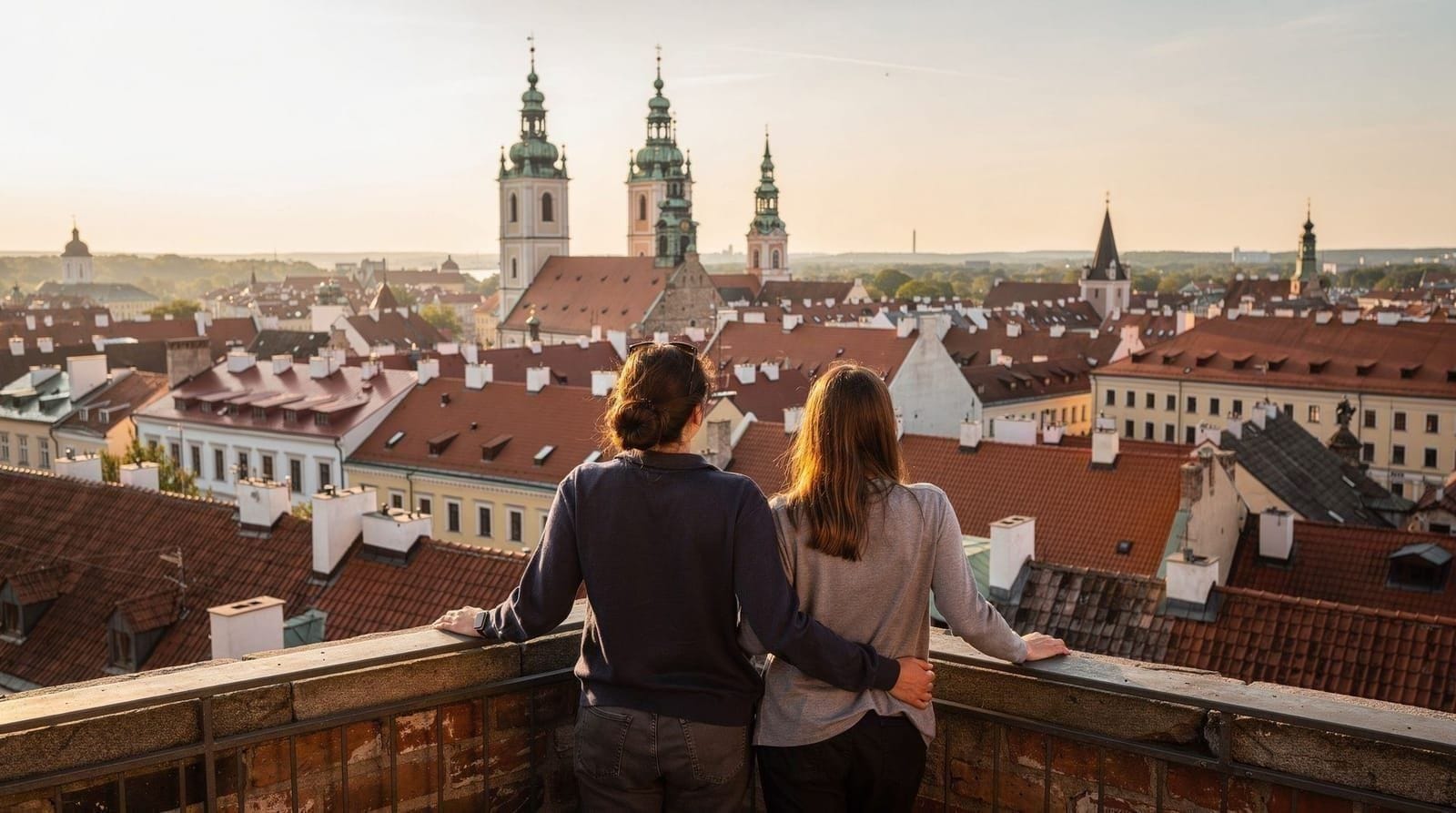
The hill is steep — about 15 minutes up the paved path from the Lower Castle courtyard — but the view over the old town at sunrise justifies the climb. Arrive by 5:30 am in summer and you’ll have the terrace almost entirely to yourself. The city faces roughly west-southwest, so morning light catches the church towers from the east in a way that afternoon light never replicates.
The tower itself (part of Gediminas Castle) photographs best from below, from the green hill slopes, rather than from the observation deck looking out. A 24–70 mm focal length works well for the hilltop-to-old-town compression shot.
Practical note: the cable car to the top operates from approximately 10 am. If you’re shooting at 5:30 am you’ll be walking. The path is lit but uneven.
The Gates of Dawn (Aušros Vartai) — a technically demanding shot
The Gates of Dawn at the southern end of Aušros Vartų Street are one of Vilnius’s most-recognized images, but they’re genuinely difficult to photograph well. The narrow street creates a corridor that channels strong midday shadows in summer; the gold Madonna chapel above the arch catches light best in late afternoon on southerly aspects.
The trick most visitor photos miss: don’t stand directly in front of the arch. Walk about 80 metres back up the street and use the width of the cobbled lane to frame the gate between the pastel buildings on either side. A short telephoto (85–135 mm) compresses the perspective nicely.
The chapel interior above the gate is accessible and genuinely beautiful — painted ceiling, silver ex-votos on the walls — but photography inside is not permitted during services.
Užupis: murals and the Republic’s constitution wall
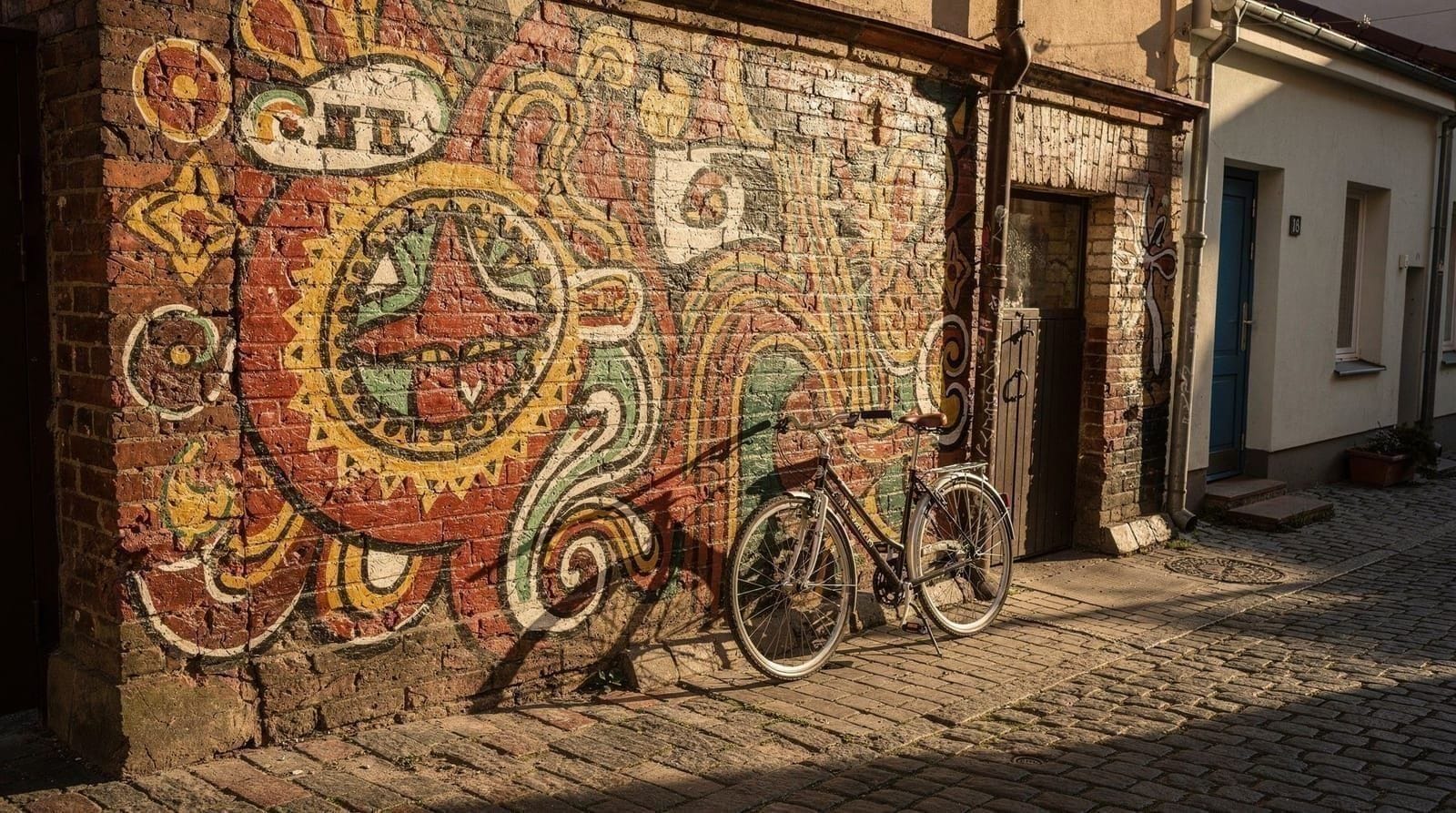
Užupis is the former slum that declared itself an independent republic in 1997. Today it’s Vilnius’s Montmartre — cafes, sculpture studios, and a critical mass of street art within a 10-minute walk from Pilies Street.
The Constitution of the Republic of Užupis is displayed on mirrored metal plaques at Paupio Street, translated into dozens of languages (Lithuanian, English, French, Hebrew, Arabic, Japanese). It’s a strong graphic element — reflective plaques, good lettering, interesting content (“Every dog has the right to be a dog”). Shoot it early before direct sunlight creates glare.
The best mural wall is on Užupio gatvė near the bridge: a large baroque-style angel has been the symbol of the district since 2002. The street-level graffiti changes regularly, which means your shot will be different from anyone else’s taken six months prior.
The bridge itself — with padlocks on the railing over the Vilnelė River — is a quieter, less-visited version of the Paris Seine bridges.
For the full story behind the murals and the district’s founding, the Why Užupis is Europe’s quirkiest neighbourhood piece is worth reading before you shoot — knowing the constitution’s backstory changes how you frame it.
St Anne’s Church from the Bernardine garden
St Anne’s Church is the most-photographed building in Vilnius. The red brick late-Gothic facade, built in the 15th century, is said to have so impressed Napoleon that he wanted to carry it back to Paris in his palm. The standard shot is from directly in front; the better shot is from the Bernardine garden (open until 10 pm in summer), which gives you the rare angle of the church rising above greenery.
Shoot in early morning or late afternoon to avoid direct overhead sun washing out the brick detail. The church interior is free to enter and genuinely plain compared to the exterior — the drama is all on the facade.
The Three Crosses Hill
The white crosses on Kalnai Park hill are visible from much of the old town and function as a directional landmark. The hilltop itself (a short, steep walk from Kosciuškos street) gives a different perspective on Vilnius than Gediminas Tower — you’re looking slightly south over the Vilnelė valley, with St Anne’s and the Bernardine Church in the middle distance.
This is the best spot for the classic “Vilnius skyline with church spires” shot. Best light: late afternoon in spring and autumn, when the low angle creates long shadows between the towers. Summer midday is flat. Winter mornings — when snow is on the rooftops — produce some of Vilnius’s most atmospheric images.
Bernardinai Cemetery
This is one for photographers who want something different. The 19th-century cemetery at the edge of Užupis is unusually beautiful: wrought-iron crosses, carved stone angels, mature trees, and an atmosphere entirely unlike the manicured Catholic cemeteries further west in Europe. It’s open, it’s free, and it’s photogenic in any season.
Notable graves include those of 19th-century Lithuanian artists and scholars. The cemetery is maintained but not over-maintained, which gives it authenticity that you can’t manufacture.
Soviet Vilnius: Lazdynai and the TV Tower
Most visitors confine themselves to the old town; the Soviet-era districts to the west and north offer a completely different visual register. Lazdynai, about 5 km from the centre by bus, is a 1970s modernist housing estate that won a Soviet architectural prize — rows of prefabricated tower blocks arranged on a hillside in a pattern that looks almost Brutalist-Romantic.
The Vilnius TV Tower in Šnipiškės (also 5 km northwest) is a 326-metre concrete structure that now has an observation deck and a revolving restaurant at 165 metres. The view from the top — available for around €10 — shows the city in a completely different way than any old-town rooftop. Bonus: the tower is the site of the January 1991 Soviet crackdown that killed 14 Lithuanian civilians defending it. A small memorial at the base is genuinely moving.
Vilnius University’s baroque courtyards
Less obvious than the tower or the churches, the sequence of interconnected courtyards inside Vilnius University is one of the best architecture shoots in the city and one of the least photographed by casual visitors, simply because it requires the small entry fee and a bit of wandering to find the best angles. The Grand Courtyard, with the observatory tower and its zodiac frieze, works well in soft midday light since it’s largely enclosed and shielded from harsh shadows. Skryba’s astronomical mural on the observatory wall is a good detail shot.
Trakai: the postcard shot with fewer crowds than you’d expect
A short train ride from Vilnius, Trakai has the single most photographed building in Lithuania: the red-brick island castle on Lake Galvė, reachable by a wooden footbridge. Morning light from the eastern shore, or a reflection shot from the water’s edge on a still day, both outperform the standard midday tourist angle. The Trakai day trip guide has the train times and logistics; budget a half-day if photography is the priority, since the light changes meaningfully between morning and afternoon.
Guided canoe tour around Trakai Castle Island — a genuinely different angle on the castleCathedral Square at dusk
Vilnius Cathedral Square is at its most photogenic at dusk when the bell tower, the neoclassical cathedral facade, and the equestrian statue of Gediminas are lit by warm artificial light before the sky goes fully dark. The “blue hour” — 15–25 minutes after sunset — is the sweet spot: sky still has colour, artificial lights are on, exposure times are manageable without long-exposure blur.
The square is often used for outdoor events, concerts, and public gatherings, particularly in summer. These can complicate or enrich a shot depending on your composition.
Practical considerations
- Best season for photography: May–September for light quantity and cafe terraces; November–December for Christmas market atmosphere and snow potential.
- Blue hour: Vilnius’s late summer sunsets (after 10 pm in June) mean blue hour is late — plan accordingly.
- Crowd management: Most tourist concentrations are on Pilies Street between 11 am and 4 pm. Shoot that area before 9 am or after 7 pm.
- Tripods: Permitted in all public outdoor spaces without permits. Museum interiors vary — ask on entry.
- Ethics in Užupis: The district is primarily residential. Photograph public art freely; use judgment with occupied courtyards and residents going about their day.
If you want to explore the city with a guide who knows these angles, a walking tour of Vilnius old town can introduce you to hidden courtyards and lesser-known viewpoints.
Walking tour of Vilnius old town highlightsBest light by season
| Season | Best for | Notes |
|---|---|---|
| Spring (Mar-May) | Skyline shots from Three Crosses | Long shadows, fresh greenery, fewer crowds |
| Summer (Jun-Aug) | Golden/blue hour at Cathedral Square | Sunset near 10pm in June; plan a late blue hour |
| Autumn (Sep-Nov) | Rasos cemetery, Bernardinai Garden | Warm colour, softer light, comfortable crowds |
| Winter (Dec-Feb) | Christmas market, snow-covered rooftops | Harsh, brief light; sunset around 3:30pm |
Frequently asked questions about photography in Vilnius
What is the single best photography spot in Vilnius?
The Three Crosses Hill in late afternoon light offers the most comprehensive skyline view, with St Anne’s Church and the Bernardine tower in the middle distance and a relatively unobstructed view of the old town.
Is drone photography allowed in Vilnius old town?
The old town is a UNESCO-adjacent zone with airspace restrictions. Drone flights over the city centre require permits from the Lithuanian Civil Aviation Administration. Don’t fly without checking current rules — fines are substantial.
What time does Gediminas Tower open?
The tower museum opens at 10 am. For sunrise photography, you’ll climb the external path (always accessible) and view from outside rather than from the museum terrace.
Are the Užupis murals permanent?
Some are, some aren’t. The angel statue and the Constitution plaques are permanent fixtures. Wall murals change over time as artists refresh them or building owners repaint surfaces.
Is Vilnius photogenic in winter?
Yes — snow on the baroque rooftops and the Christmas market lights create atmospheric images that summer crowds can’t provide. The light is harsh and brief (sunset around 3:30 pm in December), so planning is essential.
Is Trakai worth the trip just for photos?
Yes, for most photographers. The train takes about 35 minutes each way, and the castle-on-the-lake composition doesn’t exist anywhere else in Lithuania. Pair it with the Trakai day trip guide to combine photography with the rest of the visit.
Do I need a tripod for blue hour shots in Vilnius?
It helps for Cathedral Square and the TV Tower view, since exposure times lengthen as light drops, but tripods are permitted in all public outdoor spaces without a permit, so it’s a straightforward addition to your kit.