Vilnius with a baby: the practical guide
Travel with a baby requires a different planning framework than travel without one. The question is rarely “is this city beautiful?” — Vilnius is — but “is it practical when you’re pushing a pram, need a nappy change every few hours, and lose the afternoon to nap time?” This guide answers that question honestly.
| Where | Old Town, Cathedral Square, Bernardinai Garden, Vingis Park |
| Cost | Free attractions cover most of a day; Trakai adds around €10-17 |
| Time needed | Spread activities across 2 full days rather than one packed day |
| Getting there | Baby carrier for the Old Town cobblestones; stroller elsewhere |
| Best time | Any season; summer gives longer outdoor park time |
The stroller question: old town cobblestones
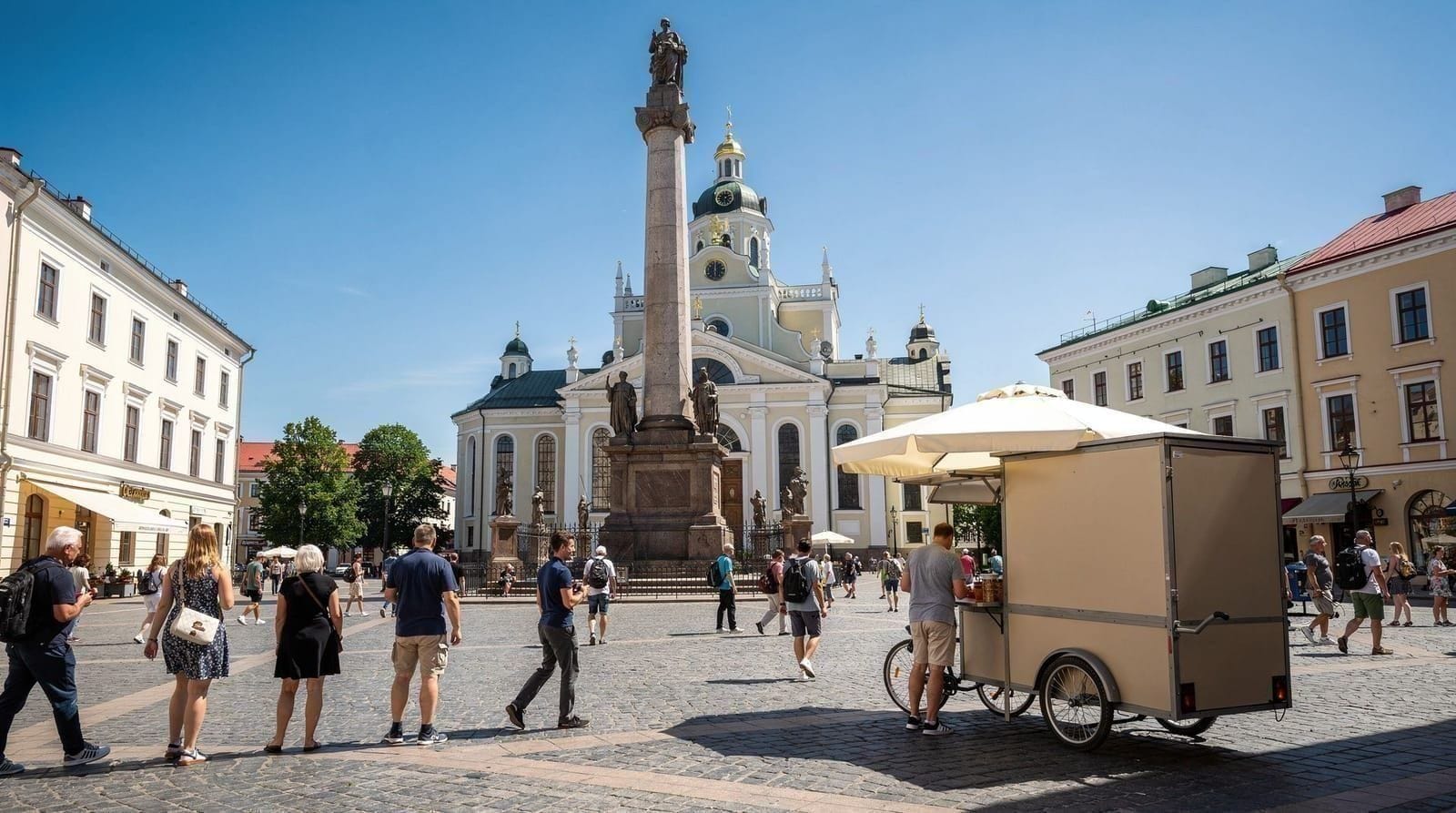
The main practical concern for visitors with prams or strollers is the old town’s cobblestones. Pilies Street, the main tourist artery, is cobbled with uneven stone paving. It is pushable with a good quality stroller (wide wheels, robust suspension) but uncomfortable over long distances. The Cathedral Square and Gedimino Prospektas (the main boulevard west of the square) have smoother surfaces.
The Bernardinai Garden — one of the best green spaces near the old town centre — has smooth gravel paths suitable for most strollers. Vingis Park (30 minutes’ walk or a bus ride west) has excellent tarmac paths and is the most pram-friendly large green space in the city.
Practical recommendation: a lightweight travel stroller with larger wheels is better than a compact umbrella stroller for Vilnius’s cobbled streets. A baby carrier (Ergo, Manduca, similar) handles the cobbled sections well and is probably the most practical choice for the old town core.
Nappy changing facilities
Vilnius city centre has fewer dedicated nappy changing stations than Western European capitals, but the situation is workable:
- Major shopping malls (Akropolis, Europa, Panorama — all outside the old town, accessible by bus) have proper nappy changing facilities.
- Larger restaurants in the old town generally have facilities if you ask.
- The larger hotel lobbies in the old town (Stikliai, Kempinski, Grand Café) have accessible facilities and are generally relaxed about parents using them with a purchase.
- Cathedral Square area public toilets (near the Bell Tower) have limited facilities but exist.
Nappies (sauskelnės in Lithuanian) are widely available in Maxima, Rimi, and Lidl supermarkets at Lithuanian prices — significantly cheaper than UK or Scandinavian equivalents. Pampers, Huggies, and own-brand options are all stocked.
Feeding
Lithuania is significantly more relaxed than some European countries about breastfeeding in public. You will not attract disapproving looks feeding a baby in a cafe, restaurant, or public space. Most cafes will provide a glass of water without being asked.
Formula: available in pharmacies (vaistinė) and supermarkets. Standard European brands (Aptamil, Nutrilon, Hipp) are available. If you use a specific specialist formula, bring adequate supply from home.
Baby food jars: widely available in supermarkets — Lithuanian brands (Mamos Receptas) and standard European brands. Fresh purée-making is straightforward with Lithuania’s good supermarket produce.
Restaurants with babies: Vilnius restaurants are generally relaxed about children — high chairs (mamos kėdutė) are available on request at most family-friendly restaurants. The market cafeterias and canteens are the most practical for feeding while managing a baby: casual, quick, cheap, and no expectation of lingering.
Getting around with a baby
- City buses and trolleybuses: accessible (kneeling function on most newer routes) but can be crowded. A baby carrier is more practical than a stroller for public transport.
- Bolt taxis: widely available via app, relatively inexpensive (€4–7 for short rides). Car seats are not standard — if your child requires one, note this in the app (some drivers offer them) or use a rental car.
- Car rental: Useful if you’re doing day trips to Trakai or Kaunas. Major rental companies at Vilnius Airport (VNO). Car seats available at extra cost with advance booking.
The getting around Vilnius guide covers transport options in more depth.
What to do with a baby in Vilnius
Not every Vilnius attraction works well with very young children — the KGB Museum, for example, has heavy content that feels inappropriate alongside a baby. But several attractions are genuinely practical and even enjoyable:
Cathedral Square: Big, flat (relatively), open space. Babies respond to the scale and the light. Good for letting a toddler walk off energy without getting lost.
Bernardinai Garden: Best park in the centre. Paths, trees, ducks in the Vilnelė. A standard choice for local families on weekend mornings.
Gediminas Hill: The hill path is steep but the view is worth it. A baby carrier is much better than a stroller for the ascent. The summit is open-air and toddler-friendly.
Vingis Park: The biggest park, with a large children’s play area, easy paths, and space for picnics. Take the bus (lines 3, 7, or the minibus routes from the centre) rather than walking.
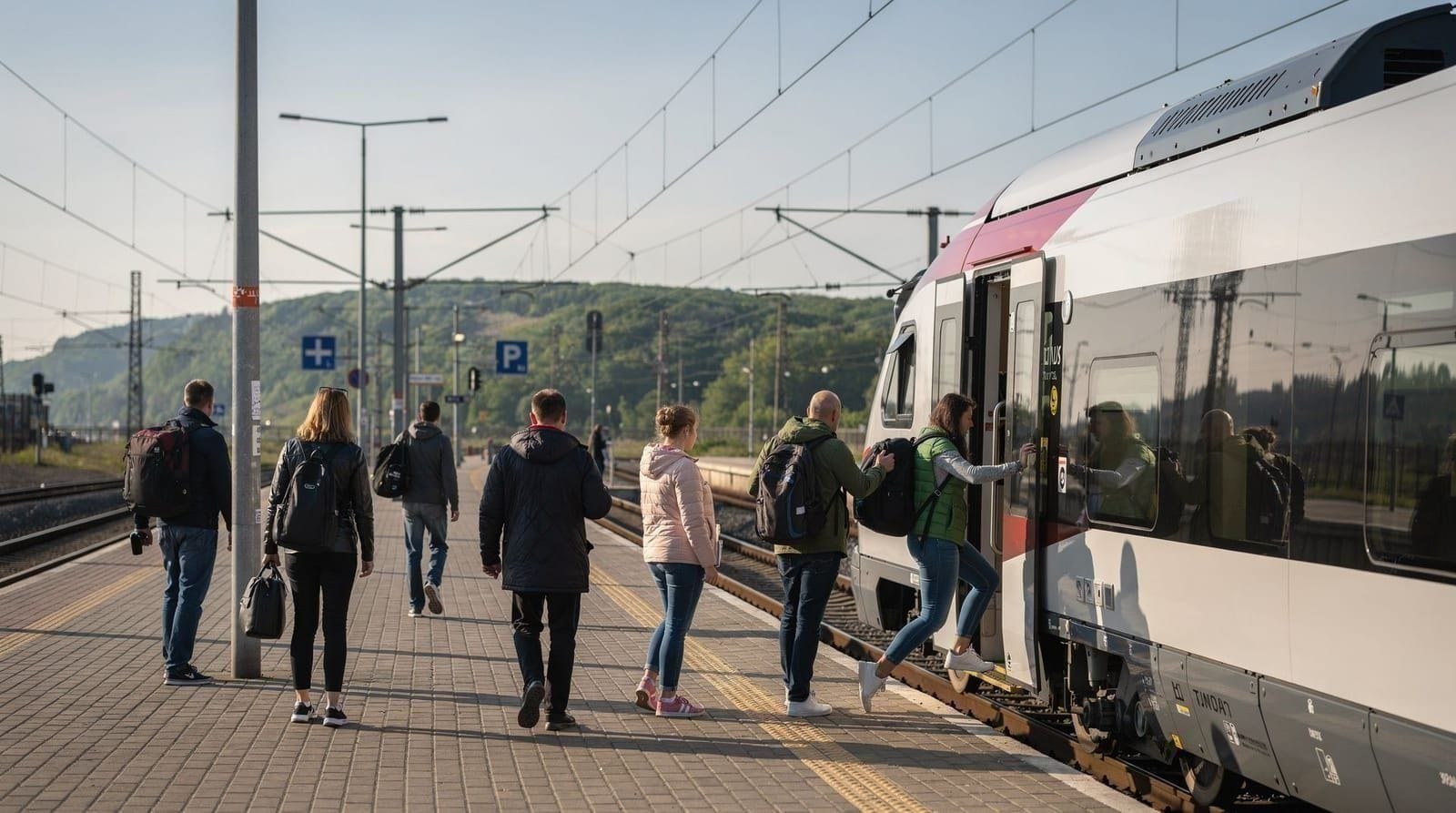
Trakai: The train journey is fun for older babies and toddlers — they respond to movement and views. The castle grounds have open spaces. The lake paths near the castle are stroller-accessible on the main route (smoother than the old town). A Trakai day trip at a slow pace, with built-in breaks, works well with children under 3. If you’d rather not manage train timetables and stroller transfers with a baby, a private car with a flexible pace removes that friction entirely.
Private half-day Trakai tour with flexible, family-friendly pacingThe National Museum of Lithuania (Cathedral Square): ground floor is accessible and has artefact displays that older babies and toddlers find visually engaging. Not the most sophisticated reason to visit, but practically convenient.
Health and wellness facilities
Lithuania has a reasonable health system and Vilnius specifically has good paediatric facilities. For non-emergency concerns:
Pharmacies (vaistinė): Open long hours, often with English-speaking staff, and well-stocked with European-standard baby products. Green cross signs mark pharmacies across the city. The pharmacy at Gedimino Prospektas 27 is centrally located and open until 9 pm on weekdays.
GP visits: The private Medinos klinika (Verkių g. 34) and Northway medical centre have English-speaking doctors and can see children without pre-registration. Walk-in costs approximately €30–50 for a consultation. Bring your EHIC card (if EU national) or travel insurance documentation.
Nearest hospital with paediatric emergency: Santaros Klinikos (Santariškių g. 2, about 5 km north of the city centre) is the main university hospital with a 24-hour paediatric emergency department.
Local families and Lithuanian parenting culture
One pleasant observation for visitors with babies: Lithuania is genuinely welcoming of families in public spaces. Lithuanian families eat in restaurants with young children; they’re in parks and cafes on weekend mornings; the general assumption is that children belong in public life rather than being hidden away.
This is partly cultural — Lithuania has a traditional emphasis on family and the Orthodox and Catholic traditions both centre family life — and partly practical, reflecting the country’s response to a demographic birth rate that the government has actively tried to address through family-friendly policies.
What this means in practice: you will not feel out of place with a baby in a Vilnius café or restaurant. You will be welcomed, helped with chairs and space, and treated as a normal customer rather than a disruption.
The family day trips from Vilnius guide and Vilnius with kids guide cover travel with older children (3+) in more depth.
Stroller vs carrier: which area needs which
| Area | Best option | Why |
|---|---|---|
| Old Town core (Pilies, Aušros Vartų) | Carrier | Cobblestones are hard on wheels and uncomfortable over distance |
| Cathedral Square, Gedimino Prospektas | Stroller | Smooth, wide, flat surfaces |
| Bernardinai Garden | Stroller | Smooth gravel paths |
| Vingis Park | Stroller | Tarmac paths, most pram-friendly large space in the city |
| Trakai castle grounds | Carrier for the interior, stroller on the main lake path | Uneven surfaces inside the castle itself |
| Public buses/trolleybuses | Carrier | Easier in crowded conditions than folding and stowing a stroller |
Flying to Vilnius with a baby
Vilnius Airport (VNO) is small and manageable — a genuine advantage over larger hub airports when travelling with a baby. Security lines are generally short outside peak summer mornings, and most airlines allow a stroller to be gate-checked and returned planeside on arrival. The airport has basic baby-changing facilities near the main concourse. If your flight lands late, Bolt taxis run reliably at all hours for the roughly 20-minute ride into the centre; pre-book a car seat with the app if you need one, since standard Bolt cars don’t carry them.
What to skip
- Walking tours: the pace and cobblestones make group walking tours impractical with a stroller and very tiring with a carrier.
- The KGB Museum (Museum of Occupations): the content is important and the space is enclosed and sometimes distressing even for adults.
- Long days: Vilnius rewards spreading across two full days rather than trying to cover everything in one push with a baby.
Accommodation considerations
Hotels in the old town are convenient but cobblestones mean pram trips are tiring. The Naujamiestis (New Town) district — around Gedimino Prospektas — has smoother streets, easy supermarket access, and is 15 minutes’ walk from the old town.
Self-catering apartments (via Booking.com or Airbnb) with kitchen facilities are often the most practical for families — you can prepare food, store nappies and formula, and do laundry. These are widely available in Vilnius at reasonable prices.
Medical
Lithuanian pharmacies (vaistinė, green cross sign) are well-stocked and pharmacists often speak English. Basic baby medications (paracetamol syrup, teething gels, rehydration salts) are available without prescription. The nearest 24-hour pharmacy to the old town is on Gedimino Prospektas.
For genuine medical concerns, Santaros Klinikos (the university hospital) and the Medinos private clinic have English-speaking staff and good paediatric services.
Frequently asked questions about Vilnius with a baby
Is the Vilnius old town stroller-friendly?
Partially — the main streets have cobblestones that require a robust stroller. The Cathedral Square and Gedimino Prospektas have smoother surfaces. A baby carrier is more practical than a stroller for the core old town.
Are there baby changing facilities in Vilnius?
Limited in the old town itself; better in shopping malls and larger hotels. Most restaurants will accommodate requests if you ask.
Can you breastfeed in public in Lithuania?
Yes — Lithuanian attitudes to breastfeeding in public are relaxed. You will not attract unwanted attention in cafes, restaurants, or public spaces.
Is Trakai accessible with a stroller?
The main path from the train station to the castle along the lake is manageable with a good stroller. The castle interior has uneven surfaces that are more difficult. A baby carrier gives more flexibility.
Where can I buy nappies in Vilnius?
Maxima, Rimi, and Lidl supermarkets all stock major brands (Pampers, Huggies) at prices 20–30% below UK or Scandinavian equivalents.
Is Vilnius Airport easy to navigate with a baby?
Yes — it’s a small, manageable airport with generally short security lines outside peak summer mornings, gate-checking for strollers, and basic baby-changing facilities near the main concourse.
Do I need a car seat for taxis in Vilnius?
Standard Bolt or taxi vehicles don’t carry car seats by default. If your child needs one, note it in the app when booking (some drivers offer them) or arrange a rental car with a car seat in advance for day trips.