Lithuanian Christmas traditions — what actually happens and when
Christmas in Lithuania is not quite like Christmas anywhere else in Europe, even if some of the exterior trappings — markets, lights, decorated trees — look familiar. The core of Lithuanian Christmas is Kūčios, the Christmas Eve meal, and it has roots that predate Christianity in Lithuania by several centuries. Lithuania was the last pagan country in Europe to be formally Christianised (in 1387), and the old beliefs left traces in the celebration that persist today.
Understanding this shapes how you experience Vilnius in December — whether you’re visiting or just curious about what’s happening in the homes behind the Old Town facades.
| When | Kūčios on 24 December; market late Nov–early Jan |
| Where | Cathedral Square (market); homes/restaurants (Kūčios) |
| Cost | Kūčios set menu €30-50/person; market snacks €2-5 |
| Book ahead | Yes — restaurant Kūčios menus and December hotels |
| Best for visitors | The market and a restaurant Kūčios dinner |
Kūčios: the twelve dishes
Kūčios (pronounced something like “koo-trios”) is Christmas Eve dinner, and it follows rules. Traditionally, there are twelve dishes, one for each apostle or — in the older reading — one for each month of the year. All twelve must be meatless: this is a fast day in the Catholic tradition, but the meatless rule also connects to pre-Christian practices around winter solstice.
The twelve dishes vary by family, region, and generation, but the canonical list includes:
Herring: The most important dish — pickled herring in onions, in cream, or simply in vinegar. You’ll find it at virtually every Lithuanian table.
Kūčiukai: Small dry biscuits made with poppy seeds, eaten with poppy seed milk. These are the most distinctively Kūčios food — you don’t eat them at other times of year. The taste is mild and slightly sweet; the significance is enormous.
Poppy seed milk (aguonų pienas): Made by soaking and grinding poppy seeds with water and a little honey. Kūčiukai are dipped into this. It sounds odd; it tastes gentle and slightly floral.
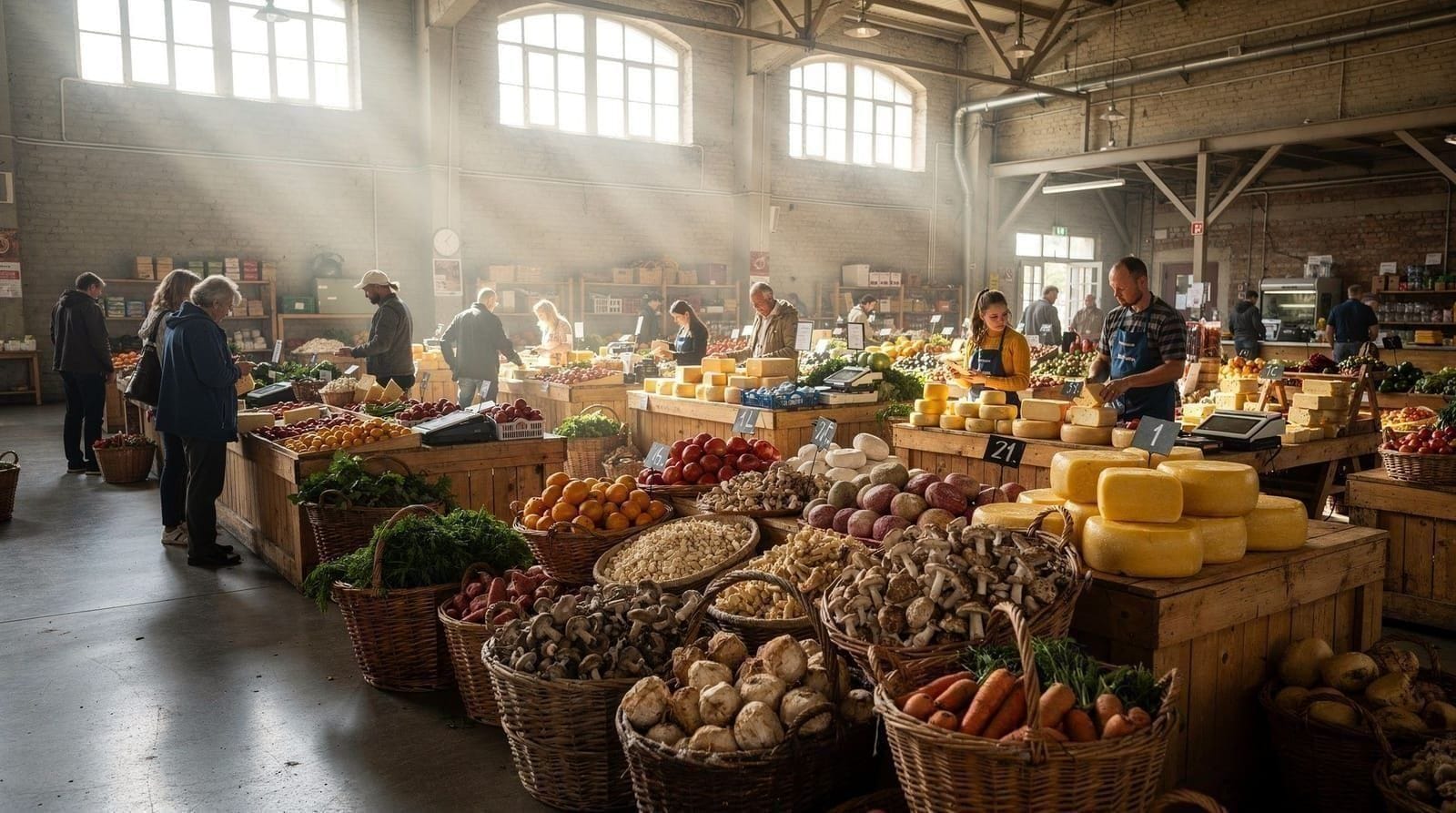
Sauerkraut and mushroom dishes: Mushrooms foraged in Lithuanian forests (porcini, chanterelles) are a major autumn ingredient, and preserved mushrooms appear at Kūčios in stews, fried preparations, and sauerkraut mixtures.
Fish dishes: Carp is traditional in some regions (particularly among communities with Polish-Lithuanian heritage); smelt, pike, and cod appear in others.
Cranberry kissel: A thick, sweet-tart cranberry pudding, sometimes served as a dessert course.
Beetroot dishes: Roasted or pickled beet salads appear in various forms.
Peas and beans: Simple preparations, often with oil and onion.
Boiled potatoes: With butter, nothing elaborate.
Porridge: Simple grain porridge — buckwheat or millet — representing older, plainer winter eating.
The exact combination matters less than the number twelve and the meatless rule. Modern families often adapt: some serve fewer dishes, some add family favourites. The principle is maintained even when the exact dishes change.
The straw under the tablecloth
Before the meal begins, straw is placed under the tablecloth. This is one of the most distinctly pre-Christian elements of Kūčios: the straw connects the meal to the stable of the Nativity in Christian interpretation, but in the older reading it connects the family to the earth, to the cycle of grain, and to the spirits of ancestors who are symbolically welcomed back to the table on this night.
A place is sometimes set for absent family members — those who have died during the year, or family members who cannot be present. The first spoonful of each dish is set aside for them.
Children sometimes pull straws from under the tablecloth and interpret the length as an omen: a long straw means good fortune in the coming year.
Hay and straw in the corners
In some families and in rural Lithuania more broadly, hay bundles are placed in the corners of the main room for the twelve days of Christmas. This is another pre-Christian survival — the house spirits that inhabit corners were acknowledged and appeased at the turning of the year. The combination with the Christian calendar is typically Lithuanian: the traditions coexist without apparent contradiction.
The Vilnius Christmas market
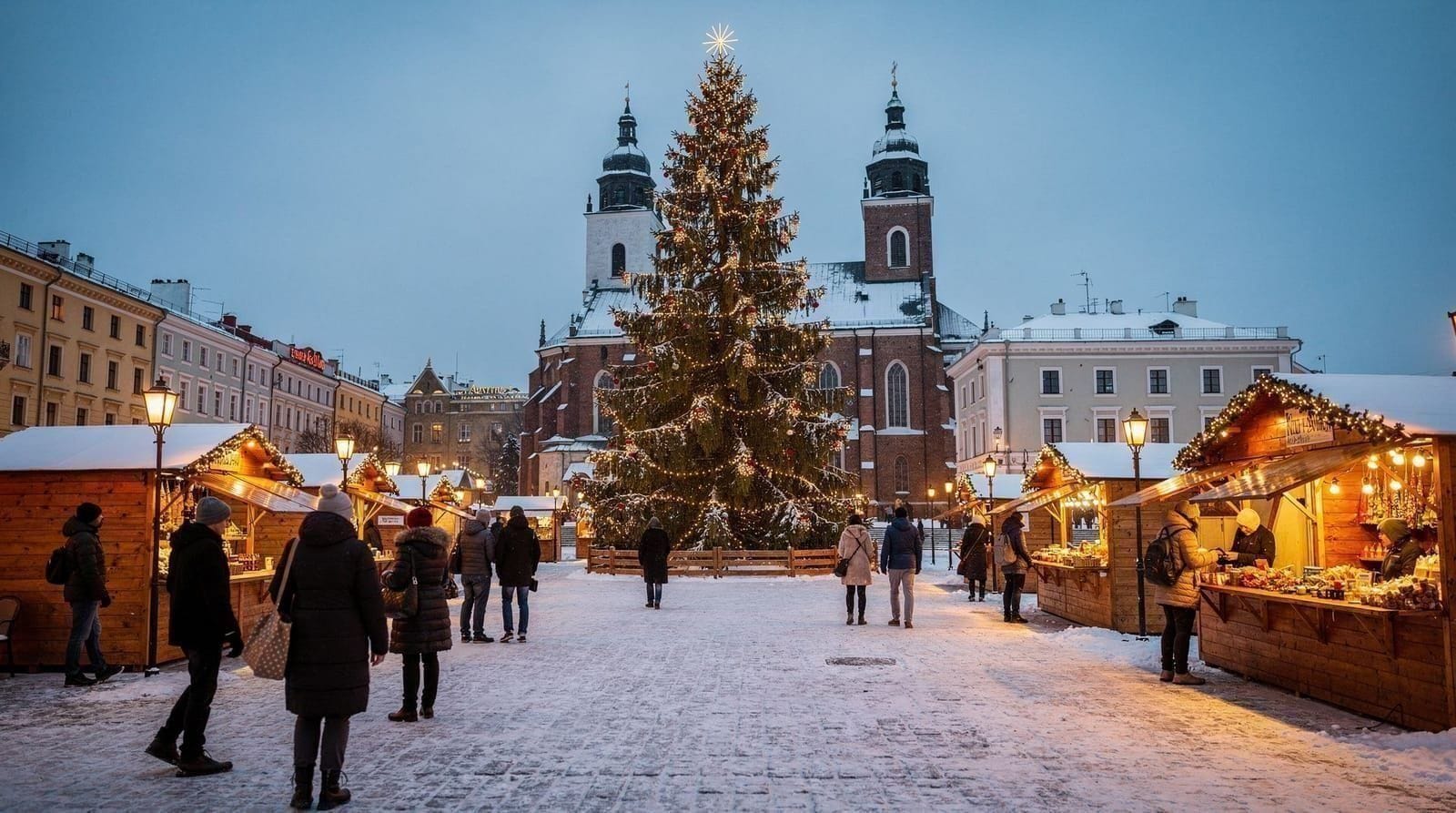
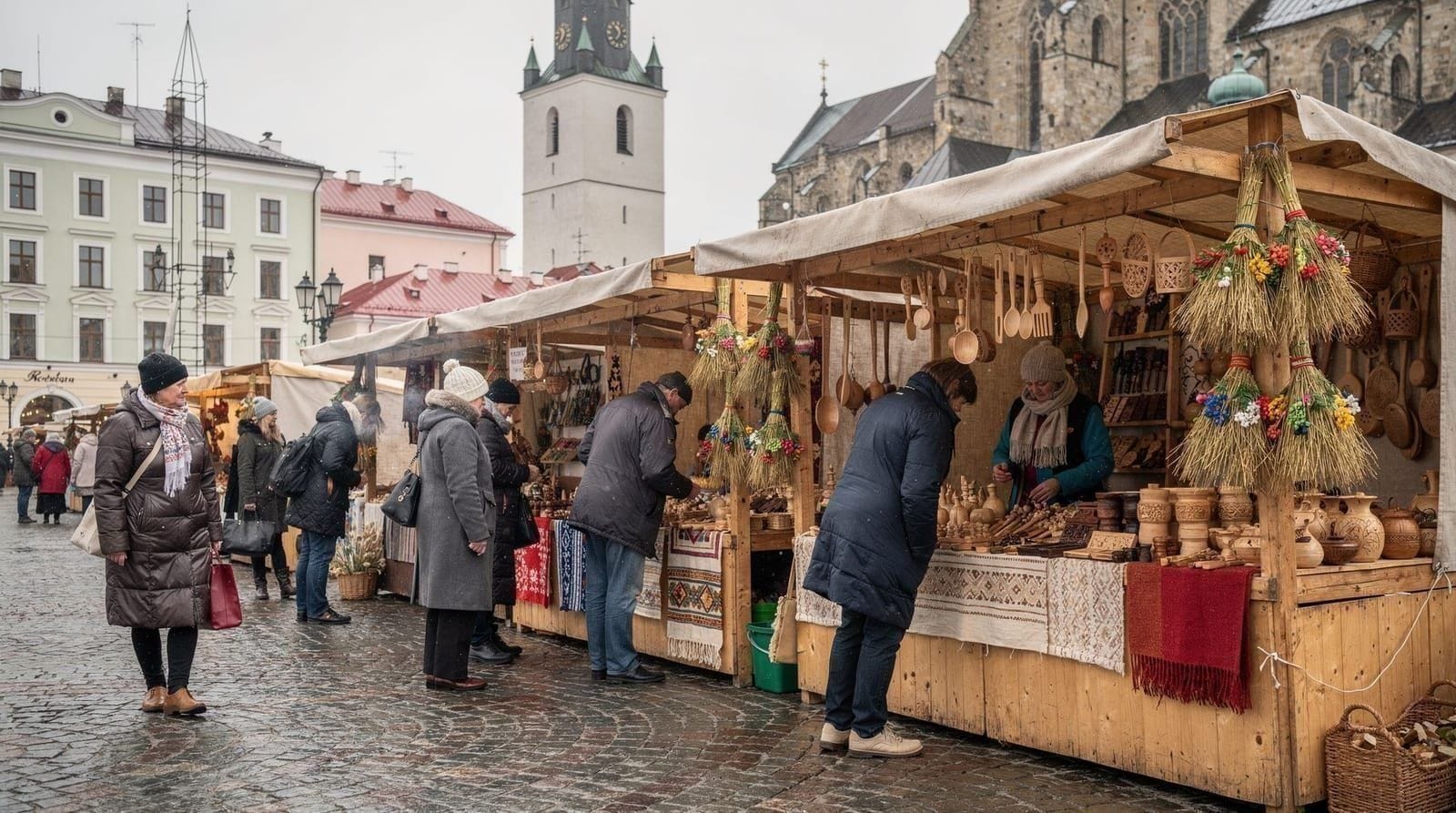
The Vilnius Christmas Market on Cathedral Square is one of the more genuine in Eastern Europe — smaller than Prague or Budapest, but less commercial. It runs from late November (usually the last weekend) to early January, with a wooden village of stalls selling ceramics, knitwear, wooden toys, amber, and — crucially — food.
Žagarėliai (deep-fried dough ribbons dusted with powdered sugar) are the essential market food, sold for around €2-3 a bag. Hot mulled wine (karštas vynas): €3-4. Kibinai, the Karaim pastry from Trakai, sometimes appears at market stalls. The central Christmas tree is enormous and takes three weeks to erect.
One thing to know: the market draws crowds on December weekends, and accommodation in Vilnius increases significantly in price during this period. Book six to eight weeks in advance for December stays. See Vilnius in winter for the full logistics.
A guided tour of the Vilnius Christmas market with traditional food tastings and local holiday contextKūčios for visitors
If you’re in Vilnius for Christmas Eve, several restaurants offer traditional Kūčios dinners — usually a set menu with the twelve dishes, appropriate to the date. Šturmų namai (various locations), Lokys (Stiklių g. 8), and Etno Dvaras (Pilies g. 16) are among the places that have historically offered Kūčios menus; check current bookings well in advance. Prices for a full Kūčios set menu run €30-50 per person.
The more interesting route is an invitation to a Lithuanian household — if you have Lithuanian friends or connections, a Kūčios invitation is something to accept without hesitation.
After Kūčios: Christmas Day and the twelve days
Christmas Day (Kalėdos) is a quieter, more private celebration — families gather, sleep, eat leftovers. The twelve days of Christmas (Kalėdiniai) run to 6 January (Epiphany). During this period, traditional songs called Kalėdinės dainos are still sung in some communities.
St Casimir’s Day (Kazimiero Šventė), in early March, brings the Kaziukas Fair to Vilnius — the biggest craft market of the year and a useful alternative if you’re interested in Lithuanian crafts but can’t make the December market. The Kaziukas fair guide has full details.
Joninės: the midsummer counterpart
Worth knowing: Lithuanian midsummer (Joninės, 24 June) is arguably more pagan than Christmas and is celebrated with considerable enthusiasm — bonfires, flower crowns, fern-searching at midnight (the fern doesn’t flower, but finding one is said to bring luck). If you’re visiting in summer, Joninės events happen across the country and in Vilnius parks. See Vilnius in summer for context.
What to eat beyond the twelve dishes
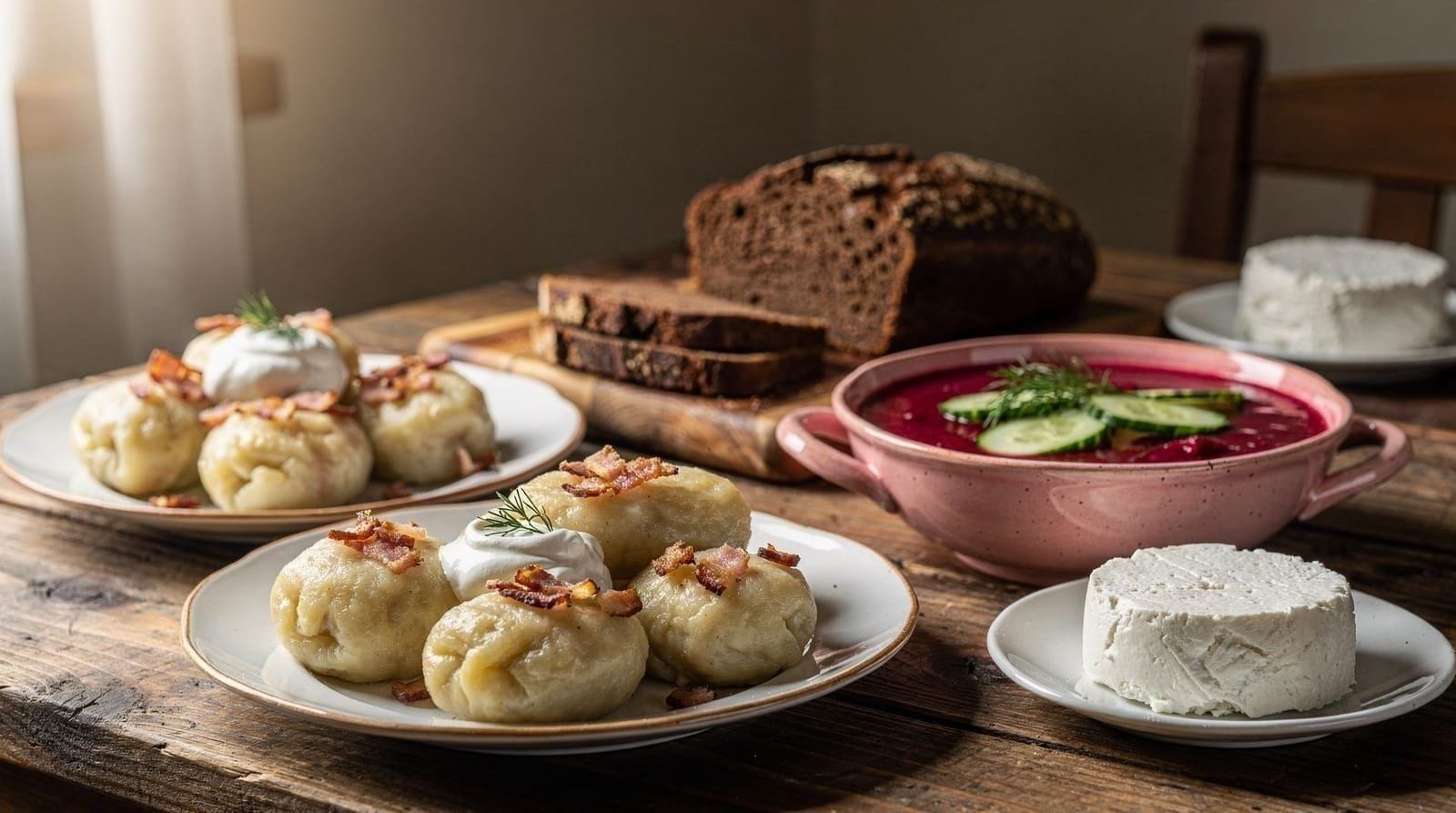
The Kūčios table is the centrepiece, but Christmas-season food in Vilnius extends well beyond it. Restaurants across the city put seasonal menus featuring game, mushroom dishes, and mulled drinks through December, and cepelinai — Lithuania’s everyday national dish — remains available year-round at places like Forto Dvaras if the twelve-dish formality isn’t what you’re after. The Vilnius food guide covers the wider restaurant scene, and the cepelinai and Lithuanian dishes guide is worth reading before a December trip, since several of the Kūčios dishes (particularly the mushroom and beetroot preparations) reappear on everyday menus in simplified form throughout winter.
December in Vilnius: what to expect logistically
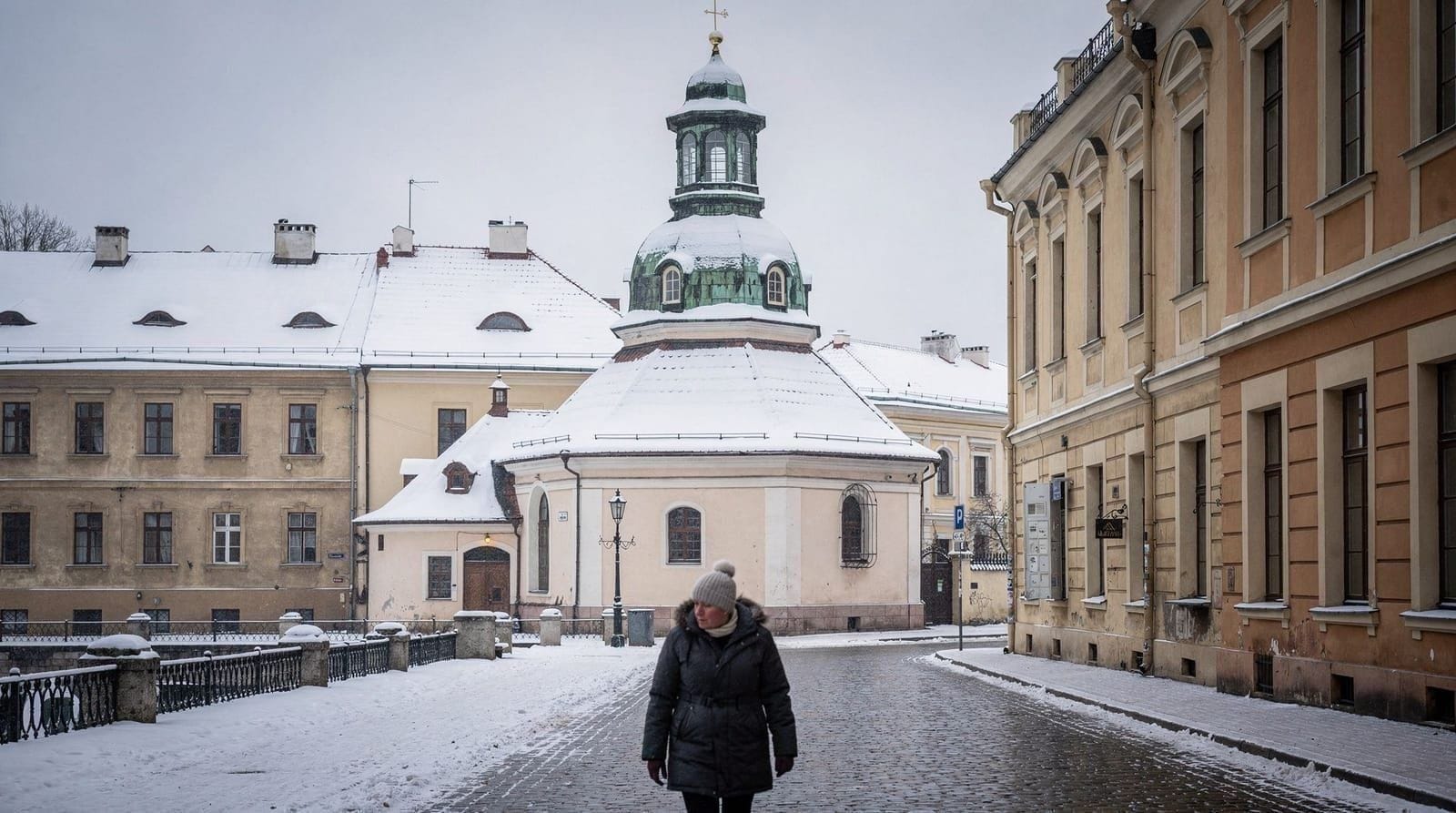
December in Vilnius means short days (sunset around 4pm), frequently overcast skies, and temperatures typically between -5°C and 3°C, with occasional snow that rarely settles for long in the city centre itself. The Christmas market and the general festive atmosphere compensate considerably for the weather — the Old Town is at its most atmospheric after dark, with the market lights and the illuminated Cathedral Square. Layered clothing, waterproof boots (the cobblestones get slick), and a plan for warming up between outdoor stretches (a café, a mulled wine stall) make the season considerably more enjoyable than dressing for a milder Western European December.
Frequently asked questions about Lithuanian Christmas traditions
Can visitors attend Kūčios celebrations?
Kūčios is primarily a family tradition held at home. The best way for visitors to experience it is through a restaurant Kūčios dinner (book well ahead) or through a connection with a Lithuanian family. Some cultural centres in Vilnius organise public Kūčios events during December.
What are the dates of the Vilnius Christmas market in 2026?
Market dates vary slightly year to year. Typically, the market opens the last Saturday or Sunday of November and runs until 6 or 7 January. Check the Vilnius Tourism official website closer to your travel dates for exact opening and closing.
Is Christmas or New Year busier in Vilnius?
Christmas (25-26 December) is quieter — most Lithuanians are at home with family. New Year’s Eve is bigger in terms of public celebration, with fireworks over the Cathedral and events at various venues. Both periods mean elevated hotel prices.
What are Kūčiukai, and can I buy them?
Kūčiukai are small dry poppy-seed biscuits eaten only at Kūčios. You can buy them at Maxima and Rimi supermarkets from late November, packaged in bags. They make an unusual edible souvenir and are easy to transport.
Do Lithuanians celebrate Christmas on the 25th or 24th?
The focus is definitively Christmas Eve (24 December) — Kūčios is the main event. Christmas Day (25 December) is a national holiday and is quieter. Some families attend midnight Mass after Kūčios; others do not.
How cold is Vilnius in December?
Typically between -5°C and 3°C, with short daylight hours (sunset around 4pm) and frequent cloud cover. Snow is common but doesn’t always settle for long in the city centre. Layered, waterproof clothing is essential, particularly for the Old Town’s slippery cobblestones.
Is there a Christmas market outside Vilnius worth visiting?
Kaunas runs its own Christmas market, generally smaller and less visited than Vilnius’s. For most travellers with limited time, the Vilnius Christmas Market on Cathedral Square remains the primary destination.