Vilnius Christmas market — guide and practical tips
Vilnius: Christmas market holiday traditions tour
Duration: 3 hours
When does the Vilnius Christmas market run?
The Vilnius Christmas market runs on Cathedral Square from late November to early January — typically opening in the last week of November and closing a few days after New Year. Exact dates vary each year. Check vilnius-events.lt or the Vilnius city tourism portal for current season dates before you travel.
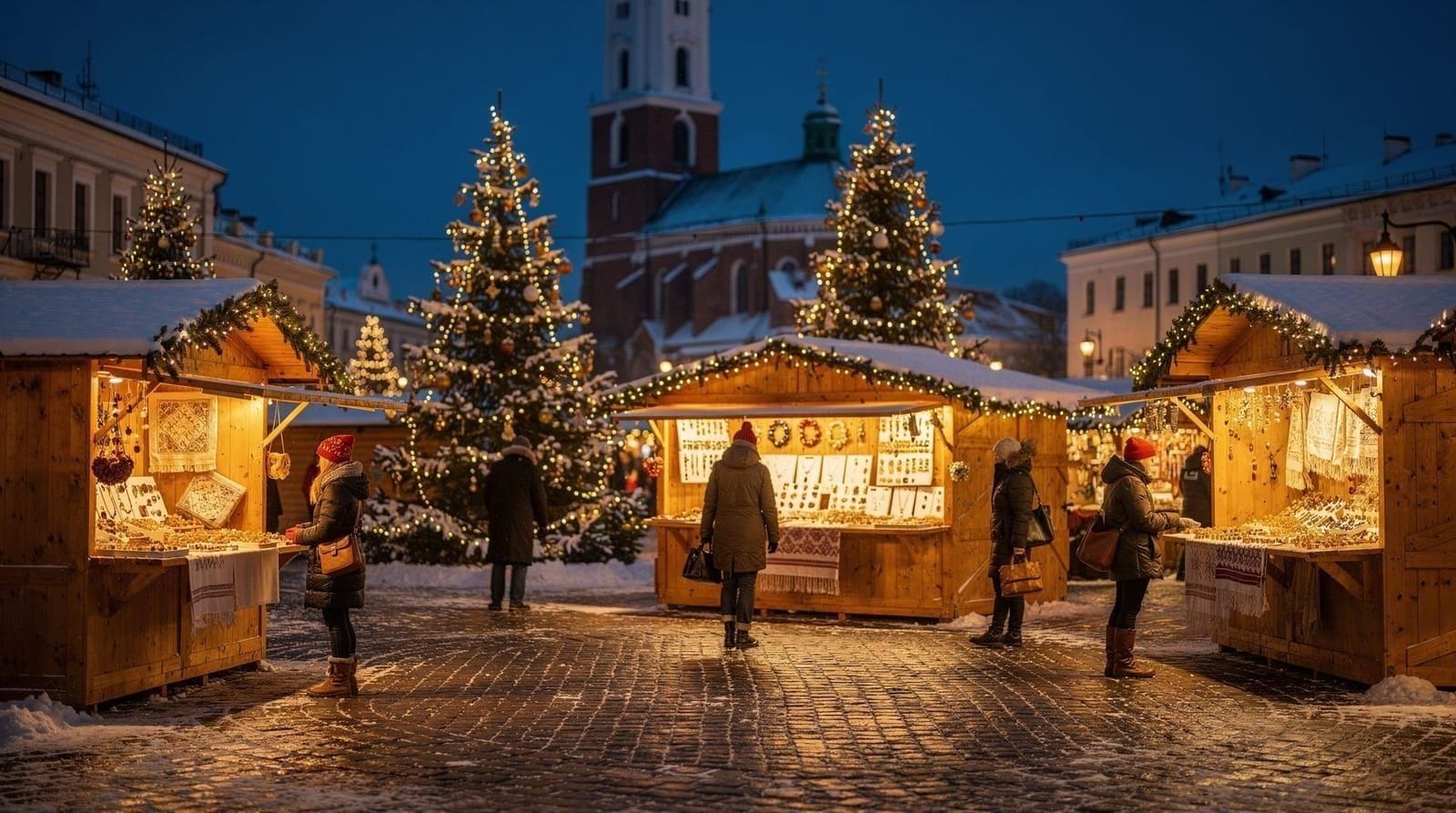
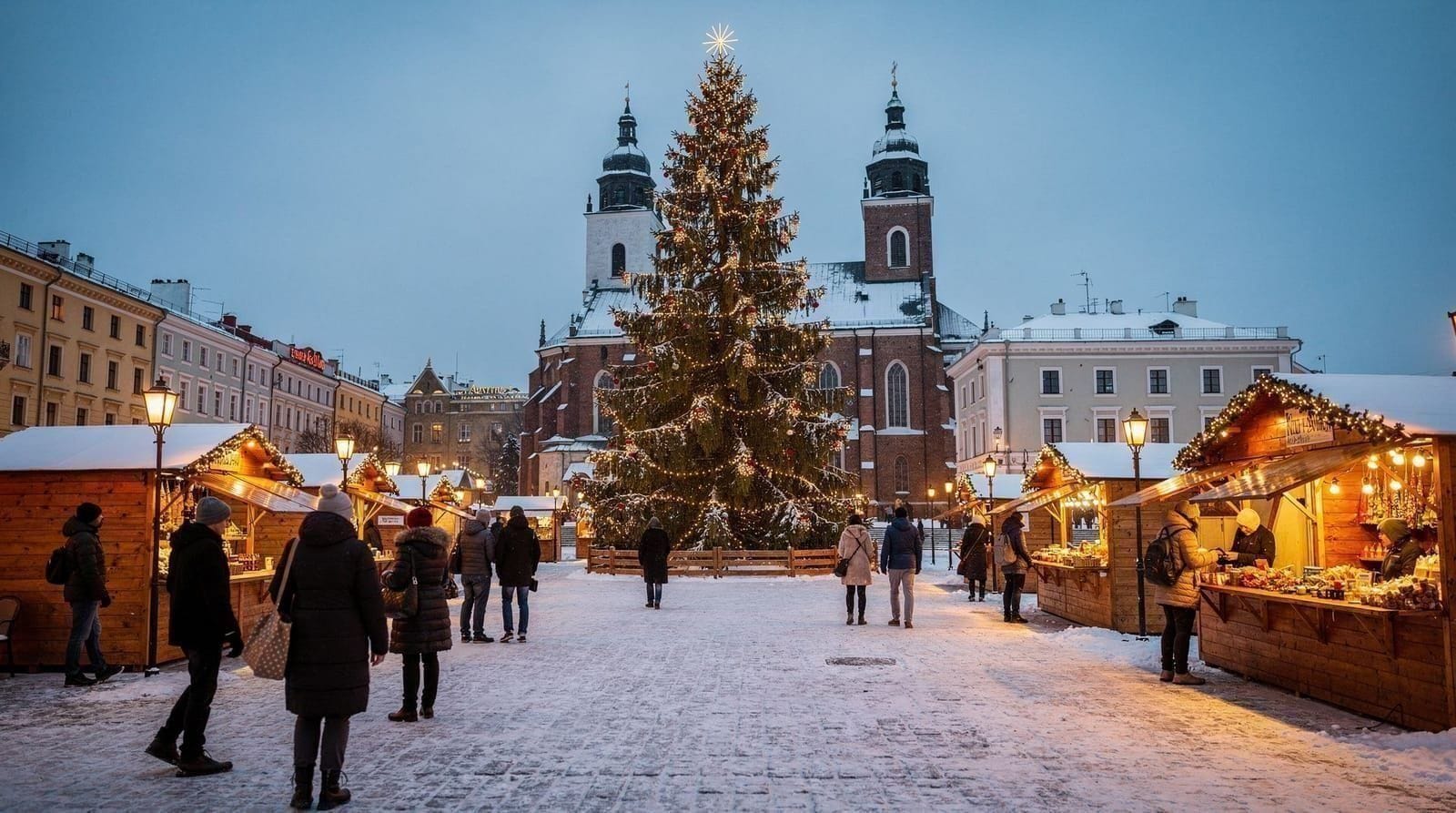
The Vilnius Christmas market occupies Cathedral Square — one of the most dramatic public spaces in the Baltic states, framed by the neoclassical cathedral with its bell tower, the eastern flank of the Old Town, and the forested slopes leading up to Gediminas Tower. Into this setting, the city erects a large Christmas tree and surrounding market stalls in late November, and it remains one of the most atmospheric versions of this Central European tradition in the region.
It is not the biggest Christmas market in Europe, or the most elaborate. It is, however, genuine — run by local producers, craftspeople, and food vendors rather than imported generic Christmas merchandise — and the setting makes it memorable even if you have seen markets in Vienna or Cologne.
| Where | Cathedral Square, with a secondary cluster at Town Hall Square |
| Cost | Free entry; mulled wine and food from around €2–5 per item |
| Time needed | 2–3 hours to browse fully, more if combined with sightseeing |
| Getting there | 10-minute walk from anywhere in the Old Town, no car needed |
| Best time | After dark (from around 4 pm in December) for the best atmosphere |
The market location
The main market runs around and below the Christmas tree in Cathedral Square, with stalls arranged in rows extending towards Gedimino prospektas. A secondary cluster of stalls sometimes occupies Town Hall Square (Rotušės aikštė) in the Old Town. Both are within 10 minutes’ walk of each other.
Cathedral Square itself is imposing at Christmas: the cathedral’s white portico and the 57-metre bell tower are floodlit, the bells mark the hours, and the centrepiece Christmas tree — usually 20+ metres tall — is elaborately decorated each year by a different designer or theme.
Getting there: the square is in the heart of the Old Town, 10 minutes’ walk from any accommodation in the Old Town. No car needed. Nearest bus/trolleybus stops are on Gedimino prospektas at the top of the square.
What to eat and drink
Karštasis vynas (mulled wine): The standard warming drink, typically €3–5 per cup, made with Lithuanian or imported red wine, spices, and orange. Quality varies between stalls — some use cheap base wine, others are considerably better. Taste before committing to a large cup.
Midus (mead): Warm Lithuanian mead (honey wine) is the more interesting option and more distinctively local. Look for stalls with Stakliškės or Suktinis labels — these are genuine Lithuanian mead producers.
Gingerbread (meduoliai): Lithuanian gingerbread is slightly different from Central European versions — darker, denser, often decorated with white icing patterns. Sold by the piece (€0.80–2) or in decorative boxes (€5–15). Excellent as a gift.
Šakotis (tree cake): The tall, branch-covered cake cooked on a rotating spit is Lithuania’s most distinctive baked good. Market vendors sell it by the slice (€2–4) or whole (€20–40). Sweet and rich, not to everyone’s taste, but distinctively Lithuanian.
Cepelinai: Some stalls sell the large potato dumplings, but they are better eaten in a proper restaurant. Market cepelinai tend to be pre-made and reheated.
Keptiniai (fried pastries): Simple fried pastry sticks dusted with sugar — essentially Lithuanian churros. Good hot, mediocre when cold.
Hot apple juice and berry drinks: For non-alcohol-drinkers and children, hot sweetened apple juice (obuolių sula) and red berry punch (uogų gėrimas) are available at most stalls.
What to buy
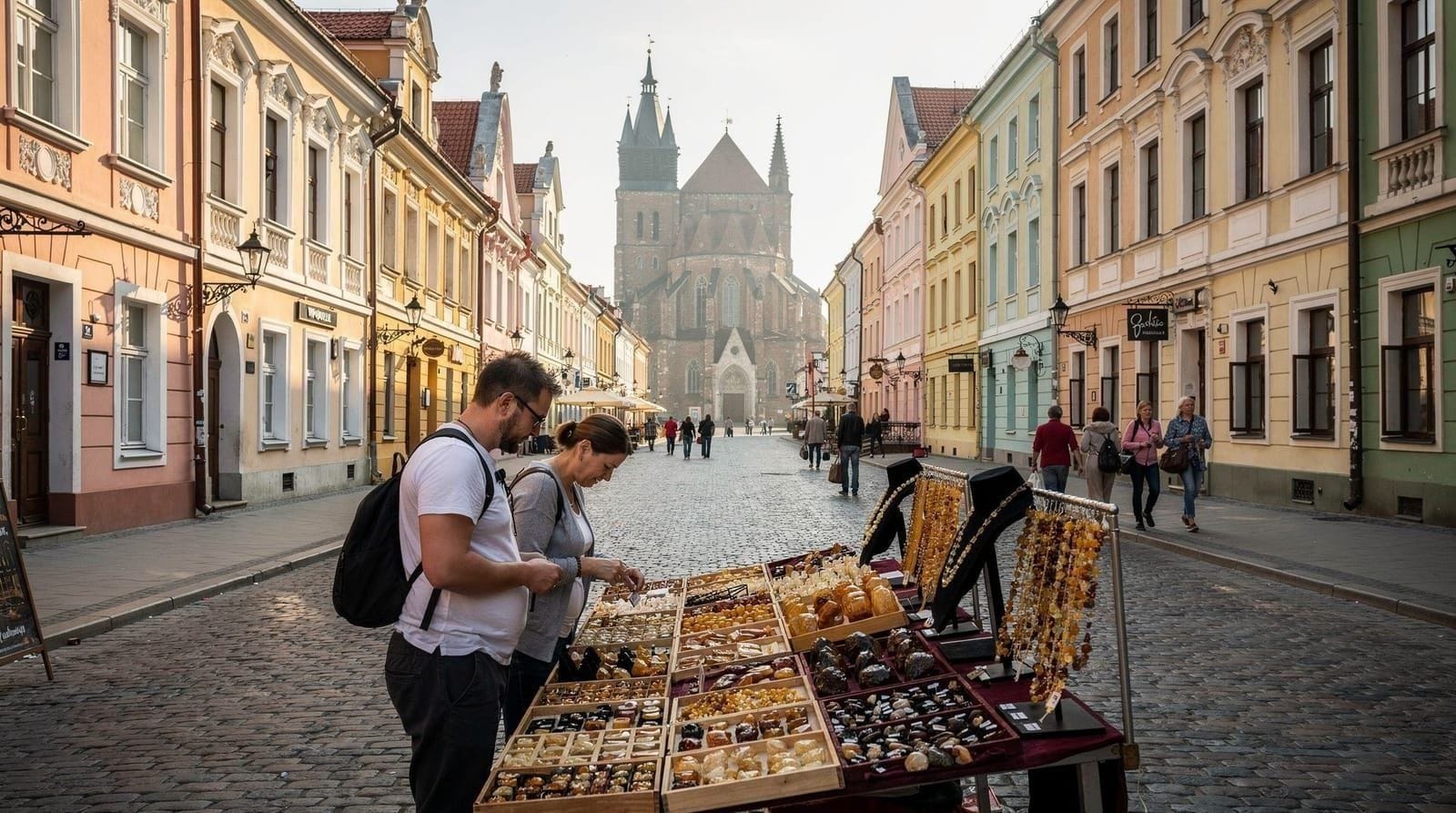
Amber: Lithuania is the world’s largest amber producer and the Christmas market is an appropriate place to buy amber jewellery — though quality and authenticity vary considerably between stalls. The amber museum shop (Šv. Mykolo g. 8) nearby sells certified authentic amber at fair prices and is preferable to market stalls selling unnamed pieces. For market purchases, ask to see documentation of origin.
Ceramics and pottery: Several artisan potters sell distinctive Lithuanian ceramics — characteristic brown and dark green glazes, traditional folk patterns. Prices are fair (€8–30 for small pieces) and these are among the best market craft products.
Wooden crafts and krikštai: Carved wooden items including miniature krikštai (traditional Lithuanian grave markers with distinctive motifs) and folk-pattern decorations. Prices from €5–40.
Knitted goods: Lithuania produces excellent wool textiles. Mittens, scarves, and hats made from natural wool by local producers are a genuine craft item and useful.
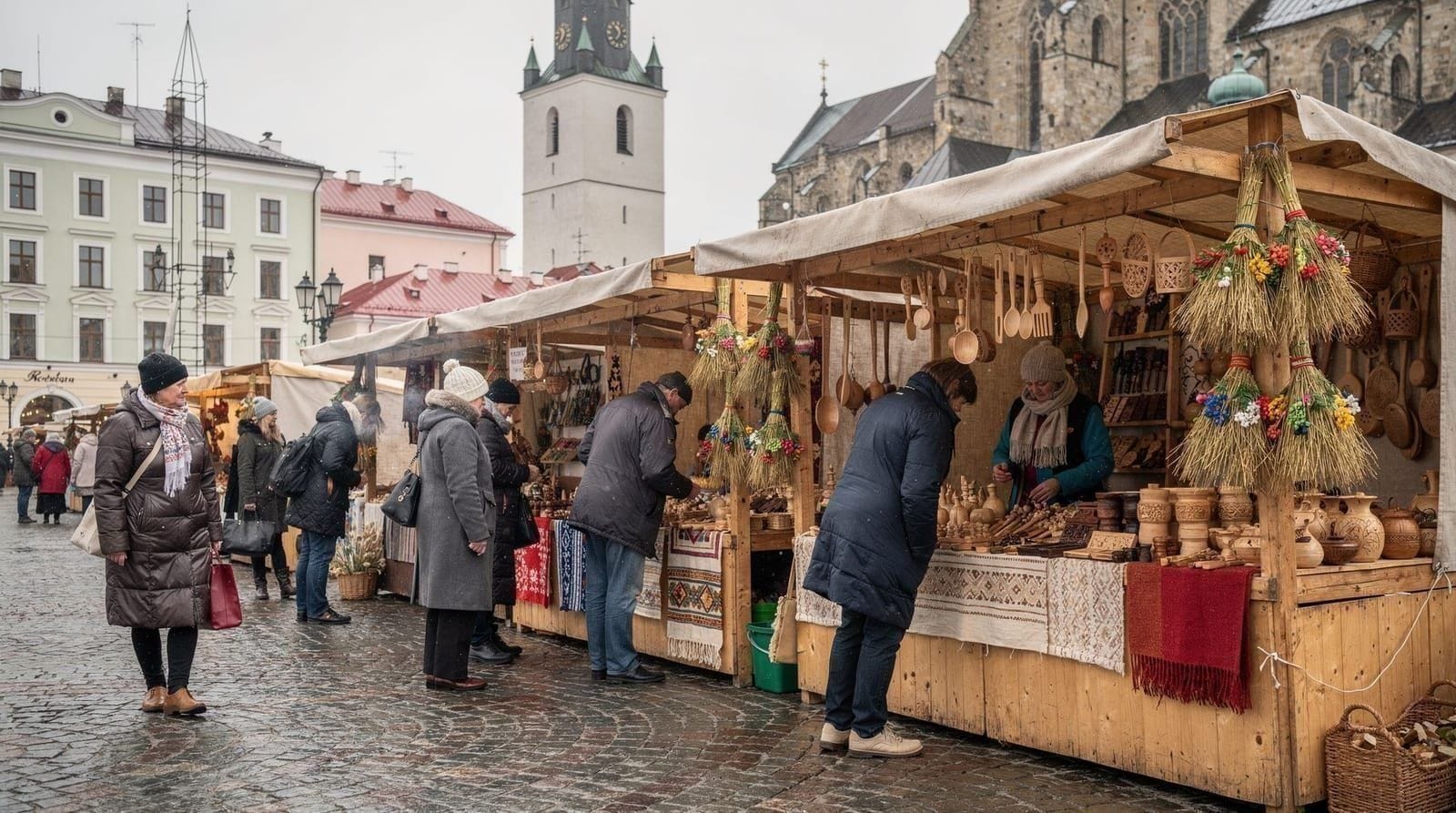
Christmas decorations: Straw ornaments (šiaudų ornamentai) are the most distinctive Lithuanian Christmas decoration — geometric shapes made from braided rye straw. Beautiful and fragile; pack carefully.
Tourist-trap awareness
The Christmas market is largely a genuine local event but some common pitfalls:
- “Handmade” stalls with mass-produced items: Not everything labelled “handmade” (rankų darbo) is made by the vendor. Look for stalls where the maker is present and can explain their technique.
- Amber without provenance: Some amber sold at markets is simulated (coloured resin). The salt-water float test (real amber floats; most fakes sink) is a rough guide. Buy from stalls with documentation or from the amber museum shop nearby.
- Adjacent tourist restaurants: The restaurants within sight of the market on Cathedral Square are tourist-priced. Walk two minutes to Pilies gatvė or Dominikonų gatvė for better value.
- “Traditional” costumes for photos: Some operators around the square offer paid photography in folk costumes. Not a scam exactly, but not a meaningful Lithuanian experience either.
Guided tour options
Book a guided Christmas market and traditions tour of VilniusA 3-hour guided walking tour of the Christmas market and Lithuanian winter traditions provides useful context: what the traditions behind specific foods and decorations mean, the history of the Cathedral Square, and the story of Lithuanian Christmas as it has evolved through pagan, Catholic, and Soviet periods. Useful if this is your first time in Vilnius; less necessary if you are already familiar with the city.
How to combine the Christmas market with sightseeing
The market alone fills 2–3 hours comfortably. Combining with Old Town sightseeing makes a full December day:
Morning (10 am–1 pm): Gediminas Tower (open year-round) → Cathedral interior (free, remarkable acoustic) → Palace of the Grand Dukes (€12, allow 1.5 h)
Lunch (1–2 pm): Literatų Smuklė (Literatų g. 6) for traditional Lithuanian food; Pilies kepyklėlė (Pilies g. 17) for soup and bread in a vaulted cellar.
Afternoon (2–4 pm): Old Town walk — Pilies gatvė → Town Hall Square → St Anne’s Church → Bernardinai Garden. The 2–3 pm light is good for photography in winter.
Evening (5–9 pm): Christmas market on Cathedral Square — the stalls are at their most atmospheric after dark, which conveniently happens by 4 pm in December.
Comparing Baltic Christmas markets
| City | Location | Scale | Character | Entry | Best season |
|---|---|---|---|---|---|
| Vilnius | Cathedral Square | Medium | Genuine local | Free | Late Nov–early Jan |
| Riga | Doma Square | Large | Tourist-oriented | Free | Late Nov–early Jan |
| Tallinn | Town Hall Square | Large | Very popular | Free | Late Nov–early Jan |
Riga’s market at Doma Square is larger and more elaborately structured, with multiple wooden pavilions. Tallinn’s market in the medieval Town Hall Square is arguably the most photogenic. Vilnius is the least touristy of the three — you are as likely to be standing next to a Lithuanian family as a tour group, which is both authentic and slightly less polished.
All three Baltic capital markets are free to enter. Vilnius and Riga are the cheapest for food and drinks.
Practical information
Dates: Late November to early January. Exact opening date varies by year (usually the last Saturday of November). Closing date is typically 3–7 January. Verify current dates at vilnius.lt or vilnius-events.lt before travel.
Hours: Stalls generally operate 10 am–9 pm (extending to 10 pm on weekends). The square itself is accessible 24 hours. Evening hours (after 5 pm) are best for atmosphere.
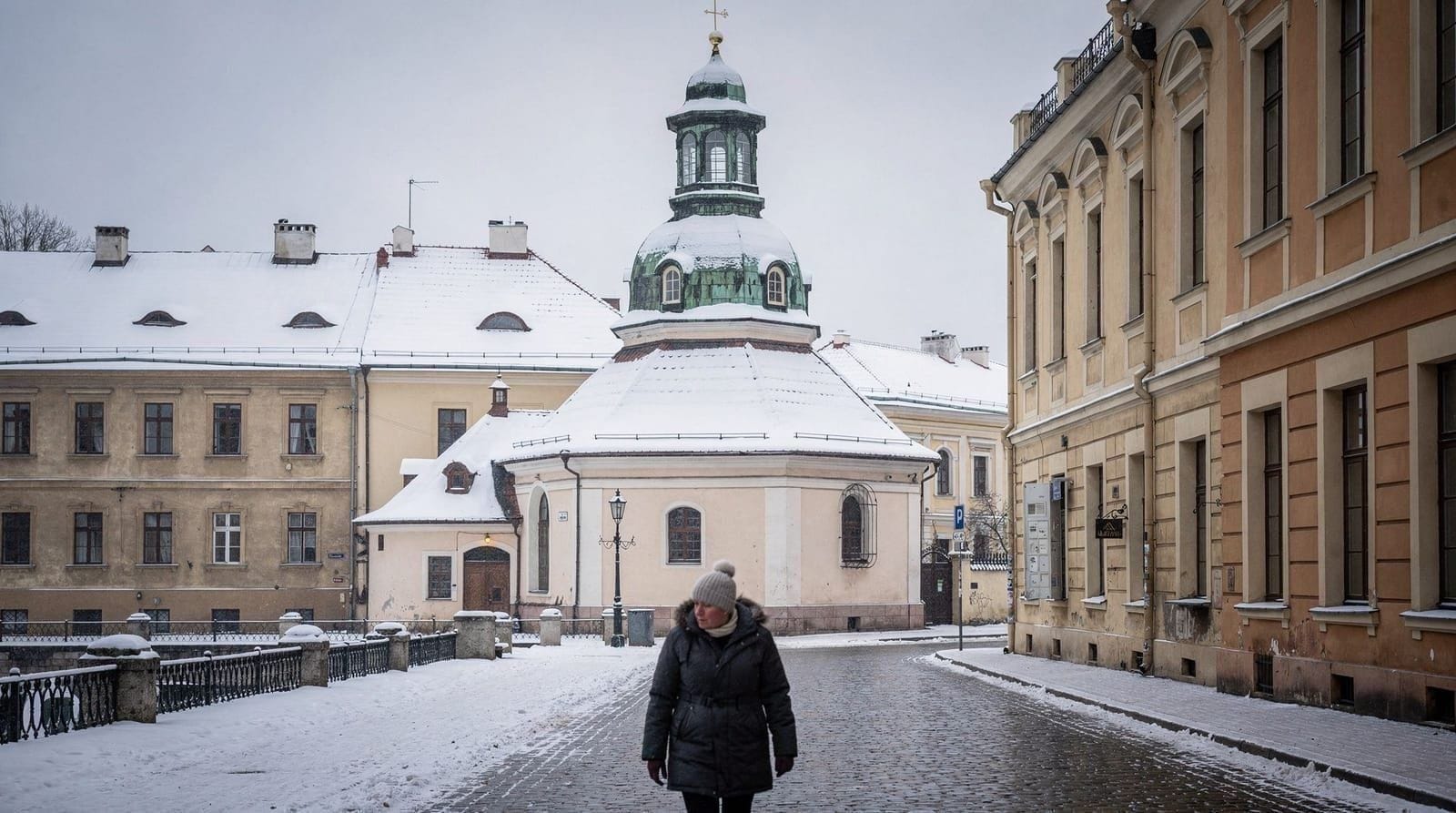
Weather: December in Vilnius ranges from 0 to −5°C. Dress warmly — you are standing still outdoors. Waterproof boots for possible snow and ice on the square.
Accommodation: Book as early as possible for Christmas week (23–27 December) and New Year’s Eve — the city fills up. January rates drop 30–50% after the market closes.
Lithuanian Christmas traditions: what you are walking into
Understanding the cultural backdrop of Lithuanian Christmas makes the market more meaningful and helps you distinguish authentic tradition from market-oriented presentation.
Kūčios (Christmas Eve): The most important Christmas celebration in Lithuania is not December 25 but Kūčios — Christmas Eve dinner. It is a strictly observed family ritual that predates Christianity in Lithuania (the country was one of the last in Europe to be Christianised, in 1387). The meal must include twelve dishes (one for each apostle, in the Catholic interpretation; one for each month in the pre-Christian version), all meatless and without dairy. Typical dishes include dried mushroom soup, herring, beet salad, poppy seed pastry (kūčiukai, small dough pieces), and Lithuanian wheat pudding (kisielius). The table is set with hay beneath the tablecloth, symbolising the manger. An empty seat and setting are left for deceased family members.
This is not a restaurant event — it is a deeply private family occasion. Foreign visitors to Lithuania on December 24 will notice that the city becomes very quiet in the evening: restaurants close early, the streets empty, and Christmas Eve belongs to Lithuanian families at home.
Christmas Day: December 25 is more similar to Western European Christmas — gifts in the morning, a meat-based family lunch, and a more relaxed atmosphere. The Christmas market continues operating throughout the holiday period.
St Stephen’s Day (December 26): A public holiday in Lithuania when visiting extended family continues. The market is typically open.
New Year’s Eve: Vilnius celebrates New Year’s Eve publicly on Cathedral Square with fireworks launched from Gediminas Tower hill. The square fills with thousands of people at midnight. It is a significant event and worthwhile if you are already in the city.
Combining the Christmas market with a day trip
The Christmas market occupies one evening or afternoon of a Vilnius visit. What to do with the rest of a December trip?
Trakai in snow: The island castle looks exceptional in winter conditions. Trains run year-round; the castle museum is open (reduced winter hours, closed Mondays). If the lake is frozen, which happens in cold winters, the landscape is extraordinary. The round trip takes half a day. See the Trakai castle day trip guide for logistics.
Druskininkai Aqua Park: The spa resort town 1.5 hours south by direct bus is particularly good in December. The Aqua Park’s outdoor pools are heated and function in snow; sitting in a warm outdoor pool in December is one of the better winter experiences available from Vilnius. The Snow Arena is also fully operational. See the Druskininkai day trip guide.
Kaunas in winter: An hour by train, Kaunas works well in December — the Ninth Fort, the modernist architecture district, and the city’s café culture are unaffected by season. The Kaunas Christmas market in the Old Town is smaller than Vilnius’s but worth seeing if you are already making the trip.
Museum circuit: Vilnius’s indoor cultural programme is excellent in winter. The Museum of Occupations (KGB Museum) on Aukų gatvė, the Palace of the Grand Dukes, the Lithuanian National Museum, and the M. K. Čiurlionis Art Museum (via day trip to Kaunas) are all best visited in winter when queues disappear.
Where to stay for the Christmas market period
Vilnius accommodation in December (outside Christmas week itself) is significantly cheaper than summer. Some specific recommendations for the market period:
Close to Cathedral Square: The Artis Hotel (Šv. Kazimiero g. 8) is a 3-minute walk from the market. Mid-range, €80–100/night in December. Amberton Cathedral Square Hotel (Katedros a. 13) is directly adjacent to the square — convenient but noisy on market evenings.
Quiet Old Town accommodation: The northern and eastern streets of the Old Town (Bernardinų gatvė, Maironio gatvė) are quieter while remaining walkable to the market. Several apartment-style guesthouses in this area offer kitchen access and lower prices than Old Town hotels (€50–70/night for a double).
Christmas week: December 23–27 sees prices rise 40–80% above regular December rates and availability drops significantly. Book 3–4 months ahead if you are specifically targeting this period.
New Year’s Eve: New Year’s Eve in Vilnius (December 31) is the most expensive single night of the year for accommodation. Prices can double vs regular December. Book 6+ months ahead.
Getting the most from a single day
If you have only one day to combine the Christmas market with sightseeing, the following sequence works well:
Morning (9–12): Arrive on an early flight or overnight train. Check in (most hotels offer 9 am luggage storage if rooms are not yet ready). Walk to Gediminas Tower for views — 30 minutes, €5 entry. Cathedral interior (free, 15 minutes). Palace of the Grand Dukes (€12, 1.5 hours).
Afternoon (12–5): Lunch at Pilies kepyklėlė or Literatų Smuklė (traditional Lithuanian, budget €15–20 per person). Old Town walk: Pilies gatvė south to Town Hall Square, St Anne’s Church exterior, Bernardinai Garden. Coffee at Pupa café (Pilies g. 19).
Evening (5 onwards): Christmas market. The market stalls are at their best after dark — which happens by 4 pm in December. Allow 2 hours to browse fully. Hot mead or mulled wine at a market stall (€4–5). Dinner at a nearby restaurant — Žuvinė (Šv. Ignoto g. 14) for upmarket Lithuanian fish dishes; Ertlio Namas (Šv. Jono g. 7) for traditional food at reasonable prices.
Photographing the market
The most reliable shot is the lit cathedral portico with the Christmas tree in the foreground, taken from the northern end of the square looking south — this works well from around 4:30 pm once the sky has darkened but before the square gets too crowded for a clear frame. A tripod is impractical in the busiest hours, so a fast lens or a camera phone’s night mode generally works better than trying to set up a longer exposure. The belfry and Gediminas Hill in the background add depth if you shoot from slightly further back near Gedimino prospektas. Snow, when it falls, transforms the scene further, though it also makes footing on the cobblestones slippery — sturdy boots matter as much for photography stability as for warmth.
How the Christmas market compares to Kaziukas Fair
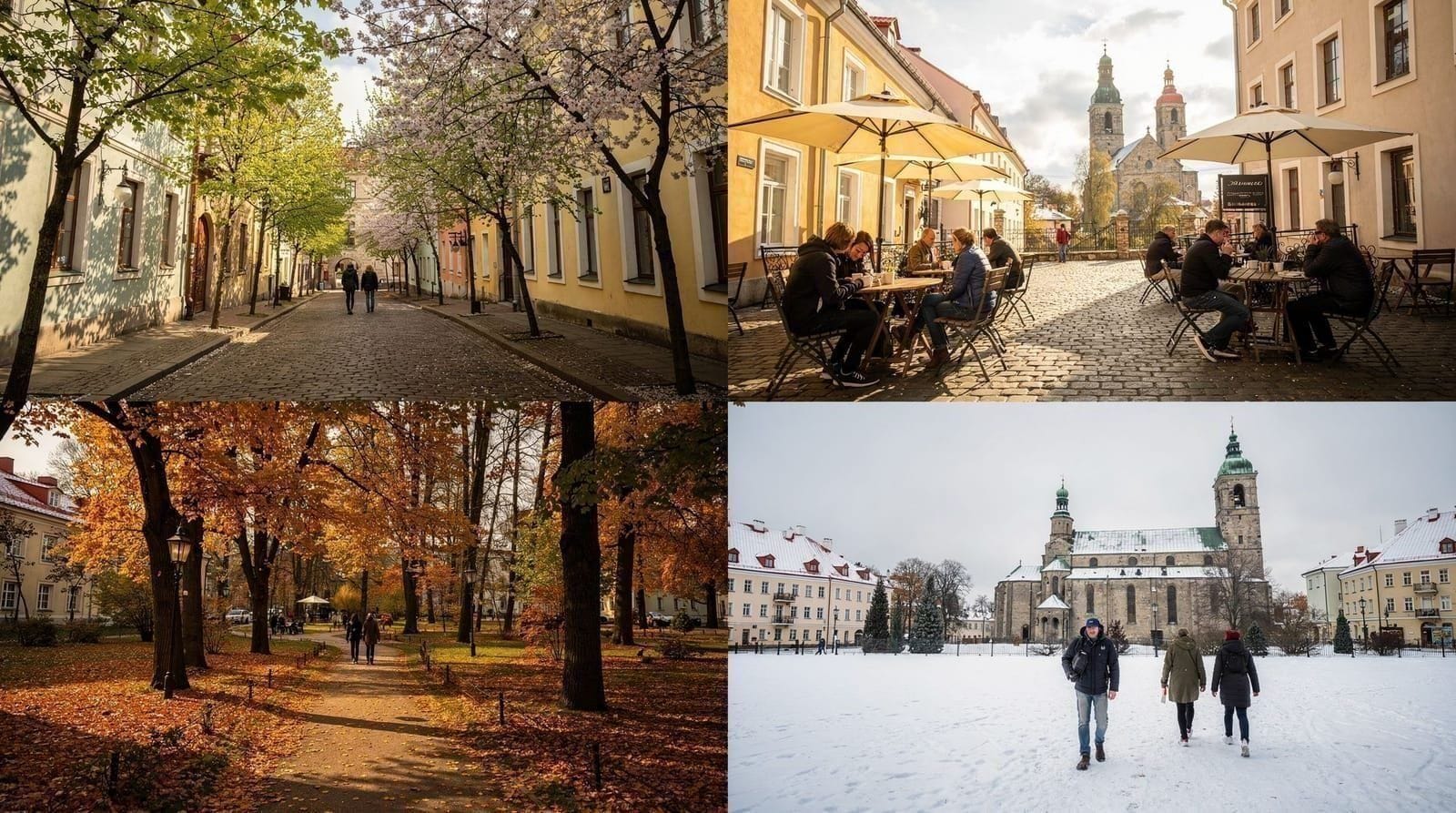
Cathedral Square hosts Vilnius’s other major seasonal market too — the Kaziukas Fair in early March, a craft market with roots in the 17th century. The two events share a location but have a genuinely different character: Kaziukas is a spring craft fair with wicker, ceramics and verbos bouquets, held during daylight in cooler-but-not-freezing weather, while the Christmas market is an evening event built around food, drink and lights. If you’re deciding when to visit Vilnius partly around its markets, the best time to visit Vilnius guide covers both alongside the rest of the seasonal calendar.
Vilnius in December beyond the market
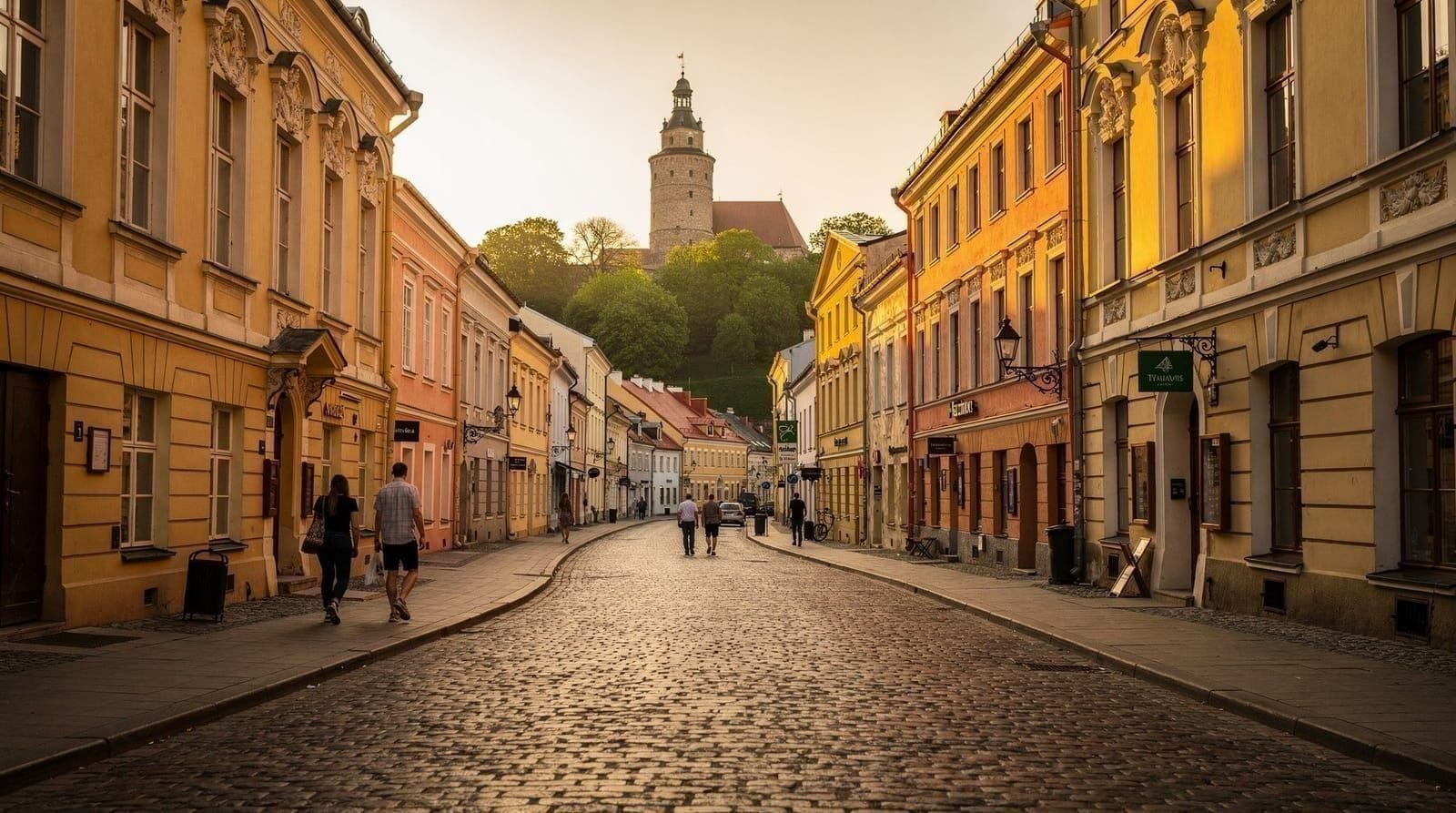
The Christmas market is the headline event, but December in Vilnius has more going for it than the square alone. See the Vilnius in winter guide for a broader look at the season — museum queues disappear, accommodation is cheaper outside Christmas week itself, and the Old Town takes on a different character under snow. The Vilnius Old Town guide is worth pairing with a market visit for a full day that combines sightseeing with the evening market.
Frequently asked questions about the Vilnius Christmas market
Does the Vilnius Christmas market sell primarily Lithuanian crafts or generic Christmas goods?
Both. The better stalls feature genuine Lithuanian amber, ceramics, wool textiles, shaškaotis, and folk crafts. Some stalls sell imported or mass-produced items dressed up as artisan. Focus on stalls where the vendor can explain the provenance of what they are selling.
Is it cold enough to need serious winter gear at the Christmas market?
Almost certainly yes. December evenings in Vilnius average −2 to −4°C, with wind chill on the open square dropping it further. A proper insulated coat, hat, gloves, and waterproof boots are not optional. Hot mulled wine helps, but thermal layers are the foundation.
Can I take a guided tour specifically of the Christmas market?
Yes — guided Christmas market tours (usually 2–3 hours) run throughout the market period. They include the market, the Cathedral Square history, and often a tasting of Lithuanian winter foods and drinks. Worth booking if you want context beyond browsing the stalls.
Is the Vilnius Christmas market suitable for children?
Yes, very much so. The market atmosphere is family-friendly, alcohol-free drinks are available, the decorations are impressive, and the gingerbread and šakotis are child-pleasing. The scale is manageable for children (not overwhelming like some large markets). Evening visits work well for children of any age, since the darkness arrives early and the lights are at their best.
What other Christmas-period events happen in Vilnius?
The main Cathedral Square mass on Christmas Eve (December 24) is a significant event and the square fills with worshippers. Vilnius Philharmonic has a December concert series. The New Year’s Eve fireworks are launched from Gediminas Tower hill over the Old Town. Check vilnius-events.lt for the current season’s full program.
Is the Vilnius Christmas market open on Christmas Day itself?
Yes, generally — the market continues operating through the holiday period, though hours can shift slightly on December 24 and 25. Christmas Eve evening itself is quiet across the city as families gather for Kūčios at home, but the market and square remain accessible.
How does the Vilnius market compare to Kaunas’s Christmas market?
Kaunas has its own, smaller Christmas market in the Old Town, worth seeing if you’re already making a day trip there — see the Kaunas day trip guide. Vilnius’s is larger and set in a more dramatic square, so most visitors prioritise Vilnius unless a Kaunas trip is already planned.
Top experiences
Bookable activities with verified prices and instant confirmation on GetYourGuide.