Cepelinai and Lithuanian dishes — the definitive guide
Vilnius: Traditional lithuanian cooking class
Duration: 3-4 hours
What are cepelinai?
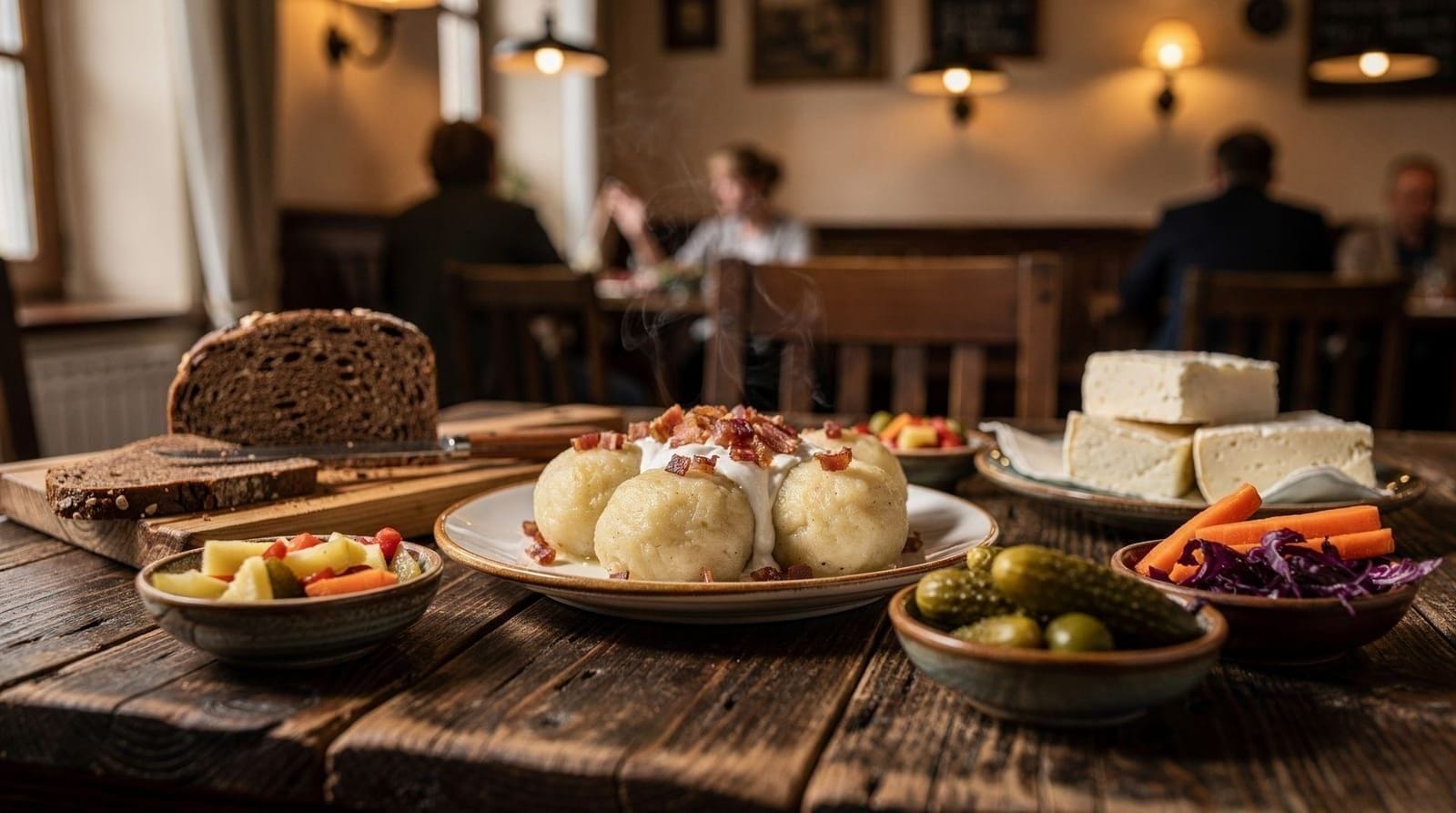
Cepelinai (singular cepelinas) are Lithuanian potato dumplings shaped like zeppelin airships — large, dense, and intensely satisfying. They are made from a mixture of raw grated potato and cooked mashed potato, stuffed with minced meat, farmer's curd cheese, or mushrooms, then boiled until cooked through. They are served with sour cream (grietinė) and crisped bacon lardons. One portion of two dumplings weighs around 400g and is a complete meal. They cost €5–9 in Vilnius restaurants.
| Must-try | Cepelinai, šaltibarščiai, kibinai |
| Cost | Around €5-9 for a main dish in a sit-down restaurant |
| Best season | Šaltibarščiai: summer only. Mushroom cepelinai: autumn |
| Where | Šnekutis, Lokys, Senatorių pasažas (Vilnius); Trakai for kibinai |
| Vegetarian option | Curd-filled (varškės) cepelinai, without bacon topping |
Lithuanian food is built from the ground up — from the ground literally, since the cuisine is rooted in root vegetables, grains, and dairy in a way that reflects the Baltic agricultural landscape rather than any borrowing from neighbouring culinary traditions. That is both its challenge and its appeal. Cepelinai, the great Lithuanian potato dumpling, is not a sophisticated dish in any French or Italian sense. It is a farming dish — calorie-dense, straightforward, and deeply satisfying. Understanding where Lithuanian food comes from is the best way to appreciate why it is worth eating.
Cepelinai — Lithuania’s national dish
What they are and where the name comes from
Cepelinai take their name from the Zeppelin airship — the large, elongated German airships that were a technological sensation in the early 20th century. The dumplings are shaped vaguely like dirigibles: oval, tapered at both ends, and substantial in a way that makes clear they were designed as the main event of a meal rather than a starter.
The dish is a relatively modern invention in terms of its current form — it became widely popular in the 20th century, though its roots lie in older Lithuanian potato-and-curd traditions that go back further. Lithuania adopted the potato enthusiastically after its introduction to the region in the 18th century, and the entire cuisine pivots around this fact. Poland has pierogi; Russia has pelmeni; Lithuania has cepelinai. Each is the same cultural gesture — the dumpling as a vehicle for making a small amount of filling stretch across a large amount of starch — but executed in distinct ways.
How cepelinai are made
The dough (if you can call it that) is a combination of raw grated potato — which, when squeezed of excess liquid, becomes sticky and starchy enough to hold together — and cooked mashed potato, which adds structure and helps binding. The ratio is roughly 60–70% raw to 30–40% cooked. The potatoes must be starchy varieties; waxy types do not work.
The filling is placed in the centre of a flattened disc of the potato mixture, which is then sealed and shaped into its characteristic oval. The sealed dumplings are lowered into well-salted boiling water and cooked for 30–40 minutes until the potato casing is cooked through. The result is dense and slightly translucent on the surface.
Serving is consistent across virtually all Lithuanian restaurants: the cepelinai arrive on a plate, two per standard portion, with a generous pour of sour cream (grietinė) and a scattering of fried bacon lardons (spirgai). The sour cream and the crisped bacon are not garnishes — they are structural to the dish, cutting through the density of the potato.
Filling variations
Meat-filled (mėsos cepelinai): The most common version uses seasoned minced pork, sometimes pork-and-beef, with onion and black pepper. The meat is raw when it goes in, cooking through as the dumpling boils.
Curd-filled (varškės cepelinai): Fresh Lithuanian curd cheese (varškė) is the filling — mild, slightly grainy, and high in protein. These are the lighter version and can be requested without the bacon topping for a (relatively) vegetarian preparation. Note that the potato dough itself is made with the same ingredients regardless; it is the filling only that changes.
Mushroom-filled (grybų cepelinai): A seasonal option using dried and reconstituted or fresh forest mushrooms. Less common on year-round menus but worth ordering in autumn, when the mushroom quality in Lithuania is at its best. Lithuanian forest mushroom season (late August to October) is taken seriously — see the autumn section of the Vilnius food guide for more on what this means for the menu.
Where to eat the best cepelinai in Vilnius
Šnekutis at Žvejų gatvė 2 in Užupis is the most often cited choice among people who know the city. It is an old-school local bar-restaurant with minimal décor, a short menu, and the kind of casual atmosphere that signals a place not trying to impress tourists. The cepelinai are made daily, the portions are generous, and the prices are among the lowest for a sit-down restaurant (€6–8 per portion). There is also a location on Subačiaus gatvė. Both draw a local crowd. The Užupis guide has more on the neighbourhood.
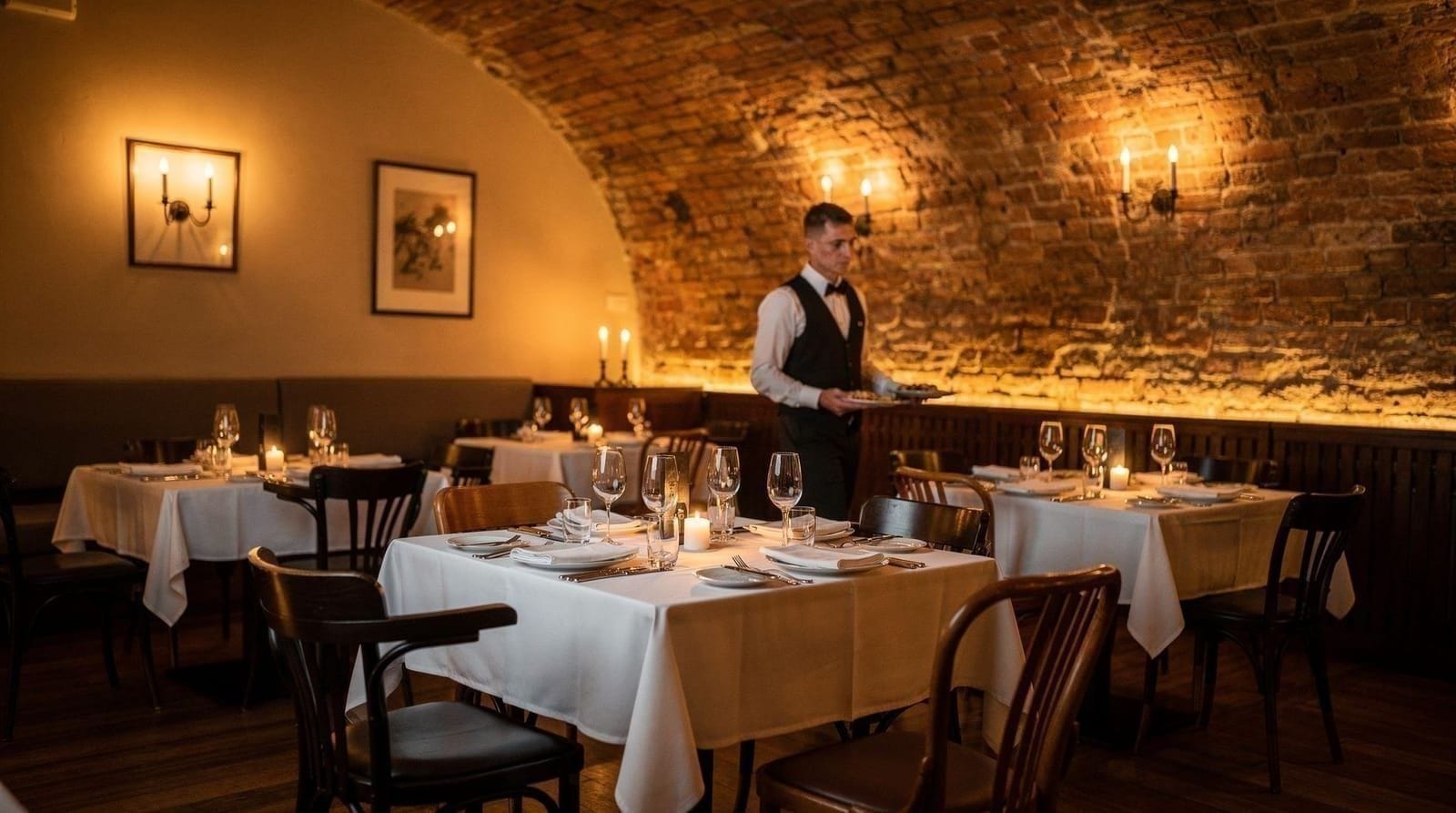
Lokys at Stiklių gatvė 8 in the Old Town is the oldest restaurant in Vilnius (in continuous operation since 1972) and occupies a Gothic cellar beneath an 18th-century building. It is more expensive than Šnekutis (€9–12 for cepelinai) and more formal, but the food is well-executed and the setting is genuinely atmospheric. The game menu — elk, wild boar, venison — is its speciality, but the traditional Lithuanian dishes including cepelinai are made properly here.
Senatorių pasažas on Pilies gatvė 26 is a canteen-style traditional restaurant with self-service lunch portions — useful for budget eating in the Old Town itself. The cepelinai quality is consistent, portions are large, and the price is low (€5–7). This is the best option if you are already in the Old Town centre and do not want to walk to Užupis or navigate to less tourist-heavy streets.
Bernelių užeiga has multiple locations across Vilnius and offers a full traditional menu at accessible prices. It is more reliably good than some of the tourist-facing Old Town alternatives and has English menus, which makes ordering straightforward for first-time visitors.
Šaltibarščiai — the cold pink soup
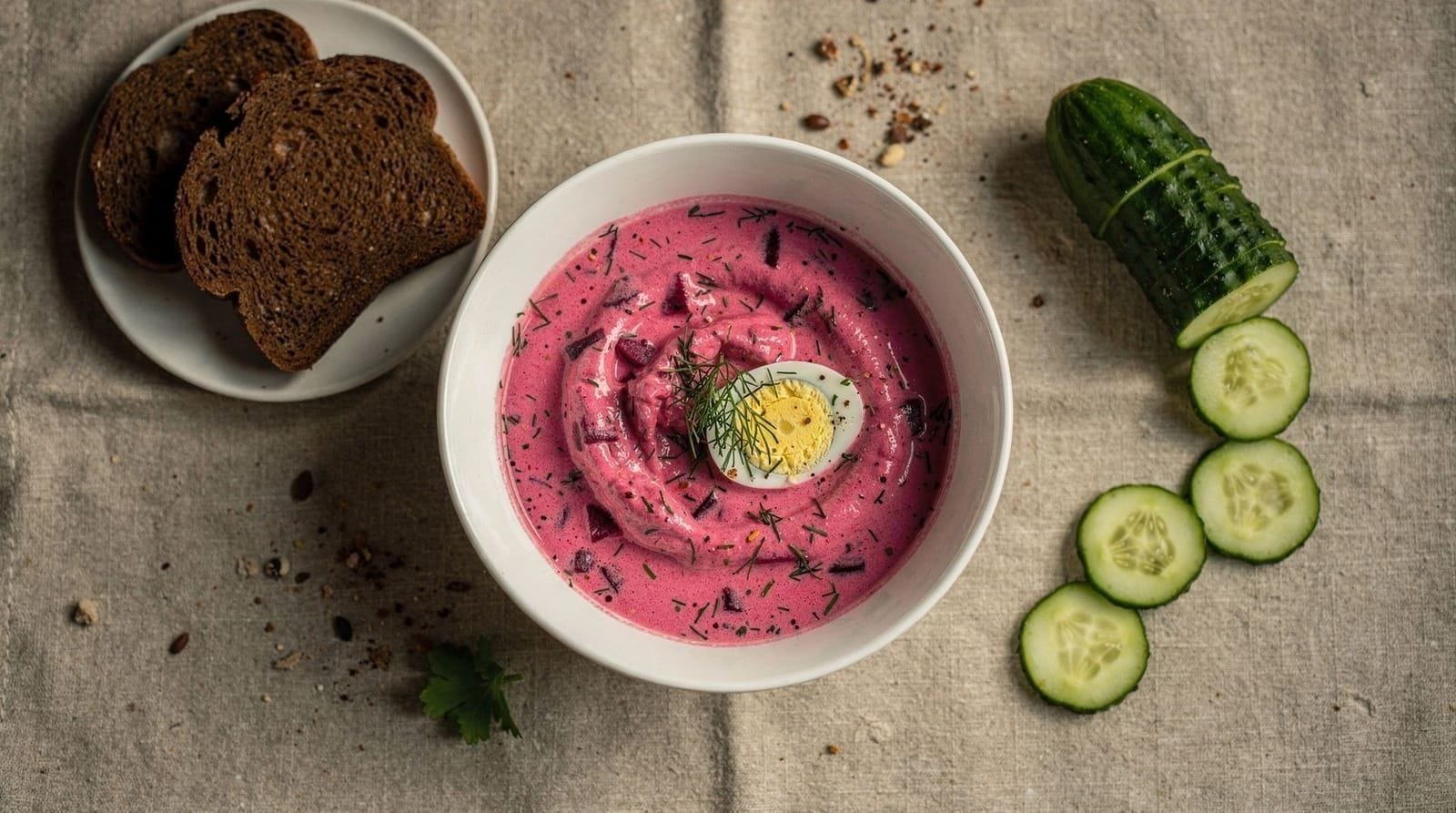
Šaltibarščiai (the phonetic approximation is “shol-tee-bar-shchay”) is Lithuanian cold beet soup, and it deserves more international recognition than it has. The base is kefir or cultured buttermilk — thick, tangy, and slightly fizzy with live cultures. Into this goes cooked or pickled beet (burokėliai), diced fresh cucumber, fresh dill, and sliced hard-boiled eggs. Everything is served cold — very cold, ideally close to refrigerator temperature — in a bowl alongside a separate plate of hot boiled potatoes.
The colour is the first thing: a vivid, neon-ish magenta-pink that is genuinely startling the first time you see it served. The taste is tangy, slightly earthy from the beet, fresh from the dill and cucumber, and the combination of the cold soup with the hot potato is a contrast that works better than it has any right to.
Šaltibarščiai is strictly a summer dish in Lithuanian restaurant culture — it appears on menus from around May and disappears in September. Trying to order it in February will get you a polite explanation that it is not available. This seasonality is part of its character; eating šaltibarščiai in Vilnius in July, when the outdoor terrace is warm and the soup arrives ice-cold, is one of the better simple food pleasures the city offers.
Kugelis — potato pudding
Kugelis is baked potato pudding: grated raw potato mixed with eggs, onion, milk, and bacon (or vegetarian alternatives), then baked in a cast-iron dish until the exterior is crisp and the interior is dense and custardy. It is cut in squares and served with sour cream. The result is somewhere between a gratin dauphinois and a savoury bread pudding, and heavier than either.
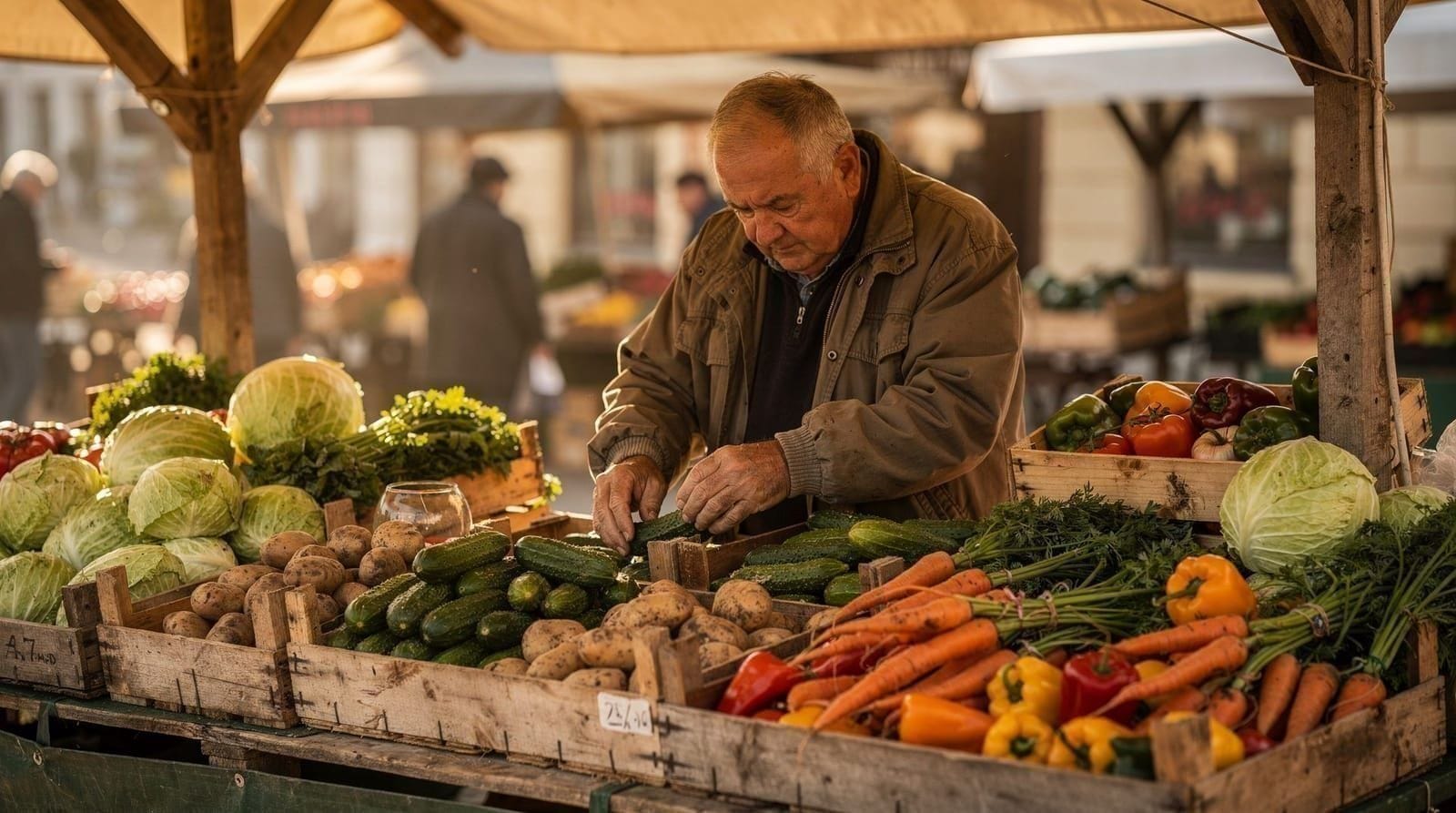
Kugelis is home cooking more than restaurant food — you will find it at canteens and valgyklos more readily than at restaurants. At Halės turgus, some of the food vendors serve it as a lunch option. It costs €4–6 per portion. It is excellent cold-weather food and best eaten in autumn or winter.
Kibinai — the Karaim pastry
The Karaim (also written Karaites) are a Turkic ethnic minority who were brought to Lithuania in the 14th century by Grand Duke Vytautas as his personal bodyguard and settled primarily in Trakai. They maintain their own language, religion, and culinary traditions to this day — and their contribution to Lithuanian food is kibinai.
A kibinas is a crescent-shaped pastry made from a slightly enriched, oily dough filled with minced mutton (or, in modern versions, pork or vegetables) and raw onion, crimped shut around the edge, and baked until golden. The pastry is slightly flaky and richer than standard shortcrust; the filling is juicy and savoury from the fat in the raw meat that renders during baking.
The proper place to eat kibinai is Trakai — the small lakeside town 28km west of Vilnius that is Lithuania’s most photogenic day-trip destination. The main street in Trakai (Karaimų gatvė) has several dedicated kibinai shops, the oldest being Senoji kibininė. They cost €2.50–4 each and are eaten out of hand, still warm. See the Vilnius to Trakai guide for how to combine this with a visit to the island castle.
In Vilnius, kibinai are available at Halės turgus and some traditional restaurants, but the quality is inconsistent and they are best saved for the Trakai experience.
Kepta duona — fried bread
Kepta duona is technically not a dish but a bar snack, and it is ubiquitous. The name means “baked bread” or, in practice, “fried bread” — dark Lithuanian rye bread cut into thick fingers, deep-fried until completely crisp, then rubbed immediately with a cut raw garlic clove while still hot. It is served with a dipping accompaniment of either sour cream or melted processed cheese (varškės padažas), or sometimes both.
The rye bread used is crucial — the dense, slightly sour Lithuanian dark bread (juoda duona) produces a very different result from light bread. When fried properly, the exterior is shatteringly crisp and the interior has almost disappeared into the crunch; when not fried properly, it is greasy and heavy. The garlic is raw, not roasted, which gives a sharp bite rather than sweetness.
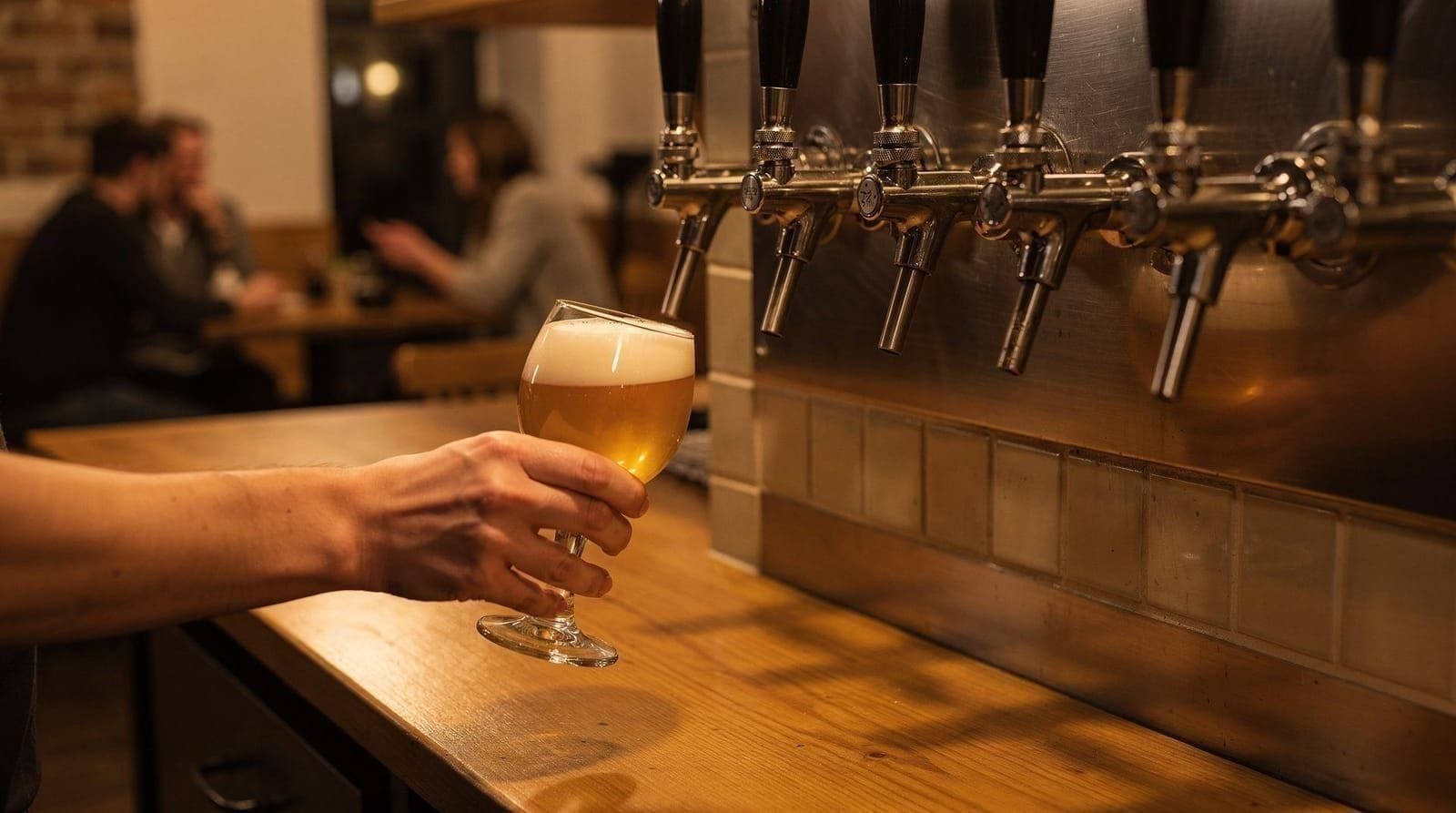
Every Lithuanian bar serves kepta duona. It costs €2–4 per portion and is genuinely one of the best things to eat in Vilnius as a beer accompaniment. Order it automatically with any beer order in any traditional bar and you will not go wrong. The Vilnius craft beer guide pairs it with specific beer styles.
Šakotis — the tree cake
Šakotis (plural šakočiai) is a Lithuanian ceremonial cake that looks like nothing else in European baking. It is made by slowly ladling thin batter onto a rotating horizontal spit that rotates over an open wood or gas fire, allowing each layer to cook before the next is added. The drips and runs of batter cook into spikes and branches on the outside — the cake ends up looking like a cross between a pine tree and a stalactite formation. The name means “branchy” in Lithuanian.
The finished cake is tall (anywhere from 30cm to over a metre for ceremonial versions), cream-coloured outside with a golden-brown exterior, and slightly dense inside — more eggy than Western European sponge, with a dry, slightly chewy texture. It is traditionally made for weddings, baptisms, and the Christmas table, and cutting a šakotis at the beginning of a celebration is a Lithuanian ritual.
For visitors, šakotis is available everywhere in Vilnius: bakeries, souvenir shops, the airport, and supermarkets. The vacuum-packed versions sold as souvenirs are acceptable for transport; fresh versions from bakeries are considerably better. Pilies kepyklėlė (Pilies gatvė) and other Old Town bakeries usually have fresh šakotis available. Eat it with coffee.
Bulviniai blynai and other potato dishes
Bulviniai blynai are potato pancakes — thicker and starchier than the Austrian Reibekuchen or the German Kartoffelpuffer, and traditionally served with sour cream. They appear on nearly every traditional menu. Variations include blynai su grybais (with mushrooms) and blynai su mėsa (with meat). They are the most accessible Lithuanian dish for visitors who find cepelinai too heavy — similar flavours but more familiar in form.
Vėdarai are a more challenging dish: pig intestines stuffed with a mixture of grated potato and pork fat, then boiled or baked. They appear on traditional menus and at farmers’ markets. Unfamiliar in form but genuinely good when made well — the potato filling becomes silky and the casing crisps in a way that is reminiscent of good sausage.
Drinks that go with Lithuanian food
Midutis is Lithuanian mead — fermented honey wine, produced in small quantities by several traditional producers. It is sweet, strong (typically 10–15% ABV), and pairs well with game meat and strong cheeses. Available at Halės turgus and specialist food shops.
Gira (kvass) is a fermented bread drink made from rye bread — barely alcoholic (under 1.5% ABV), slightly sour, and deeply refreshing. It is served cold and is the traditional Lithuanian non-alcoholic drink for summer. Street vendors sell it from tanks in summer; supermarkets stock bottled versions year-round.
Lithuanian dark beer (tamsusis alus) is the natural accompaniment to cepelinai and most meat dishes. It is typically a dark lager rather than a stout or porter, with caramel and roasted malt notes and a mild bitterness. See the Vilnius craft beer guide for specific recommendations.
Kefiras (kefir) is a cultured milk drink served at breakfast, used as the base for šaltibarščiai, and drunk throughout the day. Lithuanian supermarkets carry a wider variety of kefir than almost anywhere else in Europe — full-fat, skimmed, fruit-flavoured, and plain versions in litre bottles at very low prices.
Bringing ingredients home
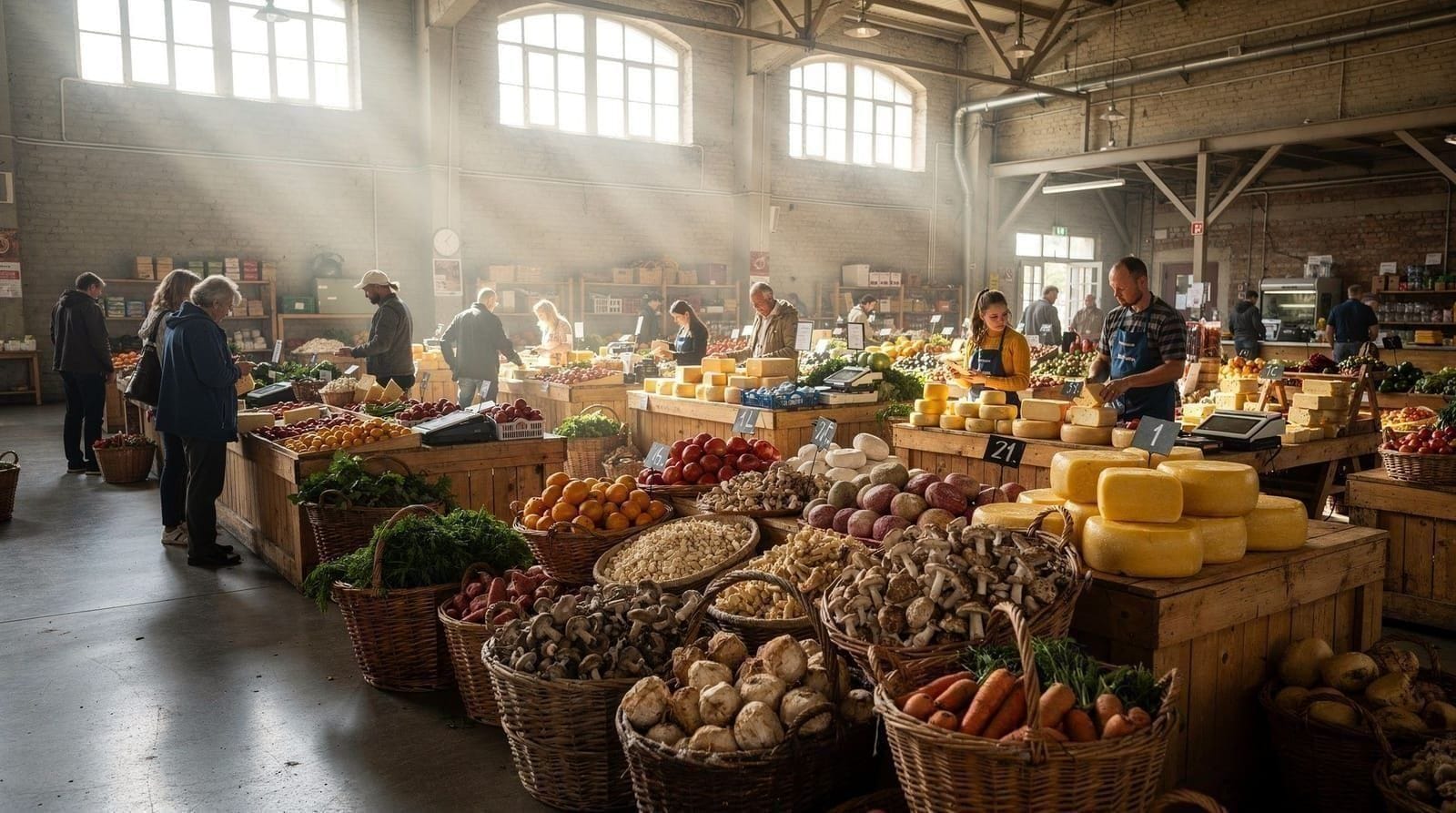
If you want to recreate any of these dishes after your trip, a few ingredients travel well. Vacuum-packed šakotis is designed for transport and available at the airport and in souvenir shops. Dried forest mushrooms (for a home version of grybų cepelinai) pack light and keep for months — Halės turgus market has several stalls selling them by weight. Amber-coloured honey for making your own midutis-style drink is another easy, non-perishable souvenir. Fresh varškė and dairy products do not travel, so treat those as something to enjoy only while in Lithuania.
Learning to cook Lithuanian food
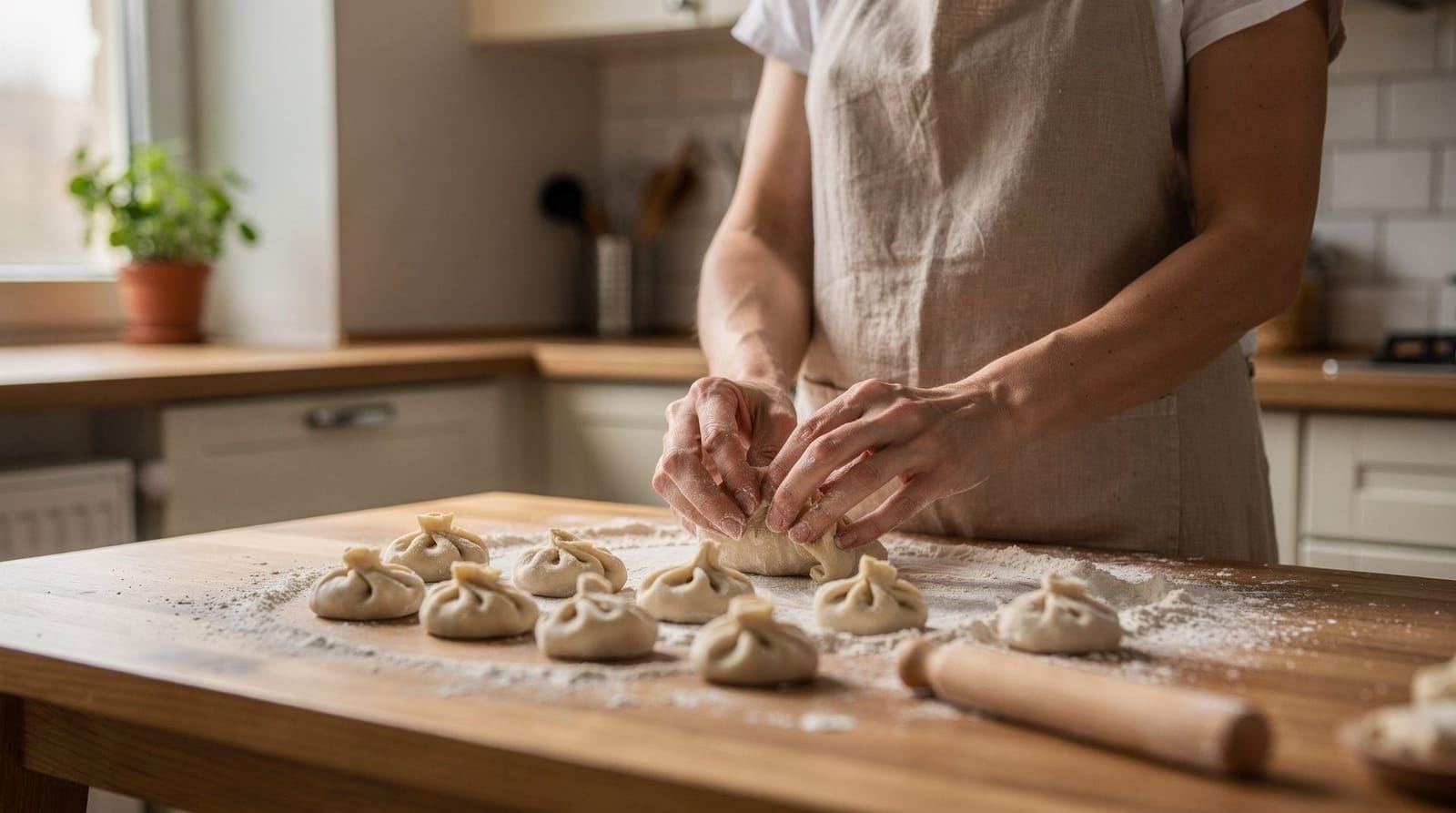
The best way to understand any cuisine is to make it. Cepelinai are labour-intensive but not technically difficult — the main challenge is correctly judging the consistency of the potato mixture and sealing the dumplings tightly enough that they do not burst during boiling (a common disaster for first attempts).
The traditional Lithuanian cooking class is a 3-hour hands-on session in a home kitchen environment with a local host, covering cepelinai, šaltibarščiai, and at least one dessert. Groups are small — typically 6–10 people — and the format is genuinely interactive rather than demonstration-only. You make the food yourself, with guidance, and eat everything at the end. It costs €50–70 per person and runs most days. For travellers spending 2–3 days in Vilnius, a cooking class on the first morning is an excellent way to immediately contextualise everything you eat for the rest of the trip.
For a broader introduction to Lithuanian food culture, the Vilnius Flavors 3-hour food tasting tour covers eight tasting stops across the city — a more passive but wider-ranging experience that introduces you to multiple dishes without committing to cooking any of them. Both approaches are valid depending on how much you want to engage.
The traditional Lithuanian food tasting is a seated tasting format that sits between the two — structured, guided, and focused specifically on traditional dishes with cultural context from the guide.
A seasonal calendar for Lithuanian dishes
Several Lithuanian dishes are genuinely tied to the calendar rather than available year-round, and knowing this helps set expectations.
| Season | What to look for |
|---|---|
| Spring (Apr-May) | Fresh dill and early greens appear in soups; kefir-based dishes lighten up |
| Summer (Jun-Aug) | Šaltibarščiai is everywhere; fresh berries in desserts; gira sold from street tanks |
| Autumn (Sep-Oct) | Mushroom-filled (grybų) cepelinai; forest mushroom dishes generally; apple desserts |
| Winter (Nov-Mar) | Kugelis and heavier baked dishes; šakotis at Christmas; game meat at Lokys |
If you visit outside the June-August window expecting šaltibarščiai, most restaurants will explain politely that it is not currently on the menu — this is normal and not a sign of a lesser kitchen.
A one-day food itinerary
For visitors who want to taste the range in a single day: start with fresh šakotis and coffee at an Old Town bakery like Pilies kepyklėlė, have a canteen-style lunch of cepelinai and soup at Senatorių pasažas or a local valgykla, snack on kepta duona with a Lithuanian dark beer mid-afternoon, and finish with a full dinner at Šnekutis or Lokys. Our best restaurants in Vilnius guide has the fuller neighbourhood-by-neighbourhood breakdown if you want to plan beyond a single day, and the Vilnius food guide covers market eating and seasonal specialities in more depth.
How to eat like a local versus tourist trap versions
The same dish can be excellent or mediocre depending almost entirely on where you order it. Tourist-trap versions of cepelinai are typically made from a pre-prepared mix, served lukewarm, and cost €9–13 for a portion that a local restaurant would charge €6–7 for. The visual difference can be subtle — these restaurants have learned to present dishes attractively — but the taste tells immediately.
A few signals that you are in a better restaurant: the menu is short and changes seasonally; prices are listed in euros without dramatic markups; the clientele includes Lithuanian people (not exclusively international tourists); the waiter does not immediately speak English when you walk in.
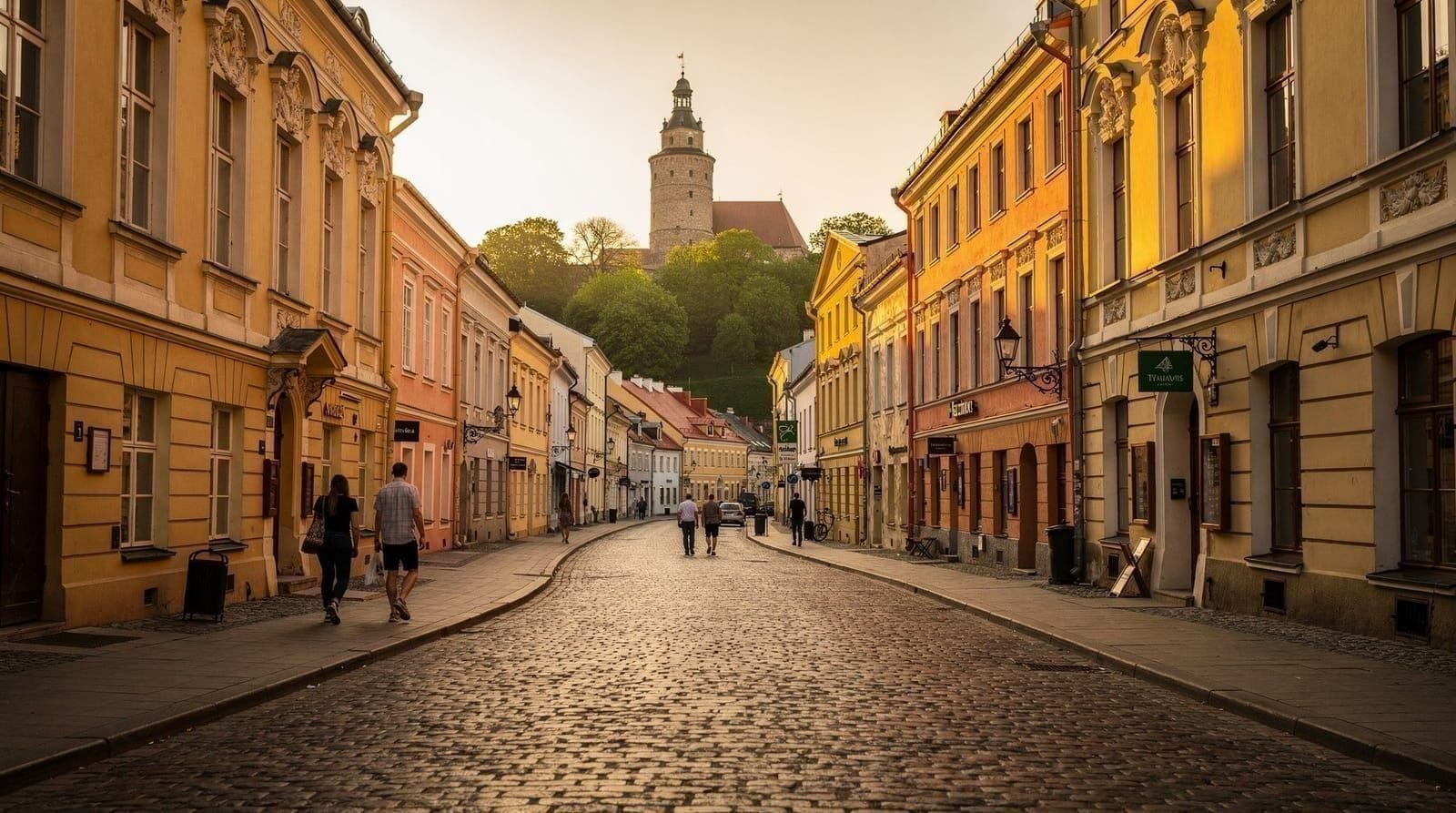
The best eating in Vilnius concentrates away from the main tourist circuit — in Užupis, in Naujamiestis, and in the streets east and south of the Old Town’s main pedestrian drag. The Vilnius on a budget guide has more practical detail on navigating this.
If you are eating in the Old Town (and there are good reasons to do so — Lokys being the main one), be selective. Walk away from Pilies gatvė at every available opportunity. The food two streets away is better and half the price.
Frequently asked questions about Lithuanian dishes
How heavy are cepelinai really?
Very heavy. Two cepelinai weigh roughly 400g before the sour cream. Most people — particularly those not accustomed to potato-dense cooking — find that one portion is enough for the entire day. Eat them at lunch, walk afterward, and do not plan a large dinner.
Is Lithuanian food very salty?
It is seasoned firmly but not excessively. Smoked and pickled products — smoked meat, pickled cucumber, fermented beet — have the salt content you would expect. Restaurant cooking is generally well-balanced. People on low-sodium diets will find Lithuanian cuisine challenging; most dishes involve cured meat in some form.
Can I find Lithuanian food in supermarkets to try before eating at restaurants?
Yes. Lithuanian supermarkets (IKI, Maxima, Rimi are the main chains) carry prepared versions of many traditional dishes in the deli and cold counter sections — cepelinai, bulviniai blynai, varškė (curd cheese), dark bread, and fermented dairy products. These are not restaurant quality but give a reasonable preview. Kefiras and juoda duona (dark rye bread) are worth buying for any extended stay.
What is varškė?
Varškė is fresh Lithuanian curd cheese — the dairy product that appears in cepelinai fillings, in pastries, in desserts, and eaten plain at breakfast. It is similar to quark or a drier cottage cheese — mild, slightly grainy, high in protein. It is not the same as cream cheese or ricotta, though those are the closest approximations. You can buy it in any Lithuanian supermarket.
Are there any Lithuanian dishes similar to food I might already know?
Bulviniai blynai (potato pancakes) are very similar to German Reibekuchen or Swiss Rösti. Kibinai are closely related to Cornish pasties or Argentinian empanadas — a filled pastry in crescent form. Šakotis has a cousin in the Polish sękacz and German Baumkuchen. Kugelis is similar to a very dense potato gratin. The Lithuanian versions are distinct but the formats will be recognisable.
Is Lithuanian food good for vegetarians?
Reasonably, though it takes some navigation. Curd-filled cepelinai (ask for no bacon topping), bulviniai blynai with mushrooms, and kugelis without bacon are all genuine options. Most restaurants that take food seriously, including Šnekutis and Lokys, can adapt a dish on request. Fully vegan eating is harder given how central dairy is to the cuisine — see the best restaurants in Vilnius guide for dedicated vegetarian addresses like Balti drambliai.
How long does a proper sit-down Lithuanian meal take?
Budget 60-90 minutes for a full meal with cepelinai or another main course — the dumplings alone take 30-40 minutes to cook, so restaurants prepare them fresh rather than holding them ready. Canteen-style places like Senatorių pasažas are faster since the dishes are already made.
Top experiences
Bookable activities with verified prices and instant confirmation on GetYourGuide.