Vilnius travel tips for first-time visitors
Vilnius: City highlights walking tour
Duration: ~2 hours
What do first-time visitors need to know about Vilnius?
Vilnius is safe, compact and very walkable. The Old Town fits in 2-3 hours on foot. Use Bolt (not taxi ranks) from the airport. Pay by card almost everywhere. English is widely spoken in tourist areas. Lithuanian is the language — a few words of thanks go a long way.
| Where | Old Town, walkable from Cathedral Square |
| Cost | Free entry visa (Schengen); budget around €45-130/day |
| Time needed | 2-3 days minimum for a first visit |
| Getting there | Vilnius Airport (VNO), 6 km from the centre |
| Best time | May-September for weather; year-round for city sights |
First visits to Vilnius tend to surprise people — the Old Town is larger and more beautiful than expected, the food is better than the stereotype, and the city feels both historic and genuinely alive. Here is the practical knowledge that will make your visit go smoothly.
Before you leave home
Visa and entry
Lithuania is in the Schengen Area and the EU. EU and EEA citizens can enter with a national ID card. US, UK, Canadian, Australian and New Zealand citizens can visit visa-free for up to 90 days within any 180-day period. No border checks within Schengen.
The EU ETIAS (travel authorisation) system is expected to launch in 2025-2026 — check current status before travelling if you are a non-EU citizen.
Currency
Lithuania uses the euro (€) and has since 2015. There is no currency exchange needed if you are arriving from another eurozone country. For non-euro travellers, exchange at bank ATMs in the city (Luminor, SEB, Swedbank machines are reliable and fee-transparent) rather than at the airport exchange desk or on Pilies Street kiosks, which apply unfavourable spreads of 5-8%.
Health and insurance
Lithuania has a public healthcare system but it is not free for non-EU tourists. Travel insurance with medical coverage is strongly recommended. EU citizens should carry their EHIC/GHIC card (European Health Insurance Card) for access to public healthcare at local rates.
No vaccinations are required. Tick-borne encephalitis (TBE) is a risk in forested areas of Lithuania, especially in spring and early summer — if you plan to hike in Aukštaitija or Dzūkija forests, consider the TBE vaccine in advance.
Getting a SIM card
The easiest option: pick up a prepaid SIM at a Tele2, Bite or Omnitel shop in the city (there is a Tele2 outlet in the main terminal at Vilnius Airport). A 30-day data SIM with 15-20 GB costs €5-10. EU citizens can use their domestic plan with EU roaming included; others should check their carrier’s Lithuanian roaming rates.
Arriving in Vilnius
From the airport
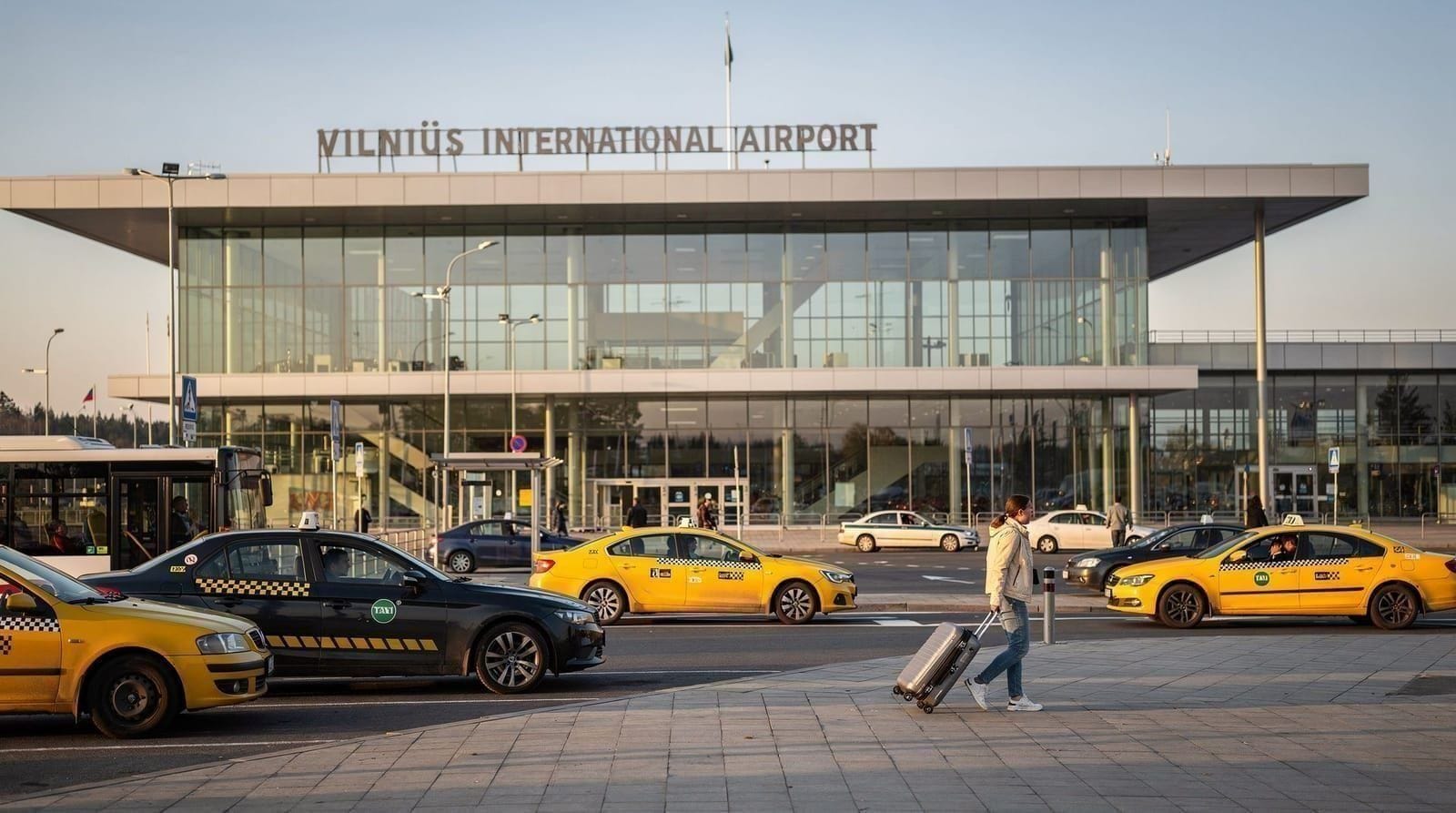
Vilnius Airport (VNO) is 6 km from the Old Town — about 15 minutes by road in normal traffic, up to 30 during rush hour.
Bolt (ride-hailing app): Open Bolt before you leave the terminal. Fare to Old Town: €6-9 depending on time of day. This is the cleanest option.
Taxi ranks: Located outside arrivals. Prices are quoted rather than metered — expect €15-25 offers. This is a well-known tourist overcharge trap; decline politely and use Bolt instead.
Bus: Routes 1 and 2 run from the airport to the city centre (Lukiškių Square) in about 30-40 minutes. Ticket costs €1 (pay via MTicket app or buy a paper ticket from the driver). Change at central stops for the Old Town.
Train: Vilnius Airport has a train station — services to Vilnius Central Station take 7 minutes, run regularly throughout the day, and cost €0.60-1. This is the cheapest option and often the fastest. Check the schedule on ltglink.lt.
See the detailed Vilnius airport to city centre guide.
Getting around the city
Walking
The Old Town is about 1.5 km north-to-south and 800 m east-to-west — small enough to walk edge-to-edge in 30-40 minutes. Almost everything a first-time visitor wants to see is walkable from Cathedral Square. Comfortable shoes on cobblestones are non-negotiable.
Public transport
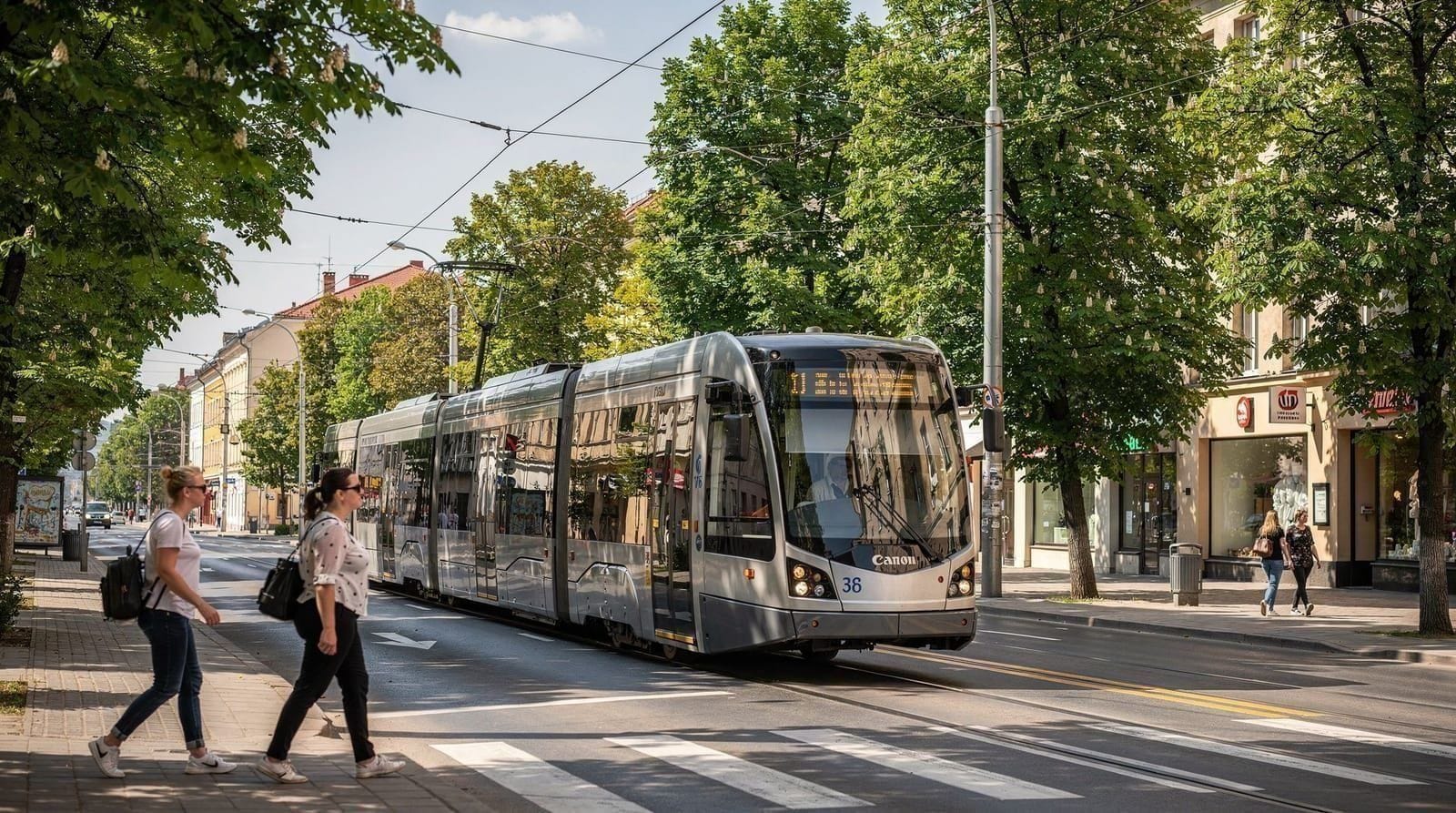
Vilnius has an extensive bus and trolleybus network. Relevant routes for tourists:
- Bus 88 from train station area to Vingis Park
- Trolleybus 2/5/17 on Gedimino prospektas (the main boulevard)
- Single ride: €1 (MTicket app) or €1.10 from driver
Bolt
Bolt is the dominant ride-hailing app — far more common than Uber (which has a presence but thinner coverage). Download it before you arrive. Bolt prices within the city are low: €4-8 for most central journeys.
Bicycles
Cycling Vilnius has a dedicated e-bike sharing scheme. Vilnius has dedicated cycling lanes in many areas including the riverside path along the Neris. For day-trip cycling (Vilnius to Trakai by bike, for example) bikes can be rented from shops near the Old Town — see cycling in and around Vilnius.
Vilnius: City highlights walking tour Vilnius: Shooting experienceLanguage basics
Lithuanian is one of the oldest living Indo-European languages and shares almost nothing with English structurally. But you do not need to learn it to visit.
A few useful words that locals appreciate:
- Ačiū (ah-choo) — thank you
- Labas — hello
- Viso gero — goodbye
- Prašom — please / you’re welcome
- Atsiprašau — excuse me / sorry
Most signs in tourist areas are in Lithuanian with English translations. Museum labels in major institutions (Museum of Occupations, Lithuanian National Museum) are in Lithuanian and English.
Neighbourhood orientation
The Old Town (Senamiestis) is defined roughly by Gedimino pr. to the north, the Vilnelė river to the east, and Pylimo Street to the west. Within this area:
- Cathedral Square is the civic heart
- Pilies Street is the main tourist pedestrian street (northernmost, closest to Cathedral Square)
- Literatai Street is covered in plaques — an outdoor gallery, off the main drag, quieter
- Užupis is east across the Vilnelė — accessed via the small bridge on Užupio g.
The Gediminas Tower sits atop the castle hill (Pilies kalnas) — access via the funicular (€2) or a 15-minute walk up the path. The hill and the views are free; the tower museum costs €6-8.
Practical tips that save time
Arrive hungry: Vilnius’s food culture is genuinely good. Cepelinai (potato dumplings filled with meat or curd, served with sour cream and bacon) at Etno Dvaras or Lokys are worth eating on day one rather than waiting.
Use the MTicket app: Download it before you arrive. Public transport tickets are €0.10-0.20 cheaper per ride than cash fares, and the app shows real-time routes.
Book the KGB Museum in advance: The Museum of Occupations (Aukų g. 2A, formerly called the KGB Museum or Museum of Genocide Victims) is small and fills up, especially in summer. Book online or arrive by 10:00 when it opens.
Avoid restaurant touts: Any restaurant on Pilies Street or Vokiečių Street with someone standing outside trying to hand you a menu is charging tourist prices. One block off these streets the food is the same quality at 20-30% lower prices.
Gediminas Tower wait times: On summer weekends, the funicular queue can be 20-30 minutes. Walk up the hill path instead — it takes 15 minutes and is more pleasant than the small cable car.
What to pack
- Comfortable walking shoes (the Old Town cobblestones are uneven)
- Light waterproof jacket (useful year-round)
- Power adapter (Type F/Schuko — same as mainland Europe)
- Sunscreen for summer (UV is strong during long summer days)
- Warm layers and waterproof boots for winter visits
Local customs to know
Tipping: Not mandatory. 10% is considered generous in restaurants; rounding up the bill is common. No expectation of tipping in bars or cafes.
Supermarkets: Self-checkout is common in Rimi and Maxima (the main chains). You bag your own groceries; no one bags for you. The plastic bag costs €0.10-0.20 — bring a tote.
Sunday trading: Most Old Town shops and many restaurants open on Sundays. Halės Market (Pylimo g.) is open Sunday morning — a good time to visit.
Photography in churches: Generally permitted but use common sense — no flash photography during services. The Gate of Dawn chapel has a notice about respectful behaviour (remove hats, silence phones).
Vilnius: Vibrant self guided audio walking tourCommon first-timer mistakes and how to avoid them
Most first-visit stumbles in Vilnius are avoidable with a little forewarning. The single most common one is eating on Pilies Street without checking prices, which tends to run 25-35% above nearby streets for comparable food — see the Vilnius on a budget guide for the fuller breakdown of where prices genuinely differ. A close second is taking a taxi rank car from the airport instead of Bolt, and a third is arriving on a Monday without checking that most museums, including the Museum of Occupations, are closed that day.
Less obvious but still common: underestimating how much the Old Town’s cobblestones affect a day of walking (bring proper shoes, not sandals), and assuming that because Lithuania uses the euro and is deep in the EU, everything will feel identical to Western Europe — the pace, the food, and the language are genuinely distinct, which is part of the appeal rather than something to smooth over.
Day one, hour by hour
A practical first day for most visitors: land, take the 7-minute airport train to Vilnius Central Station, drop bags at your accommodation, then walk north on Gedimino prospektas toward Cathedral Square — this single walk orients you to the city’s main axis within 20 minutes. Spend the early afternoon in the Old Town core (Cathedral Square, Pilies Street, the university courtyards), cross into Užupis in the late afternoon when the light is good for photos, and end the day with dinner away from the main tourist streets. This loose structure works whether you have 2 days or 5 in Vilnius — it just becomes the template you repeat with variations.
Frequently asked questions about visiting Vilnius for the first time
How many days should I plan for Vilnius?
Two full days covers the core Old Town and Užupis. Three days adds a Trakai day trip. See how many days in Vilnius for detailed day-by-day breakdowns.
What is the best way to see Vilnius on arrival day?
Take the train from the airport to Vilnius Central Station (7 minutes), drop your luggage at the hotel, then walk north on Gedimino prospektas to Cathedral Square. This gives you instant orientation and a first sense of the city within an hour of landing.
Is Vilnius wheelchair accessible?
Partially. The main avenues (Gedimino pr.) and modern museums are accessible. The Old Town cobblestones are difficult for wheelchairs and prams — some streets have smoother alternatives, but it is challenging. The funicular to Gediminas Tower is accessible; the walking path is not.
Is it worth buying a Vilnius Pass?
The Vilnius City Card (Vilnius Pass) gives access to museums and some transport. It makes financial sense if you plan to visit four or more paid museums in a 24-48 hour window. For most visitors, paying per attraction is slightly cheaper. See our Vilnius pass and tickets guide.
What should I eat in Vilnius?
Cepelinai, šaltibarščiai (cold pink beetroot soup), skilandis (smoked sausage), rye bread, and kūgelis (potato pudding) are the traditional Lithuanian staples. For dessert, šakotis (tree cake). Vilnius also has an excellent Georgian restaurant scene — the Lithuanian-Georgian community history means genuine khinkali and adjapsandali are available at spots like Egzotika Cafe.
Top experiences
Bookable activities with verified prices and instant confirmation on GetYourGuide.