Things nobody tells you about Vilnius
Travel writing about Vilnius tends to either gush about the undiscovered baroque gem or produce the same list of the castle, the Gates of Dawn, and Užupis. Neither version prepares you well for the actual experience of being there. Here are the things that genuinely surprised people — including repeat Baltic travellers — on their first Vilnius trip.
| Biggest surprise | Old town is much larger than the highlight-list suggests |
| Prices | Roughly half a typical EU capital for food and drink |
| Language | English near-universal; Lithuanian is courtesy, not necessity |
| Footwear | Proper grip shoes — cobblestones are genuinely uneven |
| Summer daylight | Nearly 17 hours in June/July; bring an eye mask |
The old town is bigger than you expect
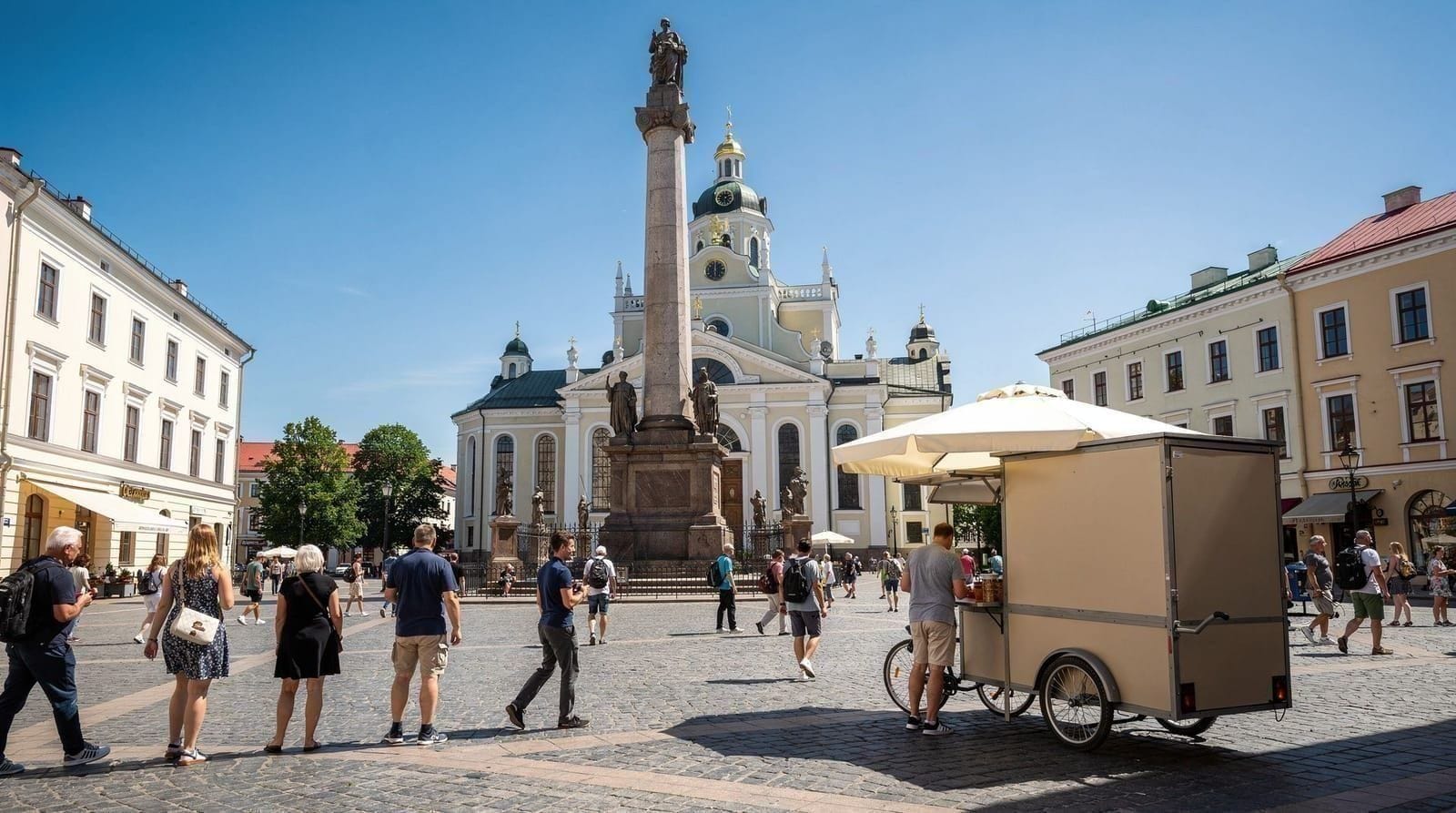
Most city guides give you a highlight list and imply you can cover it in an afternoon. Vilnius’s old town (Senamiestis) is the largest surviving baroque old town in Eastern Europe and a UNESCO World Heritage Site. Walking the perimeter takes over two hours without stopping; walking it properly, with diversions into courtyards and side streets, takes days.
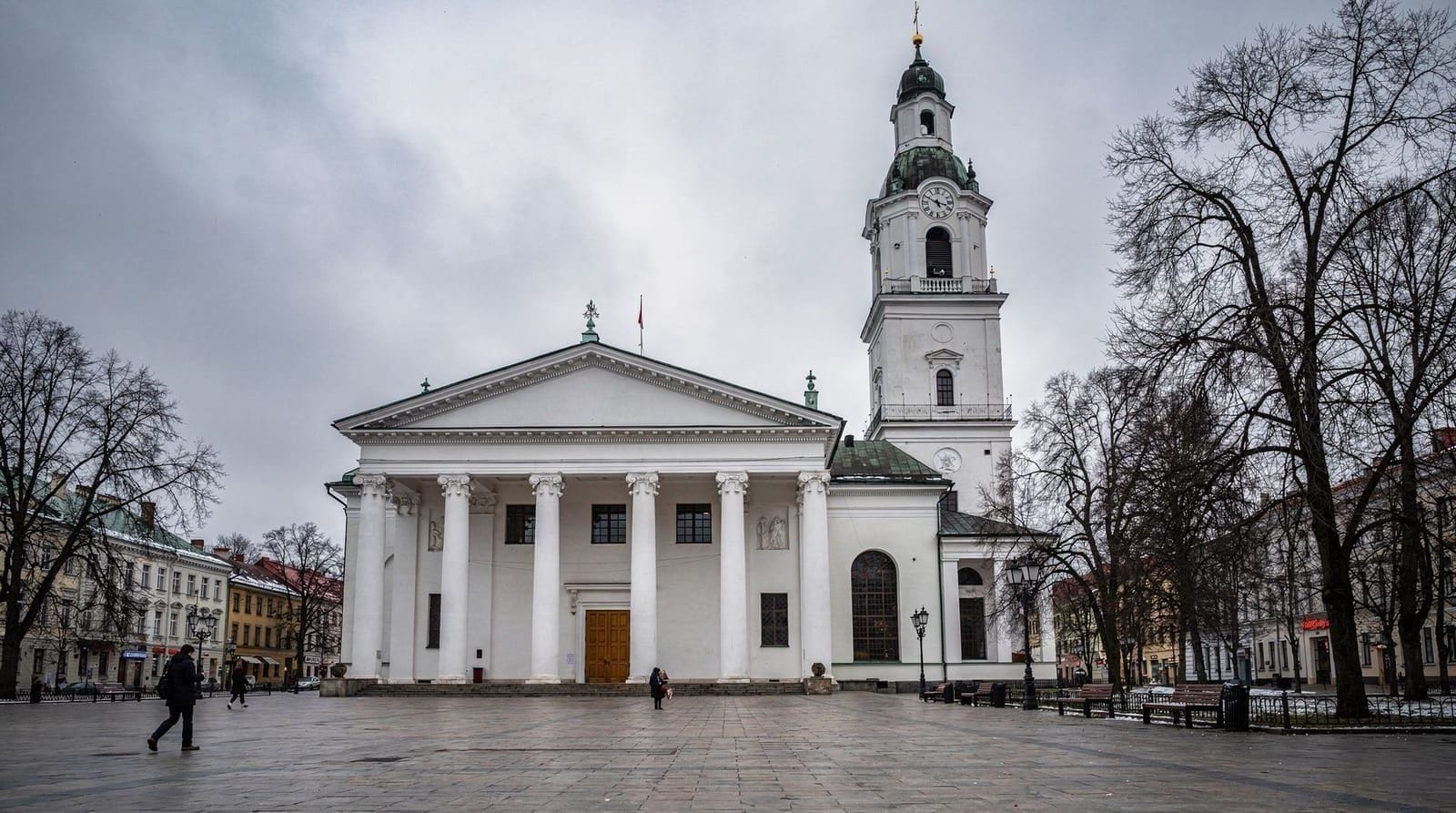
The typical visitor walks down Pilies Street, sees the Cathedral Square, climbs the castle hill, and crosses to Užupis. They’ve seen perhaps 15% of the old town. The churches off Vokiečių Street, the university complex with its sequence of courtyards, the Dominican church, the Armenian church (a Vilnius oddity), the streets east of the Gates of Dawn — these require deliberate exploration.
This is not a criticism. It means Vilnius rewards repeat visits in a way that smaller, more entirely-digested old towns don’t.
”Affordable EU capital” undersells it considerably
Guidebooks mention that Vilnius is cheap. They are not lying, but they are underselling the gap. Vilnius is not “a bit cheaper than Berlin” cheap. A sit-down canteen lunch — soup, main, drink — costs €4–7. A craft beer in a neighbourhood bar is €3–4. A taxi for a 5 km ride via Bolt costs €4–6. A hostel dorm bed is €15–20. Museum entry is €5–10.
For a British, German, or Scandinavian traveller, the sticker shock operates in reverse: things cost approximately half what you’d expect from an EU capital. For Americans from expensive metro areas, the difference is even more pronounced. The cheap eats in Vilnius guide maps this in more detail.
This creates an unusual dynamic: Vilnius is the EU city where you can genuinely afford to stay longer, eat better, and do more than your budget seems to allow. Build your plans accordingly.
The dark history is genuinely confronting
Every travel guide mentions the KGB Museum and the Jewish history of “Jewish Vilna.” What they don’t convey is how dense and unavoidable this history is when you actually engage with it.
Vilnius before World War II was approximately 40% Jewish — one of the most significant Jewish communities in Europe, home to the Vilna Gaon and a major centre of Yiddish scholarship, literature, and press. By 1945, over 90% of those people were dead, most of them shot in Paneriai forest 10 km from the city centre. The understanding Lithuanian history guide covers the full context.
What this means in practice: the KGB Museum (Museum of Occupations) is a serious, heavy place. Not a tourist attraction in the conventional sense — a documented record of what happened to people in these specific rooms. The Paneriai Memorial is a quiet forest site with mass grave pits still visible. These are not easy to visit; they are important to visit.
Vilnius also handles this history imperfectly. The public memorialisation of the Holocaust has improved significantly in recent decades but remains incomplete; some Lithuanian nationalist narratives have historically under-acknowledged local complicity in the killings. This is not a reason to avoid the history — it’s a reason to engage with it thoughtfully rather than through the sanitised version.
English is genuinely universal
You will not need Lithuanian to navigate Vilnius. In the tourist-facing parts of the city — restaurants, hotels, sites — English is spoken fluently by most service workers under 40 and adequately by most over 40. Airport to hotel, hotel to restaurant, museum to bar: you will not encounter a genuine language barrier.
This is unusual for a country of 2.8 million people; it reflects the cohort who grew up post-1991 with English as the dominant international language, and Lithuania’s general orientation towards Western European culture and media.
The Lithuanian phrases guide is still worth reading — not for necessity but for the courtesy dimension. Attempting “ačiū” (thank you) is noticed and appreciated. But it is not required.
The cobblestones are actually difficult
This is only funny in hindsight. Vilnius old town’s cobblestone streets are genuinely uneven — not decorative, slightly-different-texture cobblestones, but large, irregular, historically authentic stones that have been lifted and re-laid over centuries. In wet weather, they’re slippery. In any weather, they’re ankle-twisting ground for casual footwear.
Wear proper shoes. Not heels; not flat-soled fashion trainers. Comfortable walking shoes with grip, or ankle-supporting trail shoes, are appropriate. This is not a style recommendation — it’s a practical injury-prevention note that guides don’t usually state plainly.
The same cobblestones are the reason the old town is so photogenic; they also explain why wheelchair accessibility in the historic centre is limited and pram navigation is fatiguing.
Beer is taken seriously here
Lithuania punches above its weight in craft beer. The country has a deep tradition of farmhouse ale (kaimiškas alus) — unfiltered, unpasteurised traditional ales that predate commercial brewing — that has found an unexpected second life in the craft beer movement. Places like Prohibition Brewing on Trakų Street and Craft Beer Inn on Vilniaus Street have tap lists that would hold their own in Brussels or Copenhagen.
The major Lithuanian lagers (Švyturys, Utenos, Gubernija) are reliable and cheap at €2.50–3.50 a pint. But the farmhouse ales and the better craft offerings are distinctive enough to justify seeking out, particularly for beer drinkers who think they’ve seen everything.
The Lithuanian drinks and spirits guide covers the full picture, including midus (honey mead), gira (fermented rye drink), and the herbal vodka Trejos Devynerios (Three Nines).
The summer day is very, very long
In June and July, Vilnius has nearly 17 hours of daylight. Sunset is after 10 pm; it doesn’t get fully dark until after 11 pm. Dawn is before 5 am.
This is wonderful if you use it: you can have dinner at 8 pm and still go for a walk in bright sunlight afterwards. The cathedral square at 9:30 pm in June is still in daylight and largely empty of tourists. Photographers get golden hour twice a day.
The flip side: blackout curtains in accommodation are not universal. If you’re a light sleeper, bring an eye mask. The Lithuanian summer light is luminous and lovely; it is also present at 4:30 am.
The airport is closer than it looks
Vilnius Airport (VNO) is 6 km from the city centre — one of the closest major airports to an EU capital. Bus line 1 goes directly to the central bus and train station for €1. The journey takes about 20 minutes. A Bolt taxi is €4–6. There is essentially no reason to pay airport-rank taxi prices, which can run to €15–20 for the same journey.
Užupis is residential — genuinely
Tourists treat Užupis as an open-air art gallery with cafes attached. It’s that, but it’s primarily a residential neighbourhood where people live normal lives. The courtyards that are open and worth exploring are public-facing by intent; the ones with closed gates are private. Read the signs; use judgment.
The Republic of Užupis runs on good-natured self-governance and artistic identity. It does not have actual border controls, but it occasionally sets up theatrical “passport stamp” booths on April 1 (Užupis Day) when the district celebrates its independence with a festival. This is fun and participatory; not a real bureaucratic requirement.
The coffee scene is better than expected
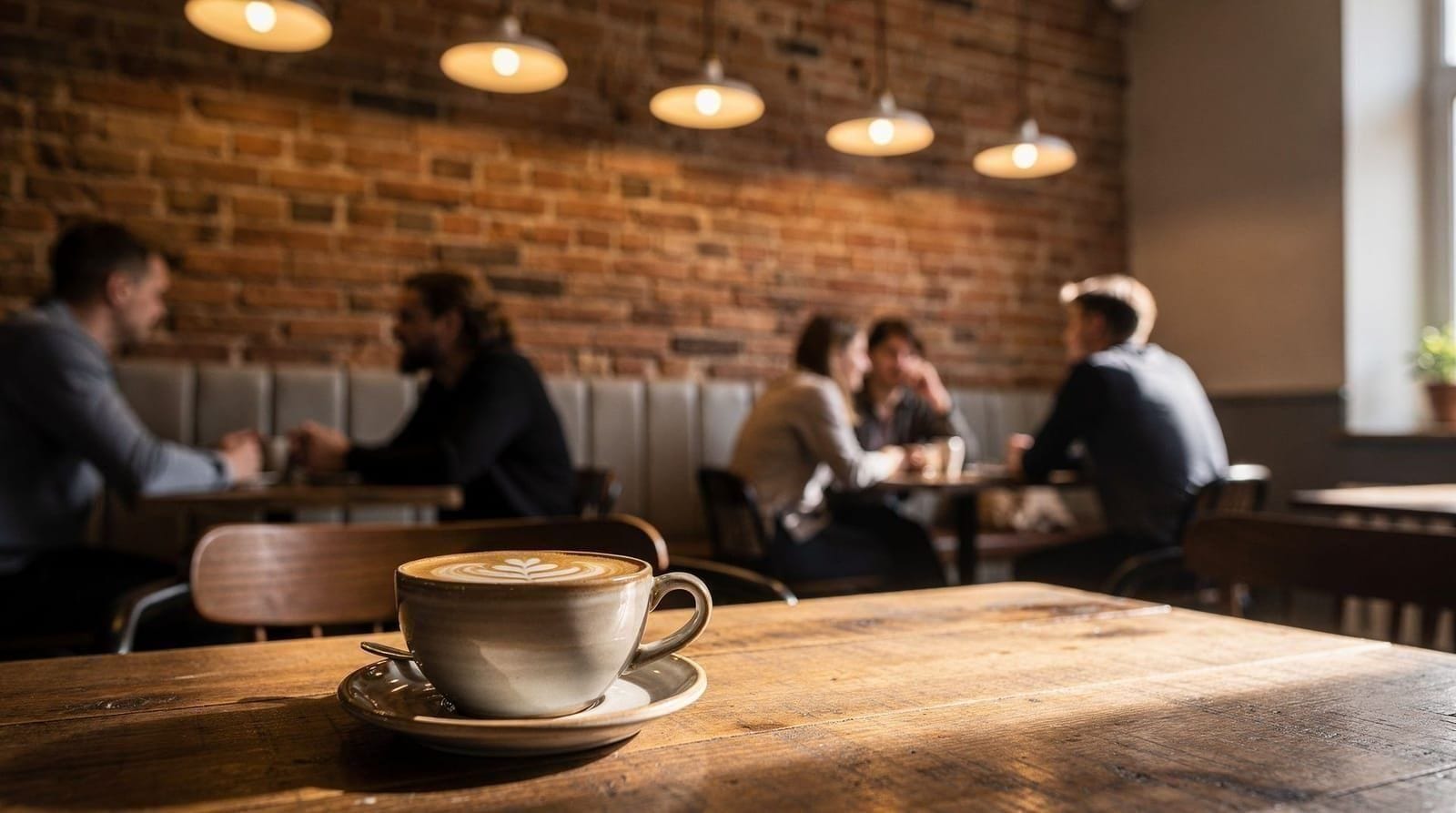
Guides rarely mention this because it’s a recent development, but Vilnius has developed a genuine specialty coffee scene over the past decade, with independent roasters and third-wave cafés scattered through the Old Town and Naujamiestis. It’s not on the level of Copenhagen or Melbourne, but it’s noticeably better than what most visitors expect from a former Soviet republic — a byproduct of the same younger, internationally-oriented generation that drives the English fluency. The best cafés in Vilnius guide has the specific recommendations; expect to pay €2.50-3.50 for a well-made espresso-based drink.
Museums close earlier than you’d assume
A genuine trap for first-time visitors: most Vilnius museums, including the KGB Museum and Gediminas Tower, close between 5pm and 6pm, and several close entirely on Mondays. This is standard in much of Eastern Europe but catches travellers used to later closing times in Western European capitals. Plan museum visits for the morning or early afternoon, and check specific hours before building a day around a particular site — a wasted trip to a closed museum is one of the more common first-timer frustrations.
You probably won’t leave disappointed — but go with the right expectations
Vilnius is not Prague. It doesn’t have Prague’s medieval density or Prague’s tourist infrastructure. It’s not Tallinn — less perfectly preserved, more lived-in. It’s not Riga, which has a slightly larger critical mass of nightlife and music.
What Vilnius has is a specific combination: substantial, well-preserved baroque architecture; a history dense with European significance (the Grand Duchy, the Jewish heritage, the 20th century’s occupations); genuine affordability; a food and coffee scene that has matured quietly; and a population that has emerged from 50 years of Soviet rule with a clear sense of what it is.
That combination, properly engaged with, is more interesting than most European city-break destinations. The payoff is proportional to the depth of engagement.
Vilnius “Then and Now” old town tour — a good way to decode what you’re actually looking atFrequently asked questions about things to know before visiting Vilnius
Is Vilnius safe?
Yes — Vilnius is one of the safer EU capitals for tourists. Petty theft (pickpocketing) exists at the level typical of any tourist city; violent crime is rare. Standard urban precautions apply: don’t display expensive equipment unattended, use Bolt rather than street taxis, be aware in very crowded areas.
Do you need cash in Vilnius?
Card payments are accepted almost universally — Lithuania’s payment infrastructure is modern and contactless payment works everywhere. Some older market stalls and small cafes prefer cash. Having €20–30 in cash is sufficient; you don’t need large amounts.
What time zone is Lithuania in?
Lithuania is in the Eastern European Time Zone (EET), UTC+2 in winter and UTC+3 in summer (EEST). Two hours ahead of UK time, one hour ahead of Central European Time (Germany, France, etc.).
Is Vilnius good for solo travel?
Yes — the city is walkable, safe, English-friendly, and has good solo-travel infrastructure including hostels, easy public transport, and a manageable scale that doesn’t overwhelm. The solo travel Vilnius guide covers the specifics.
Can you drink tap water in Vilnius?
Yes — tap water meets EU standards and is safe to drink throughout Lithuania.
What is the best neighbourhood to stay in Vilnius?
The old town (Senamiestis) is the most convenient for tourism but has premium accommodation prices and cobblestone noise. Naujamiestis (New Town) around Gedimino Prospektas offers slightly lower prices, smoother streets, and easy access to everything. Užupis is atmospheric but has limited accommodation options.
What time do museums close in Vilnius?
Most, including the KGB Museum and Gediminas Tower, close between 5pm and 6pm, and several close entirely on Mondays. Plan museum visits for morning or early afternoon and check specific hours in advance.
Is the coffee in Vilnius any good?
Yes, more so than most visitors expect — a genuine independent specialty coffee scene has developed over the past decade. See the best cafés in Vilnius guide for specific recommendations.