The best cafes in Vilnius: a local's shortlist
Vilnius has a genuinely good coffee scene, and the best of it is not on Pilies Street. The stretch of tourist cafes between the Cathedral Square and the Dawn Gate does exactly what tourist-street cafes everywhere do: mediocre coffee, inflated prices, and waitstaff trained to usher you towards the dessert menu. The actual Vilnius coffee culture lives in Užupis, Naujininkai, and the back streets of the old town where baristas compete on single-origin espresso and filter programs rather than on walk-in location.
Prices: a flat white costs €2.80–3.50 at the places listed below. A slice of cake is €3–5. These are honest 2026 prices in a city that remains one of the cheapest EU capitals for food and drink.
| Where | Užupis (best density), old town back streets, Šnipiškės |
| Cost | Flat white €2.80-3.50, cake €3-5 |
| Avoid | Pilies Street tourist cafes — inflated prices, mediocre coffee |
| Best for working | Vero Café, Coffee Inn, or Kavos Bankas |
| Best terrace | Uzupio Kavine, riverside, summer only |
The old town and its back streets
Caffe Nero alternatives to actually try
First, a disclaimer: Caffe Nero has four Vilnius locations, and they’re consistently fine for reliable Wi-Fi and a neutral latte. They are not the reason to come to Vilnius.
Doubleshot (Vilniaus g. 16) is the old-town anchor for specialty coffee. They roast their own beans and have been running a serious filter program since around 2012. The space is small — maybe 20 seats — and fills up on weekend mornings. Cortado around €3.20.
Croissant Café (Dominikonu g. 10) is not primarily a coffee shop — the draw is the French-style pastry case — but the espresso here is genuinely good and the croissants are honest. Open from 8 am, which makes it useful for early starts before walking the old town.
Mano Kalita (Šv. Kazimiero g. 3) serves Lithuanian coffee with a light menu of open sandwiches. The interior uses exposed brick and industrial fittings — the kind of aesthetic that was trendy in 2015 and is now just comfortable.
Užupis: the coffee district for people who live here
Užupis hosts a density of cafes disproportionate to its size, partly because the district’s artist-and-remote-worker demographic creates reliable demand for good third-wave coffee all week.
Arbatinė (Užupio g. 4) is a tea house that doubles as a quiet retreat — over 100 loose-leaf teas, decent filter coffee, and a back room with floor cushions. It’s popular with Vilnius University students and genuinely unusual. Don’t arrive in a hurry.
Keule Ruke (Užupio g. 10) is primarily a bar and club (check the schedule — it hosts live music most weekends), but it runs a good daytime cafe operation with a terrace overlooking the Vilnelė River. One of the few places in Vilnius where you can sit outside with a coffee and hear nothing but birds and bicycles.
Uzupio Kavine (Užupio g. 2) has been here long enough to be woven into the neighbourhood’s identity. The terrace in summer is the best outdoor coffee seat in Vilnius — a genuine local claim, not marketing copy. Expect to share your table.
Šnipiškės and the New Town
The area around Gedimino Prospektas (the main boulevard west of Cathedral Square) has several cafes oriented towards office workers rather than tourists — faster service, slightly cheaper prices, and reliable Wi-Fi.
Vero Café operates a small chain across Lithuania and the Vilnius old-town branch (Gedimino pr. 24) is the most polished. Consistent specialty coffee, good cake selection. This is where you come when you want to work for two hours without being interrupted.
Coffee Inn is Lithuania’s dominant local coffee chain — 30+ locations nationally. The product is consistently decent without being remarkable. Good if you’re at a transport hub or need guaranteed Wi-Fi.
Literatų Gatvė (the Street of Literature, near the Town Hall) has a handful of independent cafes built into the ground floors of old town buildings. Kavos Studija at No. 7 is worth knowing about — small, serious, good pour-over program.
For breakfast specifically
Vilnius breakfast culture runs behind Western Europe — many locals eat at home before work, and the concept of a weekend brunch rush arrived relatively recently. That said:
Kempinė (Labdarių g. 1) does one of the better brunches in the old town: egg dishes, Lithuanian dark rye with toppings, decent vegetarian options. Expect a queue on Sunday mornings from about 10 am.
Radharane (Pylimo g. 4) is a Hare Krishna vegetarian restaurant that has been feeding Vilnius on cheap lentil soup and grain dishes since the early 1990s. The breakfast buffet (available from 11 am) is around €6 for as much as you want. It is not trying to be fashionable; it succeeds in being useful.
What to order
- Flat white: the default order for specialty espresso. Vilnius baristas know what it means.
- Kava su pienu: coffee with milk — the generic term, often means an Americano with a jug of milk on the side. Clarify if you have preferences.
- Cepelinai to go: not coffee, but worth noting — a few cafes near the Central Market sell takeaway Lithuanian dumplings. Do not combine with a specialty espresso; both deserve full attention.
- Cake worth ordering: šakotis (Lithuanian tree cake, a spiral cylinder of layered batter) appears in various forms at multiple old-town cafes. The version at Doubleshot is one of the better ones.
What to avoid
The cafes fronting Pilies Street with photographs of food on A-boards outside. The prices are 30–50% higher than equivalent quality two streets back, and the quality is rarely equivalent. No names needed — you’ll recognise them immediately.
The Vilnius food guide covers restaurants more fully, and the coffee scene guide goes deeper on the specialty coffee picture. For cheaper eating to pair with your coffee stops, the cheap eats in Vilnius guide covers canteens and market food in the same neighbourhoods.
Flavours of Vilnius food tour — includes local cafe stopsNeighbourhood comparison for cafe-hopping
| Neighbourhood | Vibe | Best for |
|---|---|---|
| Old town back streets | Historic, cobbled, slightly touristy but manageable | First-timers combining coffee with sightseeing |
| Užupis | Bohemian, riverside, artist-and-remote-worker crowd | Slow mornings, terraces, unhurried visits |
| Šnipiškės / New Town | Office-oriented, faster service | Reliable Wi-Fi, working for a few hours |
Cafes for working remotely
Vilnius has a genuine remote-work crowd, and a handful of cafes cater to it deliberately rather than tolerating laptops as an afterthought. Vero Café and Coffee Inn have the most consistent Wi-Fi and power outlets; Kavos Bankas, being slightly outside the old town core, is quieter and less likely to be full of tourists on a weekday morning. If you’re staying longer term, the Vilnius for digital nomads guide covers coworking spaces and SIM/internet logistics beyond just cafes.
Seasonal and time-of-day notes
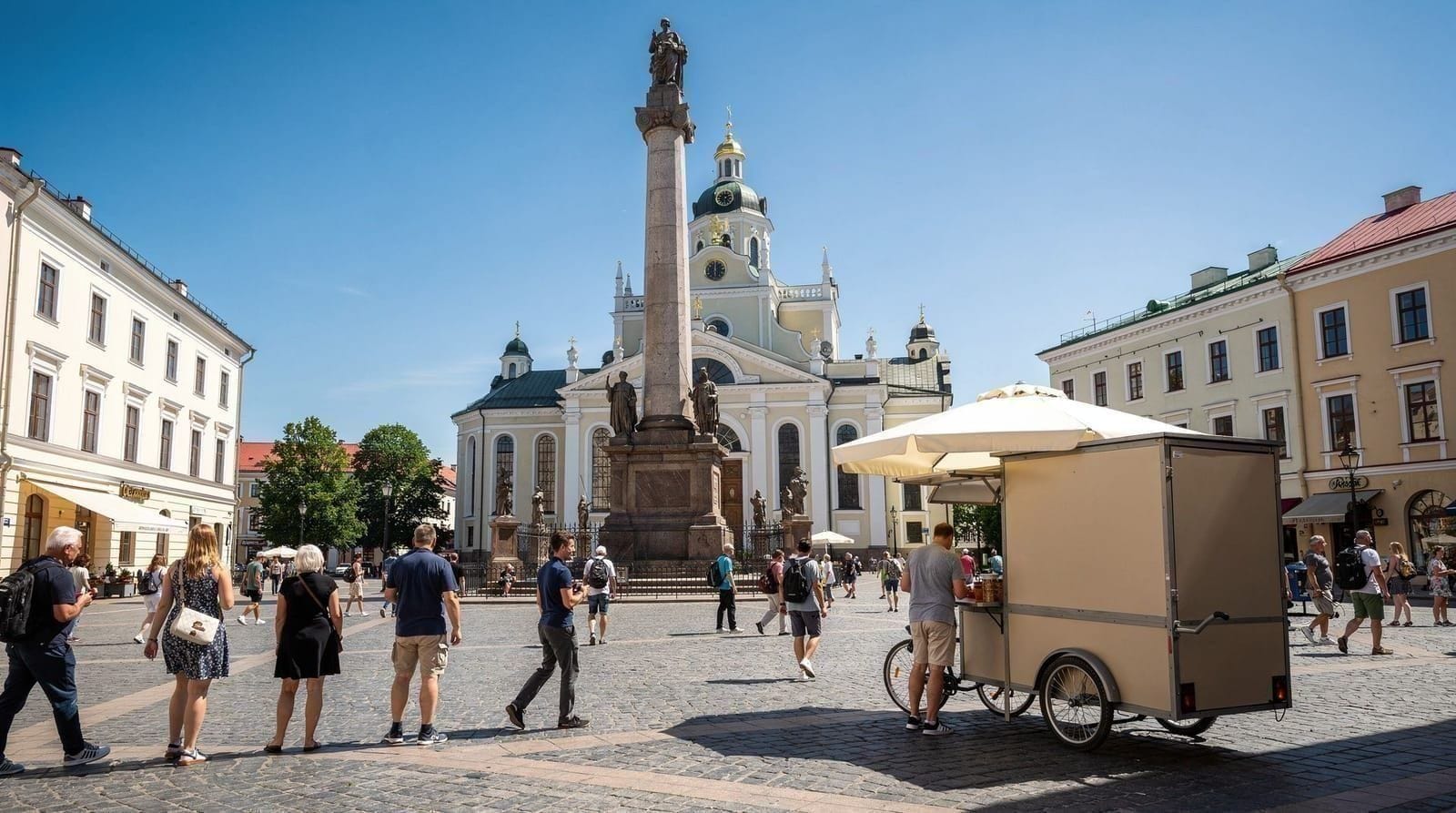
Vilnius café culture shifts significantly with the season. In summer — June through August — outdoor terraces fill up and stay busy until dusk, which can be as late as 10 pm in June. Uzupio Kavine’s riverside terrace, the back courtyard at Doubleshot, and the pavement seats on Gedimino Prospektas are the most popular open-air options.
In winter, the emphasis shifts to interior warmth. Lithuanian winters are genuinely cold (-2 to -8°C in December–January), and cafes become social anchors in a way they aren’t in summer. The window tables at Mano Kalita and the heated interior of Arbatinė are particularly well-suited to winter afternoons. The Christmas market at Cathedral Square (late November to early January) creates a pop-up café culture around the square’s perimeter, with mulled wine and honey mead stands supplementing the fixed establishments.
Mornings are quieter than you might expect, particularly on weekdays before 9 am. If you need a reliable early breakfast in the old town before a day trip, Croissant Café is the most consistent early opener. The Halės Turgus market canteen is also open from 7 am for anyone wanting a more substantial morning meal.
A note on Lithuanian café etiquette
A few small cultural notes that smooth the experience:
Sharing tables is normal in busy cafes — if a place is full and there are free seats at an occupied table, asking “Ar laisva?” (is this free?) and sitting down is perfectly acceptable. You won’t be treated as an intrusion.
Lingering is fine at most independent cafes and perfectly acceptable at Arbatinė and the Užupis establishments where the whole atmosphere encourages unhurried visits. The chains (Coffee Inn, Vero Café) are slightly faster-paced but still don’t rush customers the way Starbucks-style operations do elsewhere.
Tipping on coffee: not expected. On cake and a coffee as a small lunch substitute: rounding up or leaving €0.50–1 is appreciated at independent places; irrelevant at chains.
Counter versus table service: at most specialty coffee places you order at the counter and find your own seat. At more restaurant-style places, table service is standard. If you’re not sure, follow what others are doing.
The specialty coffee shops worth seeking out
Beyond the places already mentioned, a few additional spots that reward a deliberate visit:
Kavos Bankas (Islandijos g., slightly outside the old town core) is a quiet neighbourhood café that has been running a serious single-origin filter program since the mid-2010s. Less visible to tourists, which keeps it local and good.
Kava Piena (Dominikonu g.) operates as both a coffee shop and a record shop — the vinyl selection is genuinely curated and the coffee is equally considered. It’s a small, opinionated space that’s a better reflection of Vilnius’s contemporary creative culture than the larger tourist-facing establishments.
Etno Dvaras café (within the Etno Dvaras restaurant complex on Pilies g.) serves coffee and cake at slightly higher tourist prices but in a beautifully preserved 16th-century cellar space. The location justifies the slight premium if you want the old-town atmosphere without the worst of the tourist-trap restaurant menu.
Pairing this list with a day of sightseeing is straightforward: the Vilnius Old Town guide covers the sights within walking distance of most of the cafes above, so you can plan a loop that mixes coffee stops with the Cathedral, the university and Užupis without backtracking.
Frequently asked questions about Vilnius cafes
Do Vilnius cafes have English menus?
Almost universally yes in the old town and Užupis. Further out in residential areas, some menus are Lithuanian-only — Google Translate’s camera function is genuinely useful in those cases.
Are Vilnius cafes expensive?
Relative to Berlin or Amsterdam, no. A coffee is €2.50–3.50 at specialty places, €2–2.80 at chains. Cake is €3–5. These are among the lowest prices in the EU for comparable quality.
When do cafes open in Vilnius?
Most open between 8 and 9 am on weekdays, 9 to 10 am on weekends. A few close earlier than you’d expect — verify hours before a Sunday afternoon visit.
Is there a third-wave coffee scene in Vilnius?
Yes — a genuine one, led by Doubleshot and a handful of independent roasters. Lithuania has developed a serious coffee culture over the past decade and you’ll find well-extracted espresso and well-made filter coffee at the places listed above.
Can I work remotely from Vilnius cafes?
Most have Wi-Fi. Faster connections and power outlets are more reliably available at places like Vero Café and Coffee Inn. Independent cafes sometimes have one or two sockets and a slightly more relaxed approach to staying for hours — read the room.
Which cafe has the best breakfast in Vilnius?
Kempinė for a proper sit-down brunch, or Radharane if you want a cheap, filling vegetarian option. Both get busy on Sunday mornings, so arrive early or expect a short wait.
Is it worth visiting Vilnius cafes in winter?
Yes — the interior spaces come into their own when it’s cold outside. Arbatinė’s tea-house atmosphere and Mano Kalita’s window tables are particularly suited to a Lithuanian winter afternoon, and the Christmas market period adds a seasonal pop-up layer around Cathedral Square.