Kaunas city tour: which guided option is worth booking
Kaunas: Sightseeing 2 hour tour
Duration: 2 hours
Kaunas is Lithuania’s second city and, architecturally, its most interesting one. While Vilnius is defined by its Baroque Old Town, Kaunas has an extraordinary concentration of interwar modernist and functionalist buildings from the period when it served as the country’s provisional capital (1919–1940). The UNESCO-listed “Kaunas modernism” that earned European Capital of Culture status for 2022 is genuinely worth seeking out — and a good guided tour is the most efficient way to understand what you are looking at.
There are three distinct guided experiences here: a general sightseeing tour, a walking tour focused on the Old Town, and a specific dark history tour centred on the Ninth Fort.
| Where | Kaunas, 100 km / 55–70 min by train from Vilnius |
| Cost | City tours around €20–€35/person; Ninth Fort tour usually priced separately |
| Time needed | 4–5 hours for a worthwhile day trip; a full day if adding the Ninth Fort |
| Getting there | Frequent direct trains from Vilnius station, from around €4–€8 |
| Best time | Spring through autumn for walking; winter for the Christmas market and indoor museums |
The 2-hour Kaunas sightseeing tour
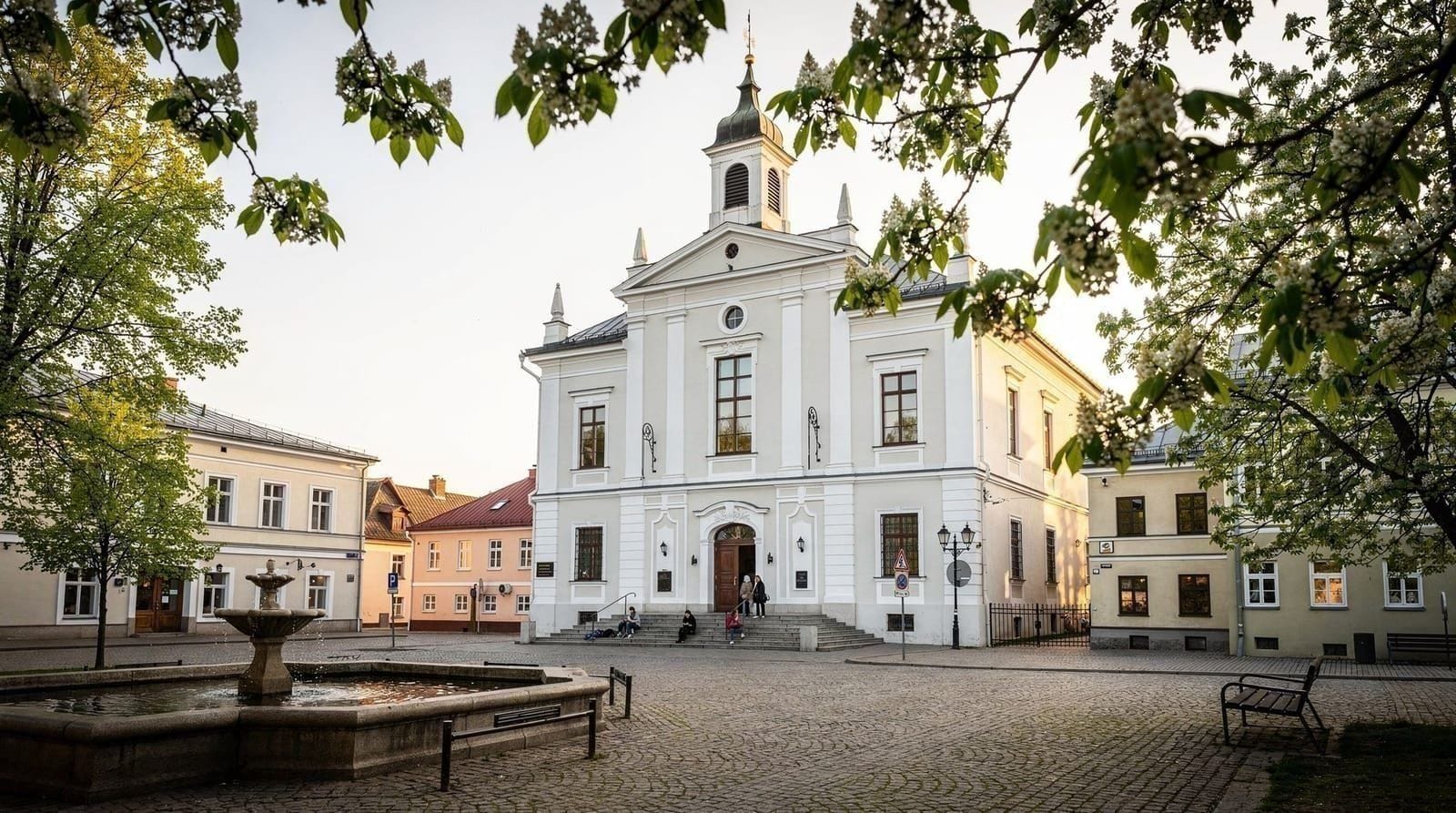
The Kaunas sightseeing 2-hour tour is the standard introduction. It covers the Old Town (centred on the Town Hall Square and the Vytautas the Great Church), the funicular up to the Aleksotas hill viewpoint, Laisvės Alėja (Freedom Avenue — the pedestrian boulevard lined with interwar modernist buildings), and key landmarks including the War Museum and the Mykolas Žilinskas Art Gallery.
Two hours is genuinely tight for a city the size of Kaunas. This format works best as an orientation tour — you see the geography, understand the layout, and know which areas to return to independently. A good guide will also point out the best café stops and which modernist buildings are structurally significant.
Price: Typically €20–€35 per person for a group tour. Compact, efficient, no dead time.
Best for: Day-trippers from Vilnius who have 4–5 hours total in Kaunas and want a guided anchor for the first half before exploring freely.
The Kaunas day trip guide provides the independent exploration context for after the tour.
The 2-hour walking tour
The Kaunas 2-hour sightseeing walking tour covers similar geography to the standard tour but with more depth on the Old Town’s medieval and early modern character. The format is entirely on foot — no minibus segments — and moves at a slower pace through the historic streets.
This is the right choice if you have a particular interest in architecture and want time to look at buildings properly rather than photograph them from a moving vehicle. It also tends to attract smaller groups (8–12 people versus 20+ on some vehicle-assisted tours), which improves the guide interaction.
What the walking format adds: You can enter specific courtyards, examine building details, and stop wherever the guide judges appropriate. The interwar modernist architecture requires close-up attention to appreciate the details of façades, windows, and structural logic — this is harder to convey from a minibus window.
The Ninth Fort dark history tour
The Ninth Fort dark history tour is the most sobering option and, for anyone with an interest in WW2 history, arguably the most important. The Ninth Fort was originally a 19th-century tsarist military fortification on the edge of Kaunas; during the German occupation (1941–1944), it became one of the primary killing sites in Lithuania. Approximately 50,000 people were murdered there — primarily Jews from Kaunas and from Western Europe (transports arrived from Germany, France, and Austria).
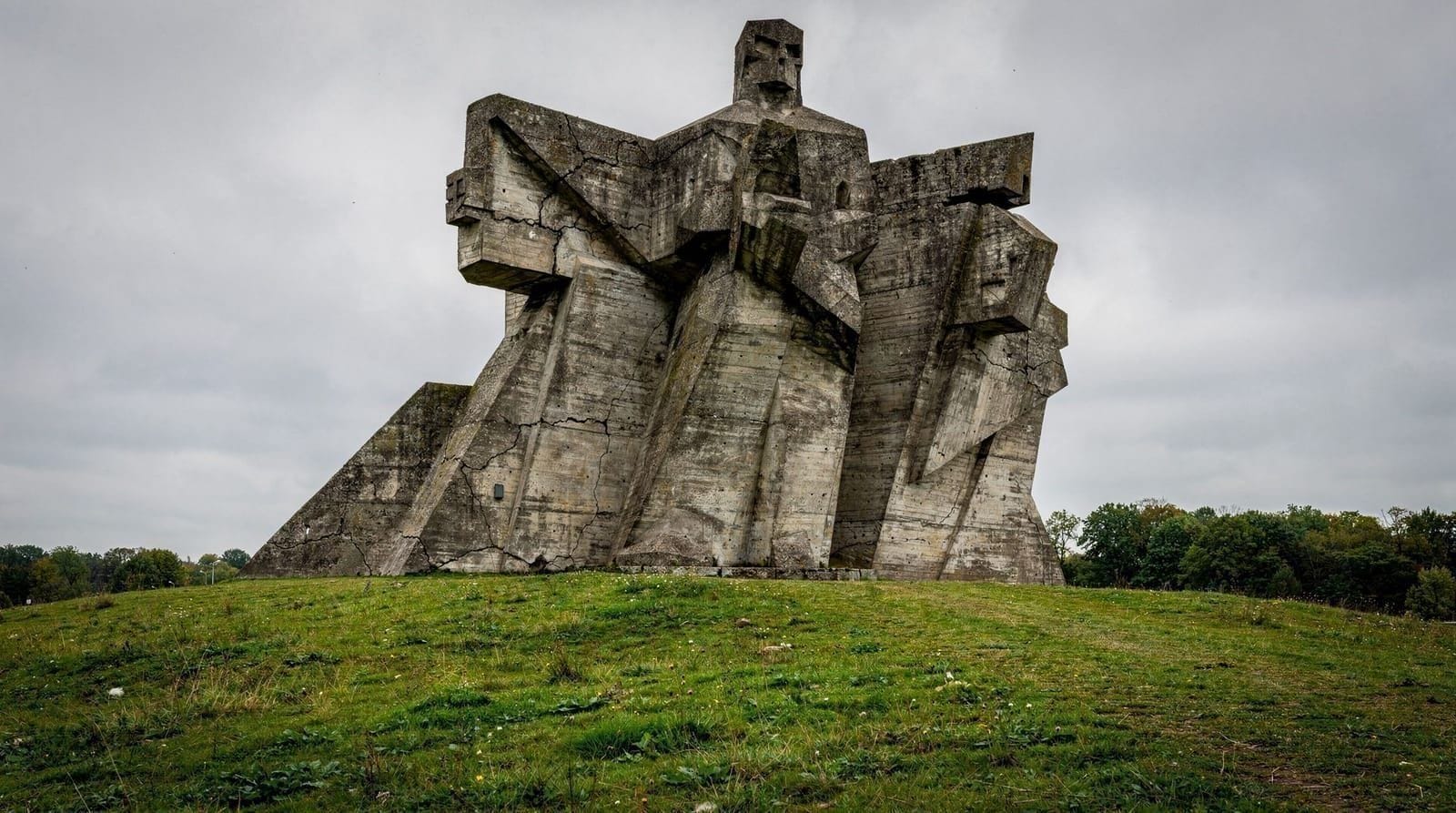
The museum at the Ninth Fort documents the chronology in detail. The outdoor site includes the pits where victims were buried, a large Soviet-era memorial, and the restored fort itself. A guided tour makes the geography and the historical sequence comprehensible in a way that self-guided visits struggle to achieve — the site is large and the outdoor elements require explanation to read properly.
Duration: 2 to 3 hours for the guided visit. Getting there from central Kaunas requires a taxi or local bus (about 20 minutes; the fort is not walkable from the city centre). Many tour operators include transport.
Context: For the broader picture of Lithuanian dark history, the Ninth Fort guide covers the site in depth. Alongside the Paneriai memorial in Vilnius, the Ninth Fort is one of the two most significant Holocaust sites in Lithuania. Both merit visits on a serious history itinerary.
Who this suits: Visitors with specific interest in Holocaust history, WW2, or Lithuanian Jewish heritage. Not a casual day trip attraction — approach with appropriate preparation and emotional space.
For visitors specifically interested in Kaunas’s pre-war Jewish community — once one of the largest and most significant in Europe — rather than just the Ninth Fort site itself, the Kaunas Jewish heritage day trip from Vilnius covers the former Jewish quarter, surviving synagogues, and the Ninth Fort together as a single guided day, with more context on daily Jewish life in interwar Kaunas than the fort-only tour provides. The Jewish Vilnius and Vilna Gaon guide is useful preparation, since Kaunas and Vilnius’s Jewish histories are closely intertwined. For the equivalent memorial site in Vilnius itself, see the Paneriai memorial guide.
Combining Kaunas and the Ninth Fort in one day
It is possible to combine a city sightseeing tour in the morning with a Ninth Fort visit in the afternoon on a single day trip from Vilnius. The logistics are workable: arrive in Kaunas by 10:00 (frequent trains from Vilnius from 7:00), take a 2-hour Old Town walking tour, have lunch on Laisvės Alėja (the main boulevard has good cafés), then taxi to the Ninth Fort for a 14:00 visit, and return to Vilnius by evening. This is a full day but not overwhelming if you pace it well.
See the 4-day Vilnius and Kaunas itinerary for a structure that gives Kaunas proper time without compressing everything into a single day.
Why Kaunas modernism matters
Kaunas as provisional capital (1919–1940) experienced a building programme that was unusually coherent for its period. Lithuanian architects trained in Paris, Vienna, and Berlin returned with Modernist, Art Deco, and Functionalist training and built within a specific 20-year window — which is why the Kaunas New Town looks as it does: a concentrated sample of interwar European architectural ambition applied to a single medium-sized city.
What to look for in the New Town:
- The Modernist villas along Vydūno Alėja and surrounding streets: private houses built for the new Lithuanian professional class between 1920 and 1940. Many survive unchanged in exterior form.
- The Central Post Office (Laisvės al. 102): a Functionalist masterpiece from 1931 by Feliksas Vizbaras. Still operating as a post office.
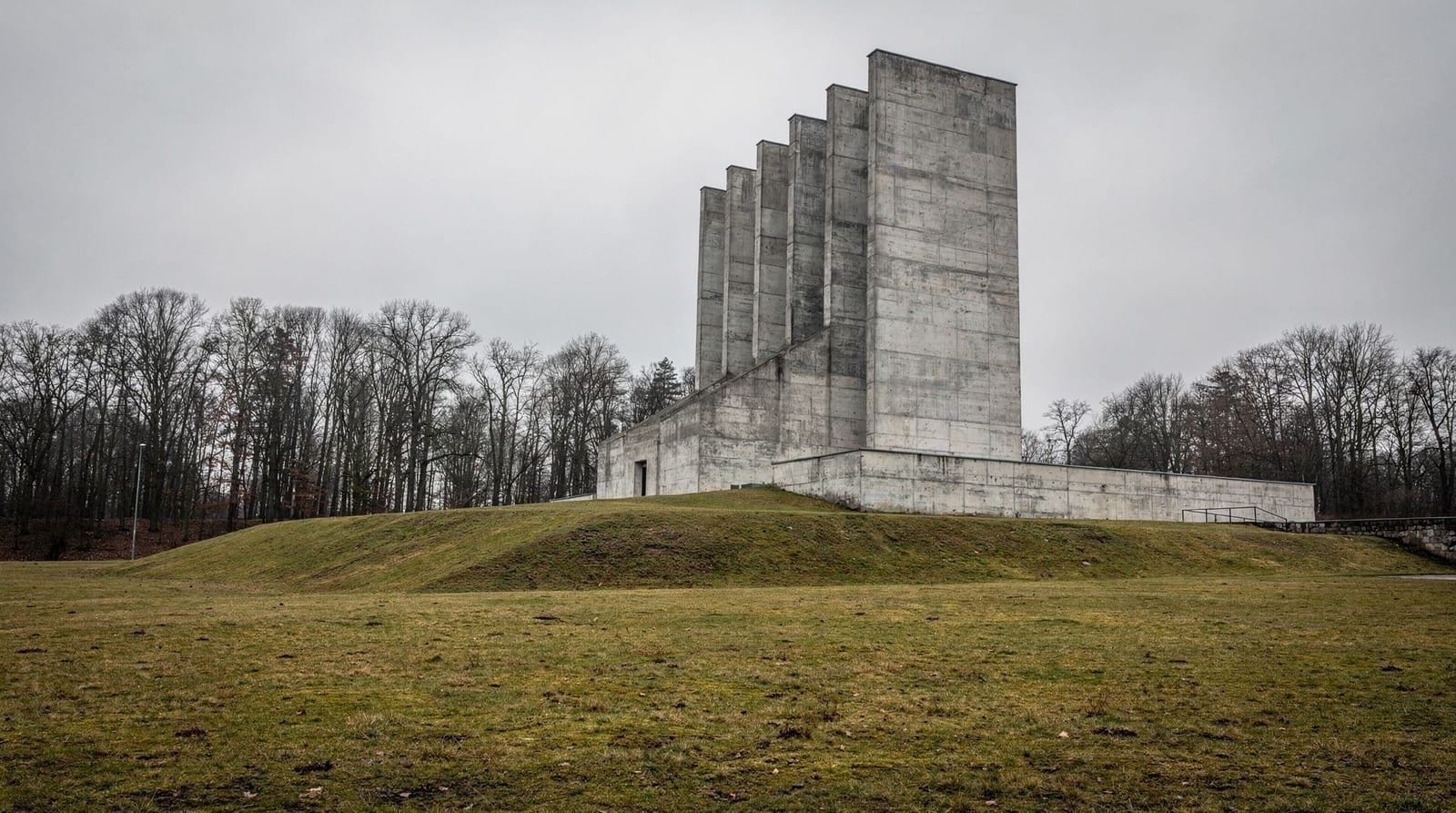
- The Kaunas Military Museum (K. Donelaičio g.): a monumental interwar public building that doubles as an architectural statement of the new state’s ambitions.
- The Vytautas the Great War Museum adjacent: the building and its outdoor memorial garden are part of the interwar nationalistic architecture programme.
- Žaliakalnis funicular: two small funicular lifts connecting the lower city with the residential hill district. Operational since 1931, the funicular is itself a period artifact.
A guided tour that covers the architectural context properly requires a guide who understands the interwar period specifically — not all city tour operators have this depth. Check tour descriptions for references to the “Kaunas modernism” or “interwar architecture” language before booking.
The Kaunas day trip guide lists the specific streets and buildings worth seeking out if you want to explore independently after the guided portion.
Going to Kaunas independently
Trains from Vilnius to Kaunas run at least hourly and cost €4–€8 depending on type (intercity express is faster and slightly more expensive). The journey is 55–70 minutes. Kaunas station is about a 15-minute walk from the Old Town.
The case for a guided tour in Kaunas is stronger than in many cities specifically because of the interwar modernist architecture — without context, a street of 1930s functionalist buildings can read as slightly austere rather than significant. The guide’s ability to explain what you are looking at and why it matters transforms the experience. See the Kaunas day trip guide for a full independent visitor framework.
Which Kaunas tour to choose
- Limited time, want an overview: 2-hour sightseeing tour
- Architecture focus, slower pace: 2-hour walking tour
- History focus, WW2 interest: Ninth Fort tour (can be combined with either city tour above)
- No guide needed, confident traveller: Independent visit using the day trip guide
The Ninth Fort in detail: what you will see
The Ninth Fort (Devintasis Fortas, Žemaičių pl. 73) sits 6 km northwest of Kaunas city centre. It was originally constructed between 1902 and 1913 as the westernmost fortification in a ring of tsarist defensive works protecting Kaunas (then Kovno) from German advance. The fort system became obsolete almost immediately with the development of artillery technology during World War I.
During the German occupation of 1941–1944, the Ninth Fort was used as a killing site. Most victims were brought in groups: the local Kaunas Jewish community in the initial mass killings of June–July 1941 (organised primarily by Lithuanian auxiliary police under German direction), and subsequently Jewish transports from Western Europe including France, Austria, and Germany. Approximately 50,000 people were killed at the fort’s pits.
The site today has three distinct areas:
- The museum building (inside the fort): documentary exhibitions on the fort’s history, the 1941 massacres, the deportation transports, and individual testimonies. Text is in Lithuanian with substantial English translation. Allow 60 to 90 minutes.
- The Soviet-era memorial sculpture (1984): a massive concrete monument — 32 metres high — erected by the Soviets who acknowledged the site as a place of Nazi atrocity but minimised the role of Lithuanian collaborators. The monument is architecturally significant regardless of your view of Soviet historiography.
- The killing pits (in the meadow below): marked with smaller monuments. The pits are on a slope; standing there with knowledge of what happened is a different experience from viewing a museum exhibit about it.
Getting there: taxi from central Kaunas costs about €7–€10. Some tour operators include transport. The site has no restaurant; bring water.
Beyond the city: Rumšiškės and the open-air museum
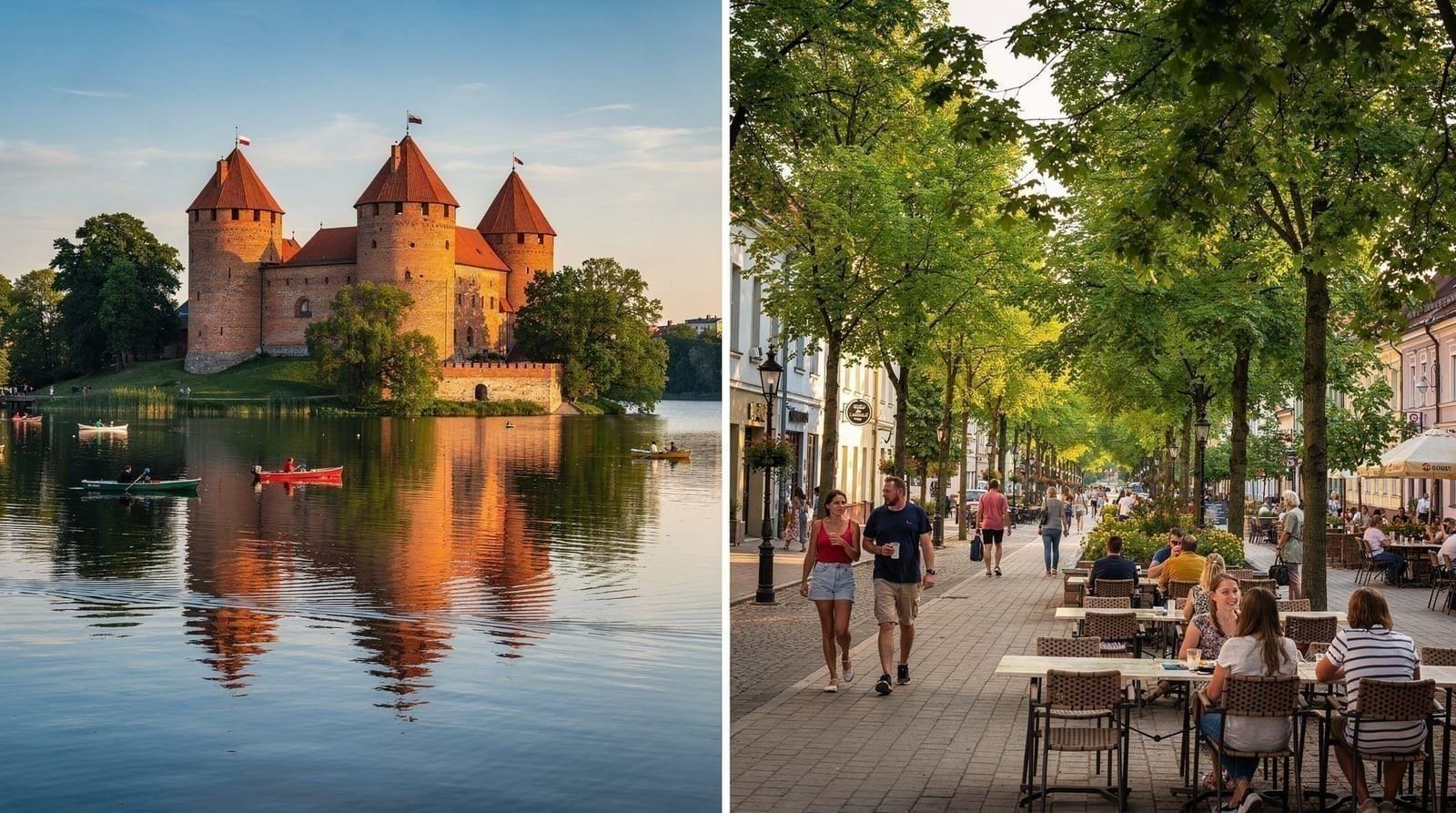
If you have more than a single day for Kaunas, or are already staying overnight, the Rumšiškės and Trakai tour from Kaunas extends the trip to the Lithuanian Open-Air Museum at Rumšiškės — a large collection of relocated traditional wooden buildings from across the country’s regions, roughly 20 km east of Kaunas — before continuing to Trakai Castle. This is a sensible way to link Kaunas with the rest of a Lithuania itinerary rather than doubling back to Vilnius and out again. For visitors comparing Kaunas’s dense interwar architecture with Vilnius’s older Baroque Old Town, the Vilnius Baroque architecture guide makes a useful side-by-side reference for what makes each city’s built environment distinct.
Frequently asked questions about Kaunas city tours
Is Kaunas better than Trakai as a day trip from Vilnius?
Different rather than better. Trakai is natural, visual, and short. Kaunas is urban, architectural, and deeper. For families with children, Trakai wins easily. For history and architecture enthusiasts, Kaunas is more rewarding. The Trakai vs Kaunas comparison guide gives a direct comparison.
What is the best café area in Kaunas?
Laisvės Alėja and the streets around it have the highest concentration of independent cafés. Momo Grill (Laisvės al. 73) is a local institution for burgers; Caffè Nero has good Lithuanian beans at Laisvės al. 38 (under different branding); Senamiestis area has the more atmospheric traditional cafés. The Kaunas day trip guide covers food options.
Is Kaunas walkable?
The Old Town and Laisvės Alėja are very walkable. The Ninth Fort requires transport (taxi recommended, around €7–€10 each way). The Pažaislis Monastery (worth seeing for the frescoes) is also on the city outskirts.
Is Kaunas worth visiting in winter?
Yes — the Christmas market and the indoor museums make it a solid winter day trip. The Laisvės Alėja looks good in snow. See the winter in Vilnius guide which mentions Kaunas as a winter option.
Does the Ninth Fort tour require advance booking?
The museum visit itself does not require advance booking (standard entry). A guided tour of the site does require booking if you want a specific language and time. Same-day booking is often possible but not guaranteed in summer.
What is the Kaunas UNESCO heritage designation?
“Kaunas: interwar optimism” was added to the UNESCO World Heritage Tentative List in 2022 following the European Capital of Culture designation. The interwar modernist architecture is concentrated primarily in the New Town (Naujamiestis) around Laisvės Alėja and surrounding streets — this is what the designation refers to.
Is Kaunas worth visiting as a day trip if I have already seen Vilnius’s Old Town?
Yes — the two cities read completely differently. Vilnius’s Baroque Old Town is medieval-to-18th-century in character; Kaunas’s New Town is a concentrated snapshot of 1920s–30s interwar European modernism. Visiting both gives a genuinely fuller picture of Lithuanian architectural history than either alone. The Kaunas destination page gives an overview of the city beyond the tour formats covered here.